
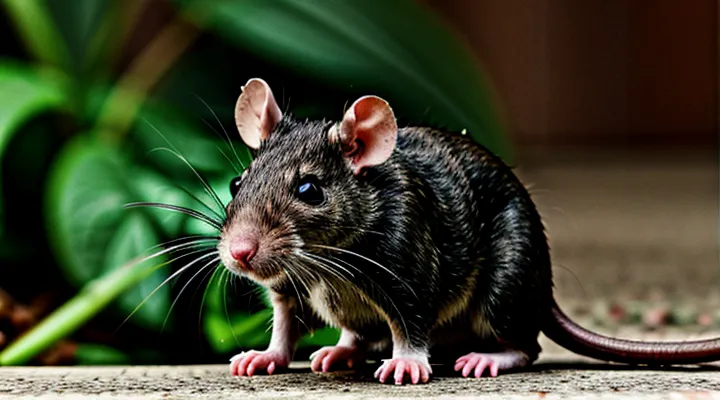
The Dental Structure of a Rat
Incisors: The Ever-Growing Front Teeth
Adaptations for Gnawing
Rats possess a pair of continuously growing incisors in each jaw, a feature that enables persistent gnawing. The enamel on the front surface is exceptionally hard, while the underlying dentine is softer; this contrast creates a self‑sharpening edge as the softer material wears faster during chewing. Because the incisors lack true roots, they erupt throughout the animal’s life, compensating for wear caused by hard foods such as seeds, wood, and plastic.
The mandibular muscles, particularly the masseter and temporalis, generate high bite forces relative to the animal’s size. Their attachment points allow rapid opening and closing cycles, facilitating the repetitive motions required to gnaw. The temporomandibular joint exhibits a hinge‑and‑slide mechanism that accommodates the forward thrust of the incisors while maintaining occlusion.
Additional adaptations include:
- Robust, curved incisors that project forward, increasing leverage.
- A diastema separating the incisors from the cheek teeth, preventing interference during gnawing.
- Specialized pulp tissue that supplies nutrients to the ever‑growing crowns.
Together, these morphological and physiological traits ensure that rats can process a wide range of hard substrates, maintaining dental health and supporting their opportunistic feeding behavior.
Importance of Continuous Growth
Rats possess a limited dentition: a single pair of continuously erupting incisors in each jaw, accompanied by a small set of molars. The incisors are the only teeth that grow throughout life, a trait shared by all rodents.
Continuous growth of the incisors prevents excessive wear caused by constant gnawing. It maintains proper occlusion, allowing efficient processing of food and the ability to breach hard materials. The self‑renewing nature of these teeth supports the animal’s survival in diverse environments.
- Overgrowth leads to malocclusion, reducing bite efficiency.
- Malocclusion can cause weight loss, oral injuries, and secondary infections.
- Stunted growth impairs the ability to gnaw, limiting access to food and shelter.
Understanding the necessity of perpetual incisor development informs veterinary diagnostics, laboratory research, and pest‑management strategies. Maintaining dental health in rats hinges on monitoring the balance between wear and growth.
Consequences of Malocclusion
Rats possess continuously growing incisors that require constant wear through gnawing. When the alignment of these teeth becomes abnormal, a condition known as malocclusion develops, leading to several physiological and behavioral disturbances.
Malocclusion interferes with normal food processing. Uneven tooth surfaces reduce chewing efficiency, causing prolonged ingestion times and incomplete breakdown of nutrients. Consequently, affected rodents often exhibit reduced body weight and diminished growth rates.
Dental overgrowth is a direct outcome of improper occlusion. Unbalanced wear allows the incisors to extend beyond the normal plane, potentially piercing the palate or surrounding soft tissues. This self‑inflicted injury predisposes the animal to secondary infections, abscess formation, and chronic inflammation.
Pain associated with misaligned teeth manifests as altered grooming behavior and reduced activity. Animals may avoid using the affected jaw, leading to muscle atrophy and further impairment of oral function.
Long‑term consequences include:
- Persistent weight loss and malnutrition
- Dental abscesses and septicemia
- Structural damage to the maxilla and mandible
- Behavioral signs of distress, such as increased aggression or withdrawal
Early detection of occlusal irregularities enables corrective measures, such as trimming overgrown incisors or providing appropriately sized chew toys to promote balanced wear. Prompt intervention mitigates the cascade of health issues linked to dental misalignment in rodents.
Molars: For Grinding and Processing Food
Location and Function
Rats possess a total of sixteen permanent teeth. The dental arrangement is confined to the oral cavity, with four incisors positioned at the front of each jaw and twelve cheek teeth (premolars and molars) located posteriorly.
- Incisors – two upper and two lower; continuously grow, enabling constant gnawing of hard materials.
- Premolars and molars – six on each side of the upper jaw and six on each side of the lower jaw; adapted for grinding and crushing food.
The incisors’ sharp edges create a shearing action that severs vegetation, seeds, and other objects, while the cheek teeth provide occlusal surfaces for mastication, breaking down food into swallowable particles. This division of labor ensures efficient processing of a varied omnivorous diet.
Comparison to Human Molars
Rats possess a total of sixteen teeth: two continuously growing incisors in the upper jaw, two in the lower jaw, and twelve molars located posteriorly. Human dentition comprises thirty‑two teeth, of which twelve are molars (including four third molars, commonly called wisdom teeth).
Key differences between rat molars and human molars:
- Size: rat molars are markedly smaller, measuring only a few millimetres in length, whereas human molars average ten to twelve millimetres.
- Structure: rat molars are brachydont with low crowns and limited cusp development; human molars are high‑crowned (often hypsodont) and feature multiple well‑defined cusps for efficient grinding.
- Growth: rat molars do not exhibit continuous eruption; they erupt once and remain static. Human molars, after eruption, cease growing and are subject to wear without replacement.
- Function: rat molars serve primarily for crushing soft seeds and grains; human molars are adapted for processing a diverse diet, including fibrous plant material and meat, requiring greater occlusal surface area.
- Replacement: rats lack a second set of molars; humans possess a deciduous set of molars that are replaced by permanent counterparts during childhood.
Wear and Tear Considerations
Rats have a total of 16 teeth: a single pair of incisors in each jaw and three premolars and three molars per side in the upper jaw, plus three premolars and three molars per side in the lower jaw. These teeth are adapted for continuous growth, a characteristic essential for coping with constant wear.
Wear and tear considerations focus on three primary factors:
- Dietary hardness – fibrous or coarse foods accelerate enamel abrasion, prompting faster incisor elongation.
- Gnawing behavior – frequent gnawing on hard objects such as wood or plastic induces micro‑fractures, requiring efficient dentin deposition to maintain structural integrity.
- Age‑related attrition – older individuals exhibit increased enamel loss, potentially leading to malocclusion if growth does not keep pace with wear.
Effective dental health management in laboratory or pet rats involves providing appropriate chew toys, monitoring food texture, and conducting regular oral examinations to detect uneven wear patterns before they compromise feeding efficiency.
Why Rats Have So Few Teeth
Evolutionary Adaptations for Diet
Rats possess a total of 16 teeth: a single pair of continuously growing incisors in each jaw and three pairs of molars in the upper jaw and two pairs in the lower jaw. This dental formula reflects a specialization for gnawing and grinding, enabling exploitation of a broad range of food sources.
Incisors exhibit a self-sharpening edge formed by enamel on the anterior surface and softer dentin on the posterior surface. Differential wear maintains a chisel‑like tip essential for breaking hard seeds, bark, and synthetic materials. The absence of premolars reduces jaw weight, facilitating rapid bite forces required for frequent gnawing.
Key dietary adaptations include:
- Persistent eruption of incisors, preventing wear‑induced shortening.
- Enamel‑dentin composition that creates a self‑maintaining cutting edge.
- High‑frequency chewing cycles that promote efficient processing of fibrous and starchy matter.
- Reduced molar count, optimizing space for enlarged mandibular muscles that generate strong bite forces.
These traits collectively allow rats to thrive on diverse diets, from grains and fruits to anthropogenic waste, illustrating a tightly integrated evolutionary response to nutritional demands.
Efficiency in Food Processing
Rats possess continuously growing incisors that enable rapid gnawing of diverse materials. This biological trait provides a model for evaluating mechanical efficiency in food‑processing operations. By measuring the rate at which rodents reduce solid substrates, engineers can quantify energy consumption per unit of material removal and compare it with industrial cutters and grinders.
Key insights derived from rodent dentition include:
- High bite force relative to tooth size results in low specific energy demand.
- Self‑sharpening edges maintain cutting efficiency without external maintenance.
- Continuous growth eliminates the need for periodic replacement, reducing downtime.
Applying these principles, food‑processing facilities can improve tool design. Selecting cutting elements that mimic the geometry of rodent incisors—narrow, curved profiles with self‑renewing edges—reduces wear and sustains throughput. Additionally, integrating sensors that monitor wear patterns analogous to rodent tooth wear enables predictive maintenance, further enhancing operational efficiency.
Overall, the study of rodent oral mechanics offers a practical framework for optimizing cutting and grinding processes, decreasing energy use, and extending equipment lifespan in food‑processing environments.
The Role of Dental Health in Rat Survival
Rats possess continuously growing incisors that extend throughout life. When these teeth maintain proper length and alignment, the animal can gnaw efficiently, process a varied diet, and avoid oral injuries. Overgrown incisors impede feeding, lead to malnutrition, and increase susceptibility to infection, directly affecting survival rates.
Key aspects of dental health influencing rat longevity include:
- Self‑sharpening action of opposite incisors ensures functional bite surfaces.
- Adequate gnawing material prevents excessive elongation and promotes wear.
- Balanced calcium and phosphorus intake supports enamel integrity.
- Regular inspection for signs of malocclusion or abscesses enables timely intervention.
Dental disease often manifests as ulceration, abscess formation, or loss of tooth structure. These conditions compromise food intake, reduce body condition, and may trigger systemic spread of pathogens. Early detection and corrective measures, such as trimming overgrown teeth or providing appropriate chew objects, restore normal feeding behavior and improve overall health outcomes.
In wild populations, individuals with optimal dental condition exhibit higher reproductive success and greater resilience to environmental stresses. Consequently, dental health functions as a fundamental determinant of rat survival.
Common Dental Problems in Rats
Overgrown Incisors
Causes of Overgrowth
Rats possess continuously growing incisors that require regular wear to maintain functional length. When natural abrasion fails, the teeth may become overgrown, leading to feeding difficulties, oral injury, and systemic health decline.
Primary factors contributing to dental overgrowth include:
- Insufficient gnawing material: environments lacking hard objects prevent the necessary self‑sharpening action of the incisors.
- Nutritional imbalances: diets low in fiber or abrasive components reduce natural tooth wear.
- Genetic predispositions: hereditary defects can affect enamel formation and root development, compromising normal growth regulation.
- Metabolic disorders: conditions such as hyperparathyroidism alter calcium metabolism, accelerating dental tissue proliferation.
- Trauma or infection: damage to the periodontal ligament or pulp can disrupt normal eruptive patterns, resulting in abnormal elongation.
Effective management combines environmental enrichment with appropriate chew toys, balanced dietary formulation, and veterinary monitoring for underlying health issues. Early detection of excessive length allows timely intervention, preventing irreversible complications.
Symptoms and Diagnosis
Rats possess a precise dental formula that results in a total of 16 teeth: eight incisors and eight molars, with no premolars or canines. The incisors grow continuously, requiring constant wear through gnawing activity.
Typical clinical signs of dental disturbance include:
- Excessive drooling or saliva accumulation
- Weight loss despite adequate food availability
- Difficulty handling food, especially hard or fibrous items
- Visible misalignment or overgrowth of incisors
- Behavioral changes such as reduced activity or increased aggression when feeding
Veterinary assessment relies on a combination of visual examination and imaging techniques:
- Direct inspection of the oral cavity using a speculum and bright illumination to evaluate incisor length, curvature, and occlusion.
- Palpation of the mandible and maxilla to detect abnormal hardness or tenderness.
- Radiographic imaging (lateral and ventrodorsal views) to reveal root integrity, molar condition, and hidden fractures.
- Dental casts or intraoral photographs for longitudinal monitoring of tooth wear patterns.
- Laboratory analysis of saliva for bacterial overgrowth when infection is suspected.
Accurate identification of these symptoms and systematic diagnostic procedures enable timely intervention, preventing severe malocclusion, secondary infections, and compromised nutrition in affected rodents.
Treatment and Prevention
Rats possess continuously growing incisors and a set of molars that require regular wear to prevent overgrowth. Dental overgrowth leads to malocclusion, difficulty eating, and secondary infections. Early detection and timely intervention are essential for maintaining oral health.
Treatment protocols focus on mechanical correction and infection control. Veterinary professionals perform precise trimming of overgrown incisors using specialized dental files. In cases of abscesses or periodontal disease, systemic antibiotics are administered according to sensitivity testing. When tooth loss occurs, prosthetic appliances may be fitted to restore chewing efficiency.
Prevention relies on environmental enrichment and dietary management:
- Provide chewable objects such as untreated wood blocks, mineral chews, or nylon tubing to promote natural tooth wear.
- Offer a diet rich in fibrous vegetables and low‑calorie pellets to encourage gnawing activity.
- Conduct routine oral examinations at least quarterly, inspecting incisors for length, alignment, and signs of lesions.
- Maintain cage cleanliness to reduce bacterial load that could exacerbate periodontal conditions.
- Monitor weight and food intake; sudden changes may indicate underlying dental discomfort.
Implementing these measures reduces the incidence of dental pathology, supports optimal nutrition, and extends the lifespan of laboratory and pet rats alike.
Malocclusion of Molars
Impact on Eating
Rats possess a distinctive dental formula that includes continuously growing incisors at the front of each jaw and a set of molars and premolars toward the back. The incisors number two per side, while the cheek teeth total twelve, resulting in a total of sixteen teeth.
The arrangement directly determines how rats handle food. Sharp, self‑sharpening incisors enable the animal to gnaw through hard materials such as seeds, nuts, and woody stems. Molars, with broader surfaces, grind softer matter, facilitating the breakdown of grains and fruits. This dual‑function system allows rats to process a wide variety of textures without reliance on external tools.
Key effects on feeding behavior:
- Incisors create initial fractures in tough items, creating manageable pieces.
- Molars perform mastication, reducing particle size for easier swallowing.
- Continuous growth of incisors prevents wear, maintaining cutting efficiency throughout the animal’s life.
Understanding the dental configuration is essential for designing appropriate diets in research settings. Food must be provided in sizes and consistencies that accommodate both gnawing and grinding phases, ensuring optimal nutrition and preventing dental overgrowth.
Veterinary Interventions
Rats possess a specific dental formula that includes 16 teeth: four incisors in the upper jaw, four in the lower, and eight molars. The incisors grow continuously, requiring regular wear to prevent overgrowth that can impair feeding and cause oral injury.
Veterinary care for rat dentition focuses on prevention, diagnosis, and treatment of common disorders such as malocclusion, overgrown incisors, and dental abscesses. Interventions include:
- Routine oral examination under brief restraint or light anesthesia to assess tooth length, alignment, and enamel integrity.
- Prophylactic trimming of incisors using specialized rodent dental files, performed at intervals determined by growth rate, typically every two to four weeks.
- Extraction of severely damaged or infected teeth, conducted under sterile conditions with appropriate analgesia and postoperative monitoring.
- Management of dental abscesses through drainage, antimicrobial therapy, and, when necessary, surgical debridement.
- Nutritional adjustments, providing hard‑shelled foods or chew toys that promote natural wear and reduce the risk of overgrowth.
Effective dental management reduces morbidity, supports normal feeding behavior, and extends the lifespan of laboratory and pet rats. Continuous monitoring and timely intervention remain essential components of rodent veterinary practice.
Comparing Rat Teeth to Other Rodents
Similarities Across Rodent Species
Rodents possess a distinctive dental pattern that defines the order. The pattern includes a single pair of large incisors in each jaw, a gap (diastema) separating the incisors from the cheek teeth, and a set of molars that are relatively simple in shape. Continuous eruption compensates for constant wear, while enamel covers only the labial surface of the incisors, creating a self‑sharpening edge.
- single pair of continuously growing incisors per jaw
- enamel restricted to the front surface of incisors
- pronounced diastema between incisors and molars
- molars with low crowns and limited root development
- similar occlusal surface morphology across species
These shared characteristics enable comparative studies of dental development and support classification within the rodent lineage. The uniformity of the dental formula across diverse genera underscores evolutionary stability in feeding adaptations.
Unique Dental Features of Rats
Rats possess a dental arrangement specialized for gnawing and chewing. The adult rodent has a total of 16 teeth: four continuously growing incisors and twelve molar‑premolar teeth. Incisors lack roots, allowing perpetual eruption that compensates for wear. Their anterior surfaces are coated with hard enamel, while the posterior portion consists of softer dentin, creating a self‑sharpening edge during mastication.
Key characteristics include:
- Absence of canines, creating a gap (diastema) between incisors and cheek teeth.
- Four incisors arranged in a single‑row pattern (two upper, two lower).
- Six cheek teeth on each side of the jaw, comprising premolars and molars with complex occlusal surfaces.
- Molars are rooted, providing stability for grinding plant material and insects.
These features enable rats to maintain a diet that combines hard seeds, fibrous vegetation, and occasional protein sources, while sustaining the constant wear imposed by their natural behavior.
Differences in Dental Formulas
Rats possess a distinctive dental arrangement that differs markedly from other rodent species and from mammals with more complex dentitions. The dental formula, a concise representation of tooth types per quadrant, provides a clear comparison.
The typical formula for a rat is expressed as « 2 I / 0 C / 0 P / 3 M », indicating two incisors, no canines, no premolars, and three molars in each half of the jaw. This yields a total of 16 teeth per side and 32 teeth overall.
Key differences relative to other rodents:
- Mice share the same incisor count (2 I) but often exhibit a reduced molar count, commonly « 2 M » per quadrant, resulting in 20–24 total teeth.
- Guinea pigs lack continuously growing incisors; their formula reads « 1 I / 0 C / 0 P / 3 M », reflecting a single pair of incisors and three molars per side.
- Rabbits present a formula of « 2 I / 0 C / 3 P / 3 M », adding three premolars absent in rats.
The primary distinction lies in the presence of only incisors and molars in rats, with the complete absence of premolars and canines. This simplification supports the species’ gnawing specialization, while the additional premolars in rabbits and the reduced molar set in mice illustrate divergent evolutionary adaptations within the order Rodentia.