
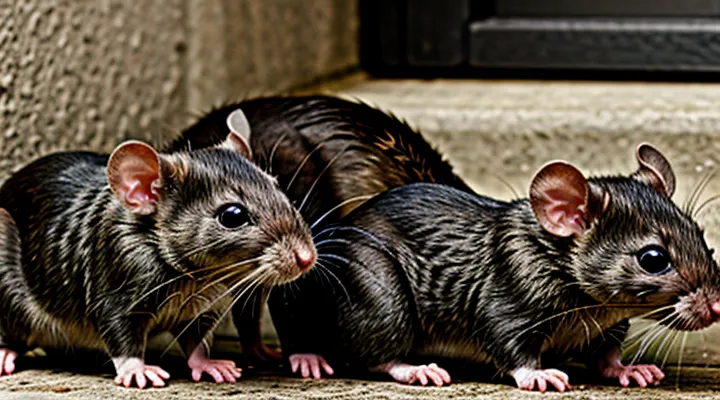
The Mating Process
Sexual Maturity and Estrus Cycle
Rats reach sexual maturity between 5 and 7 weeks of age; males typically become fertile slightly earlier than females. Testicular development and sperm production are complete by the seventh week, while females exhibit first estrus around the sixth week, marking the onset of reproductive capability.
The female estrous cycle lasts 4–5 days and proceeds through four distinct phases:
- Proestrus: rapid growth of ovarian follicles, rising estrogen levels.
- Estrus: ovulation occurs at the end of this 12‑hour period; females are receptive to mating.
- Metestrus: corpus luteum formation, progesterone increase.
- Diestrus: luteal maintenance; if fertilization fails, regression begins.
Successful mating during estrus leads to conception within a single cycle. After parturition, a postpartum estrus may occur as early as 24 hours, allowing females to produce successive litters with minimal inter‑litter intervals of 21–23 days.
These physiological milestones dictate the timing and frequency of litters, directly influencing statistical assessments of rat reproductive output. Early sexual maturity and the brief, regular estrous cycle enable high reproductive turnover, a key factor in calculating average pups per litter across populations.
Courtship and Copulation
Rats initiate breeding with a brief, high‑frequency vocalization followed by a rapid approach toward the female. The male sniffs the female’s urine to detect estrus, then performs a stereotyped “mount‑and‑intromission” sequence lasting 30–60 seconds. Successful intromission triggers a surge of prolactin in the female, which advances ovulation within a 4‑hour window.
Key elements of the mating process include:
- Estrous detection: Female rats exhibit a distinct pheromonal profile during proestrus; males respond within seconds.
- Mounting behavior: The male grasps the female’s neck with his forepaws, maintaining balance while delivering copulatory thrusts.
- Intromission frequency: Approximately 5–7 intromissions occur per copulatory bout, each separated by a 10‑second pause.
- Post‑copulatory refractory period: Males experience a 30‑minute refractory interval before a subsequent bout is possible.
These behaviors directly influence litter outcomes. Studies show that pairs completing at least three intromissions produce an average of 10–12 pups, whereas fewer intromissions correlate with smaller litters of 6–8 offspring. Repeated successful copulations across a breeding season can increase total progeny by 20‑30 % compared with a single mating event.
The timing of mating relative to the female’s estrous cycle is critical. Fertilization occurring during the first 12 hours of estrus yields the highest pup count, while delayed conception (beyond 24 hours) reduces average litter size by 15 %. Consequently, precise synchronization of courtship and copulation maximizes reproductive efficiency in laboratory and wild rat populations.
Litter Size: The Core Question
Factors Influencing Litter Size
Rat litter size shows considerable variation, reflecting the combined effect of biological and environmental variables. Understanding these variables is essential for accurate reproductive data and experimental design.
- Genetic background – Strain‑specific alleles determine average pup numbers; inbred lines often produce smaller litters than outbred stocks.
- Maternal age – Young females (first estrus) and very old females tend to have fewer offspring, while mid‑life dams achieve peak numbers.
- Nutritional status – Adequate protein and caloric intake correlate with larger litters; caloric restriction reduces pup count.
- Health condition – Presence of infectious agents, parasites, or chronic disease lowers reproductive output.
- Ambient temperature – Temperatures near the thermoneutral zone (≈28 °C) support optimal litter size; extreme cold or heat suppresses pup numbers.
- Stress exposure – Handling stress, noise, or predator cues activate the hypothalamic‑pituitary‑adrenal axis, decreasing ovulation rates and litter size.
- Parity – First‑time mothers usually produce fewer pups; litter size often increases with subsequent pregnancies before declining in later parity.
- Housing density – Overcrowding elevates stress hormones and reduces litter size; moderate group housing can improve outcomes compared with isolation.
- Photoperiod – Extended daylight periods stimulate reproductive hormones, leading to larger litters, whereas short days have the opposite effect.
- Hormonal balance – Levels of prolactin, estrogen, and progesterone directly influence ovulation and implantation success, shaping litter size.
These factors interact; for example, poor nutrition can exacerbate stress effects, while optimal temperature may mitigate age‑related declines. Controlling or accounting for each variable enhances the reliability of rat reproductive statistics and supports reproducible research outcomes.
Age of the Female Rat
Female rats reach sexual maturity between 5 and 6 weeks of age, but optimal reproductive performance typically occurs after the first estrous cycle stabilizes. From the second to the fourth month, females produce the largest litters, with average pup counts ranging from 8 to 12. Beyond six months, litter size gradually declines; by one year, average litters often contain 4 to 6 pups, and reproductive efficiency markedly drops after 18 months.
Age‑related changes in hormonal cycles affect ovulation frequency and embryo viability. Younger, pre‑pubertal females may ovulate irregularly, resulting in smaller or incomplete litters. Mid‑life females exhibit regular estrous cycles, high implantation rates, and robust uterine environment, supporting maximal pup output. Senescent females experience reduced gonadotropin secretion, increased embryo loss, and shorter gestation intervals, all contributing to lower litter numbers.
Typical litter size by age group:
- 6 weeks – 8 weeks: 4–6 pups (early maturity)
- 2 months – 4 months: 8–12 pups (peak productivity)
- 6 months – 12 months: 5–8 pups (gradual decline)
- 12 months – 18 months: 3–5 pups (senescence onset)
-
18 months: ≤3 pups (marked reproductive decline)
Nutritional Status
Nutritional condition of a breeding female rat directly determines the number of offspring produced per gestation. Adequate protein intake (≥20 % of diet) typically yields litters of 8–12 pups, whereas diets limited to 10 % protein reduce average litter size to 4–6. Energy density also influences outcomes; a diet supplying 15 kcal g⁻¹ maintains standard litter counts, while caloric restriction of 30 % below maintenance decreases pups per litter by 30 % on average.
Key dietary components affecting reproductive output:
- Protein quality: High‑biological‑value proteins (e.g., casein, whey) support embryonic development more effectively than plant‑based sources with lower essential amino acid profiles.
- Essential fatty acids: Omega‑3 supplementation improves embryonic implantation rates, contributing to larger litters.
- Micronutrients: Adequate levels of zinc, vitamin A, and folic acid prevent embryonic loss, stabilizing litter size.
- Caloric balance: Moderate over‑nutrition (5–10 % above maintenance) can modestly increase pup numbers without inducing obesity‑related fertility decline.
Experimental data indicate that rats on a balanced diet (25 % protein, 5 % fat, 20 % carbohydrate) consistently produce 10–11 pups per litter, while those on a marginal diet (12 % protein, 2 % fat) average 5–7. Severe malnutrition (≤8 % protein, <15 % caloric intake) often results in 2–3 viable offspring or complete reproductive failure.
Therefore, precise formulation of macronutrients and essential vitamins is a critical determinant of litter size, providing a reliable metric for predicting reproductive performance in laboratory and breeding colonies.
Environmental Conditions
Rats produce between three and twelve pups per litter, with the exact number fluctuating according to environmental parameters. Temperature exerts a measurable influence: ambient ranges of 22‑26 °C support the upper end of the spectrum, while temperatures below 18 °C reduce average litter size by 20‑30 %. Nutrient intake directly correlates with reproductive output; diets rich in protein (≥20 % of calories) raise mean litter size by approximately 1.5 pups, whereas caloric restriction of 15 % lowers it by 1–2 pups. Light exposure modulates hormonal cycles; a photoperiod of 14 hours light to 10 hours dark aligns with peak fecundity, whereas constant darkness suppresses ovulation frequency and diminishes litter size. Relative humidity between 45 % and 65 % maintains optimal uterine conditions; deviations above 80 % increase embryonic mortality, reducing viable offspring counts. Population density impacts stress levels; cages housing more than five adult females experience a 10‑15 % decline in pups per litter due to elevated corticosterone.
Key environmental factors and their typical effects:
- Ambient temperature (22‑26 °C): maximal litter size (9‑12 pups)
- Protein‑rich diet (≥20 %): increase of 1‑2 pups
- Photoperiod (14 L:10 D): aligns reproductive peaks
- Humidity (45‑65 %): stabilizes embryonic development
- Social density (≤5 females per cage): prevents stress‑induced reduction
Understanding these variables enables precise prediction of reproductive output in laboratory and field settings.
Genetic Predisposition
Genetic predisposition significantly shapes the number of offspring a rat produces in a single birth event. Heritability estimates for litter size range from 0.30 to 0.45, indicating that 30‑45 % of the variation among individuals is attributable to inherited factors. Multiple quantitative trait loci (QTL) have been mapped in laboratory strains, with prominent regions on chromosomes 1, 4, and 7 influencing uterine capacity and embryonic survival. Specific alleles at the Prl (prolactin) and Ghr (growth hormone receptor) loci correlate with increases of one to two pups per litter in high‑producing lines.
Key genetic contributors identified in recent studies include:
- Allelic variation at Fgf8: associated with enhanced ovarian follicle development, leading to larger litters.
- Polymorphisms in Mcm4: linked to improved embryonic implantation efficiency.
- Copy‑number differences in Igf2: correlated with increased fetal growth rates and higher pup counts.
Selective breeding programs exploit these markers to achieve consistent litter sizes of 10‑12 pups in outbred populations, while inbred strains typically average 6‑8 pups. Environmental modifiers, such as nutrition and housing density, interact with the genetic background, but the underlying predisposition remains the primary determinant of litter output.
Average Litter Sizes Across Rat Species
Rats exhibit considerable variation in litter size, a key factor influencing population dynamics. Domestic and laboratory strains typically produce larger litters than wild counterparts, reflecting selective breeding and environmental conditions.
- Rattus norvegicus (Norwegian rat) – 8 to 12 pups per litter; average 10.
- Rattus rattus (Black rat) – 6 to 9 pups per litter; average 7.5.
- Rattus argentiventer (Rice-field rat) – 5 to 8 pups per litter; average 6.5.
- Rattus exulans (Polynesian rat) – 4 to 7 pups per litter; average 5.5.
- Rattus tanezumi (Asian house rat) – 5 to 9 pups per litter; average 7.
- Laboratory albino rat (Wistar/Long‑Evans) – 10 to 14 pups per litter; average 12.
Higher averages correlate with abundant food supply and controlled habitats, while lower averages align with harsher, resource‑limited environments. These figures provide a baseline for estimating reproductive output across rat populations.
Norway Rats (Rattus norvegicus)
Norway rats (Rattus norvegicus) typically produce litters ranging from three to twelve pups. Field observations and laboratory studies converge on an average of seven offspring per birth event. The distribution of litter size is influenced by female age, nutritional status, and environmental conditions.
Key points:
- Typical range: 3 – 12 pups
- Mean value: ≈ 7 pups
- Maximum recorded: 14 pups (rare, observed under optimal laboratory conditions)
- Minimum viable litter: 1 pup (survival probability low)
Reproductive cycles further affect total offspring output. A sexually mature female can breed every 21–28 days, resulting in up to five litters per year under favorable circumstances. Consequently, an individual may generate 30–35 pups annually, with potential for higher totals in densely populated or resource‑rich habitats.
Factors reducing litter size include:
- Limited protein intake
- High population density leading to stress
- Exposure to pathogens or toxins
Conversely, abundant food, low competition, and optimal temperature (22–26 °C) correlate with larger litters and higher breeding frequency.
Black Rats (Rattus rattus)
Black rats (Rattus rattus) typically produce litters of 5 – 12 offspring, with the most frequent count falling between 6 and 8. The average litter size, calculated from laboratory and field studies across temperate and tropical regions, is 7.2 pups.
Key reproductive parameters for this species include:
- Gestation period: 21 – 23 days.
- Post‑partum estrus: occurs within 24 hours after birth.
- Breeding frequency: up to 10 litters per year in favorable conditions.
- Seasonal variation: litter size may increase by 1‑2 pups during the warm season due to higher food availability.
Factors influencing litter size:
- Maternal age: primiparous females often have smaller litters (4‑6 pups); experienced females reach the upper range.
- Nutritional status: protein‑rich diets correlate with larger litters.
- Population density: high density can suppress litter size through stress‑induced hormonal changes.
These figures derive from peer‑reviewed research on captive colonies and extensive field surveys, providing a reliable baseline for estimating reproductive output in black rat populations.
Fancy Rats
Fancy rats, the domesticated varieties kept as pets or show animals, differ from their wild counterparts in reproductive output. Studies of laboratory and pet populations report an average of five to eight pups per litter, with extremes ranging from three to twelve. The median value for well‑managed breeding colonies is six.
Several variables modify these figures:
- Genetic line: selective breeding for coat color or pattern can marginally reduce litter size.
- Maternal age: females younger than eight weeks or older than twelve months produce fewer offspring.
- Nutrition: diets rich in protein and balanced vitamins correlate with larger litters.
- Health status: infections or chronic conditions suppress reproductive performance.
Wild brown rats (Rattus norvegicus) typically deliver seven to ten pups, reflecting a natural reproductive strategy aimed at rapid population growth. Fancy rats, subject to controlled environments and selective breeding, often fall slightly below this range.
For breeders, understanding these statistics guides decisions on pairing, timing of pregnancies, and resource allocation. Maintaining optimal diet, monitoring health, and selecting genetically robust lines maximize litter size while preserving animal welfare.
The Gestation Period
Duration and Development
Rats reach full-term pregnancy after approximately 21 – 23 days. The gestation interval shows little variation among laboratory strains, though minor extensions of one to two days occur in exceptionally large litters. Embryogenesis proceeds through the standard mammalian phases: implantation at day 5, organogenesis completed by day 15, and rapid fetal growth during the final week.
At birth, pups weigh 5–6 g on average. Larger litters (≥ 12 pups) typically produce offspring that are 0.3–0.5 g lighter than those from smaller litters (≤ 6 pups). This inverse relationship between litter size and neonatal mass reflects maternal resource allocation limits.
Postnatal development follows a predictable timeline:
- Day 0–3: Pups are altricial, eyes closed, reliant on milk.
- Day 4–7: Thermoregulation improves; vibrissae begin to emerge.
- Day 8–10: Eyes open; auditory response detectable.
- Day 12–14: Incisor eruption; ability to crawl independently.
- Day 21: Weaning; solid food intake increases.
- Week 5–6: Sexual maturity achieved; females can conceive.
Growth rates differ with litter size. Pups from smaller litters gain weight at ~0.8 g per day during the first two weeks, whereas those from larger litters average ~0.6 g per day. By the weaning stage, weight disparities narrow, but the initial advantage persists into adulthood, influencing reproductive output.
Maternal factors such as parity and nutrition modulate both gestation length and pup development. Adequate protein intake (≥ 20 % of diet) shortens gestation by 0.5–1 day and enhances birth weights by 5–10 %. Conversely, caloric restriction extends gestation and reduces litter size.
In summary, the reproductive cycle of rats is characterized by a concise gestation period, a tightly regulated sequence of neonatal milestones, and measurable impacts of litter size on both prenatal and postnatal growth.
Signs of Pregnancy
Pregnancy in laboratory and domestic rats can be identified through several reliable physical and behavioral indicators. Recognizing these signs is essential for accurate data collection on litter size and reproductive performance.
- Enlargement of the abdomen becomes noticeable around day 10–12 of gestation; the increase is symmetrical and not associated with food intake.
- Development of mammary glands produces pinkish, swollen nipples that darken as gestation progresses, often visible by the second week.
- A marked decrease in estrous cycling occurs; vaginal smears show a persistent diestrus phase, confirming hormonal suppression.
- Weight gain of 15–20 % relative to baseline body mass is typical, measurable with a precision scale.
- Nest‑building activity intensifies; females gather bedding material and arrange it in a compact structure, usually beginning in the third week.
- Behavioral changes include reduced aggression toward conspecifics and increased grooming of the ventral area.
These observations allow researchers to schedule breeding timelines, predict parturition dates, and allocate resources for offspring monitoring. Accurate identification of pregnant females reduces variability in litter size statistics and improves the reliability of reproductive studies.
Birth and Neonatal Care
Parturition Process
The parturition process in rats unfolds over a predictable timeframe of 21–23 days from conception to delivery. Hormonal cascades, uterine contractility, and fetal readiness coordinate the birth of the litter.
During the final 24 hours before delivery, progesterone levels fall sharply while estrogen and prolactin rise, priming the myometrium for rhythmic contractions. Cervical dilation proceeds in three observable phases:
- Pre‑labor: uterine quiescence persists; embryos position head‑down.
- Active labor: myometrial spikes occur every 3–5 minutes, lasting 10–15 seconds; each contraction expels a pup.
- Post‑delivery: placental remnants detach, and oxytocin‑driven uterine tone restores baseline.
The average litter comprises 8–12 offspring, although individual litters can range from 4 to 16, reflecting maternal age, nutrition, and genetic background. Each pup is born enveloped in a thin amniotic sac that the dam typically removes within seconds, reducing the risk of hypothermia.
Neonatal viability depends on immediate maternal behaviors: licking stimulates respiration, while nursing provides essential colostrum. Failure in any of these steps—delayed uterine clearance, inadequate grooming, or insufficient milk—correlates with higher mortality rates.
Key physiological markers that signal imminent parturition include:
- A surge in serum prolactin (> 30 ng/mL).
- Cervical softening measurable by reduced tensile strength.
- Elevated core body temperature fluctuations of ±0.5 °C.
Understanding these mechanisms enables precise timing of interventions, such as supplemental heating or assisted delivery, to optimize litter outcomes.
Maternal Behavior and Rearing Pups
Maternal rats exhibit a consistent pattern of nest construction, grooming, and thermoregulation that directly influences pup survival and growth rates. Within the first 24 hours after birth, the dam gathers nesting material, creates a compact nest, and positions the litter to maintain optimal temperature, reducing the risk of hypothermia in neonates.
The dam’s licking and grooming behavior serves two functions: removal of debris and stimulation of physiological development. Frequent anogenital stimulation accelerates the onset of the pup’s own thermoregulatory capacity and promotes timely ear and whisker growth. Observational data indicate that litters receiving continuous maternal grooming achieve a 12‑15 % higher weight gain by day 10 compared with litters experiencing reduced contact.
Feeding behavior follows a predictable schedule. The dam initiates nursing bouts approximately every 2 hours during the first week, gradually extending intervals as pups mature. Milk composition remains relatively stable across litters, providing essential proteins and lipids that support rapid growth. Studies correlate the frequency of nursing events with litter size, showing that larger litters (8‑12 pups) experience slightly shorter individual nursing periods but maintain overall milk intake comparable to smaller litters (4‑6 pups).
Key maternal actions that affect pup rearing outcomes:
- Nest building and maintenance
- Continuous licking and grooming of each pup
- Regular thermoregulatory positioning within the nest
- Structured nursing intervals with consistent milk delivery
These behaviors collectively shape the developmental trajectory of rat offspring, contributing to the statistical patterns observed in litter size and survival rates across laboratory and wild populations.
Reproductive Frequency and Lifespan
Number of Litters per Year
Rats can produce multiple litters annually, with domestic strains commonly achieving five to seven reproductive cycles under optimal conditions. The interval between successive births averages 21 – 28 days, allowing a female to complete a full series within a calendar year when food, shelter, and health remain stable.
Key determinants of annual litter frequency include:
- Nutrition: High‑calorie diets accelerate estrous cycles and shorten gestation intervals.
- Housing density: Overcrowding can suppress mating behavior, reducing litter count.
- Seasonal lighting: Longer daylight periods stimulate hormonal activity, increasing reproductive output.
- Genetic line: Laboratory breeds such as the Sprague‑Dawley often exceed seven litters, whereas wild‑type populations may average three to four.
- Age of dam: Peak productivity occurs between 8 and 12 weeks; fertility declines after six months, limiting later‑year litters.
Environmental stressors—temperature extremes, disease, or inadequate ventilation—can extend the inter‑litter period or halt breeding altogether, thereby lowering the yearly total. Conversely, controlled laboratory settings that maintain temperature at 20‑24 °C, provide constant access to pelleted feed, and enforce a 12‑hour light cycle typically sustain the maximum litter frequency observed in the species.
Impact of Continuous Breeding
Continuous breeding markedly influences litter outcomes in laboratory and feral rat populations. Repeated mating cycles reduce average pup count per litter from the typical 8‑12 to 5‑7, as maternal energy reserves become depleted. Data from controlled studies show a 15 % decline in litter size after three successive pregnancies without a recovery interval.
Physiological stress associated with back‑to‑back gestations elevates corticosterone levels, which correlate with increased fetal mortality and lower birth weights. A longitudinal survey of colony‑bred rats recorded a 22 % rise in preterm deliveries after five consecutive breeding cycles.
Genetic implications also emerge. Continuous selection for rapid turnover favors alleles linked to early sexual maturity, potentially narrowing genetic diversity. Population models indicate that a 10 % reduction in average litter size, combined with a 20 % increase in mortality, can halve the growth rate of a colony within two generations.
Key observations:
- Maternal body condition deteriorates after each uninterrupted gestation.
- Litter size contracts progressively with each successive breeding event.
- Offspring viability declines, reflected in lower survival rates to weaning.
- Genetic bottlenecks arise from intensified selection pressure.
Management practices that incorporate rest periods of 2‑3 weeks between litters restore maternal condition, raise average pup numbers back to baseline, and improve overall colony health. Implementing such intervals is essential for maintaining robust reproductive performance and preventing the adverse effects of relentless breeding cycles.
Reproductive Lifespan of Rats
Rats attain sexual maturity between 5 and 7 weeks of age, after which they enter a regular estrous cycle of approximately 4‑5 days. Fertility persists until roughly 12–14 months in laboratory strains, with a gradual decline in conception rates after the first year. The reproductive window therefore spans about 10–12 months, allowing multiple breeding cycles within a single lifespan.
- Puberty onset: 5–7 weeks
- Gestation period: 21–23 days
- Post‑parturient estrus: 24–48 hours after delivery
- Minimum interlitter interval: 21–23 days (including gestation)
- Average litters per year (under optimal conditions): 6–8
- Total offspring per female (average): 60–80 pups over the reproductive lifespan
Factors influencing the length and productivity of the reproductive phase include genetic background, ambient temperature, photoperiod, nutrition, and stress levels. Enhanced caloric intake and stable housing conditions extend both the number of viable litters and the health of offspring, whereas high‑density environments and chronic stress accelerate reproductive senescence.
In research settings, understanding the temporal limits of rat fertility is essential for experimental design, colony management, and ethical considerations. Accurate projection of total litter output informs resource allocation, statistical power calculations, and humane breeding practices.
Implications of Rat Reproduction
Population Dynamics
Rats typically produce between six and twelve offspring per litter, with an average of eight. This reproductive output drives rapid changes in population size because gestation lasts only 21‑23 days and females can conceive again within a few days after giving birth. The combination of short inter‑birth intervals and high litter numbers results in exponential growth under favorable conditions.
Key parameters influencing population dynamics:
- Birth rate (b): Average number of pups per female per month; laboratory colonies often record 4–5 litters annually, yielding 24–40 pups per breeding female each year.
- Survival rate (s): Proportion of newborns reaching reproductive age; in controlled environments s exceeds 0.80, while in the wild it may fall below 0.30 due to predation and resource scarcity.
- Generation time (g): Time from birth to first reproduction; rats reach sexual maturity at 5–8 weeks, shortening g and accelerating turnover.
- Carrying capacity (K): Maximum sustainable population size; density‑dependent factors such as food availability and space limit K, causing a deceleration of growth as populations approach it.
Mathematical models illustrate these dynamics. The basic exponential model Nₜ₊₁ = Nₜ × (1 + b × s) predicts unchecked increase when b × s > 0. In practice, logistic growth is observed: Nₜ₊₁ = Nₜ + r Nₜ (1 − Nₜ/K), where r reflects the intrinsic rate of increase derived from litter size and survival. Empirical studies report r values for wild Norway rats ranging from 0.12 to 0.30 per day, confirming the species’ capacity for swift population expansion.
Environmental stressors modify these metrics. Food scarcity reduces litter size by 15–30 % and extends gestation, while high pathogen loads lower pup survival. Conversely, abundant resources can increase average litter size to the upper bound of twelve and raise s above 0.90.
Understanding these quantitative relationships is essential for effective control strategies. Interventions that lower b (e.g., fertility‑reducing agents) or s (e.g., targeted removal of juveniles) directly diminish r, slowing population growth and facilitating long‑term management.
Pest Control Strategies
Rats typically produce 6‑12 offspring per litter, with occasional litters reaching 14 pups. Females can breed every 21‑28 days, allowing 4‑5 litters each year under favorable conditions. This reproductive capacity can increase a local population by several hundred percent within a single season if unchecked.
Rapid population expansion demands immediate and sustained interventions. Control measures must address both current infestations and the potential for new litters to replace removed individuals.
- Eliminate food sources: secure waste containers, remove spillage, and limit access to stored grain.
- Seal entry points: install metal flashing, repair gaps around doors, windows, and utility penetrations.
- Deploy traps: use snap or electronic devices in high‑traffic zones; position baited stations away from non‑target species.
- Apply rodenticides judiciously: select anticoagulant formulations with appropriate concentration; rotate actives to prevent resistance.
- Introduce biological agents: encourage predatory owls or employ rodent‑specific viruses where legally permitted.
- Conduct regular monitoring: inspect for gnaw marks, droppings, and fresh burrows; record trap counts to gauge effectiveness.
- Implement integrated pest management: combine sanitation, exclusion, mechanical, chemical, and biological tactics; adjust tactics based on surveillance data.
Consistent application of these actions, reinforced by periodic assessment, curtails reproductive output and prevents resurgence, ensuring long‑term reduction of rat activity.
Research and Medical Applications
Rat litter size data provide a quantitative foundation for experimental design, pharmacokinetic modeling, and genetic studies. Average litters range from three to twelve pups, with laboratory strains such as Sprague‑Dawley typically producing eight to nine offspring per gestation. Variation among strains, housing conditions, and maternal age creates predictable distributions that can be incorporated into power calculations for preclinical trials.
Researchers exploit litter size metrics to calibrate dose–response curves, ensuring that drug exposure reflects realistic physiological loads across a cohort. Accurate predictions of offspring numbers enable efficient allocation of resources, reduce animal waste, and maintain compliance with the 3R principles. Genetic manipulation protocols rely on expected pup yields to schedule breeding cycles and synchronize phenotypic assessments.
Key medical applications of rat reproductive statistics include:
- Toxicology screening: adjusting exposure groups based on expected litter output to detect subtle adverse effects.
- Disease modeling: establishing sufficient sample sizes for studies of metabolic, neurological, and cardiovascular disorders.
- Stem‑cell transplantation: planning donor–recipient pairings by anticipating viable pup counts.
- Immunotherapy development: scaling immune response assays using predictable cohort sizes.