
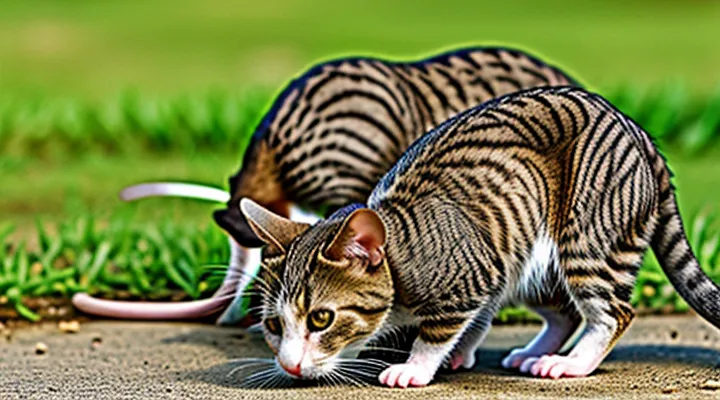
The Feline Hunter's Diet: Understanding Natural Feeding
The Nutritional Needs of Cats
Why Mice are a Natural Food Source
Mice constitute a primary component of the feline diet because they match the nutritional requirements that domestic cats evolved to process. Their muscle tissue supplies high‑quality protein rich in essential amino acids such as taurine, arginine, and lysine, which cats cannot synthesize in sufficient quantities. The small size of mice delivers a balanced proportion of fat, providing readily metabolizable energy and essential fatty acids, including arachidonic acid, critical for skin and coat health. Bone fragments within a whole mouse contribute calcium and phosphorus, supporting skeletal development and maintenance.
The sensory systems of cats are calibrated for hunting small rodents. Vision attuned to low‑light movement, acute hearing for detecting rustling, and whisker sensitivity to air currents enable efficient capture of live prey. This predatory stimulus triggers the release of dopamine and oxytocin, reinforcing feeding behavior and stress reduction. Consequently, offering mice satisfies both physiological and behavioral drives.
Advantages of mice as a natural food source include:
- Complete protein profile with mandatory feline nutrients.
- Concentrated fat supply for energy and coat condition.
- Natural source of vitamins A, D, and B‑complex from organ tissues.
- Mineral content from bone and liver that supports metabolic functions.
- Stimulation of innate hunting instincts, reducing behavioral problems.
Overall, mice align with the dietary architecture of cats, delivering essential nutrients while engaging the species‑specific predatory circuitry. This dual benefit underpins their status as an optimal natural food item for felines.
Comparing Wild vs. Domestic Cat Diets
Cats obtain nutrition from prey in the wild, while domestic cats rely on commercial formulas. Wild felines capture live rodents, ingesting muscle, organ, bone, and hair, which together supply complete amino‑acid profiles, taurine, arachidonic acid, and micronutrients without supplementation. Domestic cats receive balanced nutrients in kibble or canned food, formulated to meet feline dietary requirements; however, the absence of whole‑prey components can affect digestive microbiota diversity.
Key differences:
- Protein source – wild diet consists of whole animal tissue; domestic diet uses isolated protein isolates.
- Taurine content – abundant in raw muscle and heart tissue; commercial foods add synthetic taurine to meet minimal levels.
- Fat composition – wild prey provides omega‑3 fatty acids from membrane phospholipids; processed foods supply omega‑6–rich oils, often requiring omega‑3 enrichment.
- Micronutrients – bone delivers calcium and phosphorus; commercial feeds include mineral premixes.
- Fiber and hair – ingested hair and intestinal lining act as natural fiber; domestic diets add beet pulp or cellulose.
Estimating mouse intake for a cat weighing 4 kg: a typical mouse weighs 15–20 g and supplies roughly 3 kcal. A cat with a maintenance requirement of 200 kcal per day would need about 60–70 g of mouse meat, equating to 3–4 whole mice. This figure reflects energy alone; additional mice provide essential nutrients absent from a calorie‑only calculation.
Benefits of occasional whole‑prey feeding for house cats include:
- Improved dental health from chewing bone.
- Enhanced gut flora diversity.
- Natural stimulation of predatory behavior.
- Direct supply of bioavailable nutrients.
Domestic feeding regimens can emulate these advantages by incorporating raw or freeze‑dried whole‑prey supplements, ensuring that the cat’s diet mirrors the nutritional completeness of its wild counterpart while maintaining the safety and convenience of processed food.
The «How Many Mice» Question: Practical Feeding Guidelines
Factors Influencing a Cat's Daily Food Intake
Age and Activity Level
The quantity of mice a cat should receive each day depends primarily on the animal’s age and its activity level. Younger cats, especially kittens under six months, possess higher metabolic rates and require more frequent, smaller portions. Providing 1–2 small mice per day supplies sufficient protein and calories for rapid growth without overloading the immature digestive system.
Adult cats (1–7 years) exhibit a broader range of needs. A sedentary indoor cat typically thrives on 1 medium‑sized mouse every 24 hours, delivering roughly 250–300 kcal. Conversely, a highly active outdoor or hunting cat may require 1½–2 mice per day to sustain energy expenditure, maintain muscle mass, and support recovery after exertion.
Senior cats (8 years and older) experience a gradual decline in metabolic demand and often display reduced activity. Reducing intake to ½–1 mouse daily prevents weight gain while preserving essential nutrients. Monitoring body condition and adjusting portions accordingly ensures optimal health.
Key considerations for adjusting mouse portions by age and activity:
- Metabolic rate: higher in kittens, moderate in adults, lower in seniors.
- Physical exertion: indoor cats → lower caloric need; outdoor or working cats → higher need.
- Body condition: maintain ideal weight; increase or decrease portions based on regular assessments.
- Health status: arthritis or dental issues in older cats may necessitate softer or smaller prey.
Aligning mouse feeding schedules with these factors supports balanced nutrition, promotes lean muscle development in younger cats, sustains energy for active adults, and helps seniors retain vitality without excess weight. Regular veterinary check‑ups confirm that the chosen portion size meets the cat’s evolving physiological requirements.
Cat's Size and Breed
Cat size and breed determine the amount of mouse protein a feline can safely consume each day. Larger bodies require more calories, while metabolic rates vary among breeds, influencing how many mice provide adequate nutrition without excess.
- Small cats (under 4 kg): 1–2 average-sized mice per day.
- Medium cats (4–6 kg): 2–3 average-sized mice per day.
- Large cats (over 6 kg): 3–4 average-sized mice per day.
Breed-specific factors adjust these baselines. High‑energy breeds such as Bengal, Abyssinian, and Savannah exhibit faster metabolisms; add 0.5‑1 mouse to the recommended range. Low‑energy breeds like Ragdoll, British Shorthair, and Persian maintain slower digestion; subtract 0.5 mouse from the baseline. Hairless breeds (Sphynx) have higher heat loss, often requiring the upper end of the range.
Activity level, health condition, and age modify intake further. Working or outdoor cats may need the maximum allowance, whereas sedentary indoor cats or those with weight‑management programs should stay at the lower end. Veterinary guidance remains essential for precise feeding plans.
Health Status and Special Dietary Needs
A cat’s health status determines the quantity and quality of mouse protein it requires each day. Adult cats with normal weight and activity levels typically need 20–30 kcal per pound of body weight, which translates to roughly one to two small mice (approximately 30–50 g each) to meet daily caloric demands. Overfeeding can lead to obesity, while underfeeding may cause muscle loss and weakened immunity.
Special dietary needs arise in several situations:
- Kittens: Rapid growth demands higher protein and fat; three to four mouse portions per day, divided into multiple meals, support skeletal and neurological development.
- Senior cats: Reduced metabolism and potential kidney impairment require lower phosphorus and sodium; one small mouse supplemented with reduced‑sodium broth can satisfy protein needs without overloading renal function.
- Cats with gastrointestinal disease: Easily digestible protein is essential; finely minced mouse meat mixed with a bland carbohydrate (e.g., cooked pumpkin) improves absorption and reduces irritation.
- Allergic or food‑sensitive cats: Novel protein sources such as wild‑caught mice may reduce hypersensitivity reactions, but gradual introduction over a week prevents adverse responses.
- Obese or weight‑managed cats: Portion control is critical; a single mouse portion should be paired with increased fiber (e.g., psyllium husk) to promote satiety while limiting calories.
Monitoring body condition score, hydration, and stool quality provides feedback on whether the mouse intake aligns with health goals. Adjustments should be made promptly when weight fluctuations or clinical signs appear. Regular veterinary evaluation ensures that any underlying metabolic or organ issues are addressed while maintaining an appropriate mouse‑based diet.
Calculating Mouse Equivalents for Commercial Cat Food
Understanding Caloric Requirements
Cats require a specific amount of energy each day to maintain body weight, support activity, and ensure physiological functions. Energy needs are expressed in kilocalories (kcal) and depend on weight, age, reproductive status, and activity level.
An average adult indoor cat weighing 4 kg typically needs about 200 kcal per day. A 5 kg active outdoor cat may require 250–300 kcal, while a growing kitten of 2 kg can need up to 150 kcal. These figures provide a baseline for estimating the number of whole‑prey items required.
A laboratory mouse of 20 g contains roughly 15 kcal, whereas a larger field mouse of 30 g provides about 22 kcal. The caloric content scales with body mass; a 40 g mouse supplies approximately 30 kcal. Variation in fat and protein composition can shift values by ±10 %.
Using these averages:
- 4 kg indoor cat (≈200 kcal) ÷ 15 kcal per 20 g mouse ≈ 13 mice per day.
- 5 kg active cat (≈275 kcal) ÷ 22 kcal per 30 g mouse ≈ 12–13 mice per day.
- 2 kg kitten (≈150 kcal) ÷ 15 kcal per 20 g mouse ≈ 10 mice per day.
Providing the calculated number of mice meets the cat’s energy demand while delivering protein, essential fatty acids, vitamins, and minerals in a biologically appropriate matrix. Whole‑prey feeding also supplies natural micronutrients and promotes dental health through the mechanical action of chewing.
Protein and Fat Content Considerations
Cats require a diet that supplies sufficient protein and fat to maintain muscle mass, support organ function, and provide energy. A typical adult mouse contains approximately 20 g of protein and 5 g of fat per 100 g of edible tissue. Assuming an average mouse weighs 30 g, each provides about 6 g of protein and 1.5 g of fat.
A cat weighing 4 kg needs roughly 250 g of protein and 70 g of fat each day, based on the standard recommendation of 5 % body weight in protein and 1.5 % in fat. Translating these requirements into mouse equivalents yields the following estimate:
Because protein and fat are not perfectly aligned in a single mouse, the higher of the two counts (≈ 47 mice) ensures both nutrient targets are met. In practice, most cats are fed a mixed diet; the mouse portion can be adjusted to complement commercial food, reducing the total number of mice needed.
When planning mouse intake, consider variability in mouse size, the cat’s activity level, and health status. Larger or more active cats may require additional protein, while overweight animals benefit from a lower fat contribution. Monitoring body condition and adjusting the mouse quantity accordingly maintains nutritional balance without excess caloric load.
The Benefits of a Prey-Based Diet
Dental Health and Jaw Strength
Feeding cats whole mice provides a natural chewing challenge that promotes tooth wear and gum stimulation. The resistance offered by a mouse’s skeletal structure forces the cat’s incisors and premolars to engage fully, reducing plaque buildup and preventing over‑growth of the dental arch. Regular consumption of appropriately sized prey supports the maintenance of a healthy bite surface, as the mechanical action removes debris that would otherwise accumulate on smoother, processed diets.
Jaw musculature benefits from the effort required to capture, dismember, and swallow live or freshly killed rodents. The repetitive motion of opening, gripping, and tearing activates the masseter, temporalis, and pterygoid muscles, preserving strength and preventing atrophy. This functional load also enhances proprioceptive feedback, allowing the cat to adjust bite force precisely, which is essential for efficient prey handling and overall oral health.
Key effects of mouse feeding on dental and jaw condition:
- Enhanced enamel abrasion reduces calculus formation.
- Stimulation of gingival tissue promotes blood circulation.
- Strengthened jaw muscles maintain bite force capacity.
- Improved occlusion alignment through regular, natural chewing patterns.
Mental Stimulation and Enrichment
Providing a cat with mice does more than satisfy nutritional needs; it activates innate hunting behavior and offers continuous mental challenges. The act of stalking, pouncing, and manipulating a moving prey item requires sensory integration, decision‑making, and motor coordination, which keeps the brain engaged.
Regular exposure to live or frozen‑thawed mice prevents monotony and reduces the likelihood of repetitive behaviors such as excessive grooming or furniture scratching. By confronting a variable target, the cat practices problem‑solving skills and maintains alertness comparable to outdoor hunting scenarios.
- Enhanced focus and attention span
- Improved spatial awareness and reflexes
- Decreased stress indicators in a domestic environment
- Strengthened bond between owner and cat through interactive feeding sessions
For enrichment purposes, offering one to two small mice per day, divided into several brief sessions, supplies sufficient mental stimulation without overwhelming the digestive system. Adjust the frequency based on the cat’s age, activity level, and overall health to ensure a balanced combination of cognitive engagement and proper nutrition.
Weight Management and Lean Muscle Mass
Mice provide high‑quality protein and essential amino acids that support muscle synthesis while delivering relatively low calories. When a cat’s diet relies on whole mice, the number of prey offered each day directly influences body composition.
For a typical adult cat weighing 4–5 kg, a daily intake of 2–3 medium‑sized mice (approximately 30–45 g each) supplies enough protein to maintain lean muscle without excess energy that could promote fat accumulation. Smaller cats (3 kg or less) require 1–2 mice, while larger or more active individuals (6 kg or more) benefit from 3–4 mice to preserve muscle mass during higher activity levels.
Key considerations for weight management with mouse feeding:
- Protein density: Each mouse delivers 6–8 g of digestible protein, sufficient for daily muscle repair.
- Caloric load: A mouse contains roughly 20–30 kcal; adjusting count controls total energy intake.
- Satiety: Whole prey encourages natural chewing and slower eating, reducing overeating tendencies.
- Nutrient balance: Mice supply taurine, arginine, and B‑vitamins critical for muscular health; supplement only if other diet components lack these nutrients.
Monitoring body condition scores weekly helps fine‑tune mouse quantity. If a cat shows signs of muscle loss, increase the count by one mouse and reassess after two weeks. Conversely, gradual weight gain indicates a need to reduce the daily number or incorporate low‑calorie vegetables as filler.
By aligning mouse consumption with the cat’s target weight and activity level, owners can achieve effective weight control while fostering robust lean muscle development.
Supplementing and Balancing the Diet
When Mice Aren't Available: High-Quality Alternatives
Raw Feeding Options and Safety Precautions
Raw feeding for felines can involve whole rodents, dissected portions, or alternative prey such as chicks and quail. Whole frozen mice provide a complete nutritional profile, mirroring the natural diet of wild cats. Dissected mouse meat, skin, and organs allow precise control over macronutrient ratios, useful for cats with specific health needs. Supplementary options—frozen rat pups, field‑caught mice, or commercially prepared raw mouse kits—expand variety but require rigorous sourcing standards.
Safety measures
- Obtain rodents from reputable breeders who test for Salmonella, E. coli, and parasites.
- Freeze all raw prey at –20 °C for at least 72 hours before thawing to reduce microbial load.
- Thaw in a refrigerator, never at room temperature, and use within 24 hours.
- Separate preparation surfaces and utensils from those used for human food; sanitize with a bleach solution after each use.
- Inspect each mouse for visible injuries, discoloration, or excessive odor; discard any suspect specimens.
- Consult a veterinarian before introducing raw prey, especially for kittens, pregnant cats, or animals with compromised immunity.
- Maintain a balanced overall diet; raw rodents should complement, not replace, essential vitamins and minerals supplied by commercial cat food or supplements.
Adhering to these protocols ensures that raw mouse feeding delivers nutritional benefits while minimizing health risks.
Commercial Foods Mimicking Prey Composition
Commercial cat foods that replicate the nutritional profile of natural prey provide a practical alternative to live or frozen rodents, allowing owners to meet a cat’s daily protein requirements without handling live animals. These products are formulated to contain muscle, organ, and bone analogues in proportions that mirror the average mouse composition a cat would consume in the wild.
Key compositional elements include:
- Muscle‑derived protein from poultry, fish, or rabbit, supplying essential amino acids such as taurine and arginine.
- Organ‑derived concentrates (liver, heart, kidney) delivering vitamins A, B‑complex, and trace minerals.
- Bone meal or calcium phosphate replicating skeletal content, ensuring appropriate calcium‑phosphorus ratios for bone health.
- Fat sources (animal fats, fish oil) providing omega‑3 and omega‑6 fatty acids that support coat condition and inflammatory response.
- Fiber and prebiotic blends imitating the indigestible components of prey fur and exoskeleton, aiding gastrointestinal transit.
When these ingredients are balanced to reflect the average mouse’s macronutrient distribution—approximately 70 % protein, 15 % fat, and 5 % ash—the resulting diet supports the same physiological outcomes as a rodent‑based regimen. Cats fed such diets exhibit stable body weight, efficient nutrient absorption, and maintenance of hunting‑related behaviors through scent and texture cues embedded in the food matrix.
Veterinary nutritionists recommend selecting products that disclose specific organ and bone percentages, as this transparency confirms alignment with prey‑based standards. Consistent feeding of prey‑mimicking commercial foods eliminates the variability inherent in live‑prey supply while preserving the metabolic benefits associated with a natural feline diet.
The Importance of Variety in a Cat's Diet
A cat’s nutritional needs cannot be satisfied by a single protein source. Different prey species supply distinct amino acid profiles, micronutrients, and fatty acid ratios. Relying exclusively on one type of mouse limits intake of essential taurine, vitamin A precursors, and omega‑3 fatty acids that are abundant in other small mammals such as voles, shrews, or rabbit.
Variety also reduces the risk of nutrient deficiencies that arise from incomplete diets. For example:
- Taurine: high in rabbit muscle, moderate in mouse, low in some birds. Adequate levels support retinal health and cardiac function.
- Vitamin A: liver of diverse prey provides retinol, preventing night‑vision impairment.
- Omega‑3 fatty acids: fish‑based prey contribute EPA and DHA, essential for anti‑inflammatory processes.
- Minerals: iron and zinc concentrations differ between rodents and avian species, influencing blood health and immune response.
Rotating prey types mimics a cat’s natural hunting pattern, encouraging proper digestive enzyme activity and gut microbiota diversity. Studies on feral felines show lower incidences of gastrointestinal disorders when diets include multiple protein sources.
When planning a mouse‑based feeding program, incorporate occasional alternatives such as:
- Whole‑prey birds (e.g., quail) for higher polyunsaturated fat content.
- Small lagomorphs (e.g., baby rabbits) for enhanced vitamin A supply.
- Insects (e.g., crickets) to introduce chitin, a prebiotic fiber that supports intestinal health.
A balanced approach ensures that each meal contributes a broader spectrum of nutrients, promotes optimal physiological function, and aligns with the cat’s evolutionary feeding behavior.
Hydration: Water as a Crucial Element
Adequate water intake directly influences a cat’s ability to process prey such as mice. Fresh, clean water supports digestive efficiency, allowing nutrients from each mouse to be absorbed more completely. Insufficient hydration slows gastrointestinal transit, increasing the risk of constipation and reducing the energy derived from protein.
Key functions of water for a cat consuming mice:
- Regulates body temperature through panting and skin evaporation.
- Facilitates kidney filtration, preventing crystal formation and urinary tract issues.
- Maintains blood volume, ensuring oxygen delivery to muscles during hunting activity.
- Assists in the transport of amino acids and other metabolites from the digestive tract to tissues.
A typical adult cat requires approximately 50 ml of water per kilogram of body weight daily. This total includes moisture from prey; a mouse provides roughly 70 ml of water, reducing the need for additional drinking. However, reliance on prey alone is unreliable because mouse size and water content vary. Providing constant access to fresh water guarantees that the cat meets its hydration quota regardless of prey fluctuations.
Practical guidelines:
- Place multiple water dishes in quiet, low‑traffic areas to encourage regular drinking.
- Refresh water at least twice daily to maintain palatability.
- Consider a running water source, such as a pet fountain, to stimulate intake.
- Monitor urine output and consistency; dark, concentrated urine indicates dehydration.
Ensuring consistent hydration optimizes the nutritional benefit of each mouse, promotes overall health, and sustains the cat’s natural hunting performance.