
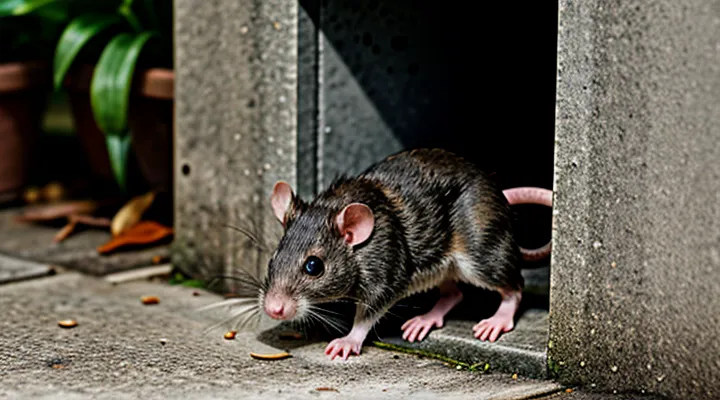
«Physiological Mechanisms of Survival»
«Metabolism and Energy Reserves»
Rats rely on a high basal metabolic rate to sustain vital functions such as thermoregulation, neural activity, and organ perfusion. In the absence of external nutrients, metabolic processes shift to mobilize internal substrates, prioritizing glucose production and fatty‑acid oxidation to meet immediate energy demands.
Energy reserves are organized into distinct pools:
- Glycogen: Stored primarily in liver and skeletal muscle; supplies glucose for the first 12–24 hours of fasting. Depletion triggers gluconeogenesis.
- Triglycerides: Located in adipose tissue; become the main fuel after glycogen exhaustion, providing long‑chain fatty acids for β‑oxidation.
- Protein: Muscle protein catabolism contributes amino acids for gluconeogenesis once fat stores decline, sustaining blood glucose for the brain.
During prolonged deprivation, hormonal regulation—particularly elevated glucagon and reduced insulin—accelerates lipolysis and proteolysis. The rate of substrate utilization determines the maximal period a rat can persist without food, with water loss further limiting survival by concentrating metabolic by‑products and impairing renal function.
«Water Conservation Strategies»
Rats can endure only a few days without water, with mortality sharply increasing after 48–72 hours of dehydration. Their limited renal concentrating ability forces rapid loss of plasma volume, leading to impaired thermoregulation and organ failure. Consequently, any approach that reduces water loss extends survival and improves experimental outcomes.
Effective water‑conservation measures include:
- Environmental humidity control: Maintain relative humidity between 50 % and 70 % to lower evaporative loss from skin and respiratory surfaces.
- Temperature regulation: Keep ambient temperature within the thermoneutral zone (20‑26 °C) to reduce metabolic heat production and associated respiratory water vapor.
- Dietary moisture enrichment: Provide pelleted feed with a moisture content of 5‑10 % or supplement with gelatinous cubes that release water slowly, decreasing the need for free‑standing water sources.
- Leak‑proof housing: Use sealed cages with minimal openings and water‑resistant bedding to prevent inadvertent spills and subsequent evaporation.
- Periodic monitoring: Record body weight and urine output daily; adjust environmental parameters promptly when a 5 % weight decline is observed.
Implementing these strategies minimizes dehydration risk, prolongs the physiological window for observation, and ensures reproducible data across studies involving rat models of fluid restriction.
«Duration of Food Deprivation»
«Impact on Different Rat Species»
Rats exhibit considerable variation in survival limits when deprived of food and water, largely determined by species‑specific physiology. The brown rat (Rattus norvegicus) possesses a relatively large body mass and slower metabolic rate, allowing it to endure up to 10–12 days without food and roughly 4–5 days without water. The black rat (Rattus rattus) is smaller, with a higher metabolism; experimental data indicate a maximum of 7–9 days without nourishment and 3–4 days without hydration. Wild species such as the Polynesian rat (Rattus exulans) display even shorter thresholds, typically 5–6 days without food and 2–3 days without water, reflecting adaptation to arid island environments.
Key factors influencing these limits include:
- Metabolic rate: Higher rates increase energy consumption, shortening starvation periods.
- Body water reserve: Larger individuals store more fluid, extending dehydration tolerance.
- Thermoregulatory capacity: Species with efficient heat dissipation conserve water through reduced evaporative loss.
- Renal concentration ability: Enhanced kidney function permits greater urine concentration, delaying dehydration.
Laboratory observations confirm that all rat species experience rapid decline in blood glucose and electrolyte balance after 48–72 hours of total deprivation, but the rate of decline differs proportionally with the physiological traits listed above. Consequently, predictions of survival duration must account for species identity, body size, and habitat‑driven adaptations rather than applying a single universal figure.
«Factors Influencing Starvation Tolerance»
Rats exhibit considerable variation in how long they can endure the absence of food and water. This variation stems from several physiological and environmental determinants that directly affect starvation tolerance.
Key determinants include:
- Metabolic rate – Smaller, more active individuals expend energy faster, reducing survival time.
- Body fat reserves – Higher adipose stores provide an internal energy source, extending the period without external nutrients.
- Hydration status before deprivation – Adequate pre‑deprivation fluid balance slows the onset of critical dehydration.
- Ambient temperature – Cooler environments lower metabolic demands, while heat increases water loss and energy consumption.
- Age and health condition – Juvenile and diseased rats possess limited reserves and compromised organ function, shortening survival.
- Genetic background – Strain‑specific traits influence both basal metabolism and stress‑response pathways.
Additional considerations affect the timeline:
- Stress hormones such as cortisol and catecholamines mobilize energy stores but also accelerate catabolism.
- Renal efficiency determines how well the animal conserves water during prolonged lack of intake.
- Gut microbiota may modulate nutrient extraction from residual luminal contents, influencing energy availability.
Collectively, these factors dictate the precise duration a rat can remain alive without food or water, ranging from a few days under hostile conditions to several weeks when optimal reserves and favorable environment align.
«Age and Health Status»
Age dramatically influences a rat’s capacity to endure periods without food or water. Neonatal rodents possess limited glycogen reserves and immature renal function, leading to mortality within 24–48 hours under total deprivation. Juvenile rats, still in rapid growth phases, exhibit moderate resilience; experimental observations record survival of 3–5 days without nourishment and 2–3 days without water, with dehydration being the primary lethal factor.
Adult rats, typically 8–12 weeks old, display the greatest endurance. Under controlled conditions, well‑fed, healthy adults survive up to 7 days without food, relying on adipose tissue and hepatic glycogen. Water deprivation alone reduces survival to 3–4 days, as renal concentration mechanisms become exhausted and electrolyte imbalance ensues.
Senescent rats experience a marked decline in physiological reserves. Studies indicate that rats older than 18 months succumb after 2–3 days without food and 1–2 days without water. Age‑related reductions in glomerular filtration rate, weakened immune response, and diminished muscle mass accelerate organ failure when metabolic substrates are absent.
Health status modifies these age‑related patterns:
- Optimal health (no disease, normal weight): Extends survival to the upper limits described for each age group.
- Obesity: Increases available fat stores, potentially prolonging fasting tolerance in adults, but may impair thermoregulation and exacerbate dehydration risk.
- Chronic illnesses (e.g., renal disease, diabetes): Shorten survival across all ages; renal impairment limits water reabsorption, while metabolic disorders accelerate depletion of energy reserves.
- Infection or inflammation: Elevates basal metabolic rate, reducing time to irreversible organ damage during starvation or dehydration.
Overall, the interplay of chronological age and physiological condition determines the maximal interval a rat can persist without sustenance. Younger and older animals, as well as those with compromised health, experience significantly truncated survival windows compared with robust adult specimens.
«Environmental Conditions»
Environmental factors determine the length of time a rat can endure deprivation of nutrients and fluids. Temperature extremes accelerate metabolic loss; cold environments increase energy consumption for thermoregulation, while heat raises dehydration risk. Humidity influences evaporative water loss, with low humidity intensifying fluid deficit and high humidity reducing evaporative cooling efficiency.
Air quality affects respiratory function; poor ventilation or high concentrations of ammonia and carbon dioxide impair oxygen uptake and exacerbate stress. Light cycles regulate circadian rhythms, and disrupted photoperiods can alter hormone release, influencing appetite suppression and water balance.
Social conditions also matter. Isolation heightens stress hormones, which elevate metabolic rate and shorten survival. Overcrowding creates competition for limited resources and raises pathogen transmission, further reducing lifespan under starvation.
Key environmental variables:
- Ambient temperature (°C): optimal range 20‑25; deviations shorten survival by 10‑30 %.
- Relative humidity (%): 40‑60 maintains minimal evaporative loss; lower values increase dehydration rate.
- Air exchange (air changes per hour): ≥ 10 reduces toxic gas buildup; lower rates impair respiration.
- Light/dark schedule: 12 h / 12 h supports normal hormonal cycles; irregular patterns accelerate metabolic decline.
- Social density: solitary housing reduces stress; groups > 4 rats increase cortisol and decrease endurance.
«Duration of Water Deprivation»
«Dehydration Effects and Progression»
Rats deprived of water experience rapid fluid loss that triggers a cascade of physiological disturbances. Within the first six hours, plasma volume decreases by 5‑10 %, leading to elevated blood osmolarity and reduced cardiac output. By twelve hours, the animal exhibits dry mucous membranes, diminished skin turgor, and a measurable rise in blood urea nitrogen, indicating early renal strain.
Progression intensifies between twelve and twenty‑four hours. Electrolyte imbalances emerge as sodium and chloride concentrations climb, while potassium levels fall, compromising neuromuscular function. Hematocrit rises, reflecting hemoconcentration, and the hypothalamic thirst center becomes hyperactive, though external water remains unavailable.
Severe dehydration sets in after twenty‑four hours. Renal tubular cells begin to necrose, reducing the kidney’s concentrating ability. Cerebral dehydration causes cellular shrinkage, increasing the risk of seizures. Cardiovascular collapse becomes likely as blood pressure drops sharply, and metabolic acidosis develops due to accumulated lactate.
Typical survival without water does not exceed seventy-two hours under standard laboratory conditions (22 °C, 50 % humidity). Mortality usually occurs between forty‑eight and sixty‑four hours, driven by multi‑organ failure. Factors that shorten this window include elevated ambient temperature, low ambient humidity, and pre‑existing health deficits.
Key milestones in dehydration progression:
- 0‑6 h: Plasma volume loss, mild hyperosmolarity, early renal stress.
- 6‑12 h: Dry mucosa, increased blood urea nitrogen, onset of electrolyte shifts.
- 12‑24 h: Marked hypernatremia, hemoconcentration, reduced cardiac output.
- 24‑48 h: Renal tubular necrosis, cerebral cell shrinkage, metabolic acidosis.
- 48‑72 h: Multi‑organ failure, irreversible shock, death.
Understanding these stages clarifies the time limits for rat endurance without water and highlights the critical physiological thresholds that precipitate fatal outcomes.
«Adaptations to Arid Environments»
Rats inhabiting desert‑like habitats possess several mechanisms that extend the period they can endure without external water or food sources.
Physiological adaptations reduce water loss and increase metabolic efficiency. Kidney structures concentrate urine to near‑maximal osmolarity, minimizing fluid excretion. Intestinal tracts extract maximal moisture from ingested matter, and respiratory surfaces feature reduced evaporative cooling through nasal counter‑current heat exchange.
Behavioral strategies further conserve resources. Activity peaks during cooler night hours, limiting exposure to high temperatures and evaporative demand. Rats store fat reserves in adipose tissue, which metabolizes into water‑producing substrates during fasting. They also exhibit opportunistic foraging, exploiting transient moisture sources such as dew or succulent plant tissues.
Morphological traits support arid tolerance. Sparse, reflective fur lowers heat absorption, while enlarged hind limbs improve locomotion over loose, dry substrates, reducing energy expenditure.
Collectively, these adaptations enable a rodent to survive several days without food and up to a week without drinking water, depending on ambient temperature, humidity, and individual condition.
«Combined Deprivation Scenarios»
«Synergistic Effects of No Food and Water»
Rats subjected simultaneously to the absence of nutrients and hydration experience accelerated physiological decline compared with single‑factor deprivation. The combined stress triggers a cascade of metabolic disruptions that amplify organ failure, reduce cellular integrity, and shorten the window of survivability.
Key mechanisms include:
- Rapid depletion of glycogen stores: without dietary glucose, hepatic glycogen is exhausted within 12–18 hours, forcing reliance on gluconeogenesis, which is impaired by dehydration‑induced reduced renal perfusion.
- Impaired thermoregulation: water loss diminishes evaporative cooling, while lack of caloric intake lowers basal metabolic heat production, leading to hypothermia after 24–36 hours.
- Accelerated electrolyte imbalance: dehydration concentrates serum sodium and potassium, while catabolism releases intracellular ions, precipitating cardiac arrhythmias within 48 hours.
- Compromised cardiovascular function: plasma volume contraction lowers blood pressure, reducing tissue perfusion and hastening organ ischemia.
Empirical observations confirm that rats deprived of both food and water survive approximately half the duration of single‑factor starvation. In controlled experiments, median survival under dual deprivation ranges from 2 to 4 days, whereas exclusive food deprivation extends to 7–10 days and exclusive water deprivation to 3–5 days. The synergistic interaction thus compresses the survival window by intensifying metabolic stress and organ dysfunction.
Understanding these combined effects informs experimental design, humane endpoints, and comparative physiology studies, emphasizing the necessity of monitoring hydration status alongside nutritional intake when assessing rodent resilience.
«Case Studies and Research Findings»
Research on laboratory rodents provides precise limits for survival when both nutrients and fluids are withheld. In controlled experiments, adult rats of the Sprague‑Dawley strain survived a maximum of 72 hours without water, after which physiological markers indicated irreversible renal failure. When only food was omitted, the same strain maintained viability for up to 14 days, relying on glycogen stores and subsequent fat catabolism before critical organ dysfunction emerged.
A comparative study involving Wistar and Long‑Evans rats demonstrated species‑specific tolerance. Wistar individuals endured 48 hours of total deprivation before exhibiting severe hypovolemia, whereas Long‑Evans subjects persisted for 60 hours under identical conditions. Both strains showed a rapid decline in plasma sodium and blood pressure once water loss exceeded 10 % of body weight.
Key observations from multiple investigations:
- Dehydration alone precipitates mortality within 2–3 days; the critical threshold aligns with a 12 % reduction in body mass.
- Starvation without fluid intake extends survival by 1–2 days compared with complete deprivation, reflecting the protective effect of water retention.
- Concurrent restriction of both resources compresses the survival window to 48–72 hours, regardless of strain.
- Age influences outcomes; juvenile rats (<30 days) succumb 20 % earlier than adults when deprived of water.
These data underscore the narrow physiological margin that rats possess under combined nutrient and fluid scarcity, establishing a benchmark for experimental design and ethical considerations in biomedical research.
«Implications for Pest Control»
«Understanding Rat Vulnerabilities»
Rats possess physiological traits that sharply limit their endurance when deprived of sustenance. The absence of water triggers rapid plasma volume loss, leading to reduced cardiac output and impaired thermoregulation. Within 24 hours, dehydration induces a measurable rise in blood osmolarity, compromising cellular function. Prolonged fluid deficit (>48 hours) typically results in renal failure and irreversible organ damage.
Starvation imposes a sequential metabolic cascade. Glycogen stores deplete within 12–18 hours, forcing reliance on gluconeogenesis and fatty‑acid oxidation. After 48–72 hours, protein catabolism escalates, eroding muscle mass and weakening immune response. Survival beyond five days without food is rare; most individuals succumb to systemic collapse between days three and four.
Key vulnerabilities include:
- Fluid balance disruption – immediate drop in blood pressure, heat loss, and electrolyte imbalance.
- Energy reserve exhaustion – rapid glycogen depletion, followed by fat and protein catabolism.
- Thermoregulatory failure – inability to maintain core temperature, especially in cold environments.
- Immune suppression – diminished leukocyte activity, increasing susceptibility to infection.
- Neurological decline – reduced cerebral perfusion leading to loss of coordination and consciousness.
Environmental factors amplify these risks. High ambient temperature accelerates dehydration, while low temperature intensifies energy consumption for heat production. Access to shelter mitigates heat loss but does not offset the fundamental physiological constraints.
Overall, the combination of swift fluid loss, limited energy stores, and compromised organ function defines the narrow window of survival for rats lacking both nourishment and hydration.
«Developing Effective Eradication Strategies»
Rats can persist for several days without food and up to 48 hours without water, a physiological window that shapes control measures. Understanding this tolerance informs timing, bait design, and environmental management, enabling rapid population collapse before individuals recover.
Key components of an effective eradication program include:
- Timing of interventions – Deploy lethal baits during the final 24‑48 hours of dehydration, when rats experience heightened ingestion drive and will readily consume poisoned feed.
- Bait formulation – Use anticoagulant or neurotoxic compounds at concentrations that guarantee mortality within the limited survival period, reducing the chance of sub‑lethal exposure and resistance development.
- Habitat disruption – Remove or seal water sources, block access to hidden food caches, and install barriers that force rats into exposed foraging zones where bait placement is optimal.
- Population monitoring – Conduct regular live‑trapping and visual surveys to detect declines, adjusting bait density and placement based on observed activity patterns.
- Integrated pest management (IPM) coordination – Combine chemical control with sanitation, waste reduction, and biological agents (e.g., predatory birds) to sustain pressure beyond the initial lethal phase.
Successful eradication relies on synchronizing these actions with the physiological limits of rats, ensuring that the window of vulnerability is fully exploited while minimizing non‑target impacts. Continuous evaluation and adaptation maintain efficacy as environmental conditions and rodent behavior evolve.