
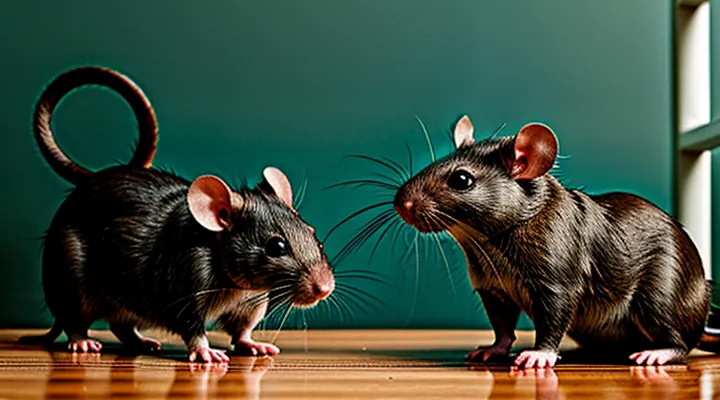
The Cognitive Capabilities of Rats
Memory and Learning
Spatial Memory
Rats demonstrate robust spatial memory, enabling navigation of complex environments and retrieval of location information after delays. Laboratory paradigms such as the Morris water maze, radial arm maze, and Barnes maze quantify this ability by measuring escape latency, error count, and path efficiency.
- In the Morris water maze, rats locate a hidden platform using distal cues; performance improves across trials, indicating consolidation of spatial representations.
- The radial arm maze assesses working and reference memory; correct arm selections decline when hippocampal activity is disrupted.
- The Barnes maze provides a dry alternative, recording time to enter an escape hole; lesions to the entorhinal cortex produce marked deficits.
Neurophysiological studies link spatial memory to place cells in the hippocampus, grid cells in the entorhinal cortex, and head‑direction cells in the thalamus. Electrophysiological recordings reveal firing patterns that map the animal’s position relative to environmental landmarks.
Pharmacological manipulation demonstrates that NMDA‑receptor antagonists impair acquisition of spatial tasks, while cholinergic enhancement can accelerate learning. Genetic models, such as knockouts of the BDNF gene, show reduced maze performance, supporting a molecular basis for spatial cognition.
Operant Conditioning
Operant conditioning provides a systematic framework for evaluating rat cognition through the manipulation of consequences that follow specific actions. In a typical apparatus, a rat learns to press a lever, nose‑poke, or perform a sequence of movements to obtain a reward (usually food or water) or to avoid a mild aversive stimulus. The relationship between the response and its outcome is quantified using reinforcement schedules such as fixed‑ratio, variable‑ratio, fixed‑interval, and variable‑interval, each revealing distinct aspects of learning rate, persistence, and temporal judgment.
Key experimental outcomes derived from operant protocols include:
- Rapid acquisition of novel response patterns, demonstrating the capacity for associative learning after a few dozen trials.
- Adaptation to changing reinforcement contingencies, indicating behavioral flexibility and the ability to update internal models of reward probability.
- Evidence of delayed gratification, where rats choose a larger, later reward over an immediate smaller one, reflecting impulse control.
- Discrimination of multiple cues (light, tone, texture) to select the appropriate response, showing perceptual categorization and rule learning.
- Transfer of learned sequences to new contexts, suggesting abstraction beyond simple stimulus‑response pairing.
Neurophysiological investigations link performance in operant tasks to activity in the basal ganglia, prefrontal cortex, and dopaminergic pathways, regions implicated in decision‑making and executive function. Pharmacological manipulations that alter dopamine transmission produce predictable changes in response rates and reinforcement sensitivity, confirming the neurochemical basis of operant behavior.
Collectively, operant conditioning experiments reveal that rats possess sophisticated learning mechanisms, capable of adjusting behavior based on probabilistic outcomes, exercising self‑control, and forming abstract representations of task structure. These capabilities constitute essential evidence for the broader assessment of rodent intelligence.
Observational Learning
Rats acquire new behaviors by watching conspecifics, a process documented across laboratory paradigms. In food‑preference tests, naïve individuals choose a novel diet after observing a peer consume it, demonstrating rapid transmission of preference without direct experience. Fear conditioning experiments reveal that observing a demonstrator receive a mild shock leads to heightened avoidance responses in observers, indicating that emotional information can be acquired socially. Maze navigation studies show that rats following a trained partner reach the goal faster than solitary learners, confirming that spatial strategies are transferable through observation.
Key experimental features of rat observational learning include:
- Demonstrator‑observer pairing: a trained rat performs the target behavior while an observer watches from an adjacent compartment.
- Controlled sensory cues: visual and auditory signals are isolated to identify the predominant modality driving learning.
- Retention testing: observers are assessed after varying delays to measure durability of the acquired behavior.
Neural investigations associate the phenomenon with activity in the posterior parietal cortex and the anterior cingulate, regions implicated in attention and affective processing. Electrophysiological recordings reveal that observing a conspecific’s action elicits firing patterns resembling those produced during self‑generated performance, suggesting a mirror‑like mechanism.
Observational learning contributes to the evaluation of rat cognition by providing a metric independent of trial‑and‑error learning. Because the observer acquires information without direct reinforcement, performance reflects the ability to interpret and internalize social cues. This capacity aligns with broader assessments of problem‑solving, memory, and flexibility, reinforcing the view that rats possess sophisticated learning strategies comparable to those observed in other mammals.
Problem-Solving Abilities
Maze Navigation
Maze navigation provides a direct metric of rodent cognition, allowing researchers to quantify learning speed, memory retention, and problem‑solving capacity. By requiring animals to locate a goal through a series of choices, mazes isolate spatial reasoning from motor performance.
Common mazes and their primary assessments:
- Radial‑arm maze: evaluates working memory by measuring revisits to previously entered arms.
- T‑maze: tests binary decision making and short‑term memory through alternation tasks.
- Morris water maze: assesses long‑term spatial memory by requiring escape to a hidden platform using distal cues.
- Complex labyrinths: examine route planning and flexibility when obstacles are altered.
During acquisition, rats exhibit rapid error reduction, indicating the formation of associative links between visual, tactile, and olfactory cues and the correct path. Performance stabilizes after a predictable number of trials, with error rates falling below 10 % in well‑trained subjects. When maze configurations are modified, many individuals adopt new routes without extensive retraining, demonstrating behavioral flexibility.
Neurophysiological recordings reveal that hippocampal place cells fire at specific locations within the maze, establishing a cognitive map. Lesions to the hippocampus or disruption of NMDA‑mediated plasticity impair both initial learning and the ability to adjust to changed layouts, confirming the structure’s central role in spatial navigation.
Experimental data across multiple laboratories show that rats can solve mazes requiring up to eight sequential decisions, integrate multiple sensory modalities, and employ shortcuts when presented with novel shortcuts. Their performance rivals that of other mammals in comparable tasks, providing a robust benchmark for comparative intelligence studies.
These findings support the use of maze navigation as a precise, reproducible indicator of rat intelligence, linking behavioral outcomes to underlying neural mechanisms and offering a platform for testing pharmacological or genetic interventions that affect cognition.
Tool Use and Innovation
Rats demonstrate measurable tool‑use capabilities that challenge traditional assumptions about rodent cognition. Laboratory experiments have recorded several distinct behaviors:
- Lever manipulation – rats learn to pull a lever to retrieve food placed beyond a barrier, adjusting grip strength based on obstacle size.
- Water‑spout construction – in a dry‑maze test, individuals stack small sticks to bridge a gap, allowing access to a water source.
- Puzzle‑box innovation – when presented with a multi‑step puzzle requiring sequential actions, rats develop novel shortcuts, such as using a ball to trigger a release mechanism.
These observations reflect flexible problem‑solving rather than simple conditioning. Neurophysiological measurements reveal increased activity in the prefrontal cortex and hippocampus during tool‑related tasks, indicating recruitment of executive functions. Comparative studies show that rat performance on tool‑use assays aligns with that of small primates when task complexity is matched, suggesting convergent evolution of cognitive strategies.
Field research supports laboratory findings. Wild Norway rats have been documented transporting twigs to reinforce burrow entrances, a behavior that reduces predator entry and improves structural stability. Such modifications persist across generations, evidencing cultural transmission of innovative practices.
Collectively, empirical data confirm that rats possess a repertoire of tool‑use and innovation skills that contribute to adaptive success in variable environments.
Decision-Making Under Uncertainty
Rats demonstrate sophisticated decision‑making when faced with ambiguous outcomes. Laboratory paradigms such as probabilistic reversal learning, two‑armed bandit tasks, and the Iowa Gambling Task analog reveal that rodents can integrate past reward histories, estimate future contingencies, and adjust choices accordingly. Behavioral data show rapid shifts in preference after a single loss, indicating sensitivity to volatility and an ability to weigh expected value against risk.
Key experimental observations:
- Probability weighting – Rats assign greater subjective importance to low‑probability, high‑reward options, a pattern comparable to human prospect theory.
- Risk assessment – In uncertain environments, rats exhibit loss‑averse behavior, preferring safe alternatives when potential losses outweigh gains.
- Learning rates – Computational models fit to trial‑by‑trial choices reveal dynamic learning rates that increase after unexpected outcomes, supporting adaptive updating mechanisms.
- Neural correlates – Electrophysiological recordings identify prefrontal cortex neurons encoding prediction errors, while dopaminergic signaling in the nucleus accumbens reflects expected value fluctuations.
These findings converge on a model wherein rats employ Bayesian inference to combine prior knowledge with incoming sensory evidence. The prefrontal‑striatal circuitry integrates probabilistic information, enabling flexible strategy selection under uncertainty. Comparative analysis across species suggests that the computational principles governing uncertain choice are conserved, providing a robust framework for evaluating rodent intelligence.
Social Intelligence in Rodents
Communication and Cooperation
Vocalizations and Ultrasonic Communication
Rats emit a diverse repertoire of vocalizations that span the audible range (approximately 2–20 kHz) and the ultrasonic spectrum (above 20 kHz). Auditory recordings reveal distinct call categories: broadband calls associated with pain or distress, low‑frequency chirps linked to social aggression, and high‑frequency ultrasonic vocalizations (USVs) that accompany mating, pup‑mother interactions, and exploratory behavior.
USVs serve as a primary channel for information exchange in environments where visual cues are limited. Experiments using high‑speed microphones and spectrographic analysis have shown that adult male rats produce a series of frequency‑modulated USVs (50–80 kHz) during courtship, while pups emit a narrow‑band, high‑pitch (≈40 kHz) call when separated from the dam. The temporal structure and frequency modulation of these calls encode the caller’s emotional state, identity, and intent, enabling rapid assessment by conspecifics.
Neurophysiological studies demonstrate that the production and perception of ultrasonic signals involve the periaqueductal gray, the auditory cortex, and specialized cochlear hair cells tuned to high frequencies. Lesions in these regions disrupt USV emission and recognition, confirming their role in the neural circuitry of communication.
Key findings from behavioral assays:
- Playback of distress USVs increases freezing and avoidance in naïve rats, indicating recognition of alarm signals.
- Exposure to female‑generated USVs accelerates learning in operant tasks, suggesting that social acoustic cues enhance cognitive performance.
- Manipulation of USV patterns (e.g., frequency shifts) alters hierarchical positioning within groups, reflecting the influence of acoustic signaling on social organization.
Collectively, vocal and ultrasonic communication provide measurable indicators of rat cognitive capacities, offering reliable metrics for assessing problem‑solving, social learning, and emotional processing in laboratory settings.
Social Learning and Information Transfer
Rats demonstrate robust social learning capabilities that allow individuals to acquire information without direct experience. Experiments using maze navigation, food preferences, and predator avoidance consistently show that naïve rats modify their behavior after observing conspecifics performing the same task.
Key mechanisms identified in laboratory studies include:
- Observational conditioning: Rats watch a demonstrator receive a reward for a specific action and subsequently replicate the action to obtain the reward themselves.
- Stimulus enhancement: Exposure to a demonstrator’s interaction with an object increases the observer’s attention to that object, facilitating faster learning.
- Social facilitation of exploration: Presence of peers lowers neophobia, enabling rats to investigate novel environments more readily.
Information transfer extends beyond immediate observation. Long‑term memory traces formed during social learning persist for weeks, allowing rats to retrieve learned solutions after periods of isolation. Moreover, vocalizations, ultrasonic calls, and scent marks serve as ancillary channels that convey risk assessment and resource location across group members.
Field observations corroborate laboratory findings. Urban rat colonies exhibit rapid spread of foraging techniques, such as exploiting new waste containers, after a single individual discovers the resource. Similarly, wild populations adapt to predator pressure by collectively adjusting escape routes, a process documented through tracking of movement patterns following predator encounters.
Collectively, these data illustrate that rat societies rely on multiple, overlapping pathways for the dissemination of adaptive knowledge, reinforcing the species’ capacity for complex problem solving and cultural transmission.
Empathy and Prosocial Behavior
Research on rat cognition reveals measurable empathy and prosocial actions. Experiments using distress‑induced vocalizations show that observer rats approach and attempt to alleviate the discomfort of conspecifics, indicating affective resonance.
Key observations include:
- Rapid acquisition of helping behavior when a cage mate is trapped, without direct reward for the helper.
- Preference for releasing a distressed peer over accessing a food reward of equal caloric value.
- Increased ultrasonic vocalizations directed toward a trapped companion, suggesting communicative concern.
Neurobiological data link these behaviors to activation of the anterior cingulate cortex and oxytocin pathways, mirroring mechanisms identified in other social mammals. Pharmacological blockade of oxytocin receptors diminishes helping tendencies, confirming a hormonal basis for prosociality.
Collectively, the evidence positions rats as capable of empathy‑driven cooperation, challenging assumptions that complex social cognition is confined to higher vertebrates.
Self-Awareness and Emotion
Mirror Self-Recognition Studies
Mirror self‑recognition (MSR) serves as a benchmark for self‑awareness across animal taxa. In rodent research, the classic mark test—applying a visible, non‑invasive mark and observing whether the animal investigates it in a mirror—produced inconsistent results because rats typically ignore reflective surfaces.
Researchers addressed this limitation by pairing the mirror with salient olfactory cues and tactile feedback. Protocols introduced a scented mark that activated the rat’s whisker system when viewed, prompting exploratory actions directed at the reflected image. Training sessions combined visual exposure with rewarded attempts to touch the mark, gradually shaping a contingency between the reflected self and the stimulus.
Key observations from these modified MSR experiments include:
- Increased frequency of nose‑to‑mirror contacts after training, exceeding baseline exploratory behavior.
- Selective grooming of the marked area when the mirror was present, indicating recognition of the mark as part of the self.
- Persistence of self‑directed actions in the absence of external rewards, suggesting internal motivation.
- Transfer of the behavior to novel mirror contexts, demonstrating generalization rather than mere habituation.
These findings expand the evidence base for rat self‑awareness, aligning rodent performance with that of other mammals that pass conventional MSR tests. They also refine methodological standards for assessing cognitive complexity in species that do not naturally engage with mirrors.
Limitations remain: reliance on extensive training may mask innate capacities, and variations in strain, age, and housing conditions influence outcomes. Future work should isolate the minimal sensory cues required for self‑recognition, compare performance across diverse rodent models, and integrate neurophysiological recordings to map the underlying circuitry.
Emotional Contagion
Rats display emotional contagion, the automatic sharing of affective states among conspecifics, which provides a measurable index of social cognition. Experiments using ultrasonic vocalizations, facial expressions, and body posture reveal that observer rats rapidly mirror the fear or pleasure exhibited by demonstrators, even when visual cues are limited.
Key findings include:
- Exposure to a conspecific receiving a mild foot shock elicits heightened corticosterone levels and freezing behavior in the observer within seconds.
- Positive emotional states, such as reward consumption, induce increased approach behavior and synchronized grooming in nearby rats.
- Pharmacological blockade of oxytocin receptors diminishes both the acquisition and expression of contagion, indicating neurochemical mediation.
These results support the view that rats possess a form of affective empathy, which contributes to assessments of their cognitive complexity and informs experimental designs that rely on social transmission of information.
Stress Response and Resilience
Rats exhibit a rapid activation of the hypothalamic‑pituitary‑adrenal (HPA) axis when confronted with acute stressors. Elevated corticosterone levels trigger neural plasticity changes in the prefrontal cortex and hippocampus, regions essential for learning, memory, and decision‑making. These hormonal shifts modulate performance on maze navigation, novel object recognition, and reversal learning tasks, providing a direct link between stress physiology and cognitive output.
Experimental paradigms distinguish between stress‑induced performance deficits and adaptive resilience. Rats that maintain stable task accuracy after repeated mild stress demonstrate:
- Efficient negative feedback regulation of corticosterone release.
- Up‑regulation of neurotrophic factors such as BDNF in the hippocampus.
- Enhanced synaptic connectivity in the medial prefrontal cortex.
Conversely, individuals showing prolonged cortisol elevation display impaired spatial memory and reduced problem‑solving flexibility, indicating that stress susceptibility directly limits intellectual capacity.
Long‑term resilience emerges from both genetic predisposition and environmental enrichment. Enriched housing conditions elevate baseline BDNF expression and improve HPA axis recovery rates, resulting in superior performance on complex discrimination tasks. Selective breeding for low stress reactivity yields offspring with faster learning curves and greater adaptability to changing reward contingencies.
Overall, the interplay between stress response mechanisms and cognitive functions in rats provides a robust model for evaluating intelligence. Precise measurement of hormonal dynamics, neural plasticity markers, and behavioral outcomes allows researchers to quantify resilience and identify the neurobiological substrates that support or constrain intelligent behavior in this species.
Neuroscience Behind Rat Intelligence
Brain Structure and Function
Hippocampus and Memory Formation
The hippocampus in rats serves as the primary neural substrate for encoding, consolidating, and retrieving episodic and spatial memories. Electrophysiological recordings demonstrate that place cells within this structure fire in patterns that correspond to specific locations, providing a neural map that guides navigation and decision‑making. Synaptic plasticity mechanisms, such as long‑term potentiation, underlie the strengthening of connections during learning episodes, thereby establishing durable memory traces.
Behavioral assays, including the Morris water maze and radial arm maze, reveal that lesions to the dorsal hippocampus impair performance on tasks requiring spatial discrimination, while sparing simple motor functions. Pharmacological manipulations that block NMDA receptors disrupt the formation of new memories without affecting previously acquired information, confirming the hippocampus’s involvement in acquisition phases. Recent optogenetic studies show that selective activation of hippocampal ensembles can induce recall of specific contexts, illustrating a causal link between neuronal ensembles and memory retrieval.
Key observations supporting the hippocampal contribution to rat cognition:
- Place‑cell activity aligns with environmental geometry, enabling flexible route planning.
- Disruption of hippocampal neurogenesis reduces performance on delayed‑matching‑to‑sample tasks, indicating a role in temporal aspects of memory.
- Gene expression analyses identify up‑regulation of immediate‑early genes (e.g., c‑Fos, Arc) during learning, correlating with synaptic remodeling.
Collectively, these findings establish the hippocampus as a central component of the neural circuitry that underpins memory formation in rats, providing a measurable substrate for assessing their problem‑solving abilities and overall intelligence.
Prefrontal Cortex and Executive Functions
The rat prefrontal cortex (PFC) occupies the medial and orbital regions of the frontal lobe and exhibits a laminar organization comparable to that of primates. Neuronal populations in these layers display task‑related firing patterns that reflect planning, inhibition, and flexible adaptation. Electrophysiological recordings show that PFC neurons encode rule contingencies and signal outcome predictions during decision‑making tasks.
Executive functions in rats are assessed through behavioral paradigms that require the integration of memory, attention, and response inhibition. Representative tasks include:
- Delayed alternation in a T‑maze, measuring working memory and rule switching.
- Five‑choice serial reaction time test, evaluating sustained attention and impulse control.
- Set‑shifting paradigms, probing cognitive flexibility when reward contingencies change.
Performance on these tasks correlates with PFC activity. Lesions or chemogenetic silencing of the medial PFC produce deficits in working memory and increase perseverative errors, indicating that this region governs the coordination of goal‑directed behavior. Neurochemical modulation, particularly dopaminergic signaling through D1 receptors, enhances signal‑to‑noise ratios in PFC circuits, improving task accuracy and response speed.
Comparative analysis reveals that rat PFC supports executive processes traditionally attributed to higher mammals, albeit with reduced cortical surface area and fewer long‑range connections. Nevertheless, the presence of hierarchical control, rule representation, and adaptive updating in rats provides a functional substrate for complex problem solving. These findings expand the understanding of rodent cognition and validate the use of rats as a model for investigating the neural mechanisms underlying executive functions.
Neuroplasticity and Adaptation
Rats demonstrate rapid neural reorganization when faced with novel challenges, evidencing a high degree of cerebral adaptability. Studies using maze reversal, operant conditioning, and sensory deprivation reveal that cortical and hippocampal circuits remodel within hours of exposure to new stimuli. Synaptic density increases in the dentate gyrus after spatial learning, while dendritic spine turnover accelerates in the prefrontal cortex during problem‑solving tasks.
Key observations include:
- Experience‑dependent synaptic strengthening: Long‑term potentiation (LTP) magnitudes rise after repeated reward‑based trials, indicating enhanced signal transmission efficiency.
- Structural remodeling: Environmental enrichment triggers expansion of gray matter volume, particularly in regions governing exploration and memory consolidation.
- Gene expression shifts: Immediate‑early genes such as c‑Fos and Arc up‑regulate within 30 minutes of novel object exposure, guiding protein synthesis for synaptic modification.
- Behavioral flexibility: Rats quickly adjust response strategies after contingency changes, reflecting an underlying capacity for rapid network reconfiguration.
These findings collectively illustrate that rat neuroplasticity underpins their ability to adapt behaviorally, supporting the conclusion that their intelligence is rooted in dynamic, experience‑driven brain changes.
Genetic Factors and Intelligence
Heritability of Cognitive Traits
Heritability quantifies the proportion of phenotypic variance in a trait that is attributable to genetic differences among individuals. In rodent cognition research, this metric determines how much of the observed variation in learning, memory, and problem‑solving abilities can be traced to inherited factors rather than environmental influences.
Key experimental approaches for estimating heritability of cognitive traits include:
- Selective breeding lines that differ in performance on maze or object‑recognition tests.
- Cross‑fostering designs that separate genetic and maternal effects.
- Quantitative genetic analyses using mixed‑model frameworks to partition variance components.
- Genome‑wide association studies (GWAS) that link single‑nucleotide polymorphisms to behavioral scores.
Empirical studies report moderate to high heritability for several tasks. Spatial navigation in the Morris water maze yields h² values between 0.30 and 0.55, indicating a substantial genetic contribution. Working‑memory performance on radial‑arm mazes shows h² estimates of 0.25–0.40. Complex problem‑solving assays, such as puzzle‑box escape latency, produce h² around 0.45, suggesting that higher‑order cognition retains a strong inherited component.
Environmental factors modulate genetic effects. Enriched housing, stress exposure, and early‑life nutrition alter the expression of cognitive phenotypes, producing genotype‑by‑environment interactions that can raise or lower heritability estimates. Longitudinal designs reveal that heritability may increase with age as environmental variance declines.
Understanding the genetic architecture of rat cognition informs selective breeding programs, improves the reproducibility of behavioral experiments, and facilitates the translation of rodent findings to human neurogenetic research. Precise heritability estimates enable the identification of candidate genes and pathways underlying learning and memory, advancing the field of comparative intelligence studies.
Gene Expression and Learning
Recent investigations into rodent cognition have revealed direct links between transcriptional dynamics and behavioral adaptation. Experiments using operant conditioning paradigms demonstrate that exposure to novel tasks triggers rapid up‑regulation of immediate‑early genes such as c‑Fos and Arc within hippocampal and prefrontal circuits. These molecular responses precede measurable improvements in maze navigation and discrimination learning.
Key observations include:
- Temporal specificity – Gene expression peaks within 30–90 minutes after training, aligning with synaptic plasticity windows.
- Regional differentiation – Dorsal hippocampus shows heightened Egr1 activation during spatial tasks, whereas ventral prefrontal cortex exhibits increased BDNF transcription during reversal learning.
- Pharmacological modulation – Administration of histone deacetylase inhibitors amplifies transcriptional bursts and accelerates acquisition rates, confirming epigenetic control over learning efficiency.
- Genetic manipulation – Knockout of Nr4a2 impairs associative conditioning without affecting motor performance, isolating a transcription factor essential for memory encoding.
Long‑term studies indicate that repeated training induces stable epigenetic marks, such as DNA methylation changes at promoters of plasticity‑related genes, which correlate with persistent performance gains across weeks. Cross‑species comparisons suggest that these mechanisms are conserved, providing a molecular framework for assessing the cognitive capacities of rats.
Collectively, the evidence positions gene expression as a measurable predictor of learning outcomes, offering a quantitative metric for evaluating rodent intelligence in experimental settings.
Impact of Environmental Enrichment
Environmental enrichment, defined as the provision of complex, stimulating habitats that include objects for manipulation, varied textures, and opportunities for social interaction, consistently alters rat behavior and neural architecture. Studies comparing rats housed in enriched cages with those in standard laboratory conditions reveal superior performance on maze navigation, object recognition, and reversal learning tasks. Enriched rats locate hidden platforms in the Morris water maze faster, discriminate novel objects with higher accuracy, and adjust more quickly to changed reward contingencies.
Key outcomes of enrichment include:
- Increased dendritic branching and spine density in the hippocampus and prefrontal cortex.
- Elevated expression of brain‑derived neurotrophic factor (BDNF) and synaptic proteins such as synaptophysin.
- Enhanced neurogenesis in the dentate gyrus, measured by BrdU labeling.
- Reduced anxiety‑like behaviors in elevated plus‑maze and open‑field tests.
These neurobiological changes correspond with improved problem‑solving abilities and flexible decision‑making. Enrichment also modulates neurotransmitter systems; for example, enriched rats exhibit higher levels of dopamine turnover in the nucleus accumbens, supporting reward‑based learning. Long‑term enrichment maintains cognitive advantages even after removal from enriched environments, indicating durable plasticity.
Implications for intelligence research are twofold. First, environmental complexity serves as a potent experimental variable that can amplify or mask inherent cognitive capacities, demanding careful control in comparative studies. Second, the observed plasticity suggests that rat intelligence is not fixed but can be shaped by external conditions, providing a model for investigating how experience-dependent mechanisms influence problem‑solving and adaptive behavior.
Ethical Considerations in Research
Animal Welfare and Research Protocols
Research involving rat cognition requires strict adherence to animal welfare standards that protect subjects while ensuring scientific validity. Institutional oversight committees evaluate each protocol before approval, confirming that procedures align with legal regulations and ethical guidelines. Documentation includes justification of species selection, description of experimental manipulations, and evidence that alternatives were considered.
Key components of responsible protocols include:
- Housing conditions: temperature, humidity, lighting cycles, and enrichment items are calibrated to reduce stress and promote natural behaviors.
- Handling practices: habituation periods and gentle restraint techniques minimize anxiety during testing.
- Pain management: analgesics and anesthetics are administered according to veterinary recommendations, with monitoring of physiological indicators.
- Endpoint criteria: predefined humane endpoints trigger immediate intervention or euthanasia to prevent undue suffering.
Compliance with the 3Rs—replacement, reduction, refinement—guides protocol design. Replacement is pursued by integrating in‑silico models or using less sentient species when feasible. Reduction is achieved through power analyses that determine the minimum number of subjects needed for statistical significance. Refinement focuses on optimizing task apparatus, shortening exposure times, and providing environmental enrichment that supports cognitive performance.
Effective welfare practices correlate with data reliability. Stress hormones and behavioral distress can confound learning metrics, leading to misinterpretation of cognitive capacity. By controlling these variables, researchers obtain clearer insights into rat problem‑solving abilities, memory retention, and decision‑making processes, thereby advancing the field of rodent intelligence research without compromising ethical standards.
The Use of Rats as Model Organisms
Rats serve as primary model organisms for investigations of mammalian cognition because their neurobiology, genetics, and behavior are well characterized and readily manipulable. Their relatively short life cycle allows longitudinal studies of learning, memory, and problem‑solving across developmental stages. Laboratory strains exhibit consistent performance in maze navigation, operant conditioning, and social interaction tasks, providing reproducible data sets for comparative analysis.
Key attributes that make rats valuable in cognitive research include:
- Compact brain architecture with homologous regions to humans, such as the hippocampus and prefrontal cortex.
- High reproductive rate, enabling large sample sizes and statistical power.
- Established genetic tools, including transgenic lines and viral vectors for targeted neuronal manipulation.
- Compatibility with invasive recording techniques (electrophysiology, calcium imaging) and non‑invasive imaging (MRI, PET).
Experimental protocols exploit these features to dissect mechanisms underlying spatial learning, decision making, and flexible behavior. For example, the Morris water maze quantifies spatial memory retention, while the five‑choice serial reaction time task assesses attentional control. Results obtained from rat models often translate to insights about human cognitive disorders, informing therapeutic development.
Limitations must be acknowledged. Species‑specific sensory preferences and ecological differences can affect task validity, and extrapolation to human cognition requires careful interpretation. Nevertheless, the convergence of genetic accessibility, neuroanatomical relevance, and behavioral richness secures rats as indispensable subjects for advancing the scientific understanding of intelligence in mammals.