
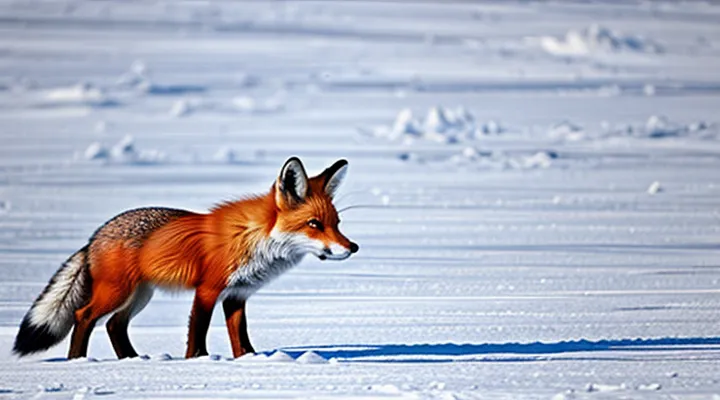
The Winter Landscape: A Fox's Hunting Ground
The Harsh Reality of Winter
Winter imposes severe constraints on the hunting efficiency of red foxes (Vulpes vulpes). Sub‑zero temperatures increase metabolic demand, forcing the animal to balance energy intake against the cost of maintaining body heat. Snow cover obscures ground‑dwelling rodents, reducing visual cues and limiting the fox’s ability to locate prey by sight alone. Consequently, the predator relies more heavily on auditory and olfactory detection, which are themselves impaired by frozen ground and diminished scent diffusion.
Key environmental factors that shape the hunting landscape in this season include:
- Snow depth of 5–15 cm, which dampens sound transmission and masks the movements of mice.
- Ground temperature below –5 °C, slowing the activity of small mammals and concentrating them in insulated microhabitats such as burrow entrances.
- Reduced daylight hours, limiting the window for visual foraging and extending the period of nocturnal activity when temperatures are lowest.
- Scarce vegetation cover, eliminating natural ambush points and forcing the fox to adopt a more active pursuit strategy.
Adaptations observed in foxes under these conditions are physiological and behavioral. Fur density increases insulation, while a higher basal metabolic rate supports rapid heat production. The animal shortens its hunting bouts, opting for brief, high‑intensity chases that minimize exposure to the cold. It also expands its diet to include alternative prey—such as lemmings, voles, and carrion—when mouse populations dip below sustainable levels.
Overall, the winter environment demands a shift from reliance on stealth and visual tracking to a strategy centered on acute scent detection, rapid bursts of movement, and flexible dietary choices. These adjustments illustrate the stark reality of the season: survival hinges on the predator’s capacity to overcome the physical barriers imposed by cold, snow, and limited prey availability.
Prey Scarcity and Survival Instincts
During winter, the availability of small rodents declines sharply as colder temperatures and deep snow limit their activity. This reduction forces foxes to adjust their hunting tactics and rely on innate survival mechanisms.
The scarcity of prey triggers several physiological and behavioral responses. Metabolic rates drop, allowing the animal to conserve energy while it searches for food. Body fat reserves accumulated during autumn provide a buffer that extends the interval between successful captures.
Foxes enhance their sensory detection to compensate for the limited visibility of concealed prey. Acute hearing discerns the faint rustle of mice beneath the snow, while a heightened sense of smell tracks scent trails left in the compacted ground. These capabilities enable the predator to locate hidden targets without visual cues.
When an encounter occurs, foxes employ specific strategies that maximize success under harsh conditions:
- Low‑profile approach: The animal moves close to the ground, reducing its silhouette against the snowy backdrop and minimizing disturbance of the substrate.
- Rapid, short bursts: Short sprints conserve energy and exploit the momentary vulnerability of a mouse forced to surface for warmth.
- Cache creation: Captured prey are often stored in shallow depressions or burrows, preserving food for periods when hunting becomes impossible.
In addition to immediate tactics, foxes modify their spatial behavior. They expand their home range to include areas where mice are more likely to emerge, such as the edges of forest clearings or near human structures that provide shelter and residual heat. This territorial adjustment increases encounter rates despite overall prey scarcity.
Collectively, reduced rodent populations and the fox’s instinctual adaptations illustrate a tightly coupled predator‑prey dynamic. The predator’s ability to modulate metabolism, sharpen sensory perception, and employ efficient hunting techniques ensures survival when food resources are minimal.
The Fox's Specialized Senses
Exceptional Hearing: Locating Prey Beneath Snow
Pinpointing Subnivean Tunnels
Foxes confront a concealed prey field beneath winter snow, where mice travel through subnivean tunnels. Successful predation depends on precise identification of these hidden passages.
Acoustic detection serves as the primary mechanism. Foxes possess a frequency range optimized for the faint rustle of mouse movement under compacted snow. By orienting the ears toward the source, they isolate the direction of activity within a few meters.
Vibrational cues complement hearing. Minor tremors generated by a mouse’s footfall travel through the snowpack and into the ground. The fox’s sensitive forepaws register these micro‑shakes, allowing it to triangulate tunnel locations even when sound is muffled.
Olfactory sampling pinpoints recent mouse traffic. Urine, feces, and scent glands leave a chemical trail on tunnel walls and at entry points. A fox’s nose can detect concentrations as low as parts per billion, revealing active routes.
Surface inspection reveals subtle snow disturbances. Slight depressions, raised ridges, or displaced snow piles mark tunnel openings. Foxes scan the terrain systematically, noting any irregularities that betray subnivean access points.
Spatial memory integrates past experiences. Over successive winters, a fox builds a mental map of reliable tunnel clusters, adjusting its search pattern based on historical success rates.
Key detection methods
- High‑frequency auditory scanning for rustling sounds.
- Forepaw vibration sensing of footfall tremors.
- Chemical analysis of scent marks at tunnel entrances.
- Visual evaluation of snow surface anomalies.
- Utilization of stored spatial information from previous hunts.
Combining these strategies enables a fox to locate subnivean tunnels with accuracy sufficient to capture winter mice.
Olfactory Prowess: Scenting Out Hidden Rodents
Foxes rely on an acute sense of smell to locate mice concealed beneath snow and leaf litter during the cold season. Their nasal cavity houses an expanded olfactory epithelium, allowing detection of volatile compounds emitted by prey even at low concentrations.
Key olfactory adaptations include:
- Enlarged turbinates that increase airflow over sensory cells.
- A high density of odor receptors tuned to rodent-specific pheromones and metabolic by‑products.
- Neural pathways that prioritize scent signals over visual cues in dim environments.
When a fox approaches a potential hunting ground, it inhales a plume of air that carries minute traces of mouse urine, feces, and skin secretions. The brain rapidly matches these chemical signatures to stored templates, pinpointing the exact location of hidden rodents.
During winter, snow acts as an insulating layer, but it also traps odor molecules near the ground surface. Foxes exploit this by lowering their snout close to the snow, creating a pressure differential that draws scent particles upward. This technique enables precise targeting of prey without expending unnecessary energy on extensive searching.
Vision in Low Light: Nighttime Hunting Advantages
Foxes possess a retinal architecture dominated by rod photoreceptors, which amplify light signals and permit image formation under minimal illumination. A reflective layer behind the retina, the tapetum lucidum, redirects photons back through the photoreceptor layer, effectively doubling the light available for visual processing. The iris can expand to near‑maximum diameter, allowing the pupil to admit a larger volume of ambient light during nocturnal periods.
These ocular traits translate into concrete hunting benefits when foxes pursue mice in winter darkness:
- Enhanced motion detection: rod‑mediated vision is highly sensitive to changes in luminance, enabling the predator to perceive the subtle, rapid movements of a mouse against a dim background.
- Extended visual range: the combined effect of pupil dilation and retinal reflection increases the distance at which a fox can resolve prey silhouettes, reducing the need for close proximity before initiating a chase.
- Superior contrast discrimination: the visual system emphasizes edges and silhouettes, allowing the fox to distinguish a mouse’s outline from low‑contrast snow‑covered terrain.
By exploiting these capabilities, a fox can locate, track, and capture mice with minimal reliance on auditory or olfactory cues, maintaining hunting efficiency throughout the winter night.
Hunting Techniques in Snow
The «Mousing» Leap: A Signature Move
Calculation of Trajectory and Impact
The fox’s winter predation on small rodents relies on precise assessment of launch geometry. Visual cues, auditory signals, and tactile feedback from the snow surface combine to estimate the mouse’s position and motion. The animal translates this information into a launch vector, defined by angle, speed, and timing.
Key factors in trajectory calculation:
- Launch angle – determined by the height of the fox’s crouch and the vertical offset of the target; a steeper angle compensates for reduced traction on snow.
- Initial velocity – generated by hind‑leg extension; muscular output is calibrated to cover the horizontal distance while maintaining sufficient lift.
- Snow resistance – friction coefficient of packed snow influences both the fox’s push‑off force and the mouse’s ability to escape; lower resistance permits a longer, flatter trajectory.
- Target motion – auditory detection of scurrying provides real‑time updates on speed and direction, allowing the fox to adjust the launch vector mid‑stride.
Impact assessment occurs at the moment of contact. The fox’s forepaws are positioned to intercept the mouse’s predicted path, delivering a controlled strike that maximizes grip and minimizes slip on the icy substrate. Force distribution across the paw pads is optimized to counteract the reduced friction, ensuring the prey is secured before it can burrow into snow cover.
By integrating sensory input with biomechanical output, the fox executes a calculated pounce that balances angle, speed, and environmental resistance, resulting in successful capture of winter rodents.
Stalking and Waiting: Patience as a Virtue
During winter, a fox must adapt its hunting strategy to the reduced visibility and the limited movement of mice beneath snow and leaf litter. The predator relies on a combination of stealthy approach and prolonged observation to secure a capture.
The fox lowers its body to the ground, aligns its movement with prevailing wind direction, and pads each step to avoid disturbing the snow surface. By maintaining a low profile, the animal minimizes visual and auditory cues that could alert the prey. The predator positions itself near known mouse burrow entrances, often using natural depressions or overturned stones as cover.
Patience governs the waiting phase. The fox remains motionless for extended periods, monitoring subtle signs such as faint vibrations, slight shifts in snow texture, or the occasional emergence of a mouse tail. This vigilance allows the fox to react instantly when the prey breaks the surface.
Key components of patient hunting:
- Continuous assessment of wind and temperature to preserve scent concealment.
- Selection of ambush sites offering both concealment and direct line of sight to burrow exits.
- Controlled breathing and minimized movement to reduce detection risk.
- Rapid strike execution the moment a mouse appears, followed by immediate retrieval.
Through disciplined stalking and disciplined waiting, the fox maximizes success rates despite the harsh winter environment.
Using Terrain to Advantage: Drifts and Cover
Foxes exploit winter snowbanks and low‑lying vegetation to conceal movement and reduce detection by mice. The soft, wind‑blown drifts form natural tunnels that mask paw prints, allowing the predator to approach prey without leaving a visible trail. By positioning themselves behind the crest of a drift, a fox can observe a mouse’s path while remaining hidden from the animal’s line of sight.
The cover provided by brush, fallen branches, and shallow depressions serves two functions: it breaks the silhouette of the fox and creates blind spots that mice cannot easily scan. When a mouse scurries along a narrow corridor between drift edges, the fox can slip into the adjacent hollow, using the irregular terrain to block auditory cues and maintain a silent stance.
Key terrain features used during winter hunts:
- Wind‑formed drifts: conceal tracks, channel prey movement, and create low‑profile ambush points.
- Vegetative cover: breaks visual profile, dampens sound, and offers ready concealment.
- Micro‑depressions: hide the fox’s torso, expose only the head for a rapid strike.
By integrating these elements, a fox maximizes stealth, minimizes energy expenditure, and increases capture success during the cold season.
The Role of Adaptations
Fur Coat: Insulation and Camouflage
The fox’s winter fur is a dense, multi‑layered coat that provides two critical functions for successful predation on small rodents in cold conditions. The outer guard hairs are stiff and water‑repellent, preventing snow and moisture from reaching the skin. Beneath them, the underfur consists of fine, soft fibers that trap air, creating an insulating barrier that retains body heat even when ambient temperatures drop below freezing. This thermal layer reduces metabolic demand, allowing the fox to remain active for longer periods while searching for prey.
Camouflage is achieved through seasonal color modulation and pattern disruption. In autumn, the coat adopts a reddish‑brown hue that blends with leaf litter and bare ground. As winter progresses, the fur lightens to a paler, gray‑white shade, matching snow-covered terrain. The irregular distribution of guard hairs breaks up the animal’s outline, making detection by mice more difficult.
Key characteristics of the winter fur coat:
- Guard hair length: up to 6 cm, providing mechanical protection.
- Underfur density: approximately 8 mm of compressed fibers per square centimeter, maximizing air retention.
- Color shift: gradual bleaching from reddish to gray‑white, synchronized with decreasing daylight.
- Water resistance: oleic secretions on guard hairs repel moisture, preserving insulation efficiency.
Paws: Traction and Silent Movement
Foxes rely on specialized paws to maintain contact with icy surfaces while remaining undetected by prey. The pads consist of dense, fibrous tissue covered by a layer of thick fur that prevents direct contact with snow, reducing heat loss and preserving grip. Sharp, retractable claws puncture compacted crusts, creating micro‑anchors that distribute weight and prevent slipping.
- Traction: Rough pad texture combined with fur fibers interlocks with snow crystals, generating friction sufficient for rapid acceleration and sudden stops.
- Insulation: Fur traps air, limiting conductive heat transfer and keeping the pads warm enough to function effectively in sub‑zero temperatures.
- Silence: Soft fur dampens vibrations, while the pads’ pliability absorbs impact sounds, allowing the fox to glide across fresh snow without audible disturbance.
These attributes enable a fox to pursue mice beneath a thin snow layer. The animal can apply pressure precisely enough to fracture the surface without alerting the rodent, then use silent, controlled movements to close the distance before striking. By integrating traction, thermal protection, and noise reduction, the paws serve as a multifunctional tool that directly supports successful winter predation.
Behavioral Flexibility: Adapting to Conditions
Foxes demonstrate pronounced behavioral flexibility when pursuing small rodents during the cold season. Limited daylight and deep snow force a shift from daytime stalking to crepuscular and nocturnal forays, maximizing visibility and reducing exposure to predators.
The animal adjusts sensory reliance, emphasizing olfactory and auditory detection over visual cues. Memory of previous burrow locations guides systematic searches, while rapid decision‑making shortens pursuit time in energetically costly conditions.
- Varying patrol routes to cover multiple microhabitats within a territory.
- Increasing reliance on ground vibrations and scent trails to locate concealed prey.
- Modulating speed and stride length to conserve heat while maintaining pursuit efficiency.
- Prioritizing recently active burrows identified by fresh soil displacement.
These adaptive tactics elevate capture rates, offsetting the reduced prey activity typical of winter months and ensuring sufficient caloric intake for survival and reproduction.
Successful Winter Hunts: A Vital Skill
Energy Conservation Strategies
In winter, a fox must balance the energetic cost of pursuit with the limited caloric return from small rodents. The animal adopts physiological and behavioral adjustments that reduce expenditure while maintaining hunting efficiency.
- Reduced locomotor speed: Foxes shorten stride length and limit sprint duration, conserving muscle glycogen during each chase.
- Selective ambush: Instead of prolonged pursuit, the predator positions near mouse burrows and waits for emergence, minimizing active movement.
- Thermal insulation: Dense winter coat lowers basal metabolic rate, allowing longer periods of low‑intensity activity without excessive heat loss.
- Pre‑stored fat utilization: Mobilization of adipose reserves supplies energy for short bursts, decreasing reliance on immediate prey intake.
- Temporal hunting: Activity peaks during twilight when ambient temperature is higher, reducing the thermoregulatory burden of movement.
These mechanisms collectively enable the fox to sustain predation on mice throughout the cold season while preserving overall energy balance.
The Importance of a Diverse Diet
Winter conditions limit the abundance of mice, forcing the fox to broaden its food intake. A varied diet supplies the calories and nutrients required for thermoregulation, muscle maintenance, and reproductive success.
A diverse intake provides several physiological advantages:
- High‑energy fats from birds, insects, and carrion sustain body heat during prolonged cold periods.
- Protein from small mammals, amphibians, and eggs supports muscle repair after frequent pursuits.
- Micronutrients such as vitamin A from rodents’ liver and iron from fish prevent deficiencies that impair vision and stamina.
When mouse populations decline, the fox shifts its hunting tactics. It expands its foraging radius, employs ambush methods near bird nests, and scavenges carcasses left by larger predators. This flexibility reduces reliance on a single prey type and mitigates the risk of starvation.
The fox’s ability to integrate multiple food sources stabilizes its population and influences prey dynamics. By consuming a range of species, the predator moderates fluctuations in individual prey groups, promoting ecological balance throughout the winter months.
Survival Rates and Population Dynamics
Winter hunting imposes severe energetic constraints on both predator and prey. Foxes must locate and capture mice beneath snow, while mice contend with limited foraging opportunities and exposure to cold.
Survival rates of mice decline sharply after the first snowfall. Primary contributors are:
- Reduced access to seeds and invertebrates, lowering caloric intake.
- Increased metabolic demand for thermoregulation.
- Elevated predation pressure from foxes that exploit mouse burrows and surface tracks.
Data from northern temperate regions indicate average winter mortality of 45‑60 % for small rodent populations, compared with 10‑15 % during the growing season.
Fox predation intensifies mouse mortality by adding a density‑dependent component. When mouse abundance exceeds a threshold of roughly 30 individuals per hectare, fox kill rates rise to 0.8 prey day⁻¹; below that threshold, kill rates fall below 0.2 prey day⁻¹. Consequently, mouse populations experience rapid declines that can trigger short‑term crashes within two to three months of deep snow onset.
Population dynamics follow a classic predator‑prey oscillation. High mouse densities in autumn support increased fox reproductive output, leading to larger litters and higher juvenile survival. As snow deepens, mouse numbers drop, reducing fox food availability and causing a measurable decline in fox body condition and survival probability (average winter survival falls from 78 % in mild winters to 52 % in severe winters). The reduced fox population subsequently alleviates predation pressure, allowing surviving mice to reproduce more successfully in spring, thereby restarting the cycle.
Overall, winter hunting directly links mouse survival rates to fox population fluctuations. The interaction creates a feedback loop where prey scarcity limits predator fitness, and predator pressure accelerates prey mortality, shaping the seasonal trajectory of both species.