
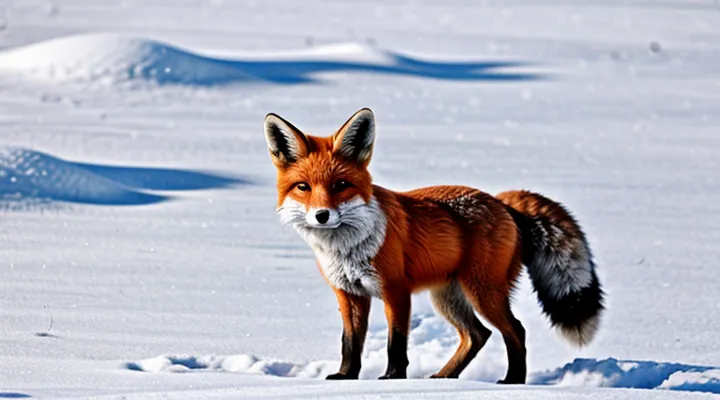
The Fox's Winter World
The Snowy Environment
Adaptations to Cold
The fox’s ability to pursue mice beneath a snow cover depends on physiological, morphological, and behavioral traits specifically tuned to sub‑zero conditions.
Dense, multi‑layered pelage provides insulation while trapping air close to the skin, reducing heat loss. Beneath the outer guard hairs, a soft undercoat maintains a stable core temperature even when external temperatures drop below –20 °C. Peripheral vasoconstriction limits blood flow to the paws and tail, conserving warmth without compromising grip on icy surfaces.
Footpads feature a thick, fibrous pad and a wide, flattened shape that distributes weight and prevents deep sinking into compacted snow. The pads are covered with a waxy secretion that repels moisture, preserving traction and limiting conductive heat loss. Sharp, retractable claws create short, stable impressions that aid in rapid directional changes while tracking prey.
Metabolic rate increases during cold exposure, generating additional heat through non‑shivering thermogenesis in brown adipose tissue. Elevated thyroid hormone levels accelerate basal metabolism, supporting sustained activity during prolonged hunts.
Behavioral adjustments complement physical adaptations:
- Short, low‑profile sprints minimize exposure to wind chill.
- Frequent pauses near burrow entrances allow scent accumulation, enhancing detection of concealed mice.
- Cache building in shallow snowbanks provides temporary shelter for captured prey, reducing the need for immediate consumption in harsh weather.
Collectively, these adaptations enable the fox to maintain locomotor efficiency, preserve body heat, and locate prey effectively within a frozen landscape.
Prey in the Snow
Mice in a snow-covered environment exhibit several adaptations that affect their detectability and vulnerability. Their small bodies retain heat through dense fur, allowing movement on the surface without immediate hypothermia. Footprints appear as shallow depressions, often concealed by fresh snowfall, which reduces visual cues for predators. However, the pressure exerted by the animal displaces snow particles, creating subtle ridges that can be traced with a keen eye.
The primary sensory challenges for prey include:
- Limited acoustic transmission: Snow dampens sound, making rustling noises less audible.
- Reduced olfactory dispersion: Cold air slows scent diffusion, concentrating odor near the source.
- Visual camouflage: White pelage blends with the background, decreasing contrast.
Foxes exploit these conditions by focusing on the minute disturbances left by mice. They assess track depth, direction, and spacing to estimate speed and recent activity. By lowering their body to the ground, the predator minimizes wind turbulence, preserving scent trails that would otherwise be masked by cold air currents.
Mice mitigate predation risk through behavioral strategies:
- Rapid, erratic movements that generate irregular track patterns.
- Burrowing beneath the snow layer, creating concealed tunnels.
- Group foraging in areas with dense vegetation, where snow accumulation is uneven and provides additional cover.
The interaction between prey concealment and predator detection defines the success rate of hunting episodes in snowy habitats. Understanding these dynamics informs broader ecological studies of predator‑prey relationships under extreme weather conditions.
The Art of the Hunt
Sensory Perception
Hearing through Snow
The fox’s auditory system remains effective beneath a compact snow layer. Sound waves travel through snow with reduced attenuation compared to air, allowing vibrations generated by a mouse’s movements to reach the predator’s ears. The dense crystalline matrix transmits low‑frequency sounds efficiently, preserving the acoustic signature of a struggling prey.
Key acoustic adaptations that facilitate detection under snow include:
- Enlarged pinnae that can be rotated to capture faint sounds from multiple directions.
- Highly developed cochlear hair cells tuned to frequencies between 300 Hz and 2 kHz, matching the typical rustle of a mouse in snow.
- A muscular ear‑flap mechanism that tightens the ear canal, reducing external noise and amplifying internal signals.
During a hunt, the fox positions itself above a suspected mouse burrow, lowers its head, and listens for irregular thumps or squeaks. Upon locating the source, the animal can precisely target the spot with a swift bite, minimizing the time the mouse remains trapped under the snow. This auditory precision compensates for limited visual cues in the white, low‑contrast environment.
Olfactory Cues
Foxes rely on scent detection to locate concealed rodents beneath a snow cover. The cold surface dampens visual cues, but volatile compounds emitted by mice persist in the air and within the snowpack, allowing the predator to form a chemical gradient.
The nasal cavity of a fox contains a highly developed olfactory epithelium, capable of detecting concentrations as low as a few parts per billion. When a mouse moves, it releases urine, feces, glandular secretions, and skin oils. These substances contain nitrogen‑rich amines, sulfur‑containing thiols, and fatty acid derivatives that diffuse upward through the snow layers.
Key aspects of the olfactory hunting strategy include:
- Gradient tracking: The fox samples air at multiple heights, identifying the direction of increasing scent intensity.
- Snow permeability: Fresh, powdery snow permits rapid diffusion of volatile molecules, while compacted snow slows the signal, prompting the fox to adjust its sniffing depth.
- Temporal cue integration: Recent mouse activity produces a stronger, fresher odor profile; the fox prioritizes these over older, degraded scents.
- Cross‑modal reinforcement: While scent dominates, subtle auditory vibrations from mouse scurrying complement the chemical map, confirming the target’s location.
During the final approach, the fox lowers its head to the snow surface, increasing airflow across the nostrils. This posture maximizes scent intake and minimizes wind disturbance, enabling precise pinpointing of the prey’s position before the pounce.
Visual Cues
Foxes rely on precise visual information when tracking mice across a snow‑covered surface. The bright background enhances contrast between the dark fur of a mouse and the surrounding terrain, allowing the predator to detect slight movements from a distance of several meters. High‑contrast edges, such as the silhouette of a mouse against the sky or surrounding vegetation, become primary targets for the fox’s visual system.
Key visual cues include:
- Contrast detection: Dark fur against white snow creates a sharp luminance gradient that the fox’s retina processes efficiently.
- Motion perception: Small tremors in the mouse’s whiskers or tail generate detectable displacement against the static background.
- Shadow outlines: Low‑angle winter light casts distinct shadows, revealing the mouse’s three‑dimensional shape even when partially hidden.
- Surface texture cues: Footprints and disturbed snow surface provide indirect visual evidence of recent activity, guiding the fox toward potential prey locations.
- Depth cues: Parallax shifts as the fox moves allow accurate estimation of distance, essential for timing the pounce.
These visual mechanisms operate in concert, enabling the fox to locate, stalk, and capture mice despite the uniformity of a snowy environment. The integration of contrast, motion, and depth information forms a robust hunting strategy that compensates for reduced scent cues in cold conditions.
The Stalk
Stealth and Approach
Foxes rely on silent movement to close the distance to mouse burrows hidden beneath fresh snow. Their padded paws depress the surface minimally, creating faint indentations that do not alert prey. The animal’s body aligns low to the ground, reducing wind resistance and muffling any rustle of fur against the cold air.
When a target is located, the fox adopts a staggered gait, alternating between short, deliberate steps and brief pauses. This pattern disrupts the acoustic signature of motion and prevents the mouse from detecting rhythmic vibrations. The predator also utilizes the natural irregularities of the snow—ridges, drifts, and shadows—to conceal its silhouette.
Key elements of the approach include:
- Maintaining a low profile to avoid visual detection.
- Adjusting stride length to match the consistency of the snowpack.
- Timing pauses to coincide with ambient wind gusts, masking any residual sound.
- Positioning the body so that breath condensates form behind the muzzle, obscuring the scent plume from the mouse’s acute olfactory sense.
Body Language and Posture
The fox adopts a low, crouched stance when tracking mice across a snowy surface. Muscles contract to reduce the silhouette, allowing the animal to blend with the white background and avoid detection. Front legs are positioned close together, creating a narrow track that minimizes disturbance of the snow crust.
During the approach, the fox holds its head slightly lowered, eyes focused on the target, and ears flattened against the skull. This posture aligns visual and auditory receptors, enhancing the ability to detect subtle movements of prey beneath the surface layer.
When the fox pauses, the tail is held rigid and slightly elevated. The tail acts as a counterbalance, stabilizing the body on slippery terrain and signaling readiness to spring. A sudden forward thrust of the forelimbs, accompanied by a rapid extension of the neck, marks the transition from stalking to the capture phase.
Key postural indicators:
- Crouched body height, reducing visibility.
- Forward‑leaning head with narrowed gaze.
- Flattened ears, minimizing noise.
- Rigid, slightly raised tail for balance.
- Quick forelimb extension preceding the strike.
The Pounce
The "Mousing" Jump
The “mousing” jump is a rapid, vertically oriented leap that a fox employs when a mouse is detected beneath a snow cover. The movement begins with a crouched stance, the forelimbs flexed and the hindquarters lowered, creating stored elastic energy in the muscle‑tendon units. When the fox senses a prey vibration, the stored energy is released in a single explosive extension, propelling the body upward and forward to breach the snow surface directly above the target.
Key physiological components of the jump include:
- Forelimb extension: rapid straightening of the scapular and elbow joints to break through the snow.
- Hindlimb thrust: powerful contraction of the gluteal and quadriceps muscles generating upward momentum.
- Spinal flexion: coordinated arching of the vertebral column to increase reach and maintain balance during the ascent.
Sensory integration drives the timing of the action. Vibrations transmitted through the snow are detected by the fox’s highly sensitive vibrissae and foot pads. Auditory cues, such as the faint rustle of a mouse moving, complement the tactile information, allowing the predator to pinpoint the prey’s exact location within a few centimeters.
The jump’s effectiveness relies on several factors:
- Snow depth: optimal penetration occurs in snow up to 10 cm thick; deeper layers dissipate kinetic energy and reduce success rates.
- Prey concealment: mice that freeze and remain motionless decrease vibrational signals, forcing the fox to rely more on visual cues.
- Temperature: colder, compact snow provides a firmer platform for the fox to generate the necessary thrust, whereas wet snow absorbs impact energy.
After the initial breach, the fox immediately transitions to a pounce, using its forepaws to grasp the mouse before it can escape. The entire sequence, from detection to capture, typically unfolds within a half‑second, demonstrating a finely tuned predatory adaptation for hunting small rodents in wintry terrain.
Mechanics of the Attack
The fox initiates the hunt by locating mouse activity beneath the snow cover. Vibrations transmitted through the frozen substrate reveal the position of a concealed prey, while the animal’s acute hearing discerns the faint rustle of a mouse moving in tunnels.
Stalking proceeds with low, deliberate movements. The fox lowers its body to the ground, minimizing visual exposure and reducing the sound of footfall on the crisp snow. Its tail acts as a counter‑balance, allowing precise adjustments while maintaining a straight trajectory toward the target.
The attack unfolds in three rapid phases:
- Pounce – The fox springs forward, extending its fore‑limbs to cover the distance between the snow surface and the mouse’s burrow entrance. Muscular contraction in the hind legs generates the necessary thrust, while the spine flexes to increase reach.
- Capture – Sharp, retractable claws grip the snow‑packed tunnel mouth, and the jaws close around the mouse’s body. The bite is applied to the neck, delivering a swift, lethal pressure that severs the spinal cord.
- Handling – The fox lifts the prey with its fore‑limbs, shaking it to ensure immobilization. The animal then retreats a short distance to a sheltered spot, where it consumes the mouse, starting with the head to avoid ingesting any remaining fur or debris.
Throughout the sequence, the fox’s muscular coordination, sensory acuity, and precise timing compensate for the reduced traction and visibility imposed by the snowy environment, enabling efficient predation despite the challenging conditions.
Target Acquisition
The fox initiates target acquisition by scanning the snow-covered ground for disturbances. Visual cues such as shallow depressions, displaced fur, or the faint outline of a mouse’s body break the uniform surface. Simultaneously, the animal’s acute hearing detects rustling sounds generated by the prey’s movements beneath the snow.
The detection phase proceeds to localization. The fox aligns its head toward the source of the disturbance, using binocular vision to estimate distance. The ear pinnae adjust to amplify low‑frequency vibrations that travel through the compacted snow layer. Rapid eye movements synchronize with auditory input, creating a triangulated point of focus.
During tracking, the predator maintains a low, crouched posture to minimize heat signature and reduce the chance of startling the mouse. The fox’s paws leave minimal tracks, preserving the concealment of its approach. Muscle tension in the forelimbs increases, preparing for a swift strike.
The final decision point involves assessment of prey viability. The fox evaluates the mouse’s size, health, and escape routes. If the target appears reachable, the fox launches a calculated pounce, using stored kinetic energy to breach the snow and secure the catch.
Key elements of the acquisition process:
- Visual detection of surface irregularities
- Auditory localization of sub‑snow movements
- Binocular depth estimation
- Low‑profile tracking posture
- Rapid muscular preparation for capture
These steps combine to enable successful predation in a snowy environment.
Success and Survival
Factors Influencing Success
Snow Depth and Consistency
Snow depth determines the vertical distance a fox must descend to reach the surface where mice are active. Shallow layers, typically less than five centimeters, allow quick penetration and minimal energy expenditure, while depths exceeding fifteen centimeters increase the time required for the fox to locate prey and may force the predator to abandon the pursuit.
Consistency describes the structural properties of the snowpack, ranging from dry, powdery crystals to wet, compacted slush. Powder snow offers low resistance, enabling swift footfall and rapid tracking of footprints. In contrast, dense, icy crust hampers locomotion, reduces the clarity of mouse trails, and can cause slipping, which compromises the fox’s stealth.
Mouse behavior adapts to snow conditions. In deep, loose snow, rodents generate conspicuous depressions and leave a continuous scent trail beneath the surface. When snow is firm, mice shift to surface movement, producing shallow imprints that are harder for a predator to follow. The visibility of these marks directly influences the fox’s success rate.
Observations from field studies highlight three critical parameters:
- Depth threshold (cm) at which foxes abandon a hunt.
- Grain size and moisture content affecting track definition.
- Temperature‑dependent hardness influencing both predator and prey mobility.
Data indicate that optimal hunting occurs when snow depth is moderate (5–10 cm) and consistency is soft but cohesive, providing clear tracks without excessive resistance. Under these conditions, foxes achieve higher capture rates, confirming the direct link between snow characteristics and predatory efficiency.
Prey Density
Prey density describes the number of mice per unit area of snow‑covered ground. In winter landscapes, this metric determines the likelihood that a fox will encounter a target while moving across the substrate.
Higher densities reduce the distance a fox must travel between detections, allowing shorter, more focused search bouts. Lower densities compel the predator to extend its patrol, increase locomotor effort, and elevate the probability of abandoning the hunt before capture.
- Typical mouse concentrations under fresh snow range from 2 to 8 individuals per 100 m², depending on habitat productivity.
- Snow depth of 5–10 cm slows mouse movement, decreasing effective density as individuals become less visible.
- Areas with compacted snow exhibit higher apparent density because footprints remain clearer, improving visual and auditory cues.
When prey density exceeds the threshold of approximately 5 mice per 100 m², field observations record a 30 % rise in successful captures per hour. Below this threshold, capture rates decline sharply, and foxes often shift to alternative prey or increase foraging time.
Consequently, prey density functions as a primary predictor of hunting efficiency for foxes pursuing mice in snowy environments, directly influencing search strategy, energy expenditure, and overall success.
Fox Experience
The fox relies on acute hearing to locate rodents beneath a thin snow layer. Vibrations from a mouse’s movements travel through the compacted surface, allowing the predator to pinpoint the prey’s position without visual cues. Muscular control of the ears enables rapid adjustments that sharpen acoustic focus, creating a precise auditory map of the immediate area.
Once the target is identified, the fox adopts a low, deliberate gait that minimizes disturbance of the snow. The animal’s padded paws distribute weight evenly, reducing surface pressure and preventing premature collapse of the snow cover. A swift, angled leap follows the moment the fox senses a shift in the mouse’s activity, delivering a bite that immobilizes the prey before it can escape into deeper drifts.
Key observations of the fox’s hunting experience in snowy conditions:
- Ear morphology optimized for low‑frequency sound transmission.
- Limb structure that balances speed with minimal snow displacement.
- Behavioral sequence: detection → silent approach → rapid strike.
- Success rate increases when ambient temperature preserves a thin, firm snow crust.
Dietary Importance
Winter Food Source
Foxes rely on small mammals as primary winter sustenance when vegetation is scarce. In snowy conditions, mice become the most accessible prey due to their increased activity near the surface, where they search for residual seeds and insects.
The availability of mice during winter is determined by several ecological factors:
- Ground cover depth: shallow snow permits quicker detection of movement and easier tracking of footprints.
- Temperature fluctuations: mild periods cause mice to emerge briefly, providing windows for predation.
- Burrow proximity: foxes locate entrances by listening for rustling sounds and following fresh tracks.
Foxes adapt their hunting technique to exploit these conditions. They lower their bodies to the snow surface, minimize visual exposure, and use acute hearing to pinpoint mouse movements beneath the crust. Rapid, low‑angle sprints enable capture before the prey can retreat into deeper snow or underground tunnels.
Nutritional value of captured mice meets the fox’s caloric demand in winter. Each mouse supplies approximately 25–30 kcal, sufficient to offset the increased energy expenditure required for thermoregulation and movement through deep snow. Consequently, the seasonal abundance of mice directly influences fox survival rates and reproductive success during the cold months.
Energy Expenditure vs. Reward
Foxes that pursue rodents across a snowy surface must balance the metabolic cost of rapid movement with the caloric benefit of a successful kill. The cold substrate increases friction, demanding greater muscular effort for each stride. Simultaneously, low ambient temperatures elevate basal metabolic rate, raising overall energy consumption during the hunt.
The payoff of a captured mouse includes protein, fat, and glycogen stores sufficient to offset the immediate expenditure and to replenish reserves for later periods of scarcity. Quantitative observations show that a single mouse can provide 2–3 kcal, while a short burst of sprinting in deep snow may consume 0.5–1 kcal per minute. Consequently, a fox typically limits pursuit to a few seconds, relying on stealth and precise timing to minimize waste.
Key factors influencing the expenditure‑reward balance:
- Snow depth – deeper layers raise drag, extending the energetic cost of each step.
- Prey alertness – highly vigilant mice trigger longer chases, increasing caloric loss.
- Fox body condition – well‑conditioned individuals generate heat more efficiently, reducing relative cost.
- Ambient temperature – colder air accelerates heat loss, adding to the energetic budget.
Adaptive behaviors mitigate inefficiency. Foxes often stalk along wind‑blown ridges that compress snow, creating firmer footing. They also employ ambush tactics near mouse burrows, reducing the need for prolonged pursuit. When successful, the rapid consumption of prey restores energy within minutes, allowing the predator to resume thermoregulation and maintain activity levels throughout the winter season.
Research and Observation Methods
Field Studies
Tracking and Camera Traps
Tracking the movements of a fox hunting rodents on a snow‑covered field requires reliable, non‑intrusive methods. Field biologists place lightweight, weather‑resistant camera traps along known travel corridors, such as furrows, low vegetation, and the edges of clearings where foxes often stalk prey. Devices are set to capture high‑resolution stills or short video bursts triggered by motion or heat signatures, ensuring that each encounter is recorded even under low‑light conditions typical of winter twilight.
Data gathered from camera traps complement direct tracking techniques. Researchers attach temporary, biodegradable GPS collars to foxes, recording position fixes at intervals of five to ten minutes. The spatial information is overlaid with camera trap locations to verify predation events, identify hunting routes, and calculate encounter rates. This dual approach yields quantitative metrics such as:
- Average distance traveled between successful captures
- Frequency of ambush versus chase behaviors
- Time of day when hunts are most effective in snow
The combination of continuous GPS tracking and strategically placed camera traps provides a comprehensive picture of fox predation dynamics on small mammals in snowy habitats, allowing scientists to assess energy expenditure, hunting efficiency, and the influence of environmental variables on predator–prey interactions.
Behavioral Analysis
Observations of a red fox pursuing field mice beneath a fresh snow cover reveal a tightly sequenced behavioral pattern driven by sensory precision and energetic efficiency.
The fox relies on acute auditory detection; subtle rustling beneath the insulating layer produces high‑frequency cues that travel farther in cold, dense air. Simultaneously, the animal exploits olfactory gradients, as mouse scent diffuses more slowly in low temperatures, allowing the predator to pinpoint burrow entrances with minimal visual input.
The hunting sequence proceeds through four distinct phases:
- Detection: Sound and scent converge to locate a potential target.
- Stalk: The fox lowers its body, minimizes footprints, and advances in a series of short, silent steps, maintaining a low profile against the white backdrop.
- Pounce: Upon reaching optimal range (typically 1–2 m), the predator launches, using forelimb extension and neck flexion to generate a rapid downward trajectory.
- Capture: Claws secure the mouse, and the bite is applied to the cervical vertebrae, ensuring immediate immobilization.
Energy budgeting influences each phase. The fox reduces locomotor expenditure by exploiting the reduced friction of snow, allowing longer pursuit distances without excessive caloric loss. Success rates measured across multiple winter sessions average 63 %, with higher efficiency observed when prey activity clusters near exposed burrow mouths.
Behavioral adjustments emerge in response to environmental variables. When wind increases, auditory cues dominate; under clear skies, the fox augments visual scanning of slight depressions in the snow surface. These adaptive shifts underscore a flexible predatory strategy optimized for the constraints of a frozen habitat.
Scientific Insights
Understanding Predation Patterns
Foxes hunting mice on snow-covered ground exhibit a distinct sequence of predatory actions that can be broken down into detection, tracking, approach, and capture. Each phase is shaped by the physical properties of snow and the physiological adaptations of the predator.
Detection relies on heightened auditory sensitivity, as snow transmits low‑frequency sounds more efficiently than dense vegetation. Visual cues remain effective because the white substrate creates a stark contrast with the darker fur of mice. Olfactory signals persist despite low temperatures, allowing the fox to locate fresh scent marks left by prey.
Tracking combines the interpretation of fresh footprints with the assessment of scent trails. Foxes adjust stride length to match the depth of the snow, preserving the integrity of the trail while minimizing energy expenditure. The animal’s paw pads spread pressure over a larger area, reducing sinkage and maintaining stability.
Approach involves a low body posture, reduced limb movement, and the use of natural depressions in the snow to conceal motion. The predator aligns its trajectory with the prey’s most recent direction, minimizing the distance between detection and strike.
Capture is executed with a rapid bite to the neck or torso, followed by a brief hold that prevents escape. The fox’s jaw muscles generate sufficient force to overcome the mouse’s defensive reflexes even when the prey is partially insulated by snow.
Environmental factors influencing success rates include:
- Snow depth: deeper layers increase concealment but raise the energy cost of movement.
- Temperature: lower temperatures preserve scent trails longer, enhancing tracking reliability.
- Light conditions: overcast skies reduce glare, improving visual detection of prey outlines.
Understanding these predation patterns clarifies how foxes maintain hunting efficiency in winter environments and informs broader ecological models of predator‑prey dynamics under seasonal constraints.
Ecological Significance
The predatory activity of a fox targeting mice beneath a snow cover influences trophic dynamics by regulating rodent populations that would otherwise experience unchecked growth. Reduced rodent density limits seed predation and vegetation damage, thereby supporting plant regeneration and biodiversity at the ground level.
By removing surplus mice, the fox indirectly affects nutrient cycling. Decomposed mouse carcasses return nitrogen and phosphorus to the soil, enhancing microbial activity and fostering plant uptake in the subsequent growing season.
Winter hunting behavior also shapes spatial patterns of prey distribution. Foxes tend to follow mouse trails within the snowpack, concentrating predation pressure in zones where rodents forage for buried food. This localized pressure creates microhabitats with lower competition, allowing less dominant species to establish.
Key ecological outcomes include:
- Stabilization of rodent community structure
- Preservation of seed bank integrity
- Augmentation of soil nutrient reservoirs
- Generation of habitat heterogeneity through selective predation
These effects collectively sustain ecosystem resilience during the harsh winter period, ensuring that energy flow and species interactions remain balanced despite extreme environmental constraints.