
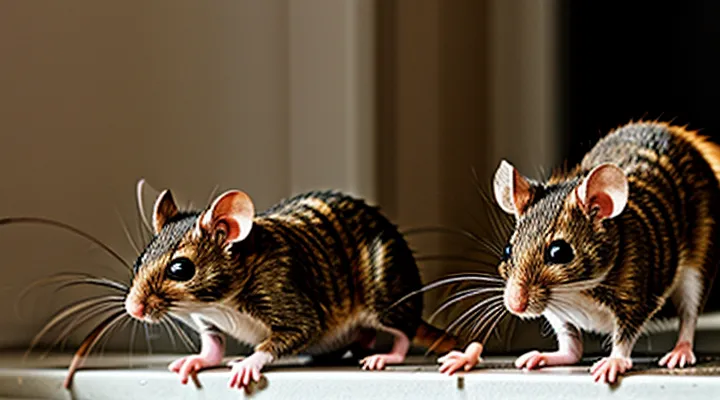
The Ubiquitous Companion: An Introduction to House Mice
The Species at a Glance: Mus musculus
Physical Characteristics
House mice that live alongside humans are small rodents, typically measuring 6–10 cm in body length with a tail of comparable length. Their weight ranges from 10 to 25 g, allowing easy navigation through narrow gaps in walls, floors, and appliances.
The coat is short, dense, and varies from light gray to brown, often with a lighter belly. This coloration provides camouflage against both natural debris and the muted tones of indoor environments. Seasonal molting adjusts fur density, enhancing thermal regulation in heated or unheated spaces.
Ears are proportionally large, measuring 1.5–2 cm, and are positioned laterally to capture a broad range of frequencies. Auditory sensitivity extends to ultrasonic sounds up to 90 kHz, facilitating detection of predators and conspecific communication within cluttered human habitats.
Whiskers (vibrissae) are long and highly innervated, supplying tactile feedback essential for maneuvering in low‑light conditions typical of storage areas and crawl spaces. The whiskers can detect minute air currents, aiding obstacle avoidance and food location.
Dentition consists of continuously growing incisors with enamel‑covered fronts and exposed dentin on the backs, creating a self‑sharpening edge. This arrangement enables efficient gnawing of a wide variety of materials, from soft food residues to hard structural components such as plastic or wood.
Limbs are slender yet muscular. Forepaws possess dexterous digits with sharp claws, allowing precise handling of grains, crumbs, and electronic components. Hind limbs provide powerful jumps, often exceeding 30 cm vertically, facilitating rapid escape from threats.
Sensory organs are adapted for nocturnal activity. Large, dark eyes maximize light capture, while a well‑developed olfactory epithelium detects volatile compounds from stored food, sewage, and human waste. These combined physical traits support successful colonization of residential and commercial structures.
Social Behavior
House mice living in human dwellings exhibit complex social structures that facilitate survival in crowded, resource‑limited environments. Individuals form hierarchical groups where dominant males control access to prime nesting sites and food caches, while subordinate members assist in foraging and predator vigilance. Dominance is reinforced through scent marking, ultrasonic vocalizations, and occasional physical contests.
Key social behaviors include:
- Territorial scent marking: Urine and glandular secretions delineate individual ranges, reducing direct conflicts.
- Cooperative breeding: Females may share nesting chambers and assist in pup care, increasing offspring survival under fluctuating food supplies.
- Altruistic alarm calls: Ultrasonic chirps alert conspecifics to threats, prompting coordinated escape or defensive actions.
- Resource sharing: Mice distribute discovered food sources among group members, stabilizing group cohesion during scarcity.
Communication relies heavily on ultrasonic frequencies beyond human hearing, enabling discreet signaling within dense structural networks of walls and ducts. Visual cues, such as tail posture and whisker positioning, supplement acoustic messages during close encounters.
Adaptation to human habitats also reshapes social dynamics. Constant food availability reduces competition intensity, allowing larger, more stable colonies. Conversely, frequent disturbances—cleaning, pest control, structural modifications—prompt rapid reorganization of hierarchies, with flexible leadership emerging to restore order. The ability to modify social organization in response to anthropogenic pressures underlies the species’ persistence in domestic settings.
A History of Coexistence: The Mouse-Human Relationship
Early Adaptations and Domestication
House mice (Mus musculus) first encountered human settlements during the Neolithic transition, when grain storage created abundant, predictable food sources. Their initial response involved behavioral shifts that reduced exposure to predators and increased tolerance of human activity. Key adaptations included:
- Development of nocturnal foraging patterns aligned with human waste cycles, allowing exploitation of discarded scraps while avoiding daylight threats.
- Rapid reproductive cycles, with a gestation period of 19–21 days and litters of up to eight pups, enabling swift population expansion in stored grain environments.
- Enhanced olfactory sensitivity to cereal aromas, facilitating detection of hidden food caches within buildings.
Genetic analyses reveal that early commensal populations diverged from wild ancestors through selective pressure on genes governing stress response, digestion of starches, and immune tolerance to human‑associated microbes. These changes laid the groundwork for a semi‑domesticated relationship, wherein mice benefited from stable resources while humans unintentionally provided shelter and protection.
Archaeological evidence from Near Eastern sites dated to 10,000 BP shows mouse remains co‑occurring with granaries, confirming the temporal overlap of agricultural development and mouse colonization. Subsequent dispersal along trade routes spread these adapted lineages worldwide, establishing the modern house mouse as a ubiquitous synanthropic species.
The Spread Across Continents
The common house mouse (Mus musculus) originated in the Indian subcontinent and spread outward through human activity. Archaeological layers in the Near East show presence of mouse remains dating to the Neolithic, indicating early commensal relationships with sedentary societies.
From the Fertile Crescent, the species expanded westward into Europe via trade routes and maritime exchange. By the Roman period, mouse populations were documented in Britain and the Iberian Peninsula, a pattern confirmed by mitochondrial DNA that traces lineages to a single western expansion event.
The transatlantic crossing occurred during the Age of Exploration. Ship cargo, grain stores, and livestock transports introduced the mouse to the Americas, where it rapidly colonized coastal ports and inland settlements. Genetic studies reveal three major haplogroups in North America, each linked to distinct European source populations.
Continental dissemination in the modern era follows global commerce. Key mechanisms include:
- Container shipping that carries grain and packaged goods.
- Air freight, providing rapid long‑distance movement.
- Urban infrastructure, offering shelter and food sources.
These pathways have enabled the mouse to establish populations on every inhabited continent, maintaining a high degree of genetic connectivity while also generating regional adaptations to local climates and human practices.
Masters of Survival: Behavioral Adaptations
Nocturnal Habits and Evasion
House mice are primarily active after dusk, aligning their foraging cycles with reduced human activity. Their circadian rhythm is driven by a light‑sensitive pineal gland that suppresses activity during daylight, allowing them to exploit darkened interiors without direct competition from diurnal species.
Nocturnal foraging reduces exposure to visual predators and minimizes encounters with humans. Mice navigate using whisker‑based tactile mapping and auditory cues, which remain reliable in low‑light conditions. Their keen sense of smell detects food residues left overnight, directing movement toward nutrient sources while avoiding areas recently cleaned.
Evasion techniques employed during nighttime include:
- Rapid sprint bursts of 5–7 m/s to escape sudden disturbances.
- Utilization of narrow gaps and vertical shafts inaccessible to larger predators.
- Immediate retreat into concealed burrows or wall voids when light levels rise.
- Release of alarm pheromones that trigger heightened alertness in nearby conspecifics.
- Preference for cluttered environments that obstruct human sightlines and impede capture devices.
These behaviors collectively enable house mice to thrive in human dwellings while remaining largely unseen.
Diet Versatility: Opportunistic Foraging
Food Storage Techniques
House mice employ several strategies to secure food in human environments, each reflecting their capacity to exploit limited resources efficiently.
Mice locate edible items by scent trails and visual cues, then transport them to concealed locations. Common storage sites include wall voids, insulation cavities, behind appliances, and within stored packaging. The choice of site balances accessibility, protection from predators, and proximity to travel routes.
Key techniques include:
- Caching: Temporary deposits of small quantities near the foraging area, allowing rapid retrieval while minimizing exposure.
- Hoarding: Accumulation of larger supplies in a single, well‑shielded compartment, often within structural gaps that remain undisturbed.
- Burrowing into soft materials: Mice gnaw into cardboard, fabric, or paper to create pockets that blend with the surrounding debris.
- Utilizing human‑created containers: Open boxes, pantry bins, and discarded bags serve as ready‑made storage units; mice seal edges with shredded material to reduce detection.
These behaviors enhance survival by ensuring a steady food supply during periods of scarcity and by reducing competition with other rodents. Adaptation to human habitats is evident in the mice’s ability to repurpose everyday objects as secure caches, demonstrating a flexible approach to resource management.
Shelter Seeking: Exploiting Human Structures
Nesting Preferences
House mice thrive in human‑occupied structures by selecting nesting sites that maximize shelter, thermoregulation, and access to resources.
The species favors concealed spaces that limit exposure to predators and disturbances. Common locations include wall cavities, ceiling joists, attic insulation, basement corners, behind appliances, and within stored boxes. These sites provide stable microclimates and proximity to food sources while remaining hidden from human activity.
Materials used for nest construction reflect availability and insulating properties. Mice gather shredded paper, fabric fibers, cotton, dried plant debris, insulation fluff, and even plastic fragments. The chosen substrate enhances heat retention and structural integrity, allowing the nest to remain functional across seasonal temperature shifts.
Key factors guiding site selection are:
- Consistent temperature range (approximately 20‑30 °C)
- Low humidity to prevent mold growth
- Immediate access to stored food or waste
- Minimal disturbance from human traffic
- Structural complexity that offers multiple escape routes
By prioritizing these criteria, house mice establish nests that support reproduction, survival, and continuous coexistence within residential and commercial environments.
Physiological Resilience: Biological Adaptations
Rapid Reproduction Cycles
Gestation and Litter Size
Gestation in the common house mouse averages 19–21 days, with slight variation linked to ambient temperature and nutritional status. Warmer indoor environments typical of human dwellings can shorten the gestation period by up to 24 hours, allowing more rapid population turnover.
Litter size ranges from 4 to 12 pups, median around 7. Several factors modulate this output:
- Maternal condition: Adequate protein and fat intake raise average litter size by 1–2 pups.
- Seasonal cues: Longer daylight hours in spring correlate with larger litters, reflecting increased resource availability.
- Population density: High density can suppress litter size through stress‑induced hormonal changes.
These reproductive parameters enable mouse colonies to exploit human habitats efficiently, sustaining high growth rates despite periodic control measures.
High Mortality, High Replenishment
Domestic mice living alongside humans experience a rapid turnover of individuals. Mortality rates in urban and suburban settings frequently exceed 40 % per year, driven by predation, pest control measures, disease, and accidental injury. The same environments provide abundant food waste, shelter in building cavities, and constant temperature regulation, enabling the population to recover swiftly.
Key mechanisms that sustain high replenishment:
- Accelerated breeding cycle: Females reach sexual maturity at 6 weeks, producing litters of 5–8 pups every 21 days under favorable conditions.
- Short gestation: A 19‑day pregnancy limits the interval between successive litters, allowing multiple reproductive bouts within a single season.
- High litter survival: Nesting materials and micro‑climates within human structures reduce exposure to extreme temperatures and predators, increasing pup survival to adulthood.
- Density‑dependent reproduction: Females adjust litter size in response to local competition, ensuring that reproductive output matches resource availability.
These factors create a dynamic equilibrium where elevated death rates are offset by prolific reproduction, maintaining stable or expanding populations despite continuous human intervention.
Genetic Adaptations to Human Environments
Resistance to Poisons
House mice living alongside humans encounter a variety of anticoagulant rodenticides designed to control populations. Over successive generations, individuals that survive exposure pass on genetic traits conferring reduced susceptibility, leading to measurable resistance within urban and suburban colonies.
Resistance emerges through several biochemical and physiological pathways:
- Altered vitamin K epoxide reductase (VKOR) enzymes reduce binding affinity for first‑generation anticoagulants such as warfarin, diminishing their inhibitory effect.
- Up‑regulated detoxification enzymes, particularly cytochrome P450 isoforms, accelerate metabolic breakdown of both first‑ and second‑generation compounds.
- Enhanced renal excretion mechanisms increase clearance rates, lowering systemic concentrations of ingested toxins.
- Behavioral avoidance, including reduced bait consumption and altered foraging patterns, limits exposure to lethal doses.
Population studies reveal that resistance frequencies can exceed 80 % in heavily treated environments. Management strategies that rotate active ingredients, employ non‑chemical controls, and integrate bait stations with reduced palatability have demonstrated temporary reductions in resistant cohorts, but long‑term efficacy requires monitoring of genetic markers associated with VKOR mutations.
Continued surveillance of resistance alleles, combined with diversified control tactics, mitigates the risk of widespread rodenticide failure and supports coexistence of mice within human habitats.
Dietary Specializations
House mice that live alongside humans have refined their feeding habits to exploit the resources of domestic environments. Their digestive systems process a wide range of carbohydrate‑rich foods, while enzymatic adaptations enable efficient extraction of nutrients from processed grains, sugary snacks, and dairy residues. Seasonal fluctuations in human waste streams prompt rapid shifts in intake, allowing the rodents to maintain energy balance despite irregular availability.
Key dietary adaptations include:
- Enhanced amylase production for rapid starch breakdown.
- Upregulated lactase activity that permits utilization of lactose from milk spills.
- Ability to metabolize low‑quality protein sources such as dried pet food and discarded meat scraps.
- Preference for high‑fat items like butter or oil residues, which support rapid weight gain and reproductive output.
Impact and Management: The Human Perspective
Damage and Disease Transmission
Economic Costs
House mice have become a pervasive element of human‑occupied structures, generating measurable financial burdens for residents, businesses, and public institutions. Their presence triggers direct expenditures and indirect losses that accumulate across sectors.
Direct costs arise from physical damage. Mice gnaw electrical wiring, compromising safety and prompting costly repairs. They infiltrate insulation, drywall, and stored materials, leading to replacement expenses. Food‑related losses include contamination of pantry items, grain stores, and processed products, which must be discarded or recalled, adding to waste and remediation fees.
Indirect costs involve health‑related spending. Pathogen transmission through droppings and urine necessitates medical treatment for affected individuals and investment in sanitation programs. Public health agencies allocate resources to monitoring and controlling outbreaks linked to rodent activity, inflating budgetary commitments.
Management expenses form a substantial portion of the economic impact. Property owners contract professional exterminators, purchase traps, baits, and monitoring devices, and often engage in ongoing preventive maintenance. Commercial facilities, such as restaurants and warehouses, incur compliance costs to meet regulatory standards that mandate rodent‑free environments.
A concise enumeration of the principal financial categories includes:
- Structural repairs (wiring, building materials)
- Food loss and product recalls
- Medical treatment and public health interventions
- Pest‑control services and preventive measures
- Insurance premium adjustments for higher risk profiles
Collectively, these elements represent a persistent fiscal pressure that influences budgeting decisions, pricing strategies, and risk assessments for entities sharing environments with house mice.
Health Risks
House mice living alongside humans transmit a range of pathogens that pose direct and indirect health threats. Their close proximity to food storage areas, waste, and structural gaps facilitates contamination.
- Bacterial infections: Salmonella and Leptospira can be carried on fur and droppings, leading to gastrointestinal illness and leptospirosis after exposure to contaminated surfaces or aerosols.
- Viral agents: Hantavirus, primarily carried by rodents, may be inhaled through dust containing dried urine or feces, causing severe respiratory syndrome.
- Parasitic infestations: Mites, fleas, and tapeworms hitchhike on mice, potentially biting humans or entering the household environment, resulting in dermatitis, allergic reactions, or intestinal infection.
- Allergen exposure: Proteins in mouse urine, saliva, and dander trigger IgE‑mediated responses, producing asthma exacerbations, rhinitis, and hypersensitivity pneumonitis in susceptible individuals.
- Food contamination: Direct contact with mouse droppings or urine introduces toxins and microbes into prepared meals, increasing the risk of food‑borne disease outbreaks.
Mitigation requires sealing entry points, maintaining rigorous sanitation, and employing integrated pest‑management strategies to reduce rodent populations and limit pathogen transmission.
Control and Prevention Strategies
Integrated Pest Management
Integrated Pest Management (IPM) provides a systematic framework for controlling house mouse populations that have become accustomed to human dwellings. The approach combines preventive, mechanical, biological, and chemical measures, each applied according to specific thresholds and evaluated for effectiveness.
Monitoring establishes the presence and density of mice through visual inspections, snap‑traps, and non‑lethal capture devices. Data from monitoring inform decisions on whether intervention is necessary and which tactics will be most efficient.
Exclusion targets structural vulnerabilities. Sealing gaps larger than ¼ inch, installing metal flashing around utility penetrations, and maintaining door sweeps prevent ingress. Regular maintenance of building envelopes reduces the opportunities for colonization.
Sanitation removes attractants. Prompt disposal of food waste, secure storage of dry goods in sealed containers, and routine cleaning of crumbs and spills diminish the resources mice require for survival and reproduction.
Mechanical controls include snap‑traps, live‑capture traps, and electronic devices. Placement along established runways, near walls, and in concealed corners maximizes capture rates. Traps should be inspected daily, and captured individuals removed in accordance with local regulations.
Biological control options are limited for Mus musculus but may involve encouraging natural predators such as barn owls in appropriate settings. Habitat modifications that support predator activity can contribute to long‑term suppression.
Chemical control is reserved for situations where other methods fail to achieve acceptable population levels. Bait stations containing anticoagulant or non‑anticoagulant rodenticides must be deployed following label instructions, with attention to secondary poisoning risks and compliance with safety standards.
Evaluation occurs after each intervention cycle. Comparing pre‑ and post‑treatment monitoring data determines the reduction achieved and guides adjustments to the IPM plan. Documentation of actions, outcomes, and environmental conditions supports continuous improvement and regulatory compliance.
Future Directions in Rodent Control
Rodent control must evolve alongside the increasing presence of commensal mice in residential and commercial settings. Current challenges stem from pesticide resistance, public concern over animal welfare, and the complexity of urban ecosystems. Addressing these issues requires integrating biological, technological, and environmental strategies.
Key future directions include:
- Gene‑drive technologies: Engineered genetic modifications can suppress fertility or spread traits that reduce survival in urban mouse populations, offering a self‑propagating control method.
- Smart‑sensor networks: Deploying IoT devices that detect movement, temperature, and scent signatures enables real‑time mapping of infestation hotspots and automated activation of deterrents.
- Habitat redesign: Modifying building structures and waste management practices to eliminate shelter and food sources reduces the attractivity of human environments for mice.
- Humane trapping systems: Advanced mechanical traps equipped with kill‑free capture mechanisms and remote release options improve public acceptance while maintaining efficacy.
- Microbiome manipulation: Introducing benign bacterial strains that interfere with mouse digestion or reproduction presents a non‑lethal, population‑level intervention.
Research must prioritize safety assessments, regulatory compliance, and scalability. Collaborative frameworks between municipal agencies, academic institutions, and private innovators will accelerate the translation of these approaches into operational programs. Continuous monitoring of ecological impact ensures that interventions remain effective without unintended consequences.