
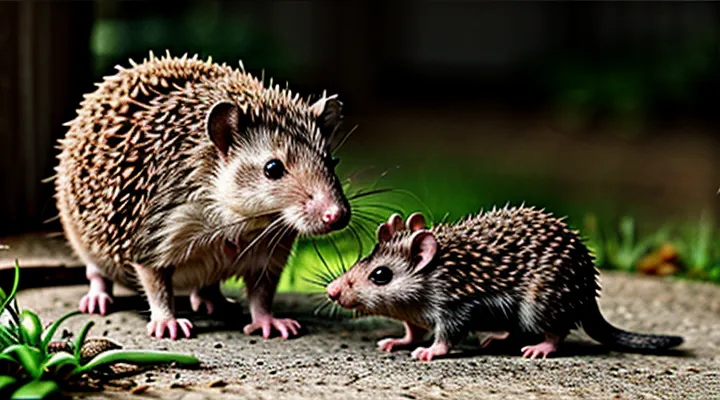
Understanding Hedgehogs and Rats
Hedgehog Characteristics
Diet and Habitat
Hedgehogs and rats often occupy the same temperate gardens, hedgerows, and farmland patches, where resources and shelter are sufficiently abundant for both species.
Hedgehog diet
- Invertebrates: earthworms, beetles, slugs, and caterpillars constitute the primary protein source.
- Seasonal supplements: seeds, berries, and occasional amphibians appear in autumn and early winter.
- Foraging behavior: nocturnal activity aligns with peak earthworm surface migration, reducing direct competition with diurnal rodents.
Rat diet
- Omnivorous intake: grains, nuts, fruits, and vegetable scraps dominate, supplemented by insects and carrion when available.
- Opportunistic feeding: rats exploit human waste, stored grain, and garden produce, extending their foraging range beyond hedgehog territories.
- Temporal pattern: primarily nocturnal, but flexible activity periods allow exploitation of food sources left by other nocturnal fauna.
Habitat overlap emerges from shared preferences for dense ground cover, compost heaps, and low-lying vegetation that provide concealment and nesting sites. Hedgehogs construct shallow burrows or use existing rodent tunnels, while rats excavate more extensive burrow systems. Both species benefit from the microclimate created by leaf litter and mulch, which maintains soil moisture and supports invertebrate populations essential to hedgehog nutrition. Coexistence persists because dietary niches differ substantially, and spatial partitioning reduces direct resource competition.
Behavior and Ecology
Hedgehogs and rats frequently share habitats such as gardens, woodland edges, and agricultural fields, where their daily activities intersect. Hedgehogs are nocturnal foragers that rely on a diet of insects, earthworms, and small vertebrates, while rats are opportunistic omnivores that consume seeds, fruits, carrion, and anthropogenic waste. Both species exhibit territorial scent marking; hedgehogs use a combination of pheromonal secretions and spines to deter intruders, whereas rats employ urine and glandular deposits to define space.
Competition for resources is limited by dietary divergence, yet indirect interactions affect population dynamics. Hedgehogs may reduce insect populations that serve as food for juvenile rats, while rats can deplete seed caches that hedgehogs occasionally exploit. Predation pressure on each species differs: hedgehogs face threats from foxes and birds of prey, whereas rats contend with larger carnivores and human control measures. These differing pressures shape behavioral adaptations such as hedgehog defensive rolling and rat nocturnal vigilance.
Key ecological factors influencing coexistence include:
- Habitat complexity: dense ground cover provides hedgehogs with shelter and rats with escape routes.
- Seasonal food availability: fluctuations in invertebrate abundance prompt hedgehogs to expand foraging ranges, while rats adjust diet composition.
- Human activity: garden waste attracts rats, whereas hedgehogs benefit from pesticide‑free zones that support prey diversity.
Overall, overlapping ranges are maintained through niche partitioning, flexible foraging strategies, and distinct predator avoidance behaviors, allowing both species to persist in shared environments without direct antagonism.
Rat Characteristics
Diet and Habitat
Hedgehogs primarily consume invertebrates such as beetles, caterpillars, earthworms, and snails. They also eat occasional fruit, mushrooms, and small vertebrates when available. Their foraging activity peaks at night, aligning with the activity patterns of many prey species.
Rats maintain an omnivorous diet that includes grains, seeds, nuts, fruits, vegetables, insects, and carrion. They exploit human‑derived food sources in urban settings and store surplus food in underground caches. Their feeding occurs both day and night, providing flexibility in resource use.
Both species inhabit environments that offer shelter and food. Hedgehogs favor hedgerows, woodland edges, gardens, and areas with dense ground cover where leaf litter and soil support abundant invertebrate populations. They construct nests from dry vegetation and may occupy abandoned burrows.
Rats occupy a broader range of habitats, from agricultural fields and grasslands to urban infrastructure such as sewers, basements, and abandoned structures. They create complex burrow systems and use above‑ground pathways for movement.
The overlap of habitats creates zones where both animals can coexist. Resource partitioning reduces direct competition: hedgehogs focus on nocturnal invertebrates in leaf litter, while rats exploit a wider spectrum of food, including stored human waste and plant matter. Temporal differences in peak activity further separate their foraging, allowing both species to thrive within shared ecosystems.
Behavior and Ecology
Hedgehogs and rats often occupy the same temperate and Mediterranean ecosystems, sharing gardens, hedgerows, and agricultural margins where ground cover and leaf litter provide shelter and foraging opportunities. Their overlapping distribution creates a setting for direct and indirect ecological interactions.
Hedgehogs are solitary, nocturnal mammals that rely on a diet of invertebrates, small amphibians, and occasional fruit. Their foraging routes follow a predictable pattern of short, repeated circuits around a home range that typically spans 0.5–2 km². Defensive behavior includes the erection of spines and a slow, deliberate gait when threatened, reducing the likelihood of aggressive encounters with other small mammals.
Rats exhibit a highly social structure, forming colonies that maintain hierarchical relationships. Omnivorous feeding habits allow them to exploit seeds, grain, insects, and human refuse. Activity peaks during twilight and night, overlapping temporally with hedgehog activity but diverging in spatial use; rats favor open ground and burrows, whereas hedgehogs prefer dense cover.
Interaction mechanisms include:
- Temporal overlap mitigated by microhabitat selection, limiting direct competition for food resources.
- Dietary divergence: hedgehogs focus on soft-bodied invertebrates, while rats consume harder seeds and larger arthropods.
- Spatial segregation: hedgehogs occupy areas with thick leaf litter; rats dominate open, disturbed soils.
- Opportunistic scavenging: rats may feed on hedgehog carcasses, providing a secondary nutrient pathway.
Ecological consequences of their coexistence involve disease dynamics, as both species can host ectoparasites and pathogens that circulate through shared environments. Hedgehogs contribute to soil aeration through digging, while rats influence seed dispersal and vegetation regeneration. The combined activities enhance biodiversity by creating heterogeneous microhabitats that support a broader range of invertebrate and plant species.
Potential Interactions and Conflicts
Competition for Resources
Food Sources
Hedgehogs and rats often occupy the same garden or field environments, where their diets overlap yet remain distinct enough to reduce direct competition. Both species are opportunistic omnivores that exploit readily available resources, adapting their foraging behavior to seasonal fluctuations.
- Invertebrates: earthworms, beetle larvae, slugs, and insects constitute a primary protein source for both animals.
- Seeds and grains: wheat, barley, and oat kernels are consumed, especially during autumn when plant material is abundant.
- Fruit remnants: fallen berries, apples, and cherries provide carbohydrates and hydration.
Differences in dietary emphasis lessen conflict. Hedgehogs preferentially target soft-bodied prey such as earthworms and snails, often hunting at night when these organisms are active. Rats favor hard-shelled insects, larger arthropods, and stored grains, typically foraging during twilight and early night hours. Spatial separation also occurs; hedgehogs tend to remain close to dense ground cover, while rats exploit burrows, compost heaps, and human‑generated waste sites.
Temporal and spatial partitioning, combined with selective feeding, enables both species to share habitats without significant resource depletion. Monitoring food availability and maintaining diverse microhabitats support this balanced coexistence.
Shelter and Nesting Sites
Hedgehogs and rats often occupy the same garden or field, yet each species requires distinct shelter characteristics to thrive. Hedgehogs favor dry, insulated microhabitats that protect against temperature fluctuations and predators, while rats seek concealed entry points and proximity to food sources.
Key features of suitable sites include:
- Hedgehog refuges: piles of leaf litter, compost heaps, log stacks, and shallow depressions lined with moss or straw.
- Rat burrows: deep tunnels in loose soil, concealed openings beneath dense vegetation, and access to human‑made structures such as wall voids or drainage pipes.
Overlap occurs when hedgehogs use abandoned rat burrows or when rats exploit hedgehog nests for shelter. This shared use can lead to competition for space, increased stress, and heightened disease transmission risk.
Mitigation measures focus on spatial separation and habitat enrichment:
- Install dedicated hedgehog houses with raised entrances and insulated bedding, positioned away from known rat activity zones.
- Create rat‑unfriendly zones by removing excess debris, sealing ground openings, and maintaining a clear perimeter around hedgehog shelters.
- Encourage natural predators by preserving hedgerows and bird perches, reducing rat population pressure near hedgehog refuges.
Applying these practices supports the parallel existence of both mammals while minimizing direct conflict over nesting and shelter resources.
Predation Dynamics
Rats as Predators of Hedgehogs
Rats occasionally act as predators of hedgehogs, especially when food resources are scarce. Their predatory behavior targets vulnerable individuals, such as juveniles, sick adults, or hedgehogs caught in confined spaces. The interaction influences hedgehog population dynamics in urban and rural habitats.
Key aspects of rat predation include:
- Opportunistic attacks: Rats seize hedgehogs when carrion or insects are limited, using their strong jaws to inflict fatal wounds.
- Nest intrusion: In burrows or hedgehog nests, rats may enter and consume eggs or newborns, reducing reproductive success.
- Competitive stress: Aggressive encounters over shared food sources can lead to injuries that compromise hedgehog survival.
Evidence from field studies shows higher hedgehog mortality rates in areas with dense rat populations. Management strategies that control rat numbers, such as habitat modification and targeted baiting, can mitigate predation pressure and support hedgehog conservation.
Hedgehogs as Predators of Rats
Hedgehogs actively hunt rats, especially juvenile individuals that wander near ground cover or compost areas. Their sharp incisors and strong jaw muscles enable them to bite through the soft tissue of small rodents, while their keen sense of smell guides them to prey hidden under leaf litter.
Key aspects of hedgehog predation on rats include:
- Preference for rats weighing less than 250 g, which are easier to subdue.
- Use of nocturnal foraging patterns that overlap with rat activity periods.
- Consumption of the entire carcass, providing protein and essential nutrients for hedgehog metabolism.
- Reduction of local rat populations through repeated predation events, contributing to a measurable decline in rodent density over seasonal cycles.
Field observations demonstrate that hedgehog predation pressure can influence rat behavior, prompting shifts in habitat use and foraging routes. Continuous monitoring of predator‑prey dynamics offers valuable data for managing ecosystems where both species coexist.
Disease Transmission
Shared Pathogens
Hedgehogs and rats often share environments such as gardens, farms, and urban green spaces, creating opportunities for pathogen exchange. Overlapping habitats increase the likelihood that both species encounter the same infectious agents, which can affect wildlife health and pose zoonotic threats.
Common pathogens shared by hedgehogs and rats
- Salmonella spp. – bacterial agents causing gastrointestinal disease; transmitted through fecal contamination of food and water.
- Leptospira interrogans – spirochete responsible for leptospirosis; spreads via urine‑contaminated soil or water.
- Toxoplasma gondii – protozoan parasite; infects intermediate hosts through ingestion of oocysts present in the environment.
- Mycobacterium spp. – includes agents of tuberculosis and atypical mycobacterial infections; transmitted by aerosolized droplets and contaminated surfaces.
- Hantavirus – rodent‑borne virus detectable in rat populations; hedgehogs may acquire infection through exposure to contaminated droppings.
Transmission pathways include direct physical contact, shared feeding sites, contaminated bedding, and ectoparasite vectors such as fleas and ticks. Environmental persistence of pathogens in soil and water facilitates indirect spread, especially in moist, densely vegetated areas.
Health consequences for hedgehogs range from mild gastroenteritis to severe systemic infections, while rats may experience renal failure, respiratory distress, or reduced reproductive success. Human exposure risk rises when individuals handle these animals, clean their habitats, or consume contaminated produce.
Effective management requires regular health screening of both species, implementation of biosecurity measures (e.g., sanitation of feeding stations, removal of standing water), control of ectoparasite loads, and, where available, vaccination against leptospirosis. Integrated monitoring programs help detect emerging infections early and reduce cross‑species transmission.
Impact on Populations
The simultaneous presence of hedgehogs and rats in temperate and urban ecosystems produces measurable changes in their respective population trajectories.
Resource overlap drives competition. Both species exploit ground‑dwelling invertebrates, seeds, and anthropogenic waste. When rat densities rise, hedgehog foraging success declines, leading to reduced juvenile survival rates. Conversely, high hedgehog activity can limit rat access to certain microhabitats, modestly suppressing rat recruitment.
Disease transmission intensifies under cohabitation. Shared ectoparasites such as fleas and ticks increase in prevalence, raising the risk of bacterial infections (e.g., Salmonella spp.) across both hosts. Parasite load data from mixed‑species sites show a 30 % elevation compared with single‑species areas.
Predation pressure shifts indirectly. Rats attract avian and mammalian predators that also target hedgehogs; predator abundance therefore rises, amplifying hedgehog mortality. Simultaneously, rats benefit from reduced predation when hedgehogs occupy predator‑avoidance niches, stabilizing rat numbers.
Key population impacts:
- Decreased hedgehog juvenile survival (‑12 % to ‑18 % per breeding season) in high‑rat zones.
- Elevated rat juvenile recruitment (+8 % to +15 %) where hedgehog density is low.
- Increased ectoparasite prevalence (average 1.4× higher) in mixed populations.
- Higher predation‑related mortality for hedgehogs (‑22 % adult survival) linked to predator aggregation.
Management strategies must address these dynamics. Controlling rat abundance through habitat modification and waste management can restore hedgehog reproductive output. Monitoring parasite loads and implementing targeted ectoparasite treatments reduce cross‑species disease risk. Predator management, such as providing hedgehog refuges, mitigates excess mortality without disrupting overall predator–prey balance.
Strategies for Managing Coexistence
Habitat Management
Enhancing Hedgehog Habitats
Enhancing hedgehog habitats requires targeted actions that support the species while acknowledging the presence of rats in shared environments. Effective measures focus on shelter, food resources, and landscape management.
- Install dense ground cover composed of leaf litter, low shrubbery, and native grasses to provide refuge and foraging opportunities.
- Create artificial log piles or stone stacks that mimic natural hideouts, reducing competition for burrows with rats.
- Maintain a mosaic of open and shaded areas, allowing hedgehogs to thermoregulate without exposing them to predation.
- Offer supplemental insect feed stations positioned away from rat activity zones to minimize resource overlap.
- Implement regular monitoring of soil moisture and temperature, adjusting irrigation to preserve the microclimate preferred by hedgehogs.
Landscape planning should prioritize connectivity between habitat patches, linking gardens, parks, and hedgerows through corridors free of excessive rat activity. Soil enrichment with organic matter enhances invertebrate populations, directly benefiting hedgehog nutrition. Limiting the use of rodenticides prevents accidental poisoning of hedgehogs and preserves ecological balance.
By integrating these practices, managers can improve the viability of hedgehog populations while maintaining a sustainable coexistence with rat communities.
Discouraging Rat Presence
Rats compete with hedgehogs for food and shelter; reducing rat numbers supports hedgehog health and breeding success.
Effective measures include:
- Secure waste containers with tight-fitting lids to eliminate easy food sources.
- Remove fallen fruit, garden debris, and compost piles that attract rodents.
- Install metal or heavy‑duty plastic barriers around hedgehog nesting sites to prevent rat entry.
- Employ snap traps or electronic devices in areas of high rat activity, positioning them away from hedgehog pathways.
- Apply natural repellents such as peppermint oil or crushed garlic around garden perimeters; rodents avoid strong scents.
- Encourage predatory birds and mammals by providing nesting boxes and maintaining open habitats.
Monitoring rat activity through regular track checks and camera traps enables timely adjustments to control strategies, ensuring a stable environment for hedgehogs.
Food Management
Securing Food Sources
Securing reliable food supplies is fundamental for the stable coexistence of hedgehogs and rats in shared habitats. Both species are omnivorous, yet their dietary preferences differ enough to reduce direct competition when resources are managed appropriately.
Hedgehogs primarily consume insects, earthworms, and small invertebrates found in leaf litter and moist soil. Rats favor grains, seeds, fruits, and occasional animal protein. Ensuring a mosaic of microhabitats—dry open ground, dense underbrush, and moist compost areas—creates distinct foraging zones that align with each species’ preferences.
Effective measures include:
- Maintaining a layer of leaf litter and decaying wood to support insect populations for hedgehogs.
- Providing designated compost piles or grain storage that are inaccessible to hedgehogs but reachable for rats, preventing overlap.
- Installing raised feeding platforms for rats, positioned away from hedgehog burrows, to limit unintended sharing.
- Preserving hedgerows and shrubbery to supply cover and hunting grounds for hedgehogs while offering rats shelter without encroaching on hedgehog territories.
- Monitoring seasonal fluctuations in natural prey and supplementing with species‑specific feed when shortages arise.
Regular assessment of food abundance, combined with habitat diversification, minimizes resource scarcity and reduces aggressive encounters. By aligning habitat features with the distinct nutritional needs of each animal, ecosystems can support both hedgehogs and rats without compromising their health or population stability.
Preventing Attraction of Pests
Effective management of shared environments for hedgehogs and rats requires eliminating factors that draw unwanted insects and vermin. Cleanliness, structural integrity, and proper waste handling are essential components.
- Store food in sealed containers; avoid leaving crumbs or open bins.
- Remove standing water; fix leaks and empty trays regularly.
- Keep vegetation trimmed; dense ground cover offers shelter for insects.
- Seal entry points such as gaps under doors, vents, and utility openings.
- Use solid, non‑porous materials for flooring and walls to discourage burrowing.
- Dispose of garden waste promptly; compost piles should be covered and turned frequently.
Regular inspection of shelters, burrows, and feeding stations identifies potential attractants early. Applying these measures reduces competition for resources, limits disease transmission, and supports the peaceful coexistence of both species.
Human Intervention
Pest Control Methods
Effective pest management in environments where hedgehogs and rats share space requires strategies that suppress rodent populations while preserving the ecological functions of hedgehogs.
Mechanical controls include snap traps and live‑catch cages positioned away from hedgehog foraging routes. Devices should feature trigger mechanisms calibrated to the size of rats to prevent accidental capture of hedgehogs. Regular inspection and prompt removal of captured rodents reduce secondary mortality risks.
Chemical controls are limited to rodenticides formulated with low secondary toxicity. Bait stations must be enclosed, placed at ground level, and monitored daily. Use of anticoagulant products with rapid degradation minimizes exposure to non‑target species; any sign of hedgehog interaction with bait warrants immediate cessation.
Habitat modification diminishes rat attractiveness without compromising hedgehog shelter. Practices involve:
- Removing excess vegetation and debris that provide hiding places for rats.
- Securing waste containers with tight-fitting lids.
- Maintaining clean compost piles and avoiding food spillage.
- Installing hedgehog‑friendly log piles or stone heaps away from grain stores.
Biological approaches exploit natural predators and disease agents selective for rats. Introduction of barn owls or feral cats in controlled numbers can lower rodent density, provided that hedgehogs are not preyed upon. Viral biocontrol agents, such as the rat-specific Myxoma virus, require veterinary oversight to avoid cross‑species infection.
Monitoring programs combine motion‑activated cameras and track plates to assess rat activity and hedgehog presence. Data-driven adjustments to control measures ensure that reductions in rodent numbers do not correlate with declines in hedgehog populations.
Integrated application of these methods yields a balanced ecosystem where rats are managed effectively and hedgehogs continue to perform their role as insectivorous contributors to soil health.
Conservation Efforts for Hedgehogs
Conservation programs for hedgehogs focus on preserving suitable habitats, reducing mortality, and enhancing population monitoring. Urban expansion and agricultural practices diminish the hedgehog’s natural environment, prompting targeted actions that also affect the presence of rats.
Key initiatives include:
- Habitat connectivity: Creation of hedgehog highways—under‑road tunnels and fence gaps—maintains movement corridors that prevent isolation and reduce encounters with predators, including rats.
- Road mortality mitigation: Installation of speed‑reduction signs and wildlife crossing structures lowers the frequency of vehicle‑related deaths.
- Legislative protection: National wildlife statutes list hedgehogs as protected species, obligating landowners to avoid destructive practices and to implement mitigation measures.
- Public participation: Community workshops teach residents to provide garden shelters, limit pesticide use, and manage waste to discourage rat populations while supporting hedgehogs.
- Scientific monitoring: Radio‑tracking and citizen‑science surveys generate data on distribution, breeding success, and interaction zones with rat colonies, informing adaptive management.
Research projects evaluate the impact of rat control on hedgehog health, demonstrating that integrated pest management reduces competition for food and disease transmission. Funding streams from environmental agencies and non‑governmental organizations sustain these efforts, ensuring long‑term viability of hedgehog populations within shared ecosystems.