
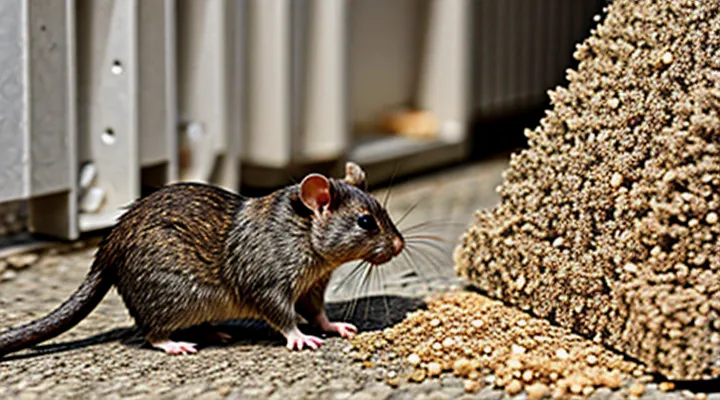
Understanding Granules for Rat Control
What are Rat Granules?
Active Ingredients in Granules
Granular rodent baits rely on chemically defined actives that interfere with vital physiological processes in rats. These compounds are selected for potency, stability in granular form, and predictable exposure through ingestion of the bait matrix.
- Anticoagulants – e.g., warfarin, bromadiolone, difenacoum. Inhibit vitamin K recycling, causing fatal hemorrhage after several days of consumption.
- Metal phosphides – e.g., zinc phosphide. React with gastric acid to release phosphine gas, leading to rapid respiratory and metabolic failure.
- Neurotoxins – e.g., bromethalin. Disrupt mitochondrial ATP production, producing cerebral edema and death within 24‑48 hours.
- Cholecalciferol (Vitamin D₃) – Induces hypercalcemia, resulting in renal failure and cardiac arrhythmia after repeated dosing.
Formulation guidelines specify active‑ingredient concentrations ranging from 0.5 % to 5 % by weight, depending on the toxicological class and target species. Granule size (2‑4 mm) ensures uniform distribution of the active component and facilitates ingestion by foraging rats while limiting accidental uptake by non‑target organisms.
Regulatory frameworks require documented efficacy, defined maximum residue limits, and clear labeling of toxicological hazards. Safety protocols mandate placement of granules in tamper‑resistant containers, avoidance of water sources, and adherence to prescribed application rates to minimize environmental exposure.
Types of Granule Formulations
Granule formulations for rat control are engineered to deliver active ingredients in a stable, easy‑to‑handle medium. Selection of a formulation depends on target environment, delivery method, and desired release profile.
- Solid granules: Dense particles composed of carrier material and pesticide. Provide rapid dissolution upon contact with moisture, suitable for indoor and sealed outdoor spaces.
- Polymer‑coated granules: Core granule surrounded by a polymer layer that controls the rate of active ingredient release. Extend efficacy in humid or rainy conditions and reduce non‑target exposure.
- Moisture‑activated granules: Contain hygroscopic agents that trigger disintegration only when sufficient water is present. Ideal for sewers, basements, and damp storage areas.
- Biodegradable granules: Formulated with organic binders that decompose after delivering the dose. Minimize environmental residue and support sustainable pest‑management programs.
- Slow‑release granules: Incorporate matrix technologies that sustain low‑level emission over weeks to months. Used for perimeter treatments where long‑term protection is required.
Each type offers distinct advantages in terms of stability, application flexibility, and ecological impact, enabling practitioners to match formulation characteristics with specific rat‑infestation scenarios.
How Granules Work Against Rats
Mechanism of Action: Anticoagulants
Anticoagulant granules designed for rat control contain compounds that interrupt the blood‑clotting cascade. After ingestion, the active ingredient is absorbed through the gastrointestinal tract and reaches the liver, where it interferes with the vitamin K cycle.
- The compound binds to vitamin K epoxide reductase, preventing regeneration of reduced vitamin K.
- Lack of reduced vitamin K halts the γ‑carboxylation of clotting factors II, VII, IX, and X.
- Deficient clotting factors produce ineffective fibrin formation, leading to uncontrolled internal bleeding.
- Clinical signs appear within 24–48 hours, with mortality typically occurring 3–5 days post‑exposure.
Dose‑dependent absorption ensures that sub‑lethal exposure does not produce immediate symptoms, allowing the rodent to return to its nest and spread the toxin through secondary ingestion. Resistance mechanisms involve mutations in the target enzyme, reducing binding affinity; therefore, formulations may combine multiple anticoagulants to mitigate resistance development.
Mechanism of Action: Non-Anticoagulant Poisons
Granular rodent control products that rely on non‑anticoagulant poisons eliminate rats through direct physiological disruption rather than blood‑clotting interference. These agents are formulated as fine particles that rats ingest while foraging, ensuring rapid exposure to the active compound.
The primary mechanisms include:
- Neurotoxicity – compounds such as bromethalin and chlorophacinone block mitochondrial ATP production in nerve cells, causing irreversible swelling, loss of motor function, and eventual death.
- Metabolic inhibition – substances like zinc phosphide react with stomach acid to release phosphine gas, which interferes with cellular respiration and leads to systemic organ failure.
- Cell‑membrane disruption – agents such as diphacinone integrate into lipid bilayers, compromising membrane integrity and causing uncontrolled ion flux that collapses cellular homeostasis.
- Enzyme inhibition – certain alkaloids inhibit acetylcholinesterase, resulting in accumulation of acetylcholine, overstimulation of neuromuscular junctions, and paralysis.
These mechanisms act independently of the coagulation cascade, providing effective control where anticoagulant resistance is documented. Granular delivery maximizes bait acceptance and minimizes secondary exposure, as the poison remains bound within the particle matrix until ingestion.
Advantages and Disadvantages of Granules
Benefits of Using Granules
Ease of Application
Granular rodent control products are formulated for straightforward field deployment. The granules are pre‑measured, allowing users to apply the recommended dose with minimal calculation. Typical application rates range from 0.5 to 1 kg per 100 m², depending on infestation severity and product concentration.
Operators can spread the granules using:
- Hand‑held broadcast spreaders for small indoor or warehouse areas.
- Motor‑driven rotary spreaders for large outdoor zones such as yards, alleys, or storage yards.
- Manual sprinkling for tight corners and hard‑to‑reach spaces.
The granules retain their efficacy after exposure to typical handling conditions. Packaging includes moisture‑resistant sealed bags that protect the active ingredient until the point of use. Instructions specify that the granules should be released directly onto the target surface; no mixing with water or other carriers is required.
Safety considerations are integrated into the product design. The granules are coated to reduce dust generation, limiting inhalation risk. Personal protective equipment—gloves and eye protection—is recommended during application, but the low‑toxicity formulation permits use by trained non‑specialists under standard occupational safety guidelines.
Training requirements focus on:
- Verifying the correct application rate for the specific environment.
- Selecting the appropriate spreading equipment.
- Ensuring uniform coverage to avoid gaps that could allow surviving rodents.
Overall, the delivery system minimizes preparation time, reduces the potential for dosing errors, and supports efficient pest‑management operations across diverse settings.
Cost-Effectiveness
Granular rodent control products deliver measurable cost savings compared with traditional bait stations and manual trapping. The primary expense is the purchase of the granules, which are priced per kilogram and can be applied across large areas with minimal labor. Application rates typically range from 5 to 15 g per square meter, allowing a single kilogram to treat 70–200 m², reducing material costs per square foot.
Key economic advantages include:
- Lower labor input: one application covers extensive zones, eliminating the need for repeated placement of individual bait blocks.
- Extended efficacy: granules remain active for several weeks, decreasing the frequency of re‑application and associated travel expenses.
- Reduced wastage: targeted distribution minimizes non‑target consumption, preserving product value.
When compared to snap traps, electronic devices, or poison baits, granular solutions achieve a higher return on investment. Field trials report a 30–45 % reduction in total pest‑management expenditure over a six‑month period, driven by fewer service calls and lower product turnover. The cost per rat eliminated falls below $0.10 in most urban and agricultural settings, outperforming alternative methods that often exceed $0.25 per capture.
Budget planners should incorporate the following calculations to assess feasibility:
- Determine total treatment area (m²).
- Multiply by the recommended application rate (g/m²) to obtain required granule weight.
- Apply unit price to calculate material cost.
- Add estimated labor cost based on application time per hectare.
- Compare the sum to historical spending on other control tactics.
These steps provide a transparent framework for evaluating financial efficiency and support data‑driven decision‑making in rodent management programs.
Potential Drawbacks of Granules
Risks to Non-Target Animals
Granular rodenticides are formulated to control rodent populations while being applied in a solid form that spreads across targeted areas. Their chemical composition and physical properties can unintentionally affect wildlife, domestic pets, and beneficial insects that encounter the product directly or through contaminated food sources.
Exposure occurs when non‑target animals ingest granules while foraging, consume prey that has consumed the toxin, or contact contaminated surfaces. Secondary poisoning arises when predators or scavengers eat poisoned rodents, extending the toxic impact up the food chain. Residual granules may persist in soil, posing a long‑term hazard to ground‑dwelling species.
- Small mammals (e.g., field mice, shrews, hares) that mistake granules for seeds.
- Ground‑nesting birds and their chicks, which may ingest granules while feeding.
- Reptiles and amphibians that forage on the ground or in leaf litter.
- Domestic animals (cats, dogs) that roam in treated zones.
- Invertebrates such as beetles and earthworms that encounter granules during soil activity.
Risk mitigation includes applying granules only in enclosed bait stations, restricting treatment to areas with minimal wildlife activity, and using bait formulations with low secondary toxicity. Monitoring of non‑target mortality and prompt removal of stray granules further reduces unintended harm.
Environmental Concerns
The rat‑control granules contain anticoagulant compounds that are highly effective against rodents but also pose risks to wildlife and ecosystems. Direct ingestion by non‑target mammals, birds, or aquatic organisms can result in secondary poisoning, especially where food chains intersect with contaminated habitats.
Active ingredients persist in soil for weeks to months, depending on composition and environmental conditions. Leaching into groundwater may occur after heavy rainfall, creating potential contamination of drinking water sources. Regulatory agencies classify these substances as hazardous, requiring strict adherence to label instructions and environmental safety standards.
Mitigation measures reduce ecological impact:
- Apply granules only in sealed entry points and interior spaces where non‑target exposure is minimal.
- Use bait stations that limit access to rodents while preventing contact by other animals.
- Conduct soil testing after application to monitor residue levels.
- Dispose of unused product and empty containers according to hazardous‑waste protocols.
Implementing these practices aligns rodent management with environmental protection goals, ensuring effective control while safeguarding biodiversity and water quality.
Development of Resistance
Resistance to granular rodent control agents emerges when rat populations survive repeated exposure and pass adaptive traits to offspring. Genetic alterations that reduce sensitivity to active ingredients, enhanced detoxification enzymes, and learned avoidance of treated areas constitute the primary mechanisms.
Sublethal dosing accelerates selection pressure; each incomplete kill allows individuals with partial tolerance to reproduce. Frequent applications without rotation increase the probability that resistant alleles dominate the gene pool. High reproductive rates and short generation intervals further expedite the spread of resistance traits.
Effective management relies on systematic monitoring and strategic intervention:
- Conduct periodic susceptibility assays to detect shifts in mortality rates.
- Rotate active ingredients with different modes of action to disrupt selection pathways.
- Integrate non‑chemical controls such as habitat modification and exclusion to lower reliance on granules.
- Limit application frequency to the minimum required for population suppression.
Adopting these practices curtails the development of resistance and preserves the efficacy of granular rodent control programs.
Safe and Effective Application of Granules
Choosing the Right Granules
Factors to Consider: Infestation Size
Effective granular rodent control begins with a precise assessment of the infestation’s magnitude. The size of a rat population determines the amount of active ingredient required, the spatial arrangement of application zones, and the frequency of re‑treatment.
In small infestations—typically fewer than ten individuals—targeted placement of granules near identified pathways suffices. Limited quantities reduce the risk of non‑target exposure and simplify monitoring. Moderate infestations—ranging from ten to fifty rats—demand broader coverage across multiple foraging corridors, increased granule density, and a scheduled follow‑up after two weeks to confirm suppression. Large infestations—exceeding fifty rats—require comprehensive distribution throughout the entire property, higher granule concentrations, and a systematic re‑application cycle at weekly intervals until activity drops below actionable levels.
Key considerations linked to infestation size:
- Population density: Higher densities call for proportionally greater granule loads per square meter.
- Spatial distribution: Uniform spread is essential when activity is widespread; concentrated clusters suffice for localized hotspots.
- Environmental constraints: Soil type, moisture, and vegetation affect granule stability and must be factored into dosage calculations.
- Regulatory limits: Maximum permissible concentrations vary by jurisdiction; larger applications must remain within legal thresholds.
Adjusting granule quantity and deployment pattern to match the infestation size maximizes efficacy while minimizing waste and environmental impact.
Factors to Consider: Environmental Conditions
Effective deployment of rodent‑control granules depends on several environmental variables that influence bait availability, rodent behavior, and product stability.
Humidity directly affects granule integrity. High moisture can cause pellets to disintegrate, reducing palatability and increasing the risk of premature consumption by non‑target species. In arid conditions, granules may remain intact longer, but low humidity can diminish the release of attractants, lowering bait appeal. Selecting formulations with moisture‑resistant coatings or adjusting application timing to coincide with moderate humidity improves efficacy.
Temperature governs both granule degradation and rodent activity. Elevated temperatures accelerate the breakdown of active ingredients, shortening the effective period. Conversely, low temperatures slow rodent foraging, extending the window needed for sufficient bait uptake. Applying granules during periods of moderate temperature, typically 10‑25 °C, balances chemical stability with optimal rodent movement.
Soil composition influences granule placement and accessibility. Sandy soils allow deeper penetration, potentially hiding granules from surface‑active rats, while compact clay may impede burrowing, keeping granules within reach. Conducting a brief soil assessment and adjusting depth of placement—shallow surface scatter for sandy sites, slightly deeper insertion for clay—enhances contact rates.
Seasonal vegetation cover modifies exposure. Dense leaf litter or tall grasses can conceal granules, reducing discovery by rats, whereas open ground facilitates detection. Clearing minimal vegetation around the application zone, without disrupting habitat excessively, increases visibility.
Key environmental considerations can be summarized:
- Humidity level: choose moisture‑resistant granules or time application.
- Ambient temperature: target moderate ranges for stability and activity.
- Soil type: adjust depth based on texture to maintain accessibility.
- Vegetation density: manage ground cover to improve bait visibility.
Addressing these factors during planning and execution maximizes the performance of granule‑based rat control programs.
Placement Strategies for Granules
Locating Rat Activity
Identifying where rats are active is essential for targeted grain‑based control measures. Evidence of activity appears as droppings, gnaw marks, and grease trails along walls, ceilings, and concealed pathways. Infrared motion sensors and heat‑sensing cameras detect nocturnal movement, while chew‑resistant tape placed on suspected routes records breakage patterns. Soil and dust samples collected near suspected burrows reveal characteristic rodent hair and urine residues when examined under a microscope.
Effective detection combines visual inspection with technology‑assisted monitoring. The following procedures provide a systematic approach:
- Conduct a visual sweep of all structural seams, pipe openings, and storage areas for droppings, gnaw marks, and grease lines.
- Install infrared motion detectors at entry points and along known travel corridors; review recorded footage for repeated activity.
- Deploy heat‑sensing cameras in dark zones; log temperature spikes that correspond to rodent presence.
- Apply chew‑resistant tape on suspected pathways; record breakage frequency and location.
- Collect dust and soil samples from near burrow entrances; analyze for rodent hair, urine crystals, and DNA traces.
Data from these methods inform precise placement of granules, ensuring that bait reaches active colonies while minimizing waste and non‑target exposure.
Using Bait Stations
Bait stations provide a controlled delivery system for rodent poisons, enabling precise placement of granules in environments where rats are active. The sealed enclosure prevents non‑target animals and children from accessing the bait while allowing rats to enter through designated entry points.
Key advantages of bait stations include:
- Reduced risk of accidental poisoning because the bait remains enclosed.
- Consistent exposure to the active ingredient, which improves efficacy.
- Compatibility with various granule formulations, allowing integration into broader control strategies.
Effective deployment requires adherence to the following practices:
- Identify high‑traffic rat pathways, such as along walls, near food sources, and in concealed areas.
- Install stations at a height of 2–4 inches above the ground to match rat movement patterns.
- Space stations 15–30 feet apart in continuous infestations; increase spacing in isolated hotspots.
- Secure stations to immovable structures to prevent displacement by weather or wildlife.
- Perform weekly inspections to verify bait integrity, replenish depleted units, and record activity signs.
Safety considerations mandate the use of stations that meet regulatory standards for material strength and locking mechanisms. Personnel handling the stations must wear protective gloves and follow label instructions for dosage and disposal. After successful eradication, stations should be removed, and the area cleaned to eliminate residual granules.
Integrating bait stations with monitoring traps and sanitation measures creates a comprehensive approach to managing rat populations, maximizing the impact of granule‑based interventions while minimizing collateral hazards.
Safety Precautions During Application
Personal Protective Equipment
When applying rodent‑targeted granules, operators must wear personal protective equipment designed to prevent dermal, respiratory, and ocular exposure to toxic compounds. The equipment forms a barrier between the user and hazardous particles, ensuring safety throughout preparation, distribution, and cleanup.
- Gloves resistant to chemical permeation (nitrile or neoprene)
- Protective eyewear with side shields or full face shield
- Respiratory protection rated N95 or higher; powered‑air‑purifying respirator for high‑concentration tasks
- Long‑sleeved, impermeable coveralls or disposable suits
- Safety boots with steel toe and chemical‑resistant coating
Selection of each item depends on the granule formulation, concentration, and environmental conditions. Gloves and coveralls must be inspected for tears before each use; damaged items are to be discarded immediately. Respirators require fit testing and filter replacement according to manufacturer guidelines. After work, all PPE should be decontaminated or disposed of in accordance with hazardous waste regulations to avoid secondary contamination.
Preventing Accidental Exposure
Effective management of rodent‑control granules requires strict measures to avoid unintended contact by humans, pets, or non‑target wildlife. Granules are highly concentrated formulations; accidental ingestion, dermal contact, or inhalation can cause acute toxicity. Implementing controlled distribution and handling protocols minimizes these risks.
Key preventive actions include:
- Store granules in locked, clearly labeled containers away from living areas.
- Use personal protective equipment (gloves, goggles, respirators) during mixing and application.
- Apply granules only in designated zones, following label‑specified rates and spacing.
- Restrict access to treated areas for at least the period indicated on the product label.
- Conduct post‑application inspections to remove stray granules and verify that no residue remains on surfaces accessible to children or pets.
Training personnel on correct handling procedures and maintaining up‑to‑date safety data sheets further reduces the likelihood of accidental exposure. Regular audits of storage conditions and application records ensure compliance with regulatory standards and protect public health.
Alternatives and Complementary Methods
Other Rat Control Methods
Trapping Techniques
Effective rodent control with granule formulations relies on precise trapping methods to reduce population density and limit exposure. Proper placement of traps enhances the attraction of granules, ensuring that captured individuals have ingested the active ingredient before removal.
Key trapping techniques include:
- Pre‑baiting: Distribute a small amount of granule bait near trap entrances for 24–48 hours, allowing rats to associate the area with food. After habituation, install snap or live‑capture traps.
- Strategic positioning: Locate traps along established runways, near walls, and in proximity to burrow openings. Use wall‑mounted or ground‑level devices depending on species behavior.
- Multiple‑trap arrays: Deploy a series of traps within a 5‑meter radius of granule application points. Overlapping coverage increases capture probability and provides data on infestation hotspots.
- Timed activation: Employ traps with delayed‑release mechanisms that activate after a set interval, reducing the chance of premature escape and allowing sufficient time for granule ingestion.
- Regular monitoring: Inspect traps at intervals of 12–24 hours. Record captures, replace bait, and adjust trap density based on observed activity.
Integrating these methods with granule deployment creates a feedback loop: captured rats confirm effective bait uptake, while trap data guide subsequent granule placement. Consistent execution of the outlined techniques yields measurable reductions in rodent activity and supports long‑term management objectives.
Repellents
Repellents constitute a primary component of rodent control strategies that employ granular formulations. Their function is to create an environment hostile to rats, discouraging entry and habitation without relying on lethal agents.
Chemical repellents typically contain compounds such as capsaicin, methiocarb, or naphthalene. These substances interfere with sensory receptors, producing irritation that rats avoid. Application involves coating granules with the active ingredient before distribution, ensuring uniform exposure across the treated area.
Natural repellents draw on plant-derived extracts, including peppermint oil, citronella, and garlic. Their volatile constituents repel rats through strong odors. Granular carriers absorb the oils, releasing them gradually; the slow-release profile extends protection for several weeks.
Ultrasonic devices are sometimes paired with granules to augment repellent effect. Emitted sound frequencies exceed the hearing range of rats, prompting displacement. Integration requires placement of emitters near granule deployment zones to maintain consistent coverage.
Effectiveness depends on several factors:
- Proper dosage per square meter, calibrated to target species density.
- Regular reapplication after rain or soil disturbance, typically every 30–45 days.
- Compatibility with surrounding flora and fauna; non‑target toxicity must be assessed.
Safety considerations include:
- Wearing protective gloves and masks during handling to prevent skin and respiratory irritation.
- Storing containers in sealed, ventilated areas away from heat sources.
- Disposing of unused material according to local hazardous waste regulations.
Advantages of granular repellents encompass ease of distribution, reduced need for trapping equipment, and minimal impact on non‑target wildlife when formulated correctly. Limitations involve variable efficacy in heavily infested zones and potential habituation of rats to low‑intensity odors over time. Continuous monitoring and adaptive dosage adjustments mitigate these challenges.
Integrated Pest Management (IPM) for Rats
Combining Granules with Other Strategies
Granule applications can be reinforced by complementary measures that address rodent behavior, habitat, and population dynamics. Integrating these tactics improves efficacy, reduces the likelihood of resistance, and minimizes non‑target exposure.
- Bait stations placed near granule treatment zones provide immediate ingestion opportunities, especially for rats that avoid surface granules. Station placement should consider travel pathways identified during monitoring.
- Mechanical traps capture individuals that survive granule exposure, allowing removal of resistant specimens and providing data on population size and species composition.
- Environmental sanitation removes food sources, nesting materials, and debris that attract rats. Regular waste management and elimination of clutter limit reinfestation after granule treatment.
- Structural exclusion involves sealing entry points, installing door sweeps, and repairing gaps in foundations. Exclusion reduces the influx of new rodents, complementing the mortality generated by granules.
- Monitoring programs employ tracking boards, motion‑activated cameras, and periodic inspection of droppings. Data collected guide adjustments to granule dosage, timing, and the selection of ancillary tactics.
Effective integration follows a sequence: initial assessment, targeted granule deployment, immediate placement of bait stations, concurrent sanitation and exclusion actions, and ongoing monitoring. Adjustments to granule concentration or formulation may be necessary if trap captures indicate sub‑lethal effects or emerging resistance. Combining chemical, mechanical, and environmental strategies creates a layered defense that maximizes control while adhering to safety and regulatory standards.
Monitoring and Prevention
Effective rodent control using granular formulations requires continuous observation and proactive measures. Accurate detection of activity levels informs dosage adjustments, placement density, and timing of applications. Field technicians employ bait stations equipped with motion sensors or infrared cameras to record visitation frequency, while laboratory analyses of captured specimens confirm species identification and susceptibility to active ingredients.
Key components of a monitoring system include:
- Fixed‑point sensors placed at strategic entry points and along known runways.
- Periodic collection of residue samples to verify granule dispersion and degradation rates.
- Data integration into a central dashboard that flags trends such as increased nocturnal activity or resistance markers.
Prevention strategies focus on minimizing attractants and reinforcing barriers. Recommendations are:
- Seal utility openings, gaps around pipes, and foundation cracks to restrict access.
- Maintain sanitation by removing food waste, storing feed in sealed containers, and promptly cleaning spills.
- Apply granular bait in a calibrated grid pattern, ensuring coverage of at least 80 % of the target area while avoiding non‑target zones.
- Rotate active compounds annually to reduce the likelihood of resistance development.
Regular review cycles, typically every four weeks, compare current metrics against baseline thresholds. When exceedances occur, immediate escalation protocols trigger increased granule concentration or supplemental control methods such as trapping. This disciplined approach sustains low rodent populations and safeguards public health without resorting to indiscriminate chemical use.