
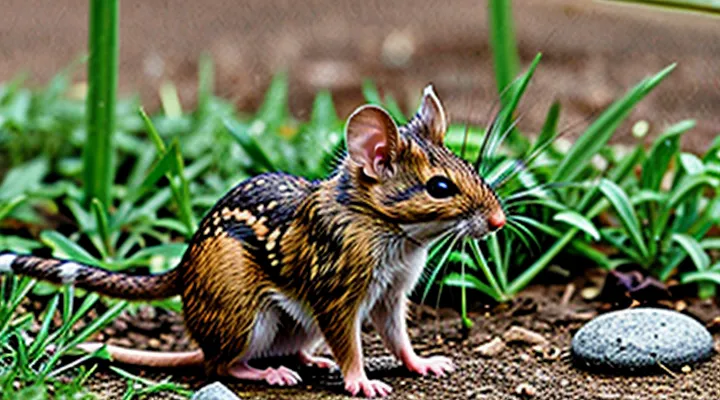
Appearance of Field Mice
Size and Shape
Body Dimensions
Field mice that inhabit garden environments typically exhibit compact bodies adapted for navigating dense vegetation and soil burrows. Adult individuals display a body length ranging from 7 to 10 cm, measured from the tip of the nose to the base of the tail. Tail length generally matches or slightly exceeds body length, extending 8 to 12 cm, providing balance during rapid locomotion.
Weight varies with species and seasonal food availability, averaging 12–25 g for common garden-dwelling mice. Hind‑foot length, an indicator of jumping ability, measures 1.2–1.8 cm, while ear length, crucial for thermoregulation, spans 0.8–1.2 cm. These dimensions collectively enable efficient foraging, predator evasion, and nesting within garden microhabitats.
Typical body proportions:
- Head‑body length: 7–10 cm
- Tail length: 8–12 cm
- Body mass: 12–25 g
- Hind‑foot: 1.2–1.8 cm
- Ear length: 0.8–1.2 cm
Variations arise from genetic differences, habitat moisture, and resource abundance, influencing overall size and robustness. Measurements reported in field studies provide baseline data for assessing health, population dynamics, and ecological impact of these small mammals in cultivated landscapes.
Tail Characteristics
Field mice that inhabit gardens possess tails that serve multiple physiological and ecological functions. The tail is an extension of the vertebral column, composed of 20–25 vertebrae, each articulated to allow flexibility. Muscular and ligamentous structures provide the strength needed for rapid directional changes during foraging and predator evasion.
Key tail characteristics include:
- Length: Typically 70–90 % of the body length, ranging from 6 cm to 9 cm in adult individuals.
- Shape: Tapered to a rounded tip; the distal segment is slightly thinner, facilitating agile movements.
- Fur coverage: Dorsal surface bears dense, short hairs that match the body’s dorsal coloration, while the ventral side is sparsely haired, exposing the underlying skin.
- Coloration: Dorsal fur varies from light brown to gray, often with a subtle darker stripe along the midline; ventral skin appears pinkish or pale.
- Scale presence: The terminal 1 cm lacks hair and is covered with fine, keratinized scales that aid in grip when climbing vegetation.
These attributes contribute to balance, allowing the mouse to maintain stability while navigating narrow stems and leaf litter. The tail also functions as a thermoregulatory organ; vasodilation of the skin surface dissipates excess heat during active periods, while vasoconstriction conserves warmth in cooler conditions. Additionally, the tail’s movement conveys social signals—rapid flicking may indicate alarm, whereas a relaxed, gently waving tail reflects a non‑threatened state.
Ear Features
Field mice that inhabit gardens possess ears adapted for precise acoustic detection and temperature regulation. The external pinna is proportionally large, triangular, and covered with fine hair that reduces wind noise while channeling sound toward the auditory canal. The cartilage framework provides flexibility, allowing the pinna to swivel up to 180 degrees, which enhances directional hearing and aids in locating predators or conspecifics.
Key ear characteristics include:
- Size and shape: Pinna length ranges from 8 to 12 mm; the apex is blunt, facilitating rapid movement.
- Hair coverage: Dense vibrissae and short guard hairs form a protective layer, minimizing debris accumulation.
- Blood vessels: A dense capillary network in the pinna surface dissipates heat, preventing overheating during active foraging.
- Auditory canal: Narrow, lined with keratinized epithelium, it protects the inner ear while maintaining sound transmission efficiency.
- Innervation: High density of mechanoreceptors in the pinna and canal supplies acute sensitivity to frequencies between 2 kHz and 20 kHz, matching the vocal range of the species.
These features collectively support the mouse’s ability to navigate dense vegetation, detect aerial and terrestrial threats, and communicate within the garden environment.
Fur and Coloring
Common Color Variations
Field mice that live in garden habitats display a limited set of fur color patterns, each linked to genetic background, geographic distribution, and seasonal camouflage needs. The most frequently observed shades are:
- Reddish‑brown: dominant across temperate zones, providing concealment among leaf litter and soil.
- Gray‑brown: common in regions with abundant stone or dry vegetation, matching the muted tones of the environment.
- Pale yellow‑beige: typical in arid or sandy garden soils, where lighter fur reduces contrast.
- Black or dark brown: less common, usually confined to populations in densely vegetated or shaded areas where deep shadows dominate.
Color variation arises from melanin concentration, with eumelanin producing darker tones and pheomelanin generating reddish hues. Seasonal molting may shift the palette toward lighter shades in summer and darker tones in winter, enhancing predator avoidance. Hybrid individuals often exhibit mixed coloration, reflecting interbreeding between neighboring populations.
Distinguishing Markings
Garden-dwelling field mice exhibit several reliable visual cues that enable rapid species identification and assessment of individual condition.
- Dorsal coat: Brown to grayish‑brown fur with a subtle dorsal stripe in many species; the stripe may be darker or lighter than surrounding fur, providing a contrast that is visible when the animal is perched on vegetation.
- Ventral surface: Pale gray‑white underparts, often lacking distinct markings; occasional faint mottling appears in juveniles.
- Tail: Length equal to or slightly exceeding body length; dorsal surface typically naked or sparsely haired, showing a uniform dark coloration, while the ventral side may be lighter.
- Ears: Small, rounded, covered with fine hair; ear pinnae frequently display a darker margin that distinguishes them from the surrounding fur.
- Whiskers: Long, stiff vibrissae extending forward from the rostrum; coloration matches dorsal fur, creating a stark line against the lighter muzzle.
- Feet: Pinkish‑brown pads with minimal fur; hind feet may show a faint dark band across the heel.
These markings remain consistent across seasonal changes, allowing observers to differentiate garden field mice from cohabiting rodent species and to monitor health indicators such as fur condition and tail integrity.
Sensory Organs
Eyesight
Field mice that inhabit garden environments rely on vision for daily activities such as locating food, avoiding predators, and navigating complex ground cover.
The eyes are positioned laterally on the skull, granting a panoramic visual field that exceeds 300 degrees. This placement reduces blind spots and enables detection of movement approaching from multiple angles.
Key visual traits include:
- High proportion of rod cells, enhancing sensitivity to dim illumination typical of dawn, dusk, and dense vegetation.
- Limited cone density, resulting in modest color discrimination but sufficient contrast perception for identifying outlines.
- Visual acuity estimated at 0.5 cycles per degree, adequate for recognizing shapes and motion at short distances.
- Depth perception supported by overlapping fields of view, facilitating accurate jumps between low stems and debris.
Under low‑light conditions, the retina dilates rapidly, maximizing photon capture. Pupil constriction occurs swiftly when exposed to bright sunlight, protecting retinal tissue and preserving image clarity.
Behaviorally, acute motion detection triggers immediate escape responses when a predator’s silhouette enters the peripheral zone. Simultaneously, the ability to discern subtle changes in ground texture guides foraging paths toward seeds and insects concealed beneath leaf litter.
Overall, the visual system of garden‑dwelling field mice integrates structural adaptations and functional performance to support survival in a dynamic, predator‑rich habitat.
Hearing
Field mice rely on acute auditory perception to navigate garden habitats, locate food, and evade predators. Their ear structures include large, mobile pinnae that can rotate up to 180 degrees, allowing rapid localization of sound sources across a wide field.
Key auditory characteristics:
- Frequency range extends from 2 kHz to 70 kHz, with peak sensitivity around 20 kHz, enabling detection of rustling insects and distant footsteps.
- Sound‑induced startle reflex triggered within 30 ms of stimulus, prompting immediate freeze or escape behaviors.
- Low‑frequency masking reduced by the dense vegetation, which reflects higher‑frequency sounds toward the mouse’s ears.
The auditory system integrates with other senses to shape foraging patterns. When a mouse perceives the faint crackle of a moving beetle, it adjusts its path to intercept the prey while maintaining a low profile. Conversely, detection of predator footsteps initiates a rapid retreat to burrow entrances, often coordinated with tactile cues from whiskers.
Neural processing occurs in the auditory cortex, where temporal patterns are decoded to differentiate between conspecific vocalizations and environmental noises. Field mice emit ultrasonic chirps during social interactions; the same frequency band is used for alarm calls that alert nearby individuals to danger.
Overall, hearing provides essential feedback for survival in garden ecosystems, influencing movement, feeding efficiency, and predator avoidance.
Olfaction
Olfaction enables garden-dwelling field mice to locate food, avoid predators, and communicate with conspecifics. The nasal epithelium contains millions of odor receptors that translate volatile compounds from soil, plants, and decaying organic matter into neural signals. These signals drive foraging routes, directing mice toward seeds, insects, and fungal spores while steering them away from areas marked by predator scents such as fox urine or owl feathers.
The structure of the olfactory system influences external features. Mice possess a pronounced, mobile snout that enhances airflow over the olfactory epithelium, allowing rapid sampling of airborne chemicals. Whisker placement around the snout provides tactile feedback that complements scent detection, facilitating navigation through dense vegetation.
Behavioral patterns linked to smell include:
- Territorial marking: Mice deposit urine and glandular secretions along pathways, creating scent trails that delineate individual home ranges.
- Social interaction: Detection of pheromones released by conspecifics triggers mating behavior and hierarchy establishment.
- Predator avoidance: Immediate withdrawal occurs when alarm odors are identified, reducing exposure to threats.
Neural processing of olfactory information occurs in the olfactory bulb, which projects to the piriform cortex and amygdala. These regions integrate scent cues with memory and emotional responses, shaping daily activity cycles and habitat selection. Consequently, olfactory acuity directly shapes both the physical adaptations and the behavioral repertoire of field mice inhabiting garden ecosystems.
Behavior of Field Mice
Habitat and Nesting
Preferred Garden Areas
Field mice select garden zones that maximize shelter, food availability, and low predation risk. Their choices reflect instinctive patterns of foraging and nesting.
- Dense ground cover such as tall grasses, clover, and low‑lying herbs. The vegetation provides concealment from aerial and terrestrial predators and retains moisture for seed and insect prey.
- Edge habitats where cultivated beds meet wild vegetation. These transitional zones offer a mix of cultivated plants and natural seed sources while preserving access to cover.
- Areas with abundant seed‑producing plants, including cereals, sunflowers, and legumes. Seeds constitute the primary energy source, especially during autumn.
- Moist microhabitats near irrigation lines, bird baths, or damp soil patches. Moisture supports invertebrate populations and softens soil for burrow construction.
- Fallen logs, stone piles, and debris heaps. Such structures create stable burrow entrances and protect against temperature extremes.
Preference for these locations is consistent across seasons, with mice shifting to seed‑rich zones in autumn and seeking denser cover during colder periods. Understanding these spatial preferences assists in garden management and wildlife monitoring.
Nest Construction Materials
Field mice that inhabit garden environments construct nests using readily available resources to provide insulation, concealment, and structural stability. Their selection of materials reflects seasonal availability and proximity to foraging sites.
Typical organic components include:
- Fresh or dried grasses, offering flexibility and moisture resistance.
- Broadleaf fragments and shredded plant stems, serving as bulk filler.
- Moss and lichens, contributing softness and additional thermal protection.
- Small twigs or bark pieces, reinforcing nest walls and supporting shape.
When human activity introduces alternative substrates, mice incorporate them opportunistically:
- Strips of paper, tissue, or cardboard, valued for softness and ease of manipulation.
- Fibrous fabric remnants, such as cotton or wool, enhancing nest warmth.
- Thin plastic films or packaging, providing a barrier against moisture.
- Compost or leaf litter mixed with garden debris, increasing volume and camouflage.
Material choice balances durability, thermal efficiency, and concealment, enabling the rodents to maintain secure brood chambers throughout the breeding season.
Burrow Systems
Field mice construct intricate burrow networks that support their daily activities and seasonal cycles. The tunnels extend 30‑80 cm below the soil surface, allowing access to stable temperature and humidity levels essential for rest and rearing of offspring.
- Main entrance: a shallow, concealed opening often located near dense vegetation or mulch, providing quick escape from predators.
- Primary tunnel: a straight or gently curved passage leading to a central chamber; walls are reinforced with compacted soil and occasional plant fibers.
- Nest chamber: situated 10‑20 cm deeper than the entrance, lined with shredded leaves, grass stems, and fine detritus to create insulation and softness for sleeping and nursing.
- Food storage alcove: a side cavity stocked with seeds, grains, or fallen insects, positioned close to the nest for efficient retrieval.
- Escape routes: secondary exits branching from the main tunnel, enabling rapid evasion when the primary entrance is threatened.
Burrow dimensions vary with soil composition; loamy soils permit larger chambers, whereas sandy substrates limit tunnel width to prevent collapse. Seasonal adjustments include sealing entrances during winter to conserve heat and expanding the network in spring to accommodate litter growth. The architecture reflects a balance between protection, thermoregulation, and resource accessibility, directly influencing the mice’s foraging patterns and predator avoidance strategies.
Diet and Foraging
Food Preferences
Field mice that inhabit garden ecosystems exhibit selective feeding habits closely tied to seasonal resource availability. Their diet primarily consists of:
- Seed kernels from grasses, cereals, and wildflowers.
- Fresh shoots and tender leaves of herbaceous plants.
- Invertebrates such as beetle larvae, earthworms, and soft-bodied insects.
- Fruit remnants, including fallen berries and ripened seed pods.
- Fungal mycelia and sporocarps encountered near moist soil.
During early spring, mice concentrate on emerging shoots and insect larvae, exploiting high protein content to support rapid growth. Summer diets shift toward abundant seed supplies and succulent foliage, while autumn sees increased consumption of fallen fruits and nuts, providing essential fats for winter preparation. In periods of scarcity, individuals may gnaw bark or consume stored crop residues, demonstrating opportunistic foraging behavior.
Digestive efficiency varies with food type: carbohydrates from seeds are processed quickly, whereas protein from insects requires longer enzymatic activity. This nutritional balance influences body condition, reproductive output, and territorial movements within the garden matrix.
Damage to Plants
Field mice that inhabit gardens frequently cause measurable injury to cultivated and ornamental vegetation. Their small size enables access to delicate plant parts, while their nocturnal foraging intensifies the risk of unnoticed loss.
Typical manifestations of plant damage include:
- Consumption of seedlings, sprouts, and tender leaves, reducing stand density and yield.
- Gnawing of bark, stems, and seed heads, creating entry points for pathogens and insects.
- Burrowing near root zones, disrupting soil structure and impairing water and nutrient uptake.
- Deposition of urine and feces, leading to localized nutrient imbalances and fungal growth.
Repeated feeding cycles can diminish plant vigor, delay maturation, and increase the need for replacement stock. Recognizing these patterns allows gardeners to implement targeted control measures and preserve plant health.
Seed and Bulb Consumption
Field mice that inhabit garden habitats regularly incorporate seeds and bulbs into their diet. Their foraging behavior targets high‑energy plant structures that are readily accessible on the soil surface or just below it.
- Seeds: Preference for small, oily seeds such as those of grasses, cereals, and wildflowers. Mice harvest seeds by gnawing the husk and extracting the kernel, often storing excess in shallow caches near burrow entrances.
- Bulbs: Consumption focuses on tender, early‑season bulbs like wild garlic, tulip, and crocus. Mice locate bulbs by scent, then use incisors to breach the outer scales and consume the nutrient‑rich inner tissue.
Seasonal patterns dictate intake levels. In autumn, abundant seed fall increases consumption rates, while in spring, emerging bulbs provide a primary protein source before insects become plentiful. Nutritionally, seeds supply carbohydrates and fats, whereas bulbs contribute proteins, sugars, and micronutrients essential for growth and reproduction.
Impact on garden productivity is measurable. Continuous seed removal can reduce the seed bank of weeds, yet excessive predation on cultivated bulbs may impair ornamental plant establishment. Management strategies that limit mouse access—such as physical barriers around bulb beds or timely seed sowing—moderate damage without disrupting the ecological role of these rodents.
Social Structure
Solitary Nature
Garden-dwelling field mice exhibit a pronounced solitary disposition. Individual adults occupy distinct home ranges that rarely overlap, even when resources are abundant. This pattern reduces direct competition and limits the spread of parasites.
Physical characteristics support solitary living. Small body size (approximately 6–9 cm head‑body length) enables rapid movement through dense vegetation. Fur coloration—usually brown to gray—provides camouflage against soil and leaf litter, allowing a mouse to remain undetected while foraging alone. Highly developed whiskers and acute hearing facilitate navigation in low‑light conditions without reliance on conspecific cues.
Behavioral traits reinforce isolation. Mice establish and defend a burrow system that serves as a private nest, food cache, and refuge. Territorial boundaries are marked by scent deposits from anal glands and urine, signalling occupancy to neighboring individuals. Foraging occurs primarily at night; each mouse searches its own area for seeds, insects, and plant material, returning to the burrow before dawn. Social interaction is limited to brief encounters during mating season, after which individuals resume solitary activity.
Key aspects of solitary nature:
- Exclusive use of a personal burrow network
- Scent‑based territorial marking
- Nocturnal solitary foraging routes
- Minimal social contact outside reproductive periods
These attributes enable garden field mice to exploit fragmented habitats efficiently while maintaining individual autonomy.
Territoriality
Field mice that inhabit gardens maintain exclusive areas that provide access to food, shelter, and mates. Territorial boundaries reduce competition and limit the spread of parasites within a population.
Territories are defined through several mechanisms:
- Scent marking with urine and glandular secretions placed near burrow entrances and feeding sites.
- Vocalizations and tail‑slaps during encounters that signal ownership.
- Physical aggression, such as chasing and biting, which establishes dominance hierarchies.
- Spatial constraints, with adult males typically defending zones of 10–30 m², while females occupy smaller, nest‑centric patches.
Territorial size fluctuates with seasonal demands. During the breeding season, males expand their range to include multiple female home ranges, increasing overlap and encounter rates. In winter, reduced foraging opportunities cause contraction of territories and heightened reliance on established burrows.
For garden management, awareness of territorial behavior informs control strategies:
- Preserve natural cover (e.g., mulch, low vegetation) to provide adequate nesting sites, discouraging mice from seeking shelter in cultivated beds.
- Distribute food sources evenly to avoid concentrated attractants that provoke aggressive boundary disputes.
- Employ physical barriers, such as fine mesh, around high‑value crops to limit access without disrupting established territories.
Understanding how garden-dwelling field mice delineate and defend their spaces enables targeted interventions that balance pest mitigation with ecological considerations.
Reproduction
Breeding Season
Garden‑dwelling field mice enter their reproductive period in early spring, typically from March to May, when temperatures rise above 10 °C and food abundance increases. Day length extending beyond twelve hours stimulates hormonal changes that trigger sexual readiness in both sexes.
Mating occurs quickly after emergence. Males patrol established territories, scent‑mark with urine and glandular secretions, and engage in brief chases to assess rival strength. Females emit ultrasonic vocalizations that attract multiple suitors, but usually select a single partner for each estrus cycle. Copulation lasts only a few seconds, after which the female retreats to a secure location to form a nest.
Nest construction intensifies during the breeding season. Females gather dry grasses, leaves, and shredded bark, lining shallow depressions beneath dense vegetation or within compost heaps. Nests are insulated with shredded plant material, providing stable microclimates for embryonic development. Maternal behavior shifts markedly: females become markedly more aggressive toward intruders, increase nocturnal foraging trips, and exhibit reduced exploratory movements outside the nest perimeter.
Key reproductive parameters are:
- Gestation length: 19–21 days.
- Average litter size: 4–7 pups.
- Weaning age: 21 days post‑birth.
- Subsequent breeding cycles: up to three litters per season, contingent on resource availability.
Offspring remain in the natal nest for the first two weeks, during which they are nourished exclusively by maternal milk. Rapid growth follows, with fur development and thermoregulation achieved by day ten. Survival rates depend on predator pressure, ambient humidity, and the continuity of food sources such as seeds and insects. Successful reproduction during this window sustains the local field‑mouse population throughout the warmer months.
Litter Size and Frequency
Garden-dwelling field mice reproduce rapidly. Females produce multiple litters each year, contributing to their population density in cultivated areas.
Typical litter size ranges from three to eight pups, with an average of five. Size variations correlate with food availability, ambient temperature, and the health of the mother. Larger litters occur in periods of abundant seed and insect supplies, while reduced numbers appear during drought or limited foraging conditions.
Breeding frequency follows a seasonal pattern:
- First litter appears in early spring (April–May) after a gestation period of about 19–21 days.
- Subsequent litters emerge every 3–4 weeks throughout the warm months.
- Up to five litters may be produced before the onset of colder weather, after which reproductive activity declines sharply.
The combination of moderate litter size and short inter‑litter intervals enables field mice to maintain high turnover rates in garden ecosystems.
Activity Patterns
Nocturnal Habits
Garden‑dwelling field mice are primarily active after dusk. Their circadian rhythm aligns with low light conditions, reducing exposure to diurnal predators.
During the night, mice emerge from burrows to forage. Activity peaks within the first three hours after sunset, then declines toward dawn. Movements are rapid and erratic, allowing efficient coverage of the garden floor while conserving energy.
Nighttime feeding focuses on seeds, insects, and soft plant tissues. Mice locate food using whisker tactile sensing and acute hearing. They transport edible items back to hidden caches, often concealed under leaf litter or within shallow depressions.
Predator avoidance relies on stealth and rapid retreat. When threatened, mice dash into dense vegetation, burrow entrances, or underground tunnels. Their coat coloration blends with the garden’s dimly lit environment, enhancing camouflage.
Social interactions occur intermittently. Mice communicate through ultrasonic vocalizations and scent marking, establishing territories and coordinating foraging excursions.
Key nocturnal habits:
- Emergence shortly after sunset
- Intensive foraging for seeds, insects, and tender plant parts
- Food caching in concealed microhabitats
- Immediate retreat to cover upon disturbance
- Use of ultrasonic calls and scent trails for intra‑species signaling
Seasonal Activity Variations
Field mice adjust their activity patterns to the changing conditions of each season, influencing their presence in cultivated plots. In spring, increased daylight and rising temperatures stimulate breeding, prompting rapid expansion of foraging ranges. Juvenile dispersal peaks during this period, leading to higher encounter rates with seedlings and tender vegetation.
Summer brings abundant seed production, which aligns with the mice’s heightened metabolic demands. Activity concentrates in the early morning and late evening to avoid peak heat, while burrow ventilation improves with warmer soil. Foraging shifts toward high‑energy grains and insect larvae that appear in moist garden microhabitats.
Autumn triggers a preparatory phase for overwintering. Mice collect and store seeds, nuts, and dried plant material in underground caches. Their movement becomes more erratic as they test multiple cache sites, and nocturnal activity extends to capitalize on cooler nights. The following winter sees a marked reduction in surface activity, with individuals remaining largely within insulated burrows and relying on stored provisions.
Typical seasonal trends:
- Spring: intense breeding, broad foraging area, juvenile dispersal.
- Summer: peak seed consumption, crepuscular activity, temperature‑driven shelter use.
- Autumn: cache building, expanded nocturnal foraging, increased territorial patrols.
- Winter: limited surface movement, reliance on stored food, deep burrow occupation.
Communication
Vocalizations
Field mice that inhabit garden ecosystems rely on vocal communication for territory defense, predator avoidance, and social interaction. Their acoustic repertoire consists of three primary call types:
- Squeaks – short, high‑frequency bursts emitted during close‑quarter encounters; serve to warn conspecifics of immediate danger or to assert dominance.
- Chirps – longer, modulated notes produced while foraging; function as contact signals that maintain group cohesion when individuals are dispersed among vegetation.
- Ultrasonic clicks – frequencies above 40 kHz, inaudible to humans; used in mating contexts and to convey subtle information about reproductive status.
Each call exhibits distinct temporal patterns. Squeaks typically last 10–30 ms with peak frequencies around 25 kHz, while chirps extend up to 150 ms and display frequency sweeps from 15 to 30 kHz. Ultrasonic clicks are brief (5–10 ms) and can exceed 60 kHz, allowing transmission without alerting many predators that lack high‑frequency hearing.
Behavioral observations confirm that vocalizations increase when mice encounter novel objects or when predator cues such as owl hoots are present. In these situations, squeaks intensify in rate and amplitude, providing rapid alerts to nearby individuals. Conversely, chirps dominate during periods of abundant food, reinforcing foraging networks and reducing the likelihood of accidental encounters.
Acoustic monitoring in garden habitats reveals that vocal activity peaks during twilight hours, aligning with the crepuscular activity pattern of the species. This timing optimizes signal propagation in dense foliage, where lower ambient noise levels enhance detection range.
Scent Marking
Garden-dwelling field mice rely on scent marking to convey information without visual cues. Specialized glands located near the cheeks, anal region, and urinary tract release volatile compounds onto vegetation, burrow entrances, and soil surfaces. The chemical signatures persist for hours, allowing individuals to detect recent activity even in dense foliage.
Key purposes of scent marking include:
- Defining and defending a foraging area from conspecific intruders.
- Signaling reproductive status to potential mates.
- Communicating hierarchy rank within a local population.
- Alerting nearby mice to predator presence through alarm‑related pheromones.
Mice deposit marks several times a day, especially during dawn and dusk when movement peaks. Researchers identify deposits by tracing fresh droppings, glandular secretions, and urine stains on plant stems. The chemical trails influence seed dispersal patterns and affect the behavior of other garden fauna, contributing to the overall ecological balance.