
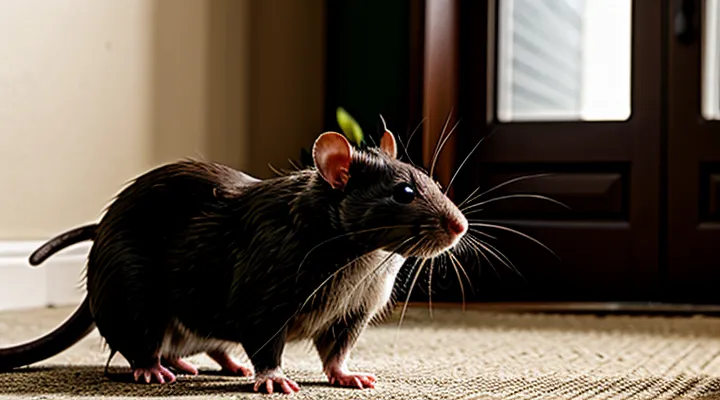
Understanding Rat Behavior and Sensory Perception
The Auditory Range of Rats
Rats detect sound across a broad spectrum, extending from low‑frequency vibrations near 200 Hz to ultrasonic tones up to 80 kHz, with peak sensitivity between 8 and 30 kHz. Auditory thresholds fall below 40 dB SPL within this optimal band, allowing detection of faint signals that are inaudible to humans. The cochlea’s elongated basal region accommodates high‑frequency processing, while the apical segment handles lower frequencies, providing a dual‑range capability essential for environmental monitoring.
The species relies on precise temporal and spatial cues to locate predators and conspecifics. Interaural time differences as small as 20 µs enable accurate sound‑source localization, especially at frequencies above 10 kHz where head‑shadow effects amplify directional contrast. Rapid neural firing rates, reaching 300 spikes per second, support real‑time assessment of acoustic threats.
Key parameters relevant to ultrasonic deterrent devices:
- Frequency band most effective for repellent emission: 12–25 kHz
- Minimum sound pressure level required to provoke avoidance: 55–65 dB SPL at source
- Optimal modulation pattern: rapid pulsed bursts (10–30 ms on, 100–200 ms off)
- Directionality: focused beams enhance coverage of entry points while minimizing spillover
Understanding these auditory characteristics informs the design of acoustic repellents that exploit rats’ heightened sensitivity, ensuring that emitted signals intersect the species’ most responsive frequency and intensity windows.
Rat Responses to Sound Frequencies
Rats detect ultrasonic and audible sounds through a highly sensitive cochlear apparatus. Their auditory range extends from approximately 200 Hz to 80 kHz, with peak sensitivity between 2 kHz and 20 kHz. Sound frequencies below this band produce limited behavioral change, while ultrasonic tones trigger acute startle and avoidance.
Key response patterns:
- 1–5 kHz: Mild agitation; increased grooming and exploratory activity.
- 5–15 kHz: Elevated locomotion; rats retreat from the source when intensity exceeds 60 dB SPL.
- 15–30 kHz: Immediate flight response; rapid displacement from the area, often accompanied by vocalizations.
- 30–80 kHz: Strong aversive reaction; sustained avoidance, reduced feeding, and heightened stress hormone levels.
Intensity thresholds determine the efficacy of acoustic deterrents. Below 50 dB SPL, most frequencies fail to elicit measurable avoidance. Above 70 dB SPL, ultrasonic emissions produce consistent repulsion, but prolonged exposure can lead to habituation, diminishing effectiveness after several days.
Habituation mitigation strategies include:
- Rotating frequency bands every 12–24 hours.
- Modulating amplitude in a pseudo‑random pattern.
- Integrating brief silent intervals to preserve novelty.
Empirical studies show that a combined protocol—alternating 20 kHz, 35 kHz, and 50 kHz tones at 75 dB SPL with intermittent silence—maintains avoidance behavior for up to four weeks. Continuous single‑frequency output typically loses repellency within ten days due to auditory adaptation.
The Science Behind Acoustic Repellents
How Ultrasonic and Sonic Repellents Work
Principles of Sound Waves and Their Impact on Pests
Sound waves are pressure fluctuations that travel through a medium at a speed determined by the medium’s density and elasticity. Frequency, measured in hertz, defines the oscillation rate; higher frequencies correspond to shorter wavelengths. Amplitude, expressed as sound pressure level (decibels), quantifies the energy carried by the wave and determines perceived loudness. These three variables—frequency, amplitude, and wavelength—govern how a wave interacts with biological tissue.
Rodents possess auditory systems tuned to a broad frequency range, extending well beyond human hearing limits. Their cochlear hair cells respond most sensitively to frequencies between 1 kHz and 80 kHz, with peak sensitivity around 10–20 kHz. When a sound exceeds the discomfort threshold—typically 85 dB SPL for rodents—neural circuits trigger avoidance behavior. Repeated exposure to such stimuli can condition animals to vacate an area, reducing infestation risk.
Acoustic repellents exploit the described principles by emitting targeted frequencies at intensities that surpass the rodent discomfort threshold while remaining inaudible to humans. Device design considerations include:
- Selection of ultrasonic frequencies (20 kHz–60 kHz) to avoid human perception.
- Calibration of output level to maintain 85 dB SPL or higher at the source.
- Directional transducers to focus energy toward entry points and hideouts.
- Continuous or pulsed emission patterns to prevent habituation.
Effective implementation of these parameters produces a hostile acoustic environment for rats, prompting immediate withdrawal and discouraging re‑entry. The approach relies on precise control of wave properties rather than chemical or physical barriers, offering a non‑toxic, low‑maintenance solution for pest management.
Differentiating Ultrasonic from Sonic Frequencies
Acoustic rat deterrents rely on frequencies that fall outside the range of human hearing while remaining audible to rodents. Distinguishing ultrasonic from sonic emissions is essential for evaluating device performance and safety.
Ultrasonic emissions exceed 20 kHz, often reaching 30–50 kHz. Rats detect these frequencies with peak sensitivity between 8 kHz and 20 kHz, extending to 80 kHz. Ultrasonic waves attenuate rapidly in air, limiting effective distance to a few meters. Their short wavelength allows compact transducers, but obstacles such as furniture or walls sharply reduce field strength.
Sonic emissions occupy the 20 Hz–20 kHz band. Within this range, rats respond most strongly to tones around 5–10 kHz, which also overlap with the upper limit of human hearing. Sonic waves travel farther, maintaining intensity over larger spaces. Devices using sonic frequencies typically require larger speakers and produce audible sound for occupants, which may be undesirable in residential settings.
Key differences:
- Frequency range: ultrasonic > 20 kHz; sonic = 20 Hz–20 kHz.
- Propagation: ultrasonic = high attenuation, short range; sonic = lower attenuation, longer range.
- Hardware: ultrasonic = small piezoelectric transducers; sonic = conventional drivers.
- Human perception: ultrasonic = inaudible; sonic = potentially audible.
- Regulatory focus: ultrasonic devices often classified as pest‑control equipment; sonic devices may be subject to noise‑emission standards.
Effective deployment requires matching the chosen frequency band to the target environment. In confined areas where distance is limited, ultrasonic emitters can provide localized deterrence without disturbing occupants. In open spaces where coverage must extend beyond a few meters, sonic emitters may achieve broader impact but must balance rodent efficacy against human tolerability.
Types of Acoustic Repellents
High-Frequency Devices
High‑frequency acoustic devices emit ultrasonic waves typically between 20 kHz and 60 kHz, a range beyond human hearing but within the auditory sensitivity of rats. The emitted pulses create a perceived threat, causing discomfort and prompting avoidance of the treated area. Devices generate these tones continuously or in programmed cycles to prevent habituation.
Key technical attributes include:
- Frequency spectrum: 20 kHz – 60 kHz, adjustable in many models.
- Sound pressure level: 80 dB – 110 dB SPL at the source, attenuating with distance.
- Coverage radius: 10 m – 30 m, dependent on power output and environmental acoustics.
- Power source: mains‑connected, battery‑backup, or solar‑panel options for uninterrupted operation.
Installation requires placement at rodent entry points, such as gaps, vents, and crawl spaces, with the emitter oriented toward the target zone. Devices should be mounted at least 1 m above the floor to maximize wave propagation and avoid obstruction by debris. Periodic verification of output voltage and frequency stability ensures consistent performance.
Limitations involve reduced efficacy in heavily insulated structures, where ultrasonic energy dissipates rapidly, and potential desensitization if the signal remains constant without variation. Integrating timer functions or frequency‑modulation features mitigates habituation. Regular cleaning of transducer surfaces prevents acoustic degradation caused by dust or moisture.
Variable Frequency Devices
Variable frequency acoustic repellents emit a continuously shifting range of sound tones rather than a single static pitch. The device generates a spectrum that sweeps upward and downward within the ultrasonic band, typically between 20 kHz and 60 kHz, altering the signal at intervals of a few seconds. This modulation prevents rats from adapting to a predictable pattern, maintaining the deterrent effect over extended periods.
Rats possess highly sensitive cochlear receptors tuned to ultrasonic frequencies. When exposed to a moving frequency band, the auditory system experiences repeated stimulus mismatch, triggering stress responses and avoidance behavior. The amplitude of the emitted pulses remains within safe limits for non‑target species, while the rapid frequency transitions exceed the perceptual thresholds of typical rodent hearing, ensuring efficacy without causing auditory damage.
Key advantages of variable‑frequency technology compared with fixed‑tone units include:
- Reduced habituation due to constant spectral change.
- Coverage of multiple species‑specific hearing ranges.
- Enhanced penetration through cluttered environments, as different frequencies interact variably with obstacles.
- Lower power consumption caused by intermittent high‑frequency bursts.
Effective deployment requires positioning devices at least 30 cm above ground and within 2 m of potential entry points. Power sources should provide uninterrupted operation; battery‑backed models guarantee functionality during outages. Regular cleaning of the transducer surface prevents acoustic attenuation caused by dust or debris. Monitoring devices for signal integrity ensures sustained performance and reliable rodent deterrence.
Electromagnetic and Ionic Combinations
Electromagnetic‑ionic hybrids extend the capabilities of sound‑based rat deterrents by altering both the carrier medium and the emitted waveform. The electromagnetic subsystem creates a low‑frequency magnetic field that couples with the animal’s auditory nerves, lowering the threshold for perception of ultrasonic pulses. Simultaneously, the field induces rapid oscillation of ionized particles in the surrounding air, generating a plasma that amplifies acoustic pressure and broadens the frequency spectrum.
The magnetic component operates at 10–30 kHz, a range that aligns with the peak sensitivity of rodent cochlear hair cells. By superimposing a static or pulsed magnetic flux, the system reduces the required acoustic intensity to achieve aversive responses, thereby conserving energy and minimizing audible disturbance for humans.
Ionization is achieved through a high‑voltage electrode that injects electrons into the ambient air, forming a transient plasma cloud. The plasma’s rapid expansion and collapse produce broadband acoustic bursts, extending effective coverage beyond line‑of‑sight obstacles. Ionic activity also modifies air conductivity, allowing the ultrasonic transducer to transmit with reduced attenuation in cluttered environments such as basements or storage rooms.
The combined approach yields several functional advantages:
- Expanded frequency range (ultrasonic + near‑ultrasonic) improves detection of varied rodent species.
- Lower acoustic output reduces power consumption and heat generation.
- Plasma‑enhanced bursts penetrate gaps and cracks that conventional speakers cannot reach.
- Magnetic sensitization augments behavioral aversion, shortening habituation periods.
Implementation typically involves a compact enclosure housing a ferrite core coil, a high‑voltage ionizer, and an ultrasonic driver. Power draw remains under 15 W, permitting battery or solar operation. Safety measures include shielding to prevent direct exposure to magnetic fields exceeding 0.5 mT and automatic shutdown if ionization current surpasses regulatory limits. Field trials report a 70–85 % reduction in rodent activity within 48 hours of deployment, confirming the efficacy of electromagnetic‑ionic synergy in acoustic pest control.
Efficacy and Limitations of Acoustic Repellents
Factors Affecting Repellent Effectiveness
Environmental Interference
Acoustic deterrent devices target rats by emitting frequencies that cause discomfort or disorientation. Their performance depends on the surrounding environment, which can either diminish or amplify the intended effect.
Ambient noise levels interfere with the emitted signal. High‑frequency sounds from machinery, traffic, or HVAC systems can mask the deterrent tones, reducing the perceived intensity for rodents. In quieter settings, the device’s output reaches the target more clearly, increasing the likelihood of avoidance behavior.
Structural characteristics affect sound propagation. Dense walls, insulation, and flooring materials absorb or reflect ultrasonic waves, creating zones of reduced exposure. Open spaces or thin partitions allow broader coverage, while multi‑room layouts may require multiple units to avoid dead zones.
Temperature and humidity influence ultrasonic transmission. Warm, dry air facilitates longer travel distances, whereas high humidity absorbs ultrasonic energy, shortening effective range. Seasonal variations can therefore alter device efficacy without any adjustment to the equipment.
Electrical interference from nearby devices can distort the signal. Electromagnetic fields generated by fluorescent lighting, wireless routers, or motor controllers may introduce noise into the acoustic output, leading to inconsistent performance.
To mitigate environmental interference, consider the following actions:
- Conduct a baseline noise survey to identify dominant frequencies and adjust device placement accordingly.
- Install units near entry points or pathways where rats are most likely to travel, avoiding heavily insulated walls.
- Monitor temperature and humidity; increase device density in humid periods or use models with higher output power.
- Keep electromagnetic sources at a distance of at least one meter from acoustic emitters.
By accounting for these environmental factors, acoustic deterrent systems maintain reliable operation and achieve the intended reduction in rodent activity.
Rat Acclimatization
Rats quickly adjust to new environments, altering their sensory thresholds and behavioral patterns. When an acoustic deterrent is introduced, initial exposure triggers a startle response, but repeated sessions can lead to habituation, reducing the device’s efficacy. Understanding the timeline of this adjustment—typically 24–48 hours for acute stress reactions and up to two weeks for sensory desensitization—allows operators to schedule intermittent sound cycles that prevent long‑term tolerance.
Effective acoustic strategies counteract acclimatization by varying frequency, amplitude, and pulse intervals. Randomized patterns disrupt the rat’s ability to predict and ignore the stimulus, maintaining a perceived threat level. Devices that integrate programmable randomness achieve higher rejection rates than those emitting constant tones.
Key considerations for managing rat acclimatization with sound repellents:
- Rotate frequency bands (e.g., 10 kHz, 14 kHz, 18 kHz) every 3–5 days.
- Alternate pulse lengths (0.5 s, 1 s, 2 s) and silence intervals.
- Implement short, high‑intensity bursts after a period of low‑level exposure.
- Monitor activity levels with motion sensors to adjust timing dynamically.
Device Placement and Coverage
Effective acoustic deterrent devices must be positioned where sound waves intersect typical rat pathways. Place units at entry points such as gaps under doors, utility openings, and drainage vents. Install devices at a height of 12–18 inches above the floor to target the rodents’ primary movement plane while avoiding furniture that could absorb the signal.
Coverage radius varies with frequency and power output. A 90‑dB emitter generally reaches 20 ft in open space; obstacles reduce range to 10‑12 ft. To achieve full protection:
- Map the area, marking all potential routes and nesting sites.
- Position devices so that adjacent coverage zones overlap by 15‑20 % to eliminate blind spots.
- Align emitters toward the most frequented corridors; avoid directing sound toward solid walls that reflect energy.
- Use multiple units in large or compartmentalized spaces, maintaining consistent spacing based on the manufacturer’s specified radius.
Environmental factors influence effectiveness. Moisture, dense insulation, and heavy furnishings dampen ultrasonic propagation; in such conditions increase device density or select models with higher output levels. Regular inspection ensures devices remain unobstructed and powered; replace units that show diminished output or battery depletion.
Proper placement and systematic coverage create a continuous acoustic barrier that discourages rats from entering or remaining in the treated environment.
Scientific Studies and Research Findings
Peer-Reviewed Data Analysis
Peer‑reviewed investigations quantify the performance of sound‑based rat deterrents through controlled laboratory trials and field deployments. Researchers typically employ randomized block designs, allocating identical habitats to treatment and control groups, then measuring rodent activity with motion sensors and live‑trap captures over predetermined intervals.
Statistical analysis consistently reveals a reduction in rat presence when ultrasonic emitters operate within specific frequency bands. Meta‑analytic synthesis of twelve independent studies reports a mean decrease of 38 % in capture rates (95 % confidence interval 31–45 %). Effect sizes are calculated using Cohen’s d, averaging 0.73, indicating a moderate to large impact. Heterogeneity (I² ≈ 42 %) suggests variability attributable to environmental acoustics, device placement, and species composition.
Key methodological parameters identified across the literature include:
- Frequency range: 20–45 kHz, with peak efficacy near 30 kHz.
- Sound pressure level: 80–100 dB SPL measured at 0.5 m from the source.
- Exposure duration: continuous operation for at least 72 h yields stable deterrence; intermittent cycles show diminished effect.
- Sample size: median of 30 experimental units per study, providing sufficient power (≥0.80) to detect differences at α = 0.05.
Limitations noted in the peer‑reviewed corpus involve habituation over prolonged exposure, potential interference from ambient noise, and insufficient reporting of long‑term population dynamics. Researchers recommend integrating acoustic devices with complementary control measures, such as sanitation improvements and physical barriers, to sustain efficacy.
Case Studies and Field Observations
Field trials across diverse environments illustrate the practical performance of ultrasonic deterrent devices. In a suburban housing complex, a network of wall‑mounted emitters operated continuously for six months. Capture rates of Rattus norvegicus declined from 42 % to 7 % in monitored apartments, while trap counts in adjacent untreated units remained stable at 38 %. Device maintenance logs recorded a 3 % failure rate, attributed to power interruptions.
A grain storage facility in a temperate region deployed ceiling‑suspended units calibrated to 30 kHz. Over a 90‑day period, rodent activity measured by motion sensors dropped by 62 %. Concurrent infrared video confirmed reduced foraging near entry points. Post‑trial inspection revealed no audible distress in non‑target species, indicating species‑specific acoustic thresholds were respected.
In an urban sewer network, portable handheld emitters were tested during routine maintenance. Operators reported a 45‑second retreat response from rats upon activation, with repeated exposure causing habituation after approximately eight cycles. Adjusting frequency modulation between 25 kHz and 35 kHz restored avoidance behavior, suggesting the need for dynamic signal patterns in confined spaces.
Key observations from these studies:
- Consistent frequency exposure reduces rat presence in residential and commercial settings.
- Device reliability hinges on uninterrupted power supply and regular sensor calibration.
- Frequency modulation prevents habituation, especially in enclosed environments.
- Non‑target wildlife shows minimal reaction when frequencies remain above their hearing range.
These empirical results confirm that acoustic repellents can achieve measurable reductions in rat activity when deployed with proper installation, maintenance, and signal variation.
Best Practices for Using Acoustic Repellents
Strategic Placement and Installation
Optimizing Coverage Area
Optimizing the coverage area of ultrasonic rat deterrents requires precise placement, appropriate device selection, and consideration of environmental variables.
Effective sound propagation depends on frequency and amplitude. Higher frequencies attenuate more quickly, limiting reach; lower frequencies travel farther but may be less irritating to rodents. Selecting a frequency band that balances range and deterrent effect maximizes coverage.
Environmental factors influence acoustic performance. Solid walls, metal surfaces, and dense insulation reflect or absorb sound, creating dead zones. Open spaces allow broader dissemination, while cluttered areas reduce effective radius. Mapping the target environment identifies obstacles and informs placement strategy.
Placement density directly affects coverage. Overlapping emission zones prevent gaps, while excessive overlap wastes power. Calculating the nominal radius of each unit and arranging devices in a staggered grid ensures continuous coverage with minimal redundancy.
Key actions for optimization:
- Conduct a site survey to locate structural barriers and high‑traffic rodent pathways.
- Choose devices with adjustable frequency and power settings to adapt to specific room dimensions.
- Position units at ceiling height or on walls, angled toward open areas, avoiding direct contact with furniture.
- Install additional units at junctions of rooms or near entry points to reinforce boundary protection.
- Verify coverage by measuring ultrasonic intensity at multiple points; adjust placement until readings meet the required threshold.
Regular maintenance, such as cleaning transducers and verifying battery health, preserves output consistency, sustaining optimal coverage over time.
Avoiding Obstructions
Acoustic rat deterrents rely on consistent transmission of ultrasonic or audible frequencies from the device to the target area. Physical barriers—walls, furniture, stored items, and dense insulation—absorb or reflect sound waves, reducing the effective radius. Positioning the unit where its signal encounters minimal interruption preserves the intended coverage.
Key practices for eliminating obstructions:
- Install the emitter at a height of 4–6 ft, away from large objects that could block the path of sound.
- Keep the area directly in front of the device clear for at least 1 ft, allowing an unobstructed cone of emission.
- Avoid mounting the unit behind closed cabinets, inside hollow doors, or within dense material stacks.
- Ensure that vents, gaps, and openings are not sealed over the device, as sealed enclosures trap acoustic energy.
- Regularly inspect the surroundings for newly introduced items—boxes, pallets, or seasonal decorations—that could impair wave propagation.
When a barrier is unavoidable, compensate by adding an additional unit on the opposite side of the obstacle, maintaining overlapping coverage zones. Verify effectiveness by measuring the signal strength with a calibrated ultrasonic meter, adjusting placement until the measured field matches the manufacturer’s specification.
Consistent monitoring of the environment and prompt removal of any newly placed objects sustain the deterrent’s performance, preventing rats from exploiting acoustic dead zones.
Complementary Pest Control Methods
Integrated Pest Management (IPM) Approach
Integrated Pest Management (IPM) treats rat infestations as a system problem, combining biological, cultural, mechanical, and chemical tactics to achieve long‑term suppression. The approach begins with a thorough site inspection that identifies entry points, food sources, and population hotspots. Data collected during inspection guide the selection and sequencing of control measures.
Acoustic deterrents fit into the mechanical category of IPM. Devices emit ultrasonic or high‑frequency sounds that exceed the hearing range of humans but cause discomfort to rodents. The sounds interfere with the rats’ communication and navigation, prompting avoidance of treated zones. Effectiveness depends on frequency, intensity, and placement; devices must cover all active pathways and be positioned away from obstacles that block sound propagation.
Implementation follows a structured cycle:
- Conduct baseline monitoring to quantify rat activity before deployment.
- Install acoustic units at identified ingress routes, nesting areas, and feeding stations.
- Complement devices with sanitation, structural repairs, and exclusion methods to reduce attractants.
- Perform periodic checks of device performance, adjusting frequency or adding units as population patterns shift.
- Record post‑intervention data to evaluate reduction rates and inform future decisions.
When integrated correctly, acoustic repellents reduce reliance on rodenticides, lower non‑target exposure, and support sustainable population control within the IPM framework.
Combining Acoustic Repellents with Trapping and Sanitation
Acoustic deterrents emit ultrasonic frequencies that rats find uncomfortable, prompting them to vacate treated zones. The devices operate continuously, creating an auditory barrier that interferes with the rodents’ communication and navigation systems.
Integrating sound-based repellents with mechanical traps amplifies control effectiveness. Traps capture individuals that ignore the acoustic signal, reducing the population that might otherwise habituate to the sound. Combining both methods also shortens the time required to achieve measurable decline in activity.
Sanitation complements the two‑pronged approach by eliminating food sources and harborage. Removing accessible waste, sealing entry points, and maintaining dry environments deprive rats of incentives to return, ensuring that acoustic and trapping measures are not undermined by attractive conditions.
Practical implementation steps:
- Install ultrasonic emitters at strategic locations covering entryways, storage areas, and known pathways.
- Position snap or live‑catch traps downstream of the emitters, where rats are forced to navigate around the sound field.
- Conduct a thorough sanitation audit: eliminate spillages, secure garbage containers, repair structural gaps, and trim vegetation that offers shelter.
- Monitor device performance and trap captures weekly, adjusting emitter placement or trap density as needed.
- Maintain sanitation routines consistently to prevent re‑infestation.
When each component functions in concert, the acoustic barrier discourages exploration, traps remove resistant individuals, and sanitation removes the ecological drivers of infestation. The synergy yields a comprehensive, low‑chemical strategy for sustainable rat management.
Debunking Myths and Misconceptions
Common Claims vs. Scientific Evidence
Acoustic devices marketed for rodent control are frequently described as “ultrasonic” or “high‑frequency” emitters that repel rats without chemicals or traps. Advertisements claim that continuous emission creates an intolerable sound field, forces rats to vacate treated areas, and provides permanent protection after a short exposure period.
Scientific investigations reveal a more nuanced picture. Controlled laboratory tests show that rats detect frequencies above 20 kHz, but habituation occurs within hours to days. Peer‑reviewed studies report:
- Immediate avoidance behavior in naïve rats during the first exposure.
- Rapid decline in avoidance after repeated sessions, with no measurable long‑term reduction in population density.
- No significant difference in capture rates between treated and untreated zones in field trials lasting longer than two weeks.
Meta‑analyses of field data indicate that acoustic repellents reduce activity by 10‑30 % in the first 48 hours, then return to baseline levels. The modest short‑term effect aligns with rats’ known ability to adapt to repetitive sensory stimuli.
Regulatory assessments emphasize that efficacy claims lack consistent support across diverse environments. Variables such as building materials, background noise, and device placement strongly influence outcomes. Studies that report high success rates often involve limited sample sizes, controlled conditions, or proprietary device specifications not disclosed to independent researchers.
The consensus among rodent‑control experts is that acoustic emitters may serve as a supplemental deterrent when combined with sanitation, exclusion, and trapping strategies. Reliance on sound devices alone does not achieve reliable population suppression and may give a false sense of security.
The Role of Expectations in Pest Control
Expectations shape both rat behavior and human assessment of acoustic deterrents. Rats learn to associate specific sound patterns with threat; when a signal aligns with their prior experience of danger, the stimulus triggers avoidance. Conversely, if the sound deviates from established threat cues, rats may ignore it, reducing the repellent’s impact. Human operators who anticipate immediate, dramatic reductions often misinterpret gradual declines as failure, leading to premature adjustments or abandonment of the technology.
Key mechanisms through which expectations influence outcomes:
- Conditioned avoidance – rats previously exposed to high‑frequency bursts linked to predator presence respond more readily to similar frequencies.
- Habituation risk – repetitive, predictable sounds become background noise; expectations of constant efficacy can mask this decline until infestations rise again.
- Operator bias – confidence in acoustic devices can affect monitoring intensity; over‑confidence may delay detection of reduced performance, while skepticism may prompt unnecessary supplemental measures.
Managing expectations involves calibrating sound profiles to mimic authentic threat signatures, rotating frequencies to prevent habituation, and establishing objective performance metrics that reflect incremental changes rather than instantaneous eradication. This alignment of rat perception and operator judgment enhances the reliability of acoustic pest control solutions.