
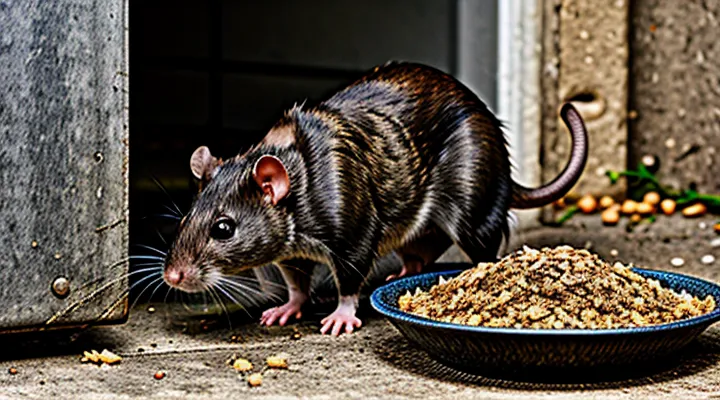
Understanding Rat Foraging Behavior
The Instinct to Hoard
Evolutionary Roots of Food Stockpiling
Rats exhibit food‑stockpiling behavior because it enhances survival during periods of scarcity. Natural selection favored individuals that could gather and conceal edible items, allowing them to maintain metabolic function when resources dwindled. This strategy originated in ancestral murids that inhabited fluctuating environments, where unpredictable food availability imposed strong pressure for anticipatory foraging.
The evolutionary advantage of stockpiling derives from several mechanisms:
- Risk mitigation: stored provisions reduce reliance on immediate foraging, lowering exposure to predators.
- Energy efficiency: caching decreases the frequency of high‑intensity search bouts, conserving caloric expenditure.
- Social reinforcement: communal storage sites promote group cohesion and facilitate information transfer about resource locations.
Neurobiological studies link the behavior to the hippocampus and mesolimbic dopamine system, which process spatial memory and reward prediction. Genetic analyses identify alleles associated with heightened exploratory drive and neophilia, traits that increase the likelihood of collecting surplus food.
Comparative data show that similar caching patterns appear in other rodents, birds, and some insects, indicating convergent evolution toward resource buffering. The persistence of this trait in modern rat populations reflects its continued relevance in urban and rural habitats where food distribution remains irregular.
Factors Influencing Stockpiling Intensity
Rats accumulate food when conditions suggest future scarcity. The degree of accumulation varies according to measurable influences.
- Resource predictability – Unstable supply triggers higher hoarding; predictable abundance reduces the need for reserves.
- Seasonal temperature shifts – Cold periods increase metabolic demand, prompting larger stores.
- Population density – Crowded groups intensify competition, leading individuals to secure more provisions.
- Predation pressure – Elevated threat levels encourage rapid collection and concealment of edible items.
- Individual temperament – Bold rats may explore and gather extensively, while timid ones limit activity.
- Social transmission – Observing conspecifics storing food can accelerate the behavior in naïve individuals.
Physiological state also shapes intensity. Rats experiencing caloric deficit or reproductive cycles allocate more effort to gathering supplies. Environmental complexity matters; cluttered habitats provide more hiding spots, facilitating larger caches. Conversely, open spaces limit concealment options, curbing stockpiling.
Experimental observations confirm that manipulating a single factor—such as introducing intermittent feeding schedules—produces measurable changes in storage quantity. When multiple variables align, for example, cold weather combined with high competition, rats exhibit the most pronounced hoarding responses.
How Rats Store Food
Cache Locations and Types
Rats exhibit systematic food caching to secure resources against scarcity and competition. Caches are placed in locations offering concealment, structural stability, and proximity to nest chambers.
- Wall voids – gaps behind plaster, insulation, or drywall provide insulated pockets inaccessible to predators and human disturbance.
- Burrow chambers – deep tunnel intersections host soil‑filled pockets where moisture preservation prolongs food viability.
- Nest piles – accumulated material in nest boxes or attic insulation serves as a readily reachable reserve for nursing litters.
- Pipe junctions – junctions of plumbing or ventilation ducts create dark, narrow spaces ideal for small, discrete caches.
- Above‑ground debris – piles of cardboard, paper, or fabric in storage closets function as temporary stores during active foraging periods.
Cache types differ by composition and purpose. Primary stores consist of high‑calorie items such as seeds, grains, and nuts, intended for long‑term use. Secondary stores contain softer foods—fruit, meat scraps—used within hours to days. Mixed caches combine both categories, allowing flexible access based on immediate energy demands.
Spatial organization follows a hierarchy: central nests hold the most valuable reserves, while peripheral sites contain opportunistic finds. This arrangement maximizes retrieval efficiency and reduces the likelihood of complete loss from a single disturbance event.
Mechanisms of Food Transportation
Rats transport food to secure locations using specialized anatomical and behavioral adaptations that support hoarding activities. Cheek pouches expand to hold a volume equal to several grams, allowing rapid collection of loose items without immediate handling. Muscular coordination enables precise placement of food within burrow chambers, reducing exposure to predators and competitors.
- Expansion of buccal cavity for temporary storage during foraging trips.
- Utilization of forepaws to grasp and maneuver items while navigating narrow tunnels.
- Employment of tail balance to stabilize loads during vertical or uneven movement.
- Deposition of food in nest vestibules, often layered to create a reserve hierarchy.
- Re‑transport of cached items when environmental cues indicate scarcity or increased competition.
These mechanisms integrate physical capacity with spatial memory, ensuring that transported provisions remain accessible and protected until consumption. The efficiency of each method directly influences the success of rat hoarding strategies across diverse habitats.
Evidence of Stockpiling in Wild and Captive Rats
Observational Studies in Natural Habitats
Tracking Food Caches
Researchers employ several reliable techniques to monitor how rats conceal and retrieve stored food. Direct observation in laboratory arenas provides baseline data on cache formation, but it is limited by visibility constraints and observer influence. To overcome these limits, investigators embed passive RFID tags in food items; readers placed at entry points record each interaction, yielding precise timestamps and individual identification without disturbance.
Video surveillance, especially infrared cameras, captures nocturnal activity and reveals cache locations that remain hidden from the naked eye. Automated motion detection software extracts movement patterns, enabling quantification of cache‑building frequency and duration of retrieval bouts. Radio telemetry, using miniature transmitters attached to foraging rats, maps movement trajectories in natural habitats and pinpoints repeated visits to specific sites, indicating cache sites.
Chemical marking of food with non‑toxic odorants allows researchers to trace scent trails left by rats. Subsequent scent‑analysis sampling identifies the spatial extent of foraging zones and highlights areas of repeated deposition. When combined with GIS mapping, these data illustrate the spatial distribution of caches relative to shelter structures and resource availability.
A typical experimental workflow includes:
- Tagging food items with RFID or odor markers.
- Deploying cameras and telemetry receivers at strategic points.
- Collecting interaction logs and movement coordinates.
- Analyzing patterns with statistical software to assess cache density, longevity, and retrieval success.
These methods collectively generate a comprehensive picture of rat food‑stockpiling behavior, revealing how individuals balance risk, memory, and environmental cues to secure resources.
Behavioral Patterns During Stockpiling
Rats exhibit systematic behavior when amassing food, reflecting adaptive strategies that maximize survival under fluctuating resource availability. The process involves distinct patterns observable across individuals and populations.
- Caching: Rats store surplus items in concealed locations, often within burrow chambers or behind structural gaps. Caches are replenished regularly, creating a reserve that buffers periods of scarcity.
- Selective acquisition: Preference is shown for high‑energy foods such as grains, seeds, and fatty matter. Preference is reinforced by olfactory cues that signal caloric density.
- Temporal distribution: Collection peaks during twilight and early night hours, coinciding with reduced predator activity. Activity levels decline sharply during daylight, limiting exposure.
- Spatial organization: Multiple caches are distributed across a territory to reduce loss from localized disturbance. Spatial separation also facilitates rapid retrieval from the nearest cache when demand arises.
- Risk mitigation: Rats monitor conspecific presence and adjust cache size accordingly; increased competition prompts the creation of smaller, more dispersed stores.
Underlying mechanisms include spatial memory that enables recall of cache sites, reinforced by scent marking, and social learning whereby inexperienced individuals adopt established caching routes observed in dominant conspecifics. Neurological studies link hippocampal activity to the formation and maintenance of these memory maps.
Understanding these behavioral patterns informs effective pest control strategies. Targeted removal of cache sites, disruption of olfactory signals, and timing interventions to coincide with peak collection periods reduce the efficacy of the stockpiling process and limit population resilience.
Laboratory Experiments on Food Storage
Controlled Environments and Stimuli
Controlled settings provide the only reliable basis for isolating the variables that drive food‑storage behavior in rodents. By eliminating extraneous influences, researchers can attribute observed caching patterns directly to experimental manipulations rather than to uncontrolled fluctuations in the laboratory.
Key environmental parameters include illumination cycles, ambient temperature, cage dimensions, and the spatial arrangement of food dispensers. Consistent lighting schedules prevent circadian disruption, while temperature stability avoids metabolic shifts that could alter foraging intensity. Standardized cage size ensures uniform access to shelter and reduces territorial competition, and fixed dispenser locations allow precise measurement of hoarding distance and frequency.
Stimuli employed to provoke or suppress food accumulation fall into several categories:
- Resource scarcity – limited portions or intermittent availability create a perceived risk of shortage.
- Predator cues – auditory or olfactory signals associated with natural enemies increase vigilance and encourage concealment.
- Novel objects – introduction of unfamiliar items tests exploratory drive and its impact on caching.
- Social context – presence of conspecifics, either as competitors or collaborators, modifies hoarding decisions.
Methodological rigor demands random assignment of subjects to stimulus conditions, replication across multiple cohorts, and continuous video monitoring to capture temporal patterns. Data extraction should focus on quantifiable metrics such as the number of cached items, storage location, and retrieval latency. Consistent reporting of these parameters enables cross‑study comparison and strengthens conclusions about the behavioral mechanisms underlying rodent food stockpiling.
Individual Differences in Hoarding Behavior
Rats exhibit marked variability in the propensity to accumulate and conceal food items. Experimental observations reveal that some individuals consistently gather surplus provisions, while others consume resources immediately, indicating distinct behavioral phenotypes within the same population.
Key determinants of hoarding intensity include:
- Sex: Males often display higher collection rates than females, correlating with territorial and mating pressures.
- Age: Juvenile rats show limited storage behavior; adults increase hoarding as reproductive cycles progress.
- Dominance rank: Subordinate individuals may hoard to offset limited access to shared caches.
- Environmental predictability: Uncertain food supply triggers elevated accumulation in risk‑averse rats.
- Genetic background: Strain‑specific studies demonstrate inherited differences in cache formation.
Laboratory protocols typically involve offering standardized food pellets within a maze or cage equipped with hidden compartments. Researchers record the number of items transferred, the latency before retrieval, and the spatial distribution of caches. Repeated trials across varied contexts allow quantification of intra‑individual consistency and inter‑individual divergence.
Physiological correlates accompany behavioral disparities. Elevated corticosterone levels align with heightened hoarding under stress, whereas increased dopamine turnover associates with exploratory foraging without storage. Neuroimaging identifies heightened activity in the ventral striatum of prolific hoarders, suggesting reward circuitry involvement.
Understanding individual differences in rat food‑stockpiling informs broader ecological models of resource management and pest control strategies. Targeted interventions that exploit predictable hoarding patterns can reduce population growth and limit crop damage.
Benefits and Drawbacks of Food Stockpiling
Survival Advantages
Food Security During Scarcity
Rats exhibit systematic food caching when resources become limited. This behavior reduces individual starvation risk and stabilizes colony nutrition over periods of scarcity. Experimental observations show that rats prioritize high‑calorie items, store them in concealed locations, and retrieve them according to metabolic demand.
Key mechanisms of rodent food hoarding include:
- Selective gathering of energy‑dense foods.
- Creation of multiple, discreet caches to mitigate loss from competitors.
- Temporal regulation of consumption, aligning intake with anticipated shortage duration.
- Social signaling that informs colony members of cache locations.
These strategies demonstrate adaptive responses that maintain internal food security despite external fluctuations. Understanding rat caching informs broader ecological models of resource management, highlighting the importance of behavioral flexibility in sustaining populations when supplies dwindle.
Protection from Predators While Foraging
Rats minimize exposure to predators during foraging by combining spatial awareness, timing, and social coordination. They select routes that pass through dense vegetation, debris, or underground tunnels, reducing line‑of‑sight for visual hunters. Frequent pauses to scan the environment with whisker and auditory cues allow rapid detection of approaching threats.
When foraging in groups, individuals benefit from collective vigilance. A single rat’s alarm signal—high‑frequency squeaks—triggers immediate cessation of movement and retreat to burrows. This shared alert system lowers the probability that any one rat will be caught while searching for food.
Key protective tactics include:
- Preference for nocturnal activity, exploiting low light conditions when many predators are less active.
- Use of pre‑established caches located within concealed burrow chambers, limiting the need to transport food over open ground.
- Rapid retreat pathways kept clear of obstacles, enabling swift escape if a predator is detected.
- Scent marking of foraging routes, which can deter some predators and inform conspecifics of safe passages.
These behaviors collectively enhance survival while allowing rats to acquire and store nourishment in environments where predation pressure is high.
Potential Risks
Spoilage and Contamination
Rats that accumulate food must manage the risk of decay and pathogen exposure. Their caching strategies incorporate several mechanisms that limit spoilage and reduce contamination.
- Rapid assessment of odor cues enables rats to identify fermenting or mold‑infested items and discard them before storage.
- Preference for dry, low‑moisture foods—such as grains, seeds, and nuts—minimizes microbial growth and extends shelf life.
- Placement of caches in cool, well‑ventilated microhabitats slows enzymatic breakdown and inhibits bacterial proliferation.
- Periodic inspection of stored supplies allows rats to remove compromised portions, preventing the spread of toxins throughout the cache.
- Use of natural antimicrobial substances, including plant resins and insect secretions, can be mixed with stored food to inhibit spoilage organisms.
These behaviors illustrate that rat hoarding is not a passive accumulation but a dynamic process aimed at preserving nutritional value while mitigating health hazards associated with decayed or contaminated provisions.
Attracting Competitors
Rats accumulate surplus food in hidden locations to ensure survival during periods of scarcity. The presence of stored resources generates chemical and visual cues that other organisms detect and exploit.
- Olfactory traces left during handling and transport signal the existence of a cache to conspecifics and opportunistic predators.
- Visible disturbances of bedding or nesting material reveal cache sites to larger mammals and insects.
- Accumulated waste, such as droppings and urine, creates a micro‑environment attractive to scavengers and parasites.
These cues invite competition from several sources: rival rat colonies seeking to appropriate supplies, domestic pets or feral cats that locate caches through scent, and human pest‑control measures that target areas with high food concentration. The resulting interference reduces the original owner’s cache integrity and may trigger aggressive encounters.
Rats mitigate the threat by dispersing food across multiple sites, employing opaque containers, and varying cache composition to mask odor signatures. Such strategies limit detection probability and preserve a portion of the stored supply despite the presence of competitors.
Distinguishing Stockpiling from Other Behaviors
Hoarding vs. Immediate Consumption
Rats display two complementary foraging strategies: caching surplus resources for future use and consuming food promptly to meet immediate energy demands. Both tactics arise from adaptive pressures that balance risk of scarcity against exposure to predators and competition.
Cache formation involves gathering edible material, transporting it to a secure location, and arranging it for later retrieval. Laboratory studies show that rats preferentially select concealed sites—burrows, nest corners, or insulated chambers—where stored items remain protected from temperature fluctuations and conspecific theft. Neurological investigations link this behavior to heightened activity in the hippocampus, a region associated with spatial memory and planning. Field observations confirm that individuals in environments with unpredictable food availability or seasonal fluctuations exhibit larger and more numerous caches.
Immediate consumption dominates when food is abundant, predation risk is low, and metabolic demands are acute. Rats ingest fresh supplies rapidly to sustain high reproductive rates and maintain body temperature. Experiments measuring bite rates and gut transit times demonstrate that rats accelerate intake when presented with high-calorie, easily accessible items, reducing the incentive to store excess.
Key factors influencing the choice between hoarding and immediate eating:
- Resource predictability: Irregular supply encourages caching; steady supply favors consumption.
- Environmental security: Dense cover or safe nesting sites enable larger caches; open habitats increase predation risk, prompting rapid consumption.
- Social dynamics: High population density intensifies competition, leading some individuals to store food defensively, while others adopt opportunistic feeding.
- Physiological state: Pregnant or lactating females prioritize immediate intake to support offspring, whereas solitary adults may allocate more effort to stockpiling.
Overall, rat foraging reflects a flexible decision matrix where the relative benefits of future food security and present nutritional gain are continuously reassessed. This dual strategy enhances survival across diverse habitats and fluctuating ecological conditions.
Cache Protection and Defense
Rats that accumulate food create concealed stores, or caches, to ensure access during periods of scarcity. Protection of these caches is integral to the hoarding strategy, influencing survival and reproductive success.
Defense of a cache involves several behaviors. First, rats select hidden locations—under debris, within burrow chambers, or behind walls—minimizing visual detection. Second, they construct physical barriers, such as compacted soil or shredded material, that impede intruders and stabilize the stored items. Third, individuals exhibit heightened vigilance while accessing the cache, pausing to scan for predators or conspecifics that might attempt theft. Fourth, they employ scent masking, mixing food with urine or glandular secretions to obscure olfactory cues that could attract competitors.
When a threat is perceived, rats may adopt active deterrence. Typical responses include:
- Rapid retreat to a safe tunnel network, leaving the cache temporarily unattended.
- Aggressive displays toward intruders, such as lunging, vocalizations, and biting.
- Recruitment of nearby group members to reinforce the defensive position.
These tactics reduce the likelihood of cache loss, reinforcing the adaptive value of food hoarding in urban and wild rat populations.
Factors Influencing Stockpiling Decisions
Food Abundance and Quality
Rats exhibit systematic food‑caching strategies that depend heavily on the amount and nutritional profile of available resources. When surplus food appears, individuals increase collection rates, transporting multiple items to concealed sites. The decision to cache is proportional to the density of edible material within the foraging range, demonstrating a direct link between resource abundance and hoarding intensity.
Nutrient composition influences selection. High‑energy foods such as grains and seeds dominate caches, while items with low caloric value are rarely stored. Protein‑rich sources receive moderate representation, reflecting the balance rats maintain between immediate metabolic needs and long‑term storage requirements.
Environmental variability modifies both abundance and quality thresholds. In habitats where food supply fluctuates seasonally, rats expand cache size and diversify stored items to mitigate future scarcity. Conversely, stable environments with consistent high‑quality provisions lead to smaller, more specialized caches.
Empirical observations reveal:
- Increased cache volume correlates with a rise in total available calories per square meter.
- Preference for high‑fat and high‑carbohydrate items persists even when alternative nutrients are plentiful.
- Seasonal shifts in diet composition precede adjustments in caching behavior, indicating anticipatory planning.
These patterns underscore that rat hoarding is not random accumulation but a calibrated response to the interplay of food quantity and nutritional value. Understanding this relationship informs pest management practices, as manipulating resource abundance and quality can alter caching dynamics and reduce population resilience.
Perceived Threat and Competition
Rats respond to perceived threats by altering the timing and location of food caches. When a predator or human presence is detected, individuals increase the frequency of short‑term storage near shelter entrances, reducing exposure during retrieval. Conversely, low‑risk environments favor larger, more distant caches that maximize storage capacity.
Competition among conspecifics intensifies cache protection mechanisms. Dominant rats monopolize high‑value food items and defend them through aggressive displays, while subordinates adopt covert caching strategies, such as dispersing small amounts across multiple sites. This partitioning reduces direct confrontations and preserves access to resources.
Key behavioral adjustments linked to threat and competition include:
- Rapid concealment of food after acquisition.
- Preference for hidden microhabitats (e.g., under debris, within burrow chambers).
- Increased use of scent‑masking behaviors (e.g., urination near caches).
- Adoption of temporal segregation, retrieving food during periods of reduced activity by rivals.
Empirical observations demonstrate that elevated threat levels trigger a shift from long‑term hoarding to immediate consumption or temporary storage, whereas heightened intra‑specific competition promotes diversified caching patterns and heightened vigilance. These dynamics illustrate the adaptive flexibility of rat foraging behavior under varying ecological pressures.
Environmental Conditions
Rats adjust their food‑stockpiling strategies in response to measurable environmental parameters. Temperature fluctuations dictate metabolic demand; colder periods increase caloric intake and accelerate cache formation. Moisture levels affect food preservation, prompting rats to favor dry substrates when humidity rises. Seasonal variation alters natural seed and grain availability, driving rodents to accumulate surplus during harvest months for use in leaner seasons. Predator density influences concealment behavior, with higher threat levels prompting deeper burrow placement of stored items. Human activity patterns, such as waste‑collection schedules, create predictable resource pulses that rats exploit by timing cache deposition to coincide with refuse availability. Habitat structure, including the presence of insulated nesting chambers, determines the spatial distribution of reserves.
- Low ambient temperature → heightened cache size
- Relative humidity above 70 % → preference for sheltered, low‑moisture storage sites
- Seasonal abundance peaks → increased hoarding during autumn
- Elevated predator presence → deeper, more concealed caches
- Regular waste disposal cycles → synchronized stockpiling events
- Access to insulated burrows → concentrated storage within nest chambers
The combined effect of these conditions produces a dynamic risk‑reward calculus. Rats evaluate immediate energy needs against future scarcity, modulating cache volume and location to maximize survival probability while minimizing detection. Empirical observations confirm that alterations in any single factor, such as a sudden temperature drop, trigger measurable changes in hoarding intensity, underscoring the central role of environmental context in shaping rodent foraging behavior.