
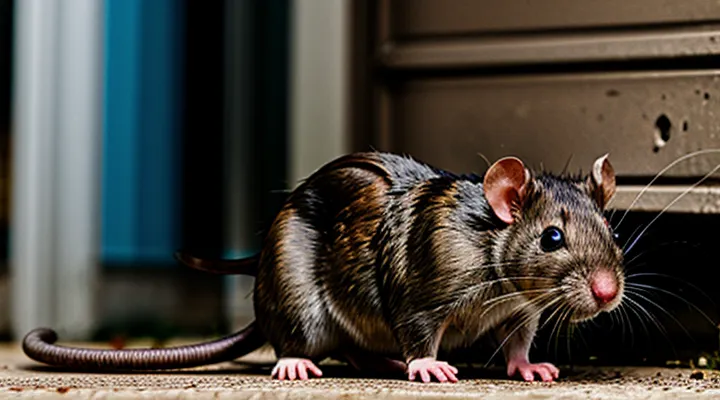
The Chemical Signals in Rat Odor
Pheromones and Social Communication
Rats rely on a sophisticated chemical signaling system to coordinate group behavior. Volatile and non‑volatile compounds released from the skin, urine, and glandular secretions bind to receptors in the main olfactory epithelium and the vomeronasal organ, triggering neural pathways that encode social information.
Pheromonal cues convey several distinct messages:
- Reproductive status – estrous females emit specific aliphatic acids that attract males and synchronize mating cycles.
- Dominance hierarchy – dominant individuals deposit higher concentrations of major urinary proteins, influencing aggression and submission in conspecifics.
- Maternal recognition – pups emit a unique blend of fatty acids that mothers identify through the VNO, directing nursing and grooming.
- Territorial boundaries – scent marks contain a mixture of volatile ketones and sulfides that delimit occupied space and deter intruders.
Neurophysiological studies show that activation of the accessory olfactory bulb by pheromones modulates the hypothalamic-pituitary-adrenal axis, adjusting stress responses according to social context. Genetic knockout of trace amine‑associated receptors diminishes social investigation, confirming the essential role of these molecules in rodent communication.
Overall, pheromonal signaling constitutes the primary mechanism by which rats exchange information about mating, rank, kinship, and territory, shaping the structure of their colonies without reliance on visual cues.
Urine and Feces as Scent Markers
Rats rely heavily on chemical cues deposited in their environment, and both urine and feces serve as primary vectors for these signals. Urine contains a complex mixture of volatile organic compounds (VOCs) such as aldehydes, ketones, and sulfur‑containing molecules. These substances evaporate rapidly, creating an olfactory plume detectable by conspecifics at distances of several meters. Analytical studies using gas chromatography–mass spectrometry have identified species‑specific ratios of compounds, allowing individuals to assess the sex, reproductive status, and territorial ownership of the emitter.
Feces complement urinary markings by providing a more persistent chemical record. The solid matrix retains semi‑volatile metabolites, including fatty acids, bile acids, and pheromonal peptides. These compounds degrade slowly, preserving information about the depositor’s diet, health condition, and hierarchical rank. Field observations demonstrate that rats repeatedly deposit fecal pellets along established runways, reinforcing territorial boundaries and facilitating social recognition.
Key functional aspects of these scent markers include:
- Individual identification: Unique chemical signatures enable discrimination among colony members.
- Reproductive signaling: Elevated levels of certain steroids in urine correlate with estrus, prompting mating behavior.
- Territorial demarcation: Concentrated deposits along perimeter routes deter intruders and reduce direct aggression.
- Health monitoring: Presence of pathogen‑related metabolites alerts conspecifics to potential disease risks.
Experimental manipulation of scent cues—such as the application of synthetic urine extracts—produces predictable behavioral responses, confirming the causal role of these chemicals in rodent communication. Consequently, urine and feces constitute essential components of the olfactory landscape that shapes rat social structure and environmental interactions.
Glandular Secretions and Individual Identity
Rats produce a complex mixture of volatile compounds through several specialized glands. The preputial gland, located near the genitalia, secretes fatty acids and lactones that differ markedly among individuals. The anal gland releases short‑chain fatty acids and sulfur‑containing molecules, while the urinary bladder contributes urea‑derived volatiles that integrate with glandular output. Each gland contributes a distinct chemical profile, yet the combined scent forms a unique odor signature for every rat.
Research using gas chromatography–mass spectrometry has identified over fifty compounds that vary consistently between individuals of the same species. Patterns of relative abundance, rather than the presence of a single molecule, encode identity. Genetic variation in enzymes of the fatty acid synthesis pathway explains much of this inter‑individual variability, linking olfactory cues to genotype.
Behavioral assays demonstrate that rats discriminate conspecifics based solely on these chemical signatures. In maze experiments, subjects preferentially follow trails marked by familiar individuals, indicating recognition of personal odor. Social hierarchy, mating preferences, and territorial boundaries are mediated through this chemical communication system.
Key points summarizing the role of glandular secretions in individual identification:
- Multiple glands contribute overlapping volatile blends.
- Chemical profiles consist of quantitative differences across dozens of compounds.
- Genetic factors shape enzymatic pathways that determine compound ratios.
- Rats use these odor signatures for recognition, mate choice, and territory marking.
The stability of glandular output over time allows rats to maintain consistent personal odors, facilitating long‑term social networks within colonies.
Factors Influencing Rat Odor Perception
Environmental Conditions and Scent Diffusion
Rats rely on volatile compounds released from their skin, urine, and secretions to communicate, and the detectability of these chemicals depends heavily on ambient conditions. Temperature influences the kinetic energy of odor molecules; higher temperatures increase evaporation rates, expanding the concentration gradient and allowing scents to travel farther. Conversely, cooler environments suppress volatilization, reducing the spatial reach of olfactory cues.
Humidity modulates scent propagation by affecting the solubility of odorants in the air. Moderate moisture levels facilitate the formation of aerosolized droplets that carry scent particles, enhancing detection by conspecifics. Excessive humidity can saturate the air, diminishing the contrast between odor plumes and background, while extremely dry air accelerates diffusion but may cause rapid degradation of labile compounds.
Airflow patterns shape the geometry of scent trails. Laminar breezes transport odorants in coherent streams, preserving concentration peaks that rats can follow. Turbulent currents fragment plumes, creating intermittent pockets of scent that require repeated sampling. Ventilation in confined spaces, such as burrows or laboratory cages, can either concentrate odors through limited exchange or dilute them via forced circulation.
Key environmental parameters affecting rodent odor diffusion:
- Temperature: 15 °C – 30 °C range dictates volatilization speed.
- Relative humidity: 40 % – 70 % optimal for stable plume formation.
- Air velocity: 0.1 – 0.5 m s⁻¹ supports directed transport without excessive turbulence.
- Substrate composition: porous bedding absorbs and re‑emits volatiles, altering temporal availability.
Human Olfactory Sensitivity and Variation
Human olfactory sensitivity varies widely among individuals, influencing how people perceive the scent of rodents. Detection thresholds for specific volatile compounds emitted by rats, such as 2‑acetyl‑1‑pyrroline and various sulfides, range from a few parts per billion to several hundred parts per billion, depending on the observer’s sensory acuity. Some subjects report clear recognition of these odors at concentrations below 10 ppb, while others require concentrations an order of magnitude higher to register any impression.
Variation arises from multiple biological and environmental factors:
- Genetic polymorphisms in olfactory receptor (OR) genes alter binding affinity for rodent‑derived molecules.
- Age‑related decline in receptor density reduces sensitivity after the fifth decade of life.
- Hormonal fluctuations, particularly estrogen levels, modulate receptor expression and signal transduction efficiency.
- Chronic exposure to strong odors desensitizes the nasal epithelium, raising detection thresholds.
- Health conditions such as sinusitis or neurodegenerative disease impair odor processing pathways.
Comparative studies show that, on average, humans possess a lower detection sensitivity for rat odorants than many mammalian predators. Nevertheless, the human olfactory system can discriminate among individual rodents based on subtle differences in their microbial flora, diet, and stress‑induced pheromonal output. This capacity relies on the same OR repertoire that mediates perception of food, danger, and social cues.
Quantitative assessments employing gas chromatography–mass spectrometry coupled with psychophysical testing provide the most reliable data on human odor thresholds. Results consistently demonstrate a log‑normal distribution of sensitivity across populations, with a small subset of “hyper‑smellers” detecting rodent volatiles at sub‑ppb levels. Understanding this variability informs both laboratory handling protocols and public health considerations when rodent infestations pose a sensory or allergenic risk.
Psychological Aspects of Odor Perception
Rats emit a complex blend of volatile compounds that humans can detect under certain conditions. Psychological research shows that perception of these odors is shaped by learned associations, emotional valence, and attentional focus. When a person experiences a rat scent in a laboratory, the odor often triggers a rapid appraisal of threat, which can influence physiological responses such as increased heart rate and cortisol release. This appraisal process relies on the brain’s limbic circuitry, linking olfactory input to fear and disgust pathways.
Experimental studies use controlled exposure to rat-derived odors to investigate conditioning effects. Participants repeatedly paired the scent with negative feedback develop stronger aversive reactions, even when the odor intensity is low. Conversely, repeated neutral or positive pairing can attenuate the negative response, demonstrating the plasticity of odor-driven affect.
Cognitive factors modulate odor perception as well. Expectation of a rat presence amplifies detection accuracy, while distraction reduces it. Memory for prior encounters with rodents influences the vividness of mental images evoked by the smell, affecting decision‑making in contexts such as pest control or animal research.
Key psychological dimensions of rodent odor perception include:
- Affective rating – hedonic scores range from mildly unpleasant to strongly aversive, depending on personal experience.
- Attention allocation – focused awareness heightens sensitivity; divided attention lowers detection thresholds.
- Learning and extinction – repeated exposure under neutral conditions can diminish the instinctive threat response.
- Cross‑modal integration – visual cues of a rat intensify the olfactory judgment, while auditory cues can mitigate it.
Understanding these mechanisms clarifies why rat odor elicits variable reactions across individuals and informs strategies for managing human‑rodent interactions in both clinical and environmental settings.
Scientific Methods for Detecting Rodent Odor
Chemical Analysis of Volatile Organic Compounds «VOCs»
Volatile organic compounds (VOCs) provide the primary chemical basis for the distinctive scent emitted by rodents. Analyzing these molecules clarifies how rats communicate, locate food, and avoid predators, and it supplies objective data for studies of olfactory perception.
Gas chromatography–mass spectrometry (GC‑MS) coupled with solid‑phase microextraction (SPME) or purge‑and‑trap sampling constitutes the standard workflow for VOC profiling. The procedure isolates trace gases from skin, urine, and glandular secretions, separates them on a capillary column, and identifies mass spectra against reference libraries. Calibration with deuterated standards enables quantification down to nanogram per liter levels.
Typical rat VOCs include:
- Aldehydes (e.g., hexanal, nonanal) – indicate lipid oxidation.
- Ketones (e.g., 2‑nonanone) – derived from fatty‑acid metabolism.
- Short‑chain fatty acids (e.g., acetic, propionic acids) – contribute to acidic odor notes.
- Sulfur‑containing compounds (e.g., dimethyl sulfide) – potent at low concentrations.
- Aromatic volatiles (e.g., phenol, indole) – linked to microbial activity on the skin.
Concentrations of these compounds vary with physiological state, sex, and environmental stressors. For instance, male urine exhibits elevated levels of specific ketones during the breeding season, while stressed individuals release higher aldehyde quantities. Such patterns correlate with behavioral assays that demonstrate attraction or avoidance responses in conspecifics.
The analytical data support multiple applications: defining odor signatures for species‑specific traps, monitoring health status through metabolic markers, and informing comparative studies of mammalian olfaction. Accurate VOC profiling thus constitutes an essential tool for elucidating the chemical language of rats.
Electronic Noses and Sensor Technology
Electronic noses replicate mammalian olfactory processes by integrating arrays of chemical sensors with pattern‑recognition algorithms. In the study of rodent scent production, these devices provide quantifiable data on volatile organic compounds emitted by rats, enabling comparison with human sensory thresholds.
Typical configurations combine metal‑oxide semiconductors, conducting polymers, or surface‑acoustic wave sensors. Each element responds to specific molecular groups, generating a multidimensional signal. Machine‑learning models—principal component analysis, support vector machines, or deep neural networks—translate raw outputs into identifiable odor profiles.
Practical outcomes include:
- Rapid screening of laboratory colonies for disease‑related metabolic changes.
- Monitoring of waste‑management facilities where rat infestations alter ambient volatile composition.
- Calibration of field‑deployed detectors for pest‑control operations, ensuring sensitivity comparable to biological noses.
Limitations involve sensor drift, cross‑sensitivity to environmental humidity, and the need for regular recalibration. Ongoing research focuses on nanomaterial coatings and adaptive algorithms to enhance stability and selectivity, thereby refining the analytical bridge between rat odor chemistry and human detection capabilities.
Behavioral Studies of Rodent Scent Detection
Behavioral investigations have established that rodents rely on olfactory cues for navigation, foraging, social interaction, and predator avoidance. Experimental designs typically pair a scent stimulus with a measurable response, allowing researchers to quantify detection limits and discrimination capabilities.
Common paradigms include:
- Two‑choice discrimination tasks, where subjects select between rewarded and unrewarded odorants.
- Trail‑following assays, in which animals track a scented pathway to locate food.
- Predator‑odor avoidance tests, presenting cat or fox urine to measure escape latency.
- Social‑odor preference tests, exposing subjects to conspecific urine or pheromonal secretions.
Results consistently show detection thresholds in the low‑nanomolar range for volatile compounds such as isoamyl acetate and trimethylamine. Rats distinguish chemically similar odorants with accuracy exceeding 80 % after brief training. Cross‑species comparisons reveal that mice exhibit slightly lower thresholds for certain pheromones, whereas gerbils display heightened sensitivity to grain‑related volatiles. Neural recordings link behavioral performance to activity patterns in the olfactory bulb and piriform cortex, confirming a tight coupling between peripheral detection and central processing.
These findings inform pest‑management strategies that exploit odorant repellents or attractants, and they provide a model for studying sensory‑driven decision making in mammals.
Managing and Mitigating Rodent Odor
Sanitation and Hygiene Practices
Rodent odor originates from secretions, urine, feces, and microbial activity on contaminated surfaces. Effective sanitation reduces odor intensity and limits health risks associated with bacterial and viral agents carried by rats.
- Prompt removal of droppings and urine stains using disposable absorbent materials.
- Application of enzymatic cleaners that break down organic residues and neutralize volatile compounds.
- Regular disinfection of food storage areas, waste containers, and entry points with EPA‑approved agents.
- Installation of sealed trash receptacles and routine disposal schedules to prevent accumulation.
- Maintenance of dry, well‑ventilated environments to discourage microbial growth and odor propagation.
Monitoring involves periodic visual inspections, odor threshold testing with calibrated olfactometers, and documentation of cleaning frequency. Compliance with these practices sustains low odor levels and supports broader pest‑management programs.
Ventilation and Air Filtration Systems
Ventilation and air filtration are primary methods for controlling odor emitted by laboratory rodents and pet colonies. Continuous airflow dilutes volatile organic compounds (VOCs) produced in urine, feces, and glandular secretions, reducing their concentration in the breathing zone. High-efficiency particulate air (HEPA) filters remove aerosolized particles, while activated carbon or zeolite media adsorb low‑molecular‑weight odorants such as ammonia, trimethylamine, and phenols.
Effective systems combine several elements:
- Supply fans delivering fresh air at rates calculated from cage density (typically 30–60 L min⁻¹ per animal).
- Exhaust ducts positioned above cage tops to capture rising plumes before they disperse.
- Pre‑filters trapping dust and hair, extending the life of downstream media.
- Carbon filters sized according to expected VOC load; replacement intervals are determined by breakthrough testing.
- Pressure differentials maintaining negative pressure relative to adjacent spaces, preventing odor escape.
Laboratory standards (e.g., ISO 14644‑1, AAALAC) specify minimum air changes per hour (ACH) for rodent facilities, often 10–20 ACH, to ensure odor levels remain below detection thresholds for humans and other animals. Computational fluid dynamics studies confirm that uniform distribution of supply air minimizes stagnant zones where odor can accumulate.
Maintenance protocols include regular inspection of filter integrity, verification of flow rates with calibrated anemometers, and routine cleaning of ductwork to prevent biofilm formation. Data loggers record temperature, humidity, and pressure, providing traceable evidence that environmental controls meet prescribed limits.
When ventilation alone cannot achieve target odor reductions, supplemental air purification technologies—such as ozone generators or photocatalytic oxidizers—may be employed, provided they do not introduce harmful by‑products. Integration of sensor‑driven feedback loops enables automatic adjustment of fan speeds and filter regeneration cycles, optimizing performance while conserving energy.
Odor Neutralizers and Eliminators
Odor neutralizers and eliminators are chemical or biological agents designed to modify or remove volatile compounds produced by rodents. They function through three primary mechanisms: adsorption of odor molecules onto porous substrates, catalytic oxidation that transforms malodorous compounds into inert gases, and enzymatic breakdown that cleaves odor‑producing molecules into non‑volatile fragments.
Common categories include:
- Activated carbon products: high surface area adsorbs amines, sulfides, and fatty acids released by rodent secretions.
- Ozone generators: generate ozone that oxidizes organic odorants, converting them to carbon dioxide and water.
- Enzyme‑based sprays: contain lipase, protease, or oxidase enzymes that degrade skin oils, urine proteins, and fecal acids.
- Photocatalytic filters: use titanium dioxide under UV light to break down odor molecules via reactive oxygen species.
Effectiveness depends on environmental factors. Temperature above 20 °C accelerates enzymatic activity, while high humidity enhances adsorption capacity of carbon. Continuous airflow distributes neutralizers evenly, preventing localized odor build‑up. Over‑application of ozone can damage electronic equipment and pose health risks, requiring calibrated dosing.
Selection criteria for rodent odor control:
- Target compounds: identify dominant odorants (e.g., 2‑methyl‑2‑butenal, skatole) to match neutralizer chemistry.
- Application site: sealed cavities benefit from adsorbents; open areas require oxidative or enzymatic solutions.
- Safety profile: prioritize agents with low toxicity to humans and non‑target wildlife.
- Longevity: consider regeneration ability of carbon filters versus single‑use sprays.
Integration with integrated pest management (IPM) programs maximizes results. Neutralizers reduce human perception of rodent presence, while eliminators degrade the chemical signals that attract conspecifics, disrupting colony establishment. Regular monitoring of odor levels with gas‑chromatography sensors confirms treatment efficacy and informs reapplication schedules.