
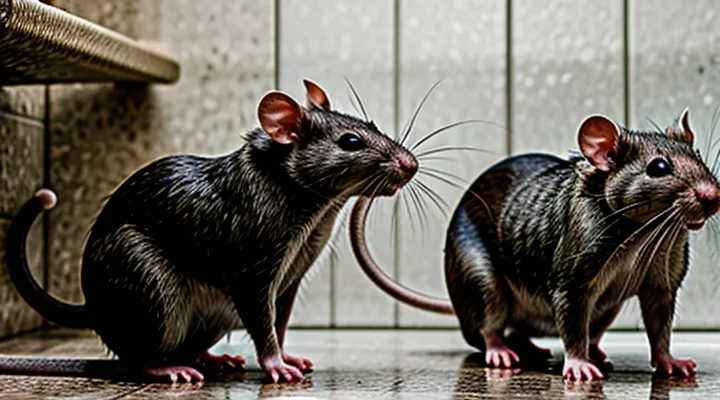
The Viral Video and Its Interpretation
The «Shower Rat» Phenomenon
What the Video Actually Showed
The footage presents a single laboratory‑bred rat placed on a shallow platform beneath a handheld spray bottle. The operator activates the bottle, delivering a fine mist that covers the animal’s dorsal surface for approximately three seconds. The camera captures the rat’s immediate reaction: a rapid retreat, followed by vigorous grooming of the wet fur with its forepaws. The video then shows the rat shaking its body, dispersing excess water, and resuming normal locomotion across the platform.
Key observations:
- Water source: standard plastic spray bottle, no permanent plumbing.
- Duration of spray: 2‑4 seconds per burst.
- Rat’s response: instinctive grooming, body shaking, brief pause before moving away.
- Environment: plain laboratory bench, neutral lighting, no additional props.
The sequence demonstrates a forced exposure to water rather than a voluntary bathing ritual. The animal’s behavior aligns with established stress‑induced grooming patterns observed in rodents, indicating that the video illustrates a controlled experiment rather than evidence of rats regularly taking showers.
Misconceptions Arising from the Footage
Video clips circulating online often present rodents appearing to clean themselves under a stream of water. The visual impression creates a belief that rats regularly use showers, yet the footage contains several systematic misinterpretations.
- Observers label any contact with liquid as “bathing,” ignoring that rats primarily groom with their forepaws.
- Slow‑motion playback elongates brief splashes, making a single lick look like sustained washing.
- Angled lighting can conceal the source of water, leading viewers to assume a faucet rather than rain or condensation.
- Zoomed‑in frames hide surrounding debris, suggesting a pristine environment that does not exist in typical habitats.
- Editing that repeats a short segment amplifies the frequency of the behavior, creating the illusion of habitual showering.
Each of these factors distorts the original context. Grooming behavior involves targeted licking of fur, often accompanied by occasional drips from a water source, but never a deliberate immersion under a running stream. Ethological studies record no instances of rats seeking out faucets or deliberately positioning themselves under showers. Instead, rats exploit accidental moisture—rain puddles, leaking pipes, or condensation—to assist in fur maintenance when the opportunity arises.
Consequently, the perception of rats taking showers derives from selective framing, temporal manipulation, and mislabeling of natural grooming actions. Empirical observations confirm that rats do not engage in regular showering practices; the myth persists solely because visual media exaggerates routine grooming moments.
Rat Hygiene and Behavior
Natural Grooming Practices
Self-Grooming and Social Grooming
Rats keep their fur clean without external bathing. Self‑grooming consists of rapid licking of the paws, followed by sweeping strokes across the body. The sequence targets the head, ears, and tail, removing debris and redistributing saliva, which contains enzymes that break down oils. Studies show that a single grooming bout can reduce surface contaminants by up to 70 % within minutes.
Social grooming complements personal care. When a rat grooms a conspecific, it reaches areas the groomer cannot access, such as the dorsal neck and the base of the tail. This exchange also transfers scent cues, reinforcing colony hierarchy and reducing stress hormones. Observations in laboratory colonies reveal that groups with frequent allogrooming display lower aggression rates and higher reproductive success.
Key observations:
- Frequency: Individual grooming occurs 5–10 times per hour; social grooming accounts for 15–20 % of total grooming time.
- Triggers: Presence of dust, urine marks, or recent mating increases grooming intensity.
- Physiological impact: Grooming elevates body temperature by 0.3 °C, aids thermoregulation, and stimulates the parasympathetic nervous system.
The evidence confirms that rats rely on licking and mutual grooming rather than water immersion to maintain hygiene, dispelling the notion that they require showers.
Role of Grooming in Rat Health
Rats maintain hygiene primarily through self‑grooming, a behavior that directly influences their physiological condition. The act of licking fur, nibbling whiskers, and cleaning paws removes debris, deters ectoparasites, and distributes natural oils across the coat. This process also stimulates circulation in the skin, supporting tissue repair and thermoregulation.
Key health outcomes linked to grooming include:
- Reduction of mite and flea infestations
- Prevention of skin infections and ulcer formation
- Maintenance of coat integrity, which protects against temperature extremes
- Regulation of stress hormones through repetitive, soothing motions
Experimental observations reveal that rats prevented from grooming develop dermatitis, exhibit higher parasite loads, and show slower wound healing. Conversely, individuals with unrestricted grooming access demonstrate lower morbidity rates and more stable body temperatures.
The popular notion that rats require a showering routine overlooks their reliance on intrinsic cleaning mechanisms. While occasional exposure to water can aid in specific situations—such as flushing out stubborn debris—routine bathing is unnecessary and may disrupt the natural microbial balance of the skin.
In summary, grooming constitutes the primary hygienic strategy for rats, delivering essential protective and physiological benefits. Providing a clean environment and allowing unrestricted grooming behavior ensures optimal health without the need for artificial showering practices.
Why Rats Don't «Shower» Like Humans
Physiological Differences
Rats possess a skin composition that limits water absorption. Their epidermis is covered by a dense layer of keratinized cells, which repels moisture and reduces the risk of edema during brief exposure to liquid. This barrier also protects against pathogens that could proliferate in a damp environment, making prolonged bathing unnecessary for health maintenance.
Thermoregulation in rats relies on vasodilation of the tail and rapid panting rather than evaporative cooling. Because they lack sweat glands, they cannot dissipate heat through perspiration; instead, they depend on ambient temperature and behavioral adjustments such as seeking cooler surfaces. Immersion in water would temporarily lower body temperature, but the subsequent rewarming demand exceeds the metabolic capacity of most species, leading to stress and potential hypothermia.
Scent communication dominates rat social interaction. Specialized flank glands produce pheromones that convey dominance, reproductive status, and territorial claims. Maintaining these chemical signals is essential for group cohesion. Regular washing would dilute or remove these cues, disrupting established hierarchies and breeding patterns.
Key physiological traits influencing the likelihood of rats using showers:
- Keratinized skin that resists water penetration.
- Absence of sweat glands; reliance on tail vasodilation for heat loss.
- High metabolic cost of rewarming after immersion.
- Prominent scent glands that require undisturbed chemical signaling.
These differences explain why rats naturally avoid extended water exposure, rendering the concept of them taking showers biologically implausible.
The Importance of Fur Maintenance
Rats rarely use water for cleaning; instead, they rely on self‑grooming to keep their coats functional. Understanding fur maintenance clarifies why the notion of rats taking showers is misleading.
The coat provides thermal regulation, tactile feedback, and a barrier against parasites. Any disruption of these functions compromises the animal’s ability to survive in variable environments.
Self‑grooming removes debris, distributes skin oils, and detangles fibers. When grooming is insufficient, fur may become matted, lose insulating properties, and harbor ectoparasites, leading to skin infections and reduced mobility.
- Regular grooming maintains even fur density.
- Oil redistribution preserves waterproofing.
- Debris removal prevents bacterial growth.
- Healthy fur supports normal thermoregulation.
Effective fur care eliminates the need for external bathing and demonstrates that rats achieve cleanliness through innate behaviors rather than artificial showering.
Understanding Animal Behavior
Anthropomorphism Explained
Attributing Human Traits to Animals
Rats are often described using human behaviors, a tendency known as anthropomorphism. This linguistic shortcut shapes public perception of animal habits, including the claim that rats regularly take showers. Scientific observations reveal that rats groom themselves vigorously, using their paws to clean fur and remove debris. Grooming serves thermoregulation, parasite control, and social bonding, but it does not involve water immersion or the deliberate use of fixtures designed for humans.
Key distinctions between rat grooming and human showering:
- Medium: Rats rely on saliva and dry rubs; showers involve flowing water.
- Purpose: Rat grooming targets fur maintenance; showers address whole‑body cleanliness and hygiene standards.
- Environment: Grooming occurs on any surface; showers require a structured plumbing system.
Misinterpretation arises when vivid anecdotes or viral videos portray rats splashing in water sources, leading observers to infer intentional showering. Such interpretations project human concepts of hygiene onto animal behavior without supporting evidence.
Research on rodent ethology confirms that water exposure is generally aversive for rats, triggering stress responses rather than pleasure. Experiments measuring cortisol levels show elevated stress markers when rats are placed in shallow pools, reinforcing the view that water is not a preferred grooming medium.
In summary, attributing the human practice of showering to rats conflates distinct biological processes. Rat self‑cleaning is a specialized, efficient behavior that does not equate to the use of water for personal hygiene as understood in human culture.
Dangers of Misinterpretation
Misreading claims about rodent hygiene can distort public perception, influence research funding, and affect animal‑care practices. When sensational headlines suggest that rats routinely use showers, readers may infer that laboratory rodents possess sophisticated grooming habits comparable to humans, leading to unrealistic expectations for pet owners and misguided welfare guidelines.
Key risks of such misinterpretation include:
- Scientific distortion: Researchers may feel pressured to design studies that confirm popular myths rather than address genuine physiological questions, compromising methodological rigor.
- Policy misallocation: Funding agencies could divert resources toward superficial investigations of rodent grooming instead of focusing on disease models, neurobehavioral research, or humane housing standards.
- Consumer misunderstanding: Pet owners might attempt to provide inappropriate bathing equipment, exposing animals to stress, hypothermia, or skin irritation.
- Media credibility loss: Repeated propagation of inaccurate statements erodes trust in science journalism, making audiences skeptical of legitimate findings.
Accurate communication requires distinguishing observed cleaning behaviors—such as self‑grooming and occasional water exposure—from anthropomorphic interpretations of “showering.” Clarifying this difference prevents the cascade of errors that begins with a single sensational claim and spreads across education, research, and animal‑care sectors.
Scientific Perspective on Rat Behavior
Studying Rodent Habits
Research on rodent behavior provides a clear framework for evaluating the claim that rats regularly use water for cleaning. Laboratory and field studies document grooming as the primary method rats employ to maintain fur condition and skin health. Grooming involves licking, nibbling, and scratching, actions that remove parasites and debris without external water sources.
Key observations include:
- Rats spend 5–15 % of their active time grooming, a proportion consistent across species and environments.
- Water exposure occurs mainly when rats encounter rain, flood conditions, or human-provided sources such as water bottles.
- In controlled experiments, rats will approach shallow water but seldom submerge; they use it for drinking and occasional brief immersion to cool body temperature.
- Post‑immersion behavior returns quickly to grooming, indicating that water does not replace self‑cleaning mechanisms.
The distinction between grooming and true showering is critical. Grooming achieves hygienic goals through direct contact with the animal’s own saliva, which contains enzymes that break down oils and pathogens. Water contact, when it happens, serves auxiliary functions—thermoregulation, hydration, and occasional removal of surface dirt—but does not constitute a regular cleaning routine.
Consequently, the narrative that rats habitually shower lacks empirical support. Evidence confirms that rats rely on innate grooming behaviors, with water use limited to opportunistic or stress‑related situations rather than a systematic hygiene practice. This conclusion aligns with established ethological principles and clarifies the myth surrounding rat bathing.
The Impact of Environment on Actions
Rats exhibit grooming behaviors that depend heavily on their surroundings. In habitats with abundant water sources, rodents frequently engage in self‑cleaning, using streams, puddles, or human‑provided fixtures. When water is scarce, grooming shifts toward dry‑rub techniques, such as using litter or fur rubbing against surfaces.
Environmental temperature regulates the frequency of cleaning. Warm conditions increase metabolic heat, prompting more frequent licking and fur smoothing to regulate body temperature. Cooler environments reduce the need for such activity, as fur insulation suffices.
Factors that shape rat cleaning actions include:
- Availability of liquid water (natural or artificial)
- Substrate texture (soft bedding versus hard surfaces)
- Population density (higher density raises disease‑avoidance grooming)
- Human interaction (exposure to sinks or baths encourages adaptation)
Observations in laboratory and field settings confirm that rats do not require showers in the human sense; instead, they adjust cleaning strategies to match the resources and risks presented by their environment.
Dispelling Common Myths
Debunking the «Cleanliness» Myth
Rats in Their Natural Habitat
Rats occupy a wide range of environments, from dense urban infrastructure to rural fields and forest edges. In cities they exploit sewer systems, basements, and abandoned structures where temperature remains relatively stable and food waste is abundant. In natural settings they nest in burrows, under rocks, or within dense vegetation, selecting sites that provide shelter from predators and access to water.
Their survival depends on efficient thermoregulation, foraging, and social interaction. Food sources include grains, fruits, insects, and anthropogenic waste. Water is obtained from puddles, streams, or condensation on surfaces. Access to clean water is critical for physiological processes, yet rats rarely seek immersion for hygiene.
Rats engage in self‑grooming to maintain fur condition and remove parasites. Grooming actions include:
- Head and facial cleaning: using forepaws to rub whiskers and muzzle.
- Body grooming: alternating strokes with each paw, covering the back, flank, and hindquarters.
- Tail maintenance: brief rubs to remove debris.
- Social grooming: mutual cleaning among colony members, reinforcing hierarchy.
These behaviors fulfill the same purpose attributed to human showering—removal of dirt and ectoparasites—without requiring a dedicated water source. Observations confirm that rats will bathe in shallow water when available, but such activity is opportunistic rather than ritualized.
In their natural habitat, the combination of environmental moisture, self‑grooming, and occasional water play satisfies the species’ hygiene requirements, rendering the notion of a structured “shower” unnecessary.
Urban vs. Wild Rat Behavior
Rats frequently groom themselves with their forepaws, a behavior documented in both city and countryside populations. The question of whether they actively seek water for bathing has generated considerable interest among researchers.
In urban environments, rats encounter abundant artificial water sources such as leaking pipes, storm drains, and discarded containers. Observations show they:
- Use standing water to rinse fur after exposure to oil or chemicals.
- Prefer shallow, cool pools that reduce overheating in subway tunnels.
- Perform rapid grooming sessions after contact with waste, likely to remove contaminants.
These habits align with the need to maintain sensory function and reduce parasite loads in densely populated settings where food waste and pollutants are common.
Wild rats, inhabiting fields, forests, and burrows, rely on natural water bodies like streams, puddles, and dew. Their behavior includes:
- Short, frequent grooming bouts after foraging in damp soil.
- Occasional immersion in shallow water to cool during heat waves.
- Limited use of water for cleaning, as fur naturally repels dirt and moisture.
The scarcity of reliable water sources in rural habitats constrains extended bathing, directing the species toward efficient self‑grooming rather than full immersion.
Comparative data indicate that urban rats are more likely to exploit water for cleansing than their wild counterparts, yet both groups primarily depend on tactile grooming. The myth that rats regularly take showers lacks support; instead, targeted rinsing in available water supplies supplements their innate grooming routine.
The Reality of Rodent Care
Grooming in Captivity
Rats in laboratory or pet environments exhibit grooming behaviors that differ markedly from those of wild conspecifics. Self‑grooming involves licking fur, whiskers, and paws to remove debris and parasites; the activity accounts for 5–10 % of a captive rat’s daily activity budget. Studies using video monitoring report that a typical adult rat performs 20–30 grooming bouts per day, each lasting 10–30 seconds.
Water bathing is not a natural habit for rats. When offered a shallow water dish, most individuals avoid immersion, displaying stress indicators such as freezing or rapid escape attempts. Exceptions occur under experimental conditions where water exposure is used to assess stress responses; in those cases, rats may tolerate brief immersion but do not engage in voluntary showering.
Hygiene management in captivity relies on environmental control rather than forced bathing:
- Provide absorbent bedding changed at least twice weekly to limit odor and parasite buildup.
- Maintain cage temperature between 20 °C and 26 °C; excessive heat increases sweating through foot pads and promotes soiling.
- Offer chewable enrichment (e.g., wooden blocks) to stimulate oral grooming and reduce fur matting.
- Conduct regular health checks for ectoparasites; topical treatments replace the need for water baths.
When a water bath is medically required (e.g., for topical medication), the protocol includes: pre‑warming the water to 30 °C, limiting immersion to 2 minutes, gently drying the animal with a soft towel, and monitoring for signs of hypothermia. This approach minimizes stress while achieving the therapeutic goal.
Overall, captive rats rely on self‑grooming and controlled environmental conditions to maintain cleanliness; they do not perform showering behaviors voluntarily.
Health Implications of Misunderstanding
Misinterpreting the belief that rats regularly bathe can distort risk assessments for disease transmission. Many assume that a clean‑looking rat poses little threat, overlooking that grooming behavior does not eliminate pathogens such as Leptospira, hantavirus, or Salmonella. Consequently, public health messages may underplay the need for sanitation measures in infested areas.
The misconception also influences pest‑control strategies. If decision‑makers view rats as inherently hygienic, they may prioritize surface cleaning over population reduction, allowing colonies to expand unchecked. This approach can increase exposure to rodent‑borne illnesses, elevate allergen levels, and amplify structural damage caused by unchecked burrowing.
Key health ramifications of the misunderstanding include:
- Persistent exposure to water‑borne and airborne pathogens carried by rodents.
- Higher incidence of allergic reactions and asthma triggered by rodent droppings and urine.
- Delayed implementation of effective eradication programs, leading to larger infestations.
- Misallocation of resources toward cosmetic cleaning rather than targeted baiting and habitat modification.
Accurate communication about rodent behavior is essential for effective disease prevention. Emphasizing that grooming does not equate to sanitation guides both the public and professionals toward appropriate interventions, reducing the overall health burden associated with rat infestations.
Implications for Pet Owners
Proper Care for Pet Rats
Essential Grooming Needs
Rats maintain cleanliness through self‑grooming and environmental management rather than taking showers. Their bodies produce oil that spreads across fur during frequent licking, removing debris and parasites. This natural process satisfies most of their hygiene requirements.
Key grooming components for pet rats include:
- Self‑grooming: Daily licking of fur and paws to distribute oils and dislodge dirt.
- Dust bathing: Access to a shallow container of fine, non‑toxic sand or ash; the abrasive medium helps remove excess oil and parasites.
- Fresh water: Constant supply of clean water for drinking and occasional wet grooming.
- Cage hygiene: Weekly removal of waste, regular cleaning of bedding, and disinfection of food bowls to prevent bacterial buildup.
- Nail trimming: Periodic clipping of overgrown claws to avoid injury and maintain comfort.
Providing these elements ensures rats stay healthy and clean without the need for human‑style showers.
Maintaining a Clean Environment
Rats rarely engage in deliberate bathing; their grooming is limited to brief licking of fur. This behavior does not replace environmental sanitation, which remains essential for preventing disease transmission and reducing infestation risk.
Effective clean‑environment practices include:
- Removing food residues and spilled grains daily.
- Storing consumables in sealed containers.
- Sealing entry points such as gaps around pipes, doors, and vents.
- Disposing of waste in tightly fitted bins and clearing litter promptly.
- Conducting regular inspections of storage areas for droppings, urine stains, and gnaw marks.
These measures limit the resources that attract rodents, thereby decreasing the likelihood of contact with humans and pets. Maintaining hygiene in residential and commercial settings directly mitigates the spread of pathogens carried by rats, regardless of their minimal self‑cleaning habits.
Recognizing Signs of Distress
When a Rat's Behavior is Unusual
Rats occasionally display actions that resemble bathing, yet these episodes differ from the popular notion of a deliberate shower. When a rat’s routine deviates from typical grooming, observers can identify several distinct patterns:
- Intense water play – a rat repeatedly splashes in a shallow dish, often after exposure to a new environment or during high humidity.
- Self‑spritzing – the animal flicks its forepaws into water and then shakes its body, creating a mist that coats the fur.
- Collective puddle gathering – a group congregates around a leaking pipe or a pet water bowl, each individual taking brief, repetitive dips.
- Post‑stress cleaning – after a predator encounter or a handling session, the rat engages in prolonged licking that extends to the paws and lower limbs, sometimes accompanied by brief immersion.
These behaviors arise from innate grooming instincts, thermoregulation needs, and stress‑relief mechanisms. Unlike human showers, the actions lack a structured sequence, fixed duration, or use of soap. Instead, they reflect an adaptive response to moisture, temperature, and social cues. Recognizing these atypical patterns clarifies that rats do not perform showers in the human sense, but they do exploit water when circumstances trigger unusual conduct.
Seeking Veterinary Advice
Veterinarians are the primary source of reliable information about rodent hygiene. Professionals assess whether a pet rat’s grooming behavior meets species‑specific needs and identify health problems that may mimic or obscure a lack of bathing.
When a rat shows excessive oil on the fur, persistent odor, or skin lesions, a veterinarian can determine if the issue stems from dermatological infection, metabolic disorder, or inadequate environmental conditions. Diagnostic tools include skin scrapings, bacterial cultures, and blood panels. Treatment plans may involve topical medication, dietary adjustments, or changes to cage cleaning routines.
Owners should contact a veterinary practitioner if any of the following occur:
- Fur appears greasy or matted despite regular self‑grooming.
- Persistent foul smell that does not improve with cage maintenance.
- Visible sores, redness, or hair loss on the body.
- Sudden change in grooming frequency, either excessive or absent.
- Unusual scratching or biting of the coat.
Veterinarians also provide guidance on safe grooming practices. Recommendations typically cover:
- Frequency of cage cleaning to reduce environmental contaminants.
- Use of non‑toxic wipes or damp cloths for spot cleaning when necessary.
- Selection of appropriate substrate that minimizes moisture retention.
- Monitoring of water quality to prevent skin irritation.
- Implementation of enrichment that encourages natural self‑grooming behaviors.
Consultation should occur promptly after the first sign of abnormal coat condition. Early veterinary intervention reduces the risk of secondary infections and supports the animal’s overall well‑being. Reliable sources for finding qualified rodent specialists include veterinary association directories, university veterinary hospitals, and professional networks dedicated to exotic pet care.