
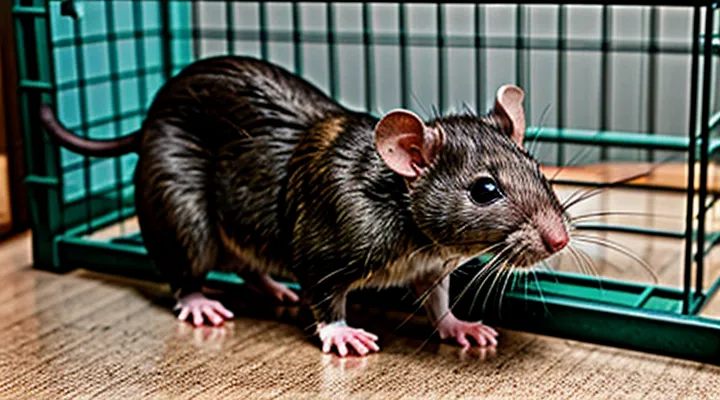
The Natural Instincts and Needs of Rats
Understanding Rat Behavior in the Wild
Exercise and Foraging Habits
Rats exhibit high levels of spontaneous locomotion; regular movement maintains musculoskeletal integrity and supports cardiovascular health.
In natural habitats, individuals traverse considerable distances while locating scattered food sources. This foraging behavior generates sustained aerobic activity, promotes spatial learning, and reduces stress.
Running wheels deliver continuous, low‑impact locomotion that mirrors the distance covered during wild foraging. Access to a wheel enables energy expenditure comparable to natural movement patterns, thereby preventing obesity and enhancing heart function.
Alternative enrichment can satisfy the same physiological and cognitive demands:
- Complex tunnel systems that encourage exploration
- Vertical climbing apparatus providing varied muscle engagement
- Scatter‑feeding of pellets across the cage floor to stimulate search behavior
- Puzzle feeders that require manipulation to obtain food
Providing a running wheel or functionally equivalent enrichment aligns with rats’ innate exercise and foraging habits, contributing directly to optimal welfare.
Social Structures and Play
Rats are highly gregarious rodents; their well‑being depends on stable social hierarchies and opportunities for interaction. Dominant individuals typically claim preferred nesting sites, while subordinates benefit from communal grooming and shared foraging zones. These structures create a dynamic environment where enrichment must accommodate both individual status and group cohesion.
Playful activities serve as a natural outlet for exploratory energy and social bonding. Typical behaviors include chase sequences, gentle wrestling, and object manipulation. A running wheel can function as a focal point for such activity, offering a solitary outlet for kinetic release while also attracting observers from the group. However, reliance on a single apparatus may limit the range of play patterns observed in a colony.
Balancing social needs with varied play opportunities enhances overall health. Effective enrichment strategies incorporate multiple elements:
- Horizontal tunnels that enable pursuit and escape scenarios.
- Climbing structures providing vertical exploration and dominance displays.
- Manipulable toys (e.g., chew blocks, hanging ropes) that encourage solitary and shared interaction.
- Multiple wheels of differing diameters to accommodate size variations and reduce competition.
Integrating these components respects the inherent social organization of rats and supports a spectrum of play behaviors, reducing stress and promoting natural activity patterns without overdependence on a solitary wheel.
The Benefits of a Running Wheel for Pet Rats
Physical Health Advantages
Cardiovascular Exercise
Cardiovascular exercise is essential for maintaining a rat’s heart health, blood circulation, and overall metabolic efficiency. Access to a running wheel provides a consistent, low‑impact activity that stimulates aerobic conditioning without excessive strain on joints.
Key physiological effects include:
- Increased stroke volume, supporting efficient oxygen delivery to tissues.
- Elevated heart rate variability, indicating improved autonomic regulation.
- Enhanced lipid oxidation, contributing to weight management and reduced adiposity.
- Strengthened capillary networks within skeletal muscle, facilitating nutrient exchange.
Rats deprived of a wheel often exhibit reduced spontaneous locomotion, leading to diminished cardiac output and a higher incidence of sedentary‑related disorders. Providing a wheel aligns cage enrichment with the species’ natural propensity for nocturnal foraging and exploration, thereby promoting a baseline level of aerobic activity that mirrors wild‑type behavior.
In research settings, the presence of a wheel standardizes exercise exposure, allowing more reliable interpretation of cardiovascular data across studies. Consequently, integrating a running wheel into cage design constitutes a practical strategy for supporting rat cardiovascular physiology.
Weight Management and Obesity Prevention
Pet rats commonly develop excess body fat when confined to static cages. Limited movement reduces daily caloric expenditure, leading to a positive energy balance and gradual weight gain.
Physical activity directly increases basal metabolic rate and promotes lean muscle development. Regular locomotion forces the animal to burn calories, counteracting the effects of ad libitum feeding and preventing adipose accumulation.
Benefits of providing a running wheel for weight control include:
- Elevated daily energy output;
- Preservation of muscle mass;
- Reduction of insulin resistance risk;
- Encouragement of natural foraging behavior.
Effective implementation requires a wheel diameter of at least 30 cm to accommodate the rat’s stride, a solid running surface to avoid foot injuries, and unrestricted access for a minimum of several hours each day. Complementary enrichment, such as chew toys and maze structures, further stimulates activity and supports a balanced body condition.
Muscle Development and Strength
Rats that have access to a running wheel exhibit measurable improvements in skeletal muscle mass and contractile force. Voluntary wheel running stimulates type‑II fiber hypertrophy, increases myofibrillar protein synthesis, and enhances neuromuscular recruitment patterns. These adaptations translate into greater grip strength and endurance during obstacle‑negotiation tasks.
Key physiological effects of wheel use include:
- Elevated expression of insulin‑like growth factor‑1 (IGF‑1) in hind‑limb muscles, promoting anabolic signaling.
- Up‑regulation of mitochondrial biogenesis markers (PGC‑1α, NRF1), supporting oxidative capacity.
- Reduction of intramuscular fat infiltration, preserving muscle quality.
- Augmented neuromuscular junction density, improving motor unit activation efficiency.
When a wheel is unavailable, rats rely primarily on spontaneous cage exploration, which provides limited high‑intensity loading. Consequently, muscle development proceeds at a slower rate, and strength gains remain modest. Incorporating a wheel therefore offers a practical, low‑stress method to enhance muscular health and functional performance in laboratory and pet rat populations.
Mental Stimulation and Enrichment
Reducing Boredom and Destructive Behavior
A running wheel supplies continuous physical activity, which occupies a rat’s natural urge to explore and move. When the wheel is present, the animal spends less time pacing the cage floor, thereby decreasing the likelihood of chewing bars, gnawing bedding, or digging destructively.
Key outcomes of wheel access include:
- Sustained mental engagement that curtails repetitive, stereotypic motions.
- Redirection of energy toward a safe, self‑controlled outlet, limiting damage to cage infrastructure.
- Enhancement of overall health, supporting stronger muscles and cardiovascular function, which indirectly reduces stress‑induced aggression.
In environments lacking a wheel, rats often exhibit heightened restlessness, manifested by increased vocalizations and heightened territorial marking. Introducing a wheel mitigates these behaviors by providing a predictable, rewarding activity that satisfies innate locomotor drives. Consequently, the cage remains intact, and the animal’s welfare improves without reliance on external enrichment devices.
Stress Reduction and Anxiety Management
Rats kept in captivity experience chronic stress when environmental stimuli are limited. Access to a rotating exercise device offers a predictable outlet for locomotor activity, which directly influences neuroendocrine pathways associated with anxiety.
Research indicates that regular use of a «running wheel» reduces plasma corticosterone levels, diminishes repetitive grooming, and promotes exploratory behavior. These physiological markers correlate with lower anxiety scores in standardized maze tests.
Key effects on stress reduction and anxiety management include:
- Enhanced dopamine release, supporting reward circuitry.
- Stabilized heart rate variability, reflecting autonomic balance.
- Decreased incidence of stereotypies, indicating improved welfare.
Effective implementation requires wheel dimensions that accommodate the animal’s size, solid construction to prevent collapse, and gradual introduction to avoid initial fear responses. Monitoring for signs of overexertion ensures the device remains beneficial rather than stressful.
Overall, providing a properly sized and safely installed rotating exercise apparatus constitutes a proven strategy for mitigating stress and managing anxiety in pet rats.
Providing an Outlet for Natural Instincts
Rats possess an innate urge to move rapidly over long distances. In captivity, a running wheel supplies a safe, controlled environment where this drive can be expressed without risking injury from uncontrolled sprinting across the cage floor.
• Locomotor instinct – continuous running is reproduced by the wheel’s rotating surface, allowing full‑body exercise.
• Exploratory instinct – the wheel’s enclosed tunnel encourages investigation of new pathways, satisfying curiosity.
• Territorial instinct – the wheel becomes a personal zone, reinforcing ownership of a specific space within the enclosure.
• Energy‑regulation instinct – sustained activity helps maintain metabolic balance, preventing excess weight gain.
Wheel dimensions must match the animal’s size; a diameter of at least 12 cm prevents spinal curvature and ensures comfortable stride length. Surface material should be smooth, free of gaps, and securely attached to avoid entrapment. Complementary enrichment—climbing structures, chew toys, foraging puzzles—addresses additional instincts such as vertical movement and oral exploration, which a wheel alone cannot fulfill.
Providing a dedicated outlet for these natural behaviors reduces stereotypic pacing, lowers cortisol levels, and promotes cardiovascular health. An appropriately sized, well‑maintained wheel, combined with diverse enrichment, creates a comprehensive strategy for supporting the physiological and psychological welfare of captive rats.
Considerations for Choosing the Right Wheel
Size and Material Safety
Rats require a wheel that matches their size to prevent strain and encourage natural locomotion. A wheel diameter of at least 12 inches (30 cm) accommodates adult rats, while younger or smaller individuals can use a 10‑inch (25 cm) model. Width should allow a comfortable grip, typically 2–3 inches (5–7 cm). Undersized wheels force the animal to arch its back, leading to spinal stress and reduced activity.
Material safety directly influences health and durability. Preferred options include:
- Polypropylene or high‑density polyethylene: non‑toxic, resistant to chewing, easy to clean.
- Powder‑coated steel: sturdy, smooth surface, must be free of sharp edges and rust.
- Untreated hardwood: natural, but requires smooth sanding and regular inspection for splinters.
Avoid wheels made from low‑grade plastics that can release harmful chemicals when chewed, and reject any metal with exposed welds or rough finishes. All components, such as axle bearings, should be sealed to prevent dust accumulation and reduce the risk of injury. Regular inspection for cracks, sharp edges, or loose parts ensures continued safety.
Stability and Noise Levels
Stability of a running wheel is essential for safe exercise. A wheel must be securely attached to the cage frame or placed on a solid base; loose mounting permits wobbling, which can cause loss of balance and injury. Rigid materials such as metal or thick acrylic reduce flex under the rat’s weight, ensuring consistent rotation. Excessive play in the axle or poorly fitted bearings generates irregular motion, potentially discouraging the animal from using the device.
Noise levels directly affect both the rodent and the household environment. Wheels constructed from thin plastic or low‑quality bearings often emit audible clicks and grinding sounds, reaching 40–50 dB at close range. Such noise can stress the rat, leading to reduced activity, and may disturb nearby occupants. Wheels equipped with silent ball bearings or magnetic levitation mechanisms typically produce less than 30 dB, a level comparable to normal background conversation.
Recommendations for optimal stability and minimal noise:
- Choose wheels with reinforced frames and high‑grade bearings.
- Verify that the attachment hardware is tightened to manufacturer specifications.
- Prefer solid‑surface bases or cages with built‑in wheel mounts.
- Select models marketed as “silent” or “quiet” and confirm decibel ratings.
- Perform regular maintenance: clean bearings, tighten screws, and replace worn components.
Properly anchored, low‑noise wheels support consistent locomotion without compromising the rat’s welfare or the surrounding environment. «A stable and quiet wheel maximizes exercise benefits while preserving a calm habitat».
Placement within the Cage
Proper placement of the «running wheel» inside the cage influences safety, activity levels, and hygiene. The wheel must be anchored securely to prevent wobbling, positioned away from food and water sources to avoid contamination, and placed where rats can easily enter and exit without obstruction.
- Locate the wheel on a solid side wall, using brackets or clips designed for the cage model.
- Keep a minimum clearance of two inches between the wheel and any bedding, food dish, or water bottle.
- Ensure at least three inches of open space around the wheel for unrestricted movement.
- Avoid placing the wheel in a corner; central or side‑wall positions reduce the risk of rats becoming trapped.
- Position the wheel opposite climbing structures to prevent interference with vertical activity.
Consistent adherence to these guidelines promotes reliable exercise, reduces injury risk, and maintains a clean environment for the rodents.
Alternatives and Complementary Enrichment
Other Forms of Exercise and Play
Tunnels and Mazes
Rats exhibit strong exploratory instincts; providing structures that simulate burrows satisfies this drive. «Tunnels» and «mazes» create three‑dimensional pathways that encourage natural digging and foraging behaviors. When evaluating the necessity of a running wheel, consider how these enclosures contribute to physical activity, mental stimulation, and spatial awareness.
Physical benefits derive from repeated climbing, crawling, and turning motions. Such movements engage hind‑limb muscles, support joint flexibility, and promote cardiovascular health. Mental enrichment arises from problem‑solving tasks; navigating a maze requires memory recall and decision‑making, reducing stereotypic pacing.
Design considerations for effective tunnel and maze systems include:
- Materials: non‑toxic, chew‑resistant plastics or untreated hardwood; avoid painted surfaces that may leach chemicals.
- Diameter: minimum 2 inches (≈5 cm) to allow comfortable passage without constriction.
- Length and complexity: combine straight sections with bends, junctions, and dead‑ends; gradually increase complexity as proficiency improves.
- Integration: position tunnels adjacent to feeding stations and nesting areas to mimic natural foraging routes.
- Maintenance: ensure removable sections for cleaning; inspect for wear that could cause injury.
When a cage incorporates a well‑planned network of tunnels and mazes, rats receive comparable aerobic and cognitive stimulation to that provided by a wheel. Consequently, the presence of a running wheel is not strictly required if alternative enrichment fulfills locomotor and exploratory needs. Nonetheless, offering both options maximizes activity opportunities and accommodates individual preferences.
Climbing Structures
Climbing structures provide essential vertical enrichment for rats kept in cages that also contain a running wheel. They enable natural climbing behavior, promote muscular development, and offer mental engagement that complements the horizontal exercise offered by a wheel.
Key advantages include:
- Strengthening forelimb muscles through repeated ascent and descent.
- Encouraging exploration of three‑dimensional space, reducing boredom.
- Facilitating scent marking on elevated surfaces, supporting social interaction.
Typical options for cage enrichment are:
- rope ladders stretched between opposite walls,
- wooden or plastic platforms of varying heights,
- branching systems that mimic tree limbs,
- modular playsets that combine tunnels, ramps, and perches.
Installation guidelines recommend anchoring each element securely to the cage frame, using non‑toxic materials such as untreated wood or natural fibers. Height should not exceed the cage’s ceiling clearance, and spacing between platforms must allow safe jumps without risk of injury. All connections require regular inspection for wear or loosening.
Maintenance involves weekly cleaning of surfaces with mild soap and water, followed by thorough drying. Periodic replacement of worn ropes or splintered wood prevents health hazards.
Position climbing structures away from the wheel’s axle to avoid obstruction. Providing both vertical and horizontal options lets rats choose the activity that best suits their momentary preference, thereby enhancing overall welfare.
Interactive Toys
Interactive toys provide essential mental stimulation for pet rats, addressing the same exploratory drive that motivates wheel use. By presenting diverse challenges, toys reduce boredom, encourage problem‑solving, and support natural foraging behaviors.
Typical categories include:
- Puzzle feeders that dispense treats when manipulated, promoting dexterity and patience.
- Tunnel systems with interchangeable sections, allowing creation of new routes and hiding spots.
- Climbing structures such as ladders, ropes, and platforms, enhancing vertical mobility and muscle development.
- Chewable objects made from safe woods or compressed cardboard, satisfying gnawing instincts while protecting cage fixtures.
When selecting toys, consider durability, non‑toxicity, and ease of cleaning. Items should withstand frequent gnawing and be free of sharp edges that could injure delicate paws or teeth. Rotating toys weekly maintains novelty and prevents habituation, ensuring continued engagement.
Interactive toys complement, rather than replace, a running wheel. Wheels primarily satisfy the need for sustained aerobic activity, whereas toys focus on cognitive enrichment and fine‑motor skills. Providing both components creates a balanced environment that mirrors the complexity of a rat’s natural habitat.
Social Interaction and Handling
The Importance of Human Bonding
Human interaction significantly influences the welfare of laboratory and pet rodents. Consistent, gentle handling reduces stress hormones, stabilizes heart rate, and promotes normal grooming behavior. These physiological markers indicate that a caregiver’s presence can mitigate the anxiety often associated with confinement.
Social contact also enhances cognitive function. Rats exposed to regular human engagement display improved maze performance and quicker adaptation to novel environments. The mental stimulation derived from predictable handling routines supports learning and memory consolidation.
Practical advantages for cage enrichment include:
- Faster habituation to new equipment, such as exercise devices, which lowers the risk of injury.
- Increased willingness to explore supplemental structures, thereby maximizing the benefits of physical activity.
- Enhanced cooperation during health assessments, reducing the need for restraint and associated trauma.
Overall, integrating human bonding into rodent care protocols complements mechanical enrichment, fostering both physical health and psychological resilience. «Rats thrive when they have consistent human interaction», a principle that underpins effective husbandry practices.
Playtime Outside the Cage
Playtime outside the cage supplies essential stimulation that cannot be replicated by a running wheel alone. Direct exposure to a safe, controlled environment encourages natural foraging, exploration, and social interactions, which enhance cognitive development and reduce stress.
Typical outdoor activities include:
- Supervised floor time on a non‑slippery surface.
- Exploration of plastic tunnels and cardboard tubes.
- Climbing on low wooden platforms or acrylic ramps.
- Interaction with chew‑safe toys placed on the floor.
Safety measures are mandatory. The enclosure must be securely closed to prevent escape. The play area should be free of small objects, toxic plants, and gaps that could trap limbs. Constant supervision by the caretaker eliminates the risk of injury or ingestion of hazardous materials. After each session, the space requires thorough cleaning to remove debris and potential pathogens.
External enrichment does not eliminate the need for a running wheel, but it can reduce reliance on it. A wheel delivers sustained aerobic activity, whereas outdoor play provides intermittent bursts of movement and sensory input. Combining both options yields a balanced regimen that satisfies the rat’s physical and mental requirements.
«Supervised outdoor enrichment» stands as a complementary component to any in‑cage exercise apparatus, ensuring comprehensive welfare for pet rats.