
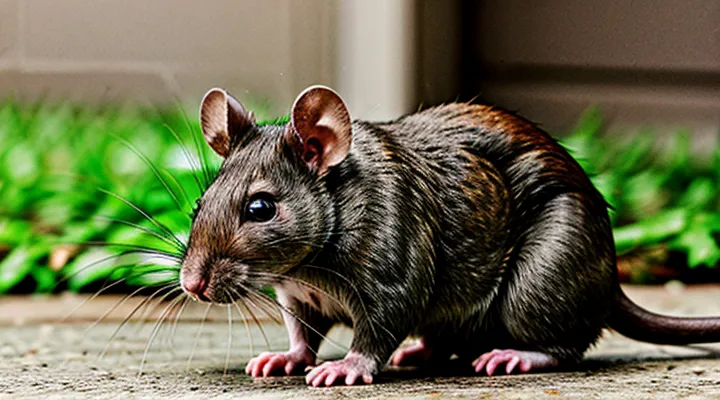
The Estrous Cycle in Rodents
Phases of the Estrous Cycle
Rats do not experience menstrual bleeding; instead, they follow an estrous cycle that regulates ovarian activity and fertility. The cycle consists of four distinct phases, each characterized by specific hormonal profiles and physiological changes.
- «Proestrus»: ovarian follicles mature under rising estrogen levels; the uterus thickens, and females become receptive to mating cues.
- «Estrus»: estrogen peaks, triggering ovulation; the female exhibits maximal sexual receptivity and may display lordosis behavior.
- «Metestrus»: after ovulation, progesterone rises as the corpus luteum forms; uterine secretions increase to support potential implantation.
- «Diestrus»: progesterone dominates, maintaining the uterine environment; if fertilization does not occur, the corpus luteum regresses and the cycle restarts.
In laboratory rats, the entire estrous cycle typically spans 4–5 days, with each phase lasting from several hours (estrus) to 1–2 days (diestrus). Monitoring vaginal cytology provides a reliable method for determining the current stage, as cell types shift markedly across the cycle. Understanding these phases is essential for interpreting reproductive experiments and for timing interventions that depend on hormonal status.
Hormonal Regulation
Hormonal regulation in rats controls the progression of the estrous cycle, which replaces the menstrual cycle observed in some other mammals. The hypothalamic‑pituitary‑gonadal axis orchestrates cyclic changes in hormone concentrations, determining follicular development, ovulation, and luteal function.
Key hormones involved include:
- Gonadotropin‑releasing hormone (GnRH) – triggers pituitary release of luteinizing hormone (LH) and follicle‑stimulating hormone (FSH).
- LH – induces ovulation and supports luteal cell activity.
- FSH – promotes growth of ovarian follicles.
- Estradiol – rises during the follicular phase, prepares the reproductive tract for potential implantation.
- Progesterone – dominates the luteal phase, maintains uterine environment.
- Prolactin – modulates luteal maintenance and maternal behaviors.
Rats lack a true menstrual bleed because the endometrial lining does not undergo the extensive proliferation and subsequent shedding characteristic of menstruating species. Instead, the endometrium is reabsorbed during the luteal phase, a process driven by the hormonal pattern described above. Consequently, the hormonal profile reflects a rapid, four‑day estrous cycle rather than a longer menstrual cycle.
Understanding this regulatory scheme informs experimental designs that rely on rodent models for reproductive research, ensuring accurate interpretation of hormonal manipulations and their effects on fertility.
Distinguishing Estrous from Menstruation
Defining Menstruation in Primates
Menstruation in primates is a cyclic shedding of the functional endometrial lining that follows spontaneous ovulation. The process begins with a rise in estrogen, triggers a luteinizing hormone surge, and culminates in the release of an oocyte. If fertilization does not occur, progesterone levels fall, the endometrium destabilizes, and blood‑rich tissue is expelled from the uterus. This external manifestation distinguishes true menstruation from the internal reabsorption of the endometrium observed in many mammals.
Key physiological criteria that define menstrual cycles include:
- Spontaneous ovulation without external cues such as photoperiod.
- Development of a thickened, vascularized endometrium during the luteal phase.
- Decidualization of endometrial stromal cells prior to potential implantation.
- Shedding of the decidualized layer accompanied by visible bleeding.
Among primates, true «menstruation» occurs in:
- Catarrhine Old World monkeys (e.g., macaques, baboons).
- Great apes, including humans and chimpanzees.
- Lesser apes (gibbons) exhibit menstrual bleeding of reduced intensity.
Species that lack one or more of the listed criteria display an estrous cycle rather than menstruation. In rodents, the endometrium is reabsorbed during the luteal phase, and bleeding is absent; ovulation is typically induced by environmental factors rather than occurring spontaneously. Consequently, the reproductive physiology of rats does not involve menstrual bleeding, underscoring a fundamental distinction between primate and rodent reproductive strategies.
Key Differences in Mammalian Reproduction
Rats, like most rodents, belong to the group of mammals that reproduce through an estrous cycle rather than a menstrual cycle. The estrous cycle proceeds without the shedding of the uterine lining; instead, the endometrium is reabsorbed if fertilization does not occur. This contrasts with species such as humans, where the endometrium is expelled during menstruation.
Mammalian reproductive strategies differ markedly in several measurable aspects:
- Cycle type: estrous (e.g., rats, dogs) versus menstrual (e.g., primates, bats).
- Cycle duration: estrous cycles range from a few days to two weeks; menstrual cycles average about 28 days.
- Hormonal pattern: luteinizing hormone surge coincides with ovulation in estrous species; in menstrual species, a distinct luteal phase follows ovulation.
- Placental structure: hemochorial placenta in primates, labyrinthine placenta in rodents, each influencing nutrient transfer efficiency.
- Gestation length: rodents complete gestation in 20–25 days, whereas primates require 180–270 days.
- Litter size: rodents produce multiple offspring per birth; most primates deliver a single neonate.
These differences affect reproductive output, parental investment, and population dynamics. In rats, rapid turnover facilitated by short cycles and large litters supports high population growth under favorable conditions. In contrast, species with menstrual cycles invest more resources per offspring, resulting in slower population expansion.
Understanding the physiological distinctions clarifies why rats do not experience menstruation, despite sharing the mammalian classification with species that do. The presence or absence of uterine lining shedding is directly linked to the underlying cycle type and associated reproductive adaptations.
The Female Rat Reproductive System
Ovaries and Uterus
Female rats possess a pair of ovaries situated in the abdominal cavity. Each ovary contains follicles that mature under the influence of gonadotropins. Mature follicles release oocytes and secrete estradiol, which drives the progression of the estrous cycle. The corpus luteum forms after ovulation, producing progesterone that prepares the reproductive tract for potential implantation.
The uterus of a rat consists of a muscular myometrium and an inner endometrium. Throughout the estrous cycle the endometrium thickens in response to rising estrogen, then remodels under progesterone influence. Unlike menstruating mammals, the rat endometrium does not shed; instead, it regresses and is rebuilt during each cycle without visible bleeding.
Key distinctions of rat ovarian and uterine function:
- Ovarian cycle is an estrous rather than a menstrual cycle.
- Endometrial remodeling occurs without shedding of tissue.
- Hormonal fluctuations are confined to the four‑day estrous phases (proestrus, estrus, metestrus, diestrus).
- Absence of a luteal phase comparable to that of species that menstruate.
These anatomical and physiological characteristics explain why rats do not experience menstruation, despite possessing functional ovaries and a uterus capable of supporting pregnancy.
Hormones Involved
Rats do not experience menstruation; they undergo an estrous cycle that lasts approximately four to five days. Hormonal regulation of this cycle follows a predictable pattern.
During proestrus, ovarian follicles produce estradiol, which reaches a peak that triggers a surge of luteinizing hormone (LH) from the pituitary. The LH surge induces ovulation. After ovulation, the corpus luteum forms and secretes progesterone, maintaining uterine conditions suitable for potential implantation throughout diestrus. Progesterone levels decline if fertilization does not occur, allowing the cycle to restart.
Additional hormones modulate the cycle:
- Gonadotropin‑releasing hormone (GnRH) from the hypothalamus controls the release of LH and follicle‑stimulating hormone (FSH).
- FSH supports follicular development during the early phase of the cycle.
- Prolactin rises during estrus and contributes to luteal maintenance.
- Inhibin, produced by developing follicles, provides negative feedback to suppress FSH secretion.
The coordinated fluctuations of estradiol, LH, FSH, progesterone, prolactin, GnRH, and inhibin ensure the progression of the rat estrous cycle without the shedding of the uterine lining characteristic of menstruation.
Male Rat Reproductive System
Testes and Accessory Glands
Rats possess paired testes located in the scrotum, where spermatogenesis occurs within seminiferous tubules. Sertoli cells support germ cell development, while Leydig cells in the interstitium synthesize testosterone, essential for the maintenance of secondary sexual characteristics and the regulation of sperm production. The blood‑testis barrier, formed by tight junctions between Sertoli cells, isolates the germinal epithelium, protecting developing spermatozoa from immune surveillance.
Accessory glands contribute the majority of the ejaculate volume and modify sperm viability. Key components include:
- Seminal vesicles – secrete a fluid rich in fructose and prostaglandins, providing energy and facilitating uterine contractility.
- Coagulating gland – produces proteins that cause semen to form a gel matrix immediately after ejaculation, protecting sperm during transfer.
- Prostate gland – adds a slightly alkaline fluid containing zinc and enzymes that enhance sperm motility and stabilize the ejaculate.
- Bulbourethral glands – release a clear pre‑ejaculatory secretion that lubricates the urethra and neutralizes residual acidity.
The combined output of these glands creates a balanced medium that supports sperm transport, protects against microbial contamination, and optimizes conditions for fertilization. In male rats, the reproductive system functions continuously without a menstrual cycle, reflecting the species’ distinct reproductive strategy.
Sperm Production and Delivery
Rats possess a compact male reproductive tract consisting of paired testes, epididymides, vas deferens, seminal vesicles, prostate, and urethra. The testes reside within a scrotal sac, maintaining temperature below core body heat to support spermatogenesis.
Spermatogenesis proceeds through defined stages:
- Spermatogonia proliferate by mitosis, generating primary spermatocytes.
- Primary spermatocytes undergo meiosis I, producing secondary spermatocytes.
- Meiosis II yields haploid spermatids.
- Spermatids mature into motile spermatozoa during spermiogenesis, acquiring flagella and condensed nuclei.
Mature sperm are stored in the epididymis, where they acquire motility and the capacity for fertilization. During ejaculation, sperm travel from the epididymis through the vas deferens, mixing with secretions from seminal vesicles and the prostate to form semen. Contractions of smooth muscle in the vas deferens and accessory glands propel the semen through the urethra and out of the penis.
Breeding and Reproduction in Rats
Mating Behavior
Rats exhibit a well‑defined mating system that maximizes reproductive efficiency. Sexual activity peaks during the dark phase of the light‑dark cycle, aligning with the species’ nocturnal habits. Female rats become sexually receptive only during the estrus stage, which lasts approximately 12–14 hours and recurs every four to five days. Pheromonal cues released from the vaginal secretions signal estrus to males, prompting investigation and mounting behavior.
Male rats display a stereotyped courtship sequence:
- Approach the receptive female and perform a series of whisker touches.
- Emit ultrasonic vocalizations that reinforce attraction.
- Initiate mounting, often accompanied by thrusting motions lasting 5–10 seconds.
- Deliver a single ejaculatory event, after which a refractory period of 30–45 minutes occurs before a possible second copulation.
Copulation typically results in the formation of a copulatory plug, which reduces the likelihood of subsequent matings by rival males. Post‑copulatory behavior includes grooming and a brief period of reduced activity, during which the female prepares for potential implantation.
Environmental factors such as population density, availability of nesting material, and stress levels modulate mating frequency. High‑density conditions can suppress estrus onset, whereas enrichment and adequate shelter promote regular cycles. Hormonal regulation, primarily driven by gonadotropin‑releasing hormone, coordinates the timing of ovulation with male courtship, ensuring synchronization of reproductive events.
Gestation and Litter Size
Rats experience a relatively short «gestation» period, typically lasting 21 to 23 days. The duration remains consistent across most laboratory and wild species, with minor variations linked to strain, nutrition, and ambient temperature.
Pregnancy length can extend by one to two days in undernourished females or shorten under optimal conditions. Hormonal cycles resume promptly after parturition, allowing successive breeding intervals of approximately four weeks.
Litter size in rats shows considerable plasticity. Average productions range between six and twelve offspring, while extreme cases report up to fourteen. Factors influencing «litter size» include:
- Genetic background of the dam
- Maternal age and health status
- Availability of high‑quality food and water
- Seasonal photoperiod effects in wild populations
Understanding these parameters assists in managing colony growth and interpreting reproductive research outcomes.
Common Misconceptions About Rat Reproduction
Addressing the «Menstruation» Myth
Rats do not undergo menstruation; their reproductive cycle is classified as estrous. The term «menstruation» describes the shedding of the uterine lining accompanied by cyclic bleeding, a process absent in rodent physiology. Female rats experience a 4‑5‑day estrous cycle, during which ovarian hormones rise and fall, but the endometrium is reabsorbed rather than expelled.
Key distinctions:
- Vaginal bleeding occurs only during parturition or pathological conditions, not as a regular cycle.
- Hormonal patterns feature a pronounced luteal phase without endometrial desquamation.
- The estrous cycle includes proestrus, estrus, metestrus, and diestrus, each identifiable by behavioral and physiological markers, not by blood loss.
Consequently, attributing menstruation to rats reflects a misunderstanding of mammalian reproductive classifications. Accurate terminology should reference the estrous cycle when describing rodent fertility.
Other Reproductive Myths
Rats, like most rodents, do not experience a menstrual cycle; they undergo an estrous cycle that ends with a brief period of vaginal opening for mating. This fact often leads to broader misconceptions about mammalian reproduction.
«Female mammals cannot become pregnant during their first estrous cycle» – false. Puberty triggers reproductive competence, and first cycles commonly result in successful conception across species.
«All mammals shed the uterine lining as menstrual blood» – false. Menstruation is limited to primates and a few other groups; most mammals reabsorb the endometrium during the luteal phase.
«Male rodents produce sperm continuously without seasonal variation» – false. Many rodent species exhibit photoperiod‑dependent spermatogenesis, reducing sperm output during non‑breeding seasons.
«Pregnancy in rodents lasts the same length as in humans» – false. Gestation in rats averages 21–23 days, substantially shorter than the human 280‑day term.
«A single mating guarantees offspring» – false. Fertilization success depends on estrous timing, sperm viability, and uterine environment; multiple copulations often increase litter size.
Understanding these myths prevents inaccurate generalizations and supports precise communication of reproductive biology.
Implications for Research and Pet Owners
Research Applications
Research involving the reproductive physiology of rats provides a reliable platform for exploring hormonal regulation, disease mechanisms, and therapeutic interventions. Because rats lack a true menstrual cycle, their estrous cycle serves as a model for studying cyclical hormone fluctuations without the complexities of menstruation. This distinction enables precise manipulation of estrogen and progesterone levels, facilitating investigations into endocrine disorders such as polycystic ovary syndrome and premature ovarian failure.
Key applications include:
- Development of contraceptive agents: Controlled alteration of the estrous cycle allows assessment of drug efficacy on ovulation suppression and luteal phase support.
- Toxicology screening: Exposure to environmental contaminants can be evaluated by monitoring disruptions in cycle regularity, providing early indicators of reproductive toxicity.
- Gene‑editing studies: CRISPR‑mediated modification of genes involved in steroidogenesis yields insight into the genetic basis of reproductive diseases, with outcomes measurable through cycle staging.
- Neuroendocrine research: Correlation of cycle phases with brain activity patterns supports mapping of hormone‑driven behavioral changes, informing treatments for mood disorders linked to hormonal imbalance.
The translational value of rodent models extends to human health. Findings on hormone‑driven tissue remodeling in rats inform understanding of endometrial dynamics, despite the absence of menstruation. Consequently, data derived from these studies contribute to the design of clinical trials, biomarker identification, and personalized medicine strategies targeting reproductive disorders.
Care for Breeding Rats
Breeding rats require a stable environment that minimizes stress and supports reproductive health. Cages should provide ample space, nesting material, and separate zones for breeding pairs and offspring. Temperature should remain between 18 °C and 24 °C, with a consistent light‑dark cycle of approximately 12 hours each.
Nutrition must meet the heightened demands of gestation and lactation. A high‑quality laboratory rodent diet, supplemented with fresh vegetables and occasional protein sources, ensures adequate caloric intake. Water should be continuously available in a leak‑proof dispenser to prevent contamination.
Health monitoring includes regular observation for signs of illness, such as nasal discharge, lethargy, or abnormal grooming. Parasite control, vaccination where appropriate, and prompt veterinary consultation reduce morbidity. Record‑keeping of breeding dates, litter sizes, and weaning ages facilitates management decisions.
Key practices for successful breeding:
- Provide nesting boxes with soft material for gestating females.
- Separate litters from parents at 21 days to prevent cannibalism.
- Rotate breeding pairs every 4–6 weeks to maintain genetic diversity.
- Clean cages weekly, using mild disinfectants that do not leave residue.