
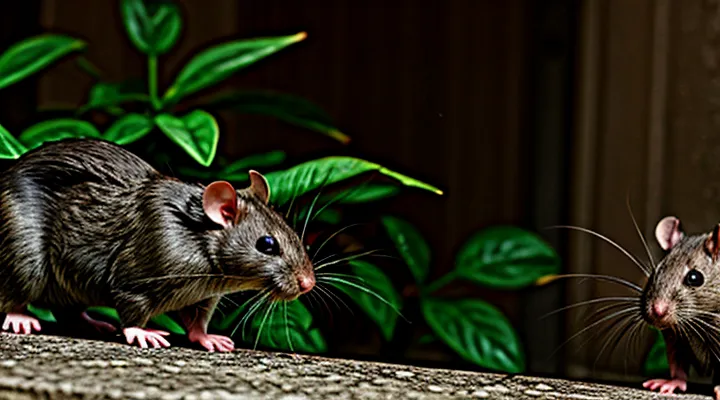
Understanding Mammalian Reproductive Cycles
Estrous vs. Menstrual Cycles
Key Distinctions
Rats do not undergo menstruation; their reproductive pattern follows an estrous cycle that differs fundamentally from the human menstrual process. The primary distinctions are:
- Cycle duration: Rats complete a full estrous cycle in 4–5 days, whereas the human menstrual cycle averages 28 days.
- Uterine lining: In rats, the endometrium is reabsorbed at the end of each cycle (a process called luteolysis), eliminating any shedding of tissue. Humans expel the functional layer of the endometrium during menstruation.
- Hormonal profile: Rat cycles are dominated by rapid fluctuations of estrogen and progesterone, with a pronounced luteal phase lasting only 12–24 hours. Human cycles feature a longer luteal phase of about 14 days, followed by a sharp decline in progesterone that triggers menstruation.
- Ovulation timing: Rats ovulate spontaneously at the onset of estrus, triggered by the estrogen surge. Human ovulation occurs mid‑cycle, after a preparatory follicular phase, and is not directly linked to menstrual bleeding.
- Reproductive strategy: The short, non‑menstrual cycle supports high reproductive turnover in rodents, while the longer menstrual cycle aligns with a strategy of fewer, more developed offspring in primates.
These differences arise from divergent evolutionary pressures and endocrine mechanisms, confirming that rats lack a menstrual cycle despite sharing basic mammalian reproductive architecture.
Hormonal Regulation
Rats do not undergo menstrual cycles; instead they exhibit a four‑ to five‑day estrous cycle governed by precise hormonal control. The hypothalamus releases gonadotropin‑releasing hormone (GnRH) in a pulsatile fashion, stimulating the anterior pituitary to secrete luteinizing hormone (LH) and follicle‑stimulating hormone (FSH). These gonadotropins drive ovarian follicle development and the production of estradiol, which peaks during proestrus and triggers the LH surge that induces ovulation.
Following ovulation, the corpus luteum secretes progesterone, establishing the luteal phase. Progesterone levels rise sharply, suppressing GnRH pulse frequency and consequently lowering LH and FSH output. In the absence of fertilization, the corpus luteum regresses, progesterone declines, and estradiol production resumes, initiating the next proestrus. This hormonal sequence repeats without the endometrial shedding characteristic of true menstruation.
Experimental monitoring of plasma hormone concentrations confirms the cyclical pattern: estradiol peaks at 10–30 pg/mL during proestrus, LH surges to 10–15 IU/L at ovulation, and progesterone reaches 5–10 ng/mL in diestrus. Prolactin levels also fluctuate, supporting luteal maintenance. The rapid turnover of hormones ensures the brief, tightly regulated cycle observed in laboratory rats.
Understanding this hormonal framework clarifies why rats serve as reliable models for studying ovarian function, endocrine disruption, and reproductive pharmacology, despite their lack of menstrual bleeding.
Evolutionary Context
Rats, like most mammals, follow an estrous cycle rather than a menstrual cycle. The estrous pattern eliminates the shedding of the uterine lining; instead, the endometrium is reabsorbed if fertilization does not occur. This arrangement conserves nutrients and reduces the physiological cost of repeated bleeding.
Evolutionary forces shaping this system include:
- High reproductive frequency – short gestation and rapid weaning allow multiple litters per year, favoring a cycle that quickly prepares the uterus for implantation.
- Energy efficiency – reabsorption of the endometrium recycles proteins and iron, advantageous for small-bodied species with limited stores.
- Predation pressure – brief fertile windows reduce the time females remain conspicuous to predators during hormonal changes.
Primates, particularly humans and other catarrhines, evolved menstrual cycles alongside longer gestation, extensive parental care, and reduced litter size. The need for a more controlled uterine environment and the ability to signal fertility through menstrual bleeding contributed to the divergence from the estrous model.
For laboratory research, recognizing that rats lack menstrual shedding clarifies the limits of using them to model human menstrual disorders. Studies requiring endometrial breakdown must employ species with true menstruation or adapt protocols to simulate comparable tissue remodeling.
The Reproductive Cycle of Rats
The Estrous Cycle in Rodents
Phases of the Rat Estrous Cycle
Rats do not undergo menstrual bleeding; their reproductive cycle is classified as an estrous cycle, which progresses through four distinct phases. Each phase can be identified by hormonal profiles and vaginal cytology, providing reliable markers for experimental timing.
-
Proestrus – lasts approximately 12 hours. Estrogen levels rise sharply, stimulating follicular development. Vaginal smears contain predominantly nucleated epithelial cells.
-
Estrus – spans about 12 hours. Peak estrogen triggers ovulation. Cytology shows cornified, anucleate epithelial cells that appear dense and refractile under microscopy.
-
Metestrus – lasts 12–24 hours. Progesterone begins to increase as the corpus luteum forms. Smears display a mixture of cornified cells and leukocytes, indicating the transition from ovulation to luteal activity.
-
Diestrus – extends 48–72 hours, the longest stage. Progesterone dominates, maintaining the uterine environment for potential implantation. Vaginal samples contain chiefly leukocytes with occasional epithelial remnants.
The complete estrous cycle in the laboratory rat averages 4–5 days, repeating continuously in the absence of pregnancy. Understanding the precise timing of each phase enables accurate scheduling of reproductive studies, hormone assays, and behavioral experiments that depend on the animal’s endocrine status.
Behavioral Changes During Estrous
Rats do not undergo menstruation; instead they experience an estrous cycle lasting approximately four to five days. Hormonal fluctuations during this period produce distinct behavioral patterns that researchers use to identify the stage of reproductive readiness.
- Proestrus: elevated estrogen triggers heightened locomotor activity, increased exploration of novel objects, and a surge in self‑grooming. Females display a pronounced preference for male scents.
- Estrus: estrogen peaks, and females exhibit lordosis reflexes, reduced aggression toward males, and a marked increase in time spent near potential mates. Nest‑building behavior intensifies, and vocalizations become more frequent.
- Metestrus: progesterone rise suppresses locomotion, promotes resting behavior, and induces a temporary decline in sexual receptivity. Grooming frequency returns to baseline.
- Diestrus: low hormone levels correspond with reduced activity, increased food intake, and heightened vigilance. Social interaction with conspecifics diminishes.
These behavioral shifts align tightly with hormonal changes, providing reliable indicators of reproductive status without reliance on menstrual markers.
Physiological Indicators
Physiological indicators that could reveal a menstrual-like process in rats include measurable hormonal fluctuations, reproductive‑tract tissue changes, and observable cellular patterns.
Hormone profiles provide the most direct evidence. In species with menstrual cycles, estradiol and progesterone rise sharply during the proliferative phase, peak at ovulation, then decline as the luteal phase ends, often accompanied by a brief surge of luteinizing hormone (LH). Detectable, cyclic peaks of these hormones in serum or urine samples would suggest a menstrual pattern rather than the typical rodent estrous cycle, which exhibits a relatively constant progesterone level and a single, brief estrogen surge.
Uterine histology offers another criterion. Menstruation is characterized by spontaneous shedding of the functional endometrial layer, visible as a thinned, desquamated epithelium with accompanying hemorrhage. Serial biopsies showing periodic endometrial breakdown and regeneration, coupled with local iron deposition from blood, would differentiate a menstrual process from the rodent estrous cycle, where the endometrium remains relatively stable and does not undergo spontaneous shedding.
Vaginal cytology can reflect underlying cycle type. In menstruating species, vaginal smears reveal a transition from keratinized epithelial cells to a mixture of leukocytes and erythrocytes during menses, then return to a predominance of nucleated epithelial cells in the proliferative phase. Consistent, cyclic appearance of red blood cells in smears would be a clear physiological marker.
A concise list of key indicators:
- Repeated, high‑amplitude estradiol and progesterone peaks with a defined luteal decline.
- Transient LH surge aligned with the estrogen peak.
- Periodic endometrial desquamation and hemorrhage confirmed by histology.
- Presence of erythrocytes in vaginal smears on a regular schedule.
Only the concurrent observation of these parameters would support the existence of a menstrual-like cycle in rats; their absence confirms the conventional estrous pattern.
Hormonal Control in Rats
Role of Estrogen and Progesterone
Rats do not undergo a menstrual cycle; they exhibit an estrous cycle that lasts four to five days. The cycle consists of proestrus, estrus, metestrus, and diestrus, each characterized by distinct hormonal profiles.
During proestrus, plasma estrogen concentrations increase sharply, reaching a peak that triggers the luteinizing hormone surge and ovulation. Estrus follows with a rapid decline in estrogen and a brief rise in progesterone as the corpus luteum forms. In metestrus, progesterone levels rise modestly, while estrogen remains low. Diestrus maintains elevated progesterone, providing a hormonal environment that supports potential implantation; if pregnancy does not occur, progesterone declines, and the cycle restarts.
The hormonal pattern in rats differs from the human menstrual cycle, where estrogen rises during the follicular phase, falls after ovulation, and progesterone dominates the luteal phase. In rats, the brief estrogen peak and the relatively low progesterone plateau reflect the shorter cycle length and the absence of menstrual shedding.
Key points for researchers:
- Estrogen surge: proestrus → ovulation trigger.
- Progesterone rise: metestrus to diestrus → uterine preparation.
- Cycle duration: 4–5 days, no endometrial shedding.
- Comparative relevance: rat estrous hormone dynamics provide a model for studying ovarian function but do not replicate human menstrual physiology.
Pituitary-Ovarian Axis
The pituitary‑ovarian axis governs reproductive function in female rodents through a sequence of hormonal signals that drive the estrous cycle. The hypothalamus releases gonadotropin‑releasing hormone (GnRH) in a pulsatile pattern, stimulating the anterior pituitary to secrete luteinizing hormone (LH) and follicle‑stimulating hormone (FSH). These gonadotropins act on ovarian follicles, prompting estrogen synthesis and follicular maturation.
Estrogen feedback modulates GnRH output: rising estradiol concentrations suppress GnRH release during the follicular phase, while a brief surge in estradiol triggers a pre‑ovulatory LH spike. The LH surge induces ovulation, after which the corpus luteum produces progesterone, which prepares the uterus for potential implantation and inhibits further GnRH secretion until luteolysis.
Key components of the axis in rats:
- GnRH: hypothalamic peptide, pulse frequency determines LH/FSH ratio.
- LH: induces ovulation, supports luteal function.
- FSH: promotes follicle growth, stimulates aromatase activity.
- Estradiol: primary ovarian estrogen, provides negative and positive feedback.
- Progesterone: luteal hormone, maintains uterine quiescence.
In rats, the cycle length averages four to five days and lacks the menstrual shedding of endometrial tissue observed in humans. Instead, the endometrium undergoes rapid remodeling without overt bleeding. The pituitary‑ovarian axis therefore orchestrates a self‑limited estrous sequence rather than a true menstrual cycle. Understanding this hormonal framework clarifies why rodents exhibit estrous, not menstrual, reproductive patterns.
Why the Distinction Matters
Implications for Research
Animal Models in Reproductive Biology
Rats are frequently employed as experimental subjects in reproductive biology because their estrous cycle is well characterized, short, and easily monitored. Unlike primates, rats do not undergo a true menstrual cycle; instead, they exhibit an estrous cycle in which the endometrium is reabsorbed rather than shed. This distinction shapes the interpretation of data derived from rat studies when addressing questions about menstrual physiology.
Key implications for using rats as models include:
- Cycle duration: Approximately 4–5 days, allowing rapid collection of multiple cycles within a single experiment.
- Hormonal profile: Fluctuations of estrogen and progesterone mirror those observed in mammals with menstrual cycles, providing a basis for comparative endocrine analysis.
- Tissue remodeling: Endometrial proliferation and regression occur without overt bleeding, necessitating histological assessment rather than visual observation of menses.
- Genetic manipulation: Availability of transgenic and knockout strains enables investigation of specific genes implicated in menstrual regulation.
Researchers must translate findings from the rat estrous framework to human menstrual biology with caution. While hormonal dynamics and gene expression patterns offer valuable insight, the absence of a true menstrual shedding event limits direct extrapolation. Complementary models—such as non‑human primates or engineered mouse lines that exhibit menstruation‑like processes—are often incorporated to bridge this gap.
In summary, rats provide a cost‑effective, high‑throughput platform for studying reproductive endocrinology and uterine physiology, yet their non‑menstrual cycle imposes constraints that must be acknowledged when addressing questions about mammalian menstruation.
Understanding Human Health
Rats do not undergo menstrual cycles; they exhibit an estrous cycle that differs markedly from the human menstrual process. In the estrous pattern, the endometrial lining is reabsorbed rather than shed, eliminating menstrual bleeding. This physiological distinction is essential when extrapolating data from rodent models to human health.
Understanding the divergence between rodent and human reproductive cycles informs several areas of medical research:
- Hormonal regulation: Rats experience rapid fluctuations in estrogen and progesterone, with a typical 4‑day cycle. Human menstrual cycles span approximately 28 days, producing distinct hormonal peaks that affect tissue response and drug metabolism.
- Tissue remodeling: The absence of menstrual shedding in rats means that studies of endometrial repair, inflammation, and scar formation must account for different cellular mechanisms.
- Disease modeling: Conditions such as endometriosis, polycystic ovary syndrome, and menstrual disorders rely on menstrual physiology. Rodent models require genetic or surgical modifications to mimic these human-specific processes.
Researchers must adjust experimental designs to reflect these differences. Strategies include:
- Selecting alternative species (e.g., primates) when menstrual physiology is critical.
- Employing hormonal manipulation in rats to simulate human-like cycles.
- Interpreting results with an explicit acknowledgment of the estrous‑menstrual gap.
Accurate translation of rodent findings to human health depends on recognizing that rats lack menstrual bleeding. Proper alignment of reproductive biology ensures that therapeutic insights derived from animal studies remain relevant to human conditions.
Misconceptions and Clarifications
Common Misunderstandings
Many people assume that female rats shed blood each month as humans do, believing that a visible discharge proves a menstrual cycle. In reality, rats belong to the estrous group; their reproductive cycle ends with ovulation, not with the shedding of a uterine lining.
A second misconception equates the length of the rat estrous cycle with a human menstrual period. The entire rat cycle lasts about four to five days, far shorter than the typical 28‑day human cycle, and it consists of distinct phases (proestrus, estrus, metestrus, diestrus) that are identified by hormonal changes and vaginal cytology, not by bleeding.
A third error is the idea that all rodent species menstruate. Only a few mammals, such as primates, some bats, and the elephant shrew, exhibit true menstruation. Rats, like most rodents, reabsorb the endometrial tissue after ovulation, leaving no external blood loss.
Common misunderstandings summarized:
- Visible vaginal secretions are mistaken for menstrual blood; they are mucus and cellular debris.
- Cycle duration is conflated with human menstrual timing; the rat cycle is measured in days, not weeks.
- Presence of a reproductive cycle is taken to mean menstruation; rats undergo estrous cycling without uterine shedding.
Clarifying these points eliminates the false belief that rats experience menstrual periods.
Scientific Accuracy
Rats reproduce through an estrous cycle, not a menstrual cycle. The estrous cycle lasts 4–5 days and consists of proestrus, estrus, metestrus, and diestrus phases, each defined by distinct hormone levels and epithelial changes. Unlike humans, rats do not shed the uterine lining; instead, the endometrium is reabsorbed during the luteal phase.
Scientific literature documents the hormonal profile of the rodent cycle:
- Luteinizing hormone (LH) peaks at the transition from proestrus to estrus.
- Estradiol rises during proestrus, triggering the LH surge.
- Progesterone increases during metestrus and remains elevated through diestrus.
Histological studies show that the rat endometrium undergoes remodeling without the bleeding characteristic of menstruation. Comparative analyses confirm that true menstruation, defined by cyclic shedding of the functional endometrial layer accompanied by bleeding, occurs only in a limited group of primates and a few other mammals.
Research implications:
- Rodent models are appropriate for studying hormone regulation, ovarian function, and fertility, but they cannot replicate menstrual physiology.
- Investigations of menstrual disorders require species that exhibit genuine menstrual cycles, such as macaques or human tissue models.
Accuracy demands clear distinction between estrous and menstrual processes to avoid misinterpretation of experimental results and to ensure relevance when extrapolating findings to human reproductive health.