
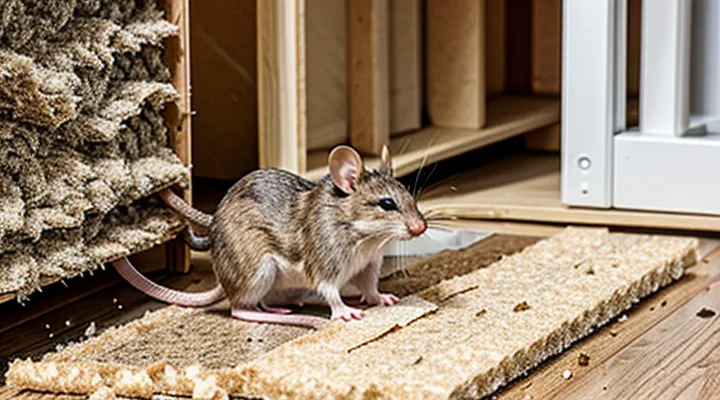
Understanding Mineral Wool Insulation
What is Mineral Wool?
Types of Mineral Wool
Mineral wool is manufactured from inorganic fibers that are melted and spun into a porous, heat‑resistant blanket. The primary categories differ in raw material, thermal performance, and mechanical strength, which influence how rodents interact with the insulation.
- Glass wool – produced from recycled glass or silica sand; low density; thermal conductivity around 0.033 W/m·K; flexible and easy to cut; relatively soft surface may be more attractive for gnawing.
- Rock (stone) wool – derived from basalt or diabase; density higher than glass wool; thermal conductivity near 0.040 W/m·K; rigid structure and abrasive fibers reduce chewing incentive.
- Slag wool – made from blast‑furnace slag; similar density to rock wool; thermal conductivity about 0.035 W/m·K; fibers are coarse and less palatable to rodents.
- Basalt wool – manufactured exclusively from basalt rock; high melting point (≈ 1200 °C); density comparable to rock wool; resistant to compression and less likely to be damaged by gnawing.
Each type presents distinct resistance to rodent activity. Harder, denser fibers such as those in rock, slag, and basalt wool create a physical barrier that discourages chewing, while the softer texture of glass wool can be more vulnerable. Selecting an appropriate mineral wool variant therefore contributes to both thermal efficiency and durability against small‑animal interference.
Properties of Mineral Wool
Mineral wool consists of molten rock or blast‑furnace slag that is spun into a fibrous mat and cured with binders. The resulting material forms a lightweight blanket or loose fill used for building insulation and acoustic treatment.
- Thermal conductivity: typically 0.032–0.045 W·m⁻¹·K⁻¹, providing consistent heat‑transfer resistance.
- Density: ranges from 10 kg m⁻³ (loose fill) to 200 kg m⁻³ (high‑density board), influencing compressive strength and rigidity.
- Fire resistance: inorganic composition yields a non‑combustible product with melt‑point above 1000 °C and zero smoke emission.
- Moisture behavior: low water absorption, retains dimensional stability when exposed to humidity, and resists mold growth.
- Acoustic performance: porous structure absorbs sound across a broad frequency spectrum, reducing reverberation.
- Mechanical strength: compressive strength increases with density, supporting structural loads and preserving shape under pressure.
- Chemical durability: resistant to acids, alkalis, and most solvents, maintaining integrity over decades.
Rodents encounter mineral wool as a coarse, abrasive fiber network lacking nutritional value. The high density of rigid boards and the sharp texture of loose fill deter chewing; any incised fibers quickly fray, making continued gnawing impractical. Consequently, mineral wool does not serve as a preferred food source or nesting material for mice.
If gnawing or physical damage compromises the blanket, thermal conductivity rises, moisture barrier degrades, and fire‑resistance ratings fall. Maintaining the continuity of mineral wool preserves its insulating efficiency and safety attributes.
Do Rodents Interact with Mineral Wool?
Rodent Behavior and Gnawing
Reasons for Rodent Gnawing
Rodents gnaw for several physiological and behavioral reasons that directly affect the durability of building insulation.
- Constant tooth growth requires regular abrasion; without sufficient chewing material, incisors can overgrow, leading to injury.
- Nutrient deficiencies, particularly low calcium or protein intake, trigger gnawing as a compensatory behavior to obtain minerals from available substrates.
- Instinctual nest construction drives mice to gather and shape soft, fibrous materials, which include insulation batts.
- Exploration and territory marking involve chewing to assess and modify the environment, creating pathways and burrows.
- Stress or overcrowding intensifies gnawing activity as a coping mechanism, increasing the likelihood of damage to surrounding structures.
These drivers explain why mineral wool, despite its resistance to moisture and fire, remains vulnerable when exposed to rodent activity. Addressing dietary needs, reducing habitat attractiveness, and implementing physical barriers can mitigate the impact on insulation performance.
Rodent Habitats and Nests
Rodents select nesting sites based on warmth, concealment, and access to food. Residential structures provide numerous micro‑habitats that satisfy these criteria, especially when insulation materials retain heat and remain hidden from visual detection.
Mineral wool, commonly installed in walls, attics, and crawl spaces, offers a stable temperature range and a soft, fibrous texture. These characteristics attract mice seeking shelter. Once a cavity is entered, the animal builds a nest using available fibers, shredded paper, cloth, and any loose insulation. The nest may be reinforced with gnawed wood or cardboard, creating a compact mass that adheres to the surrounding material.
Key factors influencing rodent colonization of insulation include:
- Presence of entry points such as gaps around pipes, vents, or foundation cracks.
- Accumulation of dust and debris that provides additional nesting material.
- Ambient humidity levels that affect the insulation’s structural integrity and comfort.
When mice incorporate mineral wool into their nests, the fibers become compressed and displaced, reducing the material’s R‑value. Repeated gnawing can also create openings that allow air leakage, further degrading thermal performance. In severe cases, the buildup of droppings and urine introduces moisture, accelerating mold growth and compromising the insulation’s fire‑resistance rating.
Effective mitigation requires sealing all potential ingress routes, installing metal or hardware cloth barriers around vulnerable openings, and regularly inspecting concealed spaces for signs of activity. Replacement of compromised insulation with rodent‑resistant alternatives, such as foam board or sealed spray foam, restores thermal efficiency while minimizing future damage.
Evidence of Rodent Infestation in Insulation
Signs of Rodent Activity
Rodent presence in walls or attics often manifests through observable evidence. Identifying these signs early prevents extensive damage to thermal barriers.
- Small, dark pellets scattered on floorboards, insulation, or near entry points.
- Fresh gnaw marks on mineral fibers, framing lumber, or wiring conduits; teeth impressions appear as clean, shallow cuts.
- Accumulated shredded paper, fabric, or insulation debris forming nests in cavities.
- Strong, musky odor emanating from confined spaces, indicating urine accumulation.
- Visible holes or gnaw‑enlarged gaps around vents, pipes, or structural joints.
- Displaced or compressed insulation layers, exposing gaps that reduce thermal resistance.
Each indicator directly correlates with a decline in insulation performance. Chewed mineral wool loses its fibrous structure, diminishing its ability to trap air and lowering the overall R‑value. Compromised insulation permits air infiltration, increasing heating or cooling loads and raising energy consumption. Moisture from urine or condensation, attracted by damaged fibers, fosters mold growth, further degrading thermal efficiency.
Prompt detection of these markers enables targeted removal of rodents, repair of insulation, and restoration of optimal building envelope performance.
Potential Damage to Insulation
Mice can bite and shred mineral wool fibers, creating gaps that reduce the material’s thermal resistance. The loss of density weakens the blanket’s ability to trap air, leading to measurable increases in heat transfer.
When rodents gnaw the insulation, they also introduce organic debris that attracts moisture. Moisture saturation accelerates mold growth and compromises the structural integrity of the surrounding building components.
Typical indicators of rodent‑related damage include:
- Visible chewed or frayed fibers on the surface of the insulation.
- Small holes or tunnels in the wool that expose underlying framing.
- Accumulation of droppings or urine stains near the affected area.
- Unexplained temperature fluctuations in rooms adjacent to the compromised zone.
The economic impact of reduced insulation performance manifests as higher energy consumption. A 10 % loss of R‑value can increase heating or cooling costs by several percent, depending on climate severity.
Preventive measures focus on sealing entry points, installing rodent‑proof barriers, and conducting regular inspections. In cases where damage is already present, removal of contaminated sections and replacement with intact mineral wool restores the original thermal rating.
Effective control of rodent activity safeguards insulation efficiency, maintains indoor comfort, and protects the building envelope from long‑term degradation.
Impact of Rodents on Mineral Wool Performance
Compromised Thermal Performance
Air Infiltration and Heat Loss
Mice that chew through mineral‑wool insulation create openings that allow uncontrolled air movement between the interior and exterior of a building. These gaps compromise the continuity of the vapor barrier, enabling drafts that bypass the intended thermal envelope.
Air infiltration through damaged insulation increases convective heat transfer. Each cubic foot of uncontrolled airflow can remove several hundred BTU per hour in a typical residential climate, directly raising heating demand and utility costs.
Key effects of rodent‑induced breaches:
- Accelerated temperature differentials across wall assemblies
- Elevated indoor humidity levels, promoting condensation on structural members
- Reduced overall R‑value of the affected cavity
- Increased risk of mold growth due to moisture accumulation
Preventive measures include sealing entry points, installing rodent‑proof mesh over insulation cavities, and conducting regular visual inspections to detect early signs of gnawing. Prompt repair of identified holes restores the barrier, limiting heat loss and preserving energy efficiency.
Moisture Accumulation
Mice chewing creates punctures and frayed edges in mineral wool, exposing the material to ambient humidity. Openings allow air exchange between conditioned interior spaces and unconditioned exterior zones, facilitating moisture infiltration directly through the damaged fibers.
Moisture that reaches the insulation accumulates because mineral wool loses its hydrophobic coating when the structure is compromised. Water droplets settle on the exposed surface, and capillary forces draw liquid deeper into the material. The resulting wet pockets raise the thermal conductivity of the insulation and create a substrate for microbial growth.
Consequences of moisture buildup include:
- Decrease in R‑value by up to 30 % in severely saturated sections.
- Development of mold colonies that can spread to adjacent framing members.
- Accelerated deterioration of wood and metal components due to rot and corrosion.
Preventive measures focus on sealing rodent entry points, repairing damaged wool, and installing vapor barriers where appropriate. Regular inspections detect early signs of moisture, allowing timely remediation before performance loss becomes irreversible.
Structural Damage and Integrity
Degradation of Insulation Batts
Insulation batts rely on consistent density and fiber integrity to maintain thermal resistance. When rodents bite through mineral wool, the structural network of fibers becomes fragmented, creating gaps that allow heat transfer and reduce the overall R‑value.
Rodents gnaw mineral fibers because the material offers minimal resistance and can be a source of nesting material. The act of chewing creates exposed edges, displaces fibers, and generates debris that settles within cavity spaces.
Physical degradation includes:
- Broken or displaced fibers that no longer interlock.
- Reduced bulk density, leading to lower insulation performance.
- Creation of channels that permit air movement, further diminishing effectiveness.
Secondary consequences arise from compromised insulation:
- Moisture can accumulate in damaged zones, fostering mold growth.
- Accumulated debris provides a substrate for additional pests.
- Increased drafts may elevate heating or cooling loads, raising energy consumption.
Detection methods focus on visual and instrumental assessment:
- Direct inspection of accessible cavity sections for bite marks and fiber loss.
- Thermal imaging to locate colder spots indicative of insulation gaps.
- Blower‑door testing to measure increased infiltration rates.
Mitigation strategies:
- Seal all potential entry points with steel wool, caulk, or hardware cloth.
- Install rodent‑resistant barriers, such as metal mesh, over batts in vulnerable areas.
- Replace severely damaged sections with new, high‑density mineral wool or alternative materials.
- Conduct periodic inspections to identify early signs of gnawing and address them promptly.
Risk of Insulation Collapse
Mice that gnaw mineral wool can create pathways for moisture, air infiltration, and loss of structural integrity. Their incisors easily cut fibers, reducing the material’s ability to hold shape and support surrounding components. When fiber density drops, the insulation may settle or sag, creating gaps that compromise thermal performance and increase energy consumption.
Key mechanisms that lead to collapse include:
- Direct removal of fibers, thinning the blanket and weakening its load‑bearing capacity.
- Creation of tunnels that allow water vapor to accumulate, promoting condensation and fiber degradation.
- Disruption of the vapor barrier, permitting bulk moisture to penetrate and cause swelling or compression of the wool.
Consequences of a compromised insulation system extend beyond reduced R‑value. Settled or collapsed sections can expose structural members to temperature extremes, accelerate wood rot, and encourage mold growth. In extreme cases, the loss of support may cause ceiling panels or wall finishes to detach, posing safety hazards.
Preventive measures focus on exclusion and monitoring. Seal entry points larger than ¼ inch, install rodent‑proof barriers, and conduct regular visual inspections of attic and crawl‑space insulation. Early detection of gnaw marks enables targeted repair before the material loses its shape and performance.
Health and Safety Concerns
Rodent Droppings and Urine
Rodent excrement and urine introduce organic matter and moisture into insulation cavities. Droppings contain proteins, fats, and carbohydrates that decompose rapidly, while urine is a source of nitrogenous compounds and water. Both substances create a microenvironment conducive to microbial growth.
Moisture from urine raises the relative humidity of mineral wool, reducing its thermal resistance. Decomposition of droppings releases heat and volatile organic compounds that further degrade the material’s structure. The combined effect can diminish the insulation’s R‑value by up to 20 % in severely contaminated zones.
Key consequences of contamination include:
- Accelerated loss of loft and density in mineral fibers
- Promotion of mold and mildew on adjacent surfaces
- Increased risk of airborne allergens and pathogens
- Potential for structural damage due to prolonged dampness
Detection of droppings and urine serves as an early indicator of rodent activity that may lead to gnawing of insulation. Prompt removal of contaminants and repair of entry points are essential to preserve the performance and longevity of the thermal barrier.
Spread of Diseases
Rodent activity in residential insulation creates pathways for pathogens to move between hidden cavities and occupied spaces. When mice gnaw mineral wool, they generate dust and fecal particles that can be carried by airflow, settling on surfaces where humans breathe them in. The physical breach also allows arthropod vectors, such as fleas and mites, to access interior rooms, increasing the risk of disease transmission.
Primary health concerns linked to this behavior include:
- Hantavirus – transmitted through aerosolized rodent urine, droppings, or saliva; inhalation of contaminated dust can cause severe respiratory illness.
- Salmonella – present in rodent feces; ingestion occurs when contaminated dust contacts food or kitchen surfaces.
- Leptospirosis – spread by contact with urine‑laden dust; skin abrasions or mucous membranes provide entry points.
- Lymphocytic choriomeningitis virus (LCMV) – carried in rodent secretions; exposure through inhalation or direct contact may lead to meningitis.
Damage to insulation also disrupts the barrier function that limits moisture accumulation. Increased humidity fosters mold growth, which can produce spores that exacerbate respiratory conditions and act as secondary carriers for bacterial agents. The combined effect of compromised insulation and rodent‑derived contaminants elevates overall indoor health risk.
Mitigation strategies focus on sealing entry points, removing damaged insulation, and implementing rigorous sanitation protocols. Regular inspection of attic and wall cavities detects gnawing early, preventing extensive contamination and reducing the likelihood of disease spread.
Preventing Rodent Infestation in Mineral Wool
Exclusion and Sealing Techniques
Sealing Entry Points
Mice can infiltrate wall cavities and chew mineral wool, compromising thermal performance and creating pathways for moisture and air leakage. The most effective defense is to eliminate the routes they use to enter the building envelope.
Identify all potential openings larger than a quarter‑inch, including gaps around pipes, vents, utility penetrations, foundation cracks, and roof eaves. Apply a durable, rodent‑proof sealant—such as stainless‑steel mesh, heavy‑gauge hardware cloth, or polyurethane foam with embedded steel wool—directly over each gap. For larger voids, install solid metal flashing or cement‑based caulk before covering with insulation.
Regularly inspect the sealed areas for signs of wear, displacement, or new damage. Reapply sealant promptly if degradation is observed.
Key actions for a comprehensive seal:
- Survey exterior and interior spaces for openings > 0.25 in.
- Use steel mesh or hardware cloth for structural gaps.
- Apply expanding polyurethane foam with steel wool filler for irregular cracks.
- Install metal flashing on vent openings and utility penetrations.
- Conduct quarterly checks and repair any compromised seals.
By systematically sealing entry points, the risk of rodents accessing and damaging mineral wool is minimized, preserving insulation integrity and maintaining energy efficiency.
Using Rodent-Proof Materials
Mice can breach mineral insulation, creating gaps that lower thermal resistance and allow moisture intrusion. Selecting materials that resist gnawing prevents these defects and preserves energy efficiency.
Materials designed to deter rodents include:
- Galvanized steel mesh with apertures smaller than ¼ inch.
- Rigid foam boards (polyisocyanurate, closed‑cell polyurethane) that lack chewable fibers.
- Stainless‑steel lath applied as a barrier between insulation and cavity walls.
- High‑density fiberboard or cement board in areas where contact with insulation is unavoidable.
Effective rodent‑proofing depends on several criteria:
- Physical hardness – the material must exceed the bite force of common house mice (approximately 0.2 N).
- Small opening size – gaps larger than ¼ inch allow entry; mesh or sealants must close all seams.
- Corrosion resistance – long‑term exposure to humidity requires metal that will not rust and compromise integrity.
- Compatibility with building codes – the barrier must meet fire‑rating and vapor‑permeability standards.
Installation recommendations:
- Install steel mesh on the exterior side of cavity walls before placing insulation, overlapping seams by at least 2 inches and fastening with corrosion‑resistant staples.
- When using rigid foam, seal edges with a rodent‑grade silicone caulk to eliminate entry points.
- Apply a continuous strip of stainless‑steel lath around penetrations such as pipes and vent openings, then cover with insulation.
- Verify that all joints between insulation panels are buttressed by a hard barrier, avoiding direct contact between mineral wool and wood framing.
Regular inspection complements material selection. Check for gnaw marks, displaced mesh, or new openings after seasonal changes. Prompt repair of compromised sections restores protection and maintains the intended thermal performance of the building envelope.
Repellents and Deterrents
Natural Repellents
Mice frequently bite through mineral wool, creating pathways for air leakage and reducing the material’s thermal resistance. The resulting gaps allow heat loss, increase energy consumption, and may promote mold growth in damp areas.
Natural repellents provide a non‑chemical means of discouraging rodent activity. Their volatile compounds create odors or tastes that mice find aversive, prompting avoidance of treated zones without compromising insulation integrity.
- Peppermint oil: strong menthol scent, applied with cotton balls or diluted spray on exposed surfaces.
- Cayenne pepper: powdered capsaicin irritates nasal passages; sprinkle along seams and corners.
- Clove oil: eugenol vapor deters rodents; use a few drops on cloth placed near entry points.
- Dried rosemary or thyme: aromatic foliage placed in attics or crawl spaces creates an unpleasant environment.
- Cedar shavings: natural oils released over time repel mice; line gaps and storage areas.
Effective deployment requires regular reapplication, especially after cleaning or seasonal changes. Concentrations must be sufficient to maintain detectable odor but low enough to avoid staining or degrading surrounding materials. Placement near known entry points, ventilation ducts, and insulation seams maximizes coverage.
When natural deterrents are consistently used, mouse intrusion into mineral wool diminishes, preserving the insulation’s R‑value and extending its service life. The approach reduces reliance on synthetic pesticides while supporting building performance.
Chemical Deterrents
Chemical deterrents provide a practical method to prevent rodents from damaging insulation composed of mineral fibers. Their primary function is to create an environment that rodents find unattractive, thereby reducing the likelihood of chewing activity that compromises thermal performance.
Common categories of deterrents include:
- Repellent sprays containing peppermint oil, eucalyptus, or capsaicin; applied to the surface of insulation or surrounding framing.
- Scented barrier compounds such as ammonia‑based emulsions; integrated into cavities before installation.
- Rodenticide granules placed in accessible voids; designed to eliminate individuals that breach the barrier.
- Ultrasonic emitters that generate frequencies beyond human hearing; mounted in attics or crawl spaces.
Effectiveness depends on correct placement and regular reapplication. Repellents lose potency after exposure to moisture or dust, requiring re‑treatment every 30‑60 days. Scented barriers retain activity longer when mixed directly with the insulating material during manufacturing. Rodenticides demand strict compliance with safety regulations; misuse can contaminate the insulation and pose health risks to occupants.
When a deterrent is compatible with mineral wool, the material’s loft and moisture‑resistance remain unchanged. Incompatible chemicals may cause fiber clumping or reduce fire‑rating, which can degrade overall insulation efficiency. Selecting products labeled as non‑corrosive and fire‑safe mitigates these risks.
Implementation guidelines:
- Inspect all entry points; seal gaps before applying deterrents.
- Apply repellents to the outer surface of insulation using a fine mist to avoid saturation.
- Incorporate scented barrier compounds during installation, ensuring uniform distribution.
- Position ultrasonic devices at intervals of no more than 15 feet to maintain consistent coverage.
Monitoring after treatment involves visual checks for gnaw marks and periodic measurement of R‑value to confirm that thermal performance has not declined. Chemical deterrents, when chosen and applied correctly, reduce rodent activity without compromising the functional integrity of mineral fiber insulation.
Professional Pest Control Measures
Inspection and Identification
Inspection of insulation must begin with a systematic visual sweep of accessible attic and wall cavities. Look for shredded fibers, exposed strands, or clusters of dust that differ in texture from intact mineral wool. Presence of droppings, gnaw marks on framing members, or small entry holes confirms rodent activity.
Identification relies on distinguishing rodent damage from other degradation sources. Mineral wool resists moisture and mold; therefore, discoloration or mold growth typically indicates water intrusion rather than chewing. Chewed sections appear ragged, with fibers pulled away from the original density, and often exhibit bite marks that match the size of a mouse’s incisors (approximately 2‑3 mm wide).
Effective inspection includes the following steps:
- Secure safe entry to the insulated area; use proper respiratory protection to avoid inhaling fibers.
- Conduct a tactile assessment—press gently on the material; compromised sections feel loose or crumbly.
- Document findings with photographs, noting location, extent of damage, and any evidence of entry points.
- Collect samples of gnawed fibers for laboratory analysis if species verification is required.
Tools that enhance detection comprise a high‑intensity flashlight, a fiber‑optic inspection camera for concealed spaces, and a calibrated moisture meter to rule out water‑related deterioration.
When damage is confirmed, the next phase involves sealing identified entry points, removing contaminated insulation, and installing replacement mineral wool that meets the original R‑value specifications. Prompt remediation prevents thermal performance loss and maintains fire‑resistance characteristics of the insulation system.
Eradication Strategies
Mice can damage mineral wool insulation by gnawing the fibrous material, creating gaps that reduce thermal resistance and permit moisture penetration. The loss of R‑value accelerates energy consumption and promotes mold growth when water infiltrates compromised zones.
Rodent activity typically originates from unsealed openings, cluttered crawl spaces, and abundant food sources. Identifying these vulnerabilities is essential for effective control.
Eradication strategies focus on prevention, removal, and monitoring:
- Seal all potential entry points with steel‑wool mesh, cement, or heavy‑duty hardware cloth; inspect foundation, vent pipes, and utility penetrations quarterly.
- Eliminate food and water sources by storing grain, pet food, and waste in airtight containers; repair leaks and maintain proper drainage.
- Deploy snap traps or electronic devices in established runways; position bait stations along walls and near suspected nesting sites.
- Apply rodenticide baits in tamper‑resistant stations where trapping is insufficient; follow label instructions and safety protocols.
- Introduce natural predators, such as barn owls, in agricultural settings to reduce population pressure.
- Conduct regular visual inspections and use motion‑activated cameras to verify the absence of activity after interventions.
Combining exclusion, sanitation, and targeted removal yields the most reliable reduction in rodent damage to insulation systems. Continuous assessment ensures that any resurgence is detected early and addressed before thermal performance degrades.