
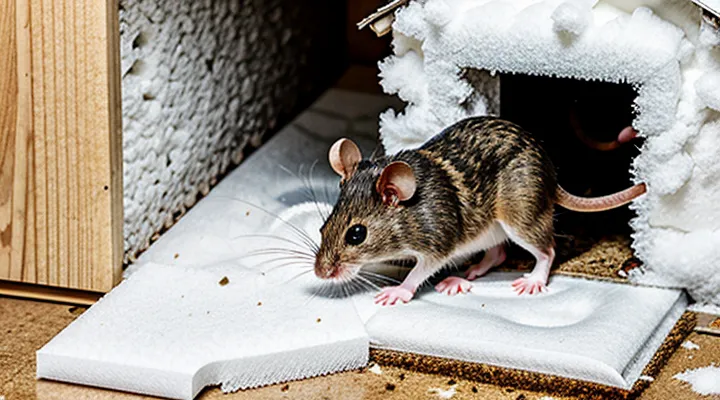
Understanding Mouse Behavior and Foam Insulation
The Appeal of Foam Insulation for Rodents
Nutritional Value (or Lack Thereof)
Mice encounter foam insulation primarily as a structural material within wall cavities. The substance consists of synthetic polymers—commonly polyurethane or expanded polystyrene—formed from petroleum‑derived monomers. These polymers contain carbon, hydrogen, and oxygen atoms arranged in long chains that resist enzymatic breakdown. Consequently, the material offers no digestible proteins, carbohydrates, lipids, vitamins, or minerals.
The dietary profile required by rodents includes:
- Essential amino acids supplied by protein sources.
- Simple and complex carbohydrates for energy.
- Fats providing essential fatty acids.
- Micronutrients such as calcium, phosphorus, and B‑vitamins.
Foam insulation lacks all listed components. Its chemical composition remains inert to the gastrointestinal enzymes of mice, rendering it nutritionally void.
Incidental ingestion arises from gnawing instincts rather than hunger for nutrients. Chewing reduces molar wear and creates pathways for ventilation, but the consumed polymer passes through the digestive tract largely unchanged. Physical irritation, blockage, or exposure to flame‑retardant additives may result, yet no caloric or nutritive benefit accrues.
In summary, foam insulation presents no nutritional value to mice; any consumption reflects behavioral adaptation rather than dietary necessity.
Nesting and Shelter Opportunities
Mice select nesting sites that are concealed, warm, and dry. Foam insulation installed within wall cavities satisfies these criteria, offering a protected environment that limits exposure to predators and environmental fluctuations.
Key attributes of foam that create shelter opportunities:
- Small, sealed voids that prevent airflow and retain heat.
- Structural rigidity that maintains consistent space for nest construction.
- Surface texture that allows easy attachment of nesting material.
- Minimal disturbance from external activities because the material is concealed behind finished walls.
The presence of such conditions can encourage mice to establish colonies within residential structures. Effective mitigation involves sealing entry points, removing excess foam in accessible areas, and maintaining regular inspections to detect early signs of nesting activity.
Types of Foam Insulation and Their Susceptibility
Expanded Polystyrene (EPS)
Expanded Polystyrene (EPS) is a lightweight, closed‑cell plastic composed of 95 % air. The material is rigid, non‑porous, and resists moisture, making it a common choice for thermal insulation in residential walls. Its low density and smooth surface provide little resistance to rodent incisors, yet the polymer itself contains no nutritional value.
Rodents such as house mice are opportunistic feeders. Their primary diet consists of grains, seeds, and stored food, but they also gnaw on non‑food items to wear down continuously growing teeth. EPS does not emit odors or textures that attract mice for consumption; however, the material may be chewed when it offers a convenient pathway through a wall cavity.
Observed behavior includes:
- Gnawing of EPS to create access routes to adjacent rooms or utility spaces.
- Removal of small EPS fragments that are subsequently discarded rather than ingested.
- Preference for insulation that contains organic binders or additives, which are absent in pure EPS.
Damage resulting from mouse activity in EPS‑filled walls typically manifests as:
- Holes or tunnels that compromise the thermal envelope, reducing energy efficiency.
- Exposure of underlying structural components, increasing the risk of moisture infiltration.
- Accumulation of mouse droppings and urine within the cavity, creating health hazards.
Preventive measures focus on sealing entry points, installing metal or hardplastic barriers, and employing rodent‑resistant insulation materials that lack the softness of EPS. Regular inspection of wall cavities can identify early signs of gnawing before extensive degradation occurs.
Extruded Polystyrene (XPS)
Extruded Polystyrene (XPS) is a closed‑cell plastic foam produced by heating polystyrene beads and extruding them through a die. The resulting material exhibits high compressive strength, low water absorption, and a thermal conductivity around 0.029 W·m⁻¹·K⁻¹. These characteristics make XPS a common choice for insulating exterior and interior wall cavities, foundation slabs, and under‑floor spaces.
Rodents such as mice primarily seek carbohydrate‑rich substances, including grains, seeds, and plant material. Synthetic polymers lack the nutritional content required for sustenance, so XPS does not constitute a food source. Laboratory observations confirm that mice will not ingest XPS when alternative food is available.
Mice possess continuously growing incisors and must gnaw to maintain tooth length. Hard, non‑nutritive materials may be chewed to create nesting cavities or to enlarge existing passages. XPS, being relatively soft compared to wood or drywall, can be gnawed if it provides structural advantage for nest building. However, the material offers little incentive beyond mechanical utility; mice do not derive energy from it.
Consequences of gnawing include:
- Creation of entry points for additional pests
- Compromise of the insulation’s thermal performance
- Potential for moisture ingress if the foam’s protective layer is breached
Mitigation measures:
- Seal gaps around plumbing, wiring, and foundation penetrations with steel wool or metal mesh before installing XPS.
- Install a rigid barrier such as metal flashing over exposed foam surfaces in high‑traffic zones.
- Employ rodent‑proof caulking and concrete sealants around joints and seams.
- Conduct regular visual inspections of wall cavities for gnaw marks or nesting material.
Understanding that XPS serves solely as an insulating barrier, not a food source, informs effective pest‑management strategies while preserving the material’s intended performance.
Spray Foam Insulation (Polyurethane)
Spray foam insulation, commonly referred to as «polyurethane foam», expands on application to fill gaps, seal air leaks, and provide thermal resistance. The material consists of two reactive liquids that polymerise into a rigid or semi‑rigid cellular structure. Its surface is smooth, low‑odor, and chemically inert after curing.
Mice are omnivorous rodents that gnaw on a wide range of substances to maintain incisors. Their diet includes grains, seeds, and occasional soft plastics, but the primary attractants are food residues and nesting material. Polyurethane foam lacks nutritional value and emits no scent that would draw rodents.
Observations from pest‑control reports indicate the following:
- Mice may chew through foam when it constitutes the only barrier between a cavity and a potential nesting site.
- The act of gnawing typically occurs to create a passage rather than to consume the material.
- Repeated gnawing can breach the foam, reducing its insulating performance and allowing entry of other pests.
Consequences of mouse activity on spray‑foam‑insulated walls include loss of airtightness, diminished R‑value, and potential exposure of underlying structural components. To mitigate risk, consider these measures:
- Seal all entry points in the building envelope before foam application.
- Use steel wool or copper mesh in wall cavities where mice are known to travel.
- Apply a thin coating of rodent‑deterrent spray on the foam surface after curing, if compatible with the product specifications.
Overall, mice do not feed on polyurethane spray foam; they may gnaw it only to gain access, which can compromise insulation integrity. Proper sealing and preventative barriers reduce the likelihood of such damage.
Signs of Rodent Activity in Walls
Visual Cues
Gnaw Marks
Mice create distinctive gnaw marks when they chew through building materials. The incisions are shallow, V‑shaped, and display parallel bite lines spaced approximately 2–3 mm apart. Edges are roughened by the incisors, and the surrounding surface often shows slight discoloration from saliva.
These marks serve as primary evidence that rodents have accessed foam insulation. Foam’s soft, cellular structure allows incisors to penetrate with minimal effort, leaving clear bite patterns. The presence of gnaw marks on insulation panels indicates that mice are not only traversing the cavity but also extracting material for nesting or consumption.
Typical indicators of gnaw activity on foam include:
- Uniform, evenly spaced bite marks aligned in the direction of mouse movement.
- Small shavings or fibers collected near the incision site.
- Fresh, moist edges suggesting recent chewing activity.
- Absence of larger holes, which implies gradual, repeated bites rather than a single aggressive breach.
Detecting gnaw marks enables accurate assessment of infestation severity. Early identification of such evidence prompts targeted remediation, including removal of compromised insulation, sealing of entry points, and placement of bait stations to prevent further damage.
Droppings and Urine Stains
Droppings and urine stains provide direct evidence of rodent activity within wall cavities that contain foam insulation. Fresh droppings appear as small, dark, cylindrical pellets, typically 3‑5 mm in length, and may be found on insulation surfaces or adjacent structural members. Urine stains manifest as yellowish or brown discolorations, often accompanied by a distinct ammonia odor, and can saturate foam, reducing its thermal efficiency.
Key identification points:
- «droppings» clustered near insulation seams or ventilation openings;
- «urine stains» localized on foam surfaces, sometimes causing softening or discoloration;
- Presence of gnaw marks on insulation edges, indicating feeding attempts;
- Accumulation of nesting material mixed with droppings, suggesting prolonged occupancy.
Detection of these signs warrants immediate inspection of the affected wall sections. Removal of contaminated insulation restores thermal performance and eliminates health hazards associated with rodent waste. Professional sealing of entry points, combined with targeted baiting, prevents further consumption of foam and limits future contamination.
Auditory Cues
Scratching and Scurrying Sounds
Scratching and scurrying noises emanating from interior walls often indicate active rodent movement. The sound pattern typically consists of intermittent, high‑frequency scratches followed by rapid, irregular scurries as the animal navigates cavities. Such acoustic signatures differ from insect activity, which produces continuous, softer rustling, and from structural settling, which generates low‑frequency thuds. Detecting these noises can confirm the presence of mice and suggest potential interaction with insulation materials.
When mice inhabit wall voids, they explore and test available substrates for nutritional value. Foam insulation, composed of polymeric cells, lacks the organic content required for sustenance, yet it may serve as a nesting medium or a passageway. The primary driver of scratching is the animal’s effort to create or enlarge openings for entry, exit, and ventilation. Scurrying follows as the rodent traverses the space, often in search of food sources located elsewhere in the building.
Key indicators associated with these sounds include:
- Persistent scratching at the same location over several days
- Rapid, directional scurrying heard during nighttime hours
- Visible droppings or gnaw marks near wall outlets or vent covers
- Diminished insulation integrity, evidenced by compressions or holes
Monitoring acoustic activity, combined with physical inspection, enables accurate assessment of rodent presence and informs appropriate mitigation measures.
Gnawing Noises
Mice frequently produce audible gnawing when they work on building materials. The sound typically originates from incisors cutting through soft substances such as polyurethane or polystyrene foam used for thermal insulation. Gnawing indicates that the animal is attempting to create a passage, enlarge a nest, or access food sources hidden behind the barrier.
Key points related to gnawing noises:
- Continuous, rhythmic chewing sounds suggest active burrowing within wall cavities.
- Sporadic, high‑pitched squeaks often accompany a mouse pulling at insulation fibers.
- Increased volume during nighttime aligns with the nocturnal habits of most rodent species.
When foam insulation is present, mice may target it because the material is easy to bite and provides a warm, protected environment. The act of chewing reduces the structural integrity of the insulation, potentially creating gaps that allow further infiltration and heat loss. Detecting gnawing early enables prompt remediation, such as sealing entry points and replacing compromised insulation.
Risks Associated with Rodent Infestations
Structural Damage
Compromised Insulation Integrity
Mice gnaw on spray‑foam or cellulose insulation when the material is accessible, soft, or contaminated with food residues. Their incisors break the polymer matrix, creating tunnels that reduce the material’s density and thermal resistance. The resulting gaps allow air leakage, diminishing the wall’s R‑value and increasing heating‑cooling costs.
Compromised insulation integrity manifests in several measurable ways:
- Visible channels or holes in the foam surface.
- Reduced surface hardness, detectable with a probe.
- Elevated indoor humidity due to increased air infiltration.
- Presence of mouse droppings or urine staining within the insulation cavity.
Repair requires removal of damaged sections, replacement with intact insulation, and sealing of entry points. Preventive measures include installing metal mesh barriers at cavity openings and maintaining a clean, food‑free environment to deter rodent activity.
Damage to Wiring and Pipes
Mice that gnaw foam insulation inside wall cavities can compromise electrical and plumbing systems. Their incisors are capable of cutting through soft polymer material, exposing underlying copper conductors and plastic pipe walls. Direct contact with wiring creates short‑circuit risks, while damage to pipe insulation accelerates corrosion and leaks.
Common outcomes include:
- Exposed conductors that may touch each other or metal framing, producing arcing and fire hazards.
- Breached pipe sheathing that allows moisture ingress, leading to rust, reduced water pressure, and potential burst pipes.
- Accumulation of chewed debris that blocks ventilation channels, increasing heat buildup around electrical components.
Preventive measures focus on sealing entry points, using rodent‑resistant insulation, and installing conduit or metal shielding around vulnerable wiring and plumbing sections. Regular inspections of wall cavities can identify gnaw marks before catastrophic failure occurs.
Health Hazards
Disease Transmission
Mice frequently gnaw foam insulation within building cavities to obtain protein and moisture. This behavior creates pathways for pathogens to move from the rodent’s gastrointestinal tract to human occupants. Direct contact with contaminated fur, saliva, or urine, as well as indirect exposure through aerosolized particles released when insulation is disturbed, can result in disease transmission.
Key illnesses associated with rodent activity in insulated walls include:
- Hantavirus pulmonary syndrome, transmitted by inhalation of aerosolized rodent excreta.
- Salmonellosis, spread through ingestion of food or water contaminated by rodent feces.
- Leptospirosis, contracted via contact with urine‑laden dust.
- Lymphocytic choriomeningitis virus (LCMV), transferred through droplet exposure to contaminated surfaces.
Preventive measures focus on eliminating access points, sealing entry gaps, and replacing compromised insulation with materials resistant to gnawing. Regular inspection of wall cavities for signs of rodent activity, combined with professional pest‑control interventions, reduces the risk of pathogen spread to occupants.
Allergen and Asthma Triggers
Rodents nesting within wall cavities can deposit urine, feces, and shed hair, each recognized as potent allergens capable of provoking respiratory inflammation. Presence of these biological materials in indoor air contributes to sensitization and exacerbates pre‑existing asthma.
When rodents gnaw on polymeric thermal barriers, microscopic particles of the material become airborne. The resulting dust contains volatile organic compounds and synthetic fibers that act as irritants, increasing airway hyper‑responsiveness in susceptible individuals.
Key allergen and asthma triggers linked to rodent activity and damaged polymeric insulation include:
- Rodent urine and dander, both high‑potency allergens.
- Fecal droppings, source of endotoxins that amplify inflammatory responses.
- Fragments of «foam insulation», releasing volatile compounds and fine particles.
- Secondary mold growth on moisture‑laden insulation, adding fungal spores to the exposure mix.
Effective control measures focus on exclusion, removal, and remediation. Seal entry points to prevent ingress, employ professional abatement to eliminate rodent colonies, and replace compromised insulation with low‑emission alternatives. Post‑remediation air filtration and thorough cleaning reduce residual allergen load, decreasing the risk of asthma attacks.
Prevention and Mitigation Strategies
Sealing Entry Points
Exterior Inspection and Repairs
Exterior inspection is the first defense against rodent damage to wall insulation. Visual assessment of the building envelope reveals gaps, cracks, and openings that permit mouse entry. Inspectors focus on points where utility lines, vents, and foundation joints intersect the exterior surface, because these are common pathways for rodents to access interior cavities.
Effective repairs eliminate the routes that enable mice to reach foam insulation. Sealing measures include applying steel wool or copper mesh to small voids, then covering with high‑quality caulk or expanding foam designed for pest resistance. Structural cracks in siding, brick, or stucco should be filled with mortar or appropriate patching compound, and any damaged flashing must be replaced to restore a continuous barrier.
Key actions for a comprehensive exterior maintenance program:
- Conduct a systematic walk‑around survey each season, documenting all potential entry points.
- Prioritize repairs on openings larger than a quarter‑inch, as these accommodate mouse ingress.
- Use durable, weather‑resistant materials that do not degrade under temperature fluctuations.
- Verify that repaired areas remain sealed after exposure to rain or wind, performing follow‑up checks within two weeks.
- Maintain clear vegetation and debris away from the building foundation to reduce shelter for rodents.
Regular exterior inspection combined with prompt, high‑quality repairs minimizes the likelihood that mice will encounter and consume foam insulation within wall cavities.
Interior Gaps and Cracks
Interior gaps and cracks provide pathways for rodents to enter wall cavities where foam insulation resides. Gaps around electrical outlets, plumbing penetrations, and baseboards often measure as little as a quarter‑inch, yet they accommodate the slender bodies of mice. Cracks in drywall, gaps behind cabinets, and openings around HVAC ducts create continuous routes from the building interior to the insulation material.
Mice exploit these openings to reach foam insulation, which serves as both a shelter and a potential food source. The insulation’s cellulose‑based additives, if present, offer nutritional value, while the polymer matrix can be gnawed for nest construction. Access through interior fissures enables rodents to investigate and consume the material without needing external entry points.
Typical interior entry points include:
- Unsealed openings around light fixtures and switch plates
- Gaps between wall studs and finished surfaces
- Uncapped conduit and pipe sleeves
- Loose or missing caulking around windows and doors
- Deteriorated sealant around vent grilles
Eliminating or reducing these gaps diminishes the likelihood of rodents reaching foam insulation, thereby limiting both structural damage and the potential for insulation consumption. Regular inspection and sealing of interior cracks constitute a proactive measure against rodent intrusion.
Rodent Deterrents
Physical Barriers
Physical barriers refer to structural elements that prevent rodents from accessing interior spaces where foam insulation is installed. Materials such as steel mesh, metal flashing, and rigid concrete create surfaces that mice cannot gnaw through, thereby eliminating the opportunity to consume or damage insulation.
Selection of barrier material depends on durability and compatibility with building codes. Steel hardware cloth with a mesh size of ¼ inch or smaller resists chewing and can be applied to wall cavities, attic joists, and crawl‑space openings. Metal flashing, installed over seams of insulation, provides a smooth, non‑edible surface that discourages gnawing. Concrete blocks or poured mortar around utility penetrations create permanent, impenetrable zones.
Installation requires sealing all entry points before barrier placement. Gaps around pipes, vents, and wiring should be closed with expanding foam or caulk, then covered with the chosen barrier. Overlap sections of mesh by at least 2 inches and fasten with corrosion‑resistant screws to maintain integrity over time.
Key practices for effective physical barriers:
- Identify and document every potential rodent entry point.
- Use barrier material with a mesh size ≤ ¼ inch.
- Seal gaps with non‑flammable, rodent‑resistant sealants before installing barriers.
- Overlap and securely fasten barrier sections to avoid gaps.
- Inspect barriers annually for damage or displacement, repairing promptly.
Implementing these measures reduces the likelihood that mice will encounter and ingest foam insulation, protecting both the material and the structural integrity of the building.
Repellents (Chemical and Natural)
Mice frequently gnaw foam insulation found in interior walls, attracted by its texture and the warmth it provides. Damage to insulation compromises energy efficiency and may expose structural components to moisture.
Chemical repellents designed for rodent control rely on strong odors or taste deterrents. Common formulations include:
- Capsaicin‑based sprays, delivering a pungent sensation that discourages chewing.
- Ammonia or phenolic compounds, producing an acrid smell intolerable to rodents.
- Commercial rodent‑repellent granules, containing synthetic predator‑urine analogues.
Effective application requires thorough coverage of exposed insulation surfaces and periodic re‑treatment, as volatility reduces potency over time. Safety data sheets must be consulted to avoid health hazards to humans and pets.
Natural repellents offer an alternative with lower toxicity. Proven options consist of:
- Peppermint oil, applied using cotton balls or diluted spray, creates a volatile menthol scent that rodents avoid.
- Clove oil, containing eugenol, interferes with the mouse’s olfactory receptors.
- Citronella or eucalyptus extracts, providing a strong aromatic barrier.
These botanicals should be refreshed weekly, especially in humid environments where evaporation accelerates loss of efficacy. Integration of natural repellents with sealing of entry points yields the most reliable protection against mice consuming foam insulation.
Professional Pest Control
Inspection and Identification
Inspection of wall cavities focuses on confirming rodent activity and determining whether spray‑foam insulation is being gnawed. Visual examination of interior and exterior surfaces reveals the first clues.
Typical indicators of consumption include:
- Chewed or frayed foam edges;
- Small piles of shredded insulation material;
- Rodent droppings near vent openings or gaps;
- Gnaw marks on surrounding wood or drywall;
- Unusual odors resembling burnt plastic.
Identification proceeds with systematic steps. Begin by sealing off all entry points to prevent further intrusion. Use a flashlight and a flexible inspection mirror to view deep crevices. Remove a small section of drywall where damage is suspected; inspect the exposed foam for bite marks and discoloration. Deploy motion‑activated cameras or infrared detectors to capture nocturnal activity. Collect any debris for laboratory analysis to confirm rodent saliva or DNA presence.
Professional tools enhance accuracy. A borescope provides real‑time video of hidden cavities. Moisture meters detect altered insulation density caused by chewing. Steel wool or copper mesh can be inserted into gaps to test for gnawing resistance. Documentation of findings with photographs and measurements supports remediation planning.
Concluding the inspection, compare observed damage with known rodent feeding patterns. Confirmed gnawing of foam insulation warrants immediate sealing of entry routes and replacement of compromised material. Continuous monitoring after repair ensures the problem does not recur.
Eradication and Exclusion Methods
Mice commonly gnaw foam insulation because the material is soft, readily accessible, and provides a warm environment. Their activity can compromise thermal efficiency and create pathways for pests. Effective control relies on two complementary strategies: eradication of existing populations and exclusion of future intrusions.
Eradication techniques
- Snap traps placed along baseboards, behind appliances, and near suspected entry points.
- Electronic traps delivering a rapid, humane kill without chemicals.
- Bait stations containing anticoagulant or non‑anticoagulant rodenticides, positioned in tamper‑resistant containers to protect non‑target species.
- Professional fumigation for severe infestations, employing gas mixtures that penetrate voids within wall cavities.
Exclusion measures
- Seal all openings larger than ¼ inch with steel wool, copper mesh, or cement‑based caulk; rodents can compress softer materials.
- Install metal flashing around utility penetrations, vents, and pipe entries.
- Replace damaged foam insulation with rodent‑resistant alternatives such as mineral wool or closed‑cell spray foam that incorporates a bittering agent.
- Maintain a clear perimeter by trimming vegetation, removing debris, and storing firewood away from the foundation.
Regular inspection of wall cavities, especially after repairs or renovations, confirms the integrity of barriers and detects early signs of activity. Prompt removal of gnawed insulation and immediate resealing of entry points prevent re‑infestation and preserve building performance. «Prevention through exclusion reduces reliance on chemical controls and enhances long‑term effectiveness».