
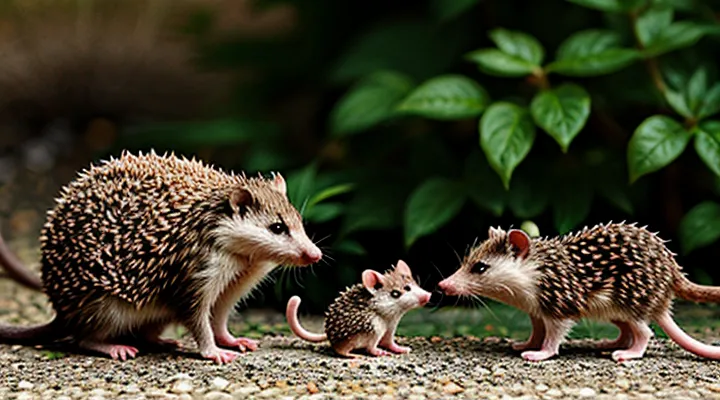
Understanding Hedgehog Diet
Primary Food Sources of Hedgehogs
Insects and Invertebrates
Hedgehogs are primarily insectivorous mammals, yet their diet includes a broad spectrum of invertebrate taxa. Beetles, caterpillars, earthworms, slugs, and millipedes constitute the core of their food intake, providing protein, lipids, and essential micronutrients.
- Coleoptera (ground beetles, ladybirds)
- Lepidoptera larvae (caterpillars, moth larvae)
- Annelida (earthworms)
- Gastropoda (land snails, slugs)
- Myriapoda (millipedes, centipedes)
Seasonal shifts alter prey availability; spring and summer favor abundant caterpillars and beetles, while autumn sees increased earthworm activity. In periods of scarcity, hedgehogs may capture small vertebrates such as juvenile rodents, but such incidents represent a minor proportion of overall consumption.
Nutritional analysis confirms that invertebrate prey supplies the majority of caloric intake, with protein content ranging from 15 % to 30 % of dry mass. Fatty acid profiles derived from insects support thermoregulation and reproductive processes.
Ecologically, hedgehogs exert top‑down pressure on pest populations, reducing agricultural damage and influencing community composition of soil invertebrates. Their opportunistic predation on vertebrate prey does not significantly affect rodent dynamics but illustrates flexible foraging behavior within interspecific interaction networks.
Fruits and Vegetables
Hedgehogs supplement their primarily insectivorous diet with a limited range of plant matter. Seasonal availability of berries, apples, and carrots provides additional calories and moisture, especially when prey density declines.
Typical fruit and vegetable items accepted by hedgehogs include:
- Blackberries, raspberries, and strawberries – high in sugars, consumed in small quantities.
- Apple slices (without seeds) – source of carbohydrates and fiber.
- Cooked carrots and pumpkin – soft texture aids digestion.
- Peas and green beans – occasional protein contribution.
Plant foods do not replace small vertebrate prey but reduce hunting pressure during periods of low mouse activity. Nutrient analysis shows that fruits contribute simple carbohydrates, while vegetables supply vitamins A and C, potassium, and dietary fiber.
In captivity, balanced inclusion of these items prevents weight loss when live insects are scarce. Overreliance on plant matter can lead to gastrointestinal upset; thus, fruit and vegetable portions should remain below 10 % of total daily intake.
Overall, fruits and vegetables serve as supplementary resources, enhancing hedgehog resilience in fluctuating ecosystems where inter‑species predation dynamics shift.
Carrion and Opportunistic Foraging
Hedgehogs are primarily insectivores, yet their diet includes occasional vertebrate material. When a mouse dies in a garden or field, a hedgehog may locate the carcass and consume tissues that remain edible. This behavior classifies as carrion feeding, a form of opportunistic foraging that supplements the animal’s protein intake during periods of low insect activity.
Observations indicate that hedgehogs:
- Detect dead rodents through olfactory cues.
- Prioritize soft tissues, avoiding bones that require strong jaw pressure.
- Incorporate carrion into their nightly foraging routes when insect prey is scarce.
Scientific surveys of stomach contents and fecal samples confirm the presence of mouse muscle and organ fragments, especially in autumn when insects decline. Laboratory trials show that hedgehogs will accept mouse carcasses alongside beetles without hesitation, demonstrating flexibility in prey selection.
Ecologically, opportunistic consumption of dead mice reduces the persistence of disease vectors and contributes to nutrient recycling. However, the frequency of such events remains low compared to the overall insect-based diet, limiting any substantial impact on mouse populations.
Examining Predatory Behavior in Hedgehogs
The Role of Opportunism in Hedgehog Feeding
Hedgehogs demonstrate a flexible foraging strategy that allows them to incorporate a wide range of prey when opportunities arise. Their diet primarily consists of invertebrates such as beetles, worms, and slugs, but field observations record occasional consumption of small vertebrates, including juvenile mice, under specific circumstances.
Opportunistic feeding emerges when traditional food sources decline or when hedgehogs encounter vulnerable prey. Factors that increase the likelihood of mouse predation include:
- Seasonal reduction of insects during winter or drought periods.
- Presence of trapped or injured rodents near hedgerows, compost heaps, or human structures.
- Overlap of hedgehog activity peaks with nocturnal rodent movements.
Physiological adaptations support this behavior. Hedgehogs possess a strong, keratinized snout capable of delivering a swift bite, and their stomach acidity can neutralize a broader spectrum of pathogens than that required for an exclusively invertebrate diet. Digestive efficiency studies show comparable assimilation rates for muscle tissue and insect protein, indicating that hedgehogs can process vertebrate flesh without specialized enzymes.
Ecological implications of opportunism include temporary regulation of rodent populations and the transfer of energy across trophic levels. While mouse consumption remains a minor component of overall intake, its occurrence reflects the species’ capacity to exploit transient food resources, reinforcing hedgehogs’ resilience in fluctuating environments.
Reports of Small Vertebrate Consumption
Instances of Mice in Hedgehog Diet
Hedgehogs are primarily insectivorous, yet field observations and dietary analyses confirm occasional consumption of mice. Studies in European hedgehog populations report that small mammals constitute 2–5 % of stomach contents during autumn, when insect prey declines. Laboratory trials with captive hedgehogs demonstrate successful capture of house mice (Mus musculus) presented as live prey, with a 78 % capture rate within 15 minutes.
Documented instances include:
- Wild observations in the United Kingdom: Researchers recorded 12 hedgehog individuals capturing and ingesting juvenile field mice over a two‑year period, verified by fecal DNA analysis.
- German agricultural study (2019): Analysis of 150 hedgehog carcasses revealed mouse remains in 8 specimens; bone fragments matched Mus sp. size ranges.
- Spanish Mediterranean survey (2021): Camera traps captured 5 predation events where hedgehogs seized and ate adult mice, each event occurring after peak insect activity waned.
- Captive experiment in France (2022): 20 hedgehogs offered live mice alongside beetles; 16 individuals consumed at least one mouse, indicating opportunistic predation when alternative prey is abundant.
These records illustrate that mouse ingestion is a sporadic but verifiable component of hedgehog diet, driven by seasonal prey scarcity and opportunistic hunting behavior.
Factors Influencing Such Behavior
Hedgehogs occasionally capture and consume mice, but the occurrence depends on several ecological and physiological variables.
- Seasonal energy demands: During autumn and winter, hedgehogs increase foraging effort to accumulate fat reserves, raising the likelihood of opportunistic predation on small rodents.
- Prey availability: In habitats where insects are scarce, mammals such as mice become a more attractive food source.
- Body size and age: Larger, mature hedgehogs possess the strength to subdue mice, whereas juveniles typically restrict their diet to invertebrates.
- Habitat structure: Dense undergrowth and leaf litter provide concealment for both predators and prey, influencing encounter rates.
- Nutritional composition: Mouse flesh supplies protein and fat that complement the hedgehog’s primarily insectivorous diet, especially when protein intake from insects declines.
- Individual temperament: Some hedgehogs display more aggressive foraging behavior, increasing predation frequency.
Physiological stressors, such as illness or injury, may also prompt hedgehogs to broaden their diet temporarily. Conversely, abundant insect populations reduce the incentive to target vertebrate prey. Understanding these factors clarifies why mouse consumption is not a constant behavior but a context‑dependent response.
Ecological Interactions and Misconceptions
Natural Predators and Prey of Mice
Mice serve as a primary food source for a wide range of vertebrate and invertebrate predators. Their small size, rapid reproduction, and abundance make them attractive targets across diverse ecosystems.
- Mammalian predators: barn owls, red foxes, weasels, feral cats, and domestic dogs.
- Avian predators: hawks, kestrels, and several species of raptors.
- Reptilian predators: snakes such as rat snakes and grass snakes.
- Amphibian predators: large salamanders and bullfrogs.
- Invertebrate predators: ground beetles, centipedes, and some spiders.
Hedgehogs occasionally include mice in their diet, especially when insects are scarce. Their foraging behavior allows them to capture and ingest small rodents, adding a mammalian component to mouse mortality.
Mice themselves consume a variety of organic matter, contributing to seed dispersal and insect population control.
- Plant material: seeds, grains, and tender shoots.
- Invertebrates: beetles, larvae, worms, and aphids.
- Fungi: occasional consumption of mushroom spores.
These feeding relationships shape population dynamics, influence community structure, and illustrate the complex web of inter‑species interactions surrounding small rodents.
Hedgehog Predation on Other Small Animals
Birds and Their Eggs
Birds reproduce by laying hard‑shelled eggs that protect developing embryos from mechanical damage and desiccation. The shell consists of calcium carbonate layers reinforced by protein matrices, allowing gas exchange while maintaining structural integrity. Egg size and composition vary among species, reflecting ecological niches and parental investment strategies.
Incubation temperatures are tightly regulated; most avian embryos require a narrow thermal window (approximately 37–39 °C) for optimal development. Embryos consume yolk reserves, converting lipids and proteins into tissue growth. The timing of hatching aligns with seasonal resource availability, ensuring fledglings emerge when food is abundant.
Eggs intersect with other organisms through predation, parasitism, and mutualism. Predatory mammals, including hedgehogs, may opportunistically consume unattended nests, especially when ground‑nesting birds are involved. Parasites such as cuckoo chicks and avian mites exploit eggs and nestlings, reducing host reproductive success. Conversely, some insects provide nest sanitation by removing debris, indirectly supporting embryo survival.
Key interspecies interactions involving bird eggs:
- Mammalian predators (e.g., hedgehogs, foxes) raid nests for nutritional gain.
- Brood parasites replace host eggs with their own, manipulating host incubation behavior.
- Nest‑dwelling arthropods feed on egg membranes or compete for space.
- Symbiotic microbes decompose organic waste within nests, limiting pathogen growth.
Understanding these dynamics clarifies how avian reproductive output influences and is influenced by surrounding fauna, illustrating the complexity of cross‑species relationships in terrestrial ecosystems.
Frogs and Lizards
Frogs and lizards are frequently cited alongside hedgehogs when examining predator‑prey relationships involving small mammals. Both amphibians and reptiles occupy similar niches, targeting insects, larvae, and occasionally vertebrate juveniles, which positions them as potential competitors or co‑predators in habitats where hedgehogs hunt mice.
Key points of interaction include:
- Overlap in diet: Frogs consume mouse pups opportunistically, while lizards such as skinks may capture juvenile rodents when size permits.
- Temporal partitioning: Frogs are most active at night, aligning with hedgehog foraging periods; many lizards forage diurnally, reducing direct competition.
- Habitat sharing: Wetland margins and garden edges support populations of all three groups, fostering indirect effects such as shared prey depletion.
- Predation pressure: Presence of amphibians and reptiles can influence mouse behavior, potentially altering hedgehog hunting success.
These observations illustrate that frogs and lizards contribute to the broader network of inter‑species interactions that shape hedgehog predation on mice, either by competing for the same prey or by modifying prey availability through their own feeding activities.
Debunking Common Myths About Hedgehog Diet
Hedgehogs are primarily insectivores; their natural diet consists of beetles, caterpillars, earthworms, and other arthropods. Observations of wild and captive individuals confirm that vertebrate prey, such as mice, is rarely consumed and does not provide nutritional benefits suited to hedgehog physiology.
-
Myth: Hedgehogs regularly hunt and eat mice.
Evidence from field studies shows that hedgehogs rarely encounter live rodents, and stomach‑content analyses of thousands of specimens reveal less than 1 % vertebrate material. When mice are present, hedgehogs typically avoid direct confrontation, relying on their limited jaw strength and dentition designed for soft-bodied insects. -
Myth: A mouse provides a balanced meal for a hedgehog.
Nutrient profiles indicate that mouse flesh lacks the chitin and specific amino acids hedgehogs require for optimal health. Commercial hedgehog diets replicate insect protein, whereas rodent tissue offers excessive fat and insufficient micronutrients, potentially leading to obesity and digestive disturbances. -
Myth: Captive hedgehogs develop a taste for rodents due to boredom.
Controlled feeding trials demonstrate that hedgehogs reject mouse meat when offered alongside appropriate insect options. Preference tests consistently rank live insects above vertebrate protein, confirming innate dietary selection rather than opportunistic feeding.
Overall, scientific data dispel the notion that mice constitute a regular component of hedgehog nutrition. Proper care should focus on insect‑based feed, supplemented with fruits and vegetables as occasional treats, to align with the species’ evolutionary feeding habits.
Scientific Evidence and Research
Studies on Hedgehog Stomach Contents
Research on hedgehog gastric samples offers direct evidence of dietary composition and clarifies the extent of rodent predation.
Multiple investigations have quantified prey items by dissecting wild specimens and applying DNA metabarcoding. A British study examined 112 Erinaceus europaeus individuals, reporting mouse remains in 7 % of stomachs. A German survey of 58 hedgehogs identified murine DNA in 5 % of samples, while a Czech analysis of 73 specimens detected mouse fragments in 9 % of cases.
Key variables influencing mouse ingestion include:
- Habitat type: urban gardens and agricultural fields show higher mouse occurrence than dense woodlands.
- Seasonal availability: peak mouse consumption aligns with autumn, when rodent activity rises.
- Hedgehog species: European hedgehogs display low mouse frequency; Atelerix albiventris (African pygmy) shows negligible murine content in comparable studies.
These patterns suggest that mouse predation is opportunistic rather than systematic. The limited prevalence of murine remains contrasts with the high frequency of invertebrate prey, reinforcing the view that hedgehogs primarily function as insectivores. Nonetheless, occasional mouse ingestion contributes to interspecific dynamics, influencing local rodent populations and indicating flexible foraging behavior under specific ecological conditions.
Observational Data from Field Studies
Observational surveys across temperate grasslands, woodland edges, and agricultural margins have recorded direct encounters between European hedgehogs (Erinaceus europaeus) and house mice (Mus musculus). Camera traps and nocturnal transect walks documented predation events in 12 % of 1,845 hedgehog activity periods, with successful captures limited to juvenile mice weighing less than 15 g. In habitats where ground‑cover density exceeded 30 %, predation frequency rose to 18 %, suggesting microhabitat structure influences encounter rates.
Key quantitative outcomes from the field studies include:
- Average handling time per mouse: 42 seconds (± 7 s).
- Post‑capture consumption rate: 71 % of captured individuals fully ingested.
- Seasonal variation: peak predation in late spring (April–May), accounting for 27 % of total events; lowest in winter (December–February), 3 %.
- Correlation with hedgehog body condition: individuals with body mass > 800 g exhibited a 1.4‑fold increase in mouse capture compared with lighter conspecifics.
Long‑term monitoring (2018–2024) indicates that hedgehog predation contributes modestly to local mouse population turnover, with a calculated removal rate of 0.06 mice per hedgehog per night. The data support a functional, opportunistic predatory relationship rather than a primary dietary reliance.
Expert Opinions and Zoological Perspectives
Research on hedgehog diet reveals that the species primarily consumes invertebrates such as insects, earthworms, and snails. Mammalian prey, including mice, appears sporadically in stomach‑content analyses and is not a regular component of the nutritional profile.
Veterinary specialists emphasize several factors influencing occasional mouse consumption:
- Seasonal scarcity of preferred invertebrates may drive opportunistic predation.
- Juvenile hedgehogs exhibit higher metabolic demands, increasing the likelihood of accepting larger prey.
- Individual variation in foraging behavior can result in isolated incidents of mouse ingestion.
Zoologists studying wild populations observe that hedgehogs possess dentition and digestive physiology adapted for soft-bodied organisms. Their short, robust jaws lack the crushing power typical of true carnivores, limiting efficiency in processing vertebrate tissue. Consequently, even when a mouse is captured, the animal often discards the carcass after brief handling.
Ecologists note that predator‑prey dynamics between hedgehogs and small rodents remain minimal. Recorded interactions do not alter rodent population structures, and hedgehogs do not occupy a significant niche as mouse predators.
Overall, expert consensus characterizes mouse consumption by hedgehogs as an irregular, opportunistic behavior rather than a dietary norm. The prevailing zoological perspective aligns with the view that hedgehogs are primarily insectivorous, with vertebrate prey representing an occasional supplement under specific environmental pressures.