
The Origin of the Myth
Folklore and Fiction
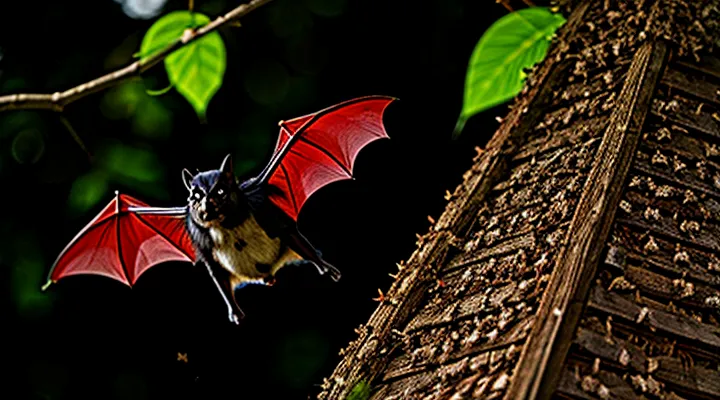
Legends across cultures portray bats as blood‑thirsty creatures. In early European folklore, vampires were often depicted as bat‑shapeshifters, a motif that linked nocturnal mammals to the consumption of human blood. African oral traditions describe “blood‑sucking bats” as omens of disease, reinforcing fear of the animal’s nocturnal habits. Asian mythologies sometimes feature bat spirits that lure victims to drink their life force, conflating the animal’s echolocation with supernatural perception.
Modern fiction expands these motifs. Notable examples include:
- Bram Stoker’s Dracula (1897), where the Count transforms into a bat to attack victims.
- Stephen King’s The Dark Tower series, featuring a “vampire bat” that feeds on human blood.
- The Batman comic universe, where the villainess “Man‑Bat” is portrayed as a blood‑drinking adversary.
- The video game Bloodborne (2015), which incorporates bat‑like creatures that harvest blood as a resource.
These narratives draw on the visual impact of bats’ nocturnal flight and their association with darkness, rather than biological evidence. Scientific observation confirms that all known bat species consume insects, fruit, nectar, or small vertebrates; none exhibit hematophagy toward humans. The persistence of the blood‑drinking myth reflects cultural anxiety about disease and death, perpetuated through storytelling and popular media.
Misconceptions from Early Explorers
Early travelers repeatedly described bats as creatures that regularly sucked human blood, a claim that spread throughout Europe and the Americas during the 16th‑18th centuries. Their narratives blended observation with superstition, often relying on sensational anecdotes rather than systematic study.
- Explorers reported seeing bats emerging from caves at night and immediately attacking sleeping villagers.
- Some accounts claimed that a single bite could drain enough blood to cause death.
- Naturalists described “vampire bats” as the dominant species in every region, regardless of actual distribution.
- Illustrations from the period depicted bats with elongated fangs and dripping blood, reinforcing the image of a universal blood‑sucking predator.
Modern zoology identifies only three species of true hematophagous bats—Desmodus rotundus, Diaemus youngi, and Glossophaga soricina—all confined to the Americas and feeding exclusively on the blood of livestock or small mammals. Their mouthparts lack the capacity to pierce human skin effectively, and field observations record no instances of them targeting people. Laboratory analyses of bat saliva confirm anticoagulant compounds specialized for animal prey, not for human hosts.
The persistence of the myth stemmed from cultural associations between nocturnal activity, darkness, and danger, coupled with limited scientific communication. Early reports were reproduced in travel literature and natural history compendia, establishing a self‑reinforcing narrative that survived long after empirical evidence disproved it.
The Biology of Vampire Bats
Species of Vampire Bats
Vampire bats belong to three recognized species. All are small, nocturnal mammals that locate prey using infrared detection and specialized saliva containing anticoagulants. Their primary food source consists of blood from mammals and birds, with occasional opportunistic feeding on humans.
- Common vampire bat (Desmodus rotundus) – inhabits Central and South America; prefers the blood of livestock; capable of biting awake or sleeping hosts; average weight 30 g.
- Hairy-legged vampire bat (Diphylla ecaudata) – ranges from Mexico to northern South America; feeds mainly on bird blood; possesses elongated hind limbs for clinging to feathers; weight about 25 g.
- White‑winged vampire bat (Diaemus youngi) – found in tropical forests of Central and South America; also targets birds; distinguished by pale wing membranes; weight near 20 g.
Human blood consumption occurs infrequently. Recorded incidents involve the common vampire bat, which may bite exposed skin when livestock are unavailable. Bites are typically painless, leaving small puncture marks; infections are rare if proper wound care follows. Overall, the three species exhibit distinct ecological niches, and human exposure represents a marginal portion of their dietary habits.
Dietary Habits of Desmodus Rotundus
Desmodus rotundus, the common vampire bat, feeds almost exclusively on the blood of mammals. Field studies across its range in Central and South America show a diet composed of 95 % ungulate blood—cattle, horses, deer—and 5 % from smaller mammals such as rodents and livestock predators. Human blood constitutes a negligible portion of intake; documented incidents involve accidental bites rather than systematic predation.
The bat locates a host by detecting body heat and carbon‑dioxide plumes. After landing, it uses razor‑sharp incisors to make a shallow incision, typically 2–3 mm deep, and secretes anticoagulant saliva containing the peptide desmoteplase. Blood flows freely for 20–30 minutes, allowing the bat to ingest up to 20 ml—approximately one‑quarter of its body weight. Feeding occurs nightly, with individuals visiting multiple hosts to meet metabolic demands.
Reproductive cycles influence intake patterns. Pregnant and lactating females increase feeding frequency and may target larger hosts to satisfy heightened energy requirements. Seasonal fluctuations in prey availability can shift the proportion of wild versus domestic animals in the diet, but human encounters remain statistically rare.
Key points summarizing the species’ feeding ecology:
- Primary prey: cattle, horses, deer (≈ 95 % of meals).
- Secondary prey: rodents, carnivores (≈ 5 %).
- Human bites: isolated, opportunistic, not a regular food source.
- Feeding mechanism: heat/CO₂ detection, incision, anticoagulant saliva.
- Nightly consumption: up to 20 ml per session, multiple hosts per night.
The evidence confirms that Desmodus rotundus does not habitually feed on human blood; its dietary specialization centers on large mammals, with humans representing an incidental and infrequent target.
Specialized Adaptations for Blood Feeding
Only three bat species consume blood, and they specialize in feeding on the blood of mammals or birds rather than humans. Their diet requires a suite of anatomical and physiological traits that enable rapid, efficient extraction and processing of liquid nourishment.
- Dental structure – elongated incisors cut through skin with minimal force; molars are reduced or absent, reflecting a diet that does not require grinding.
- Saliva composition – contains the anticoagulant desmoteplase, preventing clot formation and allowing continuous flow from the wound.
- Thermal detection – infrared‑sensitive pits in the nose locate capillaries beneath the host’s skin, guiding precise bites.
- Digestive system – a highly elastic stomach expands to hold up to 30 % of body weight in blood; rapid absorption of proteins and iron minimizes digestion time.
- Renal function – kidneys excrete excess water within minutes, concentrating nutrients and reducing the need for frequent feeding.
- Metabolic adaptation – a low basal metabolic rate conserves energy during the long intervals between meals.
Behaviorally, these bats hunt at night, using echolocation to navigate and locate roosts. After feeding, individuals share portions of their meal with colony members unable to feed, ensuring group survival. The combination of specialized dentition, anticoagulant saliva, heat‑sensing anatomy, and rapid fluid processing defines the unique capacity of these mammals to subsist on blood.
Human-Bat Interactions
Geographical Distribution of Vampire Bats
Vampire bats are the only mammals that regularly consume blood, and their range determines where human exposure can occur. Three species exist: the common vampire bat (Desmodus rotundus), the hairy‑legged vampire bat (Diphylla ecaudata), and the white‑winged vampire bat (Diaemus youngi). All three inhabit the Neotropics, preferring warm, humid environments where livestock or wildlife provide a reliable food source.
The common vampire bat occupies the broadest area, extending from southern Mexico through Central America into South America as far south as northern Argentina. The hairy‑legged and white‑winged species have more restricted distributions, primarily in the Amazon basin and adjacent lowland forests.
Countries with documented populations include:
- Mexico
- Belize
- Guatemala
- Honduras
- El Salvador
- Nicaragua
- Costa Rica
- Panama
- Colombia
- Venezuela
- Ecuador
- Peru
- Bolivia
- Brazil
- Paraguay
- Argentina
Habitat selection favors caves, hollow trees, and abandoned structures that provide roosting sites. Proximity to livestock farms increases colony density, because domestic animals supply a predictable blood source. Seasonal migrations are limited; bats generally remain within their established range, moving only short distances in response to prey availability or habitat disturbance.
Consequently, human encounters with vampire bats are most likely in rural communities within the listed nations, especially where livestock are kept outdoors at night. The geographic limits of these species define the zones where the question of blood feeding on humans is relevant.
Primary Prey of Vampire Bats
Vampire bats obtain blood meals almost exclusively from vertebrate hosts. The common vampire bat (Desmodus rotundus) targets mammals, preferring domestic livestock such as cattle, horses and pigs, but also feeding on wild ungulates and, on rare occasions, humans. The hairy‑legged vampire bat (Diphylla ecaudata) and the white‑winged vampire bat (Diaemus youngi) specialize in avian blood, selecting ground‑dwelling birds and roosting species. Their foraging strategy involves locating a host, making a shallow incision with specialized incisors, and ingesting blood that pools at the wound site.
Typical prey items include:
- Mammals (Desmodus rotundus)
- Cattle (Bos taurus)
- Horses (Equus ferus caballus)
- Pigs (Sus scrofa domesticus)
- Deer and other wild ungulates
- Birds (Diphylla ecaudata, Diaemus youngi)
- Ground‑nesting birds (e.g., quail, pheasant)
- Roosting species (e.g., chickens, guineafowl)
Feeding frequency correlates with host abundance; livestock dominate the diet where agriculture is intensive, while bird‑feeding species thrive in forested habitats with abundant avian populations. Human interactions occur mainly when bats encounter unattended individuals in rural settings, but such incidents represent a minor proportion of overall blood meals.
Rare Instances of Human Bites
Bats that occasionally bite humans represent a minute fraction of the order Chiroptera. Most species consume insects, fruit, nectar, or small vertebrates; hematophagy is limited to a handful of specialized taxa such as the vampire bats of the Americas. Reports of human bites arise almost exclusively from these three vampire species (Desmodus rotundus, Diaemus youngi, and Myotis vampyrus) when they encounter exposed skin during night‑time roosting or when a person inadvertently provides a suitable wound.
Documented incidents share common characteristics:
- Occur in rural or peri‑urban areas where vampire bat colonies are present.
- Involve individuals with open wounds, abrasions, or bleeding sites.
- Result in a small puncture wound, often accompanied by localized swelling and mild pain.
- Require prompt medical evaluation because bat saliva can transmit pathogens such as Rabies lyssavirus.
The majority of recorded human bites stem from accidental contact rather than predatory intent. Vampire bats locate blood flow through heat and carbon‑dioxide cues; a sleeping person with an exposed limb may be targeted, but the bite supplies only a few milliliters of blood. Non‑vampire bats have never been observed to seek human blood as a food source, and laboratory studies confirm their diets lack hematophagous behavior.
Overall, human bites by bats are exceedingly rare, confined to specific vampire species under unusual circumstances, and do not reflect the feeding habits of the broader bat population.
Health Implications of Bat Bites
Rabies Transmission
Bats are occasionally implicated in rabies cases, yet they do not obtain nourishment from human blood. Rabies virus persists in the nervous tissue of infected mammals, including several bat species. Transmission to humans occurs primarily through direct inoculation of saliva containing the virus.
- Bite from an infected bat
- Scratch that introduces saliva into broken skin
- Contact of mucous membranes with bat saliva, especially after handling a bat without protective gloves
Transmission without a bite or scratch is exceedingly rare; mere exposure to bat droppings or urine does not convey the virus. The incubation period varies from weeks to months, during which the virus migrates from peripheral nerves to the central nervous system. Once clinical signs appear, rabies is almost invariably fatal.
Preventive measures focus on minimizing exposure and ensuring prompt medical response:
- Avoid handling bats; if contact is unavoidable, wear thick gloves and protective clothing.
- Capture and submit any bat that has bitten or scratched a person to a wildlife health authority for testing.
- Initiate post‑exposure prophylaxis (PEP) immediately after a confirmed or suspected exposure; PEP consists of wound cleansing, rabies immunoglobulin, and a series of rabies vaccinations.
- Maintain up‑to‑date vaccination of domestic animals in regions where bat rabies is documented.
Awareness of the actual transmission pathways dispels myths about bat feeding habits and reinforces evidence‑based public‑health practices.
Other Potential Pathogens
Bats are reservoirs for a range of zoonotic agents that can reach humans through bites, aerosol exposure, or contamination of food and water supplies. The diversity of pathogens reflects bats’ long evolutionary history, large colony sizes, and ability to travel long distances.
- Rabies virus and other lyssaviruses – transmitted via saliva during aggressive encounters; cause fatal encephalitis in humans if untreated.
- Henipaviruses (Nipah, Hendra) – shed in urine, feces, and secretions; cause severe respiratory and neurological disease with high mortality.
- SARS‑related coronaviruses – detected in bat feces and saliva; capable of crossing species barriers and producing severe respiratory illness.
- Ebola and Marburg filoviruses – associated with bat tissue and excreta; linked to hemorrhagic fever outbreaks after contact with infected wildlife.
- Leptospira spp. – bacteria excreted in urine; generate leptospirosis, a febrile illness that may progress to kidney or liver failure.
- Bartonella spp. – identified in bat blood; can cause persistent bacteremia and endocarditis in humans.
These agents illustrate that the public health risk from bats derives from microbial carriage rather than any tendency to ingest human blood. Preventive measures focus on avoiding direct contact with bats, using protective equipment when handling them, and ensuring timely post‑exposure prophylaxis for known viral threats.
Prevention and Treatment
Bats rarely bite humans, but when exposure occurs, the primary health concerns are rabies and other zoonotic pathogens. Effective risk reduction relies on controlling bat entry into living spaces, avoiding direct contact, and ensuring timely medical response after an incident.
- Seal cracks, chimneys, and attic vents to prevent roosting.
- Install fine-mesh screens on windows and doors.
- Keep lights on at night in areas where bats may congregate.
- Use gloves and protective clothing when handling wildlife or cleaning roosts.
- Educate household members, especially children, about avoiding bats.
If a bite or scratch happens, immediate actions are critical:
- Wash the wound thoroughly with soap and running water for at least 15 seconds.
- Apply an antiseptic solution and cover with a clean dressing.
- Seek medical evaluation within 24 hours; a healthcare provider will assess the need for post‑exposure rabies prophylaxis.
- Follow the full course of rabies vaccination if recommended, including immunoglobulin administration when indicated.
- Monitor the wound for signs of infection and report any fever, headache, or neurological symptoms promptly.
Vaccination of domestic animals and wildlife vaccination programs further diminish the likelihood of transmission. Regular inspection of homes for bat activity and prompt removal by licensed professionals complement personal preventive measures.
Conservation and Education
Ecological Role of Bats
Bats are frequently associated with myths about hematophagy, yet their contribution to ecosystems extends far beyond any occasional contact with mammals. Their primary ecological functions are measurable and well documented.
- Insect predation: Many species consume large quantities of nocturnal insects, including agricultural pests such as moths and beetles. A single colony can capture millions of insects per night, reducing crop damage and limiting disease‑vector populations.
- Pollination: Nectar‑feeding bats visit flowers of plants like agaves, bananas, and cacao. Their movements transfer pollen over distances that wind or insects cannot achieve, supporting fruit production and genetic diversity.
- Seed dispersal: Frugivorous bats ingest fruits and excrete seeds after traveling several kilometers. This behavior facilitates forest regeneration, especially in tropical regions where other dispersers are scarce.
- Nutrient cycling: Guano deposits enrich soils with nitrogen, phosphorus, and potassium. In caves and roosting sites, accumulated waste sustains microbial communities and provides a resource for other organisms.
- Disease regulation: By controlling insect vectors, bats indirectly limit the transmission of diseases such as malaria and dengue. Their immune systems also host diverse viruses, offering valuable models for biomedical research.
Economic analyses estimate that the pest‑control services of bats save billions of dollars annually in reduced pesticide use and crop losses. Their pollination and seed‑dispersal activities contribute to the profitability of fruit and timber industries. Conservation of bat populations therefore supports food security, public health, and biodiversity.
Debunking Common Fears
Bats are often linked to the fear that they drain human blood. This fear stems from a misunderstanding of bat feeding habits and the existence of a few vampire species. The reality is that the vast majority of bat species consume insects, fruit, nectar, or small vertebrates, none of which include humans.
- Only three species of vampire bats exist, all native to the Americas. Their diet consists exclusively of the blood of livestock or wild mammals such as cattle, horses, and birds. They locate a host by detecting heat and carbon‑dioxide, then make a shallow incision with razor‑sharp teeth. The incision is too small to cause noticeable bleeding, and the bat feeds for less than a minute before withdrawing.
- Vampire bats do not target humans because human skin is thicker and more difficult to pierce. Human encounters are rare and usually occur when a bat is forced onto a person in a confined space, such as a cave or a building.
- Rabies transmission from bats to humans is possible, but the risk is low. In regions where rabies is endemic, public health guidelines recommend avoiding handling bats and seeking medical advice after any bite or scratch.
Scientific surveys confirm that fewer than 0.1 % of documented bat bites involve humans, and most incidents involve accidental contact rather than intentional feeding. Public education campaigns that highlight bat ecological benefits—pollination, insect control, seed dispersal—reduce unnecessary persecution and support conservation. By separating myth from evidence, the misconception that bats routinely drink human blood is effectively dispelled.
Promoting Bat Conservation
Bats are frequently associated with the myth that they consume human blood, a belief that fuels fear and discourages protection efforts. Scientific evidence shows that only three species of vampire bats feed on the blood of mammals, and they prefer livestock over people. Misconceptions create hostility, reduce habitat support, and hinder policies that safeguard bat populations.
Conservation strategies must address misinformation, protect roosting sites, and foster coexistence. Effective actions include:
- Educating communities about bat ecology and the rarity of human‑blood feeding.
- Securing legal protections for caves, trees, and buildings used by bats.
- Promoting bat‑friendly agricultural practices that reduce conflict with livestock.
- Supporting research on disease monitoring to separate real health risks from myths.
When public perception aligns with scientific facts, societies are more likely to fund habitat restoration, adopt bat‑friendly lighting, and recognize bats’ contributions to insect control and pollination. These measures directly counter the fear generated by false narratives and reinforce long‑term survival of bat species.