
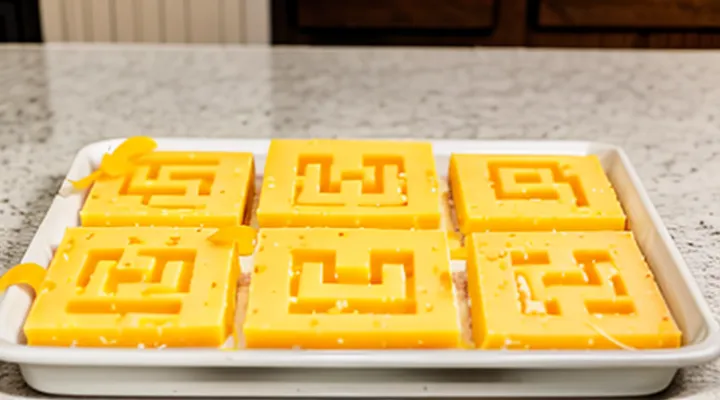
Understanding Rat Behavior and Maze Learning
Why Rats Love Mazes
Rats demonstrate a strong attraction to mazes because the structures engage innate exploratory and foraging drives. Their natural tendency to investigate novel environments triggers heightened activity in the hippocampus, a brain region responsible for spatial navigation and memory consolidation. The presence of a food reward, such as cheese, amplifies this drive by linking exploration with caloric gain, reinforcing repeated engagement with the apparatus.
- Spatial learning: Rats rapidly form cognitive maps of maze layouts, improving efficiency with each trial.
- Sensory stimulation: Tactile feedback from walls and scent cues from cheese activate whisker and olfactory systems, providing rich environmental information.
- Problem‑solving motivation: The challenge of locating a hidden reward satisfies intrinsic curiosity and promotes adaptive decision‑making.
- Social comparison: When multiple individuals navigate the same maze, competition for the reward intensifies exploratory behavior.
Designing a cheese labyrinth should therefore incorporate varied pathways, distinct tactile textures, and strategically placed scent markers. Adjustable complexity allows researchers or hobbyists to match the maze difficulty to the rodent’s learning stage, ensuring sustained interest and reliable performance metrics.
Basic Principles of Rat Training
Training rats to navigate a cheese labyrinth requires a systematic approach that builds reliable behavior patterns. Successful instruction depends on predictable reinforcement, clear cues, and a controlled environment.
- Motivation: Use cheese as a primary reward; ensure the scent is fresh and appealing.
- Positive reinforcement: Deliver the reward immediately after the desired action to strengthen the association.
- Consistency: Apply the same cue and reward schedule across all training sessions.
- Gradual complexity: Begin with simple pathways, then extend length and introduce turns as the rat demonstrates proficiency.
- Safety: Eliminate hazards, maintain proper lighting, and keep the maze free of sharp edges.
Begin each session by presenting the rat at the start point, allowing it to explore a short, straight segment. Reward the animal upon reaching the end. Incrementally add bends, dead‑ends, and alternative routes, always pairing successful navigation with cheese. Record performance metrics such as time to completion and error rate to monitor progress.
Applying these principles yields a rat capable of solving increasingly intricate cheese mazes, providing reliable data for experimental or enrichment purposes.
Designing Your Cheese Maze
Choosing Materials
Safe and Edible Components
Designing a rodent cheese labyrinth requires ingredients that are both palatable and non‑hazardous. All components must be fresh, free from mold, and free of artificial preservatives.
- Cheeses: low‑fat cheddar, mozzarella, and mild Swiss; cut into 1‑2 cm cubes or strips. Avoid blue‑veined, processed, or aged varieties that may contain mold spores.
- Vegetable additives: carrot sticks, cucumber slices, and broccoli florets; provide texture contrast and additional nutrients.
- Fruit options: apple wedges and banana slices; use in moderation due to sugar content.
- Grains: whole‑grain crackers or plain rice cakes; offer structural support for maze walls without adding excessive salt.
- Protein bites: boiled egg whites or small pieces of cooked chicken breast; supply protein without added seasoning.
Safety guidelines:
- Wash all produce thoroughly to remove pesticides and contaminants.
- Store ingredients at refrigeration temperature until assembly; discard any items that develop discoloration or odor.
- Keep the maze free of toxic substances such as chocolate, caffeine, onions, garlic, and citrus peels.
- Ensure all pieces are sized to prevent choking; avoid large chunks that a rat cannot easily manipulate.
By selecting these components and adhering to the preparation rules, the maze remains an engaging foraging environment while guaranteeing the health of the participating rodents.
Structural Integrity Considerations
When constructing a cheese labyrinth for rats, the primary focus must be on maintaining load‑bearing capacity throughout the structure. Use rigid, food‑grade materials such as high‑density polyethylene or stainless steel frames to prevent deformation under the weight of the cheese and the activity of the animals. Ensure all joints are secured with corrosion‑resistant fasteners; loose connections can compromise the maze’s shape and create safety hazards.
Key structural considerations:
- Material selection: Choose substances that resist moisture, rodent chewing, and temperature fluctuations.
- Support spacing: Position vertical supports no farther than 30 cm apart to limit sagging of horizontal platforms.
- Weight distribution: Distribute cheese blocks evenly across each section; avoid concentrated loads that could cause localized failure.
- Anchoring: Secure the entire assembly to a stable base or floor to prevent drift or tipping during vigorous exploration.
- Inspection schedule: Conduct weekly visual checks for cracks, loosening bolts, or wear on surfaces that contact the rats.
Adhering to these guidelines preserves the maze’s geometry, guarantees consistent navigation pathways, and extends the lifespan of the installation while safeguarding the animals.
Maze Layout Options
Simple vs. Complex Designs
Designing a rodent cheese labyrinth involves choosing between straightforward layouts and intricate configurations. The selection influences construction time, material usage, and the animals’ engagement level.
Simple designs consist of a single path with minimal turns. They require fewer cuts, reduce waste, and allow rapid assembly. The maze’s geometry is easy to replicate, ensuring consistent dimensions across multiple units. Rats encounter limited decision points, which can be advantageous for baseline behavioral studies where predictable navigation is essential.
Complex designs incorporate multiple branches, dead ends, and varying widths. They demand precise cutting, increased material, and longer build periods. The increased structural diversity creates numerous choice points, encouraging exploratory behavior and providing richer data on spatial learning. Complex arrangements also permit gradual difficulty adjustments by altering branch lengths or adding obstacles.
Decision criteria:
- Objective: baseline performance → simple; advanced cognition → complex.
- Resources: limited budget or time → simple; ample resources → complex.
- Data depth: binary outcomes → simple; nuanced metrics → complex.
Choosing the appropriate design aligns the maze’s structural complexity with experimental goals, resource constraints, and desired behavioral outcomes.
Incorporating Dead Ends and Rewards
Designing a cheese labyrinth for laboratory rats requires deliberate placement of dead ends and reward points to shape navigation behavior. Dead ends interrupt forward progress, forcing a rat to backtrack and explore alternative routes. Reward points, typically small cheese fragments, confirm successful choices and reinforce the desired path.
-
Dead end construction:
-
Reward integration:
- Place cheese morsels at junctions that lead toward the final goal.
- Space rewards evenly to maintain motivation without overwhelming the animal.
- Vary reward size modestly to prevent habituation and preserve interest.
Combining these elements creates a dynamic environment where rats must evaluate options, experience occasional setbacks, and receive positive feedback, resulting in measurable learning curves and improved problem‑solving performance.
Size and Scale for Optimal Engagement
The dimensions of a cheese labyrinth determine how effectively rats explore, solve puzzles, and remain motivated. Precise measurement prevents dead‑ends that discourage activity and eliminates paths that are too easy, preserving engagement throughout the trial period.
Recommended specifications:
- Corridor width: 2–3 cm for adult laboratory rats; 1.5–2 cm for juveniles.
- Path length: 30–45 cm per segment, allowing multiple turns before reaching a reward.
- Turn radius: minimum 1 cm to accommodate natural turning behavior without forcing excessive curvature.
- Overall maze footprint: 25 × 25 cm for a single‑level layout; larger footprints (up to 40 × 40 cm) support multi‑level designs.
Scaling considerations:
- Adjust width and length proportionally when increasing maze complexity to maintain consistent challenge levels.
- For groups, expand the footprint while preserving corridor dimensions to avoid crowding and competition.
- Material thickness of 0.5–1 cm provides structural stability without obstructing scent trails.
Implementing these measurements ensures that each maze segment presents a balanced task, fostering sustained interaction and reliable data collection.
Building the Maze
Step-by-Step Construction Guide
Designing a functional cheese labyrinth for laboratory rodents requires precise planning, appropriate materials, and strict adherence to safety standards. The following guide outlines each phase from concept to completion.
-
Define dimensions. Measure the test enclosure; typical mazes occupy 30 × 30 cm to 60 × 60 cm, allowing enough space for navigation without overcrowding. Record length, width, and height for all components.
-
Select cheese type. Choose low‑fat, low‑salt varieties that remain pliable at room temperature, such as mozzarella or mild cheddar. Cut the cheese into blocks no larger than 2 cm on a side to prevent excessive melting.
-
Prepare the base. Use a non‑porous, easy‑to‑clean surface—plastic tray or acrylic sheet. Apply a thin layer of food‑grade silicone to secure cheese pieces and prevent slippage.
-
Construct the pathway. Arrange cheese blocks in a continuous path, leaving gaps of 1 cm for the rat to pass. Use a ruler and grid template to maintain uniform spacing. Secure each block with a dab of silicone, allowing the adhesive to cure for 15 minutes before proceeding.
-
Add decision points. Insert forks by positioning two parallel cheese lines diverging at 45‑degree angles. Mark each branch with a small food‑grade dye dot for later identification during behavioral analysis.
-
Install barriers. Place acrylic strips or mesh panels at dead ends to prevent escape. Ensure all edges are smooth to avoid injury.
-
Test stability. Gently nudge the maze; verify that no block shifts under a 50‑gram force. Replace any loose pieces and re‑apply adhesive as needed.
-
Clean and sterilize. Disinfect the base with a dilute ethanol solution, rinse with sterile water, and allow to dry completely before introducing animals.
-
Record configuration. Photograph the completed maze from above, annotate the layout, and store the image with the experimental log for reproducibility.
Following these steps produces a reliable cheese labyrinth that supports consistent behavioral testing while maintaining animal welfare and experimental integrity.
Securing Components
Securing the components of a rodent cheese labyrinth is essential for reliable operation and safety. All structural elements must be fastened with appropriate hardware to prevent movement under the weight of the maze and the activity of the animals.
- Use stainless‑steel screws or bolts for wooden frames; corrosion resistance prolongs lifespan.
- Apply lock washers or thread‑locking adhesive to eliminate vibration‑induced loosening.
- Anchor the base to a solid surface with concrete anchors or heavy‑duty brackets to resist tipping.
Electrical parts, such as sensors and lighting, require insulated enclosures. Seal each enclosure with a gasket rated for the expected humidity level to protect against moisture from cheese residue. Route cables through conduit or cable ties, keeping them away from chewable surfaces.
The cheese dispensers themselves must be mounted on reinforced brackets. Verify that the mounting points can support the maximum load when the dispenser is filled. Attach safety shields to prevent accidental spillage and to restrict rat access to moving mechanisms.
Finally, conduct a torque check on all fasteners after initial assembly and after each cleaning cycle. Record the torque values in a maintenance log to ensure consistency and to identify components that may require replacement.
Introducing Your Rat to the Maze
Initial Exploration
Scent Familiarization
Scent familiarization prepares laboratory rats to navigate a cheese‑based labyrinth efficiently. Introducing the target odor before maze exposure reduces exploratory hesitation and improves task acquisition rates.
Key procedures for establishing odor familiarity:
- Select a cheese variety with a strong, consistent aroma; store at a constant temperature to prevent scent degradation.
- Present a small cheese sample in the home cage for 5–10 minutes daily over three consecutive days.
- Monitor rat behavior; a decrease in latency to approach the sample indicates successful conditioning.
- After conditioning, place a minimal amount of the same cheese at the maze entrance to reinforce the learned cue.
Implementing these steps ensures that the olfactory cue remains salient throughout the experiment, leading to reliable performance metrics in the cheese labyrinth.
Placing Cheese Incentives
Strategic positioning of cheese rewards determines the effectiveness of a rat maze. Distribute incentives at intervals that compel the animal to navigate the full layout while preventing premature termination of the trial. Place the first piece near the entrance to motivate entry, then locate subsequent portions at decision points, dead‑ends, and the maze’s terminus. This pattern reinforces exploratory behavior and sustains engagement throughout the course.
Key considerations for placement:
- Distance – maintain a spacing of 15–30 cm between rewards, adjusted for the maze’s total length and the rats’ typical speed.
- Visibility – ensure each cheese fragment is partially concealed by a low barrier or tunnel opening, encouraging the rat to investigate rather than simply follow a line of sight.
- Quantity – allocate a consistent mass (e.g., 0.2 g per piece) to avoid over‑satiation, which could diminish motivation for later sections.
- Variety – alternate flavor or texture (e.g., cheddar versus mozzarella) to sustain interest and reduce habituation.
Monitoring the rat’s path reveals whether incentives are appropriately spaced. If the subject repeatedly bypasses a reward, reduce the distance to the preceding incentive or increase its visibility. Conversely, if the animal lingers excessively at a location, consider relocating that piece downstream to maintain forward momentum. This iterative adjustment refines the incentive layout, ensuring the maze fulfills its experimental purpose.
Gradual Difficulty Increase
Designing a cheese labyrinth for rodents requires a systematic escalation of challenges to maintain engagement and promote learning. Begin with a simple layout: a single straight passage ending in a cheese reward. This establishes baseline motivation and allows the animal to associate the scent of cheese with the goal.
Implement incremental complexity by adding one new element at each stage:
- Turn introduction – insert a 90‑degree bend, forcing the rat to change direction.
- Intersection addition – create a T‑junction with two possible paths, only one leading to the reward.
- Dead‑end incorporation – place a false branch that terminates without cheese, encouraging exploration of alternative routes.
- Variable width – narrow sections followed by wider corridors to test spatial adaptation.
- Elevated sections – include short ramps or platforms requiring climbing or jumping.
Each modification should be tested individually before combining them. Record performance metrics such as time to locate the cheese and error rate at decision points. Use the data to adjust difficulty: if success rates remain high, introduce another element; if failure rates increase sharply, revert to the previous level or simplify the recent addition.
Maintain consistency in scent cues and lighting to isolate difficulty as the sole variable. Rotate maze orientation periodically to prevent reliance on external landmarks. By following this staged approach, the maze evolves from a trivial task to a multi‑layered puzzle, fostering sustained interest and cognitive development in the test subjects.
Observing and Adapting
Observing rat interaction with a cheese labyrinth provides the data necessary to refine its structure and improve navigation efficiency. Initial placement of the bait should be recorded with video cameras positioned at entry points, allowing precise capture of movement patterns, hesitation points, and decision branches.
Key observation methods include:
- Continuous video monitoring from multiple angles.
- Infrared tracking to detect nocturnal activity.
- Sensor‑based weight plates at corridor intersections to log passage frequency.
- Direct behavioral notes on exploration time and error rates.
Adaptation follows a systematic cycle: data collection, pattern analysis, structural modification, and re‑testing. When analysis reveals repeated dead‑ends or prolonged pauses, corridors are shortened, turn angles are smoothed, or additional scent cues are introduced. If rats consistently avoid certain sections, those pathways are either removed or re‑oriented to align with natural foraging routes.
Iterative adjustments converge on a maze that balances challenge with accessibility, ensuring rats remain engaged while providing reliable experimental outcomes. Continuous monitoring after each alteration confirms that modifications produce the intended behavioral response.
Maintenance and Cleaning
Hygiene Best Practices
When constructing a cheese labyrinth for rodents, maintaining strict hygiene prevents contamination, disease spread, and experimental bias.
Use only food‑grade, low‑moisture cheese and ensure all surfaces are free of mold, dust, and foreign particles. Clean the work area with a mild, non‑toxic detergent, rinse thoroughly, and dry with disposable paper towels before assembling the maze. Wear disposable gloves and change them whenever they become soiled.
- Sanitize all tools (knives, cutters, molds) with a 70 % ethanol solution or an approved food‑safe sanitizer; rinse and dry before contact with cheese.
- Store cheese in airtight containers at refrigeration temperatures (4 °C ± 2 °C) to inhibit bacterial growth.
- Limit exposure to ambient humidity; operate in a climate‑controlled room with relative humidity below 60 %.
- Dispose of waste cheese promptly in sealed bags and remove it from the laboratory area to avoid attracting pests.
- Document cleaning procedures, dates, and personnel responsible; retain records for audit purposes.
Inspect the completed maze for cracks, cracks, or surface irregularities that could harbor microbes. Conduct a visual and tactile check before each trial, and replace any compromised sections immediately.
Adhering to these protocols ensures a consistent, safe environment for rodent navigation studies and preserves the integrity of experimental results.
Longevity of the Maze
A cheese maze designed for laboratory rats must retain its structural integrity throughout the experimental period. Longevity depends on material choice, environmental control, and systematic upkeep.
- Use hard, low‑moisture cheeses (e.g., aged cheddar, Parmesan) as the primary substrate; these resist microbial decay longer than soft varieties.
- Reinforce pathways with food‑grade acrylic or stainless‑steel frames to prevent collapse under the weight of the rodents.
- Apply a thin, food‑safe sealant (such as a calcium carbonate coating) to reduce surface erosion from saliva and humidity.
Environmental parameters directly influence durability. Maintain ambient humidity below 55 % RH and temperature between 20 °C and 24 °C; these limits slow bacterial growth and limit cheese softening. Provide adequate ventilation to prevent condensation on maze surfaces.
A maintenance schedule prolongs usability. Inspect the maze daily for cracks, mold, or softened sections. Replace compromised cheese pieces promptly, and sanitize frames with a mild, non‑toxic detergent followed by thorough rinsing. Record each intervention to track wear patterns.
Periodic performance testing validates longevity. Conduct weekly measurements of pathway dimensions and hardness using a durometer; compare results against baseline values to detect degradation. Adjust environmental settings or material composition based on observed trends to sustain functional lifespan.