
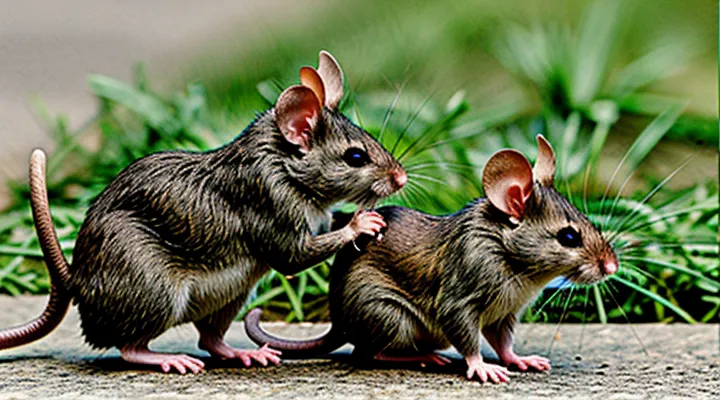
Anatomical Differences
Rat Tails
Length and Proportion
Rats possess tails that typically measure 18–25 cm, representing 70–80 % of total body length. Mice exhibit tails ranging from 7–12 cm, accounting for 80–90 % of their body length. The greater absolute length in rats reflects larger overall size, while mice maintain a higher tail‑to‑body ratio, suggesting a stronger reliance on tail functions such as balance and thermoregulation.
Key proportional differences:
- Absolute length: rat ≈ 20 cm; mouse ≈ 9 cm.
- Tail‑to‑body ratio: rat ≈ 0.75; mouse ≈ 0.85.
- Diameter: rat tail averages 0.8 cm; mouse tail averages 0.4 cm, indicating a slimmer, more flexible structure in mice.
These metrics demonstrate that, although both species have elongated tails, rats favor longer, sturdier appendages, whereas mice retain proportionally longer, thinner tails relative to their smaller bodies.
Thickness and Musculature
The tail of the laboratory rat exhibits a greater cross‑sectional diameter than that of the common mouse. Average thickness measured at the mid‑segment is approximately 2.8 mm in rats versus 1.4 mm in mice, reflecting a near‑doubling of radial dimension. This disparity results from distinct patterns of muscle development and connective‑tissue organization.
Musculature in the rat tail consists of a well‑defined dorsal and ventral longitudinal muscle block, each comprising roughly 30 % of the total tail mass. In mice, the corresponding muscle layers occupy about 18 % of tail mass, with a higher proportion of collagen fibers providing structural support. The rat’s larger muscle volume enables greater contractile force, facilitating more pronounced locomotor assistance and balance correction during rapid movements.
Key comparative points:
-
Thickness:
• Rat: 2.6–3.0 mm (mid‑segment)
• Mouse: 1.2–1.6 mm (mid‑segment) -
Muscle mass proportion:
• Rat dorsal/ventral muscles: ~30 % of tail weight
• Mouse dorsal/ventral muscles: ~18 % of tail weight -
Fiber composition:
• Rat: predominately fast‑twitch fibers, 55 % type IIb, 30 % type IIa, 15 % type I
• Mouse: mixed profile, 40 % type IIb, 35 % type IIa, 25 % type I
The increased thickness and muscle bulk in rats confer enhanced mechanical stability and higher torque generation during tail‑based maneuvers. In contrast, the slimmer, more collagen‑rich mouse tail favors flexibility and rapid positional adjustments with reduced force output.
Scalation and Texture
Rats possess a tail surface dominated by large, overlapping keratinized scales that create a relatively coarse texture. Scale length on adult Rattus spp. averages 0.8–1.2 mm, with each scale covering an area of approximately 0.6 mm². The interscale regions are minimal, resulting in a continuous protective sheet that resists abrasion and moisture loss.
Mice display a markedly different integument. Their tail scales are smaller, typically 0.3–0.5 mm in length, and arranged in a denser mosaic. The overall scale density reaches 1.5–2.0 scales mm⁻¹, producing a finer, more pliable surface. Hair follicles extend farther onto the tail, contributing to a softer feel and increased thermal exchange.
Key comparative points:
- Scale size: rat scales > mouse scales.
- Scale density: mouse tail exhibits higher density per unit length.
- Surface roughness: rat tail surface rougher; mouse tail smoother.
- Hair coverage: negligible on rat tail, moderate on mouse tail.
- Functional implications: rat tail optimized for durability; mouse tail optimized for flexibility and thermoregulation.
Mouse Tails
Length and Proportion
Rat tails typically range from 12 cm to 20 cm, whereas mouse tails rarely exceed 9 cm. Length correlates with overall body size: rats, weighing 250–500 g, possess tails that represent roughly 70 % of their head‑body length; mice, weighing 15–30 g, have tails that account for about 80 % of their head‑body length. This disparity reflects divergent ecological adaptations, with longer absolute tails in rats supporting balance during rapid locomotion, while proportionally longer tails in mice enhance maneuverability in confined spaces.
Key measurements reported in recent morphometric surveys:
-
Rats (Rattus spp.)
- Average tail length: 15.3 cm (±2.1 cm)
- Tail‑to‑body ratio: 0.68 (tail length ÷ head‑body length)
- Cross‑sectional diameter: 0.7 cm (mid‑tail)
-
Mice (Mus spp.)
- Average tail length: 7.4 cm (±1.0 cm)
- Tail‑to‑body ratio: 0.81
- Cross‑sectional diameter: 0.3 cm (mid‑tail)
The proportional analysis indicates that, despite shorter absolute length, mouse tails are relatively longer compared with their bodies. This higher ratio contributes to greater surface‑area exposure, influencing thermoregulation and tactile sensing. In contrast, rat tails, while longer, exhibit a lower proportion, aligning with their need for stability during extensive ground cover.
Thickness and Flexibility
Rat tails typically exhibit a diameter of 2–3 mm near the base, tapering to 0.5–1 mm at the tip. Mouse tails are consistently thinner, ranging from 0.8–1.5 mm at the base and narrowing to 0.2–0.5 mm distally. The reduction in cross‑sectional area correlates with species‑specific locomotor demands and thermoregulatory functions.
Flexibility assessments, expressed as maximum curvature before structural failure, reveal distinct performance profiles:
- Rats: average bending radius ≈ 5 mm; tensile strain tolerance ≈ 25 % before rupture.
- Mice: average bending radius ≈ 3 mm; tensile strain tolerance ≈ 30 % before rupture.
These metrics indicate that mouse tails, despite reduced thickness, possess greater relative elasticity, allowing sharper turns during arboreal navigation. Rat tails, with larger mass and diameter, resist deformation under higher loads but exhibit lower curvature limits. The interplay of thickness and flexibility thus defines functional specialization in each species’ caudal morphology.
Scalation and Texture
The tail of the laboratory rat exhibits a thin, hair‑free epidermis composed of tightly packed keratinized cells that form subtle, longitudinal ridges. These ridges create a faintly scaly surface, detectable under low magnification. The underlying dermis is relatively thick, providing firmness that resists deformation during handling. Moisture content remains low, resulting in a dry, slightly glossy texture.
In contrast, the mouse tail presents a smoother epidermal layer with fewer and less pronounced ridges. The keratinization is less extensive, producing a surface that feels softer to the touch. The dermal thickness is reduced, giving the tail greater flexibility and a higher degree of curvature when manipulated. The tail surface retains a modest amount of moisture, contributing to a mildly tacky feel under humid conditions.
Key distinctions in scalation and texture:
- Ridge prominence: rat – distinct longitudinal ridges; mouse – minimal ridges.
- Keratinization level: rat – extensive; mouse – moderate.
- Dermal thickness: rat – comparatively thick; mouse – thinner.
- Surface dryness: rat – dry and glossy; mouse – slightly moist and tacky.
- Mechanical stiffness: rat – higher resistance to bending; mouse – greater flexibility.
These anatomical differences influence how each species uses its tail for balance, thermoregulation, and tactile exploration.
Physiological Functions
Thermoregulation
Heat Dissipation in Rats
Rats dissipate excess body heat primarily through their tails, which act as a thermoregulatory organ distinct from the core. The tail’s extensive vascular plexus allows rapid redistribution of warm blood from the torso to the extremity, where heat can be released to the environment.
Key anatomical features that facilitate heat loss include:
- A dense network of arteriovenous anastomoses beneath the skin.
- Thin epidermal layers with reduced fur coverage on the distal portion.
- High surface‑to‑volume ratio compared with the body trunk.
Physiological mechanisms regulate this process. Vasodilation of tail vessels increases blood flow, raising the temperature of the tail surface. Concurrently, sympathetic inhibition reduces peripheral resistance, permitting greater heat transfer. When ambient temperature rises, rats exhibit a measurable increase in tail skin temperature, confirming active vascular control.
Behavioral responses complement the anatomical and physiological components. Rats commonly extend their tails outward and elevate them toward airflow, maximizing convective cooling. During periods of rest, the tail may be positioned against cooler substrates, enhancing conductive heat loss.
Comparative observations with mice reveal several distinctions:
- Rat tails are proportionally longer, providing greater surface area for heat exchange.
- Vascular density in rat tails exceeds that of mouse tails, supporting higher maximal blood flow rates.
- Mice rely more on whole‑body panting and less on tail cooling under similar thermal loads.
These differences underscore the rat tail’s specialized role in maintaining thermal homeostasis within the broader context of rodent tail physiology.
Heat Dissipation in Mice
Mice rely on their tails as primary sites for thermal regulation, especially under conditions of elevated ambient temperature. The tail’s morphology maximizes heat exchange with the environment, allowing rapid dissipation of excess body heat.
Key anatomical features that enhance thermal loss include:
- Dense peripheral vasculature that can be quickly recruited.
- Thin epidermal layer with minimal fur coverage.
- High surface‑to‑volume ratio relative to body mass.
Physiological mechanisms adjust blood flow to the tail in response to temperature fluctuations. Vasodilation expands capillary networks, increasing convective and radiative heat transfer. Conversely, vasoconstriction reduces flow when heat conservation is required. Mice also exhibit tail‑positioning behaviors, extending the appendage to maximize exposure to cooler air currents.
When compared with rat tails, mice display a larger relative tail surface area and less insulating fur, resulting in higher heat‑loss efficiency. Rat tails, while also vascularized, retain more fur and present a lower surface‑to‑volume ratio, limiting their capacity for rapid cooling.
Understanding mouse tail thermodynamics informs experimental protocols that involve temperature‑sensitive measurements. Controlling ambient conditions and monitoring tail blood flow ensure accurate interpretation of metabolic and physiological data.
Balance and Locomotion
Rat Tail as a Counterbalance
The rat tail is a flexible, tapering extension of the vertebral column composed of 30–40 caudal vertebrae, each bearing a pair of muscular and ligamentous attachments. The vertebrae are encased in a thin epidermal sheath, allowing the tail to bend sharply while maintaining structural integrity. This morphology creates a distal mass that offsets anterior body weight, thereby stabilizing the animal’s center of gravity during rapid movements.
During locomotion the tail generates a counter‑torque that opposes the angular momentum produced by limb thrust. When the rat accelerates forward, the tail swings opposite to the direction of propulsion, reducing yaw and pitch deviations. The inertial properties of the tail—mass, length, and distribution of tissue—determine the magnitude of this corrective force. Muscular control at the caudal base modulates tail position, enabling fine‑tuned adjustments in real time.
Compared with the mouse, the rat tail exhibits:
- Greater length (up to 25 cm versus 10 cm in mice)
- Higher mass proportion relative to body weight (≈ 8 % versus 5 %)
- Increased vertebral count, providing finer segmental articulation
- Enhanced musculature at the base, allowing stronger torque generation
These differences translate into distinct balance strategies. The rat relies on its longer, heavier tail to offset larger body inertia, supporting agile navigation of complex terrains such as vertical surfaces and narrow passages. The mouse, with a shorter, lighter tail, compensates through rapid limb coordination and reduced body sway.
Overall, the rat tail functions as an active biomechanical lever that continuously corrects postural deviations, improves stability during high‑speed runs, and facilitates precise positioning when climbing or maneuvering in confined spaces.
Mouse Tail for Agility and Grip
The mouse tail contributes significantly to rapid maneuvering and substrate attachment. Its cylindrical vertebral column extends beyond the body length, providing a lever that adjusts the animal’s center of mass during swift directional changes. The distal segment contains a dense array of mechanoreceptors that detect minute vibrations and surface textures, enabling precise feedback for balance correction.
Key anatomical features supporting agility and grip include:
- Vertebral flexibility: Twelve caudal vertebrae with interlocking processes allow lateral bending up to 45 °.
- Muscle arrangement: Longitudinal and oblique tail muscles generate controlled curvature and torsion without compromising speed.
- Dermal scale pattern: Overlapping keratinized scales create micro‑grooves that increase friction on vertical and irregular surfaces.
- Sensory innervation: High‑density Merkel cells and hair follicle receptors supply rapid tactile information to the central nervous system.
During arboreal navigation, the tail operates as a dynamic counterbalance, counteracting centrifugal forces generated by rapid sprints. Simultaneously, the tail can be pressed against the substrate, producing a grip force proportional to the normal load and scale friction coefficient. This dual function reduces reliance on forelimb traction, allowing mice to maintain high velocities while traversing narrow branches or cluttered environments.
Comparative data indicate that mouse tails exhibit a higher ratio of tail length to body mass than rat tails, resulting in greater torque generation for turning maneuvers. The combination of structural flexibility, specialized scaling, and advanced sensory input defines the mouse tail as an optimized organ for agility and grip.
Communication and Social Behavior
Tail Postures in Rats
Rats exhibit a limited repertoire of tail postures that correlate with physiological state, environmental conditions, and behavioral intent. The primary configurations are:
- Elevated, straight tail – indicates alertness or exploratory activity; sympathetic tone increases, resulting in reduced vasoconstriction.
- Curved dorsal arch – observed during locomotion on uneven surfaces; enhances balance by shifting the center of mass.
- Relaxed, low‑lying tail – accompanies rest or passive coping; parasympathetic dominance leads to vasodilation and heat dissipation.
- Coiled or wrapped tail – appears in confined spaces; serves as a protective scaffold and reduces exposure of the distal segment.
Quantitative assessment relies on high‑speed video capture and angular measurement relative to the body axis. Standard protocols define the tail angle (0° = aligned with the spine, 90° = perpendicular) and curvature radius for each posture. Data collection across laboratory strains shows consistent inter‑individual variability, with outliers linked to genetic mutations affecting autonomic regulation.
Experimental manipulations reveal posture shifts:
- Thermal challenge – exposure to ambient temperatures above 30 °C induces a rapid transition to the relaxed, low‑lying posture, facilitating heat loss through increased surface area.
- Predator odor – presentation of feline scent triggers an elevated, straight tail within 2 seconds, reflecting heightened vigilance.
- Motor impairment – lesions of the dorsal raphe nucleus produce persistent dorsal arching, suggesting disrupted serotonergic control of tail musculature.
Comparative data indicate that mouse tails display a broader range of fine motor adjustments, whereas rat tails prioritize gross postural changes aligned with autonomic state. Understanding these patterns enhances interpretation of behavioral assays and informs welfare monitoring in rodent facilities.
Tail Movements in Mice
Mice use their tails for locomotor stability, thermoregulation, and social signaling. Muscular architecture comprises longitudinal and transverse fibers that generate rapid, high‑frequency oscillations and slower, sustained bends. Neural control originates in the spinal central pattern generators, modulated by cerebellar inputs and sensory feedback from mechanoreceptors along the tail shaft.
Key movement patterns include:
- Whip‑like flicks: brief, high‑velocity sweeps triggered by sudden stimuli; serve as escape responses.
- Sinusoidal undulations: low‑frequency waves coordinated during climbing or navigating narrow passages; aid balance.
- Static curls: maintained curvature for thermoregulatory heat dissipation; observed in warm environments.
- Vibrational signaling: low‑amplitude tremors transmitted during social encounters; convey dominance or stress levels.
Quantitative studies employ high‑speed videography and electromyography to correlate tail kinematics with gait phases. Data show that tail oscillation frequency scales with running speed (approximately 5–12 Hz at 0.1–0.3 m s⁻¹) and that muscular activation patterns shift from tonic to phasic recruitment as speed increases.
Comparative analysis with rat tail dynamics reveals that mice display a broader frequency range and more pronounced lateral flexion, reflecting species‑specific adaptations for agile maneuvering in confined habitats.
Ecological and Behavioral Adaptations
Habitat and Niche
Role of Tail in Rat Environments
Rats depend on their tails for several physiological and behavioral functions that directly affect survival in diverse habitats. The elongated, flexible appendage serves as a counterbalance during rapid locomotion, enabling precise navigation across narrow ledges, branches, and cluttered ground surfaces. This mechanical advantage reduces the risk of falls and facilitates efficient foraging in complex environments.
- Thermoregulation – Vascular networks in the tail dissipate excess heat through convection and evaporative cooling, especially in warm climates or during intense activity. Vasoconstriction and vasodilation adjust blood flow to maintain core temperature.
- Social signaling – Tail posture and movement convey dominance, agitation, or submission during intra‑specific interactions. Rapid flicking or erect positioning communicates threat or alertness without vocalization.
- Energy reserve – Subcutaneous fat deposits accumulate in the distal tail region, providing an accessible energy source during periods of food scarcity.
- Predator evasion – Autotomy is absent, but the tail’s agility allows rapid whipping motions that can distract predators, while its length enables swift directional changes during escape.
In nesting contexts, the tail contributes to thermally insulated burrow construction. Rats often press their tails against tunnel walls, transferring warmth to the nest interior and stabilizing the structure. When exposed to water, the tail’s low thermal conductivity and ability to curl minimize heat loss, supporting aquatic foraging and escape routes.
Overall, the rat tail integrates mechanical support, temperature control, communicative functions, and metabolic storage, thereby enhancing adaptability across terrestrial, arboreal, and semi‑aquatic niches.
Role of Tail in Mouse Environments
Mice possess a highly mobile, hair‑covered tail that adapts to diverse habitats. The structure consists of vertebrae, musculature, and a dense vascular network, enabling rapid adjustments to environmental demands.
Functions of the mouse tail include:
- Balance – rapid tail movements counteract shifts in body position during climbing or rapid turns.
- Thermoregulation – blood flow modulation dissipates excess heat or conserves warmth in cold conditions.
- Communication – tail posture and vibration convey alarm signals to conspecifics.
- Locomotion assistance – tail drag reduces slip on smooth surfaces and aids in controlled descent.
- Energy storage – adipose deposits provide a supplemental reserve during food scarcity.
Habitat interaction relies on these capabilities. In arboreal settings, the tail functions as a stabilizing lever, allowing mice to navigate thin branches and vertical trunks. Within burrows, the tail serves as a tactile probe, detecting obstacles and maintaining orientation. During predator evasion, rapid tail flicks generate auditory cues that distract attackers, while the tail’s musculature supports swift directional changes.
Comparative observations reveal that rat tails, generally shorter and less flexible, emphasize fat storage over fine motor control. Consequently, mouse tails exhibit greater versatility in environments that demand precise balance and rapid thermal response.
Predation Avoidance
Tail Autotomy in Mice
Tail autotomy, the voluntary shedding of a distal tail segment, is a documented but rare phenomenon in laboratory mice (Mus musculus). The process initiates when mechanical stress exceeds the tensile strength of the caudal vertebrae, triggering fracture at pre‑designated breakage planes. Histological studies reveal a concentration of fibrocartilaginous tissue and a reduced mineralization gradient near the terminal vertebrae, facilitating separation without catastrophic hemorrhage.
Comparative observations indicate that rats (Rattus norvegicus) lack a functional autotomy mechanism. In rats, the caudal vertebral column exhibits uniform ossification and robust intervertebral ligaments, preventing self‑induced detachment. Consequently, tail loss in rats results primarily from traumatic injury rather than an adaptive response.
Key experimental findings on mouse autotomy include:
- Quantitative measurement of breaking force shows a median threshold of 0.35 N for tail segments, markedly lower than the 0.78 N required for rat tails.
- Gene expression analysis identifies up‑regulation of matrix metalloproteinases (MMP‑2, MMP‑9) and down‑regulation of collagen type I in the autotomy zone, suggesting a localized remodeling program.
- Behavioral assays demonstrate increased escape latency when mice are prevented from executing autotomy, implying a survival advantage under predation‑simulated conditions.
Evolutionary considerations propose that autotomy in mice may represent a vestigial trait retained from ancestral rodents inhabiting predator‑rich environments. The limited occurrence in modern laboratory strains reflects selective breeding away from natural pressures, yet the underlying anatomical and molecular framework persists.
Methodological recommendations for researchers comparing rodent tails:
- Standardize tail length measurements to the distal 10 mm to ensure consistent breakpoint identification.
- Employ high‑speed videography to capture detachment dynamics and minimize observer bias.
- Incorporate immunohistochemical markers for MMP activity to differentiate autotomy‑related remodeling from trauma‑induced damage.
Understanding mouse tail autotomy clarifies a distinct physiological capability absent in rats, thereby enriching comparative analyses of rodent caudal adaptations.
Tail as a Distraction in Rats
Rats frequently employ their tails to divert attention during encounters with predators or when navigating complex environments. The caudal appendage can be positioned to create motion that distracts visual predators, allowing the animal to escape while the observer focuses on the moving tail segment. This behavior is observable in laboratory settings where rats respond to sudden stimuli by flicking or whipping their tails, producing a rapid visual cue that competes with other sensory inputs.
Key functional aspects of the tail as a distraction include:
- Rapid lateral movements that generate high‑contrast visual signals.
- Ability to detach a small portion of the tail in extreme cases, providing a sacrificial distraction while the body retreats.
- Generation of auditory cues through tail‑slap against surfaces, adding a multimodal element to the distraction.
Experimental evidence demonstrates that rats with impaired tail mobility exhibit reduced success in evading predatory attacks, confirming the tail’s role in defensive strategies. Comparative data with mice show a lower reliance on tail‑based distraction, reflecting species‑specific adaptations in caudal morphology and behavior.
Evolutionary Considerations
Divergence of Tail Morphology
Ancestral Tail Forms
The ancestral tail of murid rodents originated from a primitive vertebrate caudal extension that first appeared in early mammalian lineages during the Cretaceous period. Fossil specimens of early members of the family Muridae exhibit elongated, flexible vertebral columns with 20–25 caudal vertebrae, a configuration retained in modern species albeit reduced in number.
Key characteristics of the ancestral form include:
- A robust, muscular sheath surrounding the vertebrae, providing both locomotor support and balance.
- A tapered distal segment composed of flexible cartilage and integumentary scales, facilitating rapid directional changes.
- Presence of a dorsal vascular plexus supplying oxygenated blood to the distal tissues, a feature observable in extant rat and mouse tails.
Genetic studies identify the Hox10 and Hox11 gene clusters as primary regulators of caudal vertebral development. Comparative sequencing reveals conserved motifs across rat and mouse genomes, indicating that the ancestral tail architecture was established before the divergence of the two genera.
Morphological comparisons show that contemporary rat tails retain a higher vertebral count (approximately 19–20) and a broader base, reflecting closer adherence to the ancestral template. Mouse tails, by contrast, display a reduced vertebral series (15–16) and a slimmer profile, representing a derived adaptation for enhanced agility.
Overall, the fossil record, anatomical analysis, and genetic evidence converge on a shared ancestral tail model that underpins the current diversity observed in rat and mouse caudal structures.
Adaptive Radiation and Tail Specialization
Rats and mice illustrate adaptive radiation through distinct tail morphologies that reflect ecological diversification. Tail length, musculature, and integumentary adaptations correlate with habitat use, locomotor demands, and thermoregulatory strategies.
- Length variation: Rats possess longer, heavier tails that enhance balance during climbing and support weight-bearing in burrows; mice exhibit shorter, more flexible tails suited for rapid maneuvering in tight spaces.
- Muscle distribution: Rat tails contain well‑developed axial muscles that enable powerful lateral sweeps for propulsion and stabilization; mouse tails show reduced musculature, emphasizing fine motor control for tactile exploration.
- Scale architecture: Rats display broader, overlapping scales that reduce friction on rough substrates; mice feature finer, loosely arranged scales that improve grip on smooth surfaces and aid in sensory perception.
These specializations arise from divergent selective pressures within shared environments, demonstrating how tail structures evolve to meet species‑specific functional requirements. The comparative analysis underscores the role of tail morphology as a key driver of niche differentiation among closely related rodents.
Genetic Basis of Tail Variation
Genes Influencing Tail Length
The genetic determinants of tail length differ markedly between rats and mice, reflecting divergent evolutionary pressures on vertebral growth and segmentation. Comparative genomic analyses have identified a core set of loci that modulate axial elongation, while species‑specific variants fine‑tune the final phenotype.
Key genes implicated in tail length regulation include:
- HoxA13 – governs posterior vertebral patterning; loss‑of‑function alleles produce truncated tails in both species.
- Shh – mediates distal limb and tail outgrowth; altered expression gradients correlate with increased tail length in mouse strains.
- Fgf8 – drives proliferation of tail bud mesenchyme; overexpression extends vertebral series in rats.
- Tbx5 – contributes to somite differentiation; mutations result in abnormal tail morphology.
- Bmp4 – regulates cartilage condensation; dosage variations affect vertebral number and size.
Functional studies reveal that rat alleles of Fgf8 and Bmp4 exhibit higher transcriptional activity than their mouse counterparts, accounting for the generally longer tails observed in laboratory rat strains. Conversely, mouse variants of Shh display expanded expression domains, supporting the modest tail elongation characteristic of many mouse breeds.
Epistatic interactions among these genes shape the final tail architecture. For example, simultaneous up‑regulation of HoxA13 and Shh produces additive effects on vertebral count, whereas antagonistic regulation between Fgf8 and Bmp4 can constrain excessive growth. Understanding these networks provides a mechanistic framework for interpreting phenotypic differences in rodent tail length.
Genes Influencing Tail Structure
The genetic architecture of rodent caudal morphology differs between rats and mice, yet both species share core developmental pathways that shape tail length, vertebral count, and tissue composition. Comparative analysis highlights conserved regulators and species‑specific variants that produce distinct phenotypic patterns.
Key regulatory genes include:
- Hox clusters (Hoxc9‑Hoxc13) – define anterior‑posterior identity of caudal vertebrae; rat alleles exhibit expanded expression domains, correlating with longer tails.
- Tbx4/Tbx5 – modulate mesenchymal proliferation in the tail bud; mouse Tbx4 shows higher transcriptional activity, contributing to robust tail musculature.
- Shh (Sonic hedgehog) – establishes gradient‑dependent patterning of vertebral segmentation; rat embryos display prolonged Shh signaling, resulting in additional caudal somites.
- Fgf8 – drives outgrowth of the tail bud; mouse strains possess promoter variants that increase Fgf8 transcription, influencing tail thickness.
- Wnt5a – orchestrates planar cell polarity and elongation; loss‑of‑function mutations in either species produce truncated tails, confirming essential function.
Comparative genomics reveals that rat genomes contain several copy‑number expansions in the Hoxc cluster, whereas mouse genomes harbor single‑nucleotide polymorphisms in the Tbx4 enhancer that enhance transcriptional output. Transcriptomic profiling of embryonic tail buds demonstrates that rat samples maintain elevated Shh and Fgf8 expression through later developmental stages, whereas mouse samples peak earlier and decline sooner. These temporal differences align with observed variation in vertebral number: rats typically possess 30‑35 caudal vertebrae, while mice average 24‑28.
Functional assays using CRISPR‑mediated allele swaps confirm that introducing the rat Hoxc13 enhancer into mouse embryos extends tail length to rat‑like dimensions, whereas replacing the mouse Tbx4 promoter with the rat version reduces tail musculature. Such experiments substantiate the causal relationship between identified genetic elements and species‑specific tail architecture.
In summary, conserved developmental pathways govern rodent tail formation, but divergent regulatory sequences and expression dynamics of Hox, Tbx, Shh, Fgf, and Wnt genes produce the characteristic morphological differences between rats and mice. Understanding these genetic determinants informs broader studies of vertebrate morphogenesis and evolutionary adaptation of caudal structures.