
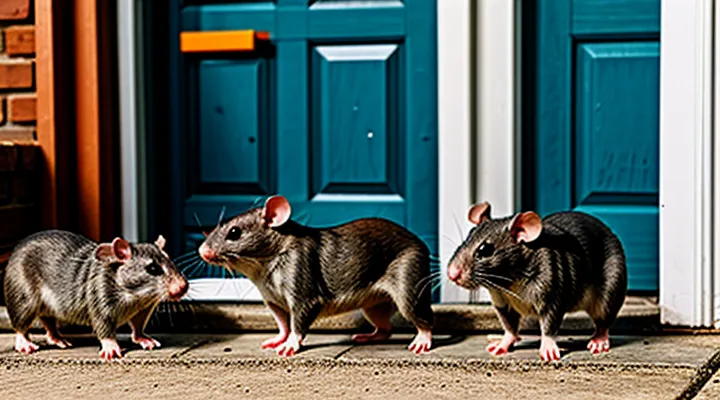
«Understanding Rat Cognition and Trainability»
«Natural Rat Behaviors and Intelligence»
Rats exhibit a repertoire of instinctive actions that reflect sophisticated problem‑solving abilities. They explore environments through tactile whisker probing, assess risks by rapid scent analysis, and navigate mazes using spatial memory. Social dynamics involve hierarchical signaling, grooming exchanges, and cooperative foraging, all of which demonstrate adaptability to variable conditions.
These innate patterns provide a foundation for effective instructional cues. Trainers can align verbal or gestural prompts with the following natural tendencies:
- Exploratory sniffing – cue rats to investigate new objects by presenting novel scents.
- Whisker‑guided tactile feedback – reinforce target locations with textured surfaces.
- Spatial memory reinforcement – use consistent landmarks to signal desired routes.
- Social reinforcement – employ peer presence or grooming mimics to encourage compliance.
- Problem‑solving incentives – integrate puzzles that require manipulation to obtain a reward.
By matching command structures to these behaviors, training programs achieve higher responsiveness and reduced learning latency. The alignment of directive signals with the rat’s inherent intelligence streamlines acquisition of desired tasks.
«Factors Influencing Training Success»
«Age and Temperament»
Rats respond to instruction sets differently depending on developmental stage and inherent disposition. Younger animals exhibit heightened plasticity, allowing rapid acquisition of new cues, while mature individuals show slower learning curves but greater consistency once a behavior is established. Temperament influences motivation; bold, exploratory rats engage readily with novel commands, whereas shy or anxious specimens require gradual exposure and positive reinforcement to overcome hesitation.
Key considerations for effective command implementation:
-
Age bracket
- Juvenile (4–8 weeks): prioritize simple, short cues; capitalize on rapid neural adaptation.
- Adolescent (9–12 weeks): introduce moderate complexity; maintain frequent reinforcement to sustain interest.
- Adult (13 weeks onward): focus on refined, multi‑step commands; allow extended practice intervals to solidify retention.
-
Temperament profile
- Aggressive or highly active rats: employ high‑energy, dynamic signals; pair with swift rewards.
- Passive or fearful rats: use low‑intensity tones, calm gestures; increase reward frequency to build confidence.
- Balanced individuals: blend stimulus intensity; adjust based on performance feedback.
-
Training schedule
- Short, daily sessions for juveniles (5–10 min).
- Moderate sessions for adolescents (10–15 min).
- Longer, spaced sessions for adults (15–20 min), with occasional rest days to prevent fatigue.
Understanding the interaction between developmental stage and personality enables precise calibration of command delivery, resulting in reliable, repeatable performance across the rat population.
«Bonding and Trust»
Bonding and trust form the foundation for successful rat instruction. When a rat perceives its handler as reliable, it is more likely to respond promptly to verbal or gestural cues.
Developing a strong bond requires consistent interaction. Recommended practices include:
- Gentle hand‑to‑hand contact for several minutes each day.
- Immediate reward (treat or praise) following any cooperative behavior.
- Short, regular training sessions that avoid fatigue.
- A predictable environment with minimal sudden noises or movements.
Trust becomes evident through observable behaviors. Indicators are:
- The rat approaches the handler without hesitation.
- Body language remains relaxed, with ears forward and whiskers unstiffened.
- Latency between cue and action stays under two seconds.
- The animal repeatedly performs the commanded task in the absence of a reward.
A well‑established bond reduces hesitation, allowing commands to be executed with higher precision. Rats that trust their handler exhibit fewer errors, maintain steadier performance under distraction, and adapt more quickly to new cues.
«Essential Training Principles»
«Positive Reinforcement Techniques»
«Clicker Training Basics»
Clicker training pairs a distinct sound with a reward, creating a clear association that guides a rat’s behavior. The method relies on operant conditioning: the animal learns that the click predicts a treat, strengthening the connection between the cue and the desired action.
Essential equipment includes a handheld clicker, high‑value food treats, and a quiet training area free of distractions. Consistency in timing—clicking the moment the rat performs the target behavior—ensures the animal links the sound to the outcome.
Training proceeds in three phases:
- Acquisition – present the clicker alone, followed immediately by a treat, until the rat responds to the sound without hesitation.
- Shaping – reinforce successive approximations of the final behavior; each small step receives a click and reward.
- Command integration – attach a verbal cue or hand signal to the established behavior, click when the rat complies, then reward.
Typical commands introduced through this protocol are “come,” “stay,” “target,” and “spin.” Each command begins with a clear click‑reward cycle, progresses through shaping, and finishes with a reliable verbal or visual prompt. Repetition of short, focused sessions—five minutes, two to three times daily—produces rapid mastery and maintains the rat’s motivation.
«Food Rewards and Motivation»
Food reinforcement drives rapid acquisition of behavioral cues in rats. A highly palatable item delivered immediately after the desired response creates a clear association between the cue and the outcome. Consistency of timing outweighs the specific nutritional composition; the reward must appear within a fraction of a second to maintain the link.
Preferred rewards include small pieces of fruit, cereal flakes, or proprietary rodent treats. Selection criteria are:
- High palatability to ensure willingness to work
- Low caloric density to prevent rapid satiety
- Uniform size for predictable delivery
Motivation depends on controlled access to the reward. Short‑term food restriction (e.g., 15–20 % reduction of daily intake) elevates drive without compromising health. Alternating reward types prevents habituation and sustains interest. Monitoring body weight and adjusting restriction schedules preserves welfare.
Effective implementation requires precise delivery mechanisms. Automated dispensers guarantee millisecond latency and eliminate human bias. Manual hand‑feeding is acceptable for low‑throughput sessions if the handler maintains identical timing. Reward quantity should match the complexity of the cue: simple discriminations need a single pellet; multi‑step sequences benefit from a series of small increments.
Key practices:
- Initiate each training block after a brief fasting period.
- Present the reward within 300 ms of cue execution.
- Use a consistent pellet size for the entire protocol.
- Rotate reward flavors every 5–7 sessions.
- Record response latency and adjust restriction if performance plateaus.
Adhering to these principles maximizes the efficiency of command acquisition in rat training programs.
«Effective Communication with Your Rat»
«Clear Cues and Consistency»
Clear cues are essential for effective rat training. A cue must be simple, distinct, and delivered in the same manner each time. Consistent timing—presenting the cue immediately before the desired behavior—helps the animal associate the signal with the action. Repeating the cue with identical volume, tone, and hand gesture eliminates ambiguity.
Consistency reinforces learning. Use the same cue for a specific behavior across all sessions; avoid substituting synonyms or altering the cue’s structure. Maintain uniform duration of each training episode, ensuring that the rat experiences a predictable pattern of cue, response, and reward. Consistency in reward timing—delivering the treat within one second of the correct response—strengthens the cue‑response link.
Practical guidelines:
- Choose a cue that is easily distinguishable from background noises.
- Deliver the cue verbally or with a hand signal, but never mix modalities for the same command.
- Apply the cue at the same point in the training routine each session.
- Provide the reward immediately after the correct response, without delay.
- Record cue parameters (tone, volume, gesture) to verify uniformity over time.
By adhering strictly to clear signals and uniform procedures, trainers minimize confusion and accelerate the acquisition of desired behaviors in rats.
«Body Language Interpretation»
Understanding rat body language is essential for delivering precise training instructions. Observable postures, movements, and vocalizations convey the animal’s readiness, stress level, and response to cues. Accurate interpretation allows trainers to adjust commands in real time, improving learning speed and welfare.
- Tail position upright, motionless – indicates alertness and willingness to engage; suitable moment to issue a new command.
- Tail tucked against the body – signals fear or discomfort; pause command delivery and assess environment.
- Ears forward, ears flattened against head – forward ears show attention; flattened ears suggest anxiety; modify tone or simplify the command.
- Whisker forward, facial muscles relaxed – denotes curiosity and calm; reinforce positive behavior with reward.
- Whisker retracted, facial tension – reflects agitation; avoid complex commands until the rat settles.
- Rapid, shallow breathing – denotes high arousal; reduce command intensity or provide a calming cue.
- Slow, deep breaths – indicates relaxation; ideal for introducing advanced tasks.
Integrating these cues requires continuous observation before, during, and after each command. When a rat displays readiness signals, issue the instruction with clear, consistent vocal or tactile markers. If stress indicators appear, pause, lower stimulus intensity, and employ soothing actions such as gentle stroking or a brief rest period before resuming training.
Practical guidelines for trainers: maintain a quiet environment to prevent misreading stress signals; record recurring patterns to predict individual rat responses; use brief, distinct commands paired with consistent hand signals to reinforce the association between verbal cue and observed body language. Consistent application of these principles yields reliable command execution and strengthens the trainer‑rat partnership.
«Foundation Commands for Rats»
«Come»
«Lure and Reward Method»
The lure‑and‑reward technique is a core component of instructional strategies used to shape rat behavior for specific cues. It relies on a two‑stage process: first, the trainer presents a stimulus that captures the animal’s attention; second, the animal receives a positive reinforcement immediately after performing the desired action.
Implementation steps:
- Identify a high‑value food item or scent that reliably attracts the rat.
- Position the lure near the target location or object associated with the command.
- Guide the rat toward the lure while maintaining a steady, calm presence.
- As the rat reaches the lure, deliver a small, consistent reward (e.g., a pellet) within one second of the action.
- Repeat the sequence, gradually increasing the distance between the rat’s starting point and the lure to strengthen the association with the cue.
Key considerations:
- Use the same type of reward throughout training to avoid confusion.
- Keep sessions brief (5–10 minutes) to maintain the rat’s focus.
- Ensure the lure is visible and accessible without requiring excessive effort.
Over successive repetitions, the animal learns to associate the cue with the lure’s presence and the subsequent reward, enabling reliable execution of the command when the cue alone is presented.
«Distance and Distraction Training»
Distance training teaches a rat to respond to a cue while positioned away from the handler. The goal is to increase the animal’s spatial awareness and reinforce obedience without direct physical contact.
- Choose a distinct audible or visual cue (e.g., a click, whistle, or hand signal).
- Start with the rat within a short radius (0.5 m).
- Deliver the cue, reward the correct response (approach, sit, or press).
- Incrementally extend the distance by 0.5 m after each successful trial.
- Record latency and success rate; adjust cue timing if performance plateaus.
Distraction training conditions a rat to maintain the commanded behavior amid competing stimuli. This method builds focus and reliability in unpredictable environments.
- Identify common distractions (other animals, food scents, sudden noises).
- Introduce a single distraction at low intensity while the rat performs the target command.
- Reward only if the command is executed correctly despite the distraction.
- Increase the number and intensity of distractions sequentially.
- Monitor error patterns to refine cue clarity and reward schedule.
Combining distance and distraction protocols yields robust command execution. Begin each session with distance drills, followed by distraction challenges at the same range. Consistent reinforcement across varied contexts ensures the rat generalizes the learned behavior, reducing reliance on proximity or a quiet setting.
«Targeting»
«Nose Touch to Hand»
Training a rat to perform a nose‑touch on a hand creates a reliable, low‑stress cue that can precede more complex behaviors. The response is easy for the animal to learn because it uses the animal’s natural investigative tendency and requires minimal physical force.
Implementation steps:
- Position a clean hand within the rat’s visual field, palm facing down.
- Hold the hand steady for 1–2 seconds while the rat approaches.
- When the rat’s nose contacts the hand, immediately deliver a brief, high‑frequency click (or other conditioned stimulus) followed by a small food reward.
- Repeat the sequence 8–10 times per session, limiting sessions to 5 minutes to prevent fatigue.
- Gradually increase the interval between hand presentation and reward, reinforcing the nose‑touch alone.
Key considerations:
- Use a consistent hand orientation and distance (approximately 5 cm from the rat’s starting point) to avoid confusion.
- Ensure the reward is highly palatable and delivered within 0.5 seconds of the click to maintain the association.
- Monitor the rat’s stress signals; discontinue the trial if excessive grooming, freezing, or agitation occurs.
Once the nose‑touch is established, it can serve as a trigger for subsequent commands such as target‑press, lever pull, or directional navigation, providing a foundation for a structured training program.
«Target Stick Introduction»
The target stick is a handheld cue used to shape precise movements in rats during conditioning sessions. It replaces verbal commands with a visible, manipulable object that the animal can learn to follow.
A typical stick consists of a lightweight rod, a brightly colored tip, and an optional attachment for a small food dispenser. The tip is designed to be easily visible from a distance, while the rod’s length allows the trainer to maintain a safe distance from the animal.
Introducing the stick to a rat follows a structured sequence:
- Present the stick without movement while the rat is in the training arena; allow the animal to sniff and investigate the tip.
- Pair brief contact with the tip (e.g., a gentle tap) with an immediate food reward.
- Repeat the contact‑reward pairing until the rat consistently approaches the tip when it is presented.
- Add a short, consistent motion of the stick away from the rat; reward the animal for following the motion.
- Gradually increase the distance and complexity of the movement, maintaining reinforcement for each successful response.
Reinforcement should remain immediate and predictable to strengthen the association between the visual cue and the desired behavior. Once the rat reliably follows the stick, the cue can be integrated with other training commands, such as directional turns or object retrieval.
Proper use of the target stick reduces reliance on auditory signals, minimizes stress, and improves the precision of learned actions. Regular cleaning of the tip and routine calibration of any attached reward device ensure consistent performance and animal safety.
«Stationing/Perching»
«"Place" Command»
The “Place” command instructs a rat to move to a designated spot and remain there until released. It establishes a predictable location for subsequent tasks such as feeding, handling, or testing.
Effective execution relies on a single, distinct verbal cue paired with a consistent hand signal. The cue should be short, for example “Place,” spoken in a calm tone. The hand signal typically involves extending the arm toward the target area while the palm faces upward, providing a visual reference that reinforces the verbal instruction.
Training proceeds through the following steps:
- Identify a clear, unobstructed area on the training surface to serve as the target location.
- Introduce the cue while gently guiding the rat toward the spot using a treat or a soft brush.
- Release the rat at the target, rewarding it immediately with a high‑value food item once it settles.
- Repeat the sequence, gradually reducing physical guidance until the rat responds solely to the cue and hand signal.
- Incorporate a release cue such as “Free” to signal the end of the hold period, ensuring the rat learns to transition smoothly.
Common issues include the rat hesitating near the target, ignoring the cue, or leaving the spot prematurely. Address hesitation by shortening the distance between the rat’s starting point and the target, and reinforce successful holds with consistent, timely rewards. If the cue is ignored, verify that the verbal command and hand signal are presented simultaneously and without distraction. Premature departure can be reduced by extending the hold duration gradually and rewarding only after the rat remains stationary for the required interval.
«Duration Building»
Duration building is a technique used to extend the time a rat maintains a specific behavior after a command is issued. It relies on gradual lengthening of the response interval while reinforcing compliance at each stage.
- Begin with a short, clearly defined interval (e.g., 2 seconds) during which the rat must hold the target behavior.
- Deliver an immediate reward at the end of the interval to strengthen the association between the command and sustained performance.
- Increase the interval incrementally (typically 1–2 seconds) once the rat consistently meets the current duration without hesitation.
- Maintain a consistent reward schedule; occasional variable reinforcement can prevent premature extinction.
- Record each session’s interval lengths to monitor progress and adjust increments according to the rat’s learning curve.
Key considerations include maintaining a calm environment, using distinct auditory or visual cues for each command, and avoiding premature termination of the interval, which can confuse the animal. Properly applied duration building yields longer, more reliable responses, enabling more complex command sequences in rat training programs.
«Advanced Tricks and Behavioral Training»
«Fetch and Retrieve»
The fetch‑and‑retrieve command teaches a rat to locate, pick up, and bring an object to the handler, providing a measurable indicator of focus, problem‑solving ability, and obedience.
Effective instruction follows a systematic progression:
- Establish a high‑value reward (e.g., a preferred food pellet) and pair it with a distinct cue such as “fetch.”
- Present a lightweight object within arm’s reach; release the cue and wait for the rat to make contact.
- Immediately reward any tactile interaction, then reinforce only when the rat lifts the object.
- Gradually increase the distance between the rat and the item, maintaining the cue and reward schedule.
- Introduce variations in object shape and texture to generalize the response.
Common errors include using ambiguous cues, rewarding partial attempts, and skipping the lifting stage. Correct these by isolating each component, ensuring the cue remains consistent, and applying reinforcement solely after successful retrieval.
A typical training schedule consists of five‑minute sessions, three times daily, for two weeks. After the initial acquisition phase, reduce reward frequency to maintain the behavior without creating dependency. Regular brief refreshers prevent extinction and keep performance stable.
«Jumping Through Hoops»
Training rats to jump through hoops requires a clear command hierarchy, consistent timing, and precise reinforcement. Begin with a simple verbal cue such as “hoop” paired with a hand signal that points toward the target. Deliver the cue only when the rat is positioned near the hoop, then reward immediately after a successful pass. This establishes a direct association between the signal and the desired action.
Progression follows a step‑by‑step protocol:
- Introduce the hoop at ground level. Allow the rat to explore the object without pressure; reward any interaction.
- Add the verbal cue. Speak the chosen word just before the rat approaches; reward any forward movement toward the hoop.
- Elevate the hoop gradually. Increase height by 2‑3 cm each session, maintaining the same cue and reward timing.
- Incorporate a secondary cue for release. Use “go” or a distinct hand motion to signal that the rat may exit the hoop after completion.
- Fade the treat. Replace food rewards with brief tactile praise or a clicker, preserving the timing of the original reinforcement.
Safety considerations include securing the hoop to prevent tipping, using non‑slippery surfaces, and limiting session length to five minutes to avoid fatigue. If a rat hesitates, lower the hoop temporarily and reinforce partial attempts, then resume height increments once confidence returns.
Consistent application of the command sequence, combined with measured reinforcement, yields reliable hoop‑jumping performance and enhances overall agility in rat training programs.
«Navigating Obstacle Courses»
Effective navigation of obstacle courses by rodents requires a defined set of verbal and gestural cues, consistent reinforcement schedules, and progressive course complexity. Trainers should establish a baseline command vocabulary that distinguishes direction, speed, and specific actions. Each cue must be brief, distinct, and paired with immediate reward to cement association.
Typical command repertoire includes:
- “Left” / “Right” – directs turn at junctions.
- “Forward” – initiates straight movement.
- “Stop” – halts progress on demand.
- “Jump” – signals clearance of low barriers.
- “Climb” – prompts ascent of vertical elements.
- “Back” – orders retreat from a segment.
Training protocol:
- Introduce a single cue in isolation on a simple platform; reward upon correct response.
- Combine two cues to form a short sequence; reinforce successful execution.
- Incorporate a low obstacle; apply “Jump” or “Climb” as appropriate; reward only after obstacle clearance.
- Expand to a multi‑segment course; randomize cue order to prevent pattern learning.
- Increase obstacle height or complexity incrementally; maintain reward timing to avoid confusion.
- Conduct brief, daily sessions; record latency and error rate to monitor progress.
Consistent application of this structured command system yields reliable obstacle navigation, reduces hesitation, and enhances overall performance in rat training programs.
«Litter Training»
«Understanding Scent Marking»
Scent marking is a natural communication method that rats use to define territory, signal identity, and convey emotional state. Recognizing the specific odor deposits enables handlers to assess a rat’s confidence level, social hierarchy, and readiness for new tasks. Accurate interpretation of these cues is essential for applying precise training commands.
When a rat deposits urine or glandular secretions on a surface, the mark contains information about the individual’s age, sex, and recent activity. Observing the frequency, location, and intensity of marks provides data that can be used to adjust training protocols. For instance, increased marking in a novel environment indicates heightened stress; reducing stress through gradual exposure and calm vocal cues will improve learning outcomes.
Practical steps for incorporating scent‑mark awareness into rat training commands:
- Identify high‑traffic zones (corners, feeding stations) and monitor mark density daily.
- Use a neutral scent marker (e.g., diluted essential oil) to establish a baseline scent in training areas, allowing the rat to differentiate between familiar and unfamiliar odors.
- Pair a consistent verbal cue (such as “focus”) with the presence of a fresh mark to teach the rat to approach or investigate the source.
- Reward the rat immediately after it investigates a mark to reinforce the desired investigative behavior.
- Gradually introduce varied scents while maintaining the same command structure to generalize the response across different environments.
By integrating scent‑mark analysis with clear verbal commands and timely reinforcement, trainers can enhance a rat’s responsiveness, reduce anxiety, and accelerate skill acquisition.
«Positive Reinforcement for Appropriate Elimination»
Positive reinforcement strengthens desired behavior by delivering a reward immediately after the rat performs the correct action. When the animal uses a designated elimination area, the trainer provides a high‑value treat, brief praise, or a brief play session. Consistency in timing and reward type creates a clear association between the act and the benefit.
The training process follows a predictable sequence. First, select a quiet, easily cleaned location such as a shallow tray filled with absorbent bedding. Second, place a small amount of the rat’s preferred food or a scented treat in the tray to attract interest. Third, observe the rat’s natural elimination cues—posture changes, sniffing, or backing up. When the rat eliminates in the tray, deliver the reward within one to two seconds. Fourth, repeat the cycle several times daily, gradually reducing the treat size while maintaining verbal praise.
- Identify a suitable elimination spot and keep it accessible at all times.
- Introduce the spot with a scent cue (e.g., a dab of food scent) to draw attention.
- Reward instantly after each successful elimination.
- Gradually phase out food rewards, retaining brief verbal acknowledgement.
- Clean the area regularly to prevent odor buildup and maintain hygiene.
If the rat continues to eliminate elsewhere, reassess the environment. Remove competing substrates, limit access to unsuitable areas, and increase the frequency of reward delivery. Monitoring progress for at least two weeks provides sufficient data to confirm that the positive reinforcement strategy has established a reliable elimination routine.
«Troubleshooting Common Training Challenges»
«Lack of Motivation»
Lack of motivation undermines the effectiveness of any instruction set for rats. When a rodent shows little interest in performing a learned command, the observable signs include reduced response frequency, prolonged hesitation before movement, and a tendency to ignore cues altogether. These behaviors signal that the animal’s internal drive to obtain a reward or avoid discomfort has diminished.
Typical contributors to diminished drive are:
- Inconsistent reinforcement schedules that fail to establish reliable expectations.
- Overexposure to the same reward, leading to satiation and reduced perceived value.
- Environmental stressors such as excessive noise, bright lighting, or unfamiliar scents.
- Physical fatigue or health issues that impair energy levels.
Addressing the problem requires a systematic approach:
- Re‑evaluate the reward system. Introduce high‑value treats, vary the type of incentive, and ensure delivery immediately after the desired response.
- Implement a progressive reinforcement pattern, alternating between continuous reinforcement for new commands and intermittent reinforcement for established ones.
- Optimize the training environment by minimizing distractions, maintaining a stable temperature, and providing a quiet, familiar space.
- Conduct brief health checks to rule out illness, injury, or nutritional deficiencies that could affect stamina.
- Schedule short, frequent sessions rather than long, exhausting ones to preserve the animal’s natural activity cycles.
By correcting reinforcement inconsistencies, refreshing reward appeal, and ensuring optimal environmental conditions, trainers can restore the rat’s willingness to engage with the command framework, thereby improving compliance and overall training outcomes.
«Distraction Management»
Effective distraction management is essential for reliable execution of rat training commands. Distractions undermine signal clarity, cause delayed responses, and increase the likelihood of erroneous behavior. Controlling environmental variables and the animal’s attentional focus preserves the integrity of the conditioning process.
Key practices for minimizing distractions include:
- Isolating the training area from loud noises, sudden movements, and unfamiliar scents.
- Scheduling sessions when the rat is naturally calm, such as after feeding but before rest periods.
- Using consistent lighting and background sounds to create a stable sensory backdrop.
- Implementing a pre‑session routine that cues the rat to expect instruction, thereby reducing curiosity‑driven interruptions.
- Gradually introducing minor stimuli during advanced phases to build resilience without compromising baseline performance.
Monitoring the rat’s response latency provides immediate feedback on distraction levels. An increase in response time signals the need to reinforce environmental controls before proceeding with further command sequences.
«Aggression or Fear Responses»
Aggressive and fearful reactions are common obstacles when shaping behavior in laboratory or pet rats. These reactions arise from perceived threats, territorial disputes, or unfamiliar stimuli and can manifest as lunging, vocalizations, freezing, or rapid retreat.
Observable signs include raised fur, widened pupils, tail flicking, sudden cessation of movement, and audible squeaks. Recognizing these cues early allows the handler to intervene before the response escalates.
Effective mitigation relies on precise, consistent cues:
- A short, low‑tone click to signal a pause and promote calm.
- A gentle, steady hand motion directing the animal away from the stressor.
- A brief, high‑frequency pulse to interrupt an aggressive charge.
- A soft, elongated tone paired with a treat to reinforce non‑threatening behavior.
After each session, record the frequency and intensity of aggression or fear indicators. Adjust cue timing, volume, and reward schedule based on trends. Gradual exposure to the trigger, combined with the cues above, reduces reactivity while maintaining task acquisition rates.
«Plateauing in Progress»
Plateauing occurs when a rat’s response to a set of instructional cues ceases to improve despite continued practice. Observable signs include static latency, unchanged accuracy rates, and reduced enthusiasm during sessions. Data collected over several days typically reveal a flattening curve on performance graphs, confirming the stagnation.
Underlying factors often involve habituation to the same cue pattern, insufficient variability in reinforcement schedules, or physiological fatigue. Repetitive exposure to identical commands can diminish the animal’s attentional focus, while a monotonous reward system may lower motivation. Additionally, overtraining without adequate rest can lead to diminished neural plasticity, limiting further skill acquisition.
To break through a plateau, trainers should adjust the command protocol by incorporating the following measures:
- Introduce novel cue variations while preserving core command structure.
- Alternate reinforcement types (e.g., switch from food rewards to brief tactile stimuli).
- Implement spaced training intervals, allowing rest periods between intensive sessions.
- Employ progressive difficulty increments, such as increasing target distance or reducing cue duration.
- Monitor physiological indicators (heart rate, grooming behavior) to detect fatigue early and adjust workload accordingly.
Applying these strategies restores learning momentum, enabling continued advancement in rat response performance.
«Safety and Ethical Considerations»
«Minimizing Stress During Training»
Effective rat command training requires low stress levels to ensure reliable performance and animal welfare. High stress impairs learning, reduces motivation, and increases aggression, undermining training objectives.
Key practices for stress reduction:
- Maintain a quiet, consistently lit environment; eliminate sudden noises and bright flashes.
- Use gentle, predictable handling; approach the rat from the side, avoid gripping by the tail, and support the body fully.
- Limit session duration to 5‑10 minutes, with at least a 30‑minute interval between repetitions.
- Provide a clear, stable cue for each command; avoid overlapping signals or ambiguous gestures.
- Employ positive reinforcement (e.g., small food rewards) immediately after the correct response; discontinue reinforcement if the rat shows signs of discomfort.
- Monitor physiological indicators such as grooming, vocalizations, and posture; pause or terminate the session if stress signs appear.
Implementing these measures creates a calm learning atmosphere, accelerates acquisition of desired behaviors, and supports long‑term retention of commands.
«Recognizing Rat Fatigue»
Recognizing fatigue in laboratory rats is essential for maintaining the effectiveness of training protocols. Fatigue manifests through measurable changes in behavior, physiology, and performance.
Observable behavioral indicators include reduced response accuracy, increased latency in executing commands, and a decline in exploratory activity. Rats may also display repetitive grooming, prolonged pauses between tasks, and a reluctance to engage with familiar cues.
Physiological signs consist of elevated cortisol levels, altered heart rate variability, and diminished body temperature regulation. Blood glucose may drop, and muscle glycogen stores can be depleted, detectable through routine sampling.
Performance metrics provide quantitative confirmation. A consistent drop of more than 15 % in correct responses over three consecutive sessions signals fatigue. Similarly, an increase of 20 % or more in task completion time warrants intervention.
To address fatigue, implement the following steps:
- Reduce training duration to 30 %–40 % of the previous length.
- Insert mandatory rest periods of at least 15 minutes after each 10‑minute task block.
- Provide enriched environments during breaks to promote recovery.
- Monitor cortisol and glucose levels daily; adjust workload if values exceed baseline by more than 10 %.
- Rotate tasks to prevent monotony and distribute muscular load.
Consistent application of these observations and adjustments safeguards rat welfare and preserves the reliability of command‑based training outcomes.
«The Importance of Play and Enrichment»
Play and enrichment provide rats with sensory, motor, and cognitive stimulation that directly supports learning processes. Structured opportunities for exploration, problem‑solving, and social interaction engage neural pathways associated with memory formation and attention, thereby increasing the efficiency of conditioning protocols.
Enriched environments reduce stress markers, promote natural foraging behavior, and improve overall health. Lower cortisol levels correlate with faster acquisition of target responses, while increased locomotor activity sustains motivation during repeated training sessions.
Practical enrichment items include:
- Tunnels and tubes that encourage navigation and spatial awareness.
- Puzzle feeders that require manipulation to access food rewards.
- Varied textures (e.g., sand, shredded paper) that stimulate tactile exploration.
- Rotating objects (e.g., wooden blocks, plastic wheels) that maintain novelty.
- Social companions or brief supervised group interactions that reinforce social competence.
Integrating these elements into a rat training program yields higher response rates, fewer extinction bursts, and more consistent performance across sessions. The systematic use of play and enrichment thus enhances the reliability and speed of behavior modification in laboratory and pet rat contexts.