
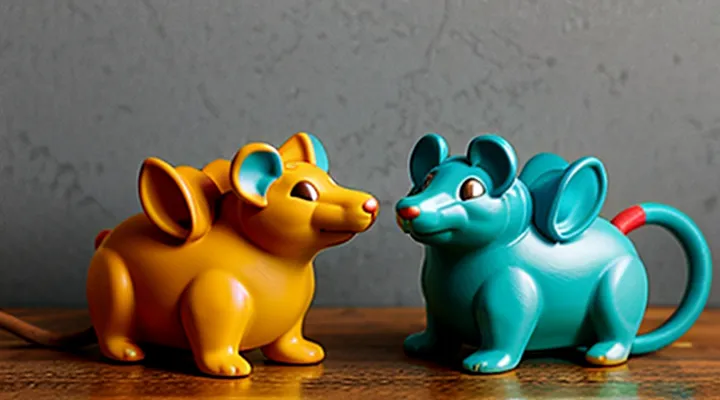
Genetics of Coat Color
Basic Principles of Rat Genetics
Mendelian Inheritance
The fur pigmentation of ornamental dambo rats follows classic Mendelian patterns. Each color phenotype results from alleles at specific genetic loci that segregate according to the law of segregation and independent assortment.
At the primary locus, a dominant allele (C) produces a dark coat, while the recessive allele (c) yields a light coat. Heterozygous individuals (C c) display the dark phenotype because the dominant allele masks the recessive one. When two heterozygotes are crossed, the expected genotype ratio is 1 C C : 2 C c : 1 c c, producing a phenotypic ratio of 3 dark : 1 light.
A second locus modifies hue. The allele (B) intensifies brown tones; the recessive allele (b) permits a diluted coloration. Interaction between the two loci follows a dihybrid cross, generating nine possible genotype combinations. The resulting phenotypes can be grouped as:
- Dark brown (C C B B or C c B B)
- Dark diluted (C C b b or C c b b)
- Light brown (c c B B)
- Light diluted (c c b b)
Epistatic relationships may occur when a third locus (E) suppresses pigment production entirely, producing an albino phenotype regardless of the other alleles. The presence of at least one dominant E allele (E –) permits expression of the color determined by C and B, while homozygous recessive (e e) results in no pigment.
Breeding strategies that track these alleles enable predictable production of desired coat colors. By selecting parents with known genotypes, breeders can calculate expected offspring ratios and achieve targeted phenotypes with high reliability.
Gene Loci and Alleles
The coloration of ornamental dambo rats is determined by specific gene loci that control pigment production, distribution, and intensity. Each locus contains multiple alleles, and the combination of alleles inherited from both parents establishes the final coat phenotype.
Key loci influencing fur pigmentation include:
- A locus (Agouti series) – alleles range from full‑color (A) to non‑agouti (a), the latter producing solid coloration.
- B locus (Brown series) – dominant brown (B) masks black, while recessive brown (b) yields chocolate tones.
- C locus (Dilution series) – dominant C maintains full saturation; recessive c c reduces pigment intensity, creating pastel shades.
- D locus (Dominant dilution) – D enhances pigment density; d d lightens the coat.
- E locus (Extension) – E permits black pigment expression; e e restricts it, resulting in red or yellow shades.
Allelic interaction follows Mendelian inheritance, yet epistatic relationships modify outcomes. For example, the e e genotype at the E locus overrides the A locus, preventing agouti pattern expression regardless of A allele presence. Similarly, the c c allele at the C locus dilutes any color produced by B or D loci, producing a uniform lighter hue.
Breeding strategies rely on predicting genotype combinations. When two heterozygous carriers (A/a, B/b) are mated, expected phenotypic ratios are:
- Full‑color agouti (AB) – 9/16
- Solid black (aaB_) – 3/16
- Full‑color brown (A_bb) – 3/16
- Solid brown (aabb) – 1/16
Adjusting parent genotypes to include dilution alleles (c c or d d) shifts these ratios toward pastel versions of the same patterns. Accurate record‑keeping of each rat’s genotype enables precise selection for desired coat characteristics.
Key Genes Influencing Coat Color
Agouti Locus («A/a»)
The Agouti locus, designated A/a, determines the distribution of pigment along individual hairs in decorative dambo rats. The dominant allele (A) produces a banded hair pattern where the base contains dark eumelanin, the middle segment carries lighter pheomelanin, and the tip remains unpigmented. This arrangement yields a characteristic sable or agouti appearance, with a subtle gradation of color across the coat.
The recessive allele (a) eliminates the banding effect, resulting in uniform coloration of each hair. When homozygous recessive (a/a), rats display solid-colored coats, commonly black, brown, or pink, depending on the interaction with other pigment genes. Heterozygous individuals (A/a) express the agouti phenotype because the dominant allele masks the recessive contribution.
Interaction with additional loci modifies the basic agouti expression:
- Extension (E): presence of the dominant E allele enhances eumelanin production, deepening the dark band.
- Dilution (D): recessive d/d lightens both dark and light bands, producing a softer, pastel agouti.
- Albino (c): homozygous recessive c/c overrides agouti pattern, resulting in an albino phenotype regardless of A allele status.
Phenotypic outcomes align with genotype combinations as follows:
- A/A or A/a with functional E and D – classic agouti with distinct dark and light bands.
- a/a with functional E – solid dark coat.
- a/a with recessive d/d – solid diluted coat.
- Any genotype with c/c – albino, no visible agouti pattern.
Understanding the Agouti locus provides a predictive framework for breeding programs aimed at specific coat appearances in decorative dambo rats.
Black Locus («B/b»)
Black Locus, represented by the B/b allele, produces a solid black coat that masks the underlying pattern of a dambo rat. The dominant B allele overrides other color genes, resulting in a uniform dark pigmentation across the entire body, including the tail and whisker pads. Homozygous (B/B) individuals display the deepest black, while heterozygous (B/b) rats retain the same overall appearance but may carry a recessive allele for future breeding.
The allele’s inheritance follows simple Mendelian dominance:
- B (dominant) × b (recessive) → 100 % black offspring (B/b)
- B/B × B/B → 100 % black (B/B)
- b/b × b/b → no black phenotype; other color genes express
When breeding for Black Locus, consider the following points:
- Pairing a black rat with a non‑black carrier (b/b) retains the black phenotype in all progeny, but introduces the recessive allele into the line.
- Two black rats (B/B or B/b) cannot produce non‑black offspring unless a hidden recessive allele is present in both parents.
- Maintaining genetic diversity requires occasional introduction of non‑black lines, preventing inbreeding depression.
Health implications of the B allele are negligible; the gene influences melanin production without affecting physiological functions. Identification relies on visual assessment of coat uniformity and, when necessary, genetic testing to confirm allele status, especially in breeding programs where hidden carriers are relevant.
C (Albino) Locus («C/c/ch/h»)
The C locus governs the presence or absence of pigment in the fur of decorative dambo rats. The wild‑type allele (C) permits normal eumelanin production, while recessive variants suppress pigmentation, resulting in albino or temperature‑dependent patterns.
- C – full pigment expression; standard coloration.
- c – complete loss of eumelanin; white coat, pink eyes (true albino).
- ch – Himalayan allele; pigment only on cooler body regions (ears, nose, tail, paws).
- h – self‑type allele; reduced pigment intensity, producing a diluted shade.
The locus follows autosomal recessive inheritance. Homozygosity for c (c/c) yields an albino phenotype; heterozygotes (C/c) display the wild‑type appearance because the C allele is dominant. The ch and h alleles are also recessive to C but exhibit partial dominance over c, allowing intermediate patterns when combined with c.
Phenotypic outcomes:
- C/C or C/c – normal coloration.
- c/c – white coat, pink eyes, pink nose.
- ch/ch or ch/c – color restricted to extremities, typical Himalayan pattern.
- h/h or h/c – overall lighter coat, sometimes described as “self‑blue” or “self‑cream”.
Breeding strategies rely on predictable segregation of these alleles. Pairing two carriers (C/c) produces a 25 % chance of albino offspring, a 50 % chance of normal‑colored progeny, and a 25 % chance of carriers. Introducing a Himalayan or self allele into a line requires at least one parent to carry the corresponding recessive allele; offspring will display the associated pattern only when homozygous or combined with c.
Understanding the C locus enables precise manipulation of fur pigmentation, essential for maintaining desired aesthetic standards in decorative dambo rat colonies.
Dilution Locus («D/d»)
The Dilution locus, designated D/d, governs the intensity of eumelanin and phaeomelanin pigments in ornamental Dambo rats. The dominant allele (D) permits full expression of base colors, while the recessive allele (d) reduces pigment deposition, producing lighter shades.
When the d allele is homozygous (dd), black fur becomes a slate‑blue hue, chocolate turns to a muted lilac, and reddish tones shift toward a soft tan. Heterozygous individuals (Dd) display the standard coloration because the dominant D allele masks the diluting effect.
Inheritance follows an autosomal recessive pattern:
- dd → diluted phenotype
- Dd → normal phenotype
- DD → normal phenotype
Interaction with other coat‑color loci modifies the final appearance. Typical outcomes include:
- dd combined with the agouti locus → diluted agouti pattern (e.g., blue‑gray agouti)
- dd with the extension locus → blue or lilac variants of solid colors
- dd in the presence of the spotting gene → pale spots against a diluted background
Breeders can predict offspring colors through Mendelian calculations. A test cross between a dd individual and a DD carrier yields a 1:1 ratio of diluted to normal pups; mating two heterozygotes (Dd × Dd) produces a 25 % chance of diluted offspring, a 50 % chance of normal carriers, and a 25 % chance of normal homozygotes. Selecting for dd genotypes ensures consistent production of the lighter coat palette valued in decorative Dambo lines.
Pink-Eyed Dilution Locus («P/p»)
The pink‑eyed dilution locus (P/p) is a recessive autosomal allele that reduces melanin deposition across the pelage of ornamental dambo rats. Homozygous individuals (p/p) display a uniform pale coat, ranging from light gray to near‑white, and characteristic pink irises due to the absence of pigment in the retinal epithelium. Heterozygotes (P/p) retain the base coat color but may exhibit subtle lightening in specific regions, depending on interactions with other color genes.
Key genetic characteristics:
- Inheritance pattern: recessive; both parents must contribute the p allele for full expression.
- Phenotypic expression: overall coat dilution, pink eyes, reduced pigmentation in whiskers and foot pads.
- Interaction with other loci: the p allele can mask the visual impact of agouti (A), brown (b), and dilute (d) loci, resulting in a more uniform appearance.
- Health considerations: pink‑eyed rats are prone to increased sensitivity to bright light and may require low‑light environments to prevent ocular discomfort.
- Breeding recommendations: to maintain the pink‑eyed phenotype, pair two p/p individuals or use a test cross with a known p carrier; avoid pairing with rats carrying dominant color alleles if the goal is to preserve the diluted appearance.
Molecular analysis identifies the P locus as a mutation in the melanophilin (MLPH) gene, which disrupts melanosome transport within melanocytes. Genetic testing kits targeting the specific nucleotide substitution provide reliable detection of carrier status, facilitating informed breeding decisions and preservation of the desired aesthetic traits.
Ruby-Eyed Dilution Locus («R/r»)
The ruby‑eyed dilution locus (R/r) modifies melanin pigment in decorative Dambo rats, producing a distinct dilution of the standard coloration. Homozygous R/R individuals display a uniform, pastel coat with reduced black and brown intensity, while heterozygous R/r rats show an intermediate phenotype that retains some original hue but with noticeably lighter shading. The mutation also affects eye pigmentation, resulting in a vivid ruby coloration that distinguishes affected animals from those lacking the allele.
Phenotypic expression of the R/r locus interacts with other coat‑color genes:
- When combined with the albino (a) allele, the ruby‑eyed dilution is masked, and the animal appears completely white with ruby eyes.
- Pairing R/r with the sable (S) locus yields a diluted sable pattern, where the characteristic dark points become soft gray.
- In the presence of the agouti (A) allele, the dilution lightens the banded pattern, producing a muted agouti appearance.
Breeders use the ruby‑eyed dilution to create aesthetically unique specimens. Predictable outcomes require knowledge of parental genotypes; crossing two heterozygous R/r rats results in a 25 % chance of producing fully diluted R/R offspring, a 50 % chance of heterozygous R/r, and a 25 % chance of non‑diluted r/r progeny. Selecting for the R allele while managing other color loci allows precise control over the final coat palette.
Common Coat Colors and Varieties
Self Colors
Black
Black coloration in ornamental Dambo rats presents a uniform, deep pigment that covers the entire coat. The shade ranges from matte ebony to a glossy midnight hue, depending on individual variation and lighting conditions.
The phenotype results from a recessive allele at the B locus, which suppresses melanin dispersion. Homozygosity for the allele produces the solid black coat, while heterozygous individuals display a diluted or mixed pattern.
Visually, the black coat offers high contrast against the characteristic white facial mask and whisker patches of the breed. The fur maintains the same texture as other color forms, retaining the silky, dense quality prized by exhibitors.
Breeding considerations:
- Pair two carriers (heterozygotes) to achieve a 25 % probability of black offspring per litter.
- Use two black individuals to guarantee the phenotype in all progeny.
- Monitor for linked health traits, as the recessive allele may co‑occur with reduced pigment in the eyes.
Health and husbandry remain consistent with other color variants. Regular grooming removes loose hair and preserves coat luster. Provide a balanced diet rich in antioxidants to support melanin stability and overall skin health.
Mink
Mink is a medium‑dark shade that occupies a central position in the coloration spectrum of decorative dambo rats. The hue combines a deep, saturated brown base with a subtle, glossy sheen, resembling the fur of the mink mammal. Genetic analysis shows that the mink phenotype results from the interaction of the Dilute (d) and Agouti (A) loci, where the Dilute allele reduces pigment intensity while the Agouti allele distributes it across the coat.
Key characteristics of the mink coloration include:
- Uniform brown tone across the back, flanks, and tail.
- Slightly lighter underbelly, creating a gentle contrast.
- Soft, velvety texture that enhances visual depth.
- Consistent coloration throughout the animal’s lifespan, with minimal fading.
Breeders seeking to produce mink coats must pair a carrier of the Dilute allele with an Agouti‑dominant partner. Offspring ratios follow Mendelian expectations, yielding approximately 25 % mink individuals when both parents are heterozygous for the relevant genes.
From a husbandry perspective, mink‑colored dambo rats require the same environmental conditions as other color variants. Their coat does not demand special grooming, but regular cleaning of the habitat helps preserve the natural luster. Health monitoring remains identical across all coat types; no unique medical concerns are associated with the mink phenotype.
Blue
Blue‑toned fur in decorative dambo rats results from a dilution of the standard black pigment, producing a slate‑gray to deep indigo appearance. The coloration is genetically recessive, requiring both parents to carry the blue allele for offspring to express the trait. Breeders monitor pedigree charts to confirm carrier status and avoid unintended loss of the hue during selection.
Key attributes of the blue coat include:
- Uniform shade across the body, with minimal variation in tone.
- Slight iridescence under direct light, revealing subtle cyan highlights.
- Consistent pigmentation on whiskers, tail, and footpads, distinguishing it from partial or mosaic patterns.
Health considerations remain identical to other color forms; the blue pigment does not affect vision, hearing, or susceptibility to common rodent ailments. Proper nutrition and environmental enrichment ensure that the visual appeal of the blue coat is maintained without compromising welfare.
Russian Blue
Russian Blue denotes a uniform slate‑grey coat with a metallic sheen, reminiscent of the feline breed from which the name derives. The fur appears dense, each hair reflecting light to produce a subtle silvery luster; eyes are typically bright amber or deep brown, providing contrast without disrupting the overall monochrome effect.
The coloration results from the interaction of a dilute gene that reduces black pigment and a recessive modifier that eliminates any residual brown tones. The genotype is expressed only when both parents contribute the recessive allele, making the trait homozygous recessive (dd). Carriers (heterozygotes) display the standard dambo pattern but conceal the Russian Blue phenotype.
Breeding Russian Blue dambo rats requires deliberate pairings:
- Identify carriers through pedigree analysis or DNA testing.
- Pair two carriers (Dd × Dd) to achieve a 25 % chance of producing Russian Blue offspring.
- Pair a carrier with a confirmed Russian Blue (Dd × dd) for a 50 % probability of the desired coat.
- Avoid mating two Russian Blues (dd × dd) unless the goal is to maintain the line without introducing new alleles.
Standard husbandry applies: balanced diet, regular cage cleaning, and routine health checks. The coat’s density does not increase grooming frequency, but gentle brushing can accentuate the sheen and reduce shedding. No additional medical concerns are associated specifically with the Russian Blue coloration.
Champagne
Champagne is a light, creamy hue that appears in decorative dambo rats as a dilute form of the standard golden coloration. The pigment results from a recessive allele that reduces the intensity of the underlying brown pigment, yielding a soft, almost pastel shade. Rats displaying this coat retain the characteristic pattern of the breed—distinctive markings on the back, sides, and tail—while the overall tone remains muted.
Genetically, the champagne expression requires two copies of the dilute gene (dd) in combination with at least one copy of the dominant gold allele (G). Breeders must pair individuals that both carry the dilute allele to achieve consistent results; otherwise, offspring will revert to the standard golden or exhibit mixed shades.
Key attributes of the champagne coat include:
- Uniform, low‑contrast coloration that enhances the visibility of pattern lines.
- Slightly lighter whisker and eye coloration, often amber rather than dark brown.
- A silky texture that does not differ from other color variants, indicating no impact on coat quality.
When selecting for champagne, responsible breeders prioritize health and temperament over aesthetic traits. The phenotype does not influence susceptibility to common rat ailments, but maintaining genetic diversity remains essential to avoid inbreeding depression.
Overall, the champagne variant expands the aesthetic range of decorative dambo rats, offering a subtle alternative to more vivid colors while preserving the breed’s distinctive markings.
Platinum
Platinum is a rare, metallic‑shimmering hue that appears in decorative dambo rats as a light, almost silvery base with subtle iridescent overtones. The pigment results from a dilution of the standard white gene combined with a modifier that reduces melanin density, allowing underlying reflective fibers to dominate the coat’s appearance.
Key characteristics of the platinum coloration include:
- Uniform brightness across the body, with minimal variation between dorsal and ventral regions.
- A faint, pearlescent sheen that becomes more pronounced under direct lighting.
- Compatibility with other color modifiers, producing variants such as platinum‑blue or platinum‑gold when paired with specific alleles.
Breeding considerations focus on maintaining genetic stability; the platinum phenotype often requires homozygosity for the dilution gene and careful avoidance of carriers for recessive darkening alleles. Successful propagation yields offspring with consistent metallic luster and a marketable aesthetic for exhibition standards.
Agouti Colors
Agouti
Agouti describes a coat pattern in which each hair contains alternating bands of pigment, resulting in a speckled, earthy appearance. In decorative dambo rats the pattern typically presents as a dark brown base overlaid with lighter, amber‑colored tips, creating a subtle, natural camouflage.
The agouti trait is governed by the A (agouti) allele, which is dominant over the a (non‑agouti) allele. When a dambo rat inherits at least one A allele, the pigment distribution along each hair shaft follows the classical banding sequence: eumelanin, pheomelanin, and a final light tip. Homozygous A/A individuals often display a more pronounced contrast between the dark and light segments, while heterozygous A/a rats may exhibit slightly muted banding.
Key characteristics of the agouti coat in dambo rats include:
- Uniform speckling across the entire body, with no solid patches of color.
- A consistent brown‑to‑tan gradient from the dorsal to ventral surfaces.
- Retention of the pattern through successive molts, ensuring stability across generations.
Breeders seeking to maintain or introduce agouti coloration should verify the presence of the A allele in both parents. Pairing an agouti carrier with a non‑agouti partner yields a 50 % probability of agouti offspring per litter; mating two agouti carriers increases this probability to 75 %. Genetic testing can confirm allele status, reducing reliance on visual assessment alone.
Phenotypic expression may vary with additional modifiers such as the dilute (d) or albino (c) genes. Dilution lightens the brown bands to a muted gray, while albino alleles suppress pigment production, eliminating the agouti pattern entirely. Awareness of these interactions allows precise control over the final coat appearance.
Cinnamon
Cinnamon is a warm, reddish‑brown hue found in the fur of decorative Dambo rats. The color results from a moderate expression of the brown allele combined with a dilution factor that reduces black pigment, producing a uniform, medium‑intensity shade. Visually, the coat displays a smooth, even tone without the darker tail or ear markings typical of other varieties.
Genetically, cinnamon manifests when the rat carries one copy of the recessive brown (b) gene and one copy of the dilution (d) gene. The combination b/d yields the characteristic hue, while the presence of a dominant black (B) allele or a non‑diluted brown allele masks the effect. Breeding pairs must be screened for both alleles to reliably produce cinnamon offspring.
Key characteristics of the cinnamon coat include:
- Consistent coloration across the body, head, and tail.
- Slightly lighter shading on the whisker pads and ventral area.
- Stable pigment that does not fade with age under proper nutrition.
Health considerations specific to this coloration are minimal; however, the pigment does not provide additional protection against UV exposure. Providing shaded habitats and a balanced diet rich in antioxidants helps maintain coat vibrancy.
When selecting breeding stock, prioritize individuals with verified b and d genotypes and avoid introducing dominant black carriers, which can dilute or eliminate the cinnamon expression in subsequent litters.
Amber
Amber dambo rats display a warm, golden hue that ranges from light honey to deep, rich orange. The pigmentation originates from a specific allele that modifies the standard agouti distribution, resulting in a uniform, saturated tone across the body, ears, and tail. This coloration is visually distinct from other common shades such as sable or chocolate, providing a striking contrast against the rat’s typical dark markings.
Key attributes of the amber phenotype include:
- Uniform fur coloration with minimal shading variations.
- Slightly deeper pigmentation on the dorsal area, creating a subtle gradient toward the ventral side.
- Eyes that often appear darker, enhancing the overall visual impact of the coat.
Breeders prioritize genetic stability when selecting for amber. Pairing individuals that carry the amber allele with those lacking competing color genes reduces the risk of unexpected melanin dilution or pattern reversion. Proper nutrition and environmental enrichment support the maintenance of coat vibrancy, as deficiencies in essential fatty acids can dull the golden sheen.
In show settings, amber dambo rats are evaluated for color consistency, gloss, and the absence of stray patches. Judges award higher scores to specimens that exhibit a flawless, homogeneous amber coat, confirming successful genetic selection and diligent husbandry.
Silverfawn
Silverfawn is a distinct coat coloration observed in ornamental dambo rats. The hue combines a pale, almost ivory base with a subtle, silvery sheen that appears most pronounced under bright lighting. The color results from a dilution of the standard fawn pigment, moderated by a modifier gene that reduces melanin density, yielding the characteristic metallic luster.
Key attributes of the Silverfawn phenotype include:
- Base tone: Light tan with a soft, warm undertone.
- Overlay: Fine silver overlay that creates a reflective surface.
- Pattern consistency: Uniform distribution across the body, minimal spotting.
- Genetic inheritance: Recessive dilution paired with a dominant silver modifier; both parents must carry the dilution allele for offspring to express Silverfawn.
Breeders prioritize health and structural standards while selecting for Silverfawn. Recommended practices involve:
- Verifying carrier status through genetic testing to avoid unexpected color outcomes.
- Maintaining a balanced diet rich in protein and essential fatty acids to support coat quality.
- Providing environmental enrichment to reduce stress, which can affect pigment expression.
Silverfawn remains a sought‑after variant among enthusiasts due to its elegant appearance and the relative rarity of the required genetic combination. Proper documentation of lineage and adherence to breeding protocols ensure the preservation of this color within the decorative dambo rat community.
Marked Varieties
Hooded
The hooded coat displays a solid-colored dorsal stripe that runs from the head across the back to the tail, while the remainder of the body retains a contrasting lighter shade. This pattern is produced by a dominant allele that suppresses pigment deposition on the sides and ventral surface, leaving only the central “hood” area pigmented. The dorsal stripe typically appears in black, chocolate, or blue, whereas the surrounding fur may be white, cream, or beige, creating a striking two‑tone effect.
Key characteristics of the hooded phenotype include:
- Uniform intensity of color along the spine, without mottling or spotting.
- Sharp demarcation between the pigmented strip and the lighter background, often visible at the neck and hip joints.
- Consistent expression across generations when at least one parent carries the dominant hooded gene.
Breeders prioritize the hooded pattern for its visual impact and predictability. Genetic testing confirms the presence of the dominant allele, reducing the risk of unwanted color variations. Proper grooming focuses on the dorsal area to maintain shine and prevent matting, while the lighter flank regions require regular cleaning to avoid discoloration from urine or feces.
Berkshire
Berkshire represents a distinct coat coloration within the ornamental dambo rat palette, characterized by a rich chocolate base overlaid with a crisp white blaze that runs from the nose across the forehead to the shoulders. The contrast creates a striking visual effect, often sought after by breeders aiming for aesthetic variety.
Key visual traits include:
- Dark brown fur covering the back, sides, and tail.
- A symmetrical white strip extending from the muzzle, across the forehead, and terminating at the shoulder ridge.
- White paws and a lighter underbelly that blends gradually into the darker dorsal area.
- Clear, well‑defined edges between the brown and white sections, without mottling.
Genetically, the Berkshire pattern follows an autosomal recessive inheritance. Both parents must carry the allele for the coloration to appear in offspring; heterozygous pairs typically produce standard brown or white coats. Careful record‑keeping of lineage is essential to maintain the trait in a breeding program.
Health and maintenance considerations remain consistent with other decorative dambo rats. The dense brown fur may accumulate debris more readily, requiring regular brushing to prevent matting. The white blaze, being more exposed, benefits from occasional gentle cleaning to avoid staining. No specific health issues are linked to the Berkshire coloration, but standard monitoring of diet, habitat hygiene, and veterinary check‑ups ensures overall well‑being.
Irish
The Irish variant refers to a deep, uniform black coat that covers the entire body of an ornamental dambo rat. This coloration results from a recessive gene that suppresses pigment production, yielding a sleek, glossy appearance without any markings or color patches.
Key attributes of the Irish coat include:
- Solid black hue across fur, whiskers, and tail.
- High sheen caused by dense, fine hair fibers.
- Lack of dorsal or ventral contrast; the skin underneath appears uniformly pigmented.
- Genetic inheritance pattern: both parents must carry the recessive allele for offspring to display the Irish phenotype.
Capped
Capped refers to a coat pattern in decorative dambo rats where the body displays a solid base color while the head, ears, and sometimes the tail tip are covered with a contrasting hue. The demarcation typically follows the natural outline of the skull, creating a distinct “cap” that isolates the facial region from the rest of the coat.
The pattern results from selective breeding that combines alleles for solid coloration with those for a separate pigment expression limited to cranial tissues. Breeders achieve capped coats by pairing individuals that carry the “cap” modifier gene with those expressing the desired base color, ensuring the modifier is homozygous to produce a consistent cap across litters.
Key characteristics of the capped pattern include:
- Clear boundary between cap and body, without gradation or blending.
- Uniform cap color that may be identical to or different from the body’s hue.
- Consistent expression across generations when the modifier gene is stabilized.
When planning a breeding program, consider the following:
- Verify that both parents carry the cap modifier to avoid non‑capped offspring.
- Maintain genetic diversity to prevent inbreeding depression while preserving the pattern.
- Record coat outcomes meticulously to track inheritance patterns and refine selection criteria.
Capped rats are frequently showcased for their striking visual contrast, making them popular in exhibitions where coat aesthetics are evaluated. The pattern does not affect health or behavior; standard care requirements for decorative dambo rats remain applicable.
Dalmatian
The Dalmatian pattern is a prominent variation among the coat colorations of ornamental dambo rats. It is characterized by a white base fur overlaid with distinct, evenly spaced black or dark brown spots that cover the entire body, including the head, back, and tail. The spotting pattern emerges from a specific genetic allele that suppresses pigment production in localized skin cells while allowing melanin synthesis in surrounding areas.
Key attributes of the Dalmatian coloration include:
- White background coat providing high contrast with spots.
- Spots ranging from 2 mm to 5 mm in diameter, maintaining uniform size throughout the animal.
- Spot density of approximately 30–45 spots per square centimeter, creating a dense, speckled appearance.
- Dark pigment color limited to black or deep brown, with no intermediate shades.
- Consistent spot distribution on all body regions, including limbs and ears, without gaps.
Breeders select for the Dalmatian pattern to achieve visual uniformity and to meet standards set by decorative rat exhibitions. The pattern remains stable across generations when both parents carry the responsible allele, ensuring reliable inheritance in progeny.
Hairless and Other Special Varieties
Rex
Rex is a distinct variety of decorative dambo rat recognized for its unique fur texture and a wide spectrum of coat hues. The breed’s hair is short, dense, and velvety, a result of a recessive gene that modifies the standard dambo coat structure. This genetic mutation produces a glossy finish that distinguishes Rex from other decorative lines.
Coloration in Rex rats follows the same pigment pathways as other dambo types, but the altered fur can affect the visual intensity of each shade. Commonly observed hues include:
- Solid black, with a deep, uniform appearance.
- Chocolate, presenting a rich, medium brown tone.
- Blue, offering a muted, steel‑gray coloration.
- Lavender, a pale, pastel violet that appears more pronounced on the velvety coat.
- Agouti, featuring a speckled pattern of light and dark bands across each hair.
Rare variations occasionally emerge, such as:
- Cream, a near‑white shade with a subtle warmth.
- Red, a vibrant orange‑brown hue that stands out against the matte texture.
Breeding programs that aim to preserve or expand the Rex color palette must manage the recessive Rex allele alongside standard dambo color genes. Successful pairings require both parents to carry the Rex mutation; otherwise, offspring will display typical dambo fur. Genetic testing confirms the presence of the Rex allele, ensuring predictable outcomes.
Care considerations for Rex rats align with those for other decorative dambo breeds. The dense coat benefits from regular grooming to prevent matting, while the short length reduces the need for intensive maintenance. Nutritional requirements remain unchanged; a balanced diet supports healthy fur development and overall vitality.
In summary, Rex represents a specialized coat type within decorative dambo rats, characterized by a velvety texture and a broad array of colors. Genetic management and routine grooming sustain the breed’s distinctive appearance and health.
Velveteen
Velveteen is a coat coloration observed in decorative dambo rats that exhibits a soft, muted hue reminiscent of brushed suede. The pigment combines a subtle gray base with a faint, warm undertone, resulting in a matte finish that lacks the glossy sheen of more vivid colors. This phenotype arises from a specific allele that reduces melanin intensity while preserving the overall coat pattern typical of the breed.
Key characteristics of the velveteen coloration include:
- Uniform tone across the body, with minimal variation between dorsal and ventral regions.
- Slightly lighter shading on the whisker pads and ears, creating a gentle contrast.
- Consistent texture that remains plush to the touch, without the glossy reflection seen in other shades.
Breeders consider velveteen desirable for exhibition purposes due to its distinctive appearance and the rarity of the underlying genetic mutation. Maintaining the visual integrity of the velveteen coat requires:
- Regular grooming to prevent matting, which can obscure the subtle color gradient.
- A balanced diet rich in essential fatty acids, supporting healthy fur quality.
- Controlled lighting during display, as strong illumination can exaggerate the matte effect and diminish the perceived depth of the hue.
Satin
Satin is a distinct coat coloration found in ornamental dambo rats, characterized by a smooth, lustrous sheen that mirrors the texture of satin fabric. The hue typically appears as a deep, uniform base color—often black, brown, or gray—overlaid with a subtle, glossy overlay that catches light at a slight angle.
Genetically, satin results from a recessive allele that modifies melanin distribution, producing the reflective surface without altering the underlying pigment. Breeders must pair two carriers or a carrier with a homozygous satin individual to achieve the phenotype in offspring.
Key attributes of the satin coat include:
- High reflectivity, giving a metallic appearance under direct illumination.
- Uniform pigmentation without the speckles or rosettes common in other patterns.
- Enhanced visual appeal for exhibition standards that prioritize coat quality.
Maintenance considerations focus on grooming and lighting. Regular brushing removes loose fur and preserves the sheen; excessive humidity can dull the reflective layer, so environments should remain dry. Nutritional support with omega‑3 fatty acids contributes to coat health and maintains the satin finish.
When selecting breeding pairs, prioritize genetic compatibility and health records to avoid propagating recessive defects that may accompany the satin allele. Proper documentation of lineage ensures reliable prediction of satin expression in future litters.
Hairless
Decorative dambo rats may present a hairless phenotype, a condition in which the typical fur is absent while the underlying skin retains pigment. This variant arises from a recessive mutation that interferes with hair follicle development without altering the genetic pathways responsible for coat coloration.
The hairless gene operates independently of the loci that determine pigment distribution, allowing the skin to exhibit the same color patterns observed in furred individuals. Consequently, hairless specimens display the full spectrum of recognized shades—ranging from solid blacks and whites to patterned mixes—solely on their exposed dermis.
Visually, the skin of a hairless rat mirrors the coloration that would appear on fur, with melanin concentrations producing identical markings. The lack of fur accentuates color contrast, making patterns more conspicuous and facilitating precise identification of genetic lines.
Breeding hairless individuals requires careful management of the recessive allele to avoid unintended health complications. The mutation may be linked to increased susceptibility to temperature fluctuations, skin injuries, and dermal infections; therefore, breeders must monitor environmental conditions and maintain rigorous hygiene protocols.
Key care practices for hairless decorative dambo rats include:
- Maintaining ambient temperature between 68–74 °F (20–23 °C) to prevent hypothermia.
- Providing soft, non‑abrasive bedding to reduce skin irritation.
- Ensuring daily inspection for wounds or signs of infection.
- Applying a hypoallergenic moisturizer formulated for small mammals when skin appears dry.
- Offering a balanced diet rich in vitamins A and E to support skin health.
Eye Colors in Dambo Rats
Black Eyes
Black eyes in decorative Dambo rats represent a distinct ocular pigmentation resulting from high melanin deposition in the iris. The trait is independent of fur hue but often coincides with darker coat shades due to shared genetic pathways influencing melanin synthesis.
Key genetic aspects:
- Inherited as an autosomal recessive allele; both parents must carry the gene for offspring to display black irises.
- The allele interacts with the C (color) locus, which governs coat pigment intensity, creating a correlation between deep coat colors and black-eyed phenotypes.
- Carrier status can be confirmed through pedigree analysis or molecular testing for the relevant melanin‑related mutation.
Health considerations:
- Black irises provide increased protection against ultraviolet radiation compared to lighter eyes.
- No intrinsic ocular disorders are linked to the black‑eye allele, but breeders should monitor for secondary conditions such as cataracts, which occur at normal rates across eye colors.
Show standards:
- Exhibition judges recognize black eyes as a desirable feature when paired with appropriate coat patterns, awarding points for contrast and visual impact.
- Excessive darkness that obscures pupil visibility may be penalized; optimal presentation balances deep pigmentation with clear pupil definition.
Breeding recommendations:
- Pair carriers with solid black‑eye individuals to increase the probability of black‑eyed litters while maintaining genetic diversity.
- Record eye color alongside coat data to refine selection strategies and avoid inadvertent propagation of undesirable recessive traits.
Ruby Eyes
Ruby eyes represent a distinct ocular phenotype that frequently accompanies the vivid fur palettes of ornamental dambo rats. The pigment responsible for this striking hue is a high concentration of erythrocytic melanin, which deposits in the iris stroma, producing a deep crimson appearance. Breeders often associate ruby eyes with specific coat patterns, such as deep sable or bright ivory, because the genetic loci governing eye coloration and fur shading are linked on chromosome 4.
The presence of ruby eyes influences selection criteria in breeding programs. Desired outcomes include:
- Consistent expression of ruby irises across litters.
- Compatibility with contrasting coat shades to enhance visual impact.
- Absence of health complications, as the mutation does not affect retinal function.
Genetic testing confirms the heterozygous or homozygous state of the ruby-eye allele, allowing precise pairing of carriers to achieve predictable results. Studies indicate that rats possessing ruby eyes exhibit normal visual acuity and no increased susceptibility to ocular disease.
When evaluating a specimen, assess the intensity of the red hue, the uniformity of coloration across both eyes, and the harmony with the animal’s overall fur coloration. Proper documentation of eye and coat genetics supports long‑term maintenance of the phenotype within breeding colonies.
Pink Eyes
Pink eyes are a distinct ocular phenotype observed in decorative dambo rats. The lack of melanin in the iris results in a translucent appearance that allows the underlying blood vessels to show through, creating a pink hue. This condition is genetically linked to the same alleles responsible for reduced coat pigmentation; rats exhibiting pink eyes often carry the same recessive genes that produce lighter or patterned fur.
Key characteristics of pink-eyed individuals include:
- Iris translucency that reveals a pinkish coloration.
- Increased sensitivity to bright light due to reduced ocular pigment.
- Correlation with coat patterns such as albino, dilute, or certain roan variants.
Health implications are limited but noteworthy. The diminished melanin provides less protection against ultraviolet exposure, making pink-eyed rats more prone to photophobia. Routine veterinary checks should monitor for corneal irritation and cataract formation, which can be accelerated by prolonged bright-light environments.
Breeding considerations focus on genetic inheritance. The pink-eye trait follows an autosomal recessive pattern; both parents must contribute the allele for the phenotype to manifest. Breeders aiming to preserve this visual feature must maintain accurate pedigree records and avoid excessive inbreeding, which can amplify associated health risks.
In terms of aesthetic impact, pink eyes enhance the visual contrast of the rat’s coat, especially when paired with pale or patterned fur. The combination accentuates the animal’s decorative qualities, making it a sought-after trait among enthusiasts of ornamental rodent breeds.
Odd-Eyes
Odd‑eyes describe a bilateral ocular condition in decorative dambo rats where each eye exhibits a distinct pigmentation, typically one dark and one light. The phenotype arises from a mutation affecting melanin distribution in the iris, independent of the animal’s overall fur palette.
The mutation follows an autosomal recessive inheritance pattern. Two carrier parents produce a 25 % chance of an odd‑eyes offspring per litter, a 50 % chance of carriers, and a 25 % chance of fully pigmented eyes. Genetic testing confirms the presence of the recessive allele, enabling precise selection.
Identification relies on visual inspection of the eyes at weaning. A dark iris paired with a pale or pinkish counterpart signals the trait. The condition does not alter the rat’s coat coloration, allowing odd‑eyes individuals to appear in any existing hue, from ivory to chocolate.
Breeders consider odd‑eyes when planning color lines. Because the trait is recessive, maintaining it requires pairing carriers or affected individuals. Introducing odd‑eyes into a line can diversify visual appeal without compromising established color standards.
Typical variations include:
- Dark‑to‑light contrast (black‑to‑pink)
- Light‑to‑dark contrast (pink‑to‑brown)
- Partial pigmentation where one eye displays a speckled pattern rather than uniform coloration
Overall, odd‑eyes provide a distinct visual element that coexists with the full spectrum of decorative dambo rat coat colors, expanding aesthetic options while adhering to genetic principles.
Factors Affecting Coat Color Expression
Environmental Influences
Environmental conditions exert measurable effects on the pigmentation patterns of decorative dambo rats. Genetic predisposition establishes a baseline palette, yet external factors modify melanin distribution, resulting in observable variations across populations.
Ambient temperature influences enzymatic activity within melanocytes. Cooler habitats tend to produce darker coats, while warmer environments favor lighter shades. The relationship persists across successive generations when breeding occurs in stable climatic zones.
Nutritional composition alters pigment synthesis. Diets rich in carotenoids and specific amino acids increase yellow and orange tones, whereas protein-deficient regimens reduce overall melanin density, yielding paler fur.
Light exposure regulates hormonal pathways that control melanin production. Prolonged illumination suppresses melanocyte-stimulating hormone, leading to reduced darkness, whereas limited daylight enhances hormone release and deepens coloration.
Physiological stressors, including disease and overcrowding, trigger hormonal fluctuations that can cause irregular pigment deposition, manifesting as mottled or patchy coats.
Key environmental determinants:
- Temperature gradients
- Dietary carotenoid and protein levels
- Photoperiod length
- Health status and stress levels
Understanding these variables enables breeders to predict and manipulate coat outcomes with greater precision.
Age-Related Changes
The coat of ornamental dambo rats undergoes predictable transformations as the animal ages. These alterations affect hue, pattern definition, and overall vibrancy, providing visual cues to the rat’s developmental stage.
In juveniles, the fur typically exhibits bright, saturated colors with sharply defined markings. Pigmentation is concentrated in the dorsal region, while ventral areas remain lighter. The contrast between primary and secondary hues is most pronounced during this period.
Adult specimens display a modest reduction in intensity. Pigment cells gradually disperse, leading to softer edges around stripes, spots, or rosettes. The dorsal palette may shift toward deeper, more muted tones, while the ventral surface often acquires a faint amber tint.
Senior rats show the most marked changes:
- Overall dullness: chroma diminishes, resulting in a washed‑out appearance.
- Fading of contrast: previously sharp delineations become blurred.
- Graying patches: localized loss of melanin creates silver or white speckles, especially around the muzzle and ears.
- Thinning of fur: reduced hair density can expose underlying skin tones, further affecting perceived color.
These age‑related modifications are not merely aesthetic; they can signal health status. Rapid or uneven fading may indicate metabolic disorders, nutritional deficiencies, or dermatological conditions requiring veterinary assessment. Regular observation of coat condition, combined with weight monitoring and behavioral checks, supports early detection of underlying issues.
Health and Nutrition
The health of decorative dambo rats is closely linked to the quality of their diet, especially when specific fur color patterns are a breeding focus. Pigmentation relies on the availability of certain amino acids, vitamins, and minerals; deficiencies can cause fading, uneven coloration, or increased susceptibility to skin disorders.
Key nutritional components include:
- Protein: High‑quality animal or plant proteins supply tyrosine, a precursor for melanin synthesis. Minimum 18 % protein in dry feed supports robust fur development.
- Essential fatty acids: Omega‑3 and omega‑6 fatty acids maintain skin elasticity and promote a glossy coat. Sources such as fish oil or flaxseed provide the required ratios.
- Vitamins A, D, and E: Vitamin A regulates epithelial cell turnover, vitamin D assists calcium metabolism for strong teeth, and vitamin E acts as an antioxidant protecting pigment cells from oxidative stress.
- Minerals: Zinc and copper are critical cofactors in melanin production. Adequate levels prevent depigmentation and support immune function.
Health monitoring should address common issues that affect coat appearance:
- Dermatitis: Often results from inadequate fatty acids or allergens in the diet. Immediate adjustment of fat sources and elimination of suspected irritants can restore skin health.
- Malocclusion: Improper calcium‑phosphorus balance leads to dental overgrowth, indirectly affecting grooming and coat condition. A diet with a calcium‑phosphorus ratio of approximately 1:1 mitigates this risk.
- Obesity: Excess calories reduce activity, leading to dull fur and increased strain on joints. Portion control and regular weight checks are essential.
Supplementation may be necessary for breeders emphasizing particular color morphs. A daily dose of a melanin‑supporting complex—containing L‑tyrosine, copper gluconate, and biotin—can enhance pigment intensity without disrupting overall nutrition.
Water quality also influences health. Fresh, filtered water prevents mineral buildup that could interfere with nutrient absorption and skin integrity.
Consistent feeding schedules, balanced nutrient profiles, and vigilant health checks together ensure that decorative dambo rats maintain vibrant fur and optimal well‑being.
Breeding for Specific Coat Colors
Understanding Desired Traits
The focus of selective breeding for ornamental dambo rats lies in specific coat attributes that define aesthetic appeal and breed standards. Desired traits include hue precision, pattern clarity, pigment intensity, and consistency across litters.
- Hue precision – breeders target exact shades such as deep sable, bright cinnamon, or muted ash, avoiding off‑color variations that deviate from the breed’s palette.
- Pattern clarity – distinct markings, including roan, brindle, or solid blocks, must appear crisp, with clean edges and uniform distribution.
- Pigment intensity – vibrant coloration signals healthy melanin production; dull or washed‑out coats often indicate genetic dilution or health issues.
- Litter consistency – uniform expression of the selected traits across siblings reduces variability and simplifies future breeding decisions.
Genetic considerations underpin trait selection. The primary genes governing melanin pathways (e.g., MC1R, TYRP1) interact with modifier loci that adjust shade depth and pattern formation. Strategic pairings aim to combine dominant color alleles with recessive modifiers to achieve the targeted phenotype while minimizing the risk of undesirable recessive disorders.
Health implications accompany visual traits. Excessive pigment concentration may correlate with skin sensitivities, while certain pattern genes have been linked to ocular anomalies. Responsible breeding balances aesthetic goals with veterinary assessments, ensuring that coat characteristics do not compromise overall vitality.
Effective record‑keeping supports trait management. Detailed logs of parent genotypes, observed phenotypes, and offspring outcomes enable data‑driven decisions, accelerating the refinement of desired coat features within the population.
Planning Pairings
When arranging breeding pairs among ornamental Dambo rats, coat coloration dictates both aesthetic outcomes and genetic stability. Accurate pairing requires assessment of each animal’s pigment genotype, dominance hierarchy of color alleles, and the likelihood of producing desired hues without compromising health.
Key considerations for pairing decisions:
- Identify the primary and secondary color genes carried by each rat.
- Determine allele dominance to predict which colors will manifest in offspring.
- Avoid combining individuals with recessive lethal alleles that could increase mortality.
- Match rats with complementary color patterns to enhance visual contrast while preserving genetic diversity.
- Record pedigree data to monitor inbreeding coefficients and maintain heterozygosity.
Implementing these steps ensures that each pair contributes to the development of a balanced palette of fur shades, supports robust lineage health, and aligns with the visual standards expected of decorative Dambo rats.
Predicting Outcomes
Predictive analysis of coloration patterns in ornamental dambo rats relies on quantifiable genetic and environmental inputs. Accurate forecasts enable breeders to select pairings that yield desired hues, streamline inventory planning, and assess market potential.
Genetic architecture determines primary pigment expression. Single‑gene loci produce classic colors such as albino or black, while polygenic networks generate intermediate shades and mottling. Dominant alleles override recessive counterparts; heterozygous combinations produce predictable ratios observable across litters.
Environmental variables modulate phenotypic expression. Nutrient composition influences melanin synthesis, ultraviolet exposure can alter pigment intensity, and chronic stress may trigger coat fading. Systematic recording of these factors refines correlation models.
Data acquisition must be systematic. Researchers collect:
- Detailed pedigree charts with genotype annotations.
- High‑resolution photographs cataloged by lighting conditions.
- Environmental logs documenting diet, housing, and health status.
Statistical and computational methods translate raw data into outcome predictions. Established approaches include:
- Mendelian probability calculations for single‑gene traits.
- Quantitative trait locus (QTL) mapping to locate polygenic contributors.
- Supervised machine‑learning classifiers trained on image datasets to forecast color distribution.
Application of these techniques yields concrete benefits. Breeders can anticipate the likelihood of specific coat colors in upcoming litters, adjust breeding strategies to meet consumer demand, and identify genetic lines prone to undesirable pigmentation anomalies. The resulting precision supports sustainable stock management and enhances the commercial appeal of decorative dambo rats.