
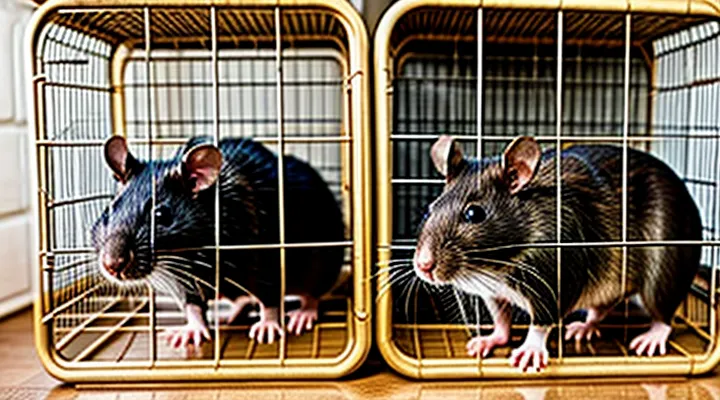
Understanding Rat Needs
Why Size Matters for Rats
Health Implications of Inadequate Space
Selecting an appropriate enclosure for a pair of rats directly influences their physiological well‑being. When living area falls short of the species‑specific requirement for movement, several health problems emerge.
- Musculoskeletal strain resulting from restricted locomotion
- Elevated stress hormone levels leading to immunosuppression
- Weight gain and obesity due to insufficient exercise opportunities
- Increased incidence of respiratory infections linked to poor air circulation in cramped spaces
- Heightened aggression and abnormal social behavior caused by territorial tension
Limited space reduces the range of natural activities such as climbing, burrowing, and foraging. This restriction diminishes muscle development and impairs joint flexibility, predisposing rats to chronic pain and arthritis. Elevated cortisol concentrations, a physiological response to confinement, suppress immune function and make individuals more susceptible to bacterial and viral pathogens. Excess caloric intake combined with reduced physical exertion accelerates adipose tissue accumulation, which in turn strains cardiovascular and metabolic systems. Social stress arising from forced proximity without adequate personal zones can trigger dominance disputes, resulting in bite wounds and heightened anxiety.
Mitigating these risks requires providing an enclosure that accommodates the full spectrum of natural behaviors, ensures adequate ventilation, and allows each animal sufficient personal space. Adhering to these standards supports optimal health outcomes for a duo of rats.
Behavioral Aspects of Cage Size
The size of an enclosure directly influences the natural repertoire of two rats. Sufficient floor area permits extensive locomotion, reducing stereotypic pacing that often signals chronic stress. Adequate height enables vertical exploration, a behavior rats exhibit instinctively when foraging or escaping predators. When space constraints limit movement, dominance hierarchies intensify, leading to increased aggression and reduced grooming reciprocity.
Key behavioral outcomes associated with cage dimensions:
- Enhanced activity levels: larger habitats support wheel running, climbing, and tunneling, which correlate with lower corticosterone concentrations.
- Decreased aggression: spacious environments dilute competition for limited resources, fostering stable social bonds.
- Improved nesting: ample bedding area encourages complex nest construction, reflecting normal maternal and communal instincts.
- Elevated cognitive stimulation: room for varied enrichment objects promotes problem‑solving and reduces neophobia.
Conversely, undersized cages produce:
- Repetitive circling or bar‑bashing, indicative of frustration.
- Suppressed play, diminishing social learning opportunities.
- Heightened scent marking, a compensatory response to perceived territorial shortage.
Optimal enclosure design balances floor space, vertical volume, and enrichment distribution, thereby aligning environmental conditions with the species‑specific behavioral repertoire of a rat pair.
Key Factors for Two Rats
Gender Considerations
When two rats share a habitat, their sex influences spatial requirements and social dynamics. Males typically attain larger body mass than females, demanding additional floor area to accommodate increased movement and muscle development. Female pairs often display higher nesting activity, which can reduce usable space for locomotion. Mixed‑sex pairs may exhibit territorial behavior that escalates with limited room, potentially leading to stress‑induced injuries.
Key points for sizing decisions:
- Allocate at least 0.5 sq ft (≈0.05 m²) of floor space per adult male; a modest increase to 0.6 sq ft (≈0.06 m²) per adult female provides margin for nesting material.
- For mixed‑sex dyads, add an extra 10 % of floor area to offset potential aggression and allow separate zones for nesting and exploration.
- Vertical enrichment (levels, climbing structures) should be proportionally larger for males, whose weight places greater demand on sturdy supports.
- Bedding depth of 2–3 in (5–7 cm) supports female nesting behavior without compromising overall cage volume.
Age and Activity Levels
Rats of different ages exhibit distinct activity patterns, which directly influence the minimum enclosure dimensions required for two individuals.
Juvenile rats, typically under three months old, display rapid bursts of climbing, tunneling, and exploratory behavior. Their heightened locomotion demands at least 1 ft² (≈0.09 m²) of floor space per animal, plus vertical structures that extend a minimum of 12 in (30 cm) above the base. Failure to provide sufficient room can result in stress‑induced injuries and stunted development.
Adult rats, ranging from three to twelve months, maintain steady activity levels with regular foraging and social interaction. A floor area of 0.75 ft² (≈0.07 m²) per rat, combined with climbing opportunities reaching 15 in (38 cm), satisfies their physiological needs while allowing space for enrichment items such as tunnels and wheels.
Senior rats, older than twelve months, experience a gradual decline in mobility but retain the need for mental stimulation. Minimum floor space of 0.6 ft² (≈0.06 m²) per rat remains appropriate; vertical height can be reduced to 10 in (25 cm) without compromising welfare, provided that accessible platforms and low‑profile toys are available.
Recommended minimum dimensions per pair
- Juvenile pair: ≥ 2 ft² floor area, ≥ 12 in vertical height.
- Adult pair: ≥ 1.5 ft² floor area, ≥ 15 in vertical height.
- Senior pair: ≥ 1.2 ft² floor area, ≥ 10 in vertical height.
Adhering to these guidelines ensures that each age group can express natural behaviors, maintain health, and coexist comfortably within a shared enclosure.
Calculating Ideal Cage Dimensions
Minimum Space Requirements
Cubic Inches Per Rat
The space requirement for each rat is measured in cubic inches, a metric that directly reflects the three‑dimensional volume of the enclosure. Sufficient volume provides room for movement, nesting, and the placement of enrichment items, all of which influence health and behavior.
Guidelines for domestic rats commonly recommend a minimum of 2 000 cubic inches per individual. This figure translates to approximately 115 liters, ensuring adequate floor area and vertical space. For a pair, the baseline total reaches 4 000 cubic inches.
Additional volume should be allocated for accessories such as tunnels, wheels, and climbing structures. A practical approach adds 500–800 cubic inches per enrichment item, resulting in a total range of 4 500 to 5 200 cubic inches for two rats when basic enrichment is present.
Key factors that modify the basic volume calculation:
- Activity level: highly active rats benefit from extra vertical space.
- Age and size: juveniles occupy less volume than mature adults.
- Health status: compromised mobility may require reduced climbing height but increased floor area.
- Number of enrichment objects: each additional item increases the necessary cubic inches.
By applying the baseline of 2 000 cubic inches per rat and adjusting for enrichment and individual characteristics, owners can determine an enclosure size that meets the spatial needs of a pair of rodents.
Floor Space Versus Vertical Space
When housing two rats, the allocation of horizontal area directly affects movement, foraging and social interaction. A minimum of 0.5 square feet per animal provides sufficient room for basic activities such as running, grooming and nesting. The total floor surface should therefore exceed 1 square foot, with additional space allowing for separate zones that reduce competition over resources.
Vertical dimension contributes to environmental complexity without expanding the cage footprint. Rats naturally climb; incorporating platforms, ramps and multi‑level tunnels satisfies this instinct. Effective vertical enrichment includes:
- Platforms positioned at least 4 inches above the base, offering resting spots.
- Ramps with a gentle incline (approximately 15 degrees) to connect levels safely.
- Suspended tubes or ladders that encourage exploration and exercise.
Balancing floor and height prevents overcrowding while promoting physical health. Excessive verticality without adequate ground space can limit natural digging behavior and restrict access to bedding. Conversely, ample floor area without vertical elements may lead to boredom and reduced activity.
The optimal enclosure therefore combines a floor surface exceeding one square foot with at least two accessible levels, each providing distinct functional zones. This configuration supports the rats’ need for both horizontal mobility and vertical exploration, fostering a balanced, stimulating environment.
Recommended Cage Sizes
Multi-Level Cages
Multi‑level enclosures add vertical dimension to the living area of a pair of rats, increasing usable space without expanding the floor footprint. The added platforms, ramps, and climbing structures create distinct zones for nesting, foraging, and exercise, allowing two animals to occupy separate levels simultaneously.
Benefits include:
- Enhanced enrichment through varied terrain;
- Increased opportunities for natural climbing behavior;
- Reduction of territorial disputes by providing separate levels;
- Improved air circulation around elevated platforms.
When calculating overall capacity, combine the horizontal floor area with the cumulative surface of each tier. A commonly accepted baseline for two rats recommends at least 0.5 square feet (≈0.05 m²) of floor space; each additional level should contribute a comparable amount of usable surface. For example, a cage with a 0.5 sq ft base and two 0.25 sq ft platforms meets the same total area as a larger single‑level unit.
Practical considerations:
- Ensure sturdy construction to prevent collapse under the weight of two active rodents;
- Provide removable platforms for easy cleaning and inspection;
- Incorporate safe, chew‑resistant materials for ladders and ramps;
- Maintain clear access to food, water, and bedding on each level.
Choosing a multi‑level design balances spatial efficiency with behavioral enrichment, supporting healthy activity patterns while adhering to size guidelines for a duo of rats.
Single-Level Cages
When housing a pair of rats in a single‑level enclosure, the floor area determines comfort and health. A minimum of 1 ft² (≈ 0.09 m²) per animal provides sufficient space for movement, nesting, and enrichment; therefore a cage of at least 2 ft² (≈ 0.18 m²) is advisable. Larger dimensions reduce territorial stress and allow separate feeding zones.
Key dimensions for a ground‑level cage:
- Length ≥ 24 in (≈ 60 cm) and width ≥ 12 in (≈ 30 cm) for two rats.
- Height ≈ 12 in (≈ 30 cm) is adequate because rats rarely climb vertically; excessive height adds unused volume and complicates cleaning.
- Bar spacing ≤ ½ in (≈ 13 mm) prevents escape while permitting easy handling.
Material considerations:
- Solid base of stainless steel or coated wire prevents chewing damage and simplifies sanitation.
- Transparent side panels allow observation without disturbance.
- Ventilation slots covering at least 30 % of the surface area maintain airflow and reduce odor buildup.
Essential accessories compatible with a single‑level layout:
- Separate water bottle and food dish placed on opposite sides.
- Hideout or tunnel positioned against a wall to create a secure retreat.
- Chewable enrichment items (wood blocks, rope) attached to the cage frame.
Maintenance guidelines:
- Remove waste daily; replace bedding weekly to control moisture.
- Disinfect the interior with a rodent‑safe cleaner every two weeks.
- Inspect bars and hinges for wear; replace damaged components promptly.
Selecting a ground‑level cage that meets these specifications ensures that two rats share an environment that supports natural behavior, reduces stress, and facilitates routine care.
Bar Spacing Considerations
Bar spacing directly affects the well‑being of a pair of rats. Gaps that are too wide permit escape, while openings that are too narrow restrict movement and can cause injury.
Recommended dimensions:
- Minimum horizontal distance between bars: ¼ inch (≈ 6 mm). This size prevents a rat’s head from slipping through while allowing comfortable passage.
- Maximum vertical spacing: ½ inch (≈ 12 mm). Larger intervals hinder climbing and reduce the risk of paw entrapment.
- Bar thickness: at least ¼ inch. Sufficient thickness resists bending under the animals’ weight and discourages gnawing.
Additional factors:
- Material durability: stainless steel or powder‑coated metal maintains structural integrity and resists corrosion.
- Ease of cleaning: smooth surfaces and rounded bar edges simplify removal of waste and bedding.
- Compatibility with accessories: ensure that tunnels, wheels, and platforms fit within the chosen spacing without forcing deformation.
Adhering to these specifications supports safe navigation, minimizes escape risk, and promotes a hygienic environment for two rats sharing an enclosure.
Features of a Good Rat Cage
Ventilation and Airflow
Proper ventilation is essential for the health of a pair of rats housed together. Adequate airflow removes ammonia, moisture, and odors that accumulate from urine and droppings, preventing respiratory irritation and skin problems.
- Provide at least one opening per side of the cage to promote cross‑draft; this creates a continuous exchange of fresh air without creating drafts that could chill the animals.
- Use wire mesh or perforated panels with openings no larger than ½ inch (≈1.3 cm) to allow air passage while preventing escape.
- Ensure the cage is placed away from direct drafts of heating or cooling systems, which can cause temperature fluctuations.
- Incorporate a filter system, such as a charcoal or HEPA insert, when the enclosure is located in a low‑ventilation room; replace filters according to manufacturer guidelines.
Maintain a minimum clearance of 2 inches (≈5 cm) between the cage walls and any surrounding furniture to avoid obstructing airflow. Regularly inspect ventilation components for blockage or corrosion; clean and replace as needed. Consistent air exchange, combined with appropriate cage dimensions, supports a stable environment for two rats and reduces the risk of disease.
Material Safety and Durability
Selecting an appropriate enclosure for a pair of rats requires careful evaluation of material safety and durability. The cage must resist chewing, tolerate regular cleaning, and avoid releasing harmful substances.
Key material considerations include:
- Solid plastic – High chew resistance, easy to disinfect, free of splinters. Verify that the polymer is labeled BPA‑free and phthalate‑free to ensure toxicity is not a concern.
- Untreated hardwood – Natural aesthetic, moderate durability. Choose species such as maple or birch; avoid soft woods that rats can quickly gnaw through. Apply a food‑grade, water‑based sealant that does not contain volatile organic compounds.
- Stainless steel – Superior strength, excellent resistance to corrosion and bacterial growth. Ensure welds are smooth to prevent injury. Stainless steel frames paired with a solid plastic base combine durability with lightweight handling.
- Tempered glass – Provides clear visibility and is chemically inert. Glass must be at least 4 mm thick to withstand accidental impacts. Use silicone sealant without additives for joining panels.
Durability assessment should address:
- Chew wear – Materials must maintain structural integrity after prolonged gnawing. Conduct periodic visual inspections for cracks or thinning.
- Cleaning compatibility – Surfaces should tolerate hot water, mild detergents, and occasional disinfectants such as diluted hydrogen peroxide. Avoid abrasive cleaners that could degrade the material.
- Longevity – Estimate service life based on manufacturer specifications and real‑world testing. Replace components showing signs of fatigue before failure occurs.
When evaluating a cage, prioritize non‑toxic, chew‑resistant, and easily maintainable materials to support the health and safety of two rats. «Non‑toxic» labeling and compliance with ASTM F963 or EN 71 standards provide reliable benchmarks for material safety.
Accessibility for Cleaning
When selecting a habitat for a pair of rodents, the ability to clean the enclosure efficiently determines long‑term health and odor control. A cage that hinders routine maintenance increases the risk of bacterial buildup and creates unnecessary strain for the caretaker.
Key features that enhance cleaning accessibility:
- Door or hatch dimensions large enough to allow a hand to reach the entire interior without excessive bending.
- Removable bottom tray that slides out smoothly, preferably on rollers or with low‑friction guides.
- Mesh or wire walls that open fully, providing unobstructed entry to nesting areas.
- Smooth interior surfaces that resist debris adherence; avoid textured plastics that retain litter.
- Accessible latch mechanisms that open with one hand, reducing the need for awkward positioning.
Designing the enclosure with these elements shortens cleaning cycles, minimizes exposure to waste, and supports consistent hygiene practices. Proper ergonomics also reduce the likelihood of injury to the caregiver during frequent maintenance tasks.
Enrichment Opportunities
Platforms and Levels
When determining an appropriate enclosure for a pair of rats, the inclusion of platforms and multiple levels directly influences usable space and animal welfare. Vertical structures expand the functional area without enlarging the floor footprint, allowing two rodents to coexist comfortably while maintaining distinct zones for sleeping, foraging, and exploration.
Key factors to evaluate:
- Platform dimensions must accommodate the average adult rat size, providing at least 6 × 6 inches of flat surface per animal.
- Height clearance between levels should exceed 4 inches to prevent accidental falls and to allow easy climbing.
- Material stability ensures platforms remain secure under the weight of active rats; metal brackets or thick acrylic supports are preferable to flimsy plastic.
- Placement of levels should create a clear hierarchy, with a lower level for nesting and a higher level for foraging or play, reducing competition for space.
- Access points such as ladders or ramps must be angled no steeper than 30°, facilitating safe ascent and descent for both individuals.
Integrating these considerations into the cage design maximizes the effective area, promotes natural behaviors, and supports a harmonious cohabitation of two rats within a confined environment.
Hammocks and Hiding Spots
When planning an enclosure for a pair of rats, integrating hammocks and hiding spots influences both comfort and spatial efficiency. Hammocks provide elevated resting areas that encourage natural climbing behavior and reduce floor congestion. Position hammocks near the cage’s upper tier, ensuring a clearance of at least two inches from the top wire to prevent entrapment. Secure attachment points must support the combined weight of two adult rats, typically 200–250 g each, without sagging.
Hiding spots satisfy the rodents’ instinct to seek shelter and aid in stress reduction. Effective shelters occupy a fraction of the cage floor—approximately 10 % of total usable area—to preserve ample space for exercise and foraging. Materials such as untreated wood, thick cardboard, or ceramic hideaways avoid toxic emissions and resist gnawing damage. Place at least two distinct shelters: one in a quiet corner and another adjacent to a climbing structure, offering choice and promoting exploration.
Key considerations for incorporating these elements:
- Size allocation – Hammocks and shelters together should not exceed 30 % of the cage’s internal volume, preserving room for wheels, tunnels, and bedding.
- Material safety – Use non‑treated, chew‑safe substrates; avoid plastic that can splinter or release chemicals.
- Placement strategy – Distribute vertically: hammock at mid‑height, shelters at floor level and near the top to create a three‑dimensional habitat.
- Cleaning accessibility – Choose designs with removable tops or open interiors to facilitate regular sanitation without dismantling the entire cage.
By balancing hammock placement and shelter density within the enclosure, owners achieve a habitat that meets the rats’ behavioral needs while maintaining optimal spatial distribution for two occupants.
Toys and Chew Items
Toys and chew items provide essential stimulation for two rats sharing a cage. Proper selection prevents boredom, encourages natural behaviors, and supports dental health.
Key considerations when choosing enrichment for a paired enclosure:
- Size compatibility: items must fit comfortably within the available floor space without obstructing movement or nesting zones.
- Material safety: only untreated wood, natural fibers, or rat‑safe plastics should be used; avoid painted, chemically treated, or toxic substances.
- Durability: chewable objects should withstand continuous gnawing for weeks, reducing the need for frequent replacement.
- Variety: include a mix of tunnels, climbing structures, and manipulable toys to engage both exploratory and social instincts.
Recommended categories of enrichment:
- Wooden chew blocks made from untreated hardwood such as apple or willow.
- Natural fiber ropes or hammocks for climbing and nesting support.
- Plastic tunnels with smooth interiors to prevent injury.
- Puzzle feeders that dispense treats when manipulated, promoting problem‑solving.
Maintenance guidelines:
- Inspect items daily for splinters, frayed edges, or excessive wear.
- Clean washable toys with mild soap and hot water; replace non‑washable items when damage occurs.
- Rotate a selection of toys weekly to maintain novelty and prevent habituation.
By aligning enrichment choices with the spatial constraints and safety requirements of a shared rat habitat, owners ensure a balanced environment that promotes health and well‑being.
Common Mistakes to Avoid
Underestimating Growth
Rats increase in size rapidly after they are adopted; failure to anticipate this growth results in a cage that becomes too small within weeks. An enclosure designed for juvenile dimensions quickly restricts movement, limits exploration, and forces the animals into a confined environment.
Insufficient space produces several measurable effects: reduced aerobic activity, elevated cortisol levels, increased incidence of musculoskeletal problems, and heightened aggression between cage‑mates. These outcomes compromise both physical health and behavioral wellbeing, undermining the purpose of providing a suitable habitat.
Practical guidelines mitigate the risk of underestimation:
- Determine the average adult body length of the species (approximately 20 cm) and add at least 30 % for comfortable movement.
- Multiply the resulting length by the same factor for width; the product yields the minimum floor area.
- Include vertical space equal to the animal’s standing height to accommodate climbing and nesting structures.
- Add a safety margin of 20 % to account for future weight gain and the need for enrichment items.
Applying these calculations ensures the enclosure remains adequate throughout the rats’ lifespan, preventing the negative consequences associated with cramped conditions.
Ignoring Future Additions
When selecting an enclosure for a pair of rats, the decision must account for possible future changes. Adding additional rodents, enrichment items, or nesting structures reduces the usable area, directly affecting the animals’ well‑being.
Neglecting to anticipate expansion leads to several measurable problems. Overcrowding raises stress levels, increases competition for food and water, and elevates the risk of injury. Reduced space limits opportunities for natural foraging and exploration, which can compromise immune function and shorten lifespan. Moreover, retrofitting a cramped cage with extra accessories often requires costly modifications or complete replacement.
Practical guidelines to avoid these pitfalls:
- Choose a cage whose floor area exceeds the minimum recommendation for two rats by at least 30 %.
- Opt for models with removable panels or modular sections, allowing straightforward enlargement.
- Reserve space along the long side of the cage for additional shelters, tunnels, or a third rat if needed.
- Verify that the cage’s material and construction support the weight of extra accessories without bending or warping.
Implementing these measures ensures that the initial investment remains suitable as the household evolves, preserving a healthy environment for the rodents now and in the future.
Prioritizing Aesthetics Over Functionality
When a pair of rats is housed, visual appeal often competes with the animals’ basic needs. Choosing an enclosure that looks attractive can mask deficiencies that affect health and behavior.
Functional requirements for a suitable environment include:
- Minimum floor area of 1 ft² per rat, providing space for movement and exploration.
- Vertical climbing structures that allow natural climbing behavior.
- Adequate ventilation to prevent odor buildup and maintain air quality.
- Easy‑to‑clean surfaces that reduce the risk of disease transmission.
Aesthetic choices typically involve material finish, color palette, and overall design. Decorative elements such as polished wood or patterned panels may enhance the cage’s appearance but can limit interior space or obstruct cleaning access.
Prioritizing looks over practicality creates several risks:
- Reduced floor space increases competition for resources, leading to stress and aggression.
- Complex designs hinder routine maintenance, allowing waste to accumulate.
- Non‑breathable materials trap moisture, fostering mold and respiratory issues.
- Visual barriers can limit observation of the rats, preventing early detection of health problems.
Effective selection balances form and function. Begin with the minimum functional standards, then evaluate designs that meet those criteria while offering appealing aesthetics. Opt for transparent or open‑frame models that provide clear visibility, incorporate removable panels for cleaning, and use durable, non‑toxic finishes. This approach ensures that the enclosure remains both visually pleasing and supportive of the rats’ well‑being.
Where to Buy and What to Look For
Reputable Brands and Retailers
Selecting an enclosure from trustworthy manufacturers ensures durability, safety, and proper ventilation for a pair of rats. Reputable producers adhere to industry standards, offer cages with removable trays, secure latches, and adequate spacing for enrichment.
- Midwest Supplies – modular plastic cages with interchangeable accessories; designs meet recommended floor area for two rodents.
- Living World – stainless‑steel cages featuring mesh sides, easy‑clean interiors, and certified non‑toxic coatings.
- Prevue Pet Products – glass‑front cages with spacious lower compartments; includes adjustable shelving for climbing structures.
- Kaytee – acrylic units with lockable doors, built‑in ramps, and detachable water bottles; widely praised for durability.
Both online platforms and physical pet stores carry these brands. Large e‑commerce sites such as Amazon and Chewy provide extensive product listings, customer reviews, and reliable return policies. Specialty retailers like Petco and PetSmart stock the same manufacturers in brick‑and‑mortar locations, offering the advantage of in‑person inspection and immediate assistance from knowledgeable staff. Selecting from these established sources reduces the risk of faulty construction and supports the health and activity of two companion rats.
Checking for Quality and Safety
When selecting an enclosure for a pair of rats, verification of construction quality and safety standards is essential.
Key quality indicators include:
- Solid, chew‑resistant material such as metal or reinforced plastic.
- Non‑toxic paint or coating free of lead and phthalates.
- Sturdy latch mechanisms that remain closed under pressure.
- Adequate ventilation openings that prevent condensation while maintaining airflow.
Safety assessment should address:
- Absence of sharp edges, protruding staples, or rough seams.
- Flooring that provides traction and can be easily cleaned, avoiding loose bedding that could be ingested.
- Seamless joints and secure mesh that prevent escape or entanglement.
Practical inspection steps:
- Measure interior dimensions to confirm compliance with recommended space per animal.
- Open and close all doors repeatedly to detect weak points.
- Examine corners and corners for cracks or splintered surfaces.
- Conduct a light test by placing a hand inside the cage; any gaps larger than a quarter‑inch indicate potential escape routes.
Compliance with these criteria ensures that the chosen habitat supports healthy, stress‑free living conditions for both rodents.
DIY Options and Considerations
When a pair of rats requires a home built from scratch, the primary concern is sufficient floor area to accommodate movement, nesting and play. Minimum dimensions of 24 inches long by 18 inches wide provide a baseline; larger footprints enhance welfare and simplify cleaning. Height can remain modest, as rats spend most of their time on the base, but a minimum of 12 inches permits the inclusion of climbing structures.
Materials commonly employed in amateur construction include untreated pine or plywood, clear acrylic panels, and wire mesh with a ½‑inch aperture. Untreated wood prevents toxic off‑gassing, while acrylic offers visibility for observation. Wire mesh facilitates ventilation but must be securely fastened to avoid gaps that enable escape. Sealing joints with non‑toxic silicone eliminates drafts and moisture ingress.
Key considerations for a DIY enclosure:
- Size – floor space of at least 432 sq in for two adults; additional 100 sq in per extra rat.
- Ventilation – at least 5 air changes per hour; mesh covering no more than one‑third of the surface.
- Safety – edges rounded or covered; all fasteners recessed to prevent chewing.
- Cleaning – removable tray or liner; smooth surfaces to avoid debris accumulation.
- Enrichment – attachment points for tunnels, hammocks and chew toys; secure mounting to prevent collapse.
Ventilation must balance airflow with temperature stability; placing the cage away from direct drafts and heat sources reduces stress. Incorporating a removable floor panel simplifies substrate replacement and allows regular health checks without disturbing the occupants.
Enrichment elements, such as wooden branches, cardboard tubes and rope ladders, should be anchored to the frame rather than suspended. Materials must be chew‑safe, free of treated finishes or synthetic fibers that could cause gastrointestinal blockage.
Budget planning involves material cost, tools and optional accessories. Basic wood and mesh can be sourced for under $30, while acrylic panels and silicone add $15–$20. Reusing reclaimed furniture reduces expense but requires thorough inspection for splinters and contaminants.
By adhering to these guidelines, a self‑constructed habitat delivers adequate space, ventilation and enrichment while remaining cost‑effective and safe for a pair of rodents. «Rats require ample floor space to exhibit natural behaviors», a principle that underpins every design decision.