
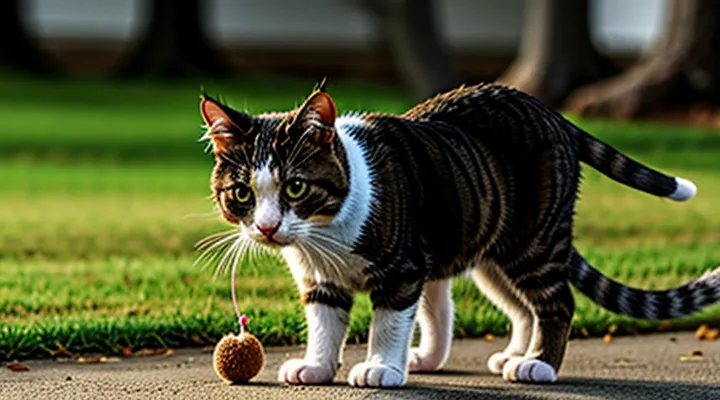
«The Instinctive Hunter»
«Historical Context of Cat-Mouse Interactions»
Throughout antiquity, domesticated felines were valued for their ability to control rodent populations in grain stores. Egyptian tomb paintings from the third millennium BCE depict cats perched beside baskets of wheat, suggesting an early recognition of their predatory function. Written records from the Old Kingdom refer to cats as “guardians of the harvest,” indicating a practical relationship between humans, felines, and mice.
In medieval Europe, monasteries and castles relied on cats to protect stored foodstuffs from plague‑carrying rodents. Chronicles from the 12th and 13th centuries mention the allocation of dedicated feeding stations for cats, reflecting an institutional approach to pest management. The spread of the Black Death heightened awareness of the cat‑mouse dynamic, prompting municipal ordinances that encouraged cat breeding.
The industrial era introduced large‑scale grain warehouses, intensifying the demand for efficient rodent control. Statistical reports from the late 19th century show a correlation between increased cat populations in storage facilities and reduced mouse infestations. Government agricultural agencies issued guidelines recommending a ratio of one cat per 500 square meters of grain storage.
Key historical milestones:
- 2600 BCE: Egyptian art illustrates cats near agricultural produce.
- 1100 CE: Monastic records prescribe cat feeding for pest suppression.
- 1348 CE: Urban statutes in European cities promote cat breeding after plague outbreaks.
- 1885 CE: Agricultural reports document cat effectiveness in industrial grain depots.
«Natural Diet of Feral Cats»
Feral cats survive primarily on small vertebrates and invertebrates encountered in their environment. Their hunting behavior targets prey that can be captured quickly and provides sufficient caloric return.
Typical components of a feral cat’s natural diet include:
- Rodents such as house mice, field mice, and rats
- Small birds, especially ground‑dwelling species and nestlings
- Amphibians like frogs and toads
- Reptiles, mainly lizards and small snakes
- Insects and arthropods, including beetles, moths, and grasshoppers
- Occasionally, carrion when live prey is scarce
Nutritional analysis shows that these prey items supply high‑quality protein, essential amino acids, taurine, and fatty acids required for feline health. The proportion of each category varies with geographic location, seasonal prey availability, and habitat type.
Studies of stomach contents and scat samples confirm that rodents constitute the largest share of intake, often exceeding 60 % of total prey mass. Birds and insects together account for the remaining portion, while occasional consumption of larger mammals or fish occurs in coastal or rural settings.
Adaptations such as acute night vision, flexible spine, and retractable claws enable feral cats to exploit this opportunistic diet efficiently, sustaining their populations without human-provided food sources.
«Domestic Cats and Their Prey Drive»
«Hunting Behavior in House Cats»
House cats retain a predatory sequence inherited from wild ancestors: detection, stalk, pounce, capture, and kill. Visual acuity attuned to motion enables identification of small rodents even in low light. Muscular hindquarters generate a rapid burst of acceleration during the pounce, while retractable claws and sharp premolars secure the prey. After the kill, the cat typically delivers a bite to the neck or spinal cord to ensure rapid incapacitation.
Field observations and laboratory studies indicate that domestic cats capture mice with a frequency ranging from 10 % to 70 % of individuals, depending on environmental exposure and indoor‑outdoor access. Indoor‑only cats display lower capture rates, yet retain the instinctual sequence and may practice mock hunting on toys. Outdoor cats that roam in rodent‑rich habitats exhibit higher capture rates and often consume a portion of the caught prey.
Key aspects of mouse consumption include:
- Nutrient contribution: Protein, taurine, and micronutrients from mouse tissue complement commercial diets, though the caloric contribution is modest relative to daily intake.
- Digestive processing: Cats possess a short gastrointestinal tract optimized for high‑protein, low‑carbohydrate meals; mouse flesh is efficiently broken down, while indigestible components such as fur are expelled as hairballs.
- Behavioral reinforcement: Successful capture reinforces predatory drive, leading to repeated hunting attempts even when prey availability is low.
Ecological studies show that domestic cats can influence local rodent populations, but the impact varies with cat density, hunting proficiency, and prey reproductive rates. In suburban settings, cats may reduce juvenile mouse numbers, whereas in dense urban environments the effect is negligible due to limited outdoor access.
Overall, hunting behavior in house cats is a measurable, instinct‑driven activity that frequently results in mouse capture. Consumption of the prey is a logical extension of the predatory act, providing supplemental nutrition while reinforcing the species’ innate hunting circuitry.
«Factors Influencing Predation in Domesticated Felines»
Domestic cats exhibit predatory behavior toward rodents, but the likelihood of a cat killing a mouse depends on several measurable factors. Genetic predisposition determines baseline hunting drive; breeds historically used for pest control, such as the Maine Coon or the Turkish Van, retain stronger chase instincts than many companion‑focused lines. Age influences skill and motivation: kittens practice hunting during play, while senior cats may lack the stamina required for successful capture. Health status directly affects performance; dental pain, vision impairment, or chronic illness reduce a cat’s ability to seize and subdue prey.
Environmental conditions shape opportunity and incentive. Outdoor access provides exposure to live rodents, whereas indoor confinement eliminates encounter chances. Even within outdoor settings, dense vegetation, low lighting, and abundant hiding places increase mouse survival rates, while open, well‑lit areas facilitate detection. Availability of alternative food sources modulates predation pressure: regular provision of high‑protein diets suppresses hunting urges, whereas caloric deficits heighten motivation to seek supplemental prey.
Human interaction alters behavior through training and reinforcement. Positive reinforcement of stalking or pouncing, intentional or accidental, can strengthen hunting sequences. Conversely, consistent discouragement of predatory actions may attenuate the response over time. Social dynamics within multi‑cat households also play a role; dominant individuals often monopolize hunting opportunities, leaving subordinates with reduced success.
Sensory capabilities underpin the predatory sequence. Acute auditory perception enables detection of rodent movement, while whisker sensitivity assists in spatial navigation during pursuit. Visual acuity, particularly motion detection at low contrast, is critical for tracking swift mice. Any impairment in these senses diminishes predation efficiency.
In summary, the propensity of domesticated felines to capture mice results from an interplay of genetics, age, health, environment, nutrition, human influence, social hierarchy, and sensory function. Understanding each factor clarifies why some cats regularly eliminate rodents while others rarely, if ever, engage in such behavior.
«The Nutritional Aspect»
«Is Mouse Meat a Complete Diet?»
Cats hunting small rodents often consume the entire animal, prompting the question of whether mouse flesh alone can sustain a domestic feline.
Mouse meat supplies high‑quality protein, all essential amino acids, and abundant taurine, a nutrient cats cannot synthesize. It also provides moderate fat, water, and trace minerals such as iron and zinc.
However, the composition lacks several elements required for long‑term health. Calcium content is low, producing an unfavourable calcium‑to‑phosphorus ratio that can impair bone development. Vitamin A, vitamin D, and essential fatty acids (especially arachidonic acid) are present only in minimal amounts. B‑vitamins, particularly thiamine, may be insufficient for a cat’s metabolic demands.
Consequences of an exclusive mouse diet include skeletal abnormalities, skin disorders, and impaired vision. To avoid these outcomes, owners must supplement raw mouse meals with calibrated sources of calcium, vitamins A and D, and omega‑6/omega‑3 fatty acids, or combine them with a complete commercial formulation.
Nutrient profile of mouse meat
- Provided adequately: protein, taurine, lysine, methionine, iron, zinc, water
- Typically deficient: calcium, vitamin A, vitamin D, arachidonic acid, thiamine, overall fatty‑acid balance
In practice, mouse meat can form a component of a feline diet but does not constitute a complete nutritional source without targeted supplementation.
«Health Risks Associated with Consuming Mice»
The practice of cats ingesting captured rodents carries measurable health hazards. Pathogens common in wild and commensal mice can survive gastrointestinal transit and infect the feline host. Notable agents include:
- Hantavirus, capable of causing hemorrhagic fever with renal syndrome;
- Salmonella spp., leading to enteritis and systemic infection;
- Leptospira interrogans, producing leptospirosis with renal and hepatic involvement;
- Yersinia pestis, the bacterium responsible for plague, albeit rare in modern settings;
- Parasites such as Taenia taeniaeformis (tapeworm) and Trichinella spiralis, which may cause intestinal obstruction or muscular inflammation.
Chemical contaminants represent another risk category. Rodent control measures often involve anticoagulant rodenticides (e.g., bromadiolone, difenacoum). Residues persist in mouse tissue and can induce coagulopathy, gastrointestinal bleeding, or hepatic toxicity when transferred to a cat.
Allergic and immunologic reactions may arise from repeated exposure to mouse proteins. Sensitization can manifest as dermatologic pruritus, respiratory irritation, or systemic anaphylaxis in susceptible individuals.
Nutritional imbalances also merit consideration. Mouse meat supplies a disproportionate ratio of protein to essential fatty acids and lacks adequate levels of taurine, vitamin A, and arachidonic acid, nutrients critical for feline health. Chronic reliance on mouse prey may precipitate retinal degeneration, cardiomyopathy, or impaired immune function.
Collectively, these biological and chemical threats underscore the need for controlled feeding practices and regular veterinary monitoring when cats are allowed to hunt and consume rodents.
«The «Myth» Component: Exceptions and Nuances»
«Cats That Don’t Hunt Mice»
Domestic cats display a wide range of predatory behavior, and a notable subset shows little or no interest in hunting rodents. Genetic factors influence this tendency; breeds such as the Ragdoll, Persian, and British Shorthair often exhibit reduced chase instincts due to selective breeding for docility. Early socialization also matters: kittens raised primarily indoors, with limited exposure to live prey, may never develop the motor patterns required for successful mouse capture.
Environmental conditions further shape hunting propensity. Cats living in homes where food is consistently provided experience diminished motivation to seek alternative sources. Conversely, outdoor cats with irregular feeding schedules retain stronger predatory drives. Health status can suppress hunting as well; pain, obesity, or chronic illness reduces stamina and willingness to engage in vigorous pursuits.
Typical characteristics of non‑hunting cats include:
- Preference for sedentary play with toys rather than live prey.
- Lack of stalking behavior when a mouse is visible.
- Minimal vocalization or excitement during rodent encounters.
Understanding these variables clarifies why the belief that all cats naturally prey on mice does not hold universally. The existence of cats that do not hunt rodents reflects a combination of breed genetics, upbringing, diet consistency, and physical condition.
«The Role of Human Intervention»
Human activity shapes the interaction between felines and rodent prey in several measurable ways. Domestic feeding reduces the incentive for cats to hunt, while supplemental food can increase population density, indirectly raising the number of encounters with mice. Outdoor access policies determine whether cats encounter wild rodents; unrestricted roaming leads to higher predation rates, whereas indoor confinement eliminates most opportunities.
Key mechanisms of human influence include:
- Dietary management – regular provision of commercial cat food diminishes reliance on live prey; however, occasional treats of raw meat may preserve hunting instincts.
- Habitat modification – landscaping that creates shelter for mice (dense ground cover, debris piles) provides easier targets for roaming cats; conversely, tidy yards limit rodent refuges.
- Selective breeding – lines developed for reduced predatory drive, such as certain companion‑cat breeds, exhibit lower mouse‑killing frequencies compared with feral‑type strains.
- Pest‑control integration – coordinated programs that pair cat presence with traps or repellents can enhance overall rodent suppression while mitigating unintended ecological effects.
Research indicates that when humans supply sufficient nutrition, the proportion of cats that kill mice declines markedly. In contrast, environments lacking alternative food sources see a rise in predation, often exceeding natural mortality rates for local rodent populations. Therefore, human decisions about feeding, access, and habitat directly determine the extent to which felines contribute to mouse mortality.
«Ecological Impact of Feline Predation»
«Impact on Rodent Populations»
Domestic felines regularly hunt small rodents, yet the scale of their effect on overall mouse populations remains measurable rather than decisive. Field studies in urban and suburban environments report average predation rates of 3–7 % of local mouse cohorts per year, with higher percentages in areas where outdoor access is unrestricted.
Population models that incorporate feline predation, reproductive rates, and immigration show a modest reduction in rodent density. When cat predation is the sole mortality source, simulations predict a 10–15 % decline after two breeding cycles; adding natural predators and disease accelerates declines to 25–30 % under optimal conditions.
Key variables that modulate this impact include:
- Cat activity pattern: nocturnal hunting aligns with peak mouse activity, increasing encounter probability.
- Outdoor access: indoor‑only cats contribute negligible mortality.
- Rodent reproductive capacity: species with rapid litter turnover offset predation losses more effectively.
- Habitat fragmentation: isolated patches limit mouse immigration, magnifying predation effects.
Empirical surveys corroborate model outcomes: neighborhoods with high outdoor cat densities exhibit lower trap counts of house mice compared with comparable areas lacking free‑roaming felines. Nonetheless, rodent populations persist despite sustained feline pressure, indicating that cats suppress but do not eradicate mice.
«Conservation Concerns and Solutions»
Domestic and feral felines often hunt small rodents, a behavior that intersects with wildlife conservation. Predation pressure can reduce local mouse populations, potentially disrupting seed dispersal and invertebrate dynamics. Simultaneously, cats may inadvertently target endangered small mammals that share habitats with common mice, amplifying biodiversity loss.
Habitat fragmentation intensifies the issue. Urban expansion creates edge environments where prey species concentrate, increasing encounter rates between cats and vulnerable wildlife. Reduced natural cover forces rodents into limited refuges, making them more accessible to hunting cats. The cumulative effect contributes to measurable declines in certain ground‑dwelling species.
Addressing these impacts requires coordinated actions:
- Implement community cat management programs that combine trap‑neuter‑return with responsible adoption policies.
- Promote indoor‑only lifestyles for pet cats, reducing outdoor hunting opportunities.
- Establish buffer zones with native vegetation to provide alternative shelter for small mammals.
- Encourage public education campaigns that highlight the ecological consequences of free‑roaming cats.
- Support research on prey selection patterns to refine mitigation strategies.
Effective mitigation hinges on policy enforcement, stakeholder collaboration, and ongoing monitoring of predator‑prey dynamics. By integrating humane cat management with habitat preservation, conservation objectives can be aligned with responsible pet ownership.