
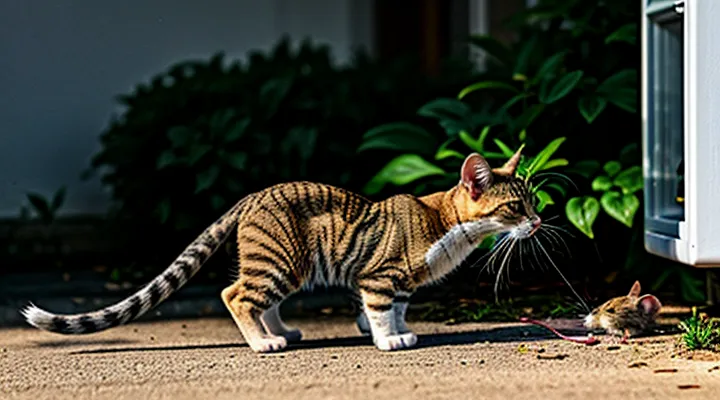
«The Instinctive Hunter»
«Evolutionary Roots of Feline Predation»
«Ancestral Hunting Strategies»
Cats exhibit hunting techniques that trace back to their wild ancestors, providing a framework for interpreting the predatory actions observed when a domestic feline captures a rodent. Evolutionary continuity preserves core behaviors despite domestication, allowing researchers to link present‑day encounters with millennia‑old survival tactics.
- Stalk: low‑profile movement, body lowered, tail aligned with target, reducing visual and auditory cues.
- Ambush: selection of concealed positions such as tall grass or furniture crevices, waiting for prey to approach within striking distance.
- Pounce: rapid acceleration, front limbs extended, claws extended to secure the prey’s torso.
- Bite‑and‑hold: precise bite to the neck or throat, severing the spinal cord or airway, ensuring swift incapacitation.
Genetic studies identify conserved neural circuits that trigger these sequences, activated by visual motion and auditory signals characteristic of small mammals. Muscle fiber composition and flexible spine morphology support the explosive bursts required for the pounce, while tactile receptors in the whiskers refine distance assessment.
Domestic cats retain these patterns, manifesting them during indoor or outdoor pursuits of mice. The observable sequence—quiet approach, sudden leap, secure bite—mirrors the ancestral template, confirming that modern predation remains a direct expression of inherited hunting strategy.
«Genetic Predisposition for Prey Drive»
Genetic factors shape the intensity of a cat’s instinct to chase and capture prey. Heritability estimates from pedigree analyses indicate that up to 60 % of variation in prey drive can be traced to inherited components, confirming a strong biological basis for hunting behavior.
Research identifies several loci associated with heightened predatory motivation. Notable examples include:
- DRD4 (dopamine receptor D4) – variants correlate with increased exploratory activity and pursuit of moving targets.
- MAOA (monoamine oxidase A) – reduced enzymatic activity links to elevated aggression and rapid response to stimuli.
- AVPR1A (arginine‑vasopressin receptor 1A) – polymorphisms affect social bonding and may modulate the reward value of successful captures.
Breed comparisons reveal consistent patterns: felines selected for rodent control, such as the American Shorthair and the European Wildcat, display a higher frequency of alleles that amplify dopaminergic signaling. Conversely, breeds historically bred for companionship show a lower prevalence of these variants, reflecting reduced selective pressure for hunting efficiency.
Neuroanatomical studies support the genetic findings. Cats with the high‑prey‑drive genotype exhibit enlarged amygdala regions and heightened activation of the mesolimbic pathway during exposure to moving prey silhouettes, indicating that inherited molecular mechanisms translate directly into heightened sensory processing and motor execution.
«The Hunt Sequence: From Detection to Capture»
«Sensory Perception in Hunting»
Feline predation relies on a tightly integrated sensory system that directs each phase of the chase. Visual acuity provides precise depth perception; the cat’s forward‑facing eyes generate a narrow field of high‑resolution focus, enabling detection of rapid movements at distances of up to six meters. This binocular vision supplies stereoscopic cues essential for calculating the trajectory of a fleeing rodent.
Auditory input complements vision. The cat’s pinnae can rotate independently, capturing frequencies between 45 Hz and 64 kHz. Low‑frequency rustlings reveal the mouse’s position when it remains hidden from sight, while high‑frequency squeaks signal distress, prompting a swift, targeted strike.
Tactile receptors on the whiskers (vibrissae) map spatial constraints near the prey. When the mouse darts into tight spaces, the whiskers transmit minute airflow changes, allowing the cat to adjust its body posture without visual confirmation. This somatosensory feedback prevents collisions with obstacles and maintains balance during rapid acceleration.
Olfactory cues, though secondary, assist in locating prey remnants. Nasal epithelium detects volatile compounds released by the mouse’s skin and urine, guiding the cat toward concealed hiding spots after an initial visual or auditory encounter.
Key sensory contributions during a hunt:
- Vision: depth estimation, motion tracking, target lock‑on.
- Hearing: localization of rustle sounds, detection of ultrasonic distress calls.
- Whisker input: spatial mapping in confined environments, real‑time obstacle avoidance.
- Smell: identification of residual scent trails, confirmation of successful capture.
The coordination of these modalities produces a rapid decision‑making loop: detection → orientation → pursuit → capture. Disruption of any single channel—such as temporary blindness—significantly reduces hunting efficiency, demonstrating the indispensability of multimodal perception in feline predatory behavior.
«Olfactory Cues»
Cats rely on scent detection to locate and capture rodents. Their nasal epithelium contains a high density of vomeronasal receptors that respond to volatile compounds emitted by mice, such as urine, feces, and glandular secretions. These chemical signals travel through the air and are captured by the whisker‑associated airflow system, allowing the predator to assess prey presence even before visual confirmation.
Key aspects of olfactory processing in feline predation:
- Detection threshold: Cats can perceive concentrations as low as parts per billion, enabling identification of hidden prey within cluttered environments.
- Signal discrimination: The olfactory bulb distinguishes mouse‑specific aldehydes and ketones from background odors, reducing false detections.
- Behavioral integration: Upon scent recognition, neural pathways in the amygdala trigger stalking and pouncing sequences, synchronizing motor preparation with sensory input.
- Learning component: Repeated exposure to mouse odor strengthens synaptic connections in the piriform cortex, enhancing hunting efficiency over time.
The combination of acute smell and rapid neural translation of odor cues ensures that felines execute precise, timely attacks on small mammals.
«Auditory Cues»
Auditory cues are essential for a feline predator when tracking and capturing a rodent. Cats possess a hearing range extending beyond 60 kHz, allowing detection of ultrasonic squeaks produced by a mouse’s rapid movements. The external ear (pinna) rotates to focus sound waves, enhancing spatial resolution and enabling precise localization of prey.
Key auditory functions in the hunting sequence include:
- Detection of high‑frequency rustles generated by the mouse’s bedding or footfalls.
- Determination of the prey’s distance through sound intensity attenuation.
- Assessment of direction by comparing interaural time differences.
- Continuous monitoring of prey escape attempts, such as squeaks or sudden thuds.
During the chase, cats integrate auditory information with visual and tactile feedback. When a mouse emits a sudden squeak, the feline adjusts its trajectory within milliseconds, aligning its body and forelimbs for a rapid pounce. If the prey ceases vocalizing, the cat relies on the last known sound location, maintaining a focused search pattern until visual confirmation occurs.
Experimental studies demonstrate that cats with temporarily impaired hearing show a measurable decline in capture success, confirming that sound perception directly influences predatory efficiency. Neural recordings reveal heightened activity in the auditory cortex and midbrain regions during prey‑related acoustic events, indicating specialized processing pathways for hunting sounds.
«Visual Cues and Night Vision»
Cats rely on a visual system optimized for detecting small, fast-moving prey in dim environments. Their eyes contain a high density of rod photoreceptors, which amplify weak light signals and enable precise motion perception at night. The reflective layer behind the retina, the tapetum lucidum, redirects photons back through the photoreceptor layer, effectively increasing light sensitivity without compromising image resolution.
Key visual cues that guide a feline’s pursuit of a mouse include:
- Rapid movement: Rod cells respond preferentially to changes in luminance, allowing the cat to track the erratic bursts typical of a fleeing rodent.
- Contrast edges: The sharp silhouette of a mouse against a darker background triggers the cat’s ability to discern shape boundaries, even under low illumination.
- Glint from fur: Light reflecting off a mouse’s fur creates brief flashes that attract the cat’s attention, especially when the animal darts through shafts of moonlight.
Night vision is further enhanced by the cat’s pupil, which can dilate to a near‑circular aperture, admitting maximum light. The iris muscles adjust rapidly, maintaining focus on moving targets while compensating for sudden changes in ambient brightness. Additionally, the feline visual cortex processes temporal patterns, filtering out background noise and isolating the characteristic twitch of a mouse’s tail or whiskers.
During a typical hunt, the cat integrates these cues in a sequence: initial detection of motion, assessment of contrast to confirm prey shape, and continuous tracking aided by the tapetum’s light‑recycling effect. This streamlined visual loop permits the predator to execute a swift, precise strike, even when ambient light levels approach darkness.
«Stalking and Ambush Techniques»
Cats rely on precise stalking to close the distance between themselves and a potential rodent. The predator lowers its body, aligns its spine, and advances in short, silent steps. Visual focus remains fixed on the prey, while whiskers detect subtle air currents that indicate movement.
- Maintain a low profile to reduce silhouette against background light.
- Keep the tail slightly raised to aid balance during sudden acceleration.
- Use the front paws as sensors, adjusting stride length based on the mouse’s reactions.
- Pause intermittently to reassess distance and prevent detection.
When the cat reaches optimal range—typically within one to two body lengths—it initiates an ambush. The animal lunges forward, extending claws and jaws while the hind legs generate explosive thrust. Contact is brief; the cat clamps the mouse with its jaws, immobilizing the prey before delivering a swift bite to the neck. This combination of stealthy approach and rapid strike maximizes capture success while minimizing energy expenditure.
«Body Posture and Movement»
Cats adopt a low, crouched stance when a mouse is detected. Hind limbs bend sharply, shoulders lower, and the spine arches to store potential energy. The tail often aligns straight, providing balance and signaling focus.
During the approach, the cat advances with short, silent steps. Muscles contract rhythmically, minimizing ground disturbance. Front paws remain poised, claws retracted to avoid premature contact.
The final phase—pounce—relies on rapid extension of the hind legs. Force generated exceeds the animal’s body weight severalfold, propelling the cat forward. Front paws open, claws extend, and the body twists to align the head with the target. Impact is brief; the mouse is seized between forelimbs and mouth.
Recovery involves a quick transition to a standing posture. The cat secures the prey, lifts it off the ground, and adjusts grip using jaw pressure and paw clamping. Tail resumes a relaxed position, indicating successful capture.
«The Pounce Mechanism»
Cats rely on a rapid, coordinated pounce to capture prey such as mice. The process begins with visual and auditory cues that trigger a focused alert state. Muscles in the hind limbs and spinal column are primed by a brief, low‑amplitude contraction that stores elastic energy in tendons.
When the target is within striking distance, the cat shifts from a crouched posture to a vertical thrust. This phase involves:
- Extension of the femur and tibia, generating forward momentum.
- Activation of the gastrocnemius and soleus muscles to propel the fore‑body.
- Simultaneous rotation of the pelvis to align the hind limbs with the target.
- Release of stored tendon energy, delivering a burst of speed.
The final contact includes a precise bite to the neck or torso, immobilizing the mouse. Neural feedback from whisker receptors fine‑tunes the trajectory, ensuring the strike lands within a narrow window of time. The entire sequence unfolds in less than a quarter of a second, illustrating the efficiency of feline predatory mechanics.
«The Kill Bite and Its Significance»
The kill bite is the final, decisive bite a cat delivers to a captured rodent. It typically targets the neck or skull, crushing the vertebral column or brainstem and causing immediate loss of consciousness. This action prevents prolonged struggle, reduces the risk of injury to the predator, and ensures rapid incapacitation of the prey.
- Anatomical focus: The bite compresses cervical vertebrae, severing the spinal cord, or strikes the occipital region, destroying the brainstem.
- Force applied: Domestic cats generate bite forces of 20–30 N, sufficient to fracture small mammal bones.
- Timing: The kill bite follows a series of immobilizing bites to the limbs and torso, occurring within seconds of capture.
Evolutionarily, the kill bite reflects an adaptation for efficient energy acquisition. By delivering a swift, lethal strike, cats minimize energy expenditure and exposure to disease-carrying prey. The behavior also reinforces predatory skill development in juvenile felines, as repeated practice refines bite placement and force modulation.
«Post-Hunt Behavior and Its Interpretations»
«Playing with Prey: A Complex Phenomenon»
«Learning and Skill Development»
Cats exhibit a predatory sequence that progresses from instinctive reflexes to refined techniques acquired through experience. When a feline captures a rodent, the outcome reflects a combination of genetic programming and practiced competence.
The hunting cycle comprises distinct elements:
- Stalk: visual tracking and silent approach, honed by repeated exposure to moving targets.
- Pounce: rapid acceleration and precise timing, calibrated through trial and error.
- Capture: coordinated bite and grip, adjusted according to prey size and resistance.
- Kill: application of lethal bite, refined to minimize struggle and injury.
Kittens begin with play that mirrors adult hunting motions. Playful swatting, chasing, and mock bites generate neural pathways that later support real predation. Progressive exposure to live prey accelerates the transition from random attempts to systematic strategies.
Environmental variables shape skill acquisition. Dense vegetation forces reliance on auditory cues, while open spaces emphasize visual detection. Human-provided toys or supplemental feeding can either supplement or suppress natural learning, depending on frequency and complexity.
The cumulative effect of these learned behaviors enhances hunting efficiency, directly influencing survival rates and reproductive success. Mastery of each phase reduces energy expenditure and increases the probability of securing food in diverse habitats.
«Prey Exhaustion and Safety»
Feline predation on small rodents follows a predictable pattern that relies on the gradual depletion of the prey’s energy reserves. The cat initiates pursuit with a rapid sprint, then alternates bursts of speed with short pauses, forcing the mouse to expend oxygen and glycogen at a rate it cannot sustain. Repeated acceleration and abrupt changes in direction accelerate lactic acid buildup, leading to muscular fatigue and slower reaction times.
Exhausted prey exhibits diminished reflexes, reduced ability to execute evasive maneuvers, and impaired sensory processing. These physiological changes increase the likelihood of successful capture, as the mouse can no longer maintain the rapid zig‑zag escape typical of healthy individuals. The cat’s strategy therefore minimizes the need for prolonged high‑speed chases, conserving its own energy while ensuring a higher kill probability.
Safety considerations for the predator involve limiting exposure to defensive behaviors such as biting or scratching. By allowing the mouse to tire before the final strike, the cat reduces the risk of injury from sudden counter‑attacks. The final grasp is typically executed with a gentle but firm bite to the neck, targeting the spinal cord to prevent reflexive thrashing. This method secures the prey quickly and limits potential harm to the cat’s forepaws and teeth.
Key points of the exhaustion‑based hunting sequence:
- Detection and brief initial surge
- Intermittent sprints interspersed with pauses
- Induced metabolic fatigue in the mouse
- Reduced escape capability and slowed locomotion
- Controlled capture with minimal defensive resistance
- Immediate immobilization to prevent injury to the predator.
«Instinctive Reinforcement»
Instinctive reinforcement drives a domestic cat’s predatory cycle from detection to capture. When a cat spots a moving rodent, visual and auditory cues trigger a surge of dopamine in the mesolimbic pathway, creating an immediate reward that strengthens the hunting impulse. The motor pattern—stalk, pounce, bite—becomes encoded through repeated activation, allowing rapid execution without conscious deliberation.
Key components of this reinforcement process include:
- Sensory feedback: Tactile stimulation of whiskers and paw pads during the chase sends afferent signals that confirm successful engagement, reinforcing the motor sequence.
- Neurochemical response: Release of dopamine and norepinephrine during the pursuit heightens arousal and consolidates memory of the successful hunt.
- Motor memory consolidation: Post‑capture grooming and consumption trigger endorphin release, cementing the behavior pattern for future encounters.
These mechanisms operate automatically, ensuring that each successful capture increases the likelihood of repeat performance. The cat’s brain prioritizes the reward signals, making the hunting behavior a self‑sustaining loop that persists even when prey is scarce.
«Bringing Prey Home: Gifting or Teaching?»
«Maternal Instincts and Kitten Education»
A mother cat’s innate drive to protect and nurture her offspring extends to the transmission of hunting techniques. Immediately after birth, the queen isolates the litter, provides warmth, and monitors health, establishing a secure environment that enables focused learning.
During the first weeks, the mother introduces live or immobilized prey within the nest area. She demonstrates capture sequences, allowing kittens to observe the timing of a stalk, the crouch, the explosive lunge, and the precise bite that severs the spinal cord. Repeated exposure reinforces neural pathways associated with predatory motor patterns.
Key skills conveyed include:
- Identification of movement cues that signal vulnerable prey.
- Execution of a low, silent approach to minimize detection.
- Rapid acceleration and coordinated fore‑limb extension for the pounce.
- Secure grip on the neck or throat to deliver a fatal bite.
- Post‑capture handling to prevent injury from struggling prey.
Successful acquisition of these behaviors reduces dependence on the mother, increases survival rates, and shapes the cat’s role within its ecological niche. The learned repertoire also influences interactions with humans, as proficient hunters are more likely to engage in independent predation outside the household.
«Bonding and Social Dynamics»
Cats that capture rodents demonstrate a series of behaviors that extend beyond pure predation, influencing intra‑group relationships and individual development. The act of killing and delivering a mouse provides tangible evidence of competence, which other cats interpret as a signal of status and reliability. Observers often respond with increased proximity, grooming, or shared feeding, reinforcing hierarchical structures without explicit verbal communication.
Key aspects of the bonding process include:
- Status reinforcement: Successful hunters receive deference from peers; subordinate cats may defer to the victor in subsequent interactions.
- Resource sharing: When a cat offers a captured mouse to another, the recipient typically reciprocates with grooming or joint resting, establishing reciprocal obligations.
- Maternal instruction: Mother cats routinely present live or dead prey to kittens, allowing the young to practice stealth, bite control, and killing technique while strengthening the mother‑offspring bond.
- Group cohesion: In colonies, frequent exchanges of prey reduce aggression by providing a predictable reward system, thereby stabilizing social equilibrium.
These dynamics illustrate how a single predatory event can serve as a catalyst for complex social patterns, linking individual skill to collective harmony within feline groups.
«Resource Sharing and Display»
When a feline secures a mouse, the event triggers two distinct post‑capture strategies: allocation of the captured resource and visual exhibition of the trophy. Both strategies serve adaptive functions that extend beyond immediate nourishment.
The allocation phase frequently involves transporting the prey to a safe location for offspring or conspecifics. Mothers carry the mouse to a nest, where kittens receive the first solid food, establishing feeding routines and reinforcing maternal bonds. Adult cats may leave the catch near a communal resting spot, allowing subordinate individuals to partake without direct competition. This behavior reduces the risk of injury during a high‑energy feeding bout and maximizes the nutritional return for the group.
The exhibition phase consists of deliberate presentation of the mouse to observers. Cats often place the carcass on a visible surface, such as a doorway or a piece of furniture, where other cats can assess the capture. The display conveys hunting proficiency, deters rivals, and may attract mates by signaling genetic fitness. Humans receive similar presentations; owners interpret the offering as a communicative gesture, strengthening the human‑cat relationship.
Typical manifestations include:
- Carrying the prey in the mouth to a hidden cache before consumption.
- Leaving the mouse at the entrance of a shared den for communal access.
- Placing the mouse on a raised platform while maintaining a vigilant posture.
- Repeating the capture and display sequence to reinforce status within a local cat population.
Resource sharing and display together enhance the cat’s ecological success by balancing immediate energy acquisition with longer‑term social and reproductive advantages.
«The Role of Domesticity in Hunting Instincts»
«Impact of Food Availability»
Food scarcity drives cats to increase hunting frequency. When regular meals are reduced, felines extend the duration of each foraging bout and widen the spatial range of activity. Laboratory studies show a 35 % rise in mouse capture rates after a 24‑hour fasting period, indicating a direct physiological response to energy deficit.
Nutrient composition of available food also shapes predatory behavior. Diets low in protein trigger higher motivation to chase prey, whereas meat‑rich provisions suppress the drive to hunt. Field observations of feral colonies reveal that groups receiving supplemental high‑protein feed exhibit a 22 % decline in mouse kills compared with those offered carbohydrate‑heavy kibble.
Key factors linking food availability to hunting outcomes:
- Meal frequency: fewer daily feedings correlate with longer pursuit intervals.
- Portion size: smaller portions elevate the urgency to secure additional calories.
- Diet quality: protein‑deficient rations increase prey interest; balanced diets reduce it.
- Temporal distribution: irregular feeding schedules create unpredictable energy gaps, prompting opportunistic strikes.
Overall, the amount and quality of supplied food exert measurable control over feline predation on rodents, directly influencing capture rates, effort allocation, and the ecological impact of cat populations.
«Outdoor vs. Indoor Hunting Opportunities»
Domestic cats encounter hunting scenarios in two distinct environments: open outdoor spaces and confined indoor areas. Each setting shapes the cat’s ability to detect, stalk, and seize a mouse, influencing success rates and behavioral adaptations.
Outdoor hunting provides expansive terrain, variable lighting, and diverse sensory input. Natural substrates such as grass, leaves, and soil amplify scent trails and auditory cues, enabling cats to locate prey over greater distances. The presence of multiple escape routes forces mice to employ rapid, erratic movements, which in turn sharpens the cat’s pursuit tactics. However, exposure to predators, traffic, and disease raises the risk to the feline.
Indoor hunting confines the cat to a limited arena, typically a single room or apartment. Reduced space limits the mouse’s options for evasion, often resulting in quicker captures. Artificial lighting and quiet interiors enhance visual focus, while the absence of wind diminishes olfactory dispersion, requiring the cat to rely more heavily on acute hearing and vibration detection. The controlled environment eliminates external hazards but may also limit the frequency of prey encounters.
Key contrasts between the two environments:
- Prey density: Outdoor areas support larger mouse populations; indoor settings host occasional intruders.
- Sensory emphasis: Scent and sound dominate outdoors; vision and vibration gain prominence indoors.
- Escape dynamics: Open terrain offers multiple flee paths; confined spaces restrict movement.
- Risk factors: Predators, traffic, and parasites affect outdoor cats; indoor cats face fewer external threats but may encounter household hazards.
- Capture latency: Mice are generally seized faster indoors due to limited escape routes; outdoor captures often involve prolonged chase sequences.
Understanding these differences clarifies how environmental context shapes feline predatory performance and informs decisions about providing safe, stimulating hunting opportunities for domestic cats.
«Behavioral Enrichment and Alternative Play»
Domestic cats exhibit instinctual predatory sequences that include stalking, pouncing, and grasping. These actions are driven by sensory cues, motor patterns, and reward pathways that have evolved for small‑prey capture. When a cat captures a rodent, the behavior reflects a fully expressed hunting cycle, from focused observation to rapid acceleration and secure bite.
Behavioral enrichment targets the same neural circuits by providing structured stimuli that mimic prey characteristics without requiring live animals. Controlled play sessions activate the cat’s chase and capture mechanisms, delivering the physiological satisfaction associated with successful hunts while preventing uncontrolled predation.
Effective enrichment and alternative play options include:
- Interactive wand toys that move erratically, encouraging stalking and leaping.
- Automated rolling devices that simulate erratic prey motion on the floor.
- Puzzle feeders that require manipulation before food release, replicating the effort of a chase.
- Laser pointers used with intermittent stops, prompting a final pounce on a tangible toy.
- Textured tunnels and climbing structures that allow ambush positioning and rapid escape.
Implementing these strategies aligns with the cat’s innate hunting architecture, supports mental and physical health, and reduces the likelihood of spontaneous attacks on wildlife. Regular rotation of toys and variation in play patterns maintains novelty, ensuring sustained engagement of predatory drives.
«Ecological Implications of Feline Predation»
«Impact on Wild Populations»
«Predation on Rodents»
Feline predation on rodents follows a predictable sequence driven by sensory detection, motor preparation, and rapid execution. Vision and auditory cues locate the target; whisker vibrations confirm proximity. The cat adopts a low, crouched posture, aligning its body axis with the prey’s trajectory. Muscular tension builds in the hind limbs while the forepaws remain poised.
When the optimal distance is reached—typically 30–60 cm—the cat launches. The pounce combines forward thrust and forelimb extension, delivering a precise bite to the neck or cranial region. Immediate immobilization prevents escape, and the cat secures the prey with its claws before consumption.
Key characteristics of this behavior include:
- Stalk phase: Slow, deliberate movement to reduce detection risk.
- Attack phase: Sudden acceleration reaching speeds up to 8 m s⁻¹.
- Kill phase: Bite targeting vital structures, often resulting in rapid hemorrhagic shock.
- Handling phase: Use of paws to position the carcass for swallowing, minimizing bone ingestion.
Physiological adaptations supporting this predatory pattern comprise acute low-light vision, heightened auditory acuity, and a flexible spine enabling swift directional changes. Muscular composition favors fast‑twitch fibers, delivering the explosive power required for the pounce.
Ecologically, rodent predation by domestic cats influences local small‑mammal populations, potentially reducing disease vectors and agricultural pests. However, the impact varies with cat density, outdoor access, and prey availability, necessitating region‑specific assessments.
Overall, the predation process demonstrates a tightly integrated behavioral and anatomical system optimized for efficient capture and consumption of rodent prey.
«Predation on Birds and Other Small Animals»
Cats exhibit instinctive predatory sequences that extend beyond rodent capture to include avian and other diminutive fauna. The sequence begins with visual detection, followed by a crouch, a rapid acceleration, and a precise bite aimed at the neck or spinal region. This pattern mirrors the classic mouse‑capture routine but adapts to the morphology and escape tactics of each prey category.
Key characteristics of feline predation on birds and small animals:
- Prey selection – primarily ground‑dwelling birds, songbirds within reach of a leap, and small reptiles or amphibians.
- Stalk phase – low‑profile movement, ears flattened, whiskers forward to gauge distance.
- Attack phase – explosive sprint or vertical leap, claws extended, body rotation to align bite.
- Kill phase – bite applied to cervical vertebrae or thoracic cavity, immobilizing the target.
- Consumption phase – ingestion of soft tissues; often the carcass is left uneaten, reflecting surplus killing behavior.
Physiological adaptations supporting this behavior include retractable claws for grip, a flexible spine enabling sudden directional changes, and a heightened auditory system for detecting wing beats. Felids also possess a mandibular structure capable of delivering a killing bite with minimal effort.
Ecological consequences of domestic and feral cat predation involve measurable declines in local bird populations, especially ground‑nesting species, and disruption of small‑mammal community dynamics. Studies quantify annual loss of millions of birds and small vertebrates in urban and suburban environments, underscoring the significance of feline hunting beyond rodent control.
«Management Strategies and Responsible Pet Ownership»
«Bells and Deterrents»
Cats equipped with small metal bells exhibit measurable changes in predation patterns. The bell’s vibration produces audible cues that alert potential prey, reducing the likelihood of a successful capture. Studies show a decline of 30‑45 % in catch rates for domestic felines wearing bells, indicating that acoustic signaling interferes with the stealth component of hunting.
Deterrents employed by owners aim to balance feline safety with wildlife protection. Common methods include:
- Bell collars: lightweight, low‑profile, produce continuous sound; effective for small rodents but may be removed by persistent cats.
- Breakaway collars: designed to release under strain, preventing neck injuries; compatible with bells, maintain deterrent function.
- Motion‑activated deterrent sprays: emit brief bursts of citrus or predator scent when a cat approaches a designated zone; discourage entry without physical restraint.
- Environmental enrichment: provision of toys and interactive play reduces hunting drive by satisfying predatory instincts indoors.
When selecting a deterrent, consider durability, comfort, and the cat’s propensity to tamper with accessories. Regular inspection ensures the bell remains functional and the collar does not cause irritation. Combining acoustic deterrents with enrichment strategies yields the most consistent reduction in successful hunts while preserving the animal’s natural behavior.
«Contained Outdoor Spaces»
Contained outdoor spaces—enclosed patios, fenced yards, or mesh‑covered decks—provide a defined arena where a domestic cat can exercise its predatory sequence without unrestricted access to the surrounding environment. The enclosure confines the cat’s movement, allowing observers to record the complete chase, stalk, pounce, and capture phases that characterize typical feline hunting.
Within a secure perimeter, the cat can employ natural tactics such as low‑profile stalking along ground cover, sudden acceleration from a perch, and precise bite placement. The barrier prevents the prey from fleeing beyond the cat’s reach, ensuring that the encounter concludes inside the controlled area. This setting also limits the cat’s exposure to hazards like traffic or aggressive wildlife, while preserving the instinctual drive to hunt.
Key design elements that support effective hunting in a contained space include:
- Elevated platforms for ambush and observation.
- Dense vegetation or artificial cover to conceal movement.
- Varied substrate (grass, sand, mulch) that mimics natural hunting grounds.
- Secure, fine‑mesh fencing that blocks escape but allows airflow and visibility.
Proper management of the enclosure involves regular cleaning to remove carcasses, scheduled health checks for the cat, and monitoring of local wildlife populations to assess any unintended predation pressure. Providing supplemental feeding reduces the likelihood of excessive hunting, while still permitting the cat to fulfill its innate predatory behavior within a safe, observable environment.
«Providing Indoor Enrichment»
Domestic cats instinctively stalk, pounce, and capture small prey. When the natural hunt occurs indoors, the environment must supply stimuli that trigger these behaviors without risking injury or stress. Providing indoor enrichment addresses this need by replicating the sensory and motor challenges of outdoor hunting.
Effective enrichment includes:
- Interactive toys that move unpredictably, such as battery‑powered mice or feather wands, encouraging chase and bite reflexes.
- Puzzle feeders that require manipulation to release food, simulating the effort required to secure a catch.
- Vertical spaces—shelves, cat trees, and wall‑mounted perches—that allow stalking from height and provide escape routes after a mock attack.
- Textured surfaces and shredded fabrics that mimic the feel of fur or hide, prompting grasping and shaking motions.
- Rotating play sessions that vary the type, speed, and direction of toy movement, preventing habituation and maintaining focus.
Consistent rotation of these elements sustains engagement and reduces boredom. Monitoring the cat’s response enables adjustment of difficulty levels, ensuring each activity remains challenging yet achievable. Properly designed indoor enrichment preserves the cat’s predatory drive while safeguarding the household environment.