
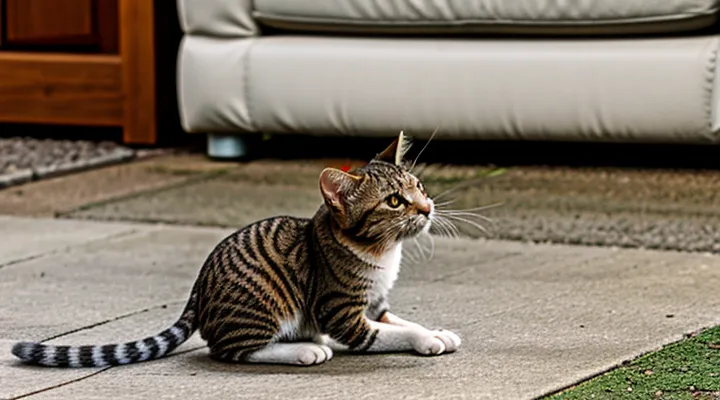
The Domestic Cat: A Natural-Born Hunter
Evolutionary Roots of Feline Predation
Wild Ancestors and Survival Instincts
Domestic felines exhibit hunting patterns that mirror those of their forest-dwelling predecessors. Evolutionary pressure shaped a suite of behaviors enabling efficient capture of small vertebrates, such as rodents.
Key inherited traits include:
- Acute auditory and visual acuity calibrated for detecting minute movements in low‑light conditions.
- Muscular forelimbs capable of rapid acceleration and precise strike execution.
- A flexible spine that stores kinetic energy for explosive lunges.
Instinctual drives derived from wild ancestors manifest as:
- Stalk‑and‑pounce sequence, initiated by a prolonged low‑profile approach followed by a sudden burst of speed.
- Bite‑and‑hold technique targeting the prey’s neck to ensure swift incapacitation.
- Post‑capture grooming, reducing scent cues that might alert additional prey.
Survival success in ancestral environments relied on the seamless integration of these sensory, motor, and behavioral components. Modern cats retain this integrated system, demonstrating that predatory efficiency remains a fundamental survival mechanism.
Domestication and Retained Traits
Domesticated Felis catus retains a suite of predatory adaptations that originated in its wild ancestors. Selective breeding for companionship did not eliminate the neural circuits governing pursuit, capture, and consumption of small vertebrates.
- Acute auditory detection of high‑frequency rustles
- Visual sensitivity to rapid, low‑contrast motion
- Muscular coordination for explosive pounce
- Behavioral sequencing of stalk‑pause‑strike
- Oral morphology suited for shearing flesh
These retained mechanisms enable a house cat to locate, immobilize, and kill a rodent despite regular feeding. The persistence of such traits illustrates that domestication modifies social tolerance without erasing the fundamental predator repertoire.
The Hunt: A Step-by-Step Analysis
Stalking Behavior
Sensory Cues: Sight, Sound, Smell
Feline predation on small rodents depends on the integration of visual, auditory, and olfactory information. Precise detection of prey movement triggers the chase sequence, while rapid assessment of sound and scent confirms target viability.
Sight provides the initial cue. Cats possess a high density of rod cells, enabling detection of motion at low light levels. Peripheral vision expands the field of view, allowing the animal to monitor swift trajectories. Depth perception, mediated by binocular overlap, facilitates accurate distance judgment during the pounce.
Sound contributes to prey localization. Acute hearing detects frequencies produced by rodent footfalls and rustling vegetation. The auditory cortex processes temporal patterns, distinguishing between live movement and background noise. This capability supports stealthy approach when visual contact is limited.
Smell offers supplementary confirmation. The vomeronasal organ and olfactory epithelium identify pheromonal and metabolic signatures of potential prey. Chemical cues persist after visual obscuration, guiding the cat toward concealed targets.
Key sensory inputs:
- Visual detection of motion and shape
- Auditory recognition of high‑frequency rustles
- Olfactory identification of rodent‑specific scents
The coordinated use of these cues maximizes hunting efficiency, ensuring successful capture in varied environmental conditions.
Stealth and Ambush Techniques
Cats exhibit highly refined predatory tactics when pursuing rodents. The success of each encounter depends on the ability to remain undetected until the moment of attack, followed by a rapid, precise strike.
Key elements of concealment include:
- Low, crouched posture that reduces silhouette against the ground.
- Slow, deliberate footfalls that minimize acoustic signals.
- Focused visual fixation on the target, aided by forward‑facing eyes that detect minute movements.
- Whisker contact with surrounding surfaces, providing tactile feedback about spatial constraints.
When the prey is within optimal range, the cat initiates the ambush phase. Critical components of this phase are:
- Calculation of launch distance, typically one to two body lengths, to ensure maximal reach without overshoot.
- Muscular contraction of hind limbs, generating explosive acceleration.
- Extension of forepaws equipped with retractable claws, delivering a controlled grip.
- Immediate bite to the neck or throat, disabling the mouse with minimal struggle.
These techniques combine to create a seamless transition from invisibility to lethal contact, exemplifying the efficiency of feline predation. The overall pattern reflects an evolutionary adaptation that maximizes energy gain while minimizing risk of injury.
The Pounce and Kill
Precision and Agility
The hunting episode between a domestic feline and a small rodent showcases extreme precision and agility, two traits that define effective predation.
Precision derives from acute visual acuity, whisker‑mediated tactile feedback, and fine motor coordination. The cat isolates the mouse’s position within a narrow visual field, calculates the optimal interception point, and executes a controlled strike that targets vital areas. Neural pathways synchronize ocular input with muscular output, reducing reaction time to milliseconds.
Agility emerges from a highly flexible spine, elongated hind limbs, and rapid muscle fiber recruitment. The feline can accelerate from rest to full speed in less than a second, execute sudden directional changes, and leap several times its body length. These capabilities allow the predator to close the distance before the prey can react, maintain balance during mid‑air adjustments, and recover swiftly after a missed attempt.
Key mechanisms supporting precision and agility include:
- Visual focus: high density of cone cells in the retina enhances motion detection.
- Whisker feedback: mechanoreceptors provide real‑time spatial information near the target.
- Spinal flexibility: intervertebral joints permit extensive curvature during pounce.
- Fast‑twitch muscle fibers: enable explosive bursts of speed and power.
Together, these attributes create a coordinated system that maximizes capture success while minimizing energy expenditure.
The Killing Bite: Instinct vs. Play
The killing bite represents the final phase of the feline predatory sequence, in which a rapid, precise mandibular closure severs vital structures of the prey. Neural circuits in the brainstem coordinate jaw muscles to generate a force sufficient to break the spinal column or crush the skull, ensuring immediate incapacitation. Sensory feedback from whisker contact and auditory cues triggers this motor pattern, differentiating it from the gentle mouthing observed during play.
Key distinctions between lethal and play bites include:
- Force output: lethal bites exceed 30 N, whereas play bites remain below 5 N.
- Target location: lethal bites aim at the neck or cranial region; play bites focus on limbs or tail.
- Duration: lethal closure lasts milliseconds, completing in under 0.1 s; play bites persist for several seconds with intermittent pauses.
- Physiological response: lethal bites activate the cat’s sympathetic nervous system, raising heart rate and adrenaline; play bites maintain a parasympathetic baseline.
Research indicates that the transition from play to killing is governed by a threshold of prey movement and size. When motion exceeds a species‑specific limit, the cat’s hypothalamic centers shift the motor program from exploratory mouthing to the stereotyped killing bite, reflecting an innate balance between instinctual aggression and social play. «The killing bite is a conserved behavioral module that ensures survival while preserving the flexibility to engage in non‑lethal interactions».
The Mouse: Prey Dynamics
Vulnerability of Small Rodents
Habitat and Predator Encounters
Domestic and feral felines occupy a range of settings that provide cover, perches, and pathways for stalking. Urban backyards, suburban gardens, and rural barns contain vegetation, debris, and structural gaps that create micro‑habitats where small rodents thrive. These environments supply both shelter for prey and ambush sites for the predator.
Key habitat features that promote predator‑prey interactions include:
- Low‑lying vegetation or mulch that masks movement and offers rodents refuge.
- Elevated surfaces such as fences, shelves, or roof beams that give cats a height advantage.
- Narrow passages and gaps behind appliances or storage units where mice travel unnoticed.
- Water sources that attract insect activity, indirectly supporting rodent populations.
Encounter patterns follow predictable sequences. A cat detects rodent activity through auditory cues, visual motion, or scent trails. It then positions itself at a concealed point, waits for the mouse to emerge onto an open surface, and initiates a rapid pounce. Successful captures often occur near feeding stations or waste bins where mouse traffic concentrates.
Prey species adjust behavior in response to feline pressure. Mice increase nocturnal foraging, reduce time spent in open areas, and develop more erratic escape routes. These adaptations, however, do not eliminate predation risk because the predator’s sensory acuity and agility remain advantageous in the described habitats.
Escape Mechanisms and Limitations
Escape from a feline predator relies on rapid, coordinated responses that exploit sensory, morphological, and behavioral adaptations. Muscular bursts generated by the hind limbs propel the prey away from the attack zone within milliseconds, while flexible spines allow sudden directional changes that evade the cat’s forward thrust. Auditory and vibrational cues trigger reflexive escape jumps, and tail flicks provide balance during high‑speed maneuvers.
Key mechanisms include:
- Startle response – immediate acceleration triggered by visual detection of the predator.
- Erratic locomotion – unpredictable zig‑zag paths that reduce capture probability.
- Shelter seeking – rapid entry into burrows, crevices, or dense vegetation inaccessible to the cat.
- Camouflage activation – static postures that blend with the substrate, decreasing detection.
Limitations constrain these strategies. Muscle fatigue limits sustained high‑speed runs, especially in small rodents with limited energy reserves. Structural barriers, such as solid surfaces or open terrain, impede shelter use and force reliance on speed alone. Sensory overload caused by the predator’s stealthy approach can delay the initiation of escape, increasing capture risk. Finally, predator learning curves reduce the effectiveness of predictable patterns, prompting prey to continually modify their escape repertoire.
Post-Hunt Behavior
Consumption and Nutritional Value
Instinctive Eating Habits
Cats exhibit a hard‑wired sequence of actions when confronting a rodent. Visual detection triggers a rapid orienting response, followed by a low‑frequency crouch that stores potential energy in the hind limbs. The subsequent leap delivers a swift, closed‑mouth bite to the neck, severing the spinal cord and incapacitating the prey within milliseconds. This pattern reflects an innate predatory program encoded in the feline nervous system.
Instinctive eating habits reinforce the efficiency of the capture phase. Upon subduing the mouse, the cat immediately assesses the prey’s size and condition, then proceeds to:
- Ingest the neck region first, targeting major blood vessels to ensure rapid blood loss.
- Chew briefly, using sharp incisors to tear flesh while preserving the skeletal structure for later consumption.
- Swallow the remaining body portions whole, a behavior that minimizes handling time and reduces exposure to potential disease agents.
Digestive physiology complements these habits. Elevated gastric acidity and a short gastrointestinal transit time enable swift breakdown of protein and fat, providing immediate energy for subsequent hunting bouts. Enzymatic activity peaks shortly after ingestion, reflecting a metabolic adaptation that aligns with the high‑frequency predatory cycle of domestic and wild felines.
Nutritional Requirements of Cats
A domestic cat’s instinct to capture small mammals mirrors the dietary profile required for optimal health. The act of seizing a rodent supplies a complete set of nutrients that domestic nutrition must replicate.
Key nutrients include:
- High‑quality animal protein
- Taurine, an essential amino acid
- Arachidonic acid, a vital fatty acid
- Vitamins A, D, E, K and B‑complex
- Calcium, phosphorus, magnesium and trace minerals
- Adequate moisture for renal function
Animal protein delivers the amino acids necessary for muscle maintenance and immune competence. Taurine deficiency leads to retinal degeneration and cardiomyopathy; therefore, diets must contain sufficient taurine from meat sources. Arachidonic acid supports skin health and inflammatory regulation, absent in plant oils. Fat‑soluble vitamins are stored in hepatic tissue; excess intake can cause toxicity, making precise formulation essential. Calcium‑phosphorus ratios around 1.2 : 1 promote skeletal integrity, while trace elements such as zinc and copper support enzymatic processes. Water intake, derived from prey’s body fluids, prevents dehydration and urinary tract disorders; dry kibble should be supplemented with fresh water.
Wild prey provides a balanced composition of these components, whereas commercial feeds must be engineered to match this profile. Formulations that rely heavily on plant proteins lack adequate taurine and arachidonic acid, necessitating supplementation. Energy density should reflect the cat’s activity level; active hunters require 30–35 kcal per kilogram of body weight per day, while sedentary individuals need less.
Practical guidance:
- Choose foods labeled “complete and balanced” for obligate carnivores.
- Verify taurine content meets or exceeds 0.1 % of the diet.
- Ensure moisture content is at least 70 % in wet formulations or provide constant access to water.
- Monitor body condition and adjust caloric intake accordingly.
- Supplement with feline‑specific vitamins only under veterinary supervision.
Play with Prey: An Evolutionary Perspective
Practice for Future Hunts
The act of a cat securing a mouse exemplifies rehearsal that refines motor skills, sensory acuity, and decision‑making patterns essential for subsequent predatory episodes. Each successful capture reinforces neural pathways governing stalking, pouncing, and handling, thereby increasing efficiency in future encounters.
Repeated engagements with prey generate measurable improvements in timing, grip strength, and bite precision. The cat’s body records outcomes, adjusting muscle activation and eye‑hand coordination to reduce latency between detection and strike.
Key benefits of this practice include:
- Enhanced spatial awareness of prey movement trajectories.
- Optimized energy allocation during chase, minimizing fatigue.
- Strengthened jaw mechanics for swift immobilization.
The cumulative effect of these adaptations positions the predator to respond to varied prey behaviors with greater confidence and reduced risk of failure.
Stress Release and Stimulation
The act of a domestic cat seizing a mouse produces immediate physiological changes that alleviate tension and provide mental engagement. Muscular contraction during the chase expends stored energy, lowering baseline cortisol levels and creating a measurable reduction in stress markers.
Neurochemical response intensifies as the predator completes the capture. Dopamine and norepinephrine surge, sharpening attention and reinforcing the rewarding aspect of the hunt. This stimulation supports adaptive behavior, encouraging repeated practice of predatory skills that are otherwise underused in a household environment.
Key outcomes of the capture episode include:
- Decrease in circulating cortisol, indicating reduced stress.
- Increase in dopamine, enhancing motivation and pleasure.
- Activation of the sympathetic nervous system, delivering short‑term arousal that sharpens focus.
- Strengthening of motor coordination through repetitive sprinting, pouncing, and clawing motions.
Observational data confirm that cats displaying frequent hunting sequences exhibit calmer demeanor during subsequent resting periods. The cycle of intense activity followed by relaxation aligns with natural predator–prey dynamics, ensuring the animal maintains both physical fitness and emotional equilibrium.
Overall, the pursuit and capture of a rodent serve as a biologically driven mechanism that simultaneously releases tension and supplies stimulating feedback, thereby preserving the cat’s innate predatory competency.
Broader Implications of Feline Predation
Ecological Role in Pest Control
Impact on Rodent Populations
Domestic felines that hunt rodents impose direct mortality on local mouse and rat populations. Each successful capture removes an individual from the breeding pool, reducing the number of potential offspring in subsequent reproductive cycles.
Predation pressure generates measurable demographic shifts:
- Decreased juvenile survival rates due to increased predation risk.
- Lowered reproductive output as adult females experience higher mortality.
- Accelerated turnover of dominant individuals, leading to altered age structure.
Secondary effects emerge from reduced rodent density. Fewer hosts are available for zoonotic pathogens, diminishing transmission opportunities for diseases such as hantavirus and leptospirosis. Crop damage declines in agricultural settings where rodent activity is a primary cause of loss. Conversely, diminished prey availability may compel surviving rodents to expand their foraging range, potentially increasing interactions with other predator species.
Overall, feline predation exerts a regulatory influence on rodent communities, shaping population size, age composition, and disease dynamics while indirectly affecting human economic interests.
Controversies and Ethical Considerations
The act of a domestic feline seizing a rodent illustrates innate predatory instincts, yet it generates debate within animal‑welfare circles. Critics argue that allowing such encounters perpetuates unnecessary suffering for prey, while proponents contend that the behavior fulfills natural drives and contributes to pest regulation.
Key points of contention include:
- The moral status of prey animals versus predator rights.
- The impact of feline predation on local biodiversity, especially bird and small‑mammal populations.
- The responsibility of pet owners to intervene or employ deterrents.
- Legal frameworks governing wildlife protection and pet ownership.
Ethical analysis focuses on balancing instinctual behavior with humane considerations. One perspective emphasizes selective feeding practices and enrichment to reduce hunting urges. Another stresses the importance of preserving ecological equilibrium by acknowledging the cat’s role as a predator, yet recommends measures such as bell collars or indoor confinement to mitigate unintended ecological damage.
Human-Cat Interactions and Predatory Instincts
Understanding Cat Behavior
Cats exhibit innate predatory sequences that have evolved over millennia. The behavior follows a predictable pattern: detection of movement, silent approach, rapid acceleration, and precise bite. Each phase relies on specialized sensory and motor systems that maximize success when confronting small vertebrates such as rodents.
The visual system detects motion at low light levels, enabling cats to spot prey from a distance of several meters. Whiskers provide tactile feedback during the final approach, allowing adjustments to the prey’s position. Auditory acuity captures high‑frequency rustles, prompting a shift from visual to auditory tracking when the target is concealed.
Key elements of the hunting process include:
- Stalk: Low‑profile movement minimizes visual cues.
- Pounce: Burst of speed generated by hind‑limb extension.
- Capture: Bite to the neck vertebrae, delivering rapid incapacitation.
- Kill: Sustained pressure ensures termination of prey.
Playful engagement with objects often mirrors these stages, serving as practice for real encounters. Repeated exposure refines motor patterns, reinforcing neural pathways associated with predation. Domestic cats retain this repertoire, displaying the same sequence when presented with live or simulated rodents.
Understanding these mechanisms clarifies why a cat’s response to a mouse appears both instinctual and highly efficient. The behavior exemplifies a specialized predator strategy, rooted in sensory precision and coordinated motor execution.
Managing Outdoor Hunting
Domestic and feral felines display a strong instinct to pursue small vertebrates when allowed to roam outside. This predatory drive can affect local wildlife populations, necessitating systematic control measures.
- Restrict free‑range movement during dawn and dusk, periods of heightened activity.
- Provide secure outdoor enclosures («catios») that allow visual exposure while preventing contact with prey.
- Equip animals with low‑volume safety devices, such as bells or ultrasonic collars, to disrupt the approach phase of an attack.
- Eliminate dense ground cover, debris piles, and unmanaged vegetation that offer refuge for rodents and birds.
- Schedule regular, nutritionally balanced meals to reduce hunger‑induced hunting impulses.
- Apply non‑lethal deterrents (e.g., motion‑activated sprinklers) in zones where vulnerable species congregate.
Continuous monitoring of kill records and adjustment of interventions based on observed outcomes ensure that the management plan remains effective and aligned with conservation objectives.