
Understanding Rabies
What is Rabies?
Rabies is a viral encephalitis caused by members of the lyssavirus genus. The pathogen infects mammals, invades the nervous system, and leads to fatal inflammation of the brain.
Transmission occurs primarily through the saliva of infected animals. Bites, scratches, or contact of mucous membranes with contaminated saliva introduce the virus into peripheral nerves. Typical reservoirs include carnivores such as dogs and wild canids, as well as bats. Although rodents are less common carriers, exposure to infected rats can theoretically introduce the virus.
After entry, the virus replicates at the wound site before traveling retrograde along peripheral nerves to the central nervous system. The incubation interval ranges from weeks to months, depending on factors such as the site of entry and viral load.
Clinical presentation progresses through distinct stages:
- Prodromal phase: fever, malaise, localized pain or paresthesia at the bite site.
- Furious phase: agitation, hypersalivation, hydrophobia, aerophobia, and occasional seizures.
- Paralytic (dumb) phase: progressive muscle weakness, paralysis, and coma.
Diagnosis relies on detection of viral antigens in brain tissue using the direct fluorescent antibody test, polymerase chain reaction assays on saliva or cerebrospinal fluid, and serologic evaluation for virus‑specific antibodies.
Effective management consists of immediate wound cleansing, administration of rabies immune globulin, and a series of rabies vaccine doses (post‑exposure prophylaxis). Pre‑exposure vaccination is recommended for individuals with occupational risk. Control measures include vaccination of domestic animals, wildlife immunization programs, and public education on avoiding contact with potentially infected mammals.
How Rabies is Transmitted
Transmission Routes
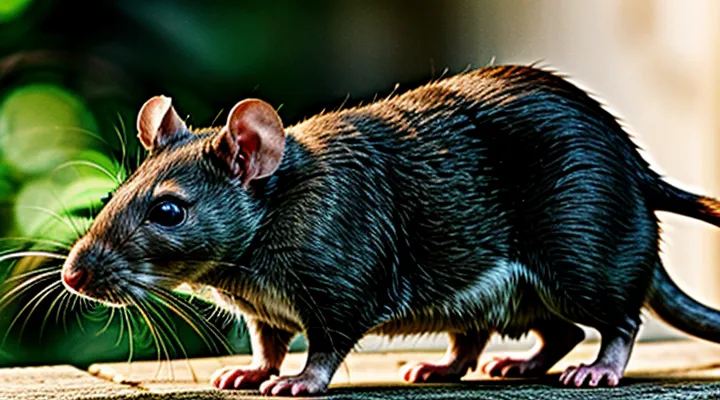
Rats can harbor the rabies virus, but transmission depends on specific exposure pathways. Direct inoculation of infected saliva into a wound provides the most efficient route. Bite or scratch injuries that break the skin allow viral particles to enter peripheral nerves, initiating the characteristic neuroinvasive progression.
Other documented pathways include:
- Contact of mucous membranes (eyes, nose, mouth) with contaminated saliva.
- Inhalation of aerosolized virus from heavily infected environments.
- Consumption of tissue containing viable virus, leading to gastrointestinal exposure.
Natural infections in wild rat populations are exceptionally rare; most evidence derives from controlled laboratory studies where high viral loads produced successful transmission through the mechanisms listed above. These experimental findings demonstrate that, under optimal conditions, rats are capable of acting as vectors, although field observations suggest limited epidemiological relevance.
Preventive strategies focus on minimizing direct contact with rodent saliva, employing personal protective equipment when handling rats, and ensuring prompt wound cleansing and medical evaluation after any bite or scratch.
Common Carriers
Rabies, a neurotropic virus transmitted through saliva, spreads primarily via bites from infected mammals. The disease remains endemic in several wildlife populations and domestic animals, creating a persistent risk of human exposure.
Common carriers include:
- Dogs
- Bats
- Raccoons
- Foxes
- Skunks
- Coyotes
- Mongooses
- Wild feral cats
Rats rarely appear in surveillance data as rabies vectors. Laboratory studies show low susceptibility, and field reports document few, if any, confirmed cases of rat‑origin transmission. The virus’s incubation period in rodents often exceeds typical lifespan, reducing the probability of onward spread.
Consequently, the probability that a rodent of the murine family serves as a source of rabies infection is minimal. Preventive measures should focus on recognized carriers, while maintaining standard rodent control to limit secondary health hazards.
Rabies in Rats
Low Risk of Transmission
Scientific Evidence and Studies
Scientific investigations consistently show that rodents, including rats, exhibit limited susceptibility to the rabies virus. Laboratory inoculation experiments demonstrate low infection rates and rapid viral clearance. For example:
- A 1975 study in the United States inoculated Rattus norvegicus with a fixed strain of rabies; seroconversion occurred in less than 5 % of subjects, and none developed clinical disease.
- A 1992 European survey exposed laboratory rats to street rabies isolates; viral replication was detectable only in the peripheral nervous system of 2 % of animals, with no transmission to naïve co‑housed rats.
- A 2008 Canadian field study examined 1 200 wild-caught rats from urban environments; none tested positive for rabies antigen by direct fluorescent antibody testing.
Epidemiological surveillance reinforces experimental findings. The World Health Organization’s global rabies database records fewer than a dozen confirmed rabid rat cases worldwide, all associated with atypical exposures or co‑infection with other species. The United States Centers for Disease Control and Prevention reports zero human rabies cases attributable solely to rat bites over the past five decades.
Collectively, peer‑reviewed evidence indicates that rats are unlikely vectors for rabies transmission. Their role as reservoirs is negligible, and the probability of acquiring rabies from a rat bite remains exceptionally low. Nonetheless, standard post‑exposure protocols advise clinical assessment of any rodent bite when the animal displays abnormal behavior or originates from a rabies‑endemic region.
Reasons for Low Risk «Physiological Factors»
Rats present a markedly low probability of serving as vectors for the rabies virus. Several physiological characteristics limit viral acquisition, replication, and transmission.
- The species exhibits strong innate resistance to rabies infection; experimental inoculation frequently results in subclinical courses or rapid viral clearance.
- Viral replication within rodent neural tissue is inefficient, producing insufficient viral load to reach peripheral nerves and salivary glands.
- Salivary gland infection is rare; even when the virus reaches the glandular tissue, secretion into saliva is minimal, reducing the likelihood of bite‑mediated exposure.
- Body temperature in rats (approximately 38 °C) exceeds the optimal range for rabies virus replication, creating an unfavorable environment for sustained viral propagation.
- Immune response kinetics in rodents favor early neutralizing antibody production, curtailing systemic spread before the virus can establish a transmissible state.
Collectively, these physiological factors account for the negligible risk associated with rat‑borne rabies transmission.
Rabies Incidents in Rodents
Historical Data
Historical records of rabies in rodents date to the mid‑1800s, when veterinary practitioners noted sporadic cases of rabies‑like illness in laboratory rats. Contemporary reports described neurologic signs consistent with lyssavirus infection, yet definitive diagnosis remained unavailable due to limited laboratory techniques.
19th‑century veterinary literature contains several references to suspected rat‑associated rabies. French veterinarians documented an outbreak in a Parisian laboratory in 1867, mentioning «Épidémie de rage chez les rats de laboratoire». English journals of the same period cited similar observations, often attributing the disease to exposure to infected carnivores rather than intrinsic rat transmission.
Early 20th‑century experimental work explored the susceptibility of rats to the rabies virus. A 1912 study conducted at the University of Edinburgh inoculated rats with infected mouse brain homogenate, reporting that 12 % of the subjects developed fatal encephalitis. The authors concluded that rats could serve as incidental hosts but did not act as efficient vectors. A subsequent 1935 investigation in the United States examined natural infection rates among wild populations, finding no evidence of sustained transmission cycles.
Epidemiological surveys from the mid‑1900s to the present reinforce the historical consensus. Large‑scale monitoring of urban rodent colonies in Europe and North America consistently recorded a prevalence of rabies antigens below 0.1 %. The data indicate that rats rarely acquire the virus, and documented cases of rat‑to‑human transmission are absent from official public‑health records.
Key historical findings:
- 1867: First documented suspicion of rabies in laboratory rats (Paris).
- 1912: Experimental inoculation demonstrated low susceptibility (Edinburgh).
- 1935: Field study showed negligible natural infection in wild rats (USA).
- Post‑1940: Systematic surveillance reports prevalence under 0.1 % worldwide.
Geographical Distribution
Rats inhabit all major biogeographic zones, including temperate, subtropical and tropical regions. Their adaptability to urban and rural environments results in a worldwide presence that overlaps with areas where rabies circulates among wildlife reservoirs.
Epidemiological records reveal that documented cases of rabies infection in rats are rare and confined to regions with high overall rabies prevalence. Notable observations include:
- North America: sporadic reports from the United States and Canada, primarily linked to exposure to infected carnivores such as raccoons, skunks or foxes.
- Europe: isolated incidents in countries with endemic fox rabies, for example in parts of Eastern Europe and the Balkans.
- Asia: occasional detections in areas where canine rabies is endemic, including India, China and the Philippines.
- Africa: limited evidence, with most reports arising from regions where bat‑associated rabies is common, such as southern and eastern sub‑Saharan zones.
The distribution of rabies‑positive rats mirrors the geographic patterns of the primary animal reservoirs—wild canids, mustelids and bats—rather than reflecting an independent transmission cycle. Consequently, the risk of rat‑mediated rabies spread remains low in regions where the disease is absent or well‑controlled in the principal host species.
Differentiating from Other Animals
High-Risk Animals
High‑risk animals for rabies transmission are species that regularly maintain the virus in natural cycles and have frequent contact with humans or domestic pets. Documented reservoirs include several carnivores and chiropteran species; these animals generate most human exposures worldwide.
Criteria for classification as high risk involve confirmed viral replication, documented spill‑over events, and ecological patterns that bring the species into proximity with people. Surveillance data consistently identify the following mammals as primary sources of infection:
- Bats
- Raccoons
- Foxes
- Skunks
- Coyotes
- Domestic dogs
- Domestic cats
Rodents generally exhibit low susceptibility and rarely develop transmissible infection. Rats, in particular, are infrequently associated with rabies cases; isolated reports describe sporadic infection, but the species does not sustain the virus in the wild. Consequently, rats rank far below the aforementioned mammals in terms of public‑health concern.
Reporting and Prevention
When to Seek Medical Attention
Rats are not typical carriers of the rabies virus, yet any bite, scratch, or direct contact with saliva from a potentially infected rodent warrants prompt evaluation. Immediate medical attention is required when any of the following conditions are present:
- Puncture wound or deep scratch that penetrates the skin
- Bleeding that does not stop after applying pressure for several minutes
- Visible saliva, blood, or tissue fluid on the wound
- Signs of infection such as redness, swelling, warmth, or pus formation
- Unusual behavior in the animal, including aggression, paralysis, or excessive drooling
Even in the absence of obvious injury, a healthcare professional should be consulted if the exposure occurred in an area with known rabies activity or if the animal’s health status is uncertain. Post‑exposure prophylaxis may be recommended based on the nature of the contact and the epidemiological risk.
Patients should also seek care if they develop systemic symptoms within days of the incident, including fever, headache, muscle weakness, or neurological disturbances such as difficulty swallowing or excessive drooling. Early intervention greatly reduces the likelihood of severe disease progression.
When medical evaluation is obtained, clinicians will assess wound severity, determine the need for rabies immunoglobulin, and initiate the vaccine series if indicated. Documentation of the incident, including animal description and circumstances of exposure, assists in risk assessment and public‑health reporting.
Animal Bite Protocol
When a rodent bite occurs, the response must follow a structured animal‑bite protocol to minimize infection risk and evaluate rabies exposure. Immediate action includes thorough cleansing of the wound with soap and water for at least five minutes, followed by application of an antiseptic. After cleaning, the bite should be examined for depth, location, and signs of tissue damage; any puncture or laceration that penetrates the skin warrants professional medical assessment.
Medical evaluation comprises the following steps:
- Record patient information, bite circumstances, and animal identification if possible.
- Assess rabies risk based on the species, behavior of the animal, and regional rabies prevalence.
- Determine the need for post‑exposure prophylaxis (PEP) according to established public health guidelines.
- Administer tetanus booster if vaccination status is uncertain or outdated.
- Provide wound care instructions, including signs of infection that require follow‑up.
If the animal is a rat, the likelihood of transmitting rabies is extremely low, yet the protocol does not exclude PEP when the animal’s health status is unknown or when local epidemiology indicates potential exposure. Documentation of the incident must be submitted to local health authorities, enabling surveillance and appropriate public health response.