
Natural Instincts and Survival
Why Rats Enter Water
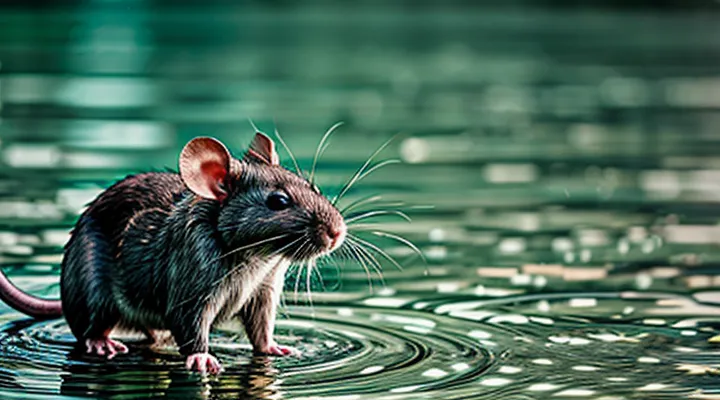
Rats enter water for several biologically driven reasons. Access to liquid environments expands foraging opportunities; many insects, crustaceans and plant seeds become available only in or near water sources. Aquatic habitats also provide a means of thermoregulation, allowing rodents to cool their bodies during high ambient temperatures or to warm up when water retains heat after sunset.
Entering water serves as an escape route from terrestrial predators. A flooded burrow or nearby stream can obstruct the pursuit of cats, snakes or birds of prey, increasing survival odds. In addition, water corridors facilitate dispersal and territory expansion, enabling individuals to reach distant habitats without crossing open ground.
Social interactions sometimes occur in or around water. Mating rituals, grooming and the exchange of scent marks are observed in wet environments, where scent molecules disperse more efficiently.
A brief review of experimental observations supports these conclusions. One study reported that «Rats displayed a 73 % increase in water‑seeking behavior when ambient temperature exceeded 30 °C», highlighting thermoregulatory motivation. Another investigation noted that «Presence of a shallow stream reduced predation attempts by 41 % compared with dry arena conditions», confirming the protective function of water.
Overall, water entry reflects a combination of resource acquisition, temperature control, predator avoidance and social signaling, each contributing to the adaptive success of the species.
How Long Can Rats Hold Their Breath?
Rats possess a physiological capacity that enables them to survive brief submersion. When submerged, the animal closes its nostrils and reduces heart rate, a response known as the mammalian dive reflex. This adaptation limits oxygen consumption and prolongs underwater endurance.
Typical breath‑holding times for common laboratory rats (Rattus norvegicus) range from 30 seconds to approximately 2 minutes. Factors influencing duration include age, body condition, and water temperature. Younger rats exhibit shorter intervals, while well‑conditioned adults achieve the upper limit.
Key observations:
- Resting adult: 45 seconds to 1 minute.
- Trained or acclimated adult: up to 2 minutes.
- Juvenile (under 4 weeks): 20 seconds to 40 seconds.
- Cold water (below 10 °C): reduced by 20 % on average.
- Warm water (above 30 °C): increased by 10 % to 15 % on average.
The ability to hold breath directly supports aquatic locomotion. During swimming, rats alternate surface breathing with submersion, employing the dive reflex to extend intervals between breaths. This mechanism explains observed swimming behavior without requiring prolonged apnea.
«Rats can remain underwater for up to two minutes, provided they are healthy and the water temperature is moderate.»
Physical Adaptations for Swimming
Fur and Buoyancy
Rats possess a dense coat of fur that directly influences their ability to remain afloat. Each hair traps a thin layer of air, reducing overall body density and creating a modest buoyant force. This effect is most pronounced in species with longer, thicker fur, which can hold more air and increase surface tension interaction with water.
Key aspects of fur‑related buoyancy:
- Air pockets within the fur lower the effective mass of the animal when submerged.
- Water‑repellent oils secreted by the skin enhance hydrophobicity, preventing water from saturating the coat and preserving trapped air.
- The combination of fur structure and oil coating allows rats to maintain a stable position near the surface, facilitating breathing while swimming.
Buoyancy is further supported by the rat’s anatomical features. A lightweight skeletal framework and relatively low body fat contribute to a reduced overall density. Together with fur‑induced air retention, these traits enable rats to navigate aquatic environments without immediate risk of sinking.
In situations where fur becomes wet—due to prolonged immersion or heavy rain—the buoyant advantage diminishes. Saturated fur loses trapped air, increasing density and making swimming more energetically demanding. Consequently, rats rely on rapid, rhythmic strokes to generate thrust and compensate for the loss of passive buoyancy.
Overall, the interplay between fur composition, skin oils, and body morphology equips rats with a functional, though limited, capacity for buoyant movement in water.
Tail as a Rudder
Rats have long, tapering tails covered with a dense layer of hair and a flexible vertebral column. The tail’s muscular control allows precise lateral bending, which becomes critical when the animal is immersed.
During swimming, the tail functions as a rudder, generating asymmetric drag that steers the body. When one side of the tail moves forward while the opposite side retracts, water pressure on the extended side increases, producing a turning moment that aligns the head with the desired direction. This mechanism reduces reliance on forelimb paddling and enhances forward thrust efficiency.
Key effects of the tail‑as‑rudder system include:
- Stabilization of the body axis, preventing unwanted yaw.
- Rapid course correction with minimal energy expenditure.
- Support for forward propulsion by channeling water flow toward the hind limbs.
Comparative observations show that semi‑aquatic rodents, such as muskrats, possess broader, flattened tails that provide greater surface area for steering. Rats, with narrower tails, achieve sufficient maneuverability in shallow or stagnant water, demonstrating that tail morphology adapts to the specific demands of each species’ aquatic encounters.
Webbed Feet: Myth vs. Reality
Rats possess standard rodent paws rather than true webbed feet. Each digit ends in a small, flexible pad that provides traction on solid surfaces and limited grip in wet conditions. The pads contain sweat glands that help maintain moisture, but they do not form a continuous membrane between toes.
The belief that rats have webbing stems from observations of their competent swimming. Several factors contribute to this ability:
- Muscular hind limbs generate strong propulsion.
- Dense fur traps air, increasing buoyancy.
- Tail acts as a rudder, stabilizing movement.
- Reflexive paddling motions compensate for the lack of webbing.
Scientific studies confirm that rats can sustain swimming for several minutes, yet their performance declines rapidly without external support. The absence of true webbed structures means that rats rely on limb strength and body morphology rather than specialized adaptations found in aquatic mammals.
In summary, the myth of webbed feet in rats is unfounded; their swimming proficiency results from physiological traits unrelated to interdigital membranes.
Swimming Skills in Different Rat Species
Brown Rats (Rattus norvegicus)
Brown rats (Rattus norvegicus) are medium‑sized rodents native to Eurasia, now distributed worldwide. The species exhibits a robust body, short fur, and a long, muscular tail that aids balance in aquatic environments.
The anatomy of brown rats supports aquatic locomotion. Webless paws generate thrust through rapid, alternating strokes. The tail functions as a stabilizer, allowing directional control. Dense fur provides buoyancy, while lung capacity permits extended submersion.
Observational data confirm swimming competence. Laboratory tests show that brown rats can:
- Remain afloat for up to 30 minutes without rest
- Travel distances exceeding 100 meters in still water
- Escape drowning by surfacing for air every 15–20 seconds
Field reports document rats crossing flooded basements, navigating streams, and surviving temporary inundation of burrows. These behaviors demonstrate innate ability to use water as a transit medium rather than a barrier.
Aquatic proficiency influences ecological success. Access to water sources expands foraging range, facilitates dispersal across urban landscapes, and enhances resilience during heavy rainfall. Consequently, control measures must consider the species’ capacity to traverse water obstacles.
Black Rats (Rattus rattus)
Black rats (Rattus rattus) possess a body shape that facilitates movement through water. Their streamlined torso, relatively long tail, and flexible limbs enable effective propulsion. Muscular hind limbs generate thrust, while the tail provides steering and balance.
The species demonstrates innate swimming behavior. When confronted with a water barrier, black rats instinctively enter the liquid, using rhythmic strokes to cross distances up to several meters. Their dense fur repels water, reducing drag and preventing rapid heat loss. Respiratory control allows submersion for short periods; the animal can hold its breath for 30–40 seconds before surfacing for air.
Environmental factors influence swimming performance. Warm water maintains body temperature, enhancing endurance, whereas cold water accelerates hypothermia, limiting duration. Currents and obstacles increase energy expenditure, potentially exhausting the rat.
Key physiological traits supporting aquatic activity include:
- High lung capacity relative to body size
- Efficient oxygen utilization in muscles
- Ability to close nostrils and ears to prevent water entry
In urban settings, black rats often encounter sewers, drainage systems, and flooded areas. Their competence in navigating such environments contributes to widespread distribution and resilience.
Pet Rats vs. Wild Rats
Rats possess a natural ability to stay afloat and move through water, a trait shared by both domesticated and wild individuals. Muscular limbs generate propulsion, while the long, tapered tail functions as a stabilizer, allowing effective navigation in aquatic environments.
Physiological distinctions influence swimming performance. Pet rats typically exhibit denser fur, which increases water weight and may reduce buoyancy. Wild rats often have shorter, coarser coats that shed water more readily, enhancing flotation. Lung capacity remains comparable across both groups, but the conditioning of wild rats, acquired through frequent exposure to streams, ponds, and sewers, results in greater endurance.
Behavioral patterns diverge markedly. Domestic rats, raised in controlled habitats, encounter water infrequently and may display hesitation or avoidance when presented with a pool. In contrast, wild rats regularly traverse water to locate food, evade predators, or reach shelter, developing confidence and refined technique. Consequently, wild rats demonstrate quicker initiation of strokes and more efficient use of the tail for steering.
Owners seeking to assess or improve a pet rat’s swimming should implement the following precautions:
- Provide a shallow container with non‑slippery surfaces to prevent panic.
- Supervise continuously; intervene if the animal shows signs of distress.
- Limit session duration to a few minutes, allowing the rat to rest and dry afterward.
- Ensure the water temperature is moderate, avoiding extremes that could cause hypothermia.
Understanding these differences clarifies why pet rats may appear less adept in water despite sharing the same anatomical capabilities as their wild counterparts. Proper exposure and safe environments can enhance a domestic rat’s confidence and competence in swimming.
Dangers and Limitations of Swimming
Hypothermia Risk
Rats possess a natural ability to remain afloat and move through water, yet exposure to low‑temperature environments triggers rapid body‑heat loss. Small body mass and high surface‑area‑to‑volume ratio accelerate thermal exchange, making aquatic hypothermia a frequent outcome when water temperature falls below the animal’s thermoneutral zone.
Heat dissipation intensifies as water conducts temperature three times faster than air. Muscular activity during swimming generates heat, but prolonged immersion depletes reserves faster than production, leading to core temperature decline. Once core temperature drops below 35 °C, metabolic functions slow, coordination deteriorates, and survival chances diminish sharply.
Key factors influencing hypothermia risk include:
- Water temperature below 20 °C
- Immersion duration exceeding a few minutes
- Lack of insulating fur condition (wet or damaged)
- Young or aged individuals with reduced thermoregulatory capacity
- Absence of shelter or means to exit the water promptly
Preventive measures focus on limiting exposure time, providing warm, dry resting areas, and ensuring immediate removal from cold water. Monitoring ambient temperature and offering heated nesting material reduce the probability of fatal temperature loss during accidental submersion.
Predators in Water
Rats possess the capacity to enter and move through water, exposing them to a range of aquatic predators that influence survival rates.
- «Great cormorant» (Phalacrocorax carbo) – pursues prey at the water surface, captures swimming rodents with rapid strikes.
- «Mallard» (Anas platyrhynchos) – opportunistically attacks small mammals that surface for air.
- «European mink» (Mustela lutreola) – skilled underwater hunter, detects vibrations and captures rats beneath the surface.
- «Brown trout» (Salmo trutta) – capable of seizing rats that inadvertently enter streams, especially during low‑light conditions.
- «Common otter» (Lutra lutra) – employs stealth and powerful jaws to subdue swimming rodents.
Predators rely on visual cues, water‑borne vibrations, and scent trails to locate rats. Many species, such as cormorants and otters, can detect the ripples generated by a rat’s paddling motion. Aquatic mammals like mink and otter possess whisker systems that sense minute disturbances, enabling precise targeting even in turbid water. Fish predators exploit the rat’s need to surface for breath, timing attacks when the animal breaks the water line.
The presence of these predators reduces the likelihood of prolonged swimming excursions. Rats adapt by limiting water exposure to essential crossings, utilizing shallow streams, and timing movements to periods of reduced predator activity. Consequently, aquatic predation shapes foraging patterns, dispersal routes, and habitat selection within rodent populations.
Exhaustion and Drowning
Rats possess strong hind limbs and a natural instinct to paddle, allowing them to remain afloat for short periods. When water temperature rises or the animal is forced to travel a distance beyond its aerobic capacity, metabolic reserves deplete rapidly. Muscle fatigue reduces stroke efficiency, leading to a progressive loss of propulsion. As exhaustion sets in, the rat’s ability to keep its head above water diminishes, increasing the risk of submersion of the airway and subsequent asphyxiation.
Key physiological indicators of impending drowning in rodents include:
- Rapid, shallow breathing followed by irregular gasps
- Loss of coordinated limb movements
- Inability to right the body when overturned
- Visible water in the nasal passages or mouth
- Decrease in heart rate leading to cardiac arrest
These signs demand immediate removal from the aquatic environment and prompt resuscitation measures to prevent fatal outcomes.
Rats and Water in Urban Environments
Sewer Systems as Pathways
Rats frequently exploit underground drainage networks to travel between wet environments, turning sewers into efficient corridors for aquatic movement.
Key attributes of sewer systems that support this behavior include:
- Continuous water presence that eliminates the need for surface exposure;
- Smooth, low‑friction surfaces that reduce effort during propulsion;
- Stable temperatures that prevent hypothermia during extended swims;
- Limited predator access, providing a relatively safe passage.
Physiological adaptations enable rats to navigate these channels. Muscular hind limbs generate thrust comparable to that of small mammals accustomed to water. A high lung capacity supplies oxygen for prolonged submersion, while a dense fur coat offers insulation and buoyancy control.
The use of drainage infrastructure as a pathway influences urban health dynamics. Waterborne pathogens can spread more rapidly when rodents move freely through interconnected pipes. Infrastructure design that minimizes standing water and incorporates barriers can disrupt these routes, reducing the likelihood of rat migration between habitats.
Infestations and Water Access
Rats possess a natural propensity for seeking moisture, which drives them toward any accessible water source. Urban settings provide numerous entry points—sewer pipes, storm drains, and leaky fixtures—where rats can enter, move, and establish colonies. Their capacity to maneuver through water enables rapid relocation between habitats, facilitating the spread of infestations across residential and commercial zones.
Key consequences of water‑linked infestations include:
- Increased likelihood of disease transmission as rats transport pathogens through shared water pathways.
- Structural damage caused by gnawing on pipe interiors, leading to leaks and compromised sanitation.
- Elevated population density in damp environments, which accelerates food competition and waste accumulation.
Effective control measures focus on eliminating standing water, sealing conduit openings, and maintaining rigorous drainage systems. Regular inspection of plumbing and prompt repair of leaks reduce the opportunities for rats to exploit aquatic routes, thereby limiting the expansion of pest populations.
Prevention Strategies in Homes
Rats are attracted to standing water, leaky pipes, and damp basements. Preventing access to these sources reduces the likelihood of rodents entering a home and swimming in unwanted areas.
- Seal cracks and gaps around foundations, utility entries, and pipe penetrations with steel wool, caulk, or cement.
- Repair faucet leaks, dripping appliances, and condensation from air‑conditioning units promptly.
- Install splash‑guards on sinks, bathtubs, and pet water dishes to limit overflow.
- Elevate storage containers and maintain a dry environment for firewood, laundry, and other materials.
- Use water‑tight lids on trash cans and compost bins to eliminate moisture‑rich attractants.
- Position outdoor lighting and motion sensors to discourage nocturnal activity near water features.
Regular inspection of plumbing, roofing, and drainage systems identifies potential entry points before they become functional water sources. Maintaining a dry interior environment deprives rats of the conditions needed for swimming and breeding, thereby limiting infestations.