
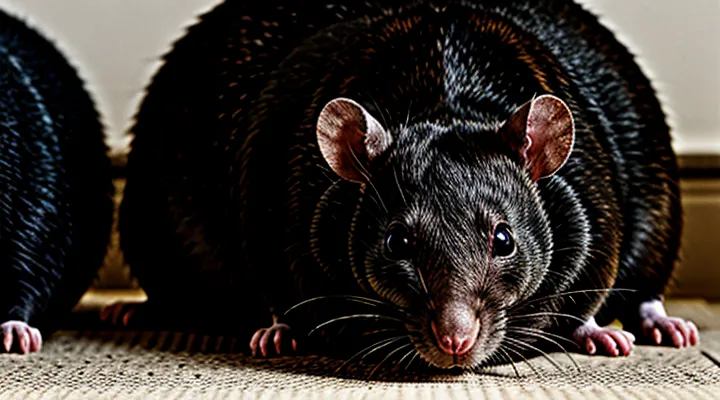
Understanding Rat Sleep Patterns
The Science Behind Rat Sleep
Unihemispheric Sleep in Animals
Rats exhibit a sleep pattern that differs from the classic bilateral slow‑wave sleep seen in many mammals. While their eyelids remain closed during most sleep episodes, physiological recordings show that one cerebral hemisphere can enter a deeper sleep state while the opposite side stays more alert. This asymmetry allows the animal to monitor the environment for predators or social cues without fully awakening.
Unihemispheric sleep, the ability to rest one brain half independently of the other, occurs in several taxa:
- Marine mammals such as dolphins and seals, which surface for breath while maintaining vigilance.
- Certain bird species, notably gulls and ducks, that sleep while perched or in flight.
- Some reptiles, including monitor lizards, demonstrate hemispheric differences in brain activity during rest.
In rodents, the phenomenon manifests as “local sleep” where specific cortical regions display slow‑wave activity while the rest of the brain remains responsive. Electroencephalogram data confirm that the sleeping hemisphere shows increased delta power, whereas the awake side maintains higher frequency activity. This partial disengagement supports brief, low‑intensity rest periods without full loss of sensory awareness.
Consequently, the capacity for one half of the brain to sleep while the other stays functional explains how rats can maintain a degree of environmental monitoring during rest, even though their eyes are typically closed. The mechanism illustrates a broader evolutionary strategy among animals to balance restorative processes with survival demands.
Rat Sleep Cycles and Stages
Rats exhibit a polyphasic sleep pattern, dividing rest into several short episodes throughout the day and night. Each episode lasts approximately 15–30 minutes, allowing a typical laboratory mouse to accumulate 12–15 hours of sleep within a 24‑hour period.
During an episode, the brain progresses through two principal stages:
- Non‑rapid eye movement (NREM) sleep – characterized by high‑amplitude, low‑frequency EEG waves; muscular tone remains relatively high; eye movements are minimal.
- Rapid eye movement (REM) sleep – identified by low‑amplitude, high‑frequency EEG activity; muscle atonia predominates; occasional twitching of whiskers and subtle eye movements occur.
Rats cycle between NREM and REM several times per episode, with REM comprising roughly 20‑30 % of total sleep time. The transition from NREM to REM is marked by a brief surge in theta rhythm (6–9 Hz) detectable in hippocampal recordings.
Eye behavior differs from that of many mammals. Although rats possess functional eyelids, they seldom remain fully closed during NREM. Brief closures may accompany REM bursts, but the majority of sleep occurs with the eyes partially open. This physiological trait explains observations of rats appearing awake while actually engaged in sleep cycles.
Environmental factors such as light intensity, stress, and cage enrichment influence the duration and distribution of sleep stages. Constant darkness tends to increase total REM proportion, whereas bright illumination suppresses REM entry. Acute stressors can truncate NREM periods and elevate wakefulness latency.
Understanding the architecture of rat sleep cycles provides a reliable framework for interpreting experimental data on cognition, metabolism, and disease models, especially when evaluating behaviors that might be mistaken for wakefulness due to the animal’s characteristic eye posture.
Debunking the Myth
Visual Cues of Sleep
Rats exhibit a range of visual indicators that signal the onset and maintenance of sleep. When a rodent’s eyelids close, the surrounding fur around the eyes often flattens, and the pupil constricts, producing a dark, uniform appearance. In contrast, during REM-like episodes, the eyes may remain partially open, yet rapid, low‑amplitude movements of the eyelids and a characteristic twitching of the whiskers accompany the state.
The following visual cues reliably differentiate sleeping from alert rats:
- Closed or partially closed eyelids with a smooth, unblemished surface.
- Pupillary dilation or constriction consistent with reduced light exposure.
- Decreased facial muscle tone, evident as relaxed whisker positioning.
- Minimal head movement, often accompanied by a slight downward tilt of the head.
- Absence of exploratory behaviors such as sniffing or grooming.
Observations of these cues under controlled lighting conditions allow researchers to confirm sleep without invasive monitoring. The presence of partially open eyes does not, by itself, indicate wakefulness; instead, it must be evaluated alongside the broader visual pattern described above.
The Nictitating Membrane’s Role
Rats possess a nictitating membrane—a translucent inner eyelid that slides horizontally across the eye. During periods of rest, the membrane can partially cover the cornea while the outer eyelid remains open, allowing the animal to remain alert to predators yet maintain ocular surface integrity.
The membrane performs three primary functions:
- Distributes tear film evenly, preventing desiccation when the eyes are not fully closed.
- Shields the cornea from debris and sudden light fluctuations that occur during wakeful inactivity.
- Reduces the need for complete eyelid closure, enabling a state of low‑amplitude sleep without full eye closure.
Physiological recordings show that rats enter a sleep‑like state with reduced brain activity while the nictitating membrane is engaged. The outer eyelids may stay partially open, but the membrane’s coverage limits exposure to environmental stressors, preserving vision and reducing infection risk.
Consequently, the presence and operation of the nictitating membrane explain how rats can exhibit sleep‑related behaviors without fully closing their eyes, distinguishing their resting pattern from that of species lacking this structure.
Reasons for Open Eyes While Resting
Predatory Instincts and Survival
Rats often rest with their eyelids only partially closed, a behavior that directly supports their predatory vigilance. The visual field remains largely unobstructed, allowing immediate detection of movement that could signal a predator.
Predatory instincts drive this adaptation. Rats possess a heightened startle reflex, rapid processing of visual cues, and an innate tendency to scan the environment even during low‑activity periods. The nervous system prioritizes threat assessment over full muscular relaxation, resulting in a semi‑open eye posture.
Survival benefits include:
- Early identification of aerial or terrestrial threats.
- Ability to react within milliseconds, reducing capture probability.
- Maintenance of spatial awareness while conserving energy during short rest phases.
Anatomically, the rat’s nictitating membrane and sparse eyelid musculature limit complete closure. This structure, combined with a high density of rod photoreceptors, sustains low‑light vision while the animal appears to be sleeping.
Collectively, the semi‑open eye posture exemplifies how sensory vigilance integrates with survival strategies, ensuring that rodents remain prepared for predator encounters even during rest.
Partial Sleep States
Rats exhibit several forms of partial sleep that allow limited sensory awareness while the brain remains partially dormant. During these states, one cerebral hemisphere can enter slow‑wave sleep while the opposite hemisphere stays alert, a pattern termed unihemispheric slow‑wave sleep. This arrangement enables the animal to monitor the environment for predators or social cues without fully relinquishing consciousness.
In addition to unihemispheric sleep, rats experience micro‑arousals—brief interruptions of non‑REM sleep lasting a few seconds—during which the eyes may remain partially open. These micro‑arousals preserve responsiveness to tactile or auditory stimuli and are recorded as transient spikes in EEG activity.
Key characteristics of partial sleep in rats include:
- Selective cortical deactivation: EEG shows reduced amplitude in the sleeping hemisphere while the awake side displays typical wake patterns.
- Maintained muscle tone: Unlike full REM sleep, muscle tone does not fully relax, preventing the animal from becoming immobile.
- Eye aperture variability: The eyelids may not close completely, especially during micro‑arousals, allowing limited visual input.
Research using invasive electrophysiology and high‑speed video confirms that these partial states are not random but follow a predictable cycle linked to circadian rhythms and environmental demands. The ability to sustain such states provides rats with a survival advantage, balancing restorative sleep functions with continuous vigilance.
Differentiating Sleep from Rest
Observing Rat Behavior
Identifying True Sleep
Rats display a range of sleep states that can be distinguished without relying on eye closure alone. True sleep is confirmed through physiological and behavioral markers that separate it from quiet wakefulness.
Electroencephalographic (EEG) recordings reveal characteristic patterns: slow-wave activity dominates non‑rapid eye movement (NREM) sleep, while rapid, low‑amplitude waves accompany rapid eye movement (REM) sleep. Muscle tone, measured by electromyography (EMG), drops markedly during REM sleep and decreases during NREM compared with wakefulness. Body posture provides additional clues; rats adopt a relaxed, often curled position, and exhibit reduced locomotor activity.
Researchers use a combination of these criteria to identify authentic sleep episodes:
- EEG: high-amplitude delta waves (NREM) or theta bursts (REM)
- EMG: low muscle tone (especially in REM)
- Behavioral immobility: lack of purposeful movement for at least several seconds
- Postural relaxation: curled or hunched stance, head resting on forelimbs
Eye state alone is insufficient because rodents can keep their eyelids partially open during both sleep and quiet wakefulness. Accurate identification therefore depends on integrating neurophysiological data with observable behavior. This multi‑modal approach resolves ambiguity and ensures that recorded sleep reflects genuine restorative states rather than mere inactivity.
Signs of Alertness vs. Drowsiness
Rats often keep their eyelids partially open while resting, making visual cues essential for distinguishing wakefulness from sleep. Observers rely on specific behavioral and physiological indicators to assess a rat’s state.
- Ears oriented forward, rotating rapidly toward sounds.
- Vibrissae (whiskers) moving in short, synchronized sweeps.
- Tail held stiff, occasionally twitching in response to stimuli.
- Pupil dilation fluctuating with ambient light, maintaining a reactive size.
- Breathing pattern steady, with regular intervals and no prolonged pauses.
When a rat transitions to drowsiness, the following signs become apparent:
- Ears droop or remain neutral, showing reduced responsiveness.
- Whisker movements slow, becoming irregular or stopping altogether.
- Tail relaxes, often sagging without tension.
- Pupils constrict, retaining a fixed size despite minor light changes.
- Respiratory rhythm deepens, with occasional brief pauses (apneas) and slower rate.
These observable differences enable accurate determination of alertness versus drowsiness, even when the animal’s eyes remain partially open.
Factors Affecting Rat Sleep
Environmental Influences
Light and Darkness
Rats possess a thin, translucent eyelid that allows limited visual input even when the eye appears closed. The structure permits a degree of eyelid retraction while the animal is at rest, creating the impression of an open eye during sleep.
In total darkness, the absence of visual stimulus triggers a complete closure of the eyelids, maximizing protection and reducing metabolic demand. In low‑light environments, rats often keep the lids partially open, maintaining a minimal visual field that supports predator detection without fully exposing the eye.
- Bright or ambient light: partial eyelid retraction, eyes may appear open during sleep.
- Dim light: partial closure, reduced visual exposure.
- Complete darkness: full closure, eyelids seal completely.
The relationship between illumination levels and eyelid position determines whether a rat’s eyes seem open while it rests. Light intensity directly influences the degree of eyelid closure, shaping the observable sleeping posture.
Noise Levels
Rats exhibit a unique ability to keep their eyelids partially open during rapid eye movement (REM) sleep, a trait that can be disrupted by acoustic disturbances. Laboratory measurements identify three noise categories relevant to this behavior:
- Quiet environment (≤30 dB): Baseline REM episodes show uninterrupted eye‑opening patterns; electrophysiological recordings reveal stable theta rhythms.
- Moderate noise (31–55 dB): Frequent micro‑arousals appear; eye‑opening duration shortens, and latency to full eye closure increases.
- Loud noise (≥56 dB): Immediate termination of REM sleep; rats close eyes fully, and stress markers such as corticosterone rise sharply.
Experimental data indicate that continuous exposure to 45 dB white noise reduces the proportion of REM sleep with partially open eyes by approximately 20 % compared with a silent chamber. Intermittent bursts above 60 dB cause complete suppression of the eye‑opening phenomenon for the duration of the stimulus. Acoustic shielding that maintains ambient levels below 30 dB preserves the natural eye‑opening pattern, confirming the sensitivity of this trait to sound intensity.
Health and Well-being
Stress and Anxiety
Rats that appear to keep their eyelids partially open while resting experience a physiological response linked to stress and anxiety. Elevated cortisol levels trigger a reflex that reduces full eyelid closure, allowing rapid visual monitoring of potential threats. This adaptation conserves energy for immediate escape but also signals heightened arousal.
When a rat’s environment introduces unpredictable noises, fluctuating light, or crowding, the animal’s sympathetic nervous system activates. The resulting tension manifests as:
- Persistent partial eye opening during rest periods
- Increased heart rate and respiration
- Frequent grooming or stereotypic movements
Chronic exposure to these stressors sustains the open‑eye sleep pattern, impairing restorative sleep phases. Reduced deep‑sleep duration compromises memory consolidation and immune function, further aggravating anxiety.
Mitigation strategies focus on environmental stability. Consistent lighting cycles, sound insulation, and adequate nesting material lower basal cortisol, encouraging full eyelid closure during sleep. Monitoring eye‑opening frequency provides a reliable indicator of an individual’s stress level and the effectiveness of enrichment interventions.
Illness and Discomfort
Rats normally close their eyelids during sleep, yet certain health problems force them to keep their eyes partially or fully open. This behavior indicates that the animal’s nervous system or ocular muscles are compromised.
Typical conditions associated with open‑eye sleep include:
- Neurological disorders such as encephalitis or traumatic brain injury, which disrupt the reflex that closes the eyelids.
- Severe infections affecting the facial nerves, leading to loss of muscle control around the eyes.
- Acute pain or distress that prevents the animal from entering a relaxed sleep state.
- Toxic exposure that interferes with neurotransmitter function, impairing normal eyelid closure.
Additional signs of discomfort often accompany the open‑eye posture:
- Decreased grooming activity.
- Abnormal body posture, such as hunching or reluctance to move.
- Vocalizations or rapid breathing indicating stress.
If a rat exhibits eyes that remain open while sleeping, immediate veterinary assessment is required. Treatment focuses on identifying the underlying cause, providing analgesics for pain, administering antibiotics for infections, and, when appropriate, using supportive therapies to restore normal eyelid function. Continuous monitoring of eye moisture and environmental humidity helps prevent secondary corneal damage until the primary issue resolves.
Implications for Rat Owners
Creating Optimal Sleeping Conditions
Enclosure Setup
Rats often appear to keep their lids partially open during rest, a behavior that can be misinterpreted without proper observation conditions. An enclosure designed for accurate monitoring must eliminate visual obstructions, control lighting, and provide stable environmental parameters.
A well‑structured cage should include:
- Transparent front panels made of clear acrylic or glass to allow unobstructed viewing from multiple angles.
- Low‑intensity, red‑shifted lighting that mimics nocturnal conditions while reducing glare that could cause the animals to blink reflexively.
- Adjustable perch or platform heights so the animal can adopt natural sleeping postures without pressure on the eyes.
- Ventilation slots positioned away from the viewing area to prevent airflow‑induced eye drying, which might force the rat to close its eyelids.
- Soft bedding that supports the body without crushing the head, preserving natural eye positioning.
Temperature and humidity must remain within the species‑specific range (20‑26 °C, 40‑60 % RH) to prevent stress‑induced eye movements. Regular cleaning of the viewing surface prevents smudges that could distort visual assessment.
By integrating these elements, researchers and hobbyists can reliably distinguish true ocular openness from reflexive blinking, ensuring that observations of rat sleep behavior are both accurate and reproducible.
Routine and Environment
Rats often rest with their eyes partially open, a behavior linked to their daily routine and surrounding conditions. Their nocturnal schedule drives activity during darkness, while brief periods of alertness persist even during sleep. The following environmental factors influence this eye‑opening tendency:
- Low light levels in the nest encourage relaxed eyelid closure; bright illumination prompts partial opening for vigilance.
- Temperature stability reduces the need for heightened sensory awareness; fluctuating heat or cold increases eye openness.
- Presence of predators or unfamiliar scents triggers a defensive state, leading to more frequent eye exposure while resting.
In a controlled laboratory setting, rats kept on a 12‑hour light/dark cycle with consistent temperature and minimal disturbances display a higher proportion of fully closed eyes during the dark phase. Conversely, animals housed in enriched cages with varied structures and frequent human interaction exhibit intermittent eye opening, reflecting continuous environmental scanning.
Routine feeding times also affect ocular behavior. Predictable food delivery aligns with the animal’s circadian rhythm, allowing deeper, uninterrupted sleep and greater eyelid closure. Irregular feeding schedules introduce stress, prompting rats to maintain partial eye opening to monitor potential threats.
Overall, a stable routine combined with dim, steady lighting, moderate temperature, and low stress levels creates conditions under which rats are more likely to close their eyes completely while sleeping.
Recognizing Abnormal Sleep Patterns
When to Consult a Vet
Rats that appear to keep their eyes open while resting may be experiencing normal REM sleep, a physiological state where eyelids can remain partially or fully open. However, certain signs indicate a health issue that requires professional evaluation.
Seek veterinary care if the rat exhibits any of the following:
- Persistent eye opening that does not alternate with closure
- Redness, swelling, or discharge from the eyes
- Visible lesions, ulcers, or abnormal growths around the ocular area
- Changes in behavior such as lethargy, loss of appetite, or difficulty moving
- Unusual facial twitching, head tilting, or loss of balance
These symptoms suggest possible infections, injuries, or neurological disorders that cannot be self‑diagnosed. Early intervention prevents complications and improves recovery chances.
Contact a qualified exotic‑animal veterinarian promptly when any of the listed conditions appear. Provide a detailed history of the rat’s environment, diet, and recent changes to aid accurate diagnosis and treatment planning.