
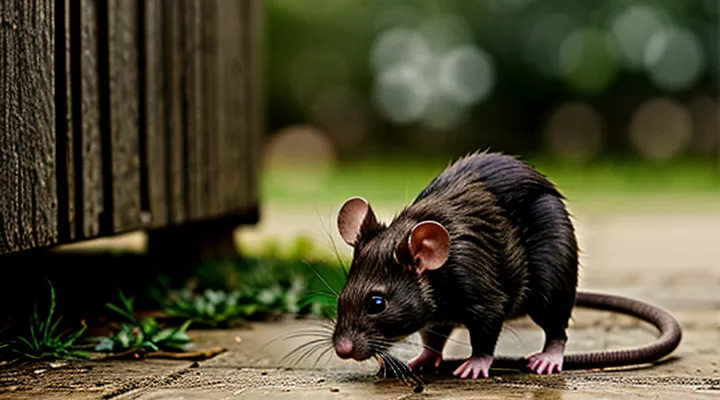
Understanding Rat Behavior
The Complexity of Rodent Cognition
Emotional Responses in Animals
Rats demonstrate physiological and behavioral markers that align with emotional states such as fear, anxiety, and frustration. Elevated corticosterone levels, increased heart rate, and ultrasonic vocalizations accompany exposure to threatening stimuli, indicating a stress response comparable to that observed in higher mammals.
Research on retaliatory behavior in rodents shows that when a rat experiences an aversive event caused by a conspecific, it may later engage in actions that reduce the aggressor’s access to resources or safe spaces. Experimental designs involving repeated mild electric shocks paired with a specific cage mate reveal that the subject rat increases aggression toward that individual after a latency period, suggesting a learned negative association and a propensity for retaliatory actions.
Key observations supporting emotional complexity in rats include:
- Preference for familiar partners after stressful encounters, indicating social bonding as a coping mechanism.
- Modification of grooming and exploratory behavior following adverse experiences, reflecting affective regulation.
- Activation of the amygdala and prefrontal cortex during tasks that require assessing past negative interactions, demonstrating neural circuitry linked to emotion processing.
These findings collectively argue that rats possess the capacity to experience and act upon negative emotions, providing a plausible basis for behaviors that could be interpreted as revenge‑like responses.
Social Structures in Rat Colonies
Rats organize their colonies through a hierarchy that influences interactions, resource distribution, and conflict resolution. Dominant individuals, typically older males, assert control by scent marking, aggressive displays, and monopolizing prime nesting sites. Subordinate members recognize these signals and adjust their behavior to avoid direct confrontation, thereby maintaining colony stability.
Social bonds extend beyond the dominant‑subordinate axis. Female rats form matrilineal clusters that cooperate in pup rearing, sharing warmth and feeding duties. These clusters exhibit reciprocal grooming and vocal exchanges, which reinforce group cohesion and reduce stress. Male offspring, after reaching sexual maturity, either integrate into the existing hierarchy or disperse to establish new colonies, a process driven by competition for breeding opportunities.
The structure of rat societies shapes their capacity for retaliatory actions. Evidence shows that individuals who experience repeated aggression may increase counter‑aggressive behaviors toward the original aggressor, especially when the aggressor holds a lower rank. This pattern reflects a conditional response embedded in the colony’s social framework rather than a generalized desire for revenge. Key elements influencing such responses include:
- Rank of the aggressor versus the victim
- Strength of existing social bonds
- Availability of alternative mates or resources
Understanding these dynamics clarifies how hierarchical organization, kinship networks, and resource competition collectively determine the likelihood of retaliatory behavior within rat colonies.
The Concept of «Revenge»
Defining «Revenge» in a Non-Human Context
Anthropomorphism vs. Scientific Observation
The question of whether rodents can act out of spite or retaliation raises a methodological conflict between attributing human-like motives and relying solely on observable behavior. Anthropomorphic narratives often describe rats as “seeking vengeance” after perceived slights, projecting intentionality that cannot be verified through experimental data.
- Assigning emotions such as anger, pride, or spite to rats.
- Interpreting escape routes or avoidance as purposeful retribution.
- Describing laboratory incidents with moral language (“punishment”, “revenge”).
Scientific observation confines analysis to measurable actions and physiological responses, avoiding speculation about inner states. Empirical studies reveal patterns that can be quantified without invoking human motives.
- Recording frequency of aggressive encounters following resource deprivation.
- Measuring stress hormone levels after exposure to aversive stimuli.
- Analyzing changes in maze performance when previous outcomes are unfavorable.
Rigorous interpretation requires discarding narrative attributions and focusing on reproducible data. Only through controlled experiments can the extent of retaliatory-like behavior in rats be accurately assessed.
Distinguishing Between Retaliation and Learned Aversion
Rats display complex behavioral responses to adverse experiences, but these responses fall into two distinct categories: active retaliation and learned aversion. Retaliation involves a deliberate, goal‑directed action aimed at the source of a previous harm, often observed when a rat re‑encounters a conspecific that previously delivered a shock and attempts to prevent that individual from accessing a resource. Learned aversion, by contrast, is a passive avoidance strategy that develops after an association between a specific cue and an unpleasant stimulus, leading the animal to reject the cue without targeting the original aggressor.
Key experimental distinctions include:
- Temporal pattern: Retaliatory attempts occur shortly after the initial offense and cease once the perceived threat is removed. Aversion persists as long as the conditioned cue remains present, even in the absence of the original offender.
- Behavioral signature: Retaliation manifests as aggressive displays, such as lunging or biting, directed toward the former aggressor. Aversion appears as withdrawal, freezing, or refusal to interact with the associated stimulus.
- Neural substrates: Studies implicate the ventral striatum and amygdala in retaliatory aggression, whereas the hippocampus and orbitofrontal cortex dominate the circuitry of conditioned avoidance.
Interpretation of these patterns requires careful control of experimental variables. Researchers must separate the animal’s opportunity to act against the perpetrator from the mere presence of a predictive cue. When the design limits direct interaction, observed avoidance reflects learned aversion rather than revenge‑like conduct.
In summary, retaliation denotes an intentional, aggressive response aimed at the source of harm, while learned aversion represents a conditioned avoidance of stimuli linked to negative outcomes. Recognizing this dichotomy prevents misattribution of simple avoidance to purposeful retribution in rodent behavior studies.
Evidence for Complex Rat Interactions
Observational Studies of Rat Social Dynamics
Aggression and Dominance Hierarchies
Rats organize their social groups through clearly defined dominance hierarchies. Higher‑ranking individuals obtain priority access to food, nesting sites, and mating opportunities, while subordinate rats experience frequent aggression from dominant conspecifics.
Aggressive encounters produce lasting memory traces. Studies using resident‑intruder tests show that a rat previously defeated by a specific opponent displays heightened aggression when later re‑encountered, indicating recognition of the former aggressor. This pattern suggests that rats can retain information about past conflicts and adjust future behavior accordingly.
Key observations linking aggression to potential retaliatory actions:
- Subordinates learn to avoid dominant individuals after repeated defeats, reducing exposure to further attacks.
- Dominants exhibit increased bite force and chase intensity when confronting a rat that previously challenged their status.
- Neural activity in the medial prefrontal cortex and amygdala rises during both initial aggression and subsequent re‑engagement with the same opponent, correlating with memory‑guided aggression.
Collectively, the evidence demonstrates that rat aggression is not merely reflexive; it is modulated by hierarchical position and past interactions. The capacity to recall and respond more aggressively to a known adversary fulfills the functional criteria of retaliatory behavior, providing a biological basis for the notion that rats may act vindictively toward specific individuals.
Reciprocal Altruism and Its Limitations
Rats demonstrate cooperative interactions that align with the framework of reciprocal altruism, a strategy in which individuals provide benefits to others with the expectation of future repayment. This mechanism can explain why a rat may tolerate a conspecific’s temporary advantage, such as sharing food, if the partner later reciprocates. However, several constraints limit the applicability of reciprocal altruism to retaliatory behavior.
- Direct reciprocity requires repeated encounters; isolated or infrequent interactions diminish the incentive to assist.
- Accurate assessment of another’s past actions depends on memory capacity; rats possess limited long‑term recall, reducing reliable bookkeeping of exchanges.
- Cost–benefit calculations become unstable when the immediate expense of helping exceeds the anticipated future return, especially in environments with scarce resources.
- Cheating—receiving aid without offering it in return—can spread rapidly if detection mechanisms are weak, leading to breakdown of cooperative networks.
Empirical studies show that rats adjust behavior based on recent outcomes, increasing aggression toward individuals that previously denied them access to food. Such responses reflect a short‑term tit‑for‑tat pattern rather than a sophisticated revenge motive. The observed escalation fits within the bounds of reciprocal altruism: retaliation emerges when the cost of cooperation outweighs expected benefits, prompting a shift toward punitive actions. Consequently, while rats can exhibit retaliatory conduct, it operates through the limited, context‑dependent processes of reciprocal altruism rather than an abstract capacity for vengeance.
Scientific Perspectives on Rat «Revenge»
Neurological Basis of Emotional Processing in Rats
Amygdala and Fear Responses
The amygdala is the primary neural structure that processes threat‑related stimuli in rats. Sensory input reaches the basolateral complex, where associative learning links neutral cues with aversive outcomes. This circuitry generates rapid autonomic and behavioral responses that manifest as freezing, avoidance, or heightened vigilance.
Fear conditioning experiments demonstrate that the amygdala encodes the intensity and duration of a threat. After a single pairing of a tone with a foot shock, rats exhibit conditioned fear responses to the tone alone, indicating that the amygdala stores a persistent memory of the aversive event. Lesions of the basolateral amygdala abolish such conditioned responses, confirming its necessity for fear memory retrieval.
When a previously threatening stimulus reappears, the amygdala activates downstream nuclei that drive motor outputs. In situations where a rat experiences an aggressive encounter, the same circuitry can produce retaliatory actions, such as counter‑attacks directed at the source of the original threat. This pattern reflects a transition from passive fear responses to active defensive aggression.
Key experimental observations linking amygdala activity to retaliatory behavior include:
- Optogenetic activation of basolateral amygdala neurons during a post‑conflict period increases the likelihood of aggressive strikes toward the aggressor.
- Pharmacological inhibition of amygdalar glutamate receptors reduces both fear‑induced freezing and subsequent aggressive bouts.
- Imaging studies show heightened amygdala firing rates when rats anticipate a chance to punish a previously threatening conspecific.
Collectively, these findings establish that the amygdala not only mediates fear acquisition and expression but also orchestrates the shift from defensive fear to proactive aggression, providing a neural basis for behaviors that may be interpreted as revenge in rodents.
Prefrontal Cortex and Decision-Making
The prefrontal cortex (PFC) in rats occupies the medial and orbital frontal regions that integrate sensory input, memory traces, and motivational signals. Neuronal activity within these areas modulates choice behavior, especially when outcomes involve social interaction or conflict. Electrophysiological recordings show that PFC neurons fire differentially during tasks that require evaluating past aggression and predicting future consequences, indicating a computational substrate for weighing retaliation versus avoidance.
Decision‑making in rodents depends on the balance between excitatory pyramidal cells and inhibitory interneurons in the PFC. Disruption of this balance, through lesions or pharmacological agents, impairs the ability to adjust behavior after a negative encounter. Consequently, rats with intact PFC circuitry can modify their approach to an opponent based on prior defeat, selecting either renewed aggression or withdrawal.
Key mechanisms linking the PFC to retaliatory-like actions include:
- Outcome monitoring – dopaminergic inputs signal reward prediction errors, updating the valuation of aggressive versus non‑aggressive strategies.
- Behavioral flexibility – the orbitofrontal sector encodes the probability of successful retaliation, allowing rapid shifts in response when the environment changes.
- Impulse control – inhibitory circuits suppress premature attacks, ensuring that aggression is deployed only when advantageous.
Experimental paradigms such as the “resident‑intruder” test reveal that rats with enhanced PFC activity exhibit higher rates of re‑engagement after an initial defeat, whereas PFC‑inhibited subjects display reduced propensity to seek retribution. These findings support the view that the rodent PFC provides the neural architecture for evaluating past harm and orchestrating future actions, including those that resemble revenge.
Experimental Design for Studying Rat Retaliation
Controlled Environment Studies
Researchers address the question of rat retaliation through tightly regulated laboratory protocols. Animals are housed in standardized cages with constant temperature, humidity, and light‑dark cycles to eliminate extraneous stressors. Food and water are provided ad libitum unless deprivation is part of the experimental manipulation.
Key methodological elements include:
- Random assignment of subjects to experimental and control groups.
- Use of identical apparatus for all trials, differing only in the presence or absence of a provocation event (e.g., removal of a conspecific’s reward).
- Blind observation by experimenters to prevent bias in behavior scoring.
- Automated video tracking to quantify latency, frequency, and intensity of aggressive responses.
Data collection focuses on measurable indicators of retaliatory behavior: repeated attacks on the individual who previously denied a reward, escalation of bite force, and persistence of aggression after the provocation has ceased. Statistical analysis typically employs mixed‑effects models to account for individual variability and repeated measures.
Findings from multiple controlled studies reveal a consistent pattern: rats exposed to a loss of a valued resource display increased aggression toward the source of deprivation, persisting across several sessions. Control groups, which experience no loss, show baseline levels of social interaction without targeted aggression.
Limitations of the approach include the artificial nature of the laboratory setting, which may not capture complex social dynamics present in natural habitats. Additionally, the definition of “revenge” remains operationalized as repeated directed aggression, a simplification of broader ethological concepts. Nevertheless, controlled environment investigations provide robust evidence that rats can exhibit retaliatory-like behavior under defined conditions.
Ethical Considerations in Animal Research
Research into sophisticated rodent behaviors, including possible retaliatory actions, triggers a series of ethical obligations. Scientists must balance scientific ambition with the moral status of the subjects, ensuring that experimental design does not exceed justified necessity.
- Replacement – prioritize non‑animal models, in‑silico simulations, or lower‑order organisms when they can address the same question.
- Reduction – limit the number of individuals to the smallest cohort that still yields statistically reliable results.
- Refinement – modify procedures to minimize pain, distress, and lasting harm; employ humane endpoints and enriched housing.
Informed consent is inapplicable to animals; instead, welfare assessments replace it. Continuous monitoring of physiological markers, behavioral indicators, and stress hormones provides objective data on the animal’s condition. Any sign of severe discomfort mandates immediate intervention.
Justification for probing retaliatory tendencies must rest on clear relevance to broader scientific or medical objectives. Researchers should demonstrate that insights cannot be obtained through alternative methods and that the knowledge gained outweighs the ethical costs.
Regulatory frameworks, such as institutional animal care committees and national legislation, enforce compliance with the 3Rs, mandate protocol review, and require documentation of ethical deliberations. Adherence to these standards safeguards both scientific integrity and animal welfare.
Alternative Explanations for Perceived «Revenge»
Learned Associations and Aversive Conditioning
Avoiding Harmful Stimuli
Rats demonstrate sophisticated avoidance of harmful stimuli, a behavior that shapes interpretations of retaliatory actions. When an aversive event occurs—electric shock, bitter taste, or predator scent—rats rapidly form associations between the stimulus and its source. This learning reduces the likelihood of repeated exposure and can be measured through operant conditioning paradigms.
Key mechanisms underlying stimulus avoidance include:
- Sensory discrimination: Rats detect subtle differences in temperature, pressure, and chemical composition, allowing precise identification of threats.
- Contextual memory: Hippocampal circuits encode environmental cues linked to danger, enabling avoidance of previously harmful locations.
- Action selection: Basal ganglia pathways bias motor responses toward escape routes rather than confrontation.
- Stress hormone modulation: Elevated corticosterone levels reinforce avoidance learning, enhancing future vigilance.
Experimental evidence shows that avoidance behavior emerges after a single pairing of a neutral cue with an unpleasant outcome. Subsequent trials reveal decreased latency to flee, reduced exploratory activity in the affected zone, and increased reliance on alternative pathways. These patterns indicate that rats prioritize self‑preservation over aggression, challenging assumptions that perceived “revenge” merely reflects heightened avoidance capacity.
Understanding the neurobiological substrates of harmful‑stimulus avoidance clarifies why rats may appear to retaliate. The observable outcomes—withdrawal, altered foraging routes, and heightened alertness—are rooted in adaptive avoidance rather than intentional retribution.
Instrumental Learning in Rats
Instrumental learning, also called operant conditioning, enables rats to modify behavior based on the consequences of their actions. When a response produces a rewarding outcome, such as food, the likelihood of that response increases; when it prevents an aversive event, such as a foot shock, the response is similarly reinforced. This learning paradigm has been established through systematic experiments using Skinner boxes, lever‑press tasks, and avoidance schedules.
Key observations include:
- Rats acquire a lever‑press response to obtain a sucrose pellet after a limited number of trials, demonstrating positive reinforcement.
- In a shuttle‑box avoidance task, rats learn to move to the opposite compartment to escape an impending shock, illustrating negative reinforcement.
- Discrete trial designs reveal that rats can discriminate between cues that predict reward versus punishment, adjusting their actions accordingly.
Neurobiological evidence links instrumental learning to dopaminergic signaling in the nucleus accumbens and to corticostriatal pathways. Pharmacological blockade of dopamine receptors impairs acquisition of lever‑press behavior, while lesions of the dorsomedial striatum disrupt goal‑directed actions without affecting habitual responses.
The relevance to retaliatory behavior emerges from the capacity of rats to associate a specific agent with an aversive outcome and to emit a response that prevents future harm. Studies where a conspecific delivers a mild shock show that rats will perform a learned action to deny the aggressor subsequent access to a reward, indicating that instrumental conditioning can generate targeted, punitive actions. This mechanism provides a plausible substrate for the appearance of revenge‑like behavior in rodents, grounded in well‑documented learning processes rather than abstract emotional constructs.
Stress-Induced Behaviors
Displacement Activities
Rats exhibit displacement activities when confronted with a threat or a thwarted goal, such as grooming, rearing, or excessive locomotion. These behaviors appear unrelated to the immediate stimulus but serve to alleviate tension and maintain physiological balance.
- Grooming of fur or whiskers
- Rearing on hind legs while exploring surroundings
- Repetitive digging in bedding material
Research shows that displacement activities can mask underlying aggression, making it difficult to interpret retaliatory intent. When a rat is denied access to a resource after a previous encounter, the emergence of these activities often coincides with heightened stress hormones, yet the observable actions remain non‑directed. Consequently, the presence of displacement behaviors does not provide clear evidence that rats plan or execute revenge; instead, they reflect an immediate coping mechanism rather than a calculated response.
Aggression as a Defense Mechanism
Aggression in rats functions primarily as a protective response. When a threat is perceived, neural circuits involving the amygdala, hypothalamus, and periaqueductal gray activate, producing rapid motor output aimed at neutralizing danger. This physiological cascade is consistent across mammalian species and does not imply deliberation beyond the immediate encounter.
Experimental observations reveal several patterns:
- Contact with an intruder triggers a sequence of threat displays, pursuit, and biting within seconds of detection.
- Exposure to a predator scent provokes heightened vigilance, escape attempts, and aggressive lunges toward the source.
- Socially subordinate individuals exhibit aggression after repeated defeats, restoring access to resources and deterring future challenges.
These behaviors arise from the need to safeguard territory, secure food, and maintain hierarchical position. The aggressive acts are temporally linked to the provoking stimulus; they cease when the threat is removed. No evidence shows a delayed, calculated retaliation that would satisfy criteria for revenge.
Consequently, aggression serves as an immediate defense mechanism rather than a manifestation of vengeful intent. The capacity for rats to plan or hold grudges remains unsupported by current neurobiological and ethological data.
Implications for Human-Rat Interactions
Managing Rat Populations
Humane Control Methods
Rats exhibit complex social learning and can associate negative experiences with specific locations or individuals. When control measures cause pain or distress, the animals may develop avoidance patterns that resemble retaliatory behavior, making effective management dependent on strategies that minimize suffering and reduce the likelihood of learned resistance.
Humane control methods focus on population reduction without inflicting pain, thereby decreasing the chance of adverse behavioral conditioning. Recommended practices include:
- Exclusion: Seal entry points, install metal flashing, and maintain structural integrity to prevent ingress.
- Sanitation: Remove food sources, store waste in sealed containers, and eliminate standing water to diminish attractants.
- Live trapping: Use cage traps with appropriate bait, check traps frequently, and release captured rats at a considerable distance from the property or arrange for humane euthanasia by qualified personnel.
- Biological deterrents: Deploy predatory scents, ultrasonic emitters, or introduce natural predators such as barn owls where feasible.
- Population control: Apply rodent‑specific contraceptive baits that reduce reproductive capacity without lethal effects.
Implementing these measures in a coordinated program reduces rat density, limits opportunities for negative reinforcement, and aligns with ethical standards for pest management. Continuous monitoring and adjustment ensure sustained effectiveness while respecting animal welfare.
Understanding Rat Motivations
Rats act primarily to obtain resources, preserve safety, and maintain social standing. Their behavior is driven by a combination of innate drives and learned associations.
- Access to food and water triggers foraging and hoarding.
- Avoidance of predators and harmful stimuli initiates escape and defensive responses.
- Establishment of dominance hierarchies motivates aggression, submission, and grooming within colonies.
- Exposure to novel environments engages exploratory activity that reinforces spatial memory.
- Repeated exposure to aversive events produces conditioned avoidance or active retaliation.
Experimental data show that rats can perform actions that resemble retaliation. In paradigms where a rat experiences a painful stimulus delivered by a conspecific, the victim later delivers a similar stimulus to the aggressor when given the opportunity. Such behavior correlates with heightened activity in the amygdala and prefrontal cortex, regions linked to emotional processing and decision‑making. However, these actions arise from learned associations and immediate emotional states rather than a conceptual sense of “revenge” as understood in human terms.
Neurochemical studies reveal that dopamine release reinforces successful acquisition of rewards, while serotonin modulates aggression and impulse control. Elevated cortisol levels after stress predict increased likelihood of retaliatory attacks, indicating that physiological arousal influences motivation to counteract perceived threats.
Overall, rat motivations encompass survival imperatives, social dynamics, and conditioned learning. Evidence supports the capacity for retaliatory behavior under specific experimental conditions, but the phenomenon aligns with adaptive responses to harm rather than an abstract desire for vengeance.
Pet Rats and Their Behavior
Interpreting Aggressive Displays
Rats communicate hostility through a repertoire of visual, auditory, and olfactory signals that signal intent to dominate or defend resources. Typical components include raised fur, exaggerated tail posture, rapid foot‑stamping, vocalizations in the 4–8 kHz range, and the deposition of scent marks containing cortisol metabolites. Each element conveys a specific level of threat and can be quantified using motion‑capture analysis, spectrographic recording, and chemical assays.
Key indicators of aggressive intent are:
- Postural elevation – dorsal hair lifted, ears flattened, and tail lifted above the spine.
- Locomotor acceleration – sudden bursts of forward movement accompanied by foot‑stamping.
- Acoustic output – high‑frequency squeaks with increased amplitude and duration.
- Chemical signaling – elevated concentrations of stress‑related pheromones in urine and glandular secretions.
Interpretation of these displays requires distinguishing between immediate defensive aggression and actions that may precede retaliatory behavior. Studies show that after a dominant encounter, subordinate rats often exhibit heightened vigilance, increased scent marking, and delayed aggressive bouts directed at the original aggressor. Such patterns suggest memory of the prior conflict and a capacity for targeted counter‑aggression rather than random hostility.
Experimental protocols that assess retaliatory potential combine controlled resident‑intruder tests with longitudinal tracking of individual responses. Researchers record baseline aggressive displays, introduce a neutral opponent, and later re‑expose the original aggressor to evaluate changes in display intensity, latency, and success rate. Consistent escalation in these metrics across repeated exposures supports the hypothesis that rats can engage in revenge‑like behavior.
Overall, aggressive displays serve as reliable predictors of subsequent retaliatory actions when analyzed with precise behavioral and physiological metrics. This evidence substantiates the view that rats possess the cognitive and emotional mechanisms necessary to pursue directed retribution after a hostile encounter.
Building Trust with Pet Rodents
Establishing a reliable bond with a pet rodent requires consistent, predictable interactions that reduce fear and encourage cooperation. Rats, like other intelligent mammals, remember individuals who provide food, safety, and gentle handling, and they adjust their behavior accordingly.
Regular feeding at the same time and place creates an association between the caretaker and nourishment. Offering treats from the hand, rather than from a dispenser, reinforces the perception that the human is a source of reward. Over several sessions, the animal learns to approach voluntarily, indicating trust.
Gentle handling techniques further solidify the relationship:
- Support the body with both hands to prevent injury and signal stability.
- Move slowly, avoiding sudden gestures that could trigger a flight response.
- Allow the rat to explore the hand before lifting, giving it control over the interaction.
Environmental consistency also matters. Keeping the cage in a quiet area, maintaining a stable temperature, and minimizing loud noises prevent stress, which erodes confidence. Providing enrichment—tunnels, chew toys, and climbing structures—demonstrates that the caretaker values the animal’s well‑being.
Observing behavior offers feedback on trust levels. A rat that approaches, sniffs, and accepts treats from the hand shows reduced wariness. Conversely, avoidance, rapid retreat, or aggressive bites signal lingering insecurity and require a slower pace of interaction.
Patience and repetition are essential. Trust does not develop overnight; it builds through a series of positive experiences that the rodent records and recalls. By maintaining predictable routines, handling with care, and creating a stable environment, owners cultivate a partnership that discourages retaliatory or hostile reactions and promotes a harmonious coexistence.