
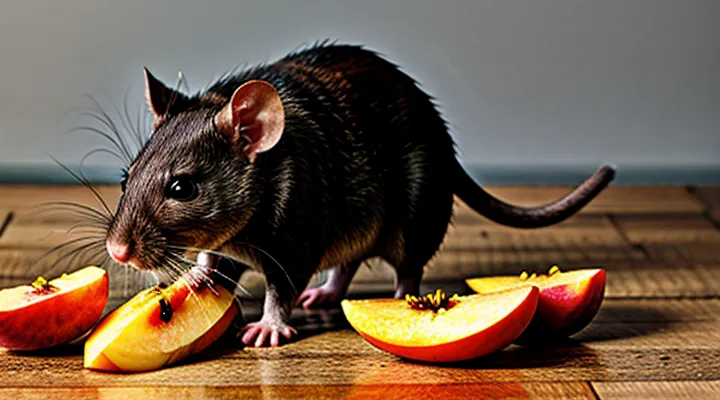
Nectarine and Rat Diet: A General Overview
Nectarines are fleshy stone fruits rich in sugars, dietary fiber, vitamins A and C, and trace minerals. Their soft pulp contains low levels of protein and fat, while the skin carries a modest amount of antioxidants. The pit harbors cyanogenic compounds that can release hydrogen cyanide if ingested in significant quantities.
Rats require a balanced diet composed primarily of grains, proteins, and limited fruit. Their natural intake includes seeds, insects, and occasional plant matter, providing essential amino acids, vitamins, and minerals. Introducing fruit supplements must respect the species’ metabolic capacity and digestive tolerance.
Key considerations for offering nectarine to rats:
- Portion size – limit to no more than 5 % of the daily caloric intake; a small slice (1–2 g) suffices.
- Frequency – treat as an occasional supplement, not a daily staple.
- Preparation – remove skin if it shows signs of pesticide residue; always discard the pit and any remaining stone.
- Observation – monitor for signs of gastrointestinal upset, such as diarrhea or reduced activity, after first exposure.
- Nutrient balance – compensate for the fruit’s low protein by maintaining a protein‑rich base diet (e.g., laboratory rodent chow).
Potential risks include excessive sugar intake leading to obesity or dental issues, and exposure to cyanogenic glycosides from the pit. Proper handling eliminates the latter risk. When administered correctly, nectarine can provide a modest source of vitamins and hydration without compromising the animal’s nutritional equilibrium.
Nutritional Value of Nectarine for Rats
Key Nutrients in Nectarine
Vitamins
Nectarines contain a spectrum of vitamins that can affect rat nutrition when the fruit is offered as a treat.
- Vitamin A (β‑carotene) – supports vision and epithelial health.
- Vitamin C – antioxidant, assists in collagen synthesis.
- B‑complex (B1, B2, B3, B6, folate) – involved in energy metabolism and nervous system function.
- Vitamin E – protects cell membranes from oxidative damage.
- Vitamin K – essential for blood clotting.
Rats synthesize vitamin C endogenously, so dietary intake is not required; excess vitamin C may cause gastrointestinal upset. Vitamin A is fat‑soluble; rats absorb it efficiently, but high concentrations can lead to hypervitaminosis A, manifesting as liver enlargement and bone abnormalities. B‑vitamins are water‑soluble; surplus is generally excreted, yet large doses can disturb gut flora. Vitamin E and K are also fat‑soluble, with toxicity unlikely at modest consumption but possible with chronic oversupply.
When offering nectarines, limit portions to no more than 5 % of total daily intake by weight. Provide small, seed‑free slices to avoid choking hazards and reduce sugar load. Monitor for signs of diarrhea or reduced appetite, which indicate intolerance.
In balanced diets, occasional nectarines contribute beneficial vitamins without replacing specialized rodent feed. Excessive feeding introduces unnecessary calories and may disrupt nutrient ratios essential for rat health.
Minerals
Nectarines contain several essential minerals, including potassium, magnesium, calcium, phosphorus, and trace amounts of iron and zinc. Potassium levels average 190 mg per 100 g of fruit, while magnesium contributes roughly 10 mg, calcium about 6 mg, and phosphorus near 20 mg. The trace minerals appear in quantities below 1 mg per 100 g.
Rats absorb dietary minerals primarily through the small intestine, where active transport mechanisms regulate potassium and calcium uptake, and passive diffusion handles magnesium and phosphorus. Excessive potassium can influence renal excretion, whereas high calcium may interfere with iron absorption. The species’ limited capacity to store excess minerals makes balanced intake critical.
Feeding nectarines to rats introduces the aforementioned minerals without significant risk of toxicity, provided the fruit is offered in moderation. Potential advantages include:
- Supplementary potassium supporting muscle contraction and nerve function.
- Magnesium contributing to enzymatic reactions and energy metabolism.
- Calcium aiding bone development when combined with adequate vitamin D.
Potential concerns involve:
- Sugar content raising caloric intake, which may indirectly affect mineral balance.
- Fiber potentially accelerating intestinal transit, reducing mineral absorption efficiency.
A practical regimen might consist of 1–2 g of fresh nectarine flesh per 100 g of rat body weight, offered two to three times weekly. Monitoring body weight and fecal consistency can reveal any adverse effects. If mineral deficiencies are suspected, supplement the diet with a balanced rodent mineral mix rather than relying solely on fruit.
Fiber
Nectarines contain dietary fiber primarily in the form of soluble pectin and a smaller proportion of insoluble cellulose. The soluble fraction slows gastric emptying and can moderate blood glucose spikes, while insoluble fiber adds bulk to the intestinal contents, promoting peristalsis.
Rats possess a hindgut microbiome capable of fermenting soluble fiber, producing short‑chain fatty acids that serve as an energy source. Insoluble fiber passes largely unchanged, aiding stool formation. Consequently, the fiber profile of nectarines aligns with the digestive capacities of laboratory and pet rats.
Key considerations for offering nectarines to rats:
- Quantity – Limit to no more than a few small slices per week; excess fiber may cause loose stools or gastrointestinal discomfort.
- Preparation – Remove the pit; wash the skin to eliminate pesticide residues. The skin retains most fiber, so feeding peeled fruit reduces fiber intake.
- Frequency – Offer as an occasional treat rather than a staple, ensuring the primary diet remains a balanced rodent chow with defined fiber levels.
Overall, the fiber present in nectarines is digestible by rats and can be included safely in moderation, provided that portion size, preparation, and overall diet composition are managed.
Potential Benefits for Rats
Feeding nectarines to rats introduces several nutritional advantages. The fruit supplies simple sugars that can serve as a rapid energy source, supporting activity levels and thermoregulation. Its high water content contributes to hydration, especially when fresh water is limited.
Key nutrients present in nectarines include:
- Vitamin A, essential for retinal health and immune function.
- Vitamin C, an antioxidant that aids in collagen synthesis and combats oxidative stress.
- Potassium, which assists in maintaining electrolyte balance and nerve transmission.
- Dietary fiber, promoting gastrointestinal motility and microbial diversity.
When offered in moderation, nectarines can diversify a rat’s diet, reducing monotony and encouraging natural foraging behavior. The fruit’s natural sugars should not replace a balanced staple diet; instead, they function as an occasional supplement that enhances overall nutrient intake.
Risks and Considerations for Feeding Nectarine to Rats
Potential Dangers
Cyanide Content in Pits
Nectarine seeds contain amygdalin, a glycoside that hydrolyzes to hydrogen cyanide (HCN) when the seed tissue is damaged. Measured cyanide concentrations in fresh pits range from 0.5 % to 1.5 % dry weight, equating to approximately 5–15 mg HCN per gram of seed material. After ingestion, enzymatic breakdown in the gastrointestinal tract releases the toxin, which is absorbed systemically.
Rats are highly sensitive to cyanide. The acute oral lethal dose (LD₅₀) for cyanide in rats is reported at 6–10 mg kg⁻¹ body weight. Considering a typical laboratory rat (250 g), ingestion of 1.5–2.5 mg of cyanide could be fatal. A single nectarine pit weighing about 0.3 g can contain up to 4.5 mg HCN, sufficient to approach or exceed the lethal threshold for a rat.
Key points for risk assessment:
- Average cyanide content: 5–15 mg g⁻¹ dry seed.
- Typical pit weight: 0.25–0.35 g (fresh).
- Potential cyanide per pit: 1.3–5.3 mg.
- Rat LD₅₀ for cyanide: 6–10 mg kg⁻¹.
Consequently, consumption of nectarine pits poses a realistic danger to rats, with even a single seed capable of delivering a toxic dose of cyanide.
High Sugar Content
Nectarines contain approximately 8–10 % total sugars, primarily fructose, glucose, and sucrose. This concentration exceeds the typical carbohydrate intake of laboratory‑bred rats, which usually receive diets formulated at 3–5 % sugars.
Elevated sugar ingestion can produce several physiological responses in rats:
- Rapid rise in blood glucose, prompting insulin release;
- Potential development of insulin resistance with chronic exposure;
- Increased risk of dental caries due to oral bacterial fermentation;
- Accumulation of adipose tissue leading to weight gain;
- Possible gastrointestinal upset, including diarrhea, when large quantities are consumed.
Rats possess the enzymatic machinery to metabolize simple sugars, yet their limited capacity to regulate excessive intake makes high‑sugar fruits a dietary concern. A single nectarine slice (≈30 g) supplies roughly 2.5 g of sugars, which may be tolerated intermittently but should not become a regular component of the diet.
For experimental or pet care settings, the following guidelines minimize adverse effects:
- Offer nectarine pieces no more than twice per week;
- Restrict portion size to 10 % of the animal’s daily caloric budget;
- Monitor weight, blood glucose, and stool consistency after each exposure;
- Provide ample fresh water and a balanced baseline diet low in added sugars.
Adhering to these limits ensures that the fruit’s nutritional benefits, such as vitamins A and C, are accessible without compromising metabolic health.
Pesticide Residues
Rats may be offered nectarines as a treat, but the presence of pesticide residues determines safety. Commercial nectarines often contain trace amounts of insecticides, fungicides, or herbicides applied during cultivation. Residue concentrations are measured in parts per million (ppm) and compared with maximum residue limits (MRLs) established by food safety authorities. Typical findings show most samples remain below MRLs, yet occasional exceedances occur, especially in fruit harvested without integrated pest management.
Experimental data indicate that residues above MRLs can cause neurotoxicity, hepatotoxicity, and reproductive disturbances in rodents. Acute exposure to high‑dose organophosphates produces cholinergic symptoms, while chronic low‑level intake may impair growth and immune function. Species‑specific metabolism means that laboratory rats can tolerate certain compounds better than wild conspecifics, but no safety margin can be assumed without analysis.
Guidelines for feeding nectarines to rats include:
- Obtain fruit from suppliers that test for pesticide residues and certify compliance with MRLs.
- Wash fruit thoroughly under running water; consider a brief soak in a dilute solution of food‑grade surfactant to reduce surface contaminants.
- Remove the skin if residues are known to concentrate there, as the peel often retains higher pesticide levels.
- Limit portions to a small fraction of the daily diet, ensuring that the overall pesticide load remains well below established toxic thresholds.
Adhering to these practices minimizes health risks while allowing rats to benefit from the vitamin‑rich flesh of nectarines.
Proper Preparation
Washing
Feeding rats nectarine demands thorough cleaning to eliminate surface contaminants that could harm small mammals.
Rinse the fruit under cool, running water.
Scrub the skin with a soft brush to dislodge dust and debris.
If residue is suspected, immerse the nectarine in a solution of one part white vinegar to three parts water for one minute, then rinse again.
Pat dry with a clean paper towel before cutting.
Remove the pit entirely; its hard seed poses a choking hazard and contains cyanogenic compounds. Slice the flesh into bite‑size pieces no larger than a rat’s paw. Inspect each piece for bruises or mold; discard any compromised sections.
When properly washed and prepared, nectarine provides rats with natural sugars and vitamins. Observe the animal after the first offering; excessive intake may cause soft stools. Adjust portion size accordingly.
Peeling
Rats may ingest nectarine flesh, but the fruit’s skin presents a potential hazard. The outer layer contains a thin waxy coating and traces of pesticide residues that can irritate the rodent’s gastrointestinal tract. Removing the skin eliminates these risks and reduces the likelihood of choking on fibrous fragments.
Key points for preparing nectarine for rats:
- Peel the fruit completely; use a vegetable peeler or a sharp knife to avoid leaving any residual skin.
- Slice the peeled flesh into bite‑size pieces, approximately ¼‑inch cubes, to facilitate chewing and digestion.
- Offer only a small portion—no more than 1‑2 teaspoons per 100 g body weight—because the fruit’s natural sugars can cause digestive upset if overconsumed.
- Rinse the peeled pieces with water to remove any surface contaminants before placement in the cage.
Providing peeled nectarine as an occasional treat supplies vitamins A and C, potassium, and dietary fiber without exposing rats to the adverse effects associated with the unpeeled fruit.
Pitting
Rats may ingest nectarine flesh, but the stone contains cyanogenic compounds that can release hydrogen cyanide when chewed. Removing the pit eliminates this risk and prevents obstruction of the digestive tract.
Proper preparation includes:
- Cutting the fruit into bite‑size pieces no larger than 1 cm.
- Discarding the pit completely; do not attempt to trim it.
- Washing the flesh to remove residual pesticide residues.
- Offering a limited portion, such as two to three small pieces, to gauge tolerance.
Nectarine skin is edible for rats, but some individuals may react to the thin layer of fuzz. If irritation occurs, peel the fruit before serving.
Monitoring after introduction is essential. Signs of distress—labored breathing, lethargy, or vomiting—require immediate veterinary attention.
Moderation and Serving Size
Nectarines can be offered to pet rats as an occasional treat, provided the portion is limited and the fruit is prepared correctly. The flesh supplies modest amounts of vitamins A and C, dietary fiber, and natural sugars that differ from the standard grain‑based diet.
A safe serving for an adult rat (approximately 250–300 g) consists of no more than a ¼‑inch cube of fresh nectarine flesh, offered no more than two times per week. This quantity delivers roughly 2–3 % of the rat’s daily caloric intake, keeping overall energy balance stable.
Preparation steps are essential:
- Remove the pit entirely; the stone contains cyanogenic compounds that are toxic if ingested.
- Wash the fruit to eliminate pesticide residues.
- Cut the flesh into bite‑size cubes that a rat can easily grasp and chew.
Excessive consumption introduces risks. High sugar levels may disrupt gut flora and contribute to obesity. Acidic content can irritate the gastrointestinal lining if large amounts are eaten. Unremoved pits present choking hazards and chemical toxicity.
Adhering to the outlined portion size and frequency ensures that nectarines enhance dietary variety without compromising health.
Alternatives and Safe Fruit Options for Rats
Safe Fruits to Offer
Rats can consume nectarine flesh in small amounts, but the fruit’s pit must be removed because it contains cyanogenic compounds that are toxic. The skin is generally safe, yet some rats may reject the texture, so monitor individual reactions.
When offering fruit, choose varieties low in acidity and free of seeds or pits. Safe options include:
- Apple (core and seeds removed)
- Blueberries
- Strawberries, sliced thinly
- Banana, peeled and broken into bite‑size pieces
- Pear (seedless)
- Kiwi, peeled
- Melon (cantaloupe, honeydew)
Introduce any new fruit gradually, observe for digestive upset, and limit portions to no more than 10 % of the rat’s total diet.
Fruits to Avoid
Rats tolerate many fruits, yet several varieties present toxic risks that outweigh nutritional benefits. When evaluating nectarine suitability, compare its properties with those of known harmful fruits to avoid offering unsafe foods.
- Citrus seeds (e.g., orange, lemon, lime) – contain cyanogenic glycosides; ingestion may cause respiratory distress.
- Apple and cherry pits – high in amygdalin, which releases cyanide upon digestion.
- Avocado flesh and skin – contains persin, a compound that can induce cardiac and respiratory failure in rodents.
- Grapes and raisins – associated with acute kidney injury; toxicity mechanisms remain unclear but are consistently reported.
- Tomato leaves and stems – solanine levels cause gastrointestinal irritation and neurological symptoms.
- Peach and plum pits – similar to cherry pits, they release cyanide when chewed.
- Elderberries (raw) – contain sambunigrin, leading to vomiting and diarrhea; only cooked berries are safe.
These fruits should be excluded from any rat diet, including attempts to feed nectarine. If nectarine is offered, remove the pit, serve only small, ripe flesh portions, and monitor for adverse reactions. Regularly providing safe, balanced nutrition reduces the likelihood of accidental poisoning from prohibited fruit items.