
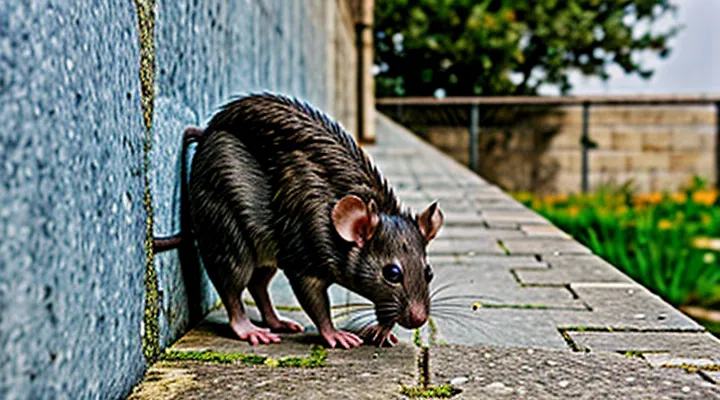
Understanding Rat Anatomy for Climbing
Feet and Claws: Nature's Grippers
Rats possess specialized hindfeet and forepaws that enable them to negotiate vertical and near‑vertical surfaces. The pads are covered with dense, short hairs that increase friction, while the underlying skin is highly flexible, allowing the foot to conform to irregular textures. Muscular control of the toes provides precise pressure distribution, reducing slippage on smooth or rough substrates.
Their claws are curved, keratinous structures that protrude slightly from the foot pads. When a rat engages a surface, the claws anchor into microscopic crevices, creating a mechanical interlock. This grip is reinforced by the following adaptations:
- Articulated toe joints – permit rapid adjustments to surface angle.
- Retractable claw mechanism – enables claws to be extended for climbing and retracted for locomotion on flat ground.
- Enhanced sensory receptors – detect minute changes in texture, guiding claw placement.
Together, these features give rats the capacity to ascend walls and other vertical obstacles without reliance on adhesive secretions or external aids.
Tails: Balance and Support
Rats rely on their tails as a dynamic counterbalance during vertical locomotion. Muscular control along the vertebral column adjusts tail position to offset shifts in the center of gravity, enabling precise alignment with the climbing surface. This real‑time compensation reduces the torque that would otherwise destabilize the animal when its forelimbs engage with a wall.
The tail also provides tactile feedback. Specialized mechanoreceptors detect airflow and contact pressure, informing the nervous system about proximity to obstacles and the texture of the substrate. This sensory input refines grip force and foot placement, allowing rats to negotiate smooth or irregular surfaces without loss of traction.
Key functions of the tail in wall climbing:
- Counterbalancing torque generated by limb movements
- Stabilizing body orientation during rapid ascent or descent
- Supplying proprioceptive data for fine motor adjustments
- Acting as a rudder for directional changes when airborne
Through these mechanisms, the tail contributes directly to the rat’s ability to scale vertical structures with agility and reliability.
Body Structure: Flexibility and Strength
Rats possess a skeletal framework optimized for vertical locomotion. Their lightweight skull and elongated spine allow rapid adjustments of body angle, facilitating adherence to uneven surfaces. The vertebral column features highly mobile intervertebral joints, granting the animal the ability to twist and bend while maintaining forward momentum.
Muscular architecture supports both strength and flexibility. The forelimb musculature—particularly the brachioradialis and flexor digitorum—produces powerful grip forces, enabling claws to embed into microscopic fissures. The hindlimb muscles, such as the gastrocnemius and quadriceps, generate explosive thrust, propelling the rat upward. Simultaneously, the intercostal and abdominal muscles contract rhythmically to stabilize the torso during ascent.
Key anatomical traits contributing to wall-climbing performance include:
- Flexible lumbar vertebrae that permit curvature adjustments.
- Robust forelimb tendons that transmit high tensile forces.
- Strong, retractable claws that engage with surface irregularities.
- Dense, elastic connective tissue in the tail, providing balance and counter‑torque.
Collectively, these structural characteristics endow rats with the capacity to navigate vertical obstacles that exceed their body length, confirming their proficiency in scaling walls.
Types of Surfaces Rats Can Ascend
Rough and Textured Walls
Rats exhibit strong climbing capacity, relying on sharp claws, flexible joints, and a lightweight body. Rough and textured surfaces provide numerous micro‑edges that engage the animal’s claws and pads, creating friction sufficient for upward movement. The irregularities on such walls also allow rats to brace their hind limbs, distributing weight and reducing slip risk.
Key characteristics of rough walls that facilitate rat ascent:
- Protruding particles or aggregates that act as grip points.
- Variable surface angles that enable the animal to shift its center of gravity.
- Porous material that absorbs minor impact forces, preventing rebound.
Conversely, smooth, non‑porous finishes lack the necessary anchorage, forcing rats to rely solely on tail balance, which limits vertical distance and speed. Studies measuring rat traction on different substrates show a marked increase in climb success rates on surfaces with a minimum roughness average (Ra) of 0.5 mm compared with polished concrete.
Understanding the interaction between rat morphology and wall texture informs pest‑control strategies and building design. Incorporating smooth, sealed finishes in vulnerable areas reduces the likelihood of rodent infiltration, while rough finishes in non‑critical zones maintain structural integrity without encouraging climbing.
Pipes and Cables
Rats exploit the geometry of pipes and cables to gain vertical traction. The circular cross‑section of a pipe offers a continuous surface that matches the curvature of a rat’s body, allowing the animal to wrap its limbs around the conduit and pull upward with coordinated limb movements. Steel or PVC conduits present a smooth, high‑friction interface when coated with dust, grease, or corrosion products, which further enhances grip.
Cables provide a linear, flexible pathway that can bridge gaps between solid structures. Rats grasp cable strands with their claws and teeth, distributing their weight along multiple points to prevent slippage. The tensile strength of typical electrical or fiber‑optic cables exceeds the forces generated by a rat’s climbing effort, so the cables remain intact while serving as a conduit for movement.
Key factors influencing rat use of these elements include:
- Diameter: Pipes between 2 in and 6 in accommodate the rat’s body without excessive clearance.
- Surface condition: Moisture, oil, or debris increase friction; polished or coated surfaces reduce it.
- Connectivity: Junctions, bends, and cable trays create a network that links floor, wall, and ceiling levels.
- Accessibility: Openings at pipe penetrations or cable entry points serve as entryways for rats entering a building’s interior.
Mitigation strategies focus on sealing pipe penetrations, installing smooth‑finished sleeves, and using cable management systems that limit exposed lengths. Regular inspection of conduit and cable routes identifies wear or debris that could facilitate climbing, enabling timely maintenance to disrupt rat pathways.
Trees and Vegetation
Rats frequently use trees and other vegetation as natural ladders when encountering vertical barriers. Bark texture, branch spacing, and leaf density provide grip points that compensate for the lack of artificial holds on smooth walls. When a tree trunk is adjacent to a wall, rats can transition from the bark to the wall surface, exploiting the irregularities created by moss, lichen, or weathering.
Key characteristics of vegetation that affect rat climbing performance:
- Rough bark surfaces increase friction, allowing the animal’s claws to anchor securely.
- Branches positioned at regular intervals enable stepwise ascent, reducing the need for a single long reach.
- Dense foliage near the base of a tree creates a sheltered environment, minimizing exposure to predators while the rat prepares for the climb.
- Moisture accumulation on bark or leaves can either improve grip or, if excessive, cause slippage; rats adjust their approach accordingly.
Understanding these plant features helps predict rat movement patterns in urban and rural settings where walls intersect with natural growth. Effective pest control measures often involve managing vegetation to limit accessible climbing routes.
Specific Building Materials
Rats can ascend many vertical surfaces, but specific building materials either facilitate or impede their progress.
Concrete and poured masonry present smooth, uninterrupted planes that lack footholds, reducing the likelihood of successful climbing. However, surface cracks, exposed rebar, or unfinished edging create enough texture for rats to gain purchase.
Brick walls, when mortared tightly, offer limited grip. Mortar joints that are recessed or deteriorated become channels for claws, allowing rats to scale the structure.
Steel panels and metal sheeting are inherently slick. Only when seams, rivets, or corrosion pits are present do they provide the necessary irregularities for rodents to cling and climb.
Glass surfaces are non‑porous and offer no traction. Rats can only traverse glass when it is framed with metal or wood that includes protruding elements or when condensation creates a thin film of moisture that marginally improves grip.
Wooden framing or siding varies with finish. Rough‑sawn lumber, splintered edges, and untreated surfaces give rats ample footholds. Conversely, smooth, painted, or laminated wood reduces climbing efficiency but does not eliminate it if gaps exist.
Polymer coatings, such as epoxy or polyurethane, seal underlying material. When applied uniformly, they create a smooth barrier that hinders rat movement. Imperfections, bubbles, or delamination, however, reintroduce climbable texture.
Key material characteristics influencing rat climbing ability
- Surface roughness: cracks, joints, or texture provide footholds.
- Presence of gaps: openings larger than ¼ inch allow claw insertion.
- Material continuity: uninterrupted planes discourage ascent.
- Maintenance condition: deterioration creates new climbing routes.
Selecting materials with minimal surface irregularities and ensuring regular inspection for cracks or gaps significantly limits rodents’ capacity to scale walls.
Brick and Mortar
Rats possess strong claws and a flexible spine that enable them to scale vertical surfaces. Brick and mortar walls present a mixed terrain: the brick units are solid, but the mortar joints create narrow gaps and uneven textures. These joints can serve as footholds for a rat’s claws, especially when the mortar is cracked, eroded, or loosely applied.
Key factors influencing a rat’s ability to ascend brick-and-mortar structures:
- Mortar condition – fresh, well‑cured mortar forms a smooth, continuous bond that resists claw penetration. Deteriorated or crumbling mortar leaves cavities that rats can exploit.
- Joint width – wider joints increase the surface area available for gripping. Standard 3‑mm joints offer limited hold, while older constructions with 5‑mm or larger gaps provide more opportunity.
- Surface roughness – rough or porous brick surfaces improve traction. Smooth, glazed bricks reduce grip and hinder climbing.
- Moisture and algae – damp mortar becomes softer, and algae growth adds a slimy layer that can both aid and impede movement, depending on texture.
In well‑maintained masonry, the integrity of the mortar and the uniformity of the brickwork create a barrier that most rats cannot overcome without supplemental assistance, such as ladders or rope. Conversely, structures with compromised mortar, irregular joints, or surface wear present a viable route for rats to climb and gain access to interior spaces. Regular inspection and timely repair of mortar joints therefore remain essential for preventing rodent intrusion through brick walls.
Wood Paneling
Wood paneling presents a mixed surface for rodents attempting to ascend vertical structures. The material’s hardness and grain direction affect traction, while the finish—paint, varnish, or laminate—determines slipperiness. Smooth, sealed panels reduce grip, whereas textured or unfinished wood offers more footholds for a rat’s claws.
Panel joints, recessed seams, and expansion gaps create continuous pathways. Even a millimeter‑wide opening can accommodate a rat’s body, allowing it to move upward without exposing its head. Fasteners that protrude from the surface serve as additional anchoring points, facilitating climb.
Installation quality directly influences accessibility. Panels installed without backer boards may sag, forming depressions that act as temporary ledges. Misaligned edges leave exposed edges that rats can use to gain purchase. Properly sealed seams and flush-mounted trim eliminate these footholds.
Preventive actions focus on eliminating climbable features:
- Apply non‑slip coatings or textured paints to increase surface friction.
- Seal all seams with rodent‑resistant caulk or metal flashing.
- Use recessed, hidden fasteners instead of surface screws or nails.
- Install metal or PVC trim over panel edges to block footholds.
- Conduct regular inspections for gaps, loose boards, or damaged finishes.
By addressing surface texture, joint integrity, and installation details, wood paneling can be rendered less hospitable to rats attempting to scale walls.
Concrete
Concrete surfaces present a mixed challenge for rodents attempting vertical movement. The material’s hardness and lack of natural grip reduce the likelihood of successful climbing, yet imperfections modify this baseline.
- Cracks and joint seams create narrow footholds that rats can exploit.
- Surface texture matters; rough, sand‑blasted concrete offers more traction than smooth, polished finishes.
- Moisture or organic residue on the surface can increase friction, aiding ascent.
When concrete walls are well‑maintained, with sealed joints and smooth finishes, rats rarely achieve sustained vertical progress. Conversely, structures showing deterioration—spalling, exposed rebar, or accumulated debris—provide the necessary footholds and pathways for rats to navigate upward. Regular inspection and repair of these vulnerabilities diminish the risk of rodent intrusion via wall climbing.
Factors Influencing Rat Climbing Ability
Species of Rat
Rats comprise a taxonomically diverse group, with more than 60 recognized species spread across several genera. Their morphological and behavioral adaptations influence the ability to scale vertical surfaces, a factor that varies markedly among species.
- Rattus norvegicus (Norwegian rat) – robust body, strong forelimbs, adhesive pads on hind feet; frequently observed scaling brick walls and metal grates in urban settings.
- Rattus rattus (Black rat) – slender frame, elongated tail, highly flexible spine; excels at navigating narrow ledges and climbing smooth plaster or painted surfaces.
- Rattus exulans (Polynesian rat) – smaller size, agile limbs; capable of climbing bamboo and thatch walls in tropical habitats.
- Rattus argentiventer (Sumatran rat) – semi-aquatic tendencies, webbed hind feet; less proficient on dry vertical surfaces but can ascend wet rock faces.
- Rattus norvegicus albus (Albino variant of the Norwegian rat) – identical climbing mechanics to the standard form; pigmentation does not affect wall-climbing performance.
The capacity to ascend walls depends on claw curvature, footpad texture, and tail balance. Species with more pronounced claw curvature and adhesive pads exhibit superior grip on rough or textured substrates, while those with flexible spines and long tails maintain equilibrium on smoother surfaces. Environmental exposure further refines these abilities; urban populations develop heightened proficiency due to frequent encounters with artificial structures.
Age and Health of the Rat
Rats possess a remarkable capacity for vertical ascent, yet this ability varies with the animal’s developmental stage and physiological condition. Younger individuals display rapid growth of skeletal muscle and flexible joints, facilitating strong grip on rough surfaces. As rats mature, muscle fibers reach peak strength, and coordination improves, optimizing climbing performance. In senior rats, sarcopenia, joint degeneration, and reduced reflex speed diminish the capacity to maintain traction on vertical substrates.
Key health determinants influencing wall‑climbing proficiency include:
- Musculoskeletal integrity: intact forelimb musculature and healthy claw keratin are essential for generating pulling force.
- Respiratory efficiency: efficient oxygen exchange sustains the aerobic metabolism required for sustained climbs.
- Neurological function: intact proprioception and motor planning enable precise limb placement and balance.
- Body condition: excessive adiposity adds load, while malnutrition weakens muscle output.
Monitoring age‑related changes and maintaining optimal health—through balanced nutrition, regular exercise, and veterinary care—preserves the rat’s ability to navigate vertical environments effectively.
Environmental Conditions
Rats’ capacity to ascend vertical surfaces depends heavily on external conditions.
Surface texture determines traction. Rough, porous materials such as brick, concrete, or untreated wood provide grip for the animal’s claws and pads, while smooth, glazed, or polished surfaces reduce friction and limit ascent. Small cracks, mortar joints, and irregularities serve as footholds; their absence forces rats to rely solely on adhesive forces, which are insufficient for sustained climbing.
Moisture alters both surface adhesion and fur properties. Moderate humidity can increase friction on porous substrates by softening micro‑structures, whereas excessive dampness may render surfaces slick and cause fur to lose grip. Conversely, very dry environments can make fur brittle, decreasing the animal’s ability to cling.
Temperature influences muscular performance and metabolic rate. Within the optimal range of approximately 20–30 °C, rats maintain peak stamina and coordination, enabling prolonged climbs. Temperatures below 10 °C reduce muscle efficiency, leading to shorter, less controlled movements; temperatures above 35 °C cause overheating, prompting rapid descent to cooler areas.
Lighting affects visual navigation. Low‑light conditions activate nocturnal sensory adaptations, allowing rats to rely on whisker feedback and proprioception for climbing. Bright illumination can increase stress and cause hesitation, potentially reducing climbing frequency.
Airflow and wind exposure also play a role. Gentle drafts may assist by providing additional sensory cues, while strong gusts can destabilize the animal and force it to abandon the climb.
Key environmental factors influencing rat climbing ability:
- Surface roughness and presence of micro‑structures
- Moisture level of the climbing surface
- Ambient temperature within the optimal physiological range
- Light intensity and visual conditions
- Air movement and wind strength
Understanding these variables clarifies why rats succeed on some walls while failing on others.
Roughness of Surface
Rats rely on friction between their pads and the substrate to generate the traction needed for vertical locomotion. Surface roughness directly modifies this frictional interface. When the texture presents micro‑scale protrusions, the pads interlock with the irregularities, increasing shear resistance and allowing the animal to sustain upward forces without slipping.
Key effects of surface roughness on rat climbing:
- Increased coefficient of friction: Rough surfaces raise the static friction coefficient, reducing the required muscular effort for ascent.
- Enhanced grip for claws: Irregularities provide anchor points for the sharp, retractable claws, improving leverage.
- Reduced slip risk: Micro‑asperities disrupt continuous sliding, breaking the motion into discrete points of contact that the rat can adjust in real time.
Conversely, smooth or polished surfaces diminish these advantages. A low‑roughness material offers minimal interlocking, resulting in a lower friction coefficient and a higher likelihood of slippage. Under such conditions, rats must rely almost exclusively on claw penetration, which is insufficient on materials lacking micro‑cavities.
Experimental observations confirm that rats achieve higher climbing speeds and sustain longer vertical distances on substrates with average roughness (Ra) values between 10 µm and 30 µm. Below 5 µm, performance drops sharply; above 50 µm, excessive protrusions can impede pad conformity, slightly decreasing efficiency.
In practical terms, surface engineering that adjusts roughness within the optimal range can either facilitate or hinder rat access to vertical structures. Designers of pest‑proof installations should prioritize low‑roughness finishes, while researchers studying rodent locomotion can use controlled roughness to isolate biomechanical variables.
Angle of Ascent
Rats rely on the angle at which a surface rises to determine whether they can maintain traction and forward motion. When the incline exceeds the point where their forelimb claws can generate sufficient normal force, the animal loses grip and slides backward.
The musculoskeletal structure of rats provides a high degree of flexibility. Their hind limbs produce powerful pushes, while the forepaws, equipped with sharp claws, create the anchoring points needed for ascent. Experiments on smooth glass and rough plywood show that rats can negotiate inclines up to approximately 70 ° before slipping, with optimal performance observed between 30 ° and 55 °.
Key variables that modify the maximum sustainable angle include:
- Surface roughness: textured materials increase friction, allowing steeper climbs.
- Body weight: lighter individuals sustain higher angles.
- Speed of movement: rapid bursts generate additional momentum, temporarily extending reachable inclines.
- Tail usage: the tail acts as a counter‑balance, improving stability on steep planes.
Understanding the relationship between climbable angle and rat locomotion clarifies why certain vertical structures, such as brick walls with mortar joints, are traversable, whereas smooth, near‑vertical surfaces remain impassable.
Presence of Obstacles
Rats possess strong forelimbs, adhesive pads, and a flexible spine that enable them to scale vertical surfaces. When obstacles are introduced, their climbing performance changes in predictable ways.
- Rough textures (concrete, brick) increase traction, allowing rats to maintain grip even when additional objects block the path.
- Smooth surfaces (glass, polished metal) reduce friction; any protruding obstacle can become a critical point of failure, causing loss of contact.
- Gaps wider than 2 cm interrupt the continuous foothold required for ascent, forcing rats to pause and search for an alternative route.
- Overhanging ledges create negative angles that exceed the rat’s ability to generate sufficient upward force, often resulting in a retreat.
- Loose debris or loose boards shift under weight, destabilizing the rat’s balance and increasing the likelihood of a slip.
The presence of obstacles thus modifies the mechanical demands of wall climbing. Adequate grip, manageable angles, and stable footholds are essential for successful ascent; any deviation from these conditions reduces the probability of a rat reaching the top.
Prevention and Control
Identifying Entry Points
Rats exploit vertical surfaces when structural weaknesses provide a foothold. Identifying where those weaknesses exist is essential for preventing intrusion.
Typical entry points include:
- Cracks larger than ¼ inch in foundation walls or exterior cladding
- Gaps around pipe penetrations, conduit sleeves, and HVAC ducts
- Unsealed utility openings such as electrical boxes, sewer cleanouts, and service vents
- Damaged or missing flashing around roof‑to‑wall transitions
- Loose or deteriorated siding, stucco, or brick mortar joints
Inspection should combine visual assessment with tactile probing. Use a flashlight to illuminate shadowed areas, then run a thin probe or wire through suspected openings to confirm size. For inaccessible heights, extendable mirrors or infrared cameras reveal hidden gaps. Document each finding with measurements and location tags.
Mitigation involves sealing identified gaps with appropriate materials: steel wool or copper mesh for small openings, followed by cement, expanding foam, or metal flashing for larger voids. Install rat‑proof covers on vents and utility ports, and ensure all exterior penetrations are wrapped with durable sealant. Regular re‑inspection, especially after weather events or construction activity, maintains barrier integrity.
Sealing and Reinforcement
Rats possess strong claws and a flexible spine, enabling them to scale vertical surfaces and breach poorly sealed structures. Unsealed gaps, deteriorated mortar, and loose cladding provide footholds and pathways for entry.
Effective sealing eliminates the primary routes used for ascent. Materials such as stainless‑steel mesh, expanding polyurethane foam, and cementitious sealants close holes around pipes, vents, and foundation cracks. Regular inspection of exterior joints and immediate repair of weather‑exposed mortar prevent new openings.
Reinforcement strengthens existing barriers against rat pressure. Options include:
- Installing metal flashing over vulnerable seams.
- Applying fiber‑reinforced polymer (FRP) wraps to brick or concrete walls.
- Securing interior wall surfaces with rigid metal sheeting behind drywall.
Combining thorough sealing with robust reinforcement creates a continuous, rat‑proof envelope, reducing the likelihood of wall climbing and subsequent infestation.
Eliminating Climbing Aids
Rats often reach elevated areas by exploiting objects that provide grip or support. Loose vegetation, exposed wiring, and unsecured shelving act as temporary ladders, enabling rodents to bypass standard barriers. Removing these aids directly reduces the likelihood of vertical movement.
Typical climbing aids include:
- Overhanging vines or ivy growing on exterior walls.
- Exterior utility lines, cables, or conduit left exposed.
- Protruding balcony railings, gutters, or roof eaves.
- Stacked debris, pallets, or firewood positioned against structures.
- Unsealed gaps around vent covers, pipe penetrations, or HVAC units.
Effective elimination measures:
- Trim or remove all vegetation within a two‑meter radius of building walls.
- Encase or reroute external wiring, securing it to smooth surfaces with non‑slip‑resistant conduit.
- Install smooth, continuous flashing over eaves and gutters to prevent rodents from gaining foothold.
- Store pallets, firewood, and similar materials on raised platforms or away from the building envelope.
- Seal all penetrations with metal or hard‑plastic collars, ensuring no protruding edges remain.
Continuous monitoring reinforces prevention. Conduct quarterly inspections to verify that no new climbing structures have developed, and promptly address any breaches. Maintaining a clean, unobstructed perimeter sustains the barrier against rat ascent.
Professional Pest Management
Rats possess strong claws and flexible bodies that enable them to scale vertical surfaces, including painted walls, brick, and concrete. Their ability to navigate smooth textures depends on surface condition, moisture, and the presence of footholds. In professional pest management, recognizing this capability guides inspection and treatment strategies.
Effective control programs address wall-climbing behavior through a combination of physical barriers, environmental modification, and targeted toxicants. Key actions include:
- Sealing cracks, gaps, and utility penetrations with steel wool, cement, or metal flashing to eliminate entry points.
- Installing smooth, non‑adhesive trim around foundation walls to reduce foothold availability.
- Applying rodent‑grade baits or dust formulations in concealed locations near suspected travel routes, ensuring compliance with safety regulations.
- Deploying bait stations or live‑trap systems on walls and vertical surfaces where activity is observed, positioning devices at least 12 inches above the floor to intercept climbing routes.
- Conducting regular monitoring visits to assess activity patterns, adjust barrier placements, and replenish control agents.
Integrated approaches combine these measures with sanitation practices that remove food and water sources, thereby decreasing the incentive for rats to explore vertical pathways. Documentation of inspection findings, barrier installations, and treatment outcomes supports ongoing management and regulatory compliance.