
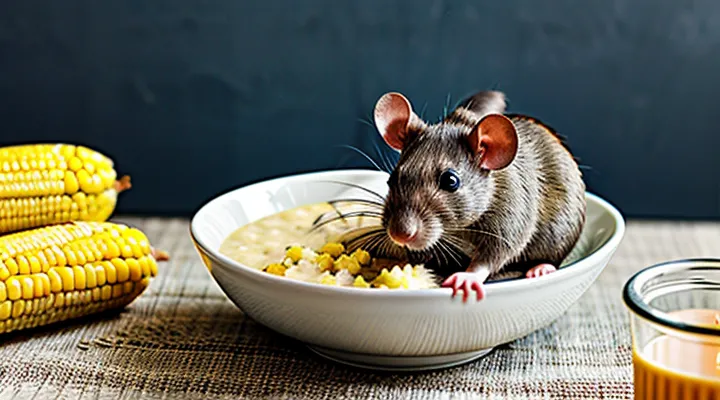
«Nutritional Value of Corn for Rats»
«Vitamins and Minerals in Corn»
Corn supplies a range of micronutrients that influence rat health when incorporated into a porridge diet. The grain’s nutrient profile includes:
- Vitamin A (beta‑carotene) – supports vision and immune function.
- Vitamin B complex:
- Thiamine (B1) – essential for carbohydrate metabolism.
- Riboflavin (B2) – involved in energy production.
- Niacin (B3) – aids in nervous system maintenance.
- Pantothenic acid (B5) – contributes to lipid synthesis.
- Pyridoxine (B6) – critical for amino‑acid metabolism.
- Folate (B9) – required for DNA synthesis and cell division.
- Vitamin E – provides antioxidant protection for cell membranes.
Key minerals present in corn are:
- Phosphorus – necessary for bone mineralization and ATP formation.
- Magnesium – participates in enzymatic reactions and neuromuscular function.
- Potassium – regulates fluid balance and nerve transmission.
- Iron – integral to hemoglobin synthesis.
- Zinc – supports enzyme activity and immune response.
While corn delivers these nutrients, its concentrations are lower than those found in specialized rodent feeds. To meet the complete nutritional requirements of rats, corn porridge should be supplemented with a balanced rat diet or fortified with additional vitamin‑mineral mixes. Excessive reliance on corn alone can lead to deficiencies in calcium, vitamin D, and certain essential amino acids.
«Fiber Content and Digestive Health»
Corn porridge can be incorporated into a rat’s diet, but its fiber level must be evaluated to maintain gastrointestinal function. Rats require a moderate amount of insoluble fiber to stimulate peristalsis and prevent constipation, while excessive soluble fiber may slow transit and cause bloating. Corn, inherently low in fiber, contributes little bulk; adding the porridge alone does not satisfy the rodent’s fiber needs.
When formulating a corn‑based mash for rats, consider the following actions:
- Supplement with a fiber source (e.g., shredded cellulose, oat bran) to reach 3‑5 % total dietary fiber.
- Verify that added fiber is primarily insoluble to promote motility.
- Monitor stool consistency daily; firm, well‑formed pellets indicate adequate fiber, while soft or sticky feces suggest excess soluble fiber.
- Adjust the proportion of corn porridge to no more than 20 % of total caloric intake to avoid diluting overall fiber content.
Research on rodent nutrition confirms that diets lacking sufficient fiber increase the risk of gastrointestinal stasis and impair nutrient absorption. By ensuring the combined feed meets the recommended fiber threshold, corn porridge can serve as an occasional energy source without compromising digestive health.
«Preparation Methods for Corn Porridge»
«Cooking Corn Safely for Rats»
Corn may be included in a rat’s diet when it is cooked without additives and served in appropriate amounts. Proper preparation eliminates the risk of digestive upset and reduces exposure to mycotoxins that can develop on raw kernels.
- Choose fresh, yellow or white sweet corn; discard any kernels that are discolored, moldy, or sprouted.
- Rinse kernels thoroughly under running water to remove dust and pesticide residues.
- Boil or steam kernels until they are soft but not mushy; a boiling time of 5–7 minutes achieves the required texture.
- Test temperature by touching a few kernels; they should be warm (≈40 °C) before cooling.
- Cool kernels on a clean surface; avoid refrigeration before serving, as rapid cooling can cause condensation and bacterial growth.
Serve a small portion—approximately one teaspoon of cooked kernels per 100 g of body weight—once or twice weekly. Mix the corn with a balanced base of pellets or fresh vegetables to maintain nutritional diversity.
Avoid adding salt, butter, oil, sugar, or spices. Discard any leftovers after 30 minutes at room temperature; prolonged exposure promotes bacterial proliferation. Store uncooked kernels in a dry, airtight container away from direct sunlight to prevent mold formation.
«Avoiding Harmful Additives»
When preparing corn porridge for laboratory or pet rats, the primary concern is the exclusion of substances that can cause toxicity, digestive upset, or long‑term health issues.
Key additives to avoid include:
- Artificial sweeteners (e.g., saccharin, sucralose); they interfere with glucose metabolism and may induce kidney stress.
- Preservatives containing nitrate or nitrite; these compounds can convert to carcinogenic nitrosamines in the gut.
- Flavor enhancers such as monosodium glutamate (MSG); excessive intake leads to neuronal over‑excitation.
- Synthetic colorants; many are linked to liver enzyme induction and allergic reactions.
- High‑salt seasonings; rats require low sodium levels; excess salt predisposes to hypertension and renal failure.
Select only pure, food‑grade cornmeal, water, and optionally a modest amount of natural, unprocessed vegetable oil. Verify that all ingredients are free from the listed additives by checking product labels and, when possible, obtaining certificates of analysis.
Regularly monitor rats for signs of gastrointestinal distress, changes in weight, or abnormal behavior after introducing porridge. Immediate cessation of the batch and a veterinary assessment are warranted if adverse symptoms appear.
By strictly limiting the formulation to basic, uncontaminated components, corn porridge can serve as a safe, nutritionally adequate supplement for rodents.
«Potential Risks and Considerations»
«Aflatoxins in Corn»
Aflatoxins are toxic metabolites produced primarily by Aspergillus flavus and A. parasiticus that contaminate corn under warm, humid conditions. The most potent forms—B₁, B₂, G₁, and G₂—are hepatotoxic, immunosuppressive, and carcinogenic. In rodents, exposure to aflatoxin B₁ at concentrations as low as 0.5 ppm can cause liver enzyme elevation, reduced growth rates, and increased mortality.
Corn intended for rat diets should be sourced from suppliers that provide aflatoxin analysis reports. Acceptable limits for laboratory rodents are generally set at ≤ 20 ppb total aflatoxins, aligning with guidelines for feed safety. If raw corn exceeds this threshold, it must be discarded or processed to reduce toxin levels.
Practical steps to minimize aflatoxin risk in corn porridge:
- Store corn in dry, ventilated containers; avoid temperatures above 30 °C and relative humidity above 70 %.
- Inspect kernels for visible mold, discoloration, or off‑odors before milling.
- Use heat‑stable processing methods (e.g., extrusion at > 150 °C) that degrade a portion of aflatoxins, though complete elimination is not achievable.
- Incorporate a certified aflatoxin‑binding additive (e.g., hydrated sodium calcium aluminosilicate) at the manufacturer‑recommended rate to reduce intestinal absorption.
- Perform periodic laboratory testing of bulk corn and finished porridge using high‑performance liquid chromatography (HPLC) or enzyme‑linked immunosorbent assay (ELISA).
When preparing corn porridge for rats, limit the inclusion rate to ≤ 10 % of the total diet to keep overall aflatoxin exposure well below toxic levels. Combine corn with protein‑rich, low‑mycotoxin ingredients such as soy or whey to ensure balanced nutrition while diluting any residual toxin concentration.
Adhering to these controls protects rat health, maintains experimental integrity, and complies with animal welfare standards.
«Sugar Content and Rat Health»
Corn porridge intended for rats contains natural sugars from corn starch that convert to glucose during digestion. Excessive glucose raises blood‑sugar levels, potentially leading to insulin resistance and obesity in laboratory and pet rats. Rats with a predisposition to metabolic disorders are especially vulnerable; even short‑term exposure to high‑sugar meals can alter glucose tolerance tests.
Research indicates that a daily sugar intake exceeding 5 % of a rat’s total caloric consumption correlates with increased adipose tissue and reduced locomotor activity. High‑glycemic feeds also accelerate dental plaque formation, contributing to oral infections. Monitoring body weight and blood‑glucose readings after introducing corn porridge helps detect adverse trends early.
Practical guidance for feeding corn porridge:
- Limit porridge to a maximum of 10 % of the total daily diet volume.
- Dilute the mixture with water or low‑sugar vegetable puree to reduce overall sugar concentration.
- Offer the porridge no more than three times per week; provide plain grain or protein pellets on other days.
- Observe each rat for signs of hyperactivity, excessive grooming, or weight gain; adjust portions accordingly.
When a rat shows elevated blood‑glucose levels, replace corn porridge with low‑glycemic alternatives such as steamed broccoli, sliced apple (thin skin), or specially formulated rodent feeds that contain complex carbohydrates and minimal simple sugars. Regular health checks, including fasting glucose measurements, ensure that dietary sugar remains within safe limits and supports optimal physiological function.
«Allergies and Sensitivities»
Corn‑based gruel can trigger allergic reactions in rats, especially when introduced without prior observation. Sensitivities may manifest as respiratory distress, skin irritation, gastrointestinal upset, or behavioral changes such as reduced activity.
Common allergens in corn include protein fractions (zein, glutelin) and residual pesticides or mold toxins that survive processing. Rats with a history of food‑related dermatitis, asthma‑like symptoms, or chronic digestive issues are at higher risk. Cross‑reactivity with other grains (wheat, barley) may amplify the response.
To evaluate safety, follow a structured trial:
- Offer a minimal portion (1–2 g) of freshly prepared corn porridge once daily.
- Record any abnormal signs within the first 24 hours, focusing on sneezing, nasal discharge, itching, diarrhea, or lethargy.
- If no adverse reaction occurs, increase the serving by 50 % every three days, continuing observation.
- Maintain a separate control diet for comparison, ensuring that the only variable is the corn component.
- Discontinue immediately and consult a veterinarian if any symptom appears.
When a rat shows intolerance, replace corn with alternative carbohydrates such as sweet potato, oatmeal, or rice, which present lower allergenic potential. Ensure the overall diet remains balanced in protein, fiber, and vitamins to prevent nutritional deficiencies.
«Recommended Serving Sizes and Frequency»
«Portion Control for Optimal Health»
When offering corn porridge to laboratory or pet rats, precise portion sizes determine nutritional adequacy and prevent obesity. A single serving should not exceed 5 % of the animal’s daily caloric intake; for a 250‑gram rat, this translates to roughly 2–3 grams of dry corn porridge, reconstituted with water to a semi‑solid consistency.
- Measure the dry ingredient with a calibrated scale before preparation.
- Mix with warm water at a 1:3 ratio (dry:liquid) to achieve a spoon‑able texture.
- Provide the portion once daily, preferably during the active evening phase.
Monitor body weight weekly. If gain exceeds 2 % per week, reduce the portion by 0.5 gram increments. If weight loss exceeds 1 % per week, increase the portion by the same amount, ensuring the total diet remains balanced with protein, fiber, and micronutrients from standard rodent pellets.
Combine corn porridge with a baseline pellet diet that supplies essential amino acids and vitamins. The porridge should complement, not replace, the pellet ration; maintain at least 80 % of daily calories from the complete feed. Adjust water availability to prevent dehydration, as the porridge adds moisture to the diet.
Document each feeding event, noting the exact weight of the porridge, the rat’s weight, and any behavioral changes. Consistent records enable evidence‑based adjustments and support optimal health outcomes for rats receiving corn‑based supplements.
«Integration into a Balanced Diet»
Corn porridge can be incorporated into a rat’s diet when it complements protein, fiber, and micronutrient sources. The carbohydrate content of corn provides quick energy, but excess can displace essential nutrients if not balanced.
- Offer porridge at no more than 10 % of total daily caloric intake.
- Mix porridge with a high‑quality pellet or fresh vegetables to ensure protein and fiber adequacy.
- Limit serving size to 1–2 teaspoons per 100 g of body weight, divided into two feedings.
- Monitor body condition; adjust portions if weight gain or loss occurs.
Corn porridge should be prepared without added salt, sugar, or artificial flavorings. Use plain boiled corn and water; avoid dairy or butter, which may cause digestive upset. Store leftovers in the refrigerator for no longer than 24 hours to prevent bacterial growth.
Integrating corn porridge responsibly supports energy needs while preserving overall nutritional balance for laboratory or pet rats.
«Alternative Grains and Porridges for Rats»
«Oatmeal as a Safe Option»
Oatmeal provides a reliable carbohydrate source for laboratory and pet rodents when corn‑based porridges are evaluated. Its soluble fiber supports digestive regularity without introducing the high starch load typical of corn preparations.
- Nutrient profile: low‑fat, moderate protein (≈12 %), essential B‑vitamins, and minerals such as iron and zinc.
- Digestibility: gelatinized oats absorb water readily, creating a soft texture that reduces the risk of choking.
- Allergen risk: oats contain negligible gluten‑related proteins, minimizing adverse immune responses in most rat strains.
Preparation guidelines ensure safety and consistency:
- Measure 1 part rolled oats to 3 parts warm water.
- Heat gently until the mixture reaches a gentle boil, then simmer for 2–3 minutes.
- Cool to body temperature (≈37 °C) before offering to the animal.
- Provide a fresh batch daily; discard leftovers after 4 hours to prevent bacterial growth.
When compared with corn porridge, oatmeal delivers a steadier glycemic response and lower caloric density, which helps maintain healthy body weight in rats prone to obesity. Incorporating oatmeal as an alternative or supplement aligns with best practices for rodent nutrition, offering a balanced, low‑risk option for daily feeding regimens.
«Quinoa and Other Healthy Alternatives»
Quinoa presents a viable substitute for corn porridge when formulating a balanced diet for rats. It supplies complete protein, containing all essential amino acids, and delivers a moderate glycemic load, reducing the risk of rapid blood‑sugar spikes. The grain’s fiber content supports gastrointestinal health, while its mineral profile—particularly magnesium, phosphorus, and iron—contributes to skeletal development and metabolic processes.
Other nutrient‑dense alternatives include:
- Amaranth: high in lysine, low in fat, and rich in antioxidants.
- Millet: easily digestible carbohydrate source, providing B‑vitamins and manganese.
- Barley (cooked, hulled): soluble fiber promotes gut motility; beta‑glucans aid immune function.
- Oats (rolled, cooked): soluble fiber, beta‑carotene, and a favorable omega‑6 to omega‑3 ratio.
When integrating these grains, follow these guidelines:
- Cook grains thoroughly to improve digestibility and eliminate anti‑nutritional factors.
- Limit portion size to 10–15 % of the total daily caloric intake, ensuring that protein, fat, and vitamin requirements remain within established rodent nutrition standards.
- Rotate grain types weekly to prevent nutrient imbalances and maintain palate variety.
- Monitor body weight and fecal consistency after introducing new foods; adjust quantities if signs of digestive upset appear.
Combining quinoa with occasional servings of the listed alternatives creates a diversified diet that meets the protein, fiber, and micronutrient needs of laboratory or pet rats, while mitigating the potential drawbacks associated with exclusive corn‑based porridge.