
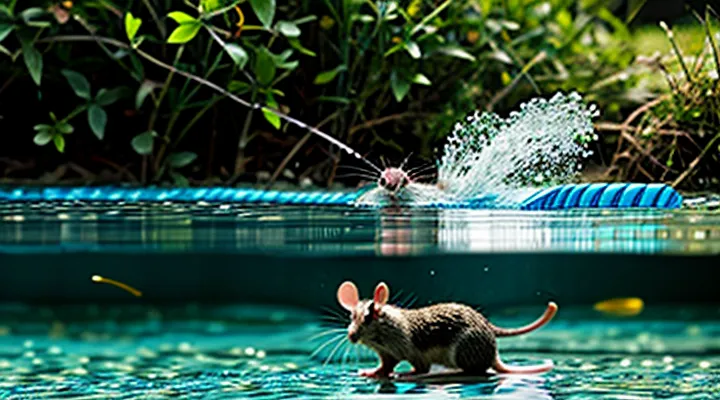
The Basic Question: Can Mice Swim?
Instinct and Natural Ability
Mice possess an innate capacity to navigate water without prior training. When placed in a shallow pool, they immediately adopt a rhythmic paddle motion that maintains forward propulsion and prevents submersion. This reflex emerges within seconds of contact with liquid, indicating a hard‑wired response rather than learned behavior.
Key instinctive actions include:
- Rapid forelimb strokes that generate thrust;
- Synchronous hind‑foot kicks that stabilize the body;
- Tail sweeps that adjust direction and balance;
- Immediate surfacing motions triggered by reduced oxygen levels.
Physiological traits complement these behaviors. Dense fur traps air, creating a buoyant layer that reduces sinking risk. Elevated lung volume provides a reserve of oxygen, allowing extended submersion. Muscular composition of the limbs favors quick, repetitive contractions suited for aquatic locomotion.
Collectively, instinct and natural ability equip mice with a functional swimming skill set that supports survival in environments where water exposure is unavoidable.
Factors Influencing Swimming
Water Type and Temperature
Mice possess limited aquatic capabilities, yet their ability to remain afloat and move in water depends heavily on the physical characteristics of the environment. Freshwater bodies, whether stagnant ponds or flowing streams, provide a density comparable to that of mammalian tissue, allowing mice to maintain buoyancy with minimal effort. In contrast, saline or brackish water increases osmotic pressure, demanding rapid adjustments in kidney function to prevent dehydration. Rapid currents impose additional mechanical stress, often exceeding the muscular strength of small rodents and resulting in swift exhaustion.
Key water conditions influencing mouse swimming performance:
- Freshwater (low salinity): supports osmotic balance; buoyancy aligns with body density.
- Brackish water (moderate salinity): requires increased renal excretion; prolonged exposure leads to electrolyte imbalance.
- Saltwater (high salinity): imposes severe dehydration risk; survival limited to brief immersion.
- Stagnant water: low flow reduces drag, but may harbor low dissolved oxygen, affecting metabolic output.
- Flowing water: heightened drag and turbulence accelerate fatigue; effective swimming limited to short distances.
Temperature exerts a direct impact on metabolic rate and thermoregulation. In water near the mouse’s core temperature (≈ 37 °C), heat loss is minimal, permitting sustained activity. Cooler water (≤ 15 °C) accelerates conductive heat loss, rapidly lowering body temperature and inducing hypothermia, which compromises muscle function and neural coordination. Warm water (≥ 30 °C) can cause hyperthermia if exposure is prolonged, especially when combined with high humidity that impedes evaporative cooling.
Temperature categories relevant to mouse aquatic performance:
- Cold (≤ 10 °C): triggers vasoconstriction; risk of hypothermia within minutes.
- Cool (10 °C – 20 °C): moderate heat loss; short bursts of activity possible.
- Warm (20 °C – 30 °C): optimal for brief swimming; metabolic demand balanced.
- Hot (≥ 30 °C): elevates core temperature; prolonged immersion leads to overheating.
Understanding the interaction between water type and temperature clarifies the physiological limits of mouse swimming. Adaptations such as a dense fur coat, rapid respiration, and efficient renal excretion enable brief submersion in favorable conditions, while extreme salinity or temperature quickly exceed the animal’s homeostatic capacity.
Mouse Species Differences
Mice exhibit considerable variation in aquatic performance, reflecting evolutionary adaptations to distinct habitats. Species inhabiting flood‑prone regions develop denser fur, enhanced lung capacity, and stronger hind‑limb musculature, enabling sustained submersion and rapid surface ascent. Conversely, desert‑dwelling species retain leaner body mass and reduced fur density, limiting buoyancy and endurance in water.
Key physiological distinctions include:
- Fur composition – Water‑repellent guard hairs increase in species frequenting wetlands, while arid‑adapted mice possess shorter, less oily coats.
- Respiratory traits – Elevated hemoglobin concentrations and larger diaphragms support prolonged breath‑holding in semi‑aquatic taxa.
- Limb morphology – Expanded metatarsal bones and elongated toes enhance propulsion for swimmers; terrestrial counterparts display compact limbs suited for digging.
Behavioral observations confirm that semi‑aquatic mice initiate swimming reflexes within seconds of immersion, whereas non‑aquatic species often exhibit panic responses and limited paddling. Genetic analyses reveal up‑regulation of hypoxia‑responsive genes in water‑adapted populations, indicating molecular mechanisms underlying enhanced oxygen utilization.
Understanding interspecies differences clarifies the range of swimming capabilities across the rodent family and informs conservation strategies for habitats where water availability fluctuates.
Adaptations and Survival in Aquatic Environments
Physiological Responses to Water
Fur and Buoyancy
Mice possess a dense coat composed of two distinct layers. The outer guard hairs are coarse and repel water, preventing saturation of the underlying undercoat. The fine underfur traps air, creating a thin insulating barrier that reduces wetting and contributes to overall buoyancy.
Buoyancy in small rodents derives from the combined effect of fur structure and body composition. Air pockets within the underfur decrease overall density, allowing a mouse to remain afloat with minimal effort. Additionally, the low fat content in most laboratory mice further lowers body density, enhancing the capacity to stay on the water surface.
Key factors influencing aquatic performance:
- Guard hairs: hydrophobic surface, limits water penetration.
- Underfur: retains microscopic air, increases displaced volume.
- Body density: low adipose tissue, promotes positive buoyancy.
- Limb movement: rhythmic paddling stabilizes position, but primary support originates from fur‑derived buoyancy.
When submerged briefly, water‑repellent guard hairs shed excess moisture, while the air‑filled undercoat maintains sufficient lift to prevent rapid sinking. Prolonged immersion overwhelms these mechanisms, leading to loss of buoyant support.
Understanding fur‑related buoyancy clarifies why mice can navigate shallow water environments despite limited anatomical adaptations for swimming.
Respiration and Breath-Holding
Mice possess physiological mechanisms that enable short periods of submersion. Their respiratory system can temporarily suspend airflow while maintaining oxygen supply to critical tissues. When a mouse submerges, the diaphragm contracts to close the glottis, preventing water entry and allowing a controlled breath‑hold.
Key aspects of the respiratory response include:
- Oxygen storage in the blood: Elevated hemoglobin concentration and a higher proportion of red blood cells increase the volume of dissolved oxygen.
- Muscle buffering: Myoglobin in skeletal muscles binds oxygen, providing an internal reserve that supports aerobic metabolism during apnea.
- Metabolic depression: Heart rate and metabolic rate decline sharply, reducing overall oxygen consumption and extending the viable breath‑hold duration.
- Ventilatory reflex modulation: Sensory receptors in the airway and lungs adjust the urge to breathe, delaying the initiation of the next inhalation until the mouse reaches a critical hypoxic threshold.
These adaptations collectively allow mice to navigate aquatic environments for brief intervals, such as crossing shallow water or escaping predators. The combination of anatomical features and physiological regulation ensures that oxygen depletion is delayed, permitting functional movement underwater despite the species’ primary terrestrial lifestyle.
Behavioral Strategies for Water Navigation
Escape and Foraging
Mice that enter water environments rely on specialized escape and foraging strategies to survive. Rapid propulsion generated by hind‑limb strokes enables swift departure from threats, while a flattened tail provides directional stability. Submerged muscles maintain buoyancy, allowing brief submersion without loss of control.
Foraging in aquatic zones involves tactile and olfactory cues. Whiskers detect surface vibrations produced by prey, and a heightened sense of smell locates food items such as aquatic insects or floating seeds. Short, flexible paws grasp slippery objects, and a waterproof fur coat prevents heat loss during prolonged exposure.
Key adaptations supporting escape and foraging:
- Hind‑limb musculature optimized for fast, repetitive strokes
- Tail morphology that functions as a rudder and stabilizer
- Fur structure with a dense undercoat that repels water
- Whisker sensitivity calibrated to detect minute water movements
- Olfactory receptors adapted to recognize dissolved organic compounds
These traits collectively expand the ecological niche of mice, permitting exploitation of resources and avoidance of predators in habitats that include standing or flowing water.
Nesting Near Water Sources
Mice frequently establish nests close to streams, ponds, or damp ground. Proximity to water provides a reliable source of moisture, essential for maintaining body hydration and supporting the high metabolic rate of small mammals. Immediate access to water also facilitates thermoregulation, allowing heat loss through evaporative cooling during warm periods.
Key advantages of water‑adjacent nesting include:
- Enhanced foraging efficiency; insects, larvae and seeds attracted to moist environments are readily available.
- Reduced exposure to desiccation; ambient humidity near water lowers evaporative loss from the skin and respiratory surfaces.
- Improved predator avoidance; shallow water bodies can serve as escape routes or concealment zones.
Potential drawbacks involve increased vulnerability to flood events and heightened presence of aquatic predators such as snakes and amphibians. Mice mitigate these risks by constructing nests above ground level, reinforcing burrow entrances with soil plugs, and selecting sites with gentle slopes that promote rapid drainage.
Limits and Risks of Swimming
Hypothermia and Exhaustion
Mice entering aquatic environments encounter rapid heat loss and limited energy reserves, making hypothermia and exhaustion the principal physiological constraints on sustained swimming.
Hypothermia develops when body temperature falls below the optimal range for enzymatic activity. Key manifestations include:
- Decreased core temperature below 35 °C
- Slowed metabolic rate leading to reduced oxygen consumption
- Impaired neuromuscular coordination
- Progressive loss of consciousness
Exhaustion arises from the depletion of glycogen stores and accumulation of metabolic by‑products. Principal effects are:
- Muscle fatigue limiting propulsive strokes
- Diminished cardiac output and respiratory efficiency
- Reduced ability to maintain buoyancy and directional control
Adaptive traits mitigate, but do not eliminate, these risks. Dense fur provides initial insulation; shivering thermogenesis generates heat; elevated heart rate supports short‑term oxygen delivery. Despite these mechanisms, prolonged immersion inevitably leads to the onset of the conditions described above, thereby restricting the duration and distance mice can effectively swim.
Predation in Water
Mice that enter aquatic environments encounter a distinct set of predators, each exploiting the animals’ limited maneuverability and reliance on surface tension. Aquatic and semi‑aquatic mammals, such as otters and minks, pursue prey by diving or swimming beneath the water’s surface, using whisker sensitivity to detect movement. Reptilian hunters, including water snakes, strike from submerged positions, employing rapid constriction once a mouse is within reach. Larger fish, particularly predatory species like pike and catfish, seize mice that inadvertently submerge, relying on lateral line detection to locate vibrations. Birds such as kingfishers and herons capture mice that surface for breathing, timing attacks with precise visual cues.
Key adaptations that influence predation risk include:
- Dense, water‑repellent fur that traps air, providing buoyancy but also creating a visible silhouette.
- Tail morphology that aids propulsion yet can be grasped by aquatic predators.
- Behavioral strategies, such as brief, intermittent swimming bouts and immediate retreat to shore, reducing exposure time.
Effective survival in water depends on the balance between these morphological traits and the predator community’s composition. Understanding the interaction between mouse physiology and aquatic predation informs broader studies of mammalian adaptation to wet habitats.
Implications for Pest Control and Wildlife Management
Water Traps and Deterrents
Mice possess physiological traits that enable brief submersion, yet prolonged exposure to water poses significant risk. Understanding how to control rodent activity in wet environments requires knowledge of effective water‑based traps and deterrent methods.
Pitfall devices filled partially with water create an immediate drowning risk for any mouse that falls in, especially when the surface is slick or covered with a thin mesh that prevents escape. Baited float traps employ a buoyant platform that supports a lure; once the mouse steps onto the platform, a weighted trigger releases a rapid influx of water, immobilizing the animal. * Electro‑suction systems draw water through a perforated floor, generating a low‑pressure zone that pulls the mouse downward while an electric pulse delivers a humane kill.
Deterrents focus on preventing entry into water‑rich zones. Hydrophobic coatings applied to surfaces near drains or gutters reduce the likelihood of mice gaining traction. Aromatic repellents, such as peppermint oil, dispersed in a fine mist over standing water, create an unpleasant olfactory environment that discourages rodents from approaching. Additionally, ultrasonic emitters placed above pools emit frequencies that interfere with mouse hearing, prompting avoidance of the area.
Maintenance practices reinforce these measures. Regular inspection of traps ensures functionality, while prompt removal of stagnant water eliminates potential habitats. Sealing cracks and installing fine mesh screens over drainage openings prevent accidental entry, reducing reliance on lethal methods.
Understanding Mouse Behavior for Control
Mice demonstrate limited aquatic proficiency; they can remain afloat for short periods by employing a rapid, alternating limb motion that generates thrust. This behavior is triggered by sudden immersion, leading to an instinctive escape response rather than sustained swimming. The motor pattern differs from that of semi‑aquatic mammals, lacking coordinated paddling and producing only brief propulsion before the animal seeks the nearest exit.
Understanding this response is essential for designing experimental controls involving water exposure. Precise knowledge of the following factors improves reproducibility and animal welfare:
- Threshold temperature that initiates the escape reflex; cooler water (< 20 °C) intensifies frantic movements, while warm water (> 30 °C) reduces activity.
- Duration of voluntary submersion before the animal attempts to climb out; typical latency ranges from 5 to 12 seconds.
- Influence of prior conditioning; repeated exposure to shallow water reduces panic‑driven thrashing but does not develop true swimming technique.
- Impact of body mass; larger individuals generate greater thrust and can sustain motion slightly longer than lighter counterparts.
Effective control strategies incorporate these observations. Enclosures should provide a dry escape route within the latency window, allowing automatic removal of the animal without manual interference. Monitoring systems that record limb frequency and body orientation can verify that the observed behavior aligns with expected escape patterns, ensuring that experimental variables remain consistent across trials.
By integrating detailed behavioral metrics with environmental parameters, researchers achieve reliable management of rodent subjects during aquatic tests, minimizing stress‑induced variability and enhancing the validity of physiological data.
Conservation Considerations for Semi-Aquatic Rodents
Semi‑aquatic rodents, including several mouse species that demonstrate swimming capability, occupy niche habitats where land and water intersect. Their physiology combines fur density, tail morphology, and lung capacity to support brief submersion, enabling foraging and escape from terrestrial predators.
Primary threats to these populations arise from alteration of riparian zones, contamination of freshwater systems, introduction of invasive predators, and shifts in temperature regimes that affect water availability. Habitat fragmentation reduces access to safe crossing points, while pollutants compromise skin integrity and respiratory function.
Conservation measures focus on preserving and restoring aquatic‑terrestrial interfaces, maintaining water quality, and facilitating movement across fragmented landscapes. Effective actions include:
- Protection of wetlands and floodplain corridors through legal designations.
- Implementation of buffer zones to filter runoff and limit chemical ingress.
- Monitoring programs that track population trends and health indicators.
- Development of predator‑control initiatives targeting invasive species.
- Support for captive‑breeding projects that supply individuals for reintroduction into restored habitats.
Long‑term success depends on coordinated management that integrates land‑use planning, water resource governance, and community engagement. Continuous research into physiological tolerances and behavioral adaptations will refine strategies and enhance resilience of semi‑aquatic rodent communities.