
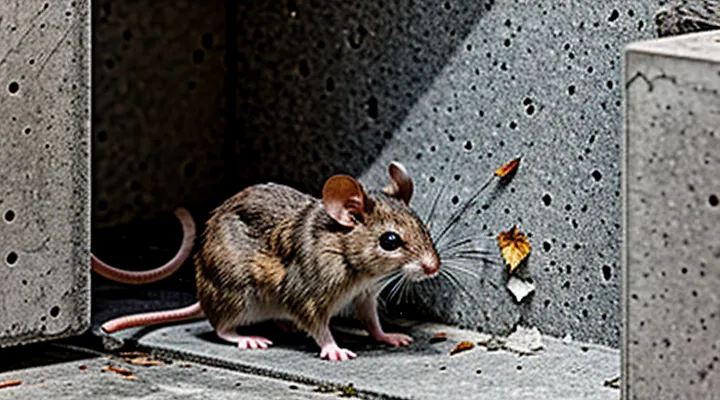
Understanding Rodent Incisor Capabilities
The Biological Necessity of Gnawing
Mice continuously incise their incisors, which elongate at a rate of roughly 0.1 mm per day. Without regular abrasion, the teeth would overgrow, obstruct feeding and cause fatal injury. The act of gnawing provides the necessary wear to maintain functional length and sharpness.
Incisor wear also serves a metabolic purpose. Mastication of fibrous plant material stimulates saliva production, which contains enzymes that begin carbohydrate digestion. Repeated gnawing enhances oral muscle development, improving bite force and coordination required for handling diverse food sources.
The behavior extends to environmental modification. By gnawing on structural elements, mice create entryways, nesting chambers, and escape routes. This capacity to breach hard substrates, including reinforced masonry, derives directly from the same dental growth‑wear cycle that sustains oral health.
Key biological drivers of gnawing:
- Continuous incisor growth necessitates mechanical shortening.
- Prevention of dental malocclusion and associated health risks.
- Stimulation of salivary enzymes that aid initial digestion.
- Development of jaw musculature essential for processing varied diets.
- Creation of shelter and access pathways through material displacement.
Measuring the Force: Mouse Bite Strength
When evaluating whether a rodent can breach a concrete barrier, the primary variable is the bite force a mouse can generate. Bite force is measured in newtons (N) and reflects the maximum pressure the incisors can apply to a substrate. Laboratory assessments typically involve a force transducer attached to a calibrated bite plate; the mouse is prompted to bite, and the peak reading is recorded. Repeated trials yield an average value that accounts for individual variation.
Key data from peer‑reviewed studies:
- Average mouse bite force: 0.5 N (≈50 g of force).
- Maximum recorded force in laboratory strains: 0.8 N.
- Force required to fracture standard concrete (compressive strength 30 MPa): roughly 10 000 N over a 1 cm² area.
The disparity between mouse bite force and the stress needed to damage concrete indicates that direct gnawing cannot compromise a properly cured concrete wall. Any observed penetration results from auxiliary factors such as pre‑existing cracks, moisture‑induced weakening, or assistance from other agents, not the mouse’s bite alone.
Materials Mice «Can» Damage
Wood and Drywall
Wood and drywall are common interior materials that often appear in structures where concrete walls serve as the primary barrier against pests. While concrete presents a hard, dense surface that resists rodent chewing, wood and drywall provide softer, more accessible layers once a mouse reaches the interior side of the wall. Rodents can gnaw through thin wooden studs, framing members, and drywall sheets with relative ease, especially when moisture or decay has weakened the material. Consequently, any breach in the concrete envelope that exposes these interior components creates a direct pathway for entry.
Key characteristics influencing susceptibility:
- Hardness: Wood fibers and gypsum board are far less dense than concrete, allowing incisors to make progress with each bite.
- Thickness: Standard ½‑inch drywall can be penetrated within minutes of sustained gnawing; thicker panels extend the time but do not prevent entry.
- Moisture content: Damp wood softens, accelerating chewing speed and increasing the likelihood of tunnel formation.
- Joint integrity: Gaps around nails, screws, and seams provide initial footholds for rodents to initiate damage.
When a mouse discovers a flaw—crack, joint, or penetrative conduit—in a concrete barrier, it will target the nearest wood or drywall surface. The animal’s incisors can exert forces of up to 30 psi, sufficient to slice through the fibers of a typical stud or the gypsum core of drywall. Once the interior layer is breached, the mouse can navigate cavities, access insulation, and reach further structural elements, potentially compromising the building’s integrity and hygiene.
Mitigation strategies focus on reinforcing the transition zone between concrete and interior finishes. Options include:
- Installing metal flashing or steel mesh over all seams where concrete meets wood framing.
- Using hardened, cement‑based board instead of standard drywall in high‑risk areas.
- Sealing all penetrations with rodent‑resistant caulking or expanding foam.
- Regularly inspecting wood studs for signs of rot or gnaw marks and replacing compromised sections promptly.
Understanding the mechanical limits of wood and drywall clarifies why these materials, while essential for interior construction, become vulnerable points once the outer concrete shield is compromised. Effective barrier design must therefore address both the concrete exterior and the softer interior layers to prevent rodent infiltration.
Soft Metals (Lead and Aluminum)
Soft metals such as lead and aluminum possess mechanical properties that influence the integrity of concrete structures under rodent pressure. Their low hardness and high ductility allow localized deformation when subjected to gnawing forces, creating micro‑cracks that can propagate through the surrounding cement matrix. Lead’s density provides limited resistance to penetration, while aluminum’s tensile strength remains insufficient to stop incisors that can generate forces up to 0.5 N per bite. Consequently, concrete reinforced with these alloys does not present a reliable barrier against rodent intrusion.
Key considerations for evaluating soft‑metal reinforcement in concrete walls:
- Yield strength: Lead (~12 MPa) and aluminum (~70 MPa) yield well below the compressive strength of typical concrete (≈30 MPa), enabling deformation under bite pressure.
- Corrosion behavior: Both metals corrode in moist environments, producing pits that weaken the concrete‑metal interface and facilitate gnawing pathways.
- Thermal expansion: Differential expansion between metal inserts and cement creates stress concentrations that can be exploited by rodents during seasonal temperature shifts.
Engineering mitigation strategies focus on substituting soft metals with high‑strength reinforcement (e.g., steel, fiber‑reinforced polymers) and applying surface treatments that increase hardness. When soft metals are unavoidable, encapsulating them within a hardened, non‑penetrable coating (epoxy, ceramic) restores barrier performance and reduces the likelihood of rodent‑induced breaches.
Rubber and Rigid Plastics
Rubber and rigid plastics are frequently employed as supplementary barriers when concrete structures must resist rodent intrusion. Their intrinsic properties differ markedly, influencing effectiveness against gnawing mammals.
Rubber offers high elasticity and compressibility, allowing it to seal joints and gaps that concrete alone cannot close. When applied as a continuous membrane or as gasket material around pipe penetrations, rubber prevents direct contact between a mouse’s incisors and the concrete surface. The material’s low hardness (typically Shore A 30–70) reduces the likelihood that a rodent can generate sufficient bite force to create a passage.
Rigid plastics, such as polycarbonate, acrylic, or high‑density polyethylene, provide a hard, non‑deformable surface. Their tensile strength and abrasion resistance exceed those of rubber, making them suitable for protective plates affixed to concrete walls, especially at vulnerable points like utility openings. A thickness of 3–5 mm generally withstands the maximum bite force recorded for common house mice (approximately 0.1 N·mm). Proper anchoring with stainless‑steel fasteners ensures that the plastic remains immobile under repeated gnawing attempts.
Key considerations for selecting either material include:
- Installation environment – rubber tolerates temperature fluctuations and maintains seal integrity; rigid plastics resist UV exposure and chemical corrosion.
- Mechanical load – rubber absorbs impact and accommodates slight movement in the structure; rigid plastics bear static loads without deformation.
- Maintenance – rubber may degrade over time and require replacement; rigid plastics retain structural properties for extended periods but can crack if subjected to excessive stress.
Combining both materials yields a layered defense: a rubber seal isolates gaps, while a rigid plastic overlay blocks any residual penetration paths. This approach maximizes protection for concrete assemblies where rodent gnawing poses a structural risk.
Analyzing the Resistance of Concrete Structures
Composition and Hardness of Standard Concrete
Standard concrete consists of Portland cement, water, fine aggregate (sand), and coarse aggregate (gravel). Typical mix ratios for residential construction are 1 part cement, 2 parts sand, and 3 parts gravel, with water added to achieve a slump of 4–5 inches. Admixtures such as plasticizers, air‑entraining agents, or accelerators may be incorporated in small percentages to modify workability, durability, or setting time.
Hardness of cured concrete is expressed primarily by compressive strength. Residential mixes attain 3,000–4,000 psi (≈ 20–28 MPa); commercial and industrial mixes reach 5,000–6,000 psi (≈ 35–40 MPa) or higher. Tensile strength, measured by modulus of rupture, is roughly 10 % of compressive strength. Surface hardness, evaluated with rebound or indentation tests, yields values comparable to a Mohs hardness of 5–6, indicating resistance to localized abrasion.
Rodent incisors generate bite forces of 0.1–0.2 N, far below the stress required to fracture concrete. Even the weakest concrete specimens resist forces exceeding 10 kN, a difference of five orders of magnitude. Consequently, mice lack the mechanical capability to penetrate or gnaw through standard concrete walls under normal conditions.
The Role of Aggregate and Binder Strength
Concrete’s resistance to rodent intrusion depends largely on the mechanical properties of its constituents. Aggregate particles provide load‑bearing capacity; larger, angular grains create interlocking networks that raise compressive strength and reduce the formation of micro‑cracks. When the aggregate skeleton is dense, the material presents a harder surface that mice must overcome before reaching any softer matrix.
Binder performance governs the cohesion between grains. High‑strength cement paste, especially when supplemented with pozzolanic additives, yields lower permeability and higher tensile strength. Reduced porosity limits the ability of a rodent’s incisors to create channels, while increased tensile capacity prevents crack propagation under repeated gnawing forces.
Key factors influencing overall durability:
- Aggregate size distribution: well‑graded mixes minimize voids.
- Grain shape: angular particles enhance interlock.
- Cement type and dosage: higher early‑strength cements improve resistance.
- Supplementary cementitious materials: silica fume, fly ash, or slag increase matrix density.
Together, these parameters define the concrete’s hardness, fracture toughness, and crack‑growth resistance, directly affecting the likelihood that a mouse can penetrate a concrete wall.
Why Solid Concrete is Impenetrable
Mice possess incisors capable of gnawing wood, plastic, and soft metals, but they lack the force required to breach solid concrete. The material’s resistance originates from several physical characteristics:
- Compressive strength: Typical structural concrete endures pressures of 3,000–5,000 psi, far exceeding the bite force a mouse can generate (approximately 0.2 psi).
- Hardness: Concrete’s surface hardness, measured around 7 on the Mohs scale, surpasses the hardness of mouse teeth (≈2.5), preventing any meaningful indentation.
- Density and mass: A 1‑cm³ block of concrete weighs about 2.4 g, creating a substantial inert mass that a small rodent cannot displace.
- Lack of organic fibers: Concrete contains no biodegradable fibers that could be chewed away; its aggregate and cement matrix remain chemically inert to saliva and enzymes.
Even when concrete contains micro‑cracks, the surrounding matrix quickly redistributes stress, closing gaps and maintaining structural integrity. Consequently, a mouse cannot create a passage through an intact concrete wall, and any breach would require external mechanical damage rather than biological chewing.
Identifying Common Entry Points and Structural Vulnerabilities
Cracks Due to Settling and Age
Concrete barriers are not impenetrable when structural defects develop. Settlement of a building’s foundation creates narrow fissures that appear as the structure adjusts to soil movement. These fissures typically range from a fraction of a millimeter to several millimeters in width and may extend vertically or diagonally across the wall surface. The width remains constant unless additional stress enlarges the opening.
Age‑related deterioration produces a different pattern of cracks. Thermal cycling, moisture infiltration, and long‑term fatigue cause shrinkage and expansion that manifest as hairline cracks, staggered joints, and spalling. Over decades, such defects can widen to several millimeters, especially where reinforcement corrodes or where concrete loses cohesion.
Both settlement and age‑induced cracks provide entry points for rodents. Mice possess incisors capable of enlarging openings as small as 2 mm, allowing them to exploit existing fissures and create additional pathways. Once a crack connects interior voids to the exterior, mice can navigate through the gap without needing to gnaw through intact concrete.
Typical indicators of compromised concrete include:
- Linear cracks following a consistent direction across a wall surface.
- Intermittent, irregular fissures clustered near corners or openings.
- Visible spalling or flaking of the concrete matrix.
- Accumulation of debris or droppings within the crack line.
Addressing these defects requires sealing with flexible, rodent‑resistant caulk, reinforcing the wall with epoxy‑filled patches, and monitoring foundation movement to prevent new fissure formation. Maintaining the integrity of concrete surfaces limits the practical routes mice can use to breach the barrier.
Mortar Joints in Brick and Block Walls
Mortar joints bind bricks or concrete blocks, filling the gaps between units. Typical mixes combine cement, lime, sand, and water; the proportion determines strength, porosity, and adhesion. Joint thickness ranges from 3 mm to 12 mm, depending on block size and construction standards.
The cured mortar exhibits compressive strength between 2,500 psi and 5,000 psi, hardness comparable to the surrounding concrete, and low moisture content. These characteristics limit the ability of rodent incisors to create a passage, especially when the joint surface remains intact and free of cracks.
Mice gnaw with continuously growing incisors that can cut through soft materials but encounter rapid wear against hard, abrasive surfaces. Successful penetration through mortar requires:
- Pre‑existing cracks or gaps larger than 2 mm
- Deterioration of the cement matrix due to moisture or chemical attack
- Loose or crumbling joint material caused by poor mixing or aging
- Direct access to the joint without intervening metal ties or reinforcement
When any of these conditions are present, mice can enlarge the opening and eventually breach the wall. Otherwise, the joint acts as a barrier comparable to solid concrete.
Mitigation measures focus on eliminating vulnerable points. Options include:
- Repointing deteriorated joints with high‑strength mortar
- Applying sealants or epoxy coatings over the joint surface
- Installing metal flashing or steel wool strips within the joint cavity
- Maintaining low interior humidity to prevent mortar softening
These actions reinforce the mortar joint, reducing the likelihood that rodents will exploit it to infiltrate concrete wall assemblies.
Areas Surrounding Utility Lines and Drains
Gaps Around Water Pipes
Mice exploit any breach in a concrete barrier, and the space surrounding water‑pipe penetrations provides a common route. Typical installation gaps range from 1 mm to 10 mm, sufficient for a mouse to squeeze through without needing to gnaw the surrounding concrete.
Rodents can enlarge small openings by continuously chewing the mortar or sealant that lines the pipe sleeve. Their incisors, capable of exerting forces up to 20 N, gradually wear away soft materials, eventually creating a passage that bypasses the wall’s structural integrity.
Effective mitigation requires sealing the annular space around each pipe. Recommended actions include:
- Inserting stainless‑steel or copper mesh sleeves that fit tightly around the pipe and extend beyond the concrete surface.
- Applying high‑strength, rodent‑resistant polyurethane foam to fill remaining voids.
- Wrapping the joint with metal flashing or cementitious mortar reinforced with fiber mesh.
Regular inspection of pipe entries, especially after construction or repair work, identifies emerging gaps before mice can establish a pathway. Prompt resealing maintains the concrete wall’s defensive function against rodent intrusion.
Ventilation Openings
Mice can bypass solid concrete by exploiting openings created for airflow. Ventilation apertures provide the only continuous path through which a rodent can enter a sealed structure, regardless of wall density.
Typical ventilation ducts range from 4 mm to 25 mm in diameter. Gaps around duct collars, poorly fitted flanges, or cracked linings enlarge the effective passage. Steel or PVC sleeves that are not welded or glued leave seams that can be widened by repeated gnawing. Dust, corrosion, and settlement further increase clearance over time.
Preventing intrusion requires sealing and screening every opening that connects interior space with the exterior. Effective measures include:
- Installing stainless‑steel mesh with openings no larger than 6 mm.
- Applying fire‑rated acoustic sealant around duct collars.
- Using compression gaskets on removable grilles.
- Conducting quarterly inspections for corrosion, deformation, or missing fasteners.
- Replacing deteriorated sleeves with welded metal or molded polymer sections.
When all ventilation routes are properly screened and sealed, the likelihood of a mouse reaching the interior through concrete walls drops to negligible levels.
The Reality of Rodent Breach
Exploiting Poor Installation Practices
Mice exploit weaknesses created during construction rather than gnawing through solid concrete. When walls, floors, or foundations are assembled without strict quality control, tiny openings appear that rodents can enlarge with minimal effort.
Typical installation errors that provide access points include:
- Unsealed conduit and pipe sleeves left with gaps larger than ¼ inch.
- Improperly backfilled utility trenches where soil settles, exposing the concrete surface.
- Cracked formwork joints that are not reinforced before concrete pours.
- Inadequate expansion joint filler that deteriorates, leaving voids.
- Missing or damaged metal flashing around windows, doors, and ventilation shafts.
These defects allow mice to enter, navigate, and establish colonies behind the wall surface. Once inside, they can compromise insulation, electrical wiring, and structural integrity. Corrective measures focus on:
- Inspecting all penetrations before concrete sets and applying fire‑rated, rodent‑proof sealants.
- Verifying that formwork aligns precisely and that reinforcement is continuous across joints.
- Using durable, compressible joint material that resists compression and cracking.
- Conducting post‑installation pressure testing to locate hidden gaps.
Eliminating installation oversights removes the pathways that rodents rely on, ensuring that concrete barriers fulfill their intended protective function.
Tunneling Beneath Slab Foundations
Rodent penetration of concrete structures often depends on pathways that bypass the material’s compressive strength. When a building rests on a slab foundation, mice frequently exploit the space beneath the slab rather than attempting to gnaw directly through the concrete surface.
Soil moisture expands cracks and creates voids at the slab‑soil interface. These openings provide a low‑resistance route for rodents to enter the crawlspace. Concrete that is thin, poorly cured, or exposed to repeated freeze‑thaw cycles develops micro‑fractures that connect to the underlying soil, further facilitating access.
The slab’s tensile weakness makes it susceptible to stress concentrations around utility penetrations, expansion joints, and perimeter edges. If these features are not sealed, mice can wedge themselves through gaps as small as a few millimeters and then enlarge the passage by repeated chewing.
Key factors that allow tunneling beneath slab foundations:
- Presence of hairline cracks or settlement gaps.
- Inadequate sealing of pipe sleeves, conduit entries, and vent stacks.
- Insufficient concrete cover over reinforcement bars.
- High groundwater levels that erode the soil‑concrete bond.
- Improper compaction of the subgrade before pouring the slab.
Mitigation measures:
- Apply elastomeric sealants to all penetrations and joint seams.
- Install stainless‑steel mesh or copper flashing beneath the slab perimeter.
- Use waterproofing membranes to isolate the slab from capillary rise.
- Conduct periodic visual inspections for emerging cracks and repair with epoxy injection.
- Maintain a dry, well‑drained subgrade to reduce soil movement and cracking.
By addressing these structural and environmental variables, the likelihood of mice establishing tunnels beneath slab foundations can be substantially reduced, eliminating the need for them to attempt direct gnawing of the concrete surface.
Deterioration Caused by Weather and Moisture
Weather exposure subjects concrete walls to repeated cycles of heating, cooling, and precipitation. Thermal expansion and contraction generate micro‑cracks that widen over time, especially when temperature swings are extreme. Moisture infiltration follows these fissures, allowing water to penetrate the interior matrix. Once inside, water reacts chemically with calcium hydroxide in the cement paste, forming calcium hydroxide hydrate and reducing pH. This process, known as leaching, weakens the binding capacity of the concrete.
Repeated wetting and drying cycles exacerbate deterioration. During wet periods, pores fill with water; subsequent drying draws moisture outward, creating suction that pulls dissolved salts toward the surface. Salt crystallization exerts pressure on pore walls, expanding existing cracks. Freeze‑thaw cycles intensify this effect: water trapped in pores expands upon freezing, generating tensile stresses that fragment the material.
Moisture also promotes biological activity. Algae, mold, and certain bacteria thrive on damp surfaces, producing organic acids that further degrade the cement matrix. These acids lower alkalinity, accelerating corrosion of embedded steel reinforcement. Corroded rebar expands, forcing adjacent concrete to crack and spall.
The combined impact of these mechanisms reduces wall density and compressive strength, creating pathways that rodents can exploit. When concrete loses integrity, the effort required for a mouse to gnaw a passage diminishes markedly. Key factors include:
- Thermal stress‑induced cracking
- Chemical leaching from water–cement interaction
- Salt crystallization pressure
- Freeze‑thaw expansion
- Biological acid corrosion
- Reinforcement corrosion and resultant spalling
Understanding how weather and moisture compromise concrete integrity clarifies why structural degradation directly influences the feasibility of rodent intrusion.
Practical Strategies for Rodent Exclusion
Using Proper Sealing Materials
Mice possess strong incisors capable of penetrating many building materials, but solid concrete resists their bite when the surface remains intact. Cracks, joints, and penetrations create pathways that rodents can exploit; the integrity of these points determines whether a mouse can gain access.
Proper sealing materials close these vulnerable openings and restore the impermeability of concrete structures. Effective products include:
- Polyurethane sealant: expands to fill irregular gaps, adheres to concrete, and remains flexible under temperature changes.
- Epoxy mortar: creates a hard, durable patch for larger cracks, bonding chemically with the substrate.
- Silicone-based caulk: suitable for small joints around pipes and cables, offering long‑term elasticity.
- Hydraulic cement: reacts with water to harden quickly, ideal for sealing active leaks that could attract moisture‑seeking pests.
Application guidelines:
- Clean the area of dust, loose particles, and debris.
- Apply a primer compatible with the chosen sealant to improve adhesion.
- Inject or spread the sealant evenly, ensuring complete coverage of the gap.
- Allow the material to cure according to manufacturer specifications before exposing it to traffic or moisture.
When all potential entry points are sealed with the appropriate material, the likelihood of rodents breaching the concrete envelope diminishes dramatically, effectively preventing mouse intrusion.
Mesh and Copper Wool Barriers
Mice possess strong incisors capable of chewing through many building materials, yet solid concrete presents a barrier that exceeds their bite force. The mineral matrix of cured concrete can withstand pressures far beyond the forces generated by rodent jaws, making direct penetration unlikely. However, gaps, cracks, and joints in concrete structures provide pathways that mice can exploit.
Mesh barriers, typically made of stainless steel or galvanized wire with openings no larger than ¼ inch, block entry through these openings. When installed flush against the interior surface of a wall, the mesh creates a physical obstruction that rodents cannot squeeze through or gnaw past without damaging the metal. Copper wool, composed of tightly wound strands of copper, offers a secondary deterrent. Its fibrous texture is difficult for mice to bite cleanly, and the metal’s slight electrical conductivity can create an uncomfortable sensation when the animal attempts to chew.
Key considerations for effective implementation:
- Inspect the entire perimeter of the concrete wall for fissures, utility penetrations, and sealant failures.
- Fit stainless‑steel mesh over each identified opening, securing it with corrosion‑resistant staples or construction adhesive.
- Apply a layer of copper wool behind the mesh, ensuring complete coverage of the gap edges.
- Seal the outer surface with a durable caulk or epoxy to prevent moisture intrusion that could degrade the copper over time.
- Conduct regular visual checks to confirm that the barrier remains intact and that no new cracks have formed.
When combined, mesh and copper wool form a dual‑layer defense that exploits both mechanical resistance and the deterrent properties of copper. This approach reduces the likelihood that rodents will breach a concrete wall, even when they locate and attempt to exploit minor structural imperfections.
Routine Inspection and Maintenance
Routine inspection of concrete barriers is essential for detecting early signs of rodent activity. Inspectors should examine joints, cracks, and penetrations at least quarterly, recording any evidence of gnaw marks, droppings, or nesting material.
- Visual survey of wall surfaces for fresh gnawing edges
- Probe of expansion joints and sealant lines with a steel rod
- Measurement of crack width; any increase beyond 2 mm warrants immediate repair
- Verification that utility openings are fitted with metal sleeves and tight gaskets
- Documentation of findings in a standardized log, noting location, date, and severity
Maintenance actions follow directly from inspection results. Small gnawing sites are sealed with epoxy‑based concrete repair kits, ensuring a minimum 3 mm overlap onto sound material. Larger breaches require removal of damaged sections and replacement with reinforced concrete, incorporating steel mesh to resist future rodent pressure. All penetrations for pipes, cables, and ducts must be equipped with stainless‑steel collars and inspected for wear during each maintenance cycle.
A preventive schedule includes quarterly cleaning of debris around wall perimeters, replacement of worn sealants, and periodic testing of metal barriers for corrosion. Adhering to this regimen minimizes the likelihood that rodents will compromise structural integrity through concrete walls.
Mitigation and Pest Control
Immediate Steps Upon Discovery
When a rodent breach of a concrete barrier is identified, immediate action prevents further damage and health risks.
- Isolate the affected area. Close doors, seal vents, and restrict access to prevent the animal from moving deeper into the structure.
- Conduct a visual inspection. Locate entry points, gnaw marks, and any signs of nesting or droppings. Document findings with photos for reference.
- Apply a temporary seal. Use steel wool, expanding foam, or cement‑based filler to block visible holes until a permanent repair can be installed.
- Deploy control measures. Place snap traps or electronic devices near the breach, ensuring they are positioned away from children and pets. Bait with high‑protein attractants for rapid capture.
- Notify professional pest‑management services. Provide them with inspection details and request a comprehensive assessment, including recommendations for structural reinforcement.
- Schedule a definitive repair. Replace compromised concrete sections with reinforced concrete or install steel mesh reinforcement to withstand future gnawing attempts.
- Review building maintenance protocols. Incorporate regular inspections of walls, foundations, and utility penetrations into the routine schedule to detect early signs of rodent activity.
Prompt execution of these steps minimizes structural deterioration, reduces contamination, and restores the integrity of the building envelope.
When to Consult Professional Exterminators
Mice are capable of chewing through masonry, especially when moisture or cracks provide an entry point. Their incisors continuously grow, and the need to wear them down drives them to gnaw at the hardest materials they can reach.
If the infestation compromises structural integrity, poses health risks, or persists despite basic interventions, professional exterminators should be engaged. Their expertise includes identifying hidden colonies, applying rodent‑specific baits, and sealing entry points with materials that resist repeated gnawing.
Typical situations that warrant immediate professional assistance:
- Visible droppings or gnaw marks on concrete surfaces.
- Persistent noises from within walls that simple traps have not reduced.
- Evidence of damage to utility lines, insulation, or foundation elements.
- Re‑occurrence of mice after previous DIY control measures.
- Presence of children, elderly, or immunocompromised individuals in the affected area.
When a qualified service is called, the provider will conduct a thorough inspection, map all access routes, and implement an integrated control plan that combines baiting, exclusion, and ongoing monitoring to prevent future breaches.
Long-Term Prevention Measures
Rodents can compromise concrete barriers when cracks, joints, or thin sections are present. Over time, their incisors enlarge openings, allowing entry into buildings and utilities.
Effective long‑term protection relies on eliminating access points and reducing attraction factors. The following actions provide durable resistance:
- Install reinforcement bars or mesh at wall perimeters to increase structural thickness beyond the chewing capacity of small mammals.
- Apply sealants and waterproofing compounds to all joints, penetrations, and utility openings; reapply according to manufacturer’s service intervals.
- Use steel wool or copper mesh to backfill gaps before applying concrete or mortar, creating a barrier that rodents cannot bite through.
- Incorporate concrete mixes with higher compressive strength and aggregate size; avoid thin slabs in high‑traffic areas.
- Conduct quarterly inspections of foundations, basements, and crawl spaces; repair hairline cracks promptly with epoxy‑based filler.
- Implement site‑wide sanitation: store feed, waste, and compost in sealed containers; eliminate vegetation that provides cover near structures.
- Deploy perimeter bait stations or electronic deterrents in accordance with local regulations, maintaining a continuous pressure gradient that discourages nesting.
Combining structural reinforcement with regular maintenance and environmental management yields a sustainable defense against rodent intrusion through concrete.