
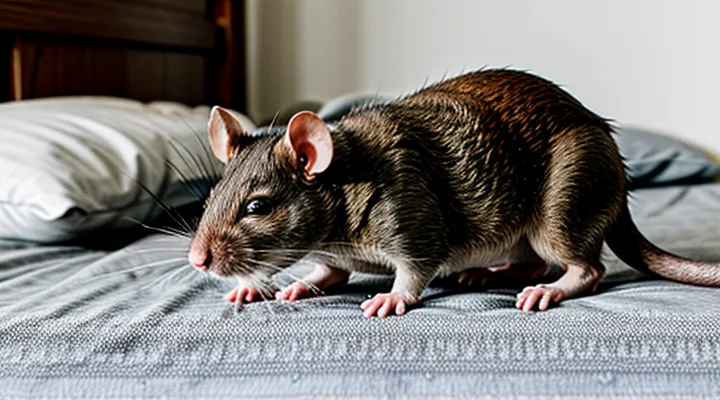
Physical Capabilities of Rats
Climbing Prowess
Rats possess a muscular hind‑limb structure and flexible spine that enable rapid vertical and horizontal movement. Their claws provide grip on a variety of surfaces, while their low body mass reduces the force needed to support themselves on elevated platforms.
Key physiological and behavioral traits influencing ascent onto a sleeping human’s sleeping area include:
- Grip strength – forepaws generate enough pressure to hold onto woven fabrics, mattress edges, and pillowcases.
- Body flexibility – ability to contort through tight gaps and overhangs.
- Exploratory drive – nocturnal foraging instincts prompt investigation of warm, sheltered spots.
- Sensory acuity – whisker and auditory cues detect human presence, allowing timing of movement to avoid disturbance.
Environmental variables that affect success are:
- Surface texture – smooth sheets reduce friction; rough blankets increase traction.
- Bed height – lower frames require less vertical lift, while high platforms demand greater exertion.
- Human posture – a completely reclined sleeper presents fewer obstacles than a curled position that blocks entry points.
- Lighting conditions – low illumination aligns with rat nocturnal activity, enhancing confidence in navigation.
When all favorable conditions converge—adequate grip surfaces, accessible entry points, and minimal human movement—a rat can reliably climb onto a sleeping person’s bed. Conversely, smooth bedding, high elevation, and active sleepers markedly lower the probability of successful ascent.
Adaptations for Vertical Movement
Rats possess several physiological and behavioral traits that enable them to navigate vertical surfaces and reach elevated sleeping areas. Their skeletal structure includes sharp, curved claws that embed into fabrics, wood, and plaster, providing a reliable anchor point. Muscular development in the forelimbs delivers the force needed to pull the body upward while the hind limbs push against the surface for additional leverage.
The tail functions as a counterbalance, allowing precise adjustments during ascent and preventing loss of equilibrium. Flexible spine segments permit the animal to contort its body, fitting through narrow gaps and wrapping around objects to gain purchase. Sensory whiskers detect texture and distance, guiding the rat toward optimal climbing routes even in low‑light conditions.
Adhesion mechanisms further support vertical movement:
- Micro‑spines on the pads of the paws increase friction against rough materials.
- Secreted oils reduce slip on smooth surfaces such as polished wood or plastic.
- Ability to generate static cling on fabric fibers through minute pressure differentials.
These adaptations collectively enable a rat to climb from the floor to a bed occupied by a sleeping person, overcoming typical obstacles such as blankets, pillow edges, and mattress height.
Rat Behavior and Habitat
Urban Rat Populations
Urban rat populations thrive in densely built environments where food waste, water sources, and shelter are abundant. High‑density housing blocks often contain concealed pathways—plumbing, utility conduits, and wall voids—that connect street‑level sewers to interior rooms. These routes enable rats to move vertically and reach upper floors with minimal obstruction.
The climbing capacity of common city rats (Rattus norvegicus and Rattus rattus) includes strong forelimbs, a prehensile tail, and the ability to scale vertical surfaces up to 1.5 m in height. When a bedroom door is left ajar or a window is open, a rat can enter the sleeping area without direct human observation. Once inside, the animal can navigate bed frames, headboards, and mattress edges, especially if the furniture lacks smooth, non‑gripping surfaces.
Key factors that increase the probability of a rat accessing a sleeper’s bed:
- Unsealed gaps around pipes, vents, or electrical outlets.
- Presence of food crumbs or spilled liquids near the bed.
- Cluttered bedding that provides footholds.
- Lack of regular pest‑control inspections.
Mitigation measures focus on structural exclusion and sanitation:
- Seal all openings larger than 6 mm with metal mesh or concrete.
- Store food in airtight containers and clean spills promptly.
- Reduce clutter and keep bedding free of fabric scraps.
- Conduct quarterly inspections by licensed exterminators.
Empirical surveys in metropolitan districts report rat sightings in bedrooms at rates between 3 % and 12 % of surveyed households, correlating strongly with the presence of the listed risk factors. Effective exclusion and hygiene practices lower these rates to under 1 % in controlled environments.
Nocturnal Activity
Rats are primarily nocturnal mammals, active from dusk through the early morning hours. Their heightened sensory abilities—acute hearing, whisker‑driven spatial awareness, and a keen sense of smell—guide movement in low‑light environments. During this period, rats routinely explore vertical structures, using their strong forelimbs and sharp claws to scale surfaces up to several feet high.
When a person lies motionless on a bed, the sleeping individual emits body heat, carbon dioxide, and scent cues that attract rodents seeking food or shelter. Rats can detect these signals from a distance of several meters. Their climbing capacity allows them to navigate bedding frames, headboards, and mattress edges, especially if the furniture is unsecured or the surrounding area offers footholds such as curtains, blankets, or nearby furniture.
Key factors that enable a rat to reach a sleeping person’s sleeping platform:
- Night‑time activity cycle – peak foraging and exploration occurs while humans are most likely asleep.
- Climbing anatomy – flexible spine, powerful forelimbs, and retractable claws provide grip on fabric, wood, and plastic.
- Sensory detection – thermal and olfactory cues guide rats toward the source of warmth and breath.
- Environmental access – gaps under doors, open windows, and clutter create pathways to the bedroom.
Understanding these biological and environmental elements clarifies why a rat may successfully climb onto a bed occupied by a sleeping individual.
Factors Attracting Rats to Homes
Food Sources
Rats are opportunistic omnivores that seek out high‑calorie, easily accessible foods. When a person sleeps, crumbs, spilled beverages, or scented fabrics can provide a temporary food source that attracts a rat to the bed area. The presence of such resources increases the likelihood that a rodent will climb onto a sleeping individual’s sleeping surface.
Typical attractants include:
- Small pieces of fruit, nuts, or candy left on night‑stands.
- Residual oil or grease on pillowcases and sheets.
- Open food containers or snack wrappers within arm’s reach.
- Sweet or protein‑rich substances that have been spilled onto bedding.
If these items are present, a rat’s natural foraging behavior can override its usual avoidance of humans, leading it to scale the mattress and explore the sleeping zone. Removing food residues, storing edibles in sealed containers, and regularly washing bedding reduce the incentive for a rat to approach a sleeping person’s bed.
Shelter and Warmth
Rats are drawn to environments that provide protection from predators and low temperatures. A dormant human bed offers a stable surface, elevated position, and insulation from drafts, making it an attractive shelter for a small rodent seeking safety during the night.
The heat emitted by a sleeping person creates a localized microclimate. Body temperature of approximately 37 °C raises the ambient temperature of surrounding bedding, reducing the energetic cost for a rat to maintain its own body heat. This thermal advantage explains why a rat may attempt to climb onto a bed that is occupied by a sleeping individual.
Factors that increase the likelihood of a rat accessing a bed include:
- Presence of accessible entry points such as gaps under the mattress or open doors.
- Cluttered or unclean bedding that provides nesting material.
- Low indoor temperatures that drive rodents toward warmer zones.
- Food odors or crumbs near the sleeping area that attract foraging behavior.
Preventive measures focus on eliminating entry routes, maintaining a clean sleeping environment, and ensuring that structural gaps are sealed. By addressing these conditions, the probability of a rat seeking shelter and warmth on a human bed can be substantially reduced.
Entry Points
Rats reach a sleeping person’s sleeping surface primarily through structural openings that connect the exterior environment with interior living spaces. These openings serve as the initial pathways for rodents to infiltrate a bedroom and subsequently access the bed.
- Gaps beneath exterior doors, especially those wider than ¼ inch, allow direct passage from hallways to private rooms.
- Cracks in foundation walls or floor joists provide concealed routes that bypass visual inspection.
- Undersized or damaged window screens create entry points that rats exploit during night hours.
- Open or poorly sealed vent shafts, including bathroom and kitchen exhausts, channel movement toward upper levels.
- Pet doors left ajar or lacking proper latching mechanisms permit unrestricted access to interior rooms.
- Utility penetrations, such as cable conduits and pipe sleeves, often lack tight seals, forming narrow conduits that rats can navigate.
Once inside, rats use vertical structures—such as baseboards, wall cavities, and furniture legs—to climb toward elevated surfaces. Loose or unanchored bedding frames, headboards, and footboards present additional footholds that facilitate the final ascent onto the sleeping platform. Ensuring all potential entry points are sealed eliminates the primary avenue for rodents to reach a bed.
The Likelihood of a Rat Entering a Bed
Investigating New Environments
Rats exhibit physiological traits that support rapid movement across varied substrates. Muscular forelimbs generate sufficient grip on woven fabrics, while a flexible vertebral column allows the body to conform to uneven surfaces. These adaptations enable a rodent to reach the top of a mattress even when a human occupant is lying still.
Environmental cues trigger exploratory behavior. Light gradients, temperature differentials, and scent trails guide the animal toward potential shelter. When a sleeping person emits body heat and carbon‑dioxide, the rat detects a localized microclimate that often indicates a safe nesting site. The presence of soft bedding reduces the effort required to climb, as the material yields under pressure, creating footholds.
Key factors influencing a rat’s decision to ascend include:
- Surface texture: woven sheets and blankets provide traction; smooth, slick covers hinder progress.
- Elevation gain: a typical mattress height (20–30 cm) falls within the vertical range rats regularly negotiate.
- Risk assessment: low ambient noise and absence of sudden movements lower perceived threat, increasing likelihood of approach.
- Resource availability: food residues or nesting material on the bed attract the animal.
Experimental observations confirm that, under conditions of low disturbance and suitable bedding, rats successfully climb onto a sleeping individual’s sleeping platform. The behavior results from a combination of anatomical capability, sensory perception of a favorable microenvironment, and minimal perceived danger.
Human Presence as a Deterrent
Human presence creates a consistent set of sensory cues that discourage rodent intrusion. The mere fact of a person occupying a bed introduces motion, heat, and carbon‑dioxide emissions that rats typically avoid. Auditory disturbances from breathing and subtle shifts in body position generate low‑frequency vibrations detectable by a rat’s sensitive whiskers, prompting retreat.
Olfactory signals also play a decisive role. Human skin secretions, perfume residues, and the scent of food remnants on clothing produce an odor profile that rats associate with potential threats. Studies show that areas with strong human scent experience a 30‑45 % reduction in nocturnal rodent activity compared to unoccupied spaces.
Physical barriers inherent in a sleeping arrangement further limit access. A mattress’s soft surface absorbs the weight of a rat, reducing the tactile feedback rats rely on to assess stability. The presence of blankets and pillows creates additional obstacles that increase the effort required for a rat to reach the sleeper’s body.
Key deterrent mechanisms:
- Vibration detection: Continuous micro‑movements trigger escape responses.
- Heat emission: Elevated temperature zones repel temperature‑sensitive rodents.
- Carbon‑dioxide output: Elevated CO₂ concentrations near a breathing human discourage entry.
- Odor masking: Human scent overwhelms rodent‑attractant cues such as food residues.
- Physical obstruction: Bedding layers impede rapid movement and climbing.
Collectively, these factors establish a hostile micro‑environment for rats, making it unlikely that a rodent will successfully climb onto a bed occupied by a sleeping individual.
Extreme Circumstances
Rats possess the physical ability to scale vertical surfaces and navigate confined gaps. Under ordinary household conditions, a sleeping occupant’s presence, bedding material, and ambient light deter most rodents from approaching the mattress directly.
Extreme conditions that can override typical deterrents include:
- Structural failure that creates an opening directly above the bed, such as a collapsed ceiling tile or a large gap in a wall.
- Intense odor of spilled food or waste that concentrates near the sleeping area, generating a strong attractant gradient.
- Severe temperature fluctuations that drive a rat to seek warm insulation, prompting movement toward a heated bed.
- Sudden loss of predator cues, for example, after a pest‑control operation eliminates surrounding cats, reducing perceived risk.
- Neurological impairment of the animal caused by exposure to toxins, diminishing its natural avoidance behavior.
Rat anatomy supports rapid ascent: sharp claws grip fabric fibers, a flexible spine enables twisting through tight spaces, and a body mass roughly one twentieth of an adult human allows the animal to balance on minimal support. Muscular endurance permits sustained climbing for several minutes, sufficient to reach a stationary sleeper.
Probability of a rat reaching a sleeping person’s bed remains low under typical circumstances but rises markedly when one or more extreme factors converge. Preventive actions—sealing structural gaps, eliminating food sources, maintaining stable indoor temperatures, and monitoring for rodent activity—substantially reduce the likelihood of such an encounter.
Preventing Rats in the Home
Rodent-Proofing Strategies
Rats can reach a sleeping surface by exploiting gaps, unsecured furniture, and climbing aids. Effective rodent-proofing eliminates entry points, reduces attractants, and creates barriers that prevent ascent.
Seal all openings larger than a quarter‑inch with steel wool, copper mesh, or cement. Inspect walls, floors, and ceilings for cracks, and apply expanding foam where needed. Install door sweeps and weather stripping on bedroom doors to block passage.
Maintain a clean environment: store food in airtight containers, remove spilled crumbs, and keep trash in sealed bins. Eliminate water sources by fixing leaks and drying damp areas, as moisture attracts rodents.
Deploy physical deterrents on furniture:
- Fit bed legs with metal caps or plastic guards that extend beyond the mattress height.
- Attach smooth, vertical metal strips to the underside of the bed frame; rats cannot grip the surface.
- Use anti‑climb tape or a continuous band of double‑sided adhesive on the legs; the sticky surface discourages upward movement.
Consider chemical barriers in non‑sleeping zones only. Place rodent‑resistant granules or bait stations along walls, away from the sleeping area, to reduce population pressure without contaminating the bed space.
Regularly inspect the bedroom for signs of activity—droppings, gnaw marks, or urine stains. Promptly repair any new openings and replace worn deterrents to sustain protection.
Maintaining Cleanliness
Rats are capable of reaching a sleeping individual’s bed if food crumbs, waste, or structural gaps provide a pathway. Cleanliness eliminates those pathways and reduces the likelihood of nocturnal intrusion.
Key practices for a hygienic sleeping environment:
- Remove all food remnants from the bedroom floor and nightstand surfaces.
- Store pet food in sealed containers and avoid feeding pets in the sleeping area.
- Vacuum carpets and upholstery weekly to capture droppings and hair.
- Wash bedding regularly at temperatures above 60 °C to destroy parasites and odor cues.
- Seal cracks around windows, doors, and baseboards with caulk or steel wool.
- Install door sweeps and ensure screens are intact to block entry points.
Routine inspections reinforce these measures. Check for signs of rodent activity—droppings, gnaw marks, or urine stains—after each cleaning cycle. Promptly address any discovered breach to maintain a barrier against nocturnal visitors.
Professional Pest Control
Rats possess strong climbing abilities and can navigate vertical surfaces such as furniture, walls, and bedding frames. When a rodent gains access to a bedroom, it may reach a sleeping occupant’s sleeping area, posing health risks through contamination and disease transmission. Professional pest control services address this threat through a systematic approach that includes inspection, exclusion, sanitation, and monitoring.
- Inspection: Technicians conduct a thorough survey of interior and exterior structures, identifying entry points, nesting sites, and signs of activity such as gnaw marks, droppings, and urine stains.
- Exclusion: Sealing gaps larger than ¼ inch, installing metal flashing around vents, and reinforcing door sweeps prevent rodents from climbing onto beds or other furnishings.
- Sanitation: Removing food sources, storing waste in sealed containers, and eliminating water sources reduce attractants that draw rats into sleeping quarters.
- Trapping and Baiting: Strategically placed snap traps, live-catch devices, or bait stations target active individuals while minimizing exposure to non-target species.
- Ongoing Monitoring: Use of motion-activated cameras and pheromone-based detection stations provides real‑time data on rodent presence, enabling timely intervention.
Effective pest management relies on integrated practices that combine physical barriers, environmental hygiene, and targeted control measures. By implementing these protocols, professionals reduce the likelihood that a rat will climb onto a sleeping person’s bed, safeguarding health and maintaining a secure living environment.