
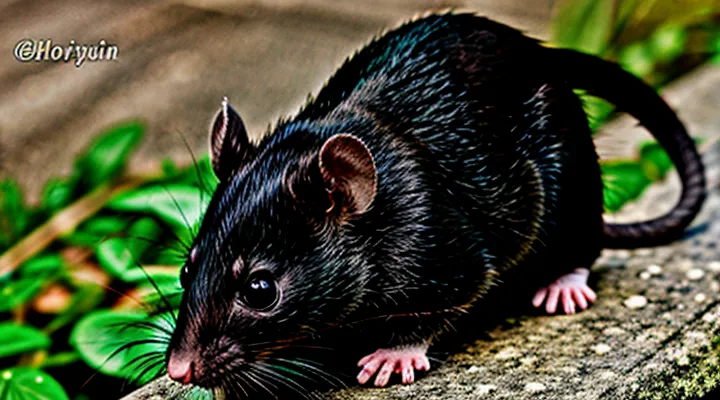
«Introduction to the Black Rat»
«What is a Black Rat?»
The black rat (Rattus rattus), also known as the ship rat, is a medium‑sized rodent native to the Indian subcontinent. Adults typically measure 16–20 cm in body length, with a tail nearly equal to the body, and weigh 120–250 g. Their fur is glossy, dark brown to black, and the ears are relatively large and hairless.
Key characteristics:
- Morphology: slender build, pointed snout, sharp incisors, and a long, scaly tail.
- Reproduction: breeding year‑round in warm climates; gestation lasts about 21 days, producing litters of 5–10 pups.
- Diet: omnivorous; consumes grains, fruit, insects, and human waste.
- Habitat: thrives in urban environments, ships, and agricultural areas; prefers elevated nesting sites such as attics and roof spaces.
- Geographic range: originally confined to South Asia, now worldwide due to maritime trade; established on most continents except Antarctica.
- Health impact: vector for pathogens including hantavirus, leptospirosis, and plague; capable of contaminating food supplies.
Understanding the biology and behavior of this species informs control measures and reduces the risk of disease transmission.
«Brief History and Origin»
The black rat (Rattus rattus) originated in the Indian subcontinent and surrounding regions of Southeast Asia. Archaeological evidence places the species in ancient settlements of the Indus Valley and southern China as early as the third millennium BCE. Its close association with grain storage made it a frequent stowaway on maritime vessels, facilitating rapid expansion across the Mediterranean, Africa, and eventually the Americas during the Age of Exploration. By the 14th century the species had established colonies in Europe, where it contributed to several historic plague outbreaks.
Key points of its spread and development:
- Early domestication: Cultivation of cereals and storage practices created ideal habitats, encouraging population growth in early agricultural societies.
- Maritime diffusion: Ships transporting goods from Asia to Europe carried rats in cargo holds, allowing colonization of ports such as Alexandria, Venice, and Lisbon.
- Continental penetration: Overland trade routes and later railway networks extended the range into interior regions of Europe and Africa.
- Modern distribution: Today the species inhabits urban, suburban, and rural environments on every continent except Antarctica, thriving in close proximity to human activity.
Genetic studies reveal low mitochondrial diversity among global populations, indicating a relatively recent common ancestry linked to the initial dispersal events from its native range. This genetic uniformity supports the conclusion that human-mediated transport, rather than natural migration, shaped the current worldwide distribution of the black rat.
«Physical Characteristics»
«Size and Build»
«Body Length»
The black rat (Rattus rattus) typically measures 13–20 cm from the tip of the nose to the base of the tail. Females tend toward the lower end of the range, while males often reach the upper limit. Body length excludes the tail, which adds an additional 15–20 cm.
Key facts about body length:
- Measured on live or preserved specimens using a flexible ruler or caliper.
- Influenced by geographic population; island subspecies may be smaller.
- Used in taxonomic keys to differentiate R. rattus from the brown rat (R. norvegicus), whose body length averages 18–25 cm.
- Correlates with age class: juveniles under 8 cm, adults above 13 cm.
«Tail Length»
The tail of the black rat (Rattus rattus) typically measures between 15 cm and 20 cm, representing roughly 70 %–80 % of the animal’s head‑body length. This proportion distinguishes the species from the brown rat, whose tail is generally shorter relative to body size. Tail length varies with age, sex, and geographic population; juveniles display proportionally longer tails that shorten slightly as they mature.
Key points for photographic documentation and identification:
- Measure from the base of the tail at the sacrum to the tip, excluding any damaged or missing portions.
- Record the ratio of tail length to head‑body length; values above 0.7 confirm typical black rat morphology.
- Note coloration: the tail is usually hairless, dark on the dorsal surface and lighter ventrally, with a scaly texture that aids in length assessment.
Accurate tail measurements enhance species verification, support ecological surveys, and improve the quality of visual records.
«Fur Coloration»
«Common Variations»
The black rat exhibits several recognizable variations that affect identification and ecological interpretation.
Morphological differences include:
- Fur coloration – ranging from uniform jet black to dark brown with occasional grayish patches on the dorsal surface.
- Tail proportion – typically longer than the head‑body length; some populations display a proportionally shorter tail, influencing locomotion on vertical surfaces.
- Ear size and shape – ears may be relatively large and rounded or slightly reduced and more tapered, reflecting adaptation to temperature regulation.
- Body mass – adult weight varies between 80 g and 150 g, with coastal specimens generally heavier due to richer food sources.
- Skull dimensions – northern forms possess broader rostrums and more robust zygomatic arches compared with southern counterparts.
Geographic variants are documented across temperate and subtropical zones. In northern Europe, individuals often show a denser, glossy pelage, whereas populations in Southeast Asia present a coarser coat and a marginally longer snout. Island populations, such as those on the Azores, may develop reduced hind foot size, a trait linked to limited predator presence.
These variations, while subtle, provide essential clues for taxonomic classification, population monitoring, and pest‑management strategies.
«Regional Differences»
The black rat (Rattus rattus) exhibits measurable variations across its global range, reflected in both physical characteristics and photographic documentation. These differences arise from adaptation to local climates, available resources, and historical introductions.
- Europe and the Mediterranean: individuals tend to display a darker, almost uniform black pelage; body length averages 16–20 cm, tail length slightly longer than head‑body. Photographs often capture a sleek silhouette against urban structures.
- Southeast Asia: fur shows a reddish‑brown hue on the dorsal side with a lighter ventral surface; tail may be proportionally shorter. Images frequently include dense vegetation backgrounds, highlighting arboreal behavior.
- Sub‑Saharan Africa: coat coloration ranges from dark brown to grayish tones; ear size is relatively larger, aiding thermoregulation. Visual records commonly feature rats near agricultural storage facilities.
- South America: specimens exhibit a mix of black and brown patches, reflecting hybridization with local Rattus species; tail length is comparatively reduced. Photographic evidence often shows rats in coastal ports and riverine environments.
- Oceania (Australia and Pacific islands): fur tends toward a dull gray, with a noticeable reduction in body size, likely due to island dwarfism. Pictures typically capture rats in coastal scrub or near human dwellings.
These regional patterns assist researchers in identifying provenance from visual material and in assessing the ecological impact of the species within distinct habitats.
«Distinctive Features»
«Ear Size and Shape»
The black rat (Rattus rattus) possesses ears that are proportionally small relative to head length, typically measuring 10–12 mm in adult specimens. The auricles are rounded, with a smooth outer margin and a slightly pointed tip that aligns with the lateral edge of the skull. Ear cartilage provides a firm yet flexible structure, allowing subtle movements for sound localization.
Key characteristics of ear morphology:
- Length: 10–12 mm, consistent across sexes; minor variation may occur with age.
- Width: 6–8 mm, giving a compact, oval silhouette.
- Shape: Rounded outer contour, tapering toward the apex; no prominent folds or ridges.
- Fur coverage: Sparse, fine hair on the dorsal surface; ventral side largely hairless, exposing pinkish skin.
- Vascularization: Dense capillary network visible through thin skin, contributing to thermoregulation.
These dimensions and form enable the species to detect high‑frequency sounds essential for predator avoidance and social communication while maintaining a streamlined profile suited to its arboreal and urban habitats.
«Eye Placement»
The eyes of the black rat sit high on the skull, positioned laterally and slightly forward. This arrangement grants a wide binocular field of approximately 120 degrees, while each eye also contributes an extensive monocular peripheral view that reaches nearly 200 degrees. The placement enables rapid detection of predators and efficient navigation through complex environments such as dense vegetation and urban structures.
Photographic depiction of the species should capture the eye level at the midpoint of the head’s vertical axis. When the camera is aligned with this plane, the eyes appear as prominent dark lenses against the fur, revealing the characteristic almond shape. Lighting from slightly above accentuates the reflective tapetum, allowing the pupil to stand out clearly.
Key aspects of eye placement relevant to identification and imaging:
- Lateral orientation provides a broad visual sweep, distinguishing the species from rodents with more forward‑facing eyes.
- High placement on the skull creates a noticeable gap between the eyes and the snout, visible in lateral profiles.
- The dark pigmentation of the iris and pupil contrasts sharply with the surrounding fur, facilitating recognition in low‑light photographs.
Accurate representation of these features supports reliable visual documentation and contributes to scientific records of the species.
«Snout Characteristics»
The snout of the black rat (Rattus rattus) is a distinguishing feature in photographic identification and morphological description. It presents a tapered, elongate form that narrows toward the tip, giving the animal a sleek facial profile. The length typically measures 1.2–1.5 cm in adult specimens, proportionate to head width and overall body size.
Key characteristics include:
- Coloration: Dorsal surface exhibits a uniform dark brown to black hue, while the ventral side is lighter, often pinkish due to thin fur coverage.
- Nostril placement: Lateral openings situated near the snout tip, providing a wide field of olfactory detection.
- Vibrissae: Prominent whiskers extend laterally and anteriorly, each approximately 1.0–1.2 cm long, serving as tactile sensors for navigation in low‑light environments.
- Dental arrangement: Two pairs of continuously growing incisors protrude from the upper jaw, visible when the mouth is slightly open; enamel exhibits orange‑yellow staining from gnawing activity.
- Skin texture: Fine, supple epidermis with sparse hair follicles; the skin remains moist, facilitating scent detection.
These attributes collectively enable reliable visual assessment of the black rat’s snout in field photography and support taxonomic differentiation from similar rodent species.
«Paw Structure»
The black rat’s fore‑ and hind‑paws exhibit adaptations that support climbing, digging, and rapid movement across varied surfaces. Each paw consists of five digits, all ending in sharp, curved claws that provide grip on vertical and uneven terrain. The pads are thick, keratinized skin that distributes pressure and reduces wear during prolonged activity.
Key anatomical features:
- Digital arrangement: Five toes per paw, with the first digit (the hallux) positioned slightly higher, aiding in grasping.
- Claw morphology: Curved, retractable keratin hooks, each approximately 2 mm in length, allowing penetration into soft substrates.
- Palmar and plantar pads: Dense, rubber‑like tissue covering the metacarpal and metatarsal bones, enhancing traction and cushioning.
- Skeletal support: Compact metacarpal and metatarsal bones fused for rigidity, while the phalanges remain flexible for fine motor control.
- Sensory receptors: Numerous mechanoreceptors embedded in the pads detect texture and vibration, facilitating precise navigation.
The photographed specimen displays typical paw coloration—pale pink pads contrasting with dark fur on the toes—and clear visibility of the claw curvature, confirming the species’ characteristic locomotor capabilities.
«Habitat and Distribution»
«Geographical Range»
«Native Regions»
The black rat (Rattus rattus) originated in tropical and subtropical zones of Asia. Its earliest documented habitats include the Indian subcontinent, Southeast Asia, and the islands of the western Pacific. Genetic studies trace the species’ diversification to these regions before human‑mediated dispersal expanded its range.
Key native areas:
- South‑west Asia: India, Pakistan, Bangladesh, Sri Lanka
- Southeast Asia: Myanmar, Thailand, Laos, Vietnam, Cambodia, Malaysia, Indonesia, the Philippines
- East Asia: southern China, Taiwan, southern Japan (Ryukyu Islands)
- Oceania: New Guinea, the Solomon Islands, parts of Melanesia
The species also inhabited parts of Africa’s eastern coastline in pre‑colonial times, where it established isolated populations before becoming globally invasive. Contemporary records confirm that the black rat remains indigenous to the above regions, despite its extensive introduction elsewhere.
«Introduced Populations»
The black rat (Rattus rattus) has established non‑native populations across multiple continents through human-mediated transport. These introduced groups are typically found in coastal ports, urban centers, and agricultural zones where shipping, trade, and travel provide regular opportunities for accidental release.
Key regions with documented introduced rat colonies include:
- Southeast Asia – Indonesia, Malaysia, and the Philippines, where the species thrives in dense human settlements and rice paddies.
- Oceania – New Zealand, Fiji, and several Pacific islands; populations are concentrated near harbors and have expanded into native forest fragments.
- North America – Eastern United States, particularly the Atlantic seaboard, and parts of the West Coast; colonies persist in ports, warehouses, and residential areas.
- South America – Brazil, Chile, and Argentina, where the rat occupies urban districts and stored‑grain facilities.
- Africa – Coastal cities of Kenya, Tanzania, and South Africa, with high densities near market places and transport hubs.
Introduced colonies exhibit rapid reproductive cycles, enabling swift population growth once established. Genetic studies reveal low diversity within many invasive groups, reflecting founder effects from limited initial introductions. Nonetheless, the species adapts to local climates, often outcompeting native rodents and contributing to the spread of zoonotic pathogens.
Management of these populations relies on integrated pest‑control strategies, including baiting, habitat modification, and strict quarantine protocols for cargo and vessels. Monitoring programs use photographic documentation and morphological keys to differentiate introduced rats from native species, supporting targeted eradication efforts where ecological risk is highest.
«Preferred Environments»
«Urban Areas»
The black rat (Rattus rattus) thrives in densely built environments where food sources, shelter, and water are readily available. In cities, the species exploits gaps in building foundations, abandoned structures, and underground utilities to establish colonies. High human activity provides constant waste, supporting large populations that can persist year‑round.
Physical characteristics aid rapid identification in urban settings. Key features include:
- Dark, glossy fur covering the entire body, with a slightly lighter belly.
- Tail length exceeding body length, slender and hairless.
- Small, triangular ears set low on the head.
- Sharp, continuously growing incisors visible when the mouth is open.
Behavioral patterns in metropolitan areas are adapted to human presence. Nighttime foraging reduces exposure to predators, while nocturnal activity aligns with waste collection schedules. The species demonstrates high reproductive capacity, with females capable of producing multiple litters annually, each averaging 6‑8 offspring.
Control measures focus on habitat modification and sanitation. Sealing entry points, removing food debris, and maintaining drainage systems reduce colony establishment. Integrated pest management programs combine monitoring, trapping, and targeted rodenticides to limit population growth while minimizing non‑target impacts.
«Rural Settings»
The black rat (Rattus rattus) frequently appears in photographs taken within agricultural landscapes, farmsteads, and peripheral woodland zones. These environments provide abundant food sources, shelter in stored grain, and access to nesting materials.
Key characteristics of rural habitats that influence the visual record and description of the species include:
- Proximity to human structures such as barns, silos, and outbuildings, which create predictable lighting conditions and background elements for imaging.
- Presence of crops and hay bales that serve as both camouflage and contrast, aiding in the identification of fur coloration and tail length.
- Seasonal variations in vegetation density, affecting the rat’s movement patterns and the likelihood of capturing active behavior versus static poses.
Photographic considerations specific to countryside settings:
- Use a moderate focal length (50‑85 mm) to frame the animal against the textured backdrop of straw or soil without distortion.
- Employ a fast shutter speed (1/500 s or higher) to freeze rapid scurrying typical of the species when disturbed by farm activity.
- Adjust exposure to accommodate the interplay of direct sunlight on open fields and shade under eaves, ensuring accurate rendering of the rat’s dark fur and lighter whisker patches.
Descriptive details derived from rural imagery:
- Dorsal fur appears uniformly black with a slight iridescent sheen, often highlighted by the reflective quality of nearby metal equipment.
- Tail length exceeds body length by 10‑20 %, a trait visible when the animal is perched on wooden beams or fence posts.
- Footpads display pinkish tones contrasting with the surrounding earth, useful for distinguishing the black rat from the larger brown rat (Rattus norvegicus) commonly found in urban environments.
Understanding these rural parameters enhances both the quality of photographic documentation and the precision of morphological description, facilitating reliable identification for researchers and pest‑management professionals.
«Coastal Regions»
The black rat (Rattus rattus) frequently occupies coastal environments where human activity creates abundant food sources and shelter. In these regions, the species exploits dunes, boardwalks, and abandoned structures, establishing populations that thrive on the constant influx of waste and stored provisions.
Key characteristics of black rat populations in shoreline habitats:
- Preference for elevated nesting sites such as driftwood piles, roof eaves, and vegetation thickets that offer protection from tidal inundation.
- Adaptation to saline conditions; fur and skin tolerate occasional exposure to sea spray without compromising health.
- Reproductive cycles accelerated by mild winter temperatures, resulting in multiple litters per year and rapid population growth.
- Interaction with maritime commerce, where ships and cargo provide vectors for accidental transport to new coastal locales.
Photographic documentation typically captures the rat’s slender body, long tail, and dark fur against sandy or rocky backdrops. Images emphasize the contrast between the animal’s agile form and the static, often harsh, coastal terrain, illustrating the species’ capacity to integrate into diverse shoreline ecosystems.
«Behavior and Ecology»
«Diet and Feeding Habits»
«Omnivorous Nature»
The black rat (Rattus rattus) consumes a broad spectrum of food sources, reflecting its true omnivorous character. Plant material, such as seeds, fruits, and grains, supplies carbohydrates and essential nutrients; animal matter, including insects, carrion, and small vertebrates, provides protein and fats. This dietary flexibility allows the species to thrive in diverse habitats, from urban environments to agricultural fields.
Key components of the rat’s diet include:
- Grains and cereals stored in human dwellings
- Fresh fruits and vegetables found in gardens
- Insects attracted to waste and debris
- Carrion and dead small animals
- Human food waste and processed items
The ability to switch between plant and animal foods enables rapid population growth when one resource becomes scarce. Moreover, the species’ propensity to exploit human-generated refuse accelerates its spread, linking its omnivorous habits directly to its status as a successful commensal. Understanding this feeding behavior is essential for accurate visual identification and ecological assessment.
«Food Preferences»
The black rat (Rattus rattus) is a small murid mammal commonly found in tropical and temperate regions, frequently depicted in photographic records and taxonomic descriptions. Its dietary habits are a central aspect of its ecological profile.
- Grains and cereals: wheat, rice, corn, barley.
- Seeds and nuts: sunflower seeds, peanuts, acorns.
- Fruits and vegetables: bananas, grapes, carrots, cucumbers.
- Invertebrates: beetles, larvae, earthworms.
- Human food waste: discarded bread, cooked meat, processed snacks.
Food selection shifts with seasonal availability; during harvest periods the rat consumes large quantities of stored crops, while in dry seasons it relies more on natural seeds and invertebrates. Urban populations exploit refuse bins and sewage, increasing contact with human settlements.
The species demonstrates high dietary flexibility, allowing rapid colonization of new habitats and influencing agricultural yields. Its opportunistic feeding behavior contributes to the spread of pathogens associated with contaminated food sources.
«Social Structure»
«Group Dynamics»
The black rat (Rattus rattus) exhibits a structured social organization that influences its foraging efficiency, disease transmission potential, and reproductive success. Individuals form colonies centered around a dominant breeding pair, while subordinate members assist in nest maintenance and brood care. Hierarchical interactions are mediated through scent marking, vocalizations, and brief aggressive encounters that reinforce rank without causing lasting injury.
Key elements of the species’ group dynamics include:
- Territoriality: Colonies defend a defined area rich in food and shelter; boundary disputes are resolved by rapid chases and scent exchanges.
- Cooperative breeding: Subordinates may delay their own reproduction to support the dominant pair, increasing overall litter survival.
- Information sharing: Foraging routes and predator alerts spread through ultrasonic calls, allowing rapid adaptation to environmental changes.
Understanding these behavioral patterns provides essential context for interpreting visual documentation and morphological descriptions of the black rat, clarifying how social structure shapes observable traits such as coat condition, body condition, and wound prevalence.
«Territoriality»
The photograph captures the typical coloration, body length, and tail proportion of the black rat, while the accompanying description records measurements, fur texture, and distinguishing features.
Territoriality refers to the maintenance of a spatial zone by an individual or a breeding pair, within which resources such as food, nesting sites, and mates are defended against conspecific intruders.
Mechanisms employed by black rats include:
- Urine and glandular secretions deposited on objects and bedding.
- Vocalizations that signal presence and deter rivals.
- Physical confrontations that establish hierarchy.
- Spatial memory that guides repeated use of favored routes and shelters.
Average home ranges measure 0.2–0.5 ha for solitary males, up to 1 ha for breeding pairs, and contract to 0.05–0.1 ha during winter when food is scarce. Population density can exceed 15 individuals per hectare in urban settings, prompting more frequent boundary patrols.
When photographing these rodents, awareness of territorial peaks—dawn and dusk—enhances the likelihood of capturing active individuals at the periphery of their zones. Positioning cameras near marked objects or established runways increases observation success without disrupting established boundaries.
«Reproduction»
«Breeding Season»
The breeding season of the black rat (Rattus rattus) typically begins in early spring and extends through late summer, varying with regional climate and food availability. Males exhibit increased territorial marking and aggressive encounters to secure access to receptive females. Females enter estrus cycles approximately every four to five days, allowing multiple litters per season. Litter size averages four to seven pups, with a gestation period of about 21 days. Neonates are altricial, gaining independence after three weeks and reaching sexual maturity at two to three months.
Key aspects of the breeding cycle:
- Hormonal changes: Elevated testosterone in males and rising estrogen in females trigger mating behavior.
- Nest construction: Females build insulated nests using shredded material, often near food sources.
- Population impact: Rapid reproductive turnover can double local populations within a few months, influencing disease transmission and ecological competition.
Understanding these dynamics aids accurate photographic documentation and morphological description of the species, ensuring that visual records reflect seasonal variations in size, coat condition, and behavior.
«Litter Size»
The black rat (Rattus rattus) typically produces between three and twelve offspring per breeding event. Average litters contain six to eight pups, though environmental conditions and maternal health can shift numbers toward the extremes of the range.
Reproductive timing influences litter size. Females reach sexual maturity at 5–6 weeks, can breed throughout the year in temperate zones, and may have up to five litters annually. Each gestation lasts approximately 21 days, allowing rapid population expansion when food and shelter are abundant.
Factors affecting litter size include:
- Nutrition: Access to high‑calorie foods correlates with larger litters.
- Stress: Crowding or predator presence often reduces offspring count.
- Age: Prime‑aged females (3–12 months) produce the most pups; very young or older females yield smaller litters.
Understanding these parameters aids in estimating population dynamics for pest management and ecological studies.
«Gestation Period»
The gestation period of the black rat (Rattus rattus) lasts approximately 21 to 23 days. Pregnancy begins shortly after mating, and the female gives birth to a litter of 5 to 12 pups, depending on age, nutrition, and environmental conditions.
Key points:
- Duration: 21‑23 days, consistent across most geographic populations.
- Onset: Ovulation occurs within 24 hours of copulation, initiating the short gestational cycle.
- Litter size: Typically 6‑8 offspring; larger litters are recorded in well‑fed, warm environments.
- Reproductive frequency: After weaning, which occurs around three weeks, females can become pregnant again, allowing up to five litters per year.
The brief gestation contributes to the species’ rapid population growth, especially in urban habitats where food and shelter are abundant.
«Black Rat in Culture and History»
«Historical Significance»
«Role in Disease Transmission»
The black rat (Rattus rattus) serves as a primary reservoir for several zoonotic pathogens. Its close association with human habitations facilitates the maintenance and spread of infections that originate in rodent populations.
Key diseases linked to this species include:
- Plague – caused by Yersinia pestis; transmission occurs through the bite of infected fleas, chiefly Xenopsylla cheopis, which feed on rat blood.
- Murine typhus – caused by Rickettsia typhi; fleas acquire the bacterium from infected rats and transmit it to humans during feeding.
- Leptospirosis – caused by pathogenic Leptospira spp.; bacteria are shed in rat urine and contaminate water or soil, leading to human exposure through skin abrasions or mucous membranes.
- Hantavirus pulmonary syndrome – certain hantaviruses are carried by rats; aerosolized rodent excreta can infect humans inhaling the particles.
- Salmonellosis – Salmonella spp. colonize the gastrointestinal tract of rats; contaminated food sources transmit the bacteria to people.
Transmission pathways extend beyond ectoparasite bites. Direct contact with rat saliva, urine, or feces introduces pathogens into wounds or mucosal surfaces. Indirect exposure arises when rodents contaminate stored food, cooking utensils, or water supplies, creating a persistent source of infection in densely populated areas.
Epidemiological data show that outbreaks often follow increases in rat populations, especially after climatic events that boost food availability. Control measures that reduce rat density, limit flea infestations, and improve sanitation directly decrease the incidence of the associated diseases.
«Impact on Human Settlements»
The black rat (Rattus rattus) thrives in densely populated areas where food, shelter, and waste are abundant. Its adaptability enables rapid colonization of residential blocks, commercial premises, and public infrastructure.
Health risks stem from the species’ capacity to carry pathogens such as Leptospira spp., Salmonella spp., and hantaviruses. Direct contact with droppings, urine, or contaminated surfaces can transmit these agents to occupants, leading to outbreaks of leptospirosis, salmonellosis, and respiratory illnesses.
Economic consequences arise from structural damage and resource loss:
- Gnawing of electrical wiring, insulation, and plumbing causes fire hazards and costly repairs.
- Consumption and contamination of stored food diminish commercial inventory and increase waste.
- Burrowing in foundations and walls compromises building integrity, necessitating frequent maintenance.
Mitigation relies on integrated pest management:
- Regular sanitation removes attractants and reduces population growth.
- Structural modifications, such as sealing entry points and installing rodent‑proof containers, limit access.
- Targeted baiting and trapping, supervised by licensed professionals, control existing infestations while minimizing non‑target impacts.
Collectively, these factors underscore the black rat’s significant influence on the safety, health, and financial stability of human settlements.
«Cultural Perceptions»
«Symbolism in Different Societies»
The visual portrayal of the black rat, accompanied by a concise description, serves as a reference point for exploring its symbolic meanings across cultures. In many East Asian societies the animal is associated with resilience and survival, reflecting its capacity to thrive in dense urban environments. African folklore frequently depicts the rat as a cunning messenger, a figure that bridges the human and spirit worlds. European medieval art often presents the creature as a harbinger of disease, linking its presence to outbreaks of plague. Indigenous peoples of the Americas sometimes regard the rat as a trickster, embodying both cleverness and moral ambiguity.
Key symbolic functions include:
- Adaptability: Demonstrated by the rat’s ability to inhabit varied habitats, reinforcing narratives of endurance.
- Communication: Represented as a carrier of secret knowledge or warnings in mythic stories.
- Moral duality: Portrayed simultaneously as a clever survivor and a potential source of danger, illustrating complex ethical lessons.
The accompanying photograph provides a concrete visual anchor, allowing observers to compare the animal’s physical traits with the abstract qualities assigned to it in each cultural context. This comparative approach highlights how a single species can acquire distinct symbolic layers, shaped by historical experiences, environmental pressures, and collective imagination.
«Photography Tips for Black Rats»
«Lighting Considerations»
When photographing a black rat, lighting determines the visibility of fur texture, eye shine, and anatomical details. Use a light source positioned at a 45‑degree angle to the subject to create subtle shadows that accentuate the contour of the head and tail without flattening the image.
- Soft, diffused light reduces harsh highlights on the glossy coat and prevents overexposure of the whiskers.
- A cooler color temperature (around 5600 K) preserves the natural dark brown hue of the fur, while a slight warm boost can emphasize the reddish tones in the underbelly.
- Backlighting, combined with a fill light from the front, isolates the silhouette and highlights the outline of the tail, useful for profile shots.
- Adjustable aperture (f/5.8–f/8) ensures sufficient depth of field to keep the entire body in focus while maintaining a modest background blur.
Consistent exposure settings across a series of images enable accurate comparison of size and markings, supporting reliable identification and documentation.
«Camera Settings»
When capturing a black rat, precise camera settings ensure detail and texture are rendered accurately.
A typical configuration for a DSLR or mirrorless system includes:
- Aperture: f/5.6 to f/8 for sufficient depth of field while maintaining sharpness across the animal’s body.
- Shutter speed: 1/250 s or faster to freeze subtle movements, especially if the subject is active.
- ISO: 400–800 in daylight; increase to 1600‑3200 for low‑light environments, balancing noise and exposure.
- White balance: Set to “Daylight” or use a custom Kelvin temperature (≈5600 K) to preserve the natural dark fur tone.
- Focus mode: Continuous (AI‑Servo/AF‑C) with a single point centered on the eyes; enable eye‑detect if available.
- Exposure compensation: Slightly underexpose (‑0.3 EV) to avoid blown highlights on glossy fur patches.
Lighting considerations:
- Use diffused natural light or a softbox positioned at a 45° angle to reduce harsh shadows.
- Avoid direct flash; if supplemental light is required, employ a diffuser to soften illumination and prevent glare on the rat’s eyes.
Composition tips:
- Frame the subject with a modest amount of negative space to highlight the animal’s silhouette.
- Keep the background uniform and low‑contrast to prevent distraction from the dark coat.
Post‑capture workflow:
- Shoot in RAW to retain maximum detail.
- Apply modest sharpening and noise reduction; preserve fine whisker texture.
- Adjust exposure and contrast in a calibrated monitor environment to maintain accurate tonal representation.
«Ethical Photography»
Ethical photography of the black rat demands respect for animal welfare and adherence to legal standards. Photographers must avoid actions that cause injury, distress, or habitat disruption. Documentation should be performed with permits where required and with consultation from local wildlife authorities.
Practices that safeguard the subject include:
- Using non‑intrusive lenses and adequate distance to prevent interference with natural behavior.
- Limiting the number of exposures in a single location to reduce stress.
- Employing passive lighting techniques to avoid sudden flashes that may startle the animal.
- Recording metadata that identifies time, place, and conditions for scientific verification.
- Securing consent from property owners when shooting on private land.
Compliance with ethical guidelines enhances the reliability of visual records and supports conservation research. Failure to observe these principles can result in legal penalties and undermine the credibility of the imagery.