
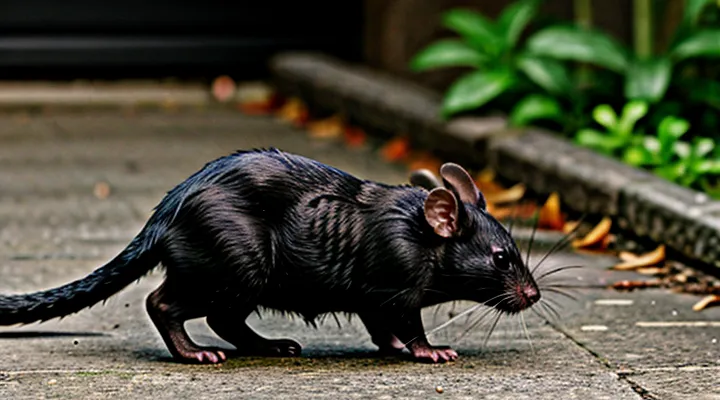
Taxonomy and Classification
The black rat, scientifically known as Rattus rattus, belongs to the order Rodentia and the family Muridae. It is a member of the genus Rattus, which comprises several species of commensal rodents found worldwide.
- Kingdom: Animalia
- Phylum: Chordata
- Class: Mammalia
- Order: Rodentia
- Family: Muridae
- Genus: Rattus
- Species: Rattus rattus
Historical taxonomic work placed the species under the synonym Rattus norvegicus in early literature, but subsequent morphological and genetic studies confirmed its distinct status. Recognized subspecies include R. r. rattus (the typical form) and R. r. frugivorus, among others, each reflecting regional variations in morphology and distribution.
Molecular phylogenetics positions Rattus rattus within the “Old World clade” of the genus, closely related to Rattus norvegicus and Rattus exulans. DNA sequencing of mitochondrial cytochrome b and nuclear genes supports a divergence from its nearest relatives during the Pleistocene, indicating a rapid expansion linked to human maritime activities.
Current classification follows the guidelines of the International Code of Zoological Nomenclature, ensuring consistency across scientific publications and databases.
Physical Characteristics
Size and Weight
The black rat (Rattus rattus) exhibits a compact body form. Adult head‑body length typically ranges from 16 cm to 22 cm, while the tail adds an additional 12 cm to 18 cm, often exceeding the body length. Weight varies with age, sex, and habitat conditions; most mature individuals fall between 70 g and 200 g. Males generally outweigh females by 10 %–20 %.
Key measurements:
- Head‑body length: 16–22 cm (6.3–8.7 in)
- Tail length: 12–18 cm (4.7–7.1 in)
- Body mass: 70–200 g (2.5–7.1 oz)
Geographic populations may display slight size shifts, with island forms tending toward larger dimensions due to reduced predation pressure. Juveniles reach half adult size within four weeks, accelerating growth during the first two months. The species’ relatively small mass contributes to its agility and ability to exploit narrow urban niches.
Fur Coloration and Texture
The fur of the black rat exhibits a range of coloration that extends beyond the typical uniform black coat. Adult individuals may display deep brown, charcoal gray, or reddish tones, with occasional white patches on the ventral surface. Juveniles often possess a lighter, more silvery pelage that darkens with maturity. Geographic variation influences hue; populations in temperate zones tend toward darker shades, while those in arid regions show paler, grayish fur.
Texture differs between body regions and life stages. The dorsal hair is coarse, providing protection against abrasion and environmental stressors. Ventral hair is finer and denser, enhancing insulation. Seasonal molting produces a softer undercoat during colder months, increasing thermal retention. The tail is covered with sparse, short hairs, while the ears bear virtually no fur, facilitating heat dissipation.
Key characteristics of fur coloration and texture:
- Color spectrum: black, dark brown, charcoal gray, reddish, occasional white ventral patches
- Age-related changes: lighter juvenile pelage, progressive darkening in adults
- Geographic influence: darker coats in cooler climates, lighter coats in warmer habitats
- Dorsal hair: coarse, protective
- Ventral hair: fine, dense, insulating
- Seasonal molt: softer undercoat in winter, shedding in spring
These attributes contribute to camouflage, thermoregulation, and tactile interaction with the environment, reflecting the species’ adaptive strategies.
Tail and Ears
The black rat possesses a long, tapering tail that typically measures 18–20 cm, slightly shorter than its head‑body length. The tail’s surface is covered with fine, overlapping scales and a sparse fur coat, providing flexibility and aiding thermoregulation. Muscular control allows rapid adjustments, contributing to balance during climbing and swift directional changes. The tail also serves as a visual signal; subtle movements convey alertness or agitation to conspecifics.
Ears are proportionally large, rounded, and set high on the skull. Each ear measures 2.5–3 cm in length and contains a well‑developed pinna that can rotate up to 180°, enhancing sound localization. The auditory system detects frequencies from 1 kHz to 70 kHz, enabling detection of high‑frequency predator cues and social vocalizations. Rich vascularization within the ear tissue facilitates heat dissipation, supporting temperature regulation in varied environments.
Key anatomical features:
- Tail length: 18–20 cm; flexible, scaled surface, sparse fur.
- Tail functions: balance, thermoregulation, visual communication.
- Ear size: 2.5–3 cm; highly mobile pinna.
- Auditory range: 1 kHz–70 kHz; precise sound localization.
- Ear functions: predator detection, conspecific signaling, heat loss.
Dental Formula
The black rat possesses a dentition adapted for continuous gnawing and efficient processing of diverse food items. Its teeth grow throughout life, compensating for constant wear caused by the animal’s foraging and nest‑building activities.
- Incisors: 1 upper / 1 lower per side
- Canines: 0 upper / 0 lower per side
- Premolars: 0 upper / 0 lower per side
- Molars: 3 upper / 3 lower per side
This arrangement yields a total of 16 teeth (8 in the upper jaw, 8 in the lower). The single pair of large, chisel‑shaped incisors provides the primary cutting force, while the three pairs of molars deliver grinding capability. The absence of canines and premolars reduces dental complexity, allowing the rat to maintain a lightweight skull suited for rapid movement and climbing. Continuous eruption of incisors ensures that the animal can persist in gnawing behaviors without loss of function, a key factor in its success across varied habitats.
Habitat and Distribution
Native Range
The black rat (Rattus rattus) originated in tropical and subtropical regions of South and Southeast Asia. Its native distribution includes:
- The Indian subcontinent, extending from Pakistan through India to Bangladesh and Sri Lanka.
- Mainland Southeast Asia, covering Myanmar, Thailand, Laos, Cambodia, Vietnam, and Malaysia.
- Southern China, particularly the provinces of Yunnan, Guangxi, and Guangdong.
- The islands of the Indonesian archipelago and the Philippines.
These areas provided the climatic conditions—warm temperatures and high humidity—that support the species’ breeding cycles and foraging habits. Fossil records and genetic studies confirm long‑term presence in these regions before the species spread globally through maritime trade routes during the 18th and 19th centuries. The native range remains the primary reservoir for the rat’s genetic diversity, influencing its adaptability and behavior in introduced environments.
Global Spread and Invasive Status
The brown‑coated Rattus rattus has moved from its origin in the Indian subcontinent to virtually every temperate and tropical region where human activity provides suitable habitats. Early expansion coincided with seafaring commerce of the 1st century CE, using ships, cargo, and stored grain as vectors. Subsequent centuries saw the species accompany colonial trade routes, establishing populations on islands and continental coasts far from its native range.
Current presence includes:
- Europe: United Kingdom, Italy, Spain, Greece, and the Baltic states.
- Africa: North‑African ports, sub‑Saharan urban centers, and islands such as Madagascar.
- Asia: Southeast Asian megacities, the Indian subcontinent, and parts of the Middle East.
- Oceania: Australia’s coastal towns, New Zealand, and numerous Pacific islands.
- Americas: Eastern seaboard of the United States, Caribbean islands, Central and South American urban areas.
In each region the rat demonstrates invasive characteristics: rapid reproduction (up to 12 litters per year), high adaptability to human‑altered environments, and competitive displacement of native rodents. Populations often achieve densities that facilitate disease transmission, cause structural damage, and reduce biodiversity through predation on birds, reptiles, and invertebrates. Management programs typically rely on integrated pest‑control measures, including habitat modification, trapping, and targeted rodenticides, to mitigate ecological and economic impacts.
Preferred Environments
The black rat thrives in environments that provide easy access to food, shelter, and nesting sites. Urban areas offer abundant refuse and structural gaps that accommodate the species’ climbing ability. Sewage systems and drainage networks supply moisture and concealment, allowing populations to persist year‑round.
Maritime settings present optimal conditions. Ships and ports combine stored provisions with cramped, dark compartments, facilitating rapid colonization and transport across regions. The rat’s preference for warm, humid climates explains its prevalence in tropical and subtropical zones, where vegetation and human settlements intersect.
Key habitat characteristics include:
- Proximity to human food sources (restaurants, markets, waste bins)
- Structures with numerous entry points (cracks, vents, pipe openings)
- Elevated or vertical surfaces for nesting (attics, rafters, tree branches)
- Warm, moist microclimates that support breeding cycles
In agricultural landscapes, the species exploits grain storage facilities and irrigation channels, using them as both feeding grounds and nesting locations. Abandoned buildings and derelict structures also serve as refuges, especially when they lack regular maintenance.
Overall, the black rat selects habitats that combine shelter, moisture, and reliable food supplies, often in close association with human activity.
Diet and Foraging Behavior
Omnivorous Nature
The black rat (Rattus rattus) exhibits a highly adaptable omnivorous diet that enables survival across diverse habitats. Its gastrointestinal tract processes both animal and plant matter efficiently, allowing rapid exploitation of available resources.
- Animal sources: insects, arthropods, small vertebrates, carrion, eggs.
- Plant sources: seeds, grains, fruits, nuts, tubers, leafy material.
- Anthropogenic items: processed foods, waste, pet feed, grain storage products.
Diet composition shifts with seasonal abundance; insect consumption peaks in warm months, while seed intake rises during autumn. Foraging occurs opportunistically on the ground, in arboreal niches, and within human structures. Nighttime activity aligns with reduced predation risk, yet the species also displays diurnal feeding when food scarcity demands.
Omnivory contributes to ecological flexibility, facilitating colonization of urban, agricultural, and natural environments. Consumption of stored grains and waste links the rat to economic losses, while predation on insects can affect pest populations. The species’ dietary breadth underpins its status as a successful commensal and invasive organism.
Food Preferences
The black rat (Rattus rattus) exhibits a highly adaptable diet, enabling survival across diverse habitats. Its food intake combines plant matter, animal protein, and anthropogenic sources, reflecting opportunistic foraging behavior.
- Grains and cereals: wheat, barley, rice, and corn constitute primary carbohydrate sources, especially in agricultural settings.
- Seeds and nuts: preferred for high lipid content; acorns, hazelnuts, and sunflower seeds are regularly consumed.
- Fruits and vegetables: apples, grapes, tomatoes, and leafy greens provide vitamins and moisture.
- Invertebrates: insects, larvae, and earthworms supplement protein, particularly during breeding season.
- Human refuse: discarded food, pet meals, and stored provisions offer abundant, predictable resources in urban environments.
Seasonal shifts influence selection. In temperate regions, rats increase intake of stored grains during winter, while summer diets expand to include abundant insects and fresh produce. Availability of waste in cities leads to reliance on processed foods, which can affect health and reproductive rates.
Nutrient balance is maintained through selective feeding. High‑energy items (seeds, nuts) are favored when energy demands rise, such as during gestation or juvenile growth. Protein‑rich prey becomes more important for lactating females. This flexible approach underpins the species’ success in both rural and urban ecosystems.
Foraging Strategies
The black rat (Rattus rattus) exploits a wide range of food sources through adaptable foraging tactics that support its success in diverse habitats. Its diet includes grains, fruits, insects, carrion, and anthropogenic waste, reflecting an opportunistic omnivorous pattern. Foraging occurs primarily at night, reducing exposure to predators and competition.
Key tactics include:
- Resource scouting: Individuals use acute olfactory and tactile senses to locate edible items, often traveling extensive distances from nesting sites.
- Food caching: Small quantities of seeds or edible debris are stored in concealed locations, enabling consumption during periods of scarcity.
- Scavenging: Rapid assessment of carrion or discarded human food allows immediate exploitation of high‑energy resources.
- Social information transfer: Juveniles learn profitable foraging routes by observing experienced conspecifics, enhancing group efficiency.
- Habitat flexibility: Rats shift between natural and urban environments, adjusting dietary composition according to availability.
These strategies combine exploratory behavior with risk‑averse timing, allowing the species to maintain high reproductive output and population density across varied ecosystems.
Social Behavior and Reproduction
Social Structure
The black rat (Rattus rattus) lives in colonies that exhibit a defined social hierarchy. Dominant individuals, typically adult males, control access to prime nesting sites and food caches. Subordinate members, including younger males and females, occupy peripheral positions within the group and defer to the dominant rat during conflicts over resources.
Reproductive activity centers on the dominant pair, which monopolizes breeding opportunities. Females outside the dominant pair may assist in pup care, but rarely reproduce until they attain higher status. This skewed breeding structure limits genetic turnover within the colony and reinforces the hierarchical order.
Communication relies on chemical, auditory, and tactile signals. Pheromonal markings delineate territory boundaries and convey dominance status. Ultrasonic vocalizations accompany aggressive encounters, while grooming and huddling reinforce affiliative bonds among lower‑ranking individuals.
Colony composition fluctuates with environmental conditions. Abundant food supplies enable larger groups, increasing the number of subordinate tiers. Scarcity triggers dispersal, prompting subordinate rats to seek new territories and potentially establish independent colonies.
Key elements of the social organization include:
- Dominance hierarchy: clear ranking from dominant male to lowest subordinate.
- Breeding monopoly: reproductive output concentrated in the dominant pair.
- Territorial marking: pheromone deposits defining individual and group space.
- Cooperative care: subordinate members contribute to pup grooming and protection.
- Dynamic group size: responsive to resource availability, influencing hierarchy depth.
Reproductive Cycle
The black rat (Rattus rattus) reproduces year‑round in temperate climates, with peak activity in warm months when food is abundant. Sexual maturity is reached at 5–6 weeks for females and 8–10 weeks for males, enabling rapid population growth.
Gestation lasts 21–23 days, after which a female typically delivers 5–8 offspring. Litters may occur every 30–45 days, provided the female is not lactating. Neonates are altricial, blind and hairless, gaining independence within three weeks.
Key reproductive parameters:
- Estrous cycle: 4–5 days, with receptivity confined to the proestrus and estrus phases.
- Post‑partum estrus: females can become fertile within 24 hours after giving birth, allowing overlapping litters.
- Seasonal variation: litter size and frequency increase during spring and summer, decline in colder periods.
- Longevity of reproductive capacity: females remain fertile for up to 12 months, producing an average of 7–10 litters in a lifetime.
High fecundity, short gestation, and the ability to breed continuously under favorable conditions make the black rat a highly adaptable and prolific species.
Litter Size and Development
The black rat (Rattus rattus) produces relatively small litters compared with other urban rodents. A typical litter contains 3–7 offspring; occasional litters may reach 10 individuals, but such numbers are rare.
Gestation lasts 21–23 days. Birth occurs under the protection of the nest, where neonates are altricial, hairless, and blind. Within 10 days the eyes open, and by 15 days fur development is complete. Pups gain weight rapidly, reaching 70 percent of adult mass by the third week.
Weaning begins at 21 days and is usually complete by 28 days. Sexual maturity is attained at 45–60 days, allowing females to enter a new reproductive cycle shortly after weaning. This rapid turnover supports the species’ capacity to expand quickly in suitable habitats.
Typical reproductive parameters
- Litter size: 3–7 (maximum ≈ 10)
- Gestation: 21–23 days
- Eye opening: ≈ 10 days
- Fur development: ≈ 15 days
- Weaning: 21–28 days
- Sexual maturity: 45–60 days
These figures illustrate the species’ reproductive efficiency and the brief developmental timeline that underpins its success in diverse environments.
Communication and Sensory Perception
Olfactory Communication
Olfactory communication is the primary sensory channel through which the species transmits information about territory, reproductive status, and social hierarchy. Chemical cues are deposited via urine, feces, and secretions from specialized scent glands located near the head and tail base. Receivers detect these cues with a highly developed vomeronasal organ, enabling rapid assessment of conspecific presence and condition.
Key aspects of olfactory signaling include:
- Territorial marking: Urine deposits create scent boundaries that deter intruders and reduce direct confrontations.
- Reproductive signaling: Females emit estrus‑specific pheromones that attract males and synchronize mating activity.
- Dominance indication: Dominant individuals produce higher concentrations of certain volatile compounds, reinforcing rank without physical aggression.
- Predator awareness: Detection of predator‑related odors triggers immediate avoidance behavior, decreasing predation risk.
Temporal dynamics affect signal efficacy. Fresh deposits convey current information, while older scents may indicate long‑term occupancy. Environmental factors such as humidity and temperature modulate molecule dispersal, influencing detection range. The integration of these chemical messages shapes group cohesion, resource allocation, and survival strategies within the population.
Auditory Communication
The brown‑colored Rattus rattus relies on a complex system of sound production to coordinate social interactions, predator avoidance, and territorial maintenance. Vocal output includes ultrasonic squeaks, low‑frequency chirps, and broadband squeals, each associated with distinct physiological and behavioral contexts.
- Ultrasonic squeaks (20–50 kHz) occur during close‑quarter encounters, convey individual identity, and facilitate mate selection.
- Low‑frequency chirps (5–10 kHz) accompany aggressive displays, serve as warnings to conspecifics, and can trigger defensive postures in listeners.
- Broadband squeals (10–30 kHz) emerge during distress, alerting nearby group members to threats and prompting collective escape behavior.
Acoustic signals travel efficiently through burrow networks and dense vegetation, where high‑frequency components experience rapid attenuation while lower frequencies persist over longer distances. The species adjusts call amplitude and duration based on ambient noise levels, ensuring signal reliability in urban and rural habitats alike.
Experimental recordings using calibrated microphones and spectrographic analysis reveal consistent temporal patterns: call duration averages 0.15 s for ultrasonic squeaks, 0.3 s for chirps, and 0.45 s for distress squeals. Frequency modulation within each call type encodes additional information, such as emotional state and hierarchical rank.
Auditory perception in the species is tuned to the same frequency ranges, with cochlear hair cells displaying heightened sensitivity to 20–30 kHz. This alignment between production and reception maximizes communication efficiency, supporting group cohesion and reproductive success.
Vision and Touch
The black rat relies on a visual system adapted to low‑light environments. Its eyes contain a high density of rod cells, which enhance sensitivity to dim illumination but limit color discrimination. Visual acuity is modest; the animal detects movement and broad shapes rather than fine detail, a trait that supports nocturnal foraging and predator avoidance.
Tactile perception is dominated by whiskers (vibrissae) and forepaw pads. Whiskers transmit mechanical vibrations to the trigeminal nerve, allowing the rat to map three‑dimensional space and identify obstacles while navigating narrow burrows or cluttered surfaces. The pads contain numerous mechanoreceptors that detect pressure changes, surface texture, and temperature, facilitating precise handling of food items and assessment of nesting material.
Key functional aspects:
- Low‑light vision: rod‑rich retinas, high motion detection, limited sharpness.
- Whisker sensitivity: rapid signal transmission, spatial mapping, environmental scanning.
- Forepaw mechanoreception: fine texture discrimination, pressure sensing, temperature awareness.
Together, these sensory modalities enable the species to locate food, avoid threats, and maintain complex social interactions in dimly lit habitats.
Ecological Impact and Control
Impact on Ecosystems
The black rat (Rattus rattus) establishes populations in diverse habitats, often where native species are absent or vulnerable. Its omnivorous diet and high reproductive rate enable rapid expansion, directly altering ecological balance.
- Predation on ground‑nesting birds and their eggs reduces avian breeding success.
- Competition with indigenous small mammals limits resources for native rodents and shrews.
- Carriage of pathogens such as Leptospira spp. and hantaviruses introduces disease pressure to wildlife and domestic animals.
- Consumption of seeds and fruits affects plant regeneration; selective seed predation can suppress certain flora, while occasional seed transport may aid dispersal of invasive plants.
- Burrowing and nesting modify soil structure, influencing microhabitat conditions for invertebrates and seedlings.
These interactions cascade through food webs, often resulting in decreased species richness and altered trophic dynamics. Agricultural fields experience crop loss and storage contamination, linking ecosystem impact to economic loss.
Effective mitigation relies on systematic population monitoring, habitat sanitation, and targeted control actions such as trapping and baiting. Reducing black rat density curtails their ecological footprint and supports recovery of native communities.
Disease Transmission
The brown‑backed (Rattus rattus) serves as a primary reservoir for several zoonotic agents that affect human populations. Transmission occurs through direct contact with the animal’s saliva, urine, or feces, and indirectly via contaminated food, water, or surfaces.
Key pathogens carried by this species include:
- Yersinia pestis – the bacterium responsible for plague; spreads when fleas feeding on infected rats bite humans or when aerosolized droplets from necrotic tissue are inhaled.
- Leptospira interrogans – causes leptospirosis; enters the body through skin abrasions or mucous membranes after exposure to urine‑contaminated water.
- Salmonella enterica serovars – lead to salmonellosis; transmitted when food is handled without proper sanitation after contact with rat droppings.
- Hantavirus – results in hemorrhagic fever with renal syndrome; infection follows inhalation of aerosolized particles from dried urine or feces.
- Bartonella spp. – linked to trench fever and cat‑scratch disease; rodents act as maintenance hosts, and ectoparasites such as fleas facilitate transfer to humans.
Behavioral traits of the brown‑backed rat enhance disease spread. The species thrives in urban environments, exploiting waste streams and sewers, which brings it into close proximity with human dwellings. High reproductive rates sustain large populations, increasing the likelihood of pathogen persistence. Aggressive foraging leads to frequent contamination of stored foodstuffs, while nocturnal activity aligns with human activity patterns in kitchens and markets.
Control measures focus on habitat reduction, sanitation improvements, and rodent population management. Elimination of food sources, sealing entry points, and regular monitoring of rodent activity lower the risk of pathogen exposure. When outbreaks occur, prompt identification of the specific agent guides targeted medical interventions, such as antibiotic therapy for bacterial infections or supportive care for viral illnesses.
Control Methods
Effective management of the species requires a combination of preventive and active measures.
Sanitation reduces food availability. Removing refuse, securing compost bins, and eliminating spillage in kitchens and warehouses deprive the rodents of sustenance and discourage colonization.
Exclusion blocks entry points. Installing metal flashing, sealing gaps larger than ¼ inch, and reinforcing doors and vents prevent ingress into structures.
Trapping provides immediate population reduction. Snap traps placed along walls, behind objects, or in known runways deliver rapid kill rates. Live-catch traps enable relocation, but must be monitored to avoid prolonged stress.
Rodenticides offer chemical control. Anticoagulant baits, applied in tamper‑resistant stations, eliminate individuals that consume lethal doses. Strict adherence to label instructions and placement away from non‑target species mitigates secondary poisoning risks.
Biological agents contribute long‑term suppression. Predatory birds, such as owls and hawks, naturally limit numbers when habitat conditions support their presence. Parasitoid wasps targeting rat eggs are experimental and require further validation.
Integrated pest management (IPM) coordinates all tactics. Regular inspections, data‑driven decisions, and rotating control methods prevent resistance development and sustain effectiveness.
Implementing these strategies in concert maximizes reduction of the rodent population while minimizing environmental impact.