
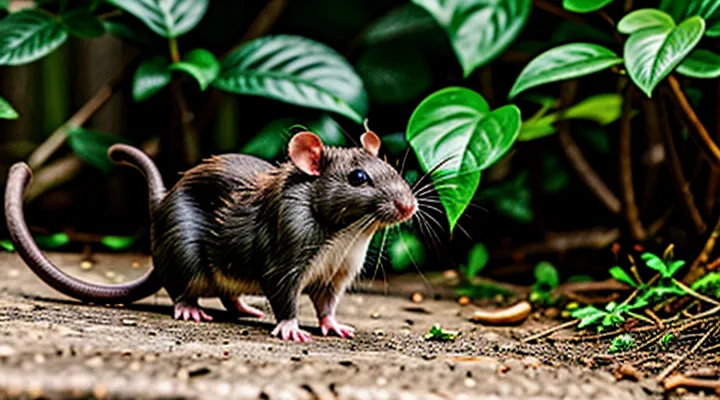
The Role of Rats in Food Webs
Predators and Prey Dynamics
Impact on Insect and Invertebrate Populations
Rats, as opportunistic omnivores, exert significant influence on insect and invertebrate communities. Their foraging behavior removes large numbers of arthropods, directly lowering populations of crop‑damaging insects such as grain beetles and stored‑product moths. This predation diminishes the need for chemical pest control, reducing environmental contamination and non‑target mortality.
By consuming carrion and detritus, rats also affect decomposer assemblages. Removal of dead insects limits the resources available to scavenging flies and beetles, thereby shaping successional dynamics in nutrient‑rich microhabitats. In turn, altered decomposer activity influences soil structure and organic matter turnover, which can modify habitat suitability for earthworms, nematodes, and other soil invertebrates.
Interaction with seed stores creates indirect effects on invertebrate populations. When rats harvest seeds, they reduce seedling establishment, limiting the development of plant species that provide shelter or food for specialist herbivores and pollinators. Consequently, the abundance of certain invertebrate taxa declines, while those adapted to open or disturbed habitats may increase.
Key impacts include:
- Suppression of disease‑vector insects (e.g., fleas, ticks) through direct consumption.
- Regulation of soil‑dwelling arthropods, influencing aeration and nutrient cycling.
- Competition with invasive invertebrate species, curbing their expansion.
- Modification of plant community composition, affecting habitat complexity for invertebrates.
Food Source for Larger Carnivores
Rats serve as a significant prey item for a wide range of predatory mammals, birds, and reptiles. Their abundance and reproductive capacity provide a reliable energy source that supports the survival and reproduction of higher trophic levels.
- Red foxes, coyotes, and wolves frequently consume rats, especially during periods when primary prey are scarce.
- Raptors such as owls, hawks, and eagles include rats in their diets, contributing to the regulation of rodent populations.
- Larger snakes, including rat snakes and boas, rely on rats for sustenance, facilitating the transfer of biomass within ecosystems.
- Carnivorous mammals like feral cats and wild dogs also incorporate rats into their feeding habits, influencing local food web dynamics.
The presence of rats enhances predator fitness by supplying protein, fat, and micronutrients essential for growth and offspring development. Predator reliance on rats promotes ecological stability: when rat numbers decline, predator populations may experience reduced reproductive success, leading to cascading effects on prey and vegetation communities. Conversely, high rat densities can sustain predator populations during fluctuations of other food sources, preventing abrupt declines in predator abundance.
Research indicates that ecosystems with robust rat‑predator interactions exhibit more balanced species composition. «Rats constitute a substantial proportion of diet for many predators, thereby reinforcing energy flow across trophic levels.» This relationship underscores the importance of rats as a foundational component in the diet of larger carnivores, contributing to overall biodiversity and ecosystem resilience.
Ecological Contributions of Rodents
Seed Dispersal and Plant Regeneration
Facilitation of Forest Health
Rats contribute to forest vitality through several ecological functions. Their foraging activities disturb leaf litter and compacted soil, creating channels that improve aeration and water infiltration. This micro‑disturbance promotes root expansion and enhances the capacity of trees to access nutrients.
Key mechanisms include:
- Seed dispersal – rodents transport and cache seeds, often relocating them to microsites with favorable conditions for germination.
- Soil turnover – burrowing behavior mixes organic matter into deeper layers, accelerating decomposition and nutrient recycling.
- Predator support – rat populations sustain a range of carnivores and raptors, which in turn regulate herbivore numbers that could over‑browse vegetation.
- Pathogen control – consumption of insects and carrion reduces the prevalence of disease vectors that threaten tree health.
«Rats act as agents of ecological engineering, reshaping forest substrates and influencing plant community dynamics». Their activities create a feedback loop that stabilizes soil structure, boosts plant regeneration, and maintains biodiversity, thereby reinforcing overall forest resilience.
Role in Ecosystem Restoration
Rats contribute to the recovery of degraded habitats by influencing several ecological processes. Their foraging activity transports seeds across heterogeneous micro‑environments, enhancing plant colonization in disturbed sites. Burrowing behavior improves soil structure, increasing porosity and facilitating water infiltration, which accelerates the establishment of vegetation. Predation on invertebrate pests reduces herbivore pressure, allowing nascent plant communities to persist.
Key functions in restoration projects include:
- Dispersal of native and opportunistic seeds, promoting biodiversity.
- Soil turnover that creates microsites favorable for seed germination.
- Regulation of arthropod populations that would otherwise suppress plant growth.
Empirical observations from post‑mining reclamation areas demonstrate that rat‑mediated seed movement accelerates the appearance of pioneer species within two growing seasons. In riparian buffer zones, burrow networks have been linked to higher moisture retention, supporting the recovery of flood‑tolerant flora.
Management strategies that incorporate rat populations—such as providing protective cover and limiting rodent control measures—enhance ecosystem resilience. Monitoring of rat density alongside vegetation metrics offers a practical framework for adaptive restoration planning.
Soil Aeration and Nutrient Cycling
Burrowing Activities and Soil Structure
Rats’ subterranean activities generate extensive tunnel networks that modify soil physical properties. The creation of burrows increases porosity, allowing air and water to penetrate deeper layers. Enhanced aeration promotes root respiration and accelerates the decomposition of organic matter, while improved infiltration reduces surface runoff and mitigates erosion.
Key effects of rat burrowing on soil structure include:
- Redistribution of organic fragments and mineral particles, resulting in finer aggregates and increased cohesion;
- Stimulation of microbial communities through the introduction of organic residues and the formation of microhabitats;
- Promotion of seed burial and germination by providing protected niches within the soil profile;
- Facilitation of nutrient cycling as burrow walls expose previously inaccessible layers to biogeochemical processes.
Decomposers of Organic Matter
Rats consume carrion, plant detritus, and fecal matter, converting complex organic substances into simpler compounds that enter the soil food web. Their digestive enzymes break down proteins, lipids, and carbohydrates, producing nutrient‑rich waste that supports microbial activity and plant uptake.
Through foraging, rats transport organic material across microhabitats, linking surface litter to subterranean layers. This movement accelerates the distribution of nitrogen, phosphorus, and potassium, enhancing soil fertility and promoting plant growth.
Key ecological outcomes include:
- Rapid turnover of dead matter, reducing accumulation of waste in urban and rural settings.
- Stimulation of microbial decomposition processes via excreta that serve as substrates for bacteria and fungi.
- Support of higher trophic levels, as predators rely on rats as a food source, integrating decomposer pathways into broader food webs.
Overall, rat‑driven decomposition contributes to the recycling of organic nutrients, sustaining ecosystem productivity and resilience.