
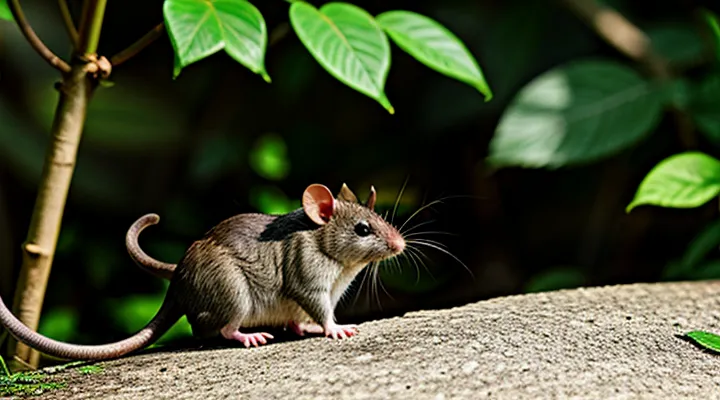
The Overlooked Contributions of Rodents to Ecosystems
Dispelling Misconceptions: The True Ecological Identity of Rats
Beyond the Pest: Re-evaluating the Image of Rats
Rats often appear solely as urban nuisances, yet their biological activities support multiple ecosystem processes. Their foraging behavior spreads seeds across fragmented habitats, enhancing plant regeneration in disturbed areas. By transporting organic material, rats introduce nutrients into soil layers, improving microbial activity and promoting decomposition.
- Seed dispersal: consumption of fruits and subsequent excretion of viable seeds extends plant colonization zones.
- Soil modification: burrowing creates aerated channels that increase water infiltration and root penetration.
- Predator sustenance: dense populations provide reliable food sources for owls, snakes, and carnivorous mammals, stabilizing food‑web dynamics.
- Scavenging: rapid consumption of carrion limits disease‑bearing carcass accumulation, reducing pathogen reservoirs.
These functions counterbalance the negative perception tied to human‑centered concerns. Recognizing rats as contributors rather than mere pests reshapes management strategies, encouraging coexistence measures that preserve their ecological contributions while mitigating health risks. The shift from eradication to integration aligns conservation objectives with realistic urban and rural planning.
Understanding Rat Diversity: A Spectrum of Ecological Roles
Rats encompass a broad taxonomic range, from the ubiquitous brown rat (Rattus norvegicus) to specialized species inhabiting arid deserts, high‑altitude forests, and subterranean ecosystems. Each taxon exhibits distinct morphological, physiological, and behavioral adaptations that determine its position within local food webs and environmental processes.
- Seed predation and dispersal: several granivorous rats consume large quantities of seeds, reducing seed banks while simultaneously transporting viable seeds to new microhabitats.
- Soil engineering: burrowing species relocate substantial volumes of earth, promoting aeration, water infiltration, and the incorporation of organic matter into deeper soil layers.
- Nutrient cycling: omnivorous rats excrete nitrogen‑rich waste, accelerating the conversion of organic debris into mineral forms usable by plants.
- Predator support: rat populations sustain a variety of carnivores, raptors, and reptiles, maintaining trophic stability across ecosystems.
- Disease regulation: by hosting parasites and pathogens, rats influence pathogen dynamics, providing indirect control mechanisms for vector populations.
Morphological variation, such as dental enamel thickness, limb proportion, and sensory organ development, aligns with specific ecological functions. For example, elongated incisors in seed‑specialists enable efficient husk removal, while enlarged auditory bullae in nocturnal species enhance detection of prey and predators.
Population density correlates with habitat productivity. In agricultural landscapes, rat numbers rise with crop abundance, intensifying seed predation and waste generation. Conversely, in undisturbed forests, low‑density populations focus on detritus processing, contributing to litter decomposition rates.
Understanding this diversity clarifies how rats mediate energy flow, influence plant regeneration, and shape community composition. Recognizing each species’ niche informs management strategies that balance agricultural concerns with conservation objectives.
Ecosystem Engineering: Reshaping Habitats and Resources
Soil Health and Nutrient Cycling
Bioturbation: Rats as Natural Tillers
Rats continuously disturb soil while foraging, constructing burrows, and moving organic material. Their activity mixes litter, leaf fragments, and mineral particles, creating heterogeneous micro‑environments that accelerate decomposition and nutrient cycling.
- Burrow excavation introduces oxygen to anaerobic layers, promoting aerobic microbial activity.
- Transport of surface detritus into deeper horizons redistributes carbon, nitrogen, and phosphorus, enhancing plant‑available pools.
- Soil turnover reduces compaction, increases water infiltration, and improves root penetration.
These processes modify habitat structure for invertebrates and small vertebrates, fostering greater biodiversity. By reshaping the physical and chemical properties of the substrate, rats contribute to ecosystem resilience and productivity without direct human intervention.
Decomposition and Organic Matter Redistribution
Rats consume carrion, fallen fruits, and decaying plant material, converting complex organic compounds into simpler substances that microbes can further break down. Their digestive processes accelerate nutrient release, making nitrogen, phosphorus, and carbon available to surrounding vegetation.
Through foraging and territorial movement, rats transport organic residues from nutrient‑rich sites to less fertile patches. This redistribution homogenizes soil fertility across heterogeneous landscapes, supporting plant growth in areas that would otherwise remain nutrient‑poor.
Burrowing activity mixes surface litter with deeper soil layers. The resulting bioturbation enhances aeration, promotes microbial colonization, and improves water infiltration. Nest construction incorporates shredded vegetation and detritus, creating micro‑environments where decomposition proceeds more rapidly.
Key mechanisms by which rats influence decomposition and organic matter flow:
- Ingestion of dead material followed by excretion of nutrient‑rich feces.
- Relocation of organic fragments while foraging across multiple habitats.
- Soil disturbance through tunnel excavation, which integrates surface litter into subsurface soils.
- Incorporation of plant debris into nests, providing localized hotspots for microbial activity.
Seed Dispersal and Plant Propagation
Granivory and Cache Formation
Rats consume a wide range of seeds, from grasses to nut-producing trees. Their dentition and digestive physiology allow efficient processing of hard seed coats, while selective preferences shape the composition of harvested items. Seasonal fluctuations in food availability trigger intensified granivory, leading to measurable changes in seed predation rates across habitats.
When surplus seeds are collected, rats often transport them to concealed locations and store them for later use. These caches are created in soil burrows, under leaf litter, or within crevices, and may remain hidden for weeks to months. Retrieval is guided by spatial memory and olfactory cues, resulting in a dynamic turnover of stored resources.
Ecological consequences of rat granivory and caching include:
- Redistribution of seeds away from parent plants, reducing density‑dependent mortality.
- Partial recovery of cached seeds, providing a delayed germination window that enhances seedling establishment.
- Alteration of plant community structure through selective removal of certain species' seeds.
- Enhanced soil aeration and nutrient mixing caused by burrowing activities associated with cache construction.
- Creation of food patches that support secondary consumers, linking rodent foraging to higher trophic levels.
Collectively, these processes integrate rat foraging behavior into ecosystem functions, influencing vegetation dynamics, soil health, and food‑web connectivity.
Facilitating Forest Regeneration
Rats, as abundant forest-dwelling rodents, affect vegetation recovery through several direct actions.
Their habit of collecting and burying seeds creates spatially distributed caches that later germinate. Cache placement often occurs in microhabitats favorable for seedling establishment, such as gaps with sufficient light and moisture.
Burrowing activity loosens compacted soil, increases pore space, and improves water infiltration. The resulting aerated substrate supports root penetration and enhances seed-soil contact.
Excrement supplies localized concentrations of nitrogen, phosphorus, and organic matter. These nutrient pulses accelerate early growth of emerging seedlings and stimulate microbial activity that further mineralizes soil nutrients.
Predation on seed‑eating insects reduces pressure on vulnerable seedlings. By lowering herbivore populations, rats indirectly increase seedling survival rates.
Key mechanisms by which rats support forest regeneration:
- Seed caching and scatter‑hoarding
- Soil aeration through tunnel construction
- Localized nutrient enrichment via feces
- Suppression of seed‑predator insect populations
- Creation of microhabitats that protect seedlings from extreme conditions
Collectively, these processes create conditions conducive to the reestablishment of forest cover after disturbance.
Trophic Dynamics: A Vital Link in the Food Web
Prey Base for Predators
Sustaining Raptor Populations
Raptors depend on abundant, healthy rodent populations for nutrition, reproductive success, and population stability. The presence of diverse rat species maintains a reliable food source, enabling birds of prey to sustain breeding cycles and achieve higher fledgling survival rates.
Effective measures to sustain raptor populations include:
- Preservation of natural habitats that support both rodents and raptors, such as grasslands, wetlands, and forest edges.
- Installation of artificial nesting platforms and protection of existing cliff and tree nests to increase breeding opportunities.
- Reduction of pesticide use to prevent secondary poisoning of raptors that consume contaminated rodent prey.
- Implementation of long‑term monitoring programs that track raptor numbers, breeding success, and prey availability.
- Promotion of land‑management practices that maintain heterogeneous vegetation structures, fostering rodent diversity and, consequently, a stable prey base.
By ensuring continuous rodent abundance and safeguarding critical raptor habitats, ecosystems retain functional predator–prey dynamics that regulate small‑mammal populations and support overall biodiversity.
Supporting Carnivore Diets
Rats serve as a primary food source for many carnivorous species, transferring energy from plant‑based primary production to higher trophic levels. Their abundance and reproductive capacity ensure a reliable supply of biomass, sustaining predator populations even during periods of scarcity.
- Provide essential proteins, fats, and micronutrients that support growth, reproduction, and immune function in carnivores such as foxes, raptors, and small wild cats.
- Stabilize predator numbers by preventing extreme fluctuations; consistent prey availability reduces the risk of starvation‑driven mortality.
- Influence predator foraging behavior, encouraging the development of hunting skills and territorial patterns that shape ecosystem structure.
- Contribute to disease regulation; predators that consume rats can reduce rodent‑borne pathogen loads, indirectly benefiting human health and livestock.
The presence of rats thus underpins the dietary needs of carnivores, reinforces trophic connections, and promotes overall ecological resilience.
Insectivory and Pest Control
Regulating Insect Populations
Rats consume large quantities of insects, reducing the abundance of species that can damage crops or spread disease. Their omnivorous diet includes beetles, caterpillars, grasshoppers, and larvae of flies, which are taken from fields, gardens, and forest floors.
- Beetles (e.g., weevils, grain beetles) are captured during foraging.
- Caterpillars of moths that feed on foliage are eaten.
- Grasshoppers and crickets are grabbed on the ground or in vegetation.
- Fly larvae and pupae are removed from decaying organic matter.
By removing these insects, rats limit the reproductive potential of pest populations. Predation pressure shortens life cycles and lowers survival rates, especially for species that reproduce rapidly.
In addition to direct consumption, rats disrupt insect habitats through burrowing and seed caching. Soil turnover creates less favorable conditions for soil-dwelling larvae, while stored seeds reduce food availability for seed‑eating insects.
The net effect of rat activity includes higher plant productivity, fewer crop losses, and diminished transmission of vector‑borne pathogens. Agricultural ecosystems benefit from lower pesticide requirements, while natural habitats experience balanced trophic interactions that support biodiversity.
Secondary Benefits for Agriculture
Rats and other rodents provide indirect advantages that improve agricultural productivity. Their burrowing activity loosens compacted soil, facilitating root expansion and enhancing water infiltration. Excretions return organic matter to the ground, enriching nutrient availability for crops.
By feeding on insects, larvae, and small arthropods, these mammals reduce populations of species that damage plants. This natural suppression lowers the need for chemical insecticides and mitigates crop loss.
Rodent foraging spreads seeds across fields, promoting plant diversity and aiding the establishment of beneficial species. Simultaneously, consumption of weed seeds limits the emergence of competitive flora, decreasing labor required for weed management.
Research programs exploit rodent genetics to identify traits linked to stress tolerance, disease resistance, and growth efficiency. Insights derived from these studies inform breeding strategies for higher-yielding varieties.
Key secondary benefits for agriculture:
- Enhanced soil structure through bioturbation
- Increased organic nutrient input from droppings
- Biological control of herbivorous insects
- Seed dispersal that supports beneficial plant communities
- Reduction of weed seed banks
- Contribution to scientific advances in crop improvement
Ecosystem Resilience and Adaptation
Adapting to Environmental Changes
Pioneer Species in Disturbed Habitats
Rats frequently appear as pioneer species after natural or anthropogenic disturbances. Their high reproductive rate, omnivorous diet, and tolerance for varied microclimates enable rapid population establishment in habitats where vegetation cover, soil structure, or food resources are altered.
In newly exposed soils, rats consume seed banks, carrion, and detritus, converting organic matter into fecal pellets that enhance nutrient cycling. Their burrowing activity aerates compacted substrates, creates micro‑habitats for invertebrates, and facilitates water infiltration.
Key ecological contributions of rats in early successional stages include:
- Dispersal of viable seeds over distances beyond the reach of wind or gravity, promoting plant colonization.
- Predation on insect larvae and other arthropods, regulating pest populations that could otherwise dominate disturbed sites.
- Provision of a consistent prey source for raptors, snakes, and carnivorous mammals, supporting higher trophic levels.
- Redistribution of nutrients through excreta, accelerating decomposition and soil fertility.
These functions accelerate the transition from barren or degraded conditions to more complex plant communities, thereby influencing the trajectory of ecosystem recovery. By occupying vacant niches quickly, rats create conditions that favor subsequent colonizers, reinforcing biodiversity and stability in recovering landscapes.
Indicator Species for Environmental Health
Rats serve as reliable indicators of ecosystem condition because their population dynamics reflect changes in habitat quality, resource availability, and pollutant levels. Rapid reproduction, broad diet, and habitat flexibility allow rodents to respond quickly to environmental stressors, making fluctuations in their abundance or health a measurable signal of ecosystem disturbance.
Key attributes that qualify rats as indicator species:
- Sensitivity to toxic substances: bioaccumulation of heavy metals and pesticides is detectable in rat tissue, providing early warnings of contamination.
- Habitat utilization: presence in both urban and wild settings records the impact of land‑use conversion and fragmentation.
- Disease prevalence: shifts in pathogen load among rat populations signal alterations in community health and vector dynamics.
Monitoring protocols typically involve:
- Trapping and population density assessments across defined transects.
- Tissue sampling for chemical analysis of contaminants such as lead, mercury, and organochlorines.
- Serological testing for zoonotic agents, including hantavirus and leptospirosis, to gauge disease pressure on both wildlife and human communities.
Data derived from rat monitoring inform management decisions, such as remediation of polluted sites, evaluation of restoration success, and adjustment of land‑use policies. Because rats occupy trophic positions from primary consumers to prey for predators, their status integrates information from multiple ecological layers, offering a comprehensive snapshot of environmental health.
Genetic Diversity and Evolutionary Processes
Role in Gene Flow and Hybridization
Rats serve as mobile vectors of genetic material across fragmented habitats. Individuals regularly traverse corridors, agricultural fields, and urban green spaces, thereby linking isolated populations. This movement enables the exchange of alleles, reduces genetic drift, and mitigates the accumulation of deleterious mutations that can arise in small, closed groups.
Hybridization between closely related rodent species occurs frequently where ranges overlap. Documented cases include gene flow between Rattus norvegicus and Rattus rattus in port environments, resulting in introgressed traits such as enhanced disease resistance or altered reproductive timing. Such genetic blending can expand ecological niches and accelerate adaptive responses to changing conditions.
The consequences of these processes extend to ecosystem stability. Greater genetic variability within rat populations supports higher reproductive success, improves resilience to environmental stressors, and influences predator–prey dynamics. Understanding the mechanisms of allele transfer and interspecific mixing informs both biodiversity conservation strategies and the management of rodent‑associated risks.
Shaping Co-evolutionary Relationships
Rats generate selective pressures that drive reciprocal adaptations across multiple taxa. Their foraging behavior, high reproductive rate, and habitat flexibility create persistent ecological challenges, prompting species that interact with them to evolve defensive, exploitative, or cooperative traits.
Plant species that rely on rats for seed dispersal develop fruit characteristics—such as size, nutrient composition, and protective husks—that enhance rat attraction while limiting predation by other mammals. In response, rats evolve dentition and digestive enzymes optimized for processing these seeds, reinforcing a mutualistic feedback loop.
Predatory birds, snakes, and carnivorous mammals refine hunting strategies, sensory acuity, and venom potency to capture increasingly wary rats. Concurrently, rat populations develop heightened vigilance, nocturnal activity patterns, and rapid escape responses, exemplifying a classic predator‑prey arms race.
Pathogens exploit rat populations as reservoirs, encouraging the evolution of virulence factors that maximize transmission without killing the host prematurely. Rats counteract with immune adaptations, such as diversified Major Histocompatibility Complex (MHC) alleles, which in turn pressure pathogens to diversify antigenic profiles.
Key mechanisms through which rats shape co‑evolutionary relationships include:
- Resource‑driven mutualisms (seed dispersal, carrion consumption)
- Predator‑prey escalation (behavioral and morphological innovations)
- Host‑pathogen dynamics (immune diversification and pathogen virulence)
- Competitive interactions with sympatric rodents (niche partitioning, territoriality)
These interdependent processes illustrate how rat populations act as catalysts for evolutionary change, reinforcing their ecological significance beyond mere presence in ecosystems.
Conclusion: Acknowledging the Unsung Heroes of Nature
Rats sustain ecosystem balance through several distinct mechanisms. Their foraging activity controls seed populations, limiting the spread of invasive plants and fostering native vegetation. By consuming large quantities of insects and arthropods, they reduce pest pressure on crops and forest understories. Their burrowing behavior aerates soil, enhances water infiltration, and creates microhabitats that support diverse invertebrate communities. Additionally, rat carcasses supply nutrient pulses that enrich the food web, benefiting scavengers and decomposers.
- Seed regulation and plant community dynamics
- Insect predation and pest suppression
- Soil modification and habitat creation
- Nutrient recycling through carrion
Recognizing these functions affirms rats as indispensable contributors to ecological resilience, deserving acknowledgment alongside more celebrated wildlife.