
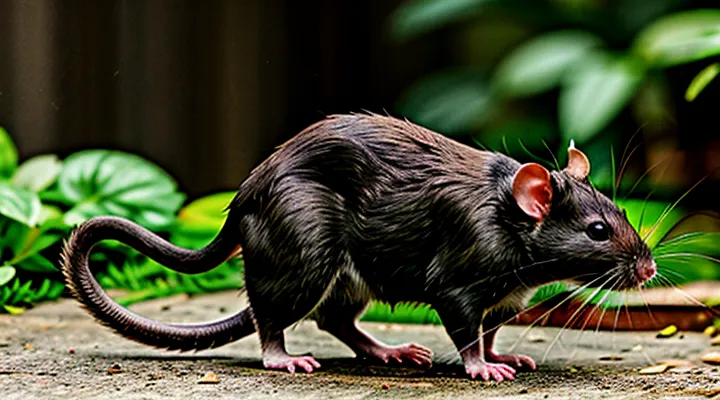
The Role of Rats in Ecosystem Dynamics
Nutrient Cycling and Soil Health
Decomposition and Organic Matter
Rats accelerate the breakdown of dead organic material by consuming carrion, discarded plant matter, and fecal deposits. Their digestive processes transform complex tissues into simpler compounds that soil microbes can readily mineralize.
- Ingestion of carcasses converts protein‑rich tissue into nitrogen‑laden waste, boosting available nitrogen for microbial assimilation.
- Consumption of seed husks and fruit remnants produces fine organic fragments that increase the surface area for microbial activity.
- Burrowing behavior mixes surface litter with deeper soil layers, enhancing aeration and promoting aerobic decomposition pathways.
The rapid conversion of organic inputs into mineral nutrients raises soil fertility, supports higher primary productivity, and stabilizes nutrient cycles. Consequently, rat‑driven decomposition contributes to a more resilient and productive ecosystem.
Soil Aeration and Bioturbation
Rats construct extensive tunnel networks that penetrate compacted layers, creating channels for air and water movement. These passages increase oxygen diffusion into deeper soil strata, supporting root respiration and microbial activity.
Through continuous burrowing, rats relocate soil particles, mixing organic matter with mineral substrates. This bioturbation process:
- Enhances nutrient distribution across horizons.
- Breaks up aggregates, reducing bulk density.
- Promotes seed burial and germination by exposing dormant seeds to favorable conditions.
The combined effect of aeration and bioturbation improves soil structure, accelerates decomposition, and sustains plant productivity, illustrating the ecological contributions of rodent activity.
Food Web Contributions
Prey for Predators
Rats serve as a reliable food source for a wide range of carnivorous species, including owls, foxes, snakes, and larger mammals. Their abundance in urban and rural environments sustains predator populations that might otherwise experience scarcity, thereby maintaining trophic balance.
Key ecological contributions of rats as prey:
- Support of predator reproductive success through consistent nutrient intake.
- Stabilization of predator numbers, preventing over‑population of other mesopredators.
- Promotion of biodiversity by enabling apex predators to occupy habitats where alternative prey are limited.
- Facilitation of energy transfer from primary producers to higher trophic levels via the rat’s role as a herbivore and omnivore.
These effects collectively enhance ecosystem resilience and functional integrity.
Scavenging and Waste Removal
Rats function as efficient scavengers, rapidly locating and consuming organic debris that would otherwise accumulate in urban and rural habitats. Their keen sense of smell and nocturnal foraging patterns allow them to exploit food sources inaccessible to larger mammals, thereby reducing the volume of carcasses, spoiled produce, and other perishable waste.
Through constant activity, rats accelerate the decomposition process. By breaking down material into smaller fragments, they increase the surface area available for microbial action, which speeds up mineralization and returns nutrients to the soil. This cycle supports plant growth and sustains the food web at multiple trophic levels.
Key ecological services provided by rat scavenging include:
- Removal of disease‑causing refuse that can attract vectors such as flies and insects.
- Redistribution of nutrients across microhabitats, enhancing soil fertility.
- Suppression of competing pest populations by outcompeting them for limited resources.
Collectively, these functions lower the burden on human waste‑management systems and contribute to the stability of ecosystems where rats are present.
Unexpected Ecological Services
Seed Dispersal
Germination Enhancement
Rats influence seed germination through several direct actions that improve plant establishment. Their foraging behavior transports viable seeds away from parent plants, reducing competition and exposing seeds to favorable microhabitats.
- Seed movement: gnawing and caching relocate seeds to nutrient‑rich sites, often beneath leaf litter or in burrow chambers.
- Soil disturbance: burrowing creates aerated pockets, enhancing oxygen availability for germinating embryos.
- Nutrient enrichment: fecal deposits add organic matter and nitrogen, providing immediate nutrition for emerging seedlings.
- Seed scarification: chewing softens hard seed coats, accelerating water absorption and germination onset.
These processes increase germination rates, diversify plant communities, and support trophic cascades that sustain higher biodiversity. Consequently, rodent activity contributes measurable improvements to ecosystem productivity and resilience.
Habitat Colonization
Rats readily establish populations in a wide range of environments, from temperate forests to urban green spaces. Their ability to locate shelter, exploit diverse food sources, and reproduce quickly allows them to occupy vacant niches and stabilize newly formed habitats.
Through colonization, rats influence ecosystem processes in several measurable ways:
- Seed transport – individuals carry edible seeds in fur or digestive tracts, depositing them across microhabitats and enhancing plant regeneration.
- Soil modification – burrowing activity loosens compacted ground, improves aeration, and facilitates water infiltration, which benefits root growth and microbial activity.
- Predator support – dense rat populations provide reliable prey for raptors, snakes, and mammalian carnivores, sustaining higher trophic levels.
- Nutrient cycling – consumption of organic waste and subsequent excretion return nitrogen, phosphorus, and carbon to the soil, accelerating decomposition cycles.
The cumulative effect of these actions contributes to greater biodiversity, increased resilience of ecological communities, and more efficient energy flow within the ecosystem.
Pest Control (Indirect)
Predation on Insect Larvae
Rats regularly consume the larvae of beetles, flies, moths and other insects, directly limiting the numbers of species that can cause agricultural loss or deforesting damage. Their opportunistic foraging pattern enables them to locate larval habitats in soil, leaf litter and stored grain, where they ingest substantial quantities of developing insects.
Laboratory and field observations indicate that a single adult rat can ingest dozens of larvae per day, with consumption rates rising during peak larval emergence. This predation pressure reduces larval survival rates, curtails population booms, and prevents outbreaks of pests such as the grain weevil and cabbage root fly.
By suppressing larval populations, rats decrease herbivory on crops and forest seedlings, promote healthier plant growth, and limit the spread of disease vectors carried by insects. The resulting decline in plant damage enhances primary productivity, while the removal of dead larvae contributes organic matter that accelerates decomposition and nutrient recycling.
Key ecological outcomes of rat predation on insect larvae
- Lower incidence of crop loss caused by larval feeding.
- Reduced need for chemical insecticides in agricultural and stored‑product settings.
- Enhanced seedling survival and forest regeneration.
- Accelerated nutrient turnover through the incorporation of consumed larvae into rat waste.
Overall, rat predation on insect larvae provides measurable advantages for ecosystem stability, agricultural efficiency and biodiversity maintenance.
Competition with Other Rodents
Rats interact with sympatric rodent species through direct and indirect competition for food, shelter, and nesting sites. Their high reproductive rate enables rapid population growth, which can suppress the numbers of slower‑reproducing rodents such as voles and mice. This pressure reduces the likelihood of any single species dominating a niche, promoting a more balanced community structure.
Key ecological outcomes of rat‑rodent competition include:
- Resource partitioning: Rats exploit a broader diet, including human refuse, carrion, and seeds, forcing other rodents to specialize on remaining resources, which minimizes overlap.
- Habitat modification: Burrowing activity by rats alters soil composition and aeration, creating microhabitats that benefit certain insect taxa while making conditions less favorable for some ground‑dwelling rodents.
- Disease regulation: By outcompeting carriers of specific pathogens, rats can indirectly lower transmission rates of diseases that predominantly affect other rodent populations.
Overall, the competitive dynamics between rats and other rodents contribute to species diversity, stabilize trophic interactions, and influence nutrient cycling within ecosystems.