
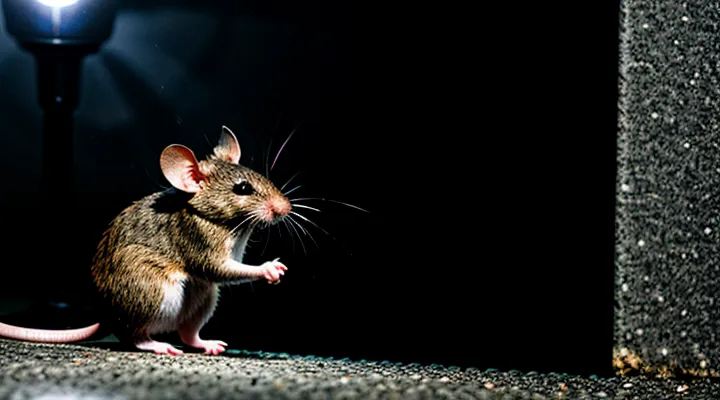
The Nocturnal Nature of Mice
Circadian Rhythms and Activity Patterns
Mice exhibit a robust circadian system that synchronizes physiological processes with the 24‑hour light–dark cycle. The suprachiasmatic nucleus receives photic input, adjusts endogenous oscillators, and drives rhythmic expression of clock genes such as Per1, Per2, and Cry1. These molecular cycles translate into predictable fluctuations in hormone levels, body temperature, and metabolic rate.
Activity peaks for laboratory mice typically occur during the dark phase, with locomotor and foraging behavior rising sharply after lights off. During the light phase, voluntary movement declines to a basal level, yet brief bouts of activity persist, reflecting an intrinsic ultradian component. The pattern can be summarized as follows:
- Dark‑phase surge: 70‑90 % of total daily distance traveled.
- Light‑phase trough: 10‑30 % of daily distance, concentrated in brief intervals.
- Transition periods: Gradual increase or decrease in activity within 30‑60 minutes of light changes.
Photophobia influences the dark‑phase dominance. Retinal melanopsin cells detect ambient illumination and trigger aversive responses that suppress exploratory behavior under bright conditions. Experiments using variable light intensity show a dose‑dependent reduction in wheel‑running and open‑field exploration, confirming that intensity, rather than mere presence of light, modulates activity levels.
Chronobiological studies indicate that disrupting the light–dark schedule—through constant light, constant darkness, or phase shifts—alters the amplitude and phase of circadian rhythms. Consequences include fragmented activity, reduced total locomotion, and altered expression of stress‑related hormones. Consequently, the synchronization of circadian oscillators to external light cues remains a primary determinant of nocturnal rodents’ behavioral repertoire.
Adaptations for Low-Light Environments
Olfactory Sensitivity
Mice possess a highly developed olfactory system that detects volatile compounds at concentrations as low as parts per trillion. This sensitivity enables rapid identification of food sources, conspecifics, and potential threats, functioning independently of visual cues. When ambient illumination increases, rodents shift reliance toward tactile and auditory information, yet the olfactory apparatus remains the primary modality for environmental assessment.
Key characteristics of mouse olfactory sensitivity include:
- Large olfactory epithelium surface area relative to body size, providing extensive receptor neuron populations.
- Expression of over 1,000 odorant receptor genes, allowing discrimination of a broad chemical spectrum.
- Fast signal transduction; odor detection can trigger behavioral responses within 100 ms.
- Integration with limbic structures, linking odor perception to memory and stress responses.
Experimental data demonstrate that mice exposed to low‑intensity light maintain comparable sniffing rates to those kept in darkness, indicating that modest illumination does not diminish olfactory acuity. Conversely, high‑intensity light can suppress exploratory sniffing, likely due to stress‑induced hormonal changes that temporarily alter receptor sensitivity.
In natural settings, nocturnal rodents exploit olfactory cues to navigate dark burrows, locate mates, and avoid predators that rely on visual detection. The robustness of their smell perception compensates for limited visual input, ensuring survival even when light conditions fluctuate.
Auditory Acuity
Mice possess a highly developed auditory system that compensates for limited visual input during periods of darkness. The cochlear structure includes an expanded basilar membrane, allowing detection of frequencies between 1 kHz and 100 kHz, with peak sensitivity near 15 kHz. This range overlaps with the ultrasonic vocalizations used for social communication and predator detection.
Auditory acuity supports several behavioral adaptations relevant to light avoidance:
- Rapid localization of high‑frequency sounds enables escape from aerial predators that are more active at dusk.
- Detection of low‑intensity rustling signals the presence of conspecifics, facilitating group foraging in dim environments.
- Sensitivity to ultrasonic cues assists in navigating complex burrow networks where visual cues are minimal.
Neurophysiological studies show that the auditory cortex of nocturnal rodents exhibits heightened plasticity, enhancing signal discrimination under low‑light conditions. This plasticity is reflected in increased synaptic density within the primary auditory area, promoting faster processing of transient acoustic events.
Behavioral assays demonstrate that mice exposed to sudden light flashes maintain higher vigilance when concurrent auditory stimuli are present, suggesting that auditory information reinforces the decision to retreat to shelter. Conversely, in complete darkness, mice rely exclusively on acoustic cues to assess risk and locate resources, confirming that hearing is a primary sensory modality for survival when visual information is suppressed.
Tactile Senses (Whiskers)
Mice rely on their vibrissae to compensate for limited visual acuity during periods of low illumination. Each whisker is anchored in a follicle richly supplied with mechanoreceptors that transduce minute deflections into neural signals. This tactile system operates independently of photic input, allowing rapid assessment of surrounding structures.
Key characteristics of the whisker apparatus include:
- High spatial resolution: Individual vibrissae detect objects as small as a few micrometers, providing a detailed map of the immediate environment.
- Rapid signal transmission: Axons from the follicle reach the brainstem within milliseconds, supporting real‑time navigation.
- Bidirectional sensing: Whiskers respond to both direct contact and air currents, extending sensory range beyond physical touch.
- Integration with motor control: Muscular adjustments enable whisker positioning to prioritize regions of interest, enhancing exploratory efficiency.
When exposed to sudden light, mice exhibit a brief pause in locomotion, yet whisker activity intensifies. This pattern reflects a shift from visual reliance to heightened tactile scanning, ensuring safe movement despite visual disruption. Experimental recordings show increased firing rates in the trigeminal nuclei during illumination, confirming that vibrissal input dominates decision‑making when photic cues become unreliable.
Consequently, the tactile system functions as the primary navigational modality for nocturnal rodents, directly influencing behavioral responses to changes in ambient light.
Understanding Mouse Vision
Rod-Dominant Retinas
Rod‑dominant retinas in mice consist of a high proportion of rod photoreceptors, typically exceeding 95 % of the total photoreceptor population. This composition yields extreme sensitivity to low‑intensity illumination and limited capacity for color discrimination. The dense rod layer, coupled with a thin cone rim at the visual streak, maximizes photon capture under scotopic conditions.
Key functional outcomes of this retinal architecture include:
- Rapid activation of the rod cascade at photon levels far below cone thresholds, enabling navigation in near‑dark environments.
- Prolonged integration time, allowing detection of faint, slowly changing light sources.
- Reduced visual acuity and color perception, reflecting the scarcity of cones.
- Elevated baseline firing of intrinsically photosensitive retinal ganglion cells, which mediate non‑image‑forming responses such as pupil constriction and circadian entrainment.
These properties shape mouse behavior toward light. High rod sensitivity renders bright illumination uncomfortable, triggering avoidance responses that manifest as rapid retreat from illuminated zones or decreased activity under sudden light exposure. The retinal circuitry relays this aversive signal through the suprachiasmatic nucleus and the amygdala, reinforcing nocturnal foraging patterns and shelter‑seeking behavior.
Consequently, the rod‑dominant retinal design directly influences the tendency of nocturnal rodents to minimize exposure to intense light, supporting their evolutionary adaptation to low‑light habitats.
Perception of Light Intensity
Mice detect ambient illumination through a retina densely populated with rod photoreceptors and a smaller complement of cones. Rods respond to low photon counts, enabling visual function at luminance levels as low as 0.01 cd m⁻². Cones become active above approximately 10 cd m⁻², providing color discrimination and higher spatial resolution. The transition between rod‑dominated and cone‑dominated vision occurs sharply, defining the threshold at which mice begin to register bright light as potentially disruptive.
Behavioral assays reveal that exposure to light intensities exceeding 5 cd m⁻² suppresses exploratory activity and increases latency to enter open arenas. Mice placed in a gradient chamber preferentially occupy zones where measured illumination remains below 2 cd m⁻², indicating an innate preference for dim environments. When sudden illumination spikes above 20 cd m⁻², subjects exhibit freezing or rapid retreat, reflecting an acute aversive response.
Physiological measurements support these observations. Pupil constriction initiates at luminance levels of 1 cd m⁻², reducing retinal irradiance and protecting photoreceptors from overstimulation. Electroretinographic recordings show a marked decrease in amplitude when stimulus intensity surpasses 15 cd m⁻², confirming neural attenuation of bright light signals. Adaptive mechanisms, such as up‑regulation of melanopsin‑expressing retinal ganglion cells, modulate circadian entrainment under varying light conditions.
Key quantitative findings:
- Rod activation threshold: ~0.01 cd m⁻²
- Cone activation onset: ~10 cd m⁻²
- Behavioral avoidance onset: >5 cd m⁻²
- Pupil constriction start: 1 cd m⁻²
- Neural response suppression: >15 cd m⁻²
These data delineate the perceptual limits that shape nocturnal rodent activity patterns and inform experimental designs involving illumination control.
Spectral Sensitivity and Color Vision
Ultraviolet Perception
Mice possess photoreceptors that extend into the ultraviolet (UV) spectrum, allowing detection of wavelengths below 400 nm. The retinal architecture includes a subset of cone cells expressing the short‑wave opsin SWS1, which is maximally sensitive to UV light. Electrophysiological recordings confirm that UV stimulation elicits robust responses comparable to those evoked by visible wavelengths.
Behavioral assays demonstrate that mice can discriminate UV cues from non‑UV controls. In a two‑choice task, subjects preferentially approach a UV‑emitting source when it signals food availability, indicating functional relevance of UV perception for foraging. Conversely, when UV light signals a predator model, mice exhibit rapid retreat, suggesting that UV cues can trigger avoidance behavior.
Key implications for nocturnal activity:
- UV sensitivity enhances detection of reflective surfaces, such as urine marks, which contain UV‑reflective components used in territorial communication.
- UV cues contribute to predator awareness; many nocturnal predators reflect UV light from fur or feathers, providing a visual warning signal.
- The presence of UV‑responsive cones supports a broader visual palette than previously assumed for strictly nocturnal mammals.
Overall, ultraviolet perception equips mice with an additional sensory channel that influences both attraction to resources and evasion of threats, thereby shaping their nocturnal behavioral repertoire.
The Role of Light in Mouse Behavior
Natural Light Exposure and Habitat Selection
Mice exhibit a pronounced preference for habitats that minimize exposure to natural illumination. Field observations consistently show higher population densities in burrow systems, dense ground cover, and underground tunnels where daylight penetration is limited. These environments reduce visual detection by predators and align with the species’ crepuscular to nocturnal activity patterns.
Laboratory experiments confirm that even low-intensity daylight suppresses exploratory behavior. When presented with a choice between a dimly lit enclosure and a brightly illuminated arena, mice overwhelmingly select the dim option, reducing movement speed and foraging effort. This response persists across strains and is measurable through decreased locomotor activity and elevated stress hormone levels in the illuminated sector.
Key factors influencing habitat selection regarding light exposure include:
- Soil depth and tunnel architecture that block direct sunlight.
- Vegetation density providing shade and visual concealment.
- Proximity to artificial light sources, which is generally avoided unless food resources are abundant.
- Seasonal variations in day length that shift activity windows toward darker periods.
These patterns indicate that natural light acts as a primary environmental cue shaping spatial distribution and nest placement. Understanding this relationship informs pest management strategies, conservation of native rodent populations, and the design of laboratory housing that respects innate photic preferences.
Artificial Light and Its Effects
Light-Dark Cycles in Laboratories
Laboratory environments rely on precisely controlled photoperiods to simulate natural circadian rhythms in nocturnal rodents. Researchers typically employ a 12‑hour light, 12‑hour dark schedule (LD 12:12), though variations such as LD 14:10 or LD 10:14 adjust activity peaks for specific experimental goals. Light intensity is calibrated to 100–200 lux during the light phase, a level sufficient to suppress melatonin without causing visual stress. During the dark phase, infrared illumination below 1 lux enables video monitoring while preserving the animals’ perception of darkness.
Key considerations for implementing light‑dark cycles include:
- Timing consistency: Automated timers synchronize lights across all cages, preventing phase shifts that could confound behavioral data.
- Spectral composition: Cool white LEDs dominate modern setups; their spectrum aligns with rodent photoreceptor sensitivity, reducing unintended retinal stimulation.
- Light leakage control: Opaque cage lids, blackout curtains, and sealed room doors eliminate stray photons that might disrupt nocturnal activity.
- Acclimation period: A minimum of one week under the chosen photoperiod allows mice to entrain their internal clocks before data collection begins.
Deviations from standard cycles reveal the influence of illumination on fear responses. Shortened dark periods increase exploratory behavior during the light phase, suggesting reduced aversion to illumination. Conversely, extending darkness amplifies thigmotaxis and freezing when brief light pulses are introduced, indicating heightened light sensitivity. These patterns underscore the necessity of rigorous light‑dark scheduling to interpret fear‑related assays accurately.
In summary, meticulous regulation of photoperiod parameters—duration, intensity, spectrum, and isolation—provides a reproducible framework for studying nocturnal rodent behavior under laboratory conditions.
Impact of Constant Light
Constant illumination disrupts the circadian system that governs mouse activity cycles. Light exposure throughout the 24‑hour period suppresses melatonin secretion, eliminates the natural dark phase, and forces the internal clock to operate at an abnormal phase angle. The resulting physiological imbalance manifests in measurable changes to behavior.
- Elevated locomotor activity during periods that would normally be restful.
- Increased latency to initiate exploratory behavior in novel environments.
- Reduced preference for dark shelters, indicating altered risk assessment.
- Impaired spatial learning and memory performance in maze tests.
Laboratory studies consistently show that mice maintained under uninterrupted light exhibit heightened anxiety‑like responses, such as avoidance of open arms in elevated plus‑maze assays. Hormonal assays reveal elevated corticosterone levels, supporting a stress response linked to the absence of darkness. Moreover, constant light interferes with feeding rhythms, leading to irregular intake patterns and weight fluctuations.
These findings have practical implications. Researchers must control lighting conditions to avoid confounding effects on experimental outcomes. Animal welfare protocols should incorporate dark periods or dim lighting cycles to preserve natural behavioral repertoires and reduce stress‑related pathology.
Behavioral Responses to Sudden Illumination
Mice exhibit rapid, stereotyped reactions when exposed to an abrupt light source. The initial response consists of a brief pause in locomotion, followed by a swift turn away from the illumination. This orientation shift is mediated by retinal ganglion cells that project to the superior colliculus, triggering motor circuits responsible for escape.
Key behavioral components include:
- Immediate cessation of foraging activity.
- Sudden increase in speed toward the nearest shelter.
- Elevated vocalizations in the ultrasonic range.
- Heightened vigilance, manifested as frequent head lifts and whisker sweeps.
Experimental observations show that the latency between light onset and the first movement away averages 120 ms, with variance dependent on ambient brightness and prior exposure history. Repeated flashes reduce the latency, indicating habituation, whereas novel wavelengths prolong the reaction time.
Physiological studies link these patterns to a surge in corticosterone and adrenaline, which amplify neuromuscular readiness. The suprachiasmatic nucleus modulates the sensitivity of the visual pathway, resulting in stronger responses during the early dark phase.
Overall, sudden illumination provokes a cascade of defensive actions in nocturnal rodents, reflecting an innate strategy to minimize exposure to potential predators.
Photophobia vs. Avoidance of Exposure
Innate Responses
Mice exhibit a suite of innate responses that are triggered automatically when they encounter light. These reactions are hard‑wired, requiring no prior learning, and serve to protect a species that has evolved for activity in darkness.
The visual system of a typical laboratory mouse contains a high proportion of rod cells, specialized for low‑light detection, and a limited number of cones. Sudden illumination activates intrinsically photosensitive retinal ganglion cells, which project to the suprachiasmatic nucleus and the hypothalamus. This pathway suppresses melatonin release, elevates corticosterone levels, and initiates a cascade of autonomic adjustments that prepare the animal for potential danger.
Observable behaviors that emerge without training include:
- Rapid retreat from illuminated zones (negative phototaxis).
- Immediate cessation of foraging coupled with a brief freeze response.
- Elevated locomotor speed when forced to cross a lit area.
- Increased grooming and whisker retraction, indicating heightened vigilance.
These patterns arise from conserved neural circuits that prioritize concealment and rapid escape when light threatens the mouse’s camouflage. The responses are consistent across strains and persist even in environments where light exposure is rare, underscoring their evolutionary origin.
Learned Aversions
Mice develop aversive responses to illumination through associative learning rather than through innate photophobia. When a bright light is repeatedly paired with an unpleasant event—such as a mild foot shock or a predator odor—subjects begin to avoid the light even in the absence of the original trigger. This conditioned avoidance demonstrates that light can become a predictive cue for danger.
Key observations from conditioning studies include:
- Rapid acquisition of avoidance after only a few light‑shock pairings.
- Increased latency to enter illuminated zones during subsequent trials.
- Elevated corticosterone levels indicating stress associated with the learned cue.
- Persistence of avoidance for several days after training, with gradual decline during extinction sessions.
Neural mechanisms involve enhanced activity in the visual thalamus, the basolateral amygdala, and the dorsal hippocampus. Synaptic plasticity within these regions strengthens the association between visual input and aversive memory, allowing the animal to anticipate threat based on light intensity alone.
Generalization occurs when mice extend avoidance to dimmer illumination or to different wavelengths that share visual characteristics with the training stimulus. Extinction protocols—repeated exposure to light without the aversive outcome—reduce the response, but complete suppression often requires extensive sessions.
Understanding learned aversions informs laboratory practices. Housing designs should minimize sudden bright flashes that could become conditioning events. Experimental protocols that rely on light cues must account for prior exposure histories to avoid confounding behavioral readouts. Proper management of lighting conditions thus safeguards animal welfare and preserves data integrity.
Factors Influencing Mouse Reactions to Light
Species-Specific Differences
Mice display a pronounced aversion to bright illumination, yet the intensity of this response varies among rodent species that share nocturnal habits. Laboratory Mus musculus typically retreats from light levels exceeding 30 lux, whereas wild‑caught Peromyscus maniculatus tolerates illumination up to 80 lux before exhibiting escape behavior. In contrast, nocturnal gerbils (Meriones unguiculatus) show minimal avoidance, remaining active under light intensities that suppress mouse activity.
Key factors underlying interspecific variation include retinal photoreceptor composition, circadian clock sensitivity, and ecological niche. Species inhabiting open desert environments possess a higher proportion of rod cells and reduced melanopsin signaling, which diminishes light‑induced suppression of foraging. Forest‑dwelling rodents retain heightened melanopsin pathways, reinforcing rapid withdrawal from sudden light exposure.
- Mus musculus: strong light avoidance; retreat triggered at low lux levels; high melanopsin expression.
- Peromyscus maniculatus: moderate avoidance; threshold elevated relative to house mouse; intermediate rod‑cone ratio.
- Meriones unguiculatus: weak avoidance; sustained activity under bright conditions; reduced melanopsin activity.
- Rattus norvegicus: variable response; avoidance linked to prior exposure and habitat complexity; moderate melanopsin levels.
Individual Variation
Mice display a spectrum of photophobic responses that cannot be reduced to a single species‑wide pattern. Individual animals differ in the intensity of light that triggers avoidance, the latency before retreat, and the duration of sheltering after exposure. These variations arise from genetic background, developmental history, and current physiological state.
Key determinants of personal light sensitivity include:
- Genotype – allelic differences in melatonin receptors and visual pigment genes modify threshold levels.
- Age – juveniles often exhibit heightened avoidance compared with mature adults, reflecting developmental changes in retinal processing.
- Circadian phase – individuals measured during subjective night show stronger photophobia than those tested during subjective day.
- Stress exposure – recent handling or predator cues can amplify or suppress avoidance behavior.
Experimental data reveal that within a homogeneous laboratory strain, the proportion of mice that flee at a given luminance can range from 30 % to 85 %. Such dispersion persists across repeated trials, indicating stable individual traits rather than random fluctuation.
Understanding these personal differences refines predictions about population‑level responses to artificial lighting and informs the design of habitats that accommodate the full range of nocturnal rodent behavior.
Environmental Context
Presence of Predators
Mice encounter a range of visual predators that shape their activity patterns. Owls, hawks, and raptors hunt primarily at dusk and during the night, relying on limited ambient illumination to locate prey. Their hunting success increases when rodents expose themselves to even low‑intensity light, prompting mice to restrict movement to darker microhabitats.
Ground‑based predators such as cats, foxes, and snakes exploit brief periods of illumination near the ground surface. When artificial lighting extends into nocturnal hours, these hunters gain a visual advantage, reducing the safe foraging window for mice. Consequently, mouse populations in well‑lit environments display:
- Delayed emergence from burrows
- Shorter foraging bouts
- Preference for densely vegetated or underground routes
Laboratory experiments confirm that exposure to a 10‑lux light source raises corticosterone levels in mice by 30 % compared with complete darkness, indicating heightened stress linked to predator detection. Field studies show a 45 % decline in capture rates of wild mice in areas where streetlights are installed, relative to unlit control zones.
The presence of predators thus imposes selective pressure that reinforces nocturnal avoidance of light. Mice that limit exposure to illuminated zones reduce detection risk, maintain lower stress hormones, and improve survival odds in predator‑rich habitats.
Availability of Shelter
Mice select shelters that provide darkness, protection from predators, and stable microclimates. When suitable hideouts are abundant, individuals spend less time exposed to ambient light, reinforcing their nocturnal activity pattern. Conversely, limited shelter forces mice to forage in illuminated areas, increasing encounters with visual cues that trigger avoidance responses.
Key factors influencing shelter selection:
- Structural complexity (e.g., cracks, burrows, stacked material) creates shadowed zones.
- Proximity to food sources reduces travel distance and exposure duration.
- Thermal insulation maintains body temperature during cooler night hours.
Experimental observations demonstrate that mice placed in environments with dense nesting material exhibit reduced locomotion under low‑intensity light, whereas sparse conditions raise activity levels in illuminated zones. This behavior aligns with a risk‑avoidance strategy: the presence of secure, dark refuges diminishes the need to confront light‑induced stressors.
Age and Developmental Stage
Mice exhibit distinct reactions to illumination that change as they mature. During the first two weeks after birth, the visual apparatus is incomplete; retinal photoreceptors develop gradually, and the pupillary light reflex is weak. Consequently, neonates show limited avoidance of bright environments, relying primarily on maternal cues for shelter.
From the third to sixth postnatal week, visual acuity improves, and the circadian system becomes responsive to light cues. Juvenile mice begin to display measurable aversion to sudden or intense illumination, demonstrated by rapid retreat to dark corners in open‑field tests. This period also marks the onset of consistent nocturnal activity patterns.
Adult mice (approximately 8–12 weeks old) possess fully functional retinal pathways and a stable circadian rhythm. Their avoidance of light is robust: exposure to light levels above 200 lux triggers immediate locomotor inhibition and increased use of shelter zones. Behavioral assays reveal a dose‑response relationship, with higher intensities eliciting stronger suppression of exploratory behavior.
In aged individuals (over 18 months), photoreceptor degeneration and altered melatonin signaling reduce sensitivity to light. Although older mice still prefer darkness, their escape latency and shelter preference diminish compared to younger adults. Age‑related decline may lead to increased exposure to suboptimal lighting conditions in laboratory settings.
Key points summarizing age‑dependent light responses:
- Neonatal stage: underdeveloped retina, minimal light avoidance.
- Juvenile stage: emerging photic sensitivity, initial nocturnal pattern formation.
- Adult stage: peak light aversion, strong circadian entrainment.
- Senescent stage: reduced photoreceptor function, attenuated avoidance behavior.
Practical Implications and Research
Pest Control Strategies
Light-Based Deterrents
Light-based deterrents exploit photic aversion to reduce mouse activity in indoor and storage environments. Mice possess retinas adapted for low illumination, yet sudden or intense light sources trigger a stress response that interrupts foraging and nesting behavior. Consequently, targeted illumination can serve as a non‑chemical control measure.
Common implementations include:
- Flashing LEDs: High‑frequency pulses (5–20 Hz) create a stroboscopic effect that interferes with visual processing, prompting rodents to vacate illuminated zones.
- Infrared–visible hybrid units: Emit brief bursts of visible light while maintaining infrared surveillance, allowing continuous monitoring without habituation.
- Motion‑activated spotlights: Sensors detect rodent movement and deliver a focused beam for a few seconds, limiting exposure to prevent acclimation.
Effectiveness depends on several parameters:
- Intensity: Light levels above 300 lux reliably elicit avoidance; lower intensities produce variable responses.
- Duration: Short bursts (1–3 seconds) prevent sensory adaptation, whereas continuous exposure may lead to habituation.
- Wavelength: Short‑wave blue light (460–480 nm) generates stronger aversive reactions than longer wavelengths, though ultraviolet exposure is avoided for safety.
- Placement: Devices positioned near entry points, food storage, or nesting sites maximize disruption of established pathways.
Limitations include reduced impact in cluttered spaces where shadows provide refuge, and diminished efficacy during daylight when ambient illumination masks deterrent cues. Integration with other control strategies—such as exclusion sealing and baiting—enhances overall suppression of mouse presence.
Understanding Habitat Preferences
Mice select habitats that balance protection from predators, thermal stability, and access to food. Their preference for concealed environments directly influences their exposure to light, because darkness reduces visual detection by both conspecifics and predators. Typical sites include burrows, dense vegetation, and human-made structures such as wall voids and storage areas. These locations provide low‑intensity illumination, high humidity, and stable temperatures, all of which support physiological processes and reproductive success.
Key environmental variables shaping mouse habitat choice are:
- Light level: Preference for dim or absent light; bright areas are avoided unless shelter is immediately available.
- Cover density: Thick ground cover, leaf litter, or structural barriers that obstruct line of sight.
- Temperature moderation: Subterranean or insulated spaces that buffer extreme temperatures.
- Food proximity: Access to seeds, grains, insects, and waste material within a short foraging radius.
- Predator presence: Areas with reduced activity of nocturnal predators, such as owls and snakes.
Laboratory observations confirm that when presented with a gradient of illumination, mice concentrate activity in the darkest zones, even when food is placed in brighter sections. Field studies report higher population densities in environments where natural or artificial structures limit light penetration, such as dense underbrush or cluttered attics. Consequently, habitat selection serves as a primary mechanism for minimizing light exposure, reinforcing the nocturnal lifestyle of these rodents.
Laboratory Animal Welfare
Maintaining Appropriate Light Cycles
Mice, as nocturnal mammals, rely on predictable light-dark patterns to regulate circadian rhythms, hormone release, and foraging behavior. Disrupting these patterns can lead to stress responses, altered activity levels, and impaired experimental outcomes. Therefore, establishing and maintaining appropriate light cycles is essential for reliable observation of their reactions to illumination.
Key parameters for an effective light schedule include:
- Photoperiod length: A 12‑hour light phase followed by 12‑hour darkness closely mimics natural conditions and supports stable melatonin cycles.
- Light intensity: During the light phase, provide 150–300 lux at cage level; avoid sudden spikes that could trigger avoidance behavior.
- Spectral composition: Use broad‑spectrum white light with a balanced red‑blue ratio; excessive blue wavelengths can suppress melatonin more strongly.
- Transition timing: Implement gradual dimming and brightening over 10–15 minutes to prevent abrupt changes that may cause agitation.
- Consistency: Keep the same schedule daily, including weekends and holidays, to prevent phase shifting.
Monitoring tools such as programmable LED systems and light meters ensure compliance with these specifications. Recording cage illumination continuously allows detection of deviations, enabling prompt correction before physiological effects manifest.
When light cycles align with the animal’s innate rhythm, researchers can differentiate innate aversion to light from stress‑induced avoidance, yielding clearer insight into nocturnal rodent behavior.
Minimizing Stress from Illumination
Mice, as primarily nocturnal mammals, exhibit heightened sensitivity to sudden or intense illumination. Excessive light exposure triggers physiological stress responses, including elevated corticosterone levels and altered locomotor activity, which can confound behavioral experiments. Reducing illumination‑induced stress therefore improves data reliability and animal welfare.
Effective strategies focus on three parameters: intensity, spectral quality, and exposure pattern.
- Intensity: Use dim lighting (≤5 lux) for routine handling; reserve brighter levels (≥50 lux) for brief, necessary procedures.
- Spectrum: Prefer long‑wavelength (red) LEDs; wavelengths above 600 nm produce minimal retinal activation in rodents.
- Temporal pattern: Implement gradual ramp‑up and ramp‑down of light to prevent abrupt transitions. Limit continuous illumination to intervals shorter than 10 minutes when possible.
Environmental modifications further limit stress. Opaque barriers or nesting material shield cages from external light sources. Adjustable light shields positioned over testing arenas allow precise control of illumination zones. Providing a dark refuge within the enclosure enables mice to self‑regulate exposure.
Acclimation protocols reinforce tolerance. Expose subjects to low‑level light for 5–10 minutes daily over a week, monitoring physiological markers to confirm reduced stress reactivity. Record baseline activity under standardized lighting before introducing experimental variables.
Documentation of lighting conditions—intensity (lux), wavelength (nm), duration (seconds), and timing relative to the animal’s circadian phase—must accompany all behavioral reports. Consistent reporting facilitates replication and comparison across studies investigating photic influences on nocturnal rodent behavior.
Future Research Directions
Future investigations must clarify the mechanisms that drive photophobic responses in laboratory mice and related nocturnal rodents. Current evidence links light avoidance to circadian regulation, yet the genetic determinants remain poorly mapped.
- Identify allelic variants that modulate sensitivity to illumination through genome‑wide association studies in diverse mouse strains.
- Map the functional connectivity of retinal, thalamic, and hypothalamic nuclei using optogenetics and in vivo calcium imaging to resolve circuitry underlying negative phototaxis.
- Conduct experiments in semi‑natural environments to assess how ambient light gradients interact with predator cues and foraging behavior.
- Compare photophobic phenotypes across species such as rats, hamsters, and voles to determine evolutionary convergence or divergence.
- Translate mechanistic insights into humane pest‑management strategies that exploit light cues without chemical agents.
- Develop high‑throughput behavioral assays employing automated video tracking and machine‑learning classification to increase reproducibility and statistical power.
Integrating molecular genetics, systems neuroscience, and ecological fieldwork will generate a comprehensive framework for predicting how nocturnal mammals respond to artificial illumination and how such responses may shift under changing environmental light regimes.