
Understanding the Water Rat
General Characteristics
Size and Weight
The water rat exhibits a compact body plan adapted for semi‑aquatic life. Adult individuals typically measure between 30 and 45 cm in total length, including a tail that adds 15–25 cm. Body mass ranges from 250 g to 550 g, with females generally occupying the lower end of the scale and males the higher.
- Head‑body length: 30–45 cm
- Tail length: 15–25 cm
- Weight: 250–550 g
These dimensions vary among regional populations, reflecting differences in habitat productivity and seasonal food availability. Compared with terrestrial rodents of similar taxonomic groups, the water rat’s tail is proportionally longer and more muscular, supporting its swimming efficiency, while its overall mass remains modest to maintain buoyancy.
Fur Color and Texture
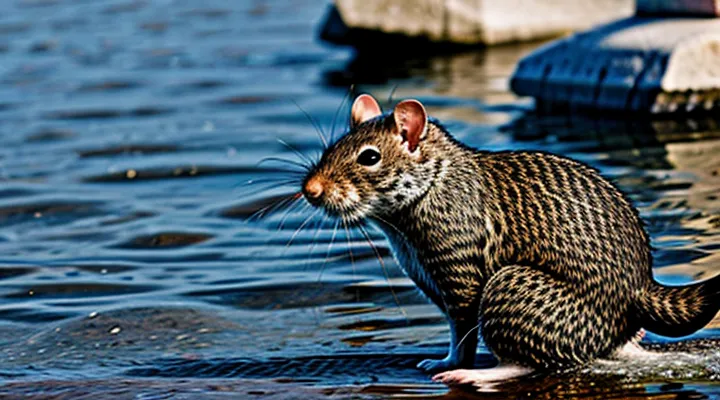
The water rat’s coat displays a distinct palette that serves both camouflage and thermoregulation. Dorsal fur ranges from deep brown to muted olive, often interspersed with black speckles that break up the outline against riparian vegetation. Ventral hair is consistently lighter—cream to pale gray—providing countershading that reduces visibility from below. Seasonal molts may introduce a subtle shift toward richer hues in winter, enhancing heat retention, while spring growth favors a thinner, brighter coat for improved mobility.
Texture varies across body regions to meet functional demands. The back and sides bear dense, guard‑hair layers that repel water and protect against abrasion from reeds and stones. Underneath, a soft undercoat traps air, creating an insulating barrier that maintains core temperature during prolonged submersion. The belly and inner limbs possess finer, more pliable fibers, allowing flexible movement and precise handling of prey. Tail and hind‑foot fur exhibit a semi‑slick texture, reducing drag while swimming.
Key characteristics:
- Color stratification: dark dorsal, light ventral, occasional seasonal tint changes.
- Guard‑hair density: high on back and flanks for water resistance.
- Undercoat thickness: moderate across torso, maximized for thermal insulation.
- Localized softness: belly and limb fur for tactile sensitivity.
- Hydrodynamic adaptation: semi‑slick fur on tail and hind feet to streamline movement.
These attributes collectively define the water rat’s exterior profile, distinguishing it from related semi‑aquatic rodents and reflecting evolutionary pressures of a riparian habitat.
Body Shape and Proportions
The water rat exhibits a streamlined silhouette optimized for aquatic locomotion. The torso is elongated, with a length that typically ranges from 20 to 30 cm in adult specimens, while the tail adds an additional 15 to 25 cm, resulting in a body‑to‑tail ratio of roughly 1:0.8. This proportion provides both thrust and balance during swimming.
Limbs are short and robust. Forefeet are equipped with partially webbed digits, enabling precise manipulation of prey, whereas hind feet are fully webbed, delivering powerful paddling strokes. The overall limb length measures about 5 cm, representing roughly 15 % of total body length.
The head is narrow, with a pointed snout that accounts for 12‑14 % of the animal’s length. Eye placement is lateral, granting a wide visual field, while the ears are small and recessed, reducing drag.
Key dimensional characteristics:
- Body length: 20–30 cm
- Tail length: 15–25 cm
- Weight: 150–350 g (average 220 g)
- Hind‑foot webbing span: 3–4 cm
- Skull length: 2.5–3.0 cm
These measurements distinguish the water rat from terrestrial rodents, whose body proportions favor locomotion on land rather than propulsion in water. The combination of an elongated, hydrodynamic form and proportionally large, webbed hind limbs underpins the species’ efficiency in freshwater habitats.
Distinctive Physical Features
Head and Facial Structure
The water rat possesses a broad, flattened skull that supports a streamlined profile adapted for aquatic locomotion. The cranial bones are fused to reduce water resistance, creating a compact head that aligns closely with the body’s axis.
Facial elements exhibit several specialized adaptations:
- Large, dorsally positioned eyes provide binocular vision while the animal remains partially submerged.
- Small, rounded ears are recessed within the skull, minimizing drag and protecting auditory structures from water ingress.
- Prominent, stiff whiskers (vibrissae) extend laterally and forward, enabling precise detection of water currents and prey movements.
- A robust, muscular muzzle houses powerful incisors and cheek teeth, facilitating the capture and processing of fish, crustaceans, and aquatic insects.
Compared with terrestrial rodents, the water rat’s head displays reduced nasal openings, a more pronounced occipital region, and a shorter facial length relative to overall skull size. These differences enhance buoyancy control and improve underwater foraging efficiency.
Ears and Eyes
The water rat’s auditory and visual structures exhibit distinctive adaptations that set the species apart from typical terrestrial rodents.
Ears are compact, rounded, and positioned low on the skull, minimizing drag while swimming. The external pinna is reduced, often covered by a thin layer of fur, which protects against water infiltration. Internally, the auditory canal leads to a well‑developed cochlea, enabling detection of low‑frequency sounds transmitted through water and the surrounding environment. Muscular control of the ear flap allows rapid closure, preventing water entry during submersion.
Eyes are relatively small, set laterally, and feature a dense layer of reflective tapetum lucidum. This adaptation enhances low‑light vision, crucial for nocturnal foraging and navigating murky waterways. The cornea is flattened, reducing spherical aberration when viewing through the water‑air interface. Retinal composition includes a high proportion of rod cells, providing heightened sensitivity to movement and contrast rather than color discrimination.
Key differences from related species:
- Ear size – water rat ears are smaller and more protected than those of land‑dwelling rats.
- Ear mobility – ability to seal the ear canal during diving is absent in most terrestrial rodents.
- Eye placement – lateral positioning offers a broader field of view, whereas many rodents have more forward‑facing eyes.
- Retinal structure – increased rod density contrasts with the higher cone concentration found in diurnal relatives.
These morphological traits collectively support the water rat’s semi‑aquatic lifestyle, allowing efficient detection of prey and predators across both aquatic and terrestrial habitats.
Tail: Length and Covering
The tail of the water rat exhibits a distinctive combination of length and surface texture that supports its semi‑aquatic lifestyle. Measurements across species show a tail length ranging from 70 % to 120 % of head‑body length, with larger specimens tending toward the upper end of the spectrum. This proportion enables effective propulsion and balance during swimming and climbing.
-
Length:
• Average proportion: 0.8 – 1.2 × head‑body length.
• Variation correlates with habitat type; river‑dwelling forms possess longer tails for enhanced thrust. -
Covering:
• Dorsal surface: dense, water‑repellent fur interwoven with fine hairs, reducing drag.
• Ventral surface: sparsely haired or nearly naked skin, facilitating heat exchange and tactile feedback.
• Tail tip: often bears a tuft of longer guard hairs that stiffen during rapid movement, improving steering.
These traits collectively provide the water rat with the maneuverability required for navigating currents, while the specialized fur distribution maintains thermoregulation and minimizes water resistance.
Feet: Adaptations for Aquatic Life
The water rat’s hind limbs exhibit several structural modifications that enhance swimming efficiency and support terrestrial movement. Muscular development concentrates around the femur and tibia, providing powerful thrust during paddle strokes. The skin covering the feet expands into a dense network of pliable, hair‑like fur that traps a thin layer of air, reducing drag and improving buoyancy.
Key adaptations of the feet include:
- Webbed digits whose membranes are reinforced by keratinized edges, preventing tearing in fast currents.
- Enlarged metatarsal pads composed of spongy tissue, distributing pressure and allowing traction on slippery banks.
- High concentration of sensory receptors in the toe pads, enabling detection of subtle water vibrations and substrate texture.
- Flexible ankle joints that permit a wide range of motion, facilitating both forward propulsion and backward maneuvering.
These features collectively enable the water rat to navigate aquatic environments with agility while retaining the ability to forage and escape predators on land.
Habitat and Geographical Distribution
Preferred Environments
Water rats thrive in habitats that combine abundant water flow with dense cover, allowing easy access to prey and protection from predators. Their physiological adaptations—webbed hind feet, water‑repellent fur, and keen underwater vision—dictate a preference for environments where these traits confer a selective advantage.
- Slow‑moving rivers and streams – steady currents maintain oxygen‑rich water and support insect larvae, crustaceans, and small fish, the primary diet components.
- Marshes and reed beds – dense vegetation offers shelter, nesting sites, and a rich assemblage of amphibians and mollusks.
- Coastal estuaries – brackish water tolerable by some species provides access to both freshwater and marine prey, expanding dietary options.
- High‑altitude alpine streams – colder temperatures and clear water favor species with higher metabolic rates and more robust fur insulation.
Species differences emerge in salinity tolerance and altitude range. Populations inhabiting coastal estuaries exhibit physiological mechanisms for osmoregulation, whereas upland groups possess enhanced thermoregulation to endure cooler streams. Consequently, the distribution of water rats reflects a spectrum of ecological niches, each aligned with the specific functional traits of the taxon.
Regional Variations in Appearance
The water rat exhibits distinct morphological patterns that correspond to its geographic distribution. Populations in temperate zones tend to develop denser, longer fur to retain heat, while those in tropical regions display shorter, glossier coats that facilitate heat dissipation. Coastal groups often possess a pronounced, flattened tail that enhances swimming efficiency, whereas inland specimens retain a more cylindrical tail suited for burrowing.
Key regional traits include:
- Northern Europe: Dark brown dorsal pelage, robust body mass, enlarged hind feet with webbing.
- Southeast Asia: Light gray to olive dorsal fur, slender build, reduced webbing, elongated whiskers for tactile navigation in dense vegetation.
- Australia’s eastern coast: Reddish‑brown fur with a distinct white underbelly, muscular forelimbs, and a tail with a flattened dorsal surface.
- South America’s river basins: Brownish‑black fur with a glossy sheen, elongated snout, and a tail featuring a pronounced dorsal ridge.
These variations arise from selective pressures such as climate, water flow, and predator assemblages, resulting in locally adapted phenotypes that maintain the species’ ecological versatility.
Differentiating the Water Rat
Water Rat vs. Common Rats
Size Comparison
The water rat (genus Hydromys) reaches a body length of 25–30 cm, with the tail adding another 20–25 cm. Body mass ranges from 350 g to 600 g, depending on age and habitat. In comparison, the common brown rat (Rattus norvegicus) measures 20–25 cm in body length, tail 15–20 cm, and weighs 200–300 g. The European water vole (Arvicola amphibius) attains a body length of 18–22 cm, tail 5–9 cm, and mass of 150–250 g.
Key size differentials:
- Overall length: water rat exceeds brown rat by up to 10 cm; water vole is shorter by 5–10 cm.
- Tail proportion: water rat’s tail equals or surpasses body length; brown rat’s tail is slightly shorter than the body; water vole’s tail is markedly reduced.
- Mass: water rat weighs 1.5–2 times more than brown rat; water vole is roughly half the mass of a water rat.
These measurements illustrate the water rat’s adaptation to an aquatic niche, reflected in a larger, more robust body and an elongated, powerful tail suited for swimming.
Tail Differences
The tail of a water rat serves as a primary adaptation for its semi‑aquatic lifestyle, yet its morphology varies markedly among species and between sexes. Length typically ranges from one‑half to three‑quarters of the body, with longer tails observed in species that rely more heavily on swimming. Surface texture differs: some species possess dense, water‑repellent fur covering the entire tail, while others exhibit a partially naked, muscular shaft that enhances propulsion.
Key structural differences include:
- Shape – Rounded, laterally compressed tails provide greater thrust in fast‑moving water; flattened tails are common in species inhabiting still or shallow habitats.
- Musculature – Robust caudal muscles increase swimming speed, whereas reduced musculature accompanies a more terrestrial lifestyle.
- Webbing – Presence of interdigital membranes on the tail’s distal portion improves maneuverability; absence of webbing indicates a reliance on terrestrial locomotion.
- Coloration – Darker dorsal pigmentation offers camouflage in deep water, while lighter ventral tones reduce visibility from below.
Sexual dimorphism also influences tail characteristics. Males often display slightly longer and thicker tails, supporting territorial displays and mating rituals, whereas females tend to have shorter, more streamlined tails that favor efficient foraging. These variations reflect evolutionary pressures that balance aquatic performance with terrestrial agility across the water rat’s diverse environments.
Fur and Coloration
The water rat’s pelage exhibits a dense, water‑repellent undercoat topped by coarser guard hairs. This combination provides insulation and reduces drag while swimming. Guard hairs are typically longer, stiff, and arranged in a slightly raised pattern that channels water away from the body.
Coloration varies geographically but follows a limited palette:
- Upperparts: dark brown to black, often with a subtle olive tint.
- Flanks: lighter brown, sometimes grayish, creating a gradual transition to the ventral surface.
- Ventral side: pale gray or off‑white, occasionally tinged with a faint yellow hue.
Seasonal molting adjusts fur thickness. In colder months, the undercoat becomes thicker, while the guard hairs retain length to preserve the animal’s streamlined silhouette. Juvenile individuals display a more uniform gray coat, darkening as they mature.
Pigmentation is linked to melanin concentration in the guard hairs. Higher eumelanin levels produce the darker dorsal shades, whereas reduced melanin results in the lighter flanks and belly. Genetic studies indicate that variations in the MC1R gene correlate with the observed color differences among populations.
Overall, the water rat’s fur structure and coloration serve functional roles in thermoregulation, camouflage, and aquatic efficiency, distinguishing it from related semi‑aquatic rodents.
Behavioral Distinctions
The water rat exhibits a range of behaviors that set it apart from other semi‑aquatic rodents. Observations show consistent patterns across habitats, yet notable variations arise from ecological pressures and demographic factors.
- Foraging: individuals prioritize aquatic prey during high water levels, shifting to terrestrial vegetation when shoreline recedes.
- Social organization: males form loose colonies centered on burrow systems, while females maintain smaller, kin‑based groups.
- Territoriality: males defend overlapping river segments using scent markings; females exhibit limited range, focusing on nesting sites.
- Activity cycle: peak movements occur at dusk and dawn, with reduced activity during midday heat.
- Breeding rituals: courtship involves vocalizations and water‑borne scent trails; litter size correlates with resource abundance.
These behavioral distinctions influence population dynamics, predator avoidance, and habitat utilization. Understanding such patterns supports targeted conservation measures and informs ecological modeling of riparian communities.
Water Rat vs. Other Semi-Aquatic Rodents
Distinguishing from Voles
The water rat (Nectomys spp.) exhibits a streamlined body, dense waterproof fur, and partially webbed hind feet that facilitate swimming. Its tail is long, laterally flattened, and covered with coarse hair, providing propulsion in water. The head features a blunt snout, small rounded ears, and eyes positioned high on the skull, enhancing underwater vision.
Key morphological differences between water rats and voles include:
- Tail shape: water rat has a flat, paddle‑like tail; vole possesses a short, cylindrical tail.
- Fur texture: water rat fur is thick, oily, and water‑repellent; vole fur is soft, dry, and adapted to burrowing.
- Feet: water rat hind feet are partially webbed with elongated claws; vole feet are compact with short, non‑webbed toes.
- Body proportion: water rat displays a longer body relative to head size; vole shows a more balanced head‑to‑body ratio.
- Habitat adaptations: water rat’s nostrils can close during submersion; vole lacks such structures, reflecting a terrestrial lifestyle.
Distinguishing from Muskrats
The water rat (genus Arvicola) and the muskrat (genus Ondatra) share semi‑aquatic habitats but display distinct external characteristics that enable reliable identification.
Size and build differ markedly. Water rats measure 250–300 mm in head‑body length, with a relatively slender torso and a tail that is short, hair‑covered, and tapers sharply. Muskrats reach 300–400 mm, possess a robust, barrel‑shaped body, and have a long, laterally flattened tail edged with a sparse fringe of stiff hairs.
Fur coloration provides another cue. The water rat’s dorsal pelage ranges from dark brown to almost black, while the ventral side is a lighter gray‑brown. Muskrats exhibit a uniform brown coat on both dorsal and ventral surfaces, often with a subtle reddish hue on the flanks.
Head morphology also separates the species. Water rats have a pointed snout, small rounded ears that lie close to the skull, and prominent whiskers extending from the muzzle. Muskrats display a broader, more blunt snout, larger ears that are partially visible, and shorter whiskers.
Key distinguishing features can be summarized:
- Tail: short, hair‑covered (water rat) vs. long, flattened with hair fringe (muskrat)
- Body shape: slender, elongated (water rat) vs. stout, barrel‑shaped (muskrat)
- Fur color: darker dorsal, lighter ventral (water rat) vs. uniformly brown (muskrat)
- Snout and ears: pointed snout, hidden ears (water rat) vs. blunt snout, visible ears (muskrat)
These morphological markers allow field researchers and wildlife managers to differentiate the two species accurately, even when observed from a distance or in low‑visibility conditions.
Distinguishing from Beavers
The water rat (Nectomys spp.) and the beaver (Castor spp.) occupy overlapping freshwater habitats, yet their morphologies diverge markedly. Water rats possess a streamlined body, dense but short fur, and a tail covered with scales and a thin fringe of hair. Their hind feet are webbed, supporting agile swimming, while the forefeet retain claws for digging. In contrast, beavers exhibit a robust, elongated silhouette, coarse double-layered fur, and a broad, flat tail composed of dense, hairless skin used for propulsion and signaling.
Key distinguishing characteristics:
- Tail structure: Water rat – scaled, narrow, lightly furred; Beaver – wide, flat, hairless.
- Body size: Water rat – 20–30 cm head‑body length, 150–300 g; Beaver – 70–90 cm head‑body length, 15–30 kg.
- Dental adaptation: Water rat – incisors modest, suited for gnawing soft vegetation; Beaver – massive, continuously growing incisors designed for cutting wood.
- Habitat modification: Water rat – does not construct dams; Beaver – builds extensive dams and lodges.
- Skeletal features: Water rat – elongated lumbar vertebrae for flexible swimming; Beaver – reinforced lumbar region for powerful tail thrust.
These anatomical and behavioral differences enable reliable identification of water rats in field surveys and prevent confusion with the larger, dam‑building rodent.
Identifying Marks and Unique Traits
Specific Markings
The water rat exhibits a set of distinct markings that aid in species identification and indicate ecological adaptations.
The dorsal surface is covered by coarse, dark‑brown to black fur, often interspersed with lighter guard hairs that create a subtle speckled appearance. A narrow, pale stripe may run along the spine in some populations, providing contrast against the darker background.
Ventral coloration differs markedly from the back. The belly displays a uniform cream to light gray hue, free of the mottling seen dorsally. This ventral uniformity is consistent across age classes and sexes.
Facial markings include:
- Dark patches surrounding the eyes, forming a mask that reduces glare and enhances visual focus in aquatic habitats.
- A white or pale whisker pad extending from the snout to the cheeks, contrasting with the surrounding fur.
- A thin, dark line extending from the nostrils to the base of the ears, often indistinct in juveniles.
The tail presents a gradient from dark brown at the base to a lighter, sometimes almost white, tip. Scale‑like hairs on the tail surface create a faint banded pattern visible under close inspection.
Seasonal variation influences the intensity of these markings. In winter, the dorsal coat darkens, while the ventral side remains light, maintaining the stark dorsal‑ventral contrast. Geographic populations may show minor deviations in stripe prominence or tail tip coloration, reflecting localized environmental pressures.
Collectively, these markings provide reliable visual cues for taxonomic classification and indicate the water rat’s adaptation to semi‑aquatic environments.
Sexual Dimorphism
Sexual dimorphism in water rats manifests primarily through measurable differences in body dimensions, pelage characteristics, and cranial morphology. Males typically exceed females in length and mass, achieving total body lengths up to 30 % greater and weights ranging from 400 g to 650 g, whereas females average 300 g to 500 g. This size disparity influences locomotor performance, with larger males displaying stronger swimming bursts.
Distinctive external features include:
- Tail proportion: Males possess proportionally longer tails, often 1.2 times the body length; females exhibit shorter tails, approximately equal to body length.
- Fur coloration: Males frequently develop a darker, more saturated dorsal coat, while females retain a lighter, gray‑brown hue. Ventral pelage remains uniformly pale in both sexes.
- Vibrissae density: Males show increased whisker density along the rostrum, enhancing tactile sensing during underwater foraging; females maintain a lower density pattern.
Cranial analysis reveals that male skulls present broader zygomatic arches and more robust mandibles, correlating with a diet that includes larger crustaceans. Female skulls are narrower, reflecting a preference for smaller prey items. These morphological distinctions provide reliable criteria for sex identification in field studies and support ecological assessments of population structure.
Evolutionary Adaptations and Their Impact on Appearance
Adaptations for Swimming and Diving
Streamlined Body
The water rat’s body exhibits a pronounced taper from head to tail, reducing drag during aquatic movement. Muscular development concentrates along the dorsal line, enabling rapid propulsion while maintaining stability in turbulent streams.
Key attributes of the streamlined form include:
- Elongated, flattened skull that aligns with the body’s axis, minimizing resistance.
- Smooth, dense fur that repels water, preventing excess weight and preserving buoyancy.
- Short, webbed hind limbs positioned low on the torso, providing thrust without disrupting the streamlined silhouette.
- Tail shaped like a flattened paddle, serving as both rudder and additional propulsive surface.
These characteristics differentiate the water rat from terrestrial relatives, whose bulkier frames favor terrestrial locomotion. The aquatic adaptation emphasizes low profile, reduced surface area, and coordinated limb placement, all contributing to efficient navigation of fast‑flowing waterways.
Webbing on Feet
The water rat’s feet are distinguished by a thin, flexible membrane extending between the toes. This webbing increases surface area, allowing the animal to generate thrust while swimming and to distribute weight when walking on soft, submerged substrates.
Morphologically, the membrane consists of keratinized epidermal tissue reinforced by a network of collagen fibers. Its attachment points vary along the digit length, producing a gradient of flexibility: proximal regions are more rigid, while distal sections remain supple. This structure enables rapid adjustments to water resistance during propulsion and provides a degree of grip on slippery surfaces.
Variations among species reflect ecological specialisation:
- Species inhabiting fast‑flowing streams exhibit broader, more robust webbing, supporting stronger thrust and stability.
- Populations in stagnant ponds possess narrower membranes, prioritising maneuverability over raw power.
- Juvenile individuals display less developed webbing, which thickens and expands with age, aligning with increased aquatic activity.
Comparative analysis shows that the water rat’s foot webbing surpasses that of most terrestrial rodents in both extent and structural complexity, yet remains less extensive than the fully aquatic adaptations seen in otters or beavers. This intermediate design balances terrestrial locomotion with proficient swimming, underscoring the species’ semi‑aquatic niche.
Thermoregulation and Fur Density
The water rat maintains body temperature through a combination of metabolic heat production and a specialized pelage. High basal metabolic rates generate internal warmth, while the fur layer minimizes heat loss to the surrounding water.
The outer coat consists of coarse guard hairs that repel water, preventing wetting of the underlying underfur. The underfur is exceptionally dense, with fibers arranged in a three‑dimensional matrix that traps air. This air layer provides insulation even when the animal is submerged, reducing conductive heat transfer.
Seasonal molting adjusts fur density to match ambient conditions. In colder months, the underfur becomes thicker, increasing its insulating capacity; during warmer periods, the coat thins, allowing more efficient heat dissipation. The water‑repellent guard hairs remain consistent year‑round, ensuring the underlayer stays dry.
Key aspects of thermoregulation and fur density in the water rat:
- Guard hairs: water‑resistant, protect underfur from saturation.
- Underfur: densely packed, forms an insulating air pocket.
- Metabolic heat: high basal rate sustains core temperature.
- Seasonal molt: adjusts underfur thickness to environmental temperature.
- Comparative advantage: fur structure provides superior insulation relative to terrestrial rodents of similar size.
Sensory Adaptations
Vision in Water
The water rat’s visual system is tuned for aquatic environments, allowing clear perception despite refractive challenges posed by water. Light refraction at the water–air interface is minimized by a flattened cornea and a highly convex lens, which together maintain focal length comparable to that of terrestrial relatives.
Key anatomical adaptations include:
- A reduced corneal refractive power, compensated by an enlarged, spherical lens.
- A dense distribution of rod cells in the retina, enhancing sensitivity to low‑light conditions typical of murky waters.
- A vertically elongated pupil that contracts rapidly, regulating light entry during surface excursions.
- A tapetum lucidum layer that reflects stray photons, improving photon capture efficiency.
These traits differentiate the water rat from land‑dwelling rodents in several respects:
- Lens curvature is markedly steeper, providing stronger focusing power underwater.
- Retinal rod density exceeds that of terrestrial species by up to 30 %, supporting superior scotopic vision.
- The presence of a tapetum lucidum is rare among rodents but common in semi‑aquatic mammals.
- Pupil morphology shifts from circular to slit‑like, optimizing depth of field during rapid surface dives.
Functionally, the adaptations yield high visual acuity at short ranges, reliable detection of moving prey, and adequate color discrimination in the blue‑green spectrum where water transmission is greatest. Depth perception relies on combined monocular cues—pupil shape and lens accommodation—rather than stereoscopic vision, which is less effective in the turbid habitats the species occupies.
These visual characteristics contribute directly to the water rat’s foraging efficiency, predator avoidance, and habitat selection, reinforcing its distinct appearance and ecological niche among semi‑aquatic mammals.
Whiskers and Touch
Water rats possess highly specialized vibrissae that extend well beyond the muzzle, providing a primary mechanism for environmental assessment. Each whisker comprises a dense bundle of mechanoreceptors capable of detecting minute air currents, surface textures, and object proximity. The arrangement follows a symmetrical pattern, with longer, stiffer hairs positioned laterally to capture lateral flow and shorter, more flexible fibers oriented forward for precise front‑ward probing.
The tactile system integrates whisker input with neural pathways that transmit signals to the somatosensory cortex, enabling rapid interpretation of spatial information. This integration supports activities such as foraging in murky water, navigating narrow burrows, and maintaining balance on slippery substrates. The sensitivity threshold of the vibrissal array reaches micro‑Newton forces, allowing detection of prey movements that generate barely perceptible disturbances.
Key functional aspects of whiskers and touch include:
- Detection of water turbulence and surface ripples, facilitating prey localization.
- Assessment of substrate roughness, aiding in the selection of stable footholds.
- Continuous feedback for body posture adjustment during swimming and climbing.
- Coordination with auditory and visual cues to construct a comprehensive spatial map.
Ecological Role and Conservation Status
Role in the Ecosystem
The water rat’s morphology, including its streamlined body, webbed hind feet, and dense fur, equips it for a semi‑aquatic lifestyle that directly influences freshwater ecosystems. Its foraging behavior regulates populations of aquatic invertebrates, small fish, and amphibian larvae, thereby maintaining balanced trophic dynamics. By consuming these organisms, the species curtails potential outbreaks of pest species that could otherwise alter water quality.
Predation on the water rat provides nourishment for larger carnivores such as otters, raptors, and terrestrial mammals, linking aquatic and terrestrial food webs. Its burrowing activity along riverbanks stabilizes sediments, reduces erosion, and creates microhabitats for invertebrates and plant seedlings. The animal’s movements facilitate the transport of organic material, enhancing nutrient cycling between water and adjacent terrestrial zones.
Additional ecological contributions include:
- Serving as a bioindicator; fluctuations in its abundance reflect changes in water purity, habitat integrity, and pollutant levels.
- Assisting in seed dispersal when ingesting fruit or plant matter, aiding the propagation of riparian vegetation.
- Influencing microbial communities through excreta, which enriches the microbial loop and supports decomposition processes.
Collectively, these functions integrate the water rat into the structure and resilience of freshwater habitats, reinforcing ecosystem health and productivity.
Threats to Survival
The water rat’s distinctive fur coloration, elongated tail, and webbed hind feet enable efficient swimming and foraging in riparian habitats. These morphological adaptations also determine exposure to specific risks that compromise population stability.
- Habitat fragmentation caused by urban expansion reduces access to continuous waterways, limiting foraging range and breeding sites.
- Water pollution, including heavy metals and agricultural runoff, degrades prey availability and introduces toxic substances that accumulate in fur and tissues.
- Predation pressure intensifies when vegetation cover diminishes, exposing the semi‑aquatic mammal to avian and terrestrial hunters.
- Climate‑driven alterations in river flow and temperature affect the integrity of nesting banks and the suitability of aquatic prey.
- Invasive species, such as non‑native fish and crustaceans, compete for food resources and may introduce novel pathogens.
The water rat’s reliance on dense bank vegetation for shelter makes it particularly vulnerable to erosion and deforestation. Its semi‑transparent fur, which provides camouflage in clear water, loses effectiveness in turbid or polluted streams, increasing detection by predators. Webbed feet, while advantageous for propulsion, limit mobility on dry or degraded banks, restricting escape routes when habitats shrink.
Mitigating these threats requires protecting contiguous riparian corridors, enforcing water quality standards, and managing invasive populations. Restoration of native vegetation along stream edges directly supports the species’ camouflage and shelter needs, while monitoring contaminant levels safeguards health and reproductive success.
Conservation Efforts
The water rat’s distinctive fur, webbed feet, and streamlined body enable efficient swimming and foraging in freshwater habitats. Declining populations result from habitat loss, water contamination, and competition with invasive species, prompting targeted conservation measures.
Key actions to preserve the species include:
- Habitat protection – designating riparian zones and wetlands as protected areas, restricting development, and restoring degraded banks.
- Pollution mitigation – enforcing stricter discharge standards for agricultural runoff, industrial effluents, and sewage to maintain water quality.
- Legal safeguards – listing the species under national wildlife statutes, imposing penalties for illegal trapping, and regulating trade.
- Research and monitoring – conducting population surveys, genetic studies, and tracking movement patterns to inform adaptive management.
- Captive breeding and reintroduction – establishing accredited programs that produce healthy individuals for release into suitable habitats.
- Community involvement – educating local residents, promoting sustainable land‑use practices, and supporting citizen‑science initiatives for data collection.
Coordinated implementation of these measures has yielded measurable improvements in water quality and population stability in several river basins. Continued investment in multidisciplinary strategies remains essential to ensure the long‑term survival of the water rat across its native range.