
General Overview
Taxonomy and Classification
The African giant pouched rat (Cricetomys gambianus) belongs to the order Rodentia and exhibits a well‑defined taxonomic hierarchy. Its classification reflects both morphological traits and genetic analyses that have clarified relationships within Muridae.
- Kingdom: Animalia – multicellular eukaryotes with heterotrophic nutrition.
- Phylum: Chordata – organisms possessing a notochord at some developmental stage.
- Class: Mammalia – endothermic vertebrates with hair and mammary glands.
- Order: Rodentia – gnawing mammals characterized by a single pair of continuously growing incisors.
- Family: Muridae – the largest rodent family, encompassing true mice, rats, and related species.
- Subfamily: Murinae – “Old World rats and mice,” distinguished by specific dental and cranial features.
- Genus: Cricetomys – defined by large body size, extensive cheek pouches, and nocturnal habits.
- Species: Cricetomys gambianus – described by Desmarest in 1820, the type species of the genus.
Within the species, two subspecies are recognized: C. g. gambianus, occupying West and Central Africa, and C. g. emini, found in East Africa. Molecular studies indicate limited gene flow between these populations, supporting their subspecific status. The taxonomic framework provides a basis for comparative research, conservation assessments, and ecological monitoring of this prominent African rodent.
Physical Characteristics
Size and Weight
The African giant pouched rat (Cricetomys gambianus) ranks among the largest muroid rodents. Adults typically reach a head‑body length of 40–55 cm, with an additional tail measuring 30–45 cm. Body mass varies with sex and age; mature males average 1.2–1.5 kg, while females are slightly lighter at 0.9–1.2 kg. Exceptional individuals can exceed 2 kg, particularly those maintained in captivity with abundant nutrition.
Key size parameters:
- Head‑body length: 40–55 cm
- Tail length: 30–45 cm
- Average male weight: 1.2–1.5 kg
- Average female weight: 0.9–1.2 kg
- Maximum recorded weight: >2 kg
These dimensions place the species well above typical African rodents, reflecting adaptations for extensive foraging ranges and burrowing activity.
Fur and Coloration
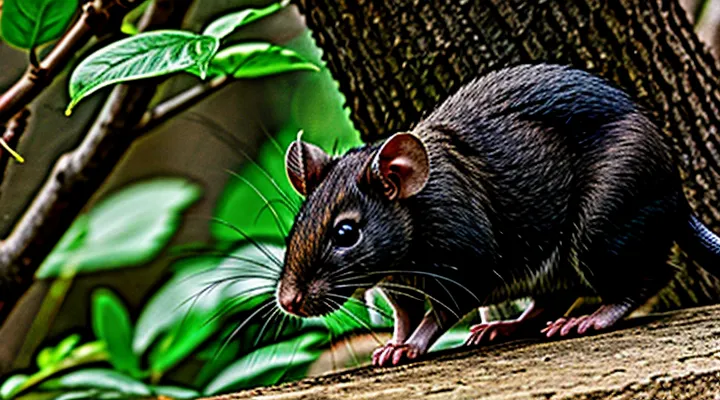
The African giant pouched rat possesses a coat that balances protection and thermoregulation. The fur is short, dense, and slightly coarse, providing resistance to abrasion while allowing efficient heat dissipation. Each hair contains a pigmented shaft and a lighter, often translucent tip, creating a subtle sheen that varies with moisture levels.
Coloration patterns exhibit consistent regional traits:
- Dorsal surface: dark brown to black, sometimes with a faint reddish hue in individuals from arid zones.
- Lateral flank: medium brown, forming a gradient between dorsal and ventral tones.
- Ventral surface: pale gray to creamy white, often lacking the darker pigments of the back.
- Facial mask: darker band encircles the eyes and extends toward the snout, enhancing visual contrast.
- Tail: uniformly dark, matching the dorsal coloration, with a slightly glossy finish.
Sexual dimorphism in coat color is minimal; however, juveniles display a lighter overall tone that darkens with maturity. Seasonal molting occurs biannually, resulting in a modest increase in hair length during the rainy season and a slight reduction in the dry season. Geographic populations may show minor variation in hue intensity, reflecting adaptation to local substrate colors and predator avoidance strategies.
Distinctive Features
The African giant pouched rat (Cricetomys gambianus) reaches lengths of 70–90 cm, including a tail that can exceed 30 cm. Body mass typically ranges from 1.0 to 1.5 kg, making it one of the largest rodent species in sub‑Saharan Africa. Its most recognizable characteristic is a large, expandable cheek pouch located on each side of the mouth; the pouches can hold up to 150 g of material and are used for food transport and nest construction.
Fur coloration varies from brown to reddish‑brown on the dorsal surface, transitioning to a lighter, grayish underside. The coat is dense, providing insulation against temperature fluctuations in savanna and forest habitats. Ears are proportionally large, rounded, and covered with sparse hair, enhancing auditory sensitivity. The species possesses a robust, blunt snout equipped with a highly developed olfactory epithelium, enabling detection of scents at concentrations as low as parts per trillion.
Key physiological and behavioral traits include:
- Exceptional olfactory acuity, employed in locating food, predators, and, in trained individuals, concealed explosives or disease‑bearing rodents.
- Strong gnawing ability facilitated by continuously growing incisors with enamel reinforced at the front edge.
- Social structure characterized by small colonies, each maintaining a communal nest constructed from gathered vegetation and stored in the cheek pouches.
- Nocturnal activity pattern, with peak foraging occurring during the first few hours after sunset.
These features distinguish the species from smaller murid rodents and underpin its adaptability across diverse African ecosystems.
Habitat and Distribution
Geographic Range
The African giant pouched rat occupies a broad swath of sub‑Saharan Africa, extending from West African savannas to the eastern highlands and southern woodlands. Its core distribution includes the following nations:
- Senegal, Guinea, and Sierra Leone in the west
- Côte d’Ivoire, Ghana, and Nigeria across the central belt
- Cameroon, Central African Republic, and the Democratic Republic of the Congo in the central region
- Uganda, Kenya, and Tanzania toward the east
- Zambia, Malawi, and northern Mozambique in the south‑east
Populations thrive in a variety of habitats, from dry savanna and cultivated fields to moist forest edges and riverine corridors. The species tolerates elevations from sea level up to approximately 2,000 m, with higher densities recorded in lowland agricultural mosaics where food resources are abundant. Isolated introductions have occurred in parts of West Africa for research purposes, but the natural range remains uninterrupted across the listed countries.
Preferred Habitats
The giant pouched rat (Cricetomys gambianus) inhabits sub‑Saharan Africa, reaching body lengths of 40–50 cm and weighing up to 1.5 kg. Populations are most abundant where vegetation offers both cover and foraging opportunities.
Preferred habitats include:
- Open savanna with scattered trees and shrubs, providing shelter from predators and access to insects and seeds.
- Woodland edges and secondary forests, where leaf litter and fallen logs create nesting sites.
- Agricultural fields adjacent to natural vegetation, offering abundant grain and arthropod resources.
- Riparian zones and moist lowland areas, supplying water and a higher density of invertebrate prey.
Habitat selection correlates with food availability and nesting requirements. Dense ground cover protects burrows, while proximity to water sources ensures hydration and supports a richer invertebrate community. Seasonal movements often shift toward cultivated lands during the dry period, when natural seed production declines.
Habitat degradation—particularly deforestation, intensive farming, and drainage of wetlands—reduces suitable environments, leading to population fragmentation. Conservation measures focus on preserving mosaic landscapes that integrate natural vegetation with low‑intensity agriculture, thereby maintaining the ecological conditions essential for the species’ survival.
Behavior and Ecology
Diet and Foraging
The African giant pouched rat exhibits an omnivorous diet that reflects its adaptability to diverse habitats. Primary food sources include:
- Cereals and stored grains such as millet, sorghum, and rice.
- Seeds and nuts harvested from savanna vegetation.
- Invertebrates, particularly beetles, termites, and larvae.
- Fresh fruit and berries when available.
- Small vertebrates, including amphibians and reptiles.
- Anthropogenic waste, especially discarded food scraps in human settlements.
Foraging occurs chiefly during twilight and night hours. The species relies on a keen olfactory system to locate concealed resources, while tactile whiskers assist in detecting objects within narrow burrows. Individuals often transport food to underground chambers, creating temporary caches that support periods of scarcity. Social foraging is observed, with groups exchanging information about abundant patches through scent marking and vocalizations. Opportunistic feeding behavior enables rapid exploitation of transient resources such as agricultural spills or seasonal insect emergences.
Social Structure
The African giant pouched rat lives in small, stable groups that typically contain one dominant male, several adult females, and their offspring. Group size rarely exceeds ten individuals, allowing efficient resource sharing and predator vigilance.
- Dominance is established through physical displays such as scent marking, vocalizations, and brief bouts of aggression. The leading male retains exclusive breeding rights, while subordinate males may assist in nest maintenance.
- Females maintain a matrilineal hierarchy; older females dominate younger ones, influencing access to nesting sites and food caches.
- Offspring remain with the natal group for up to six months, during which they learn foraging routes and social cues from adults. Early integration reduces mortality and promotes cooperative burrow construction.
- Communication relies on a repertoire of high‑frequency chirps, low‑frequency growls, and tactile grooming. These signals coordinate group movements, alert members to threats, and reinforce social bonds.
- Territorial boundaries are marked by secretions from scent glands located near the cheeks. Overlap between neighboring groups is minimal; encounters are resolved through brief vocal exchanges rather than prolonged conflict.
Overall, the species exhibits a structured social system that balances reproductive control, cooperative care of young, and efficient resource exploitation within a confined geographic range.
Reproductive Habits
The African giant pouched rat reaches sexual maturity at 6–8 months for females and 8–10 months for males. Breeding peaks during the rainy season when food availability is highest, but females can conceive year‑round under favorable conditions.
Gestation lasts approximately 30 days, after which females give birth to litters of 2–4 pups. Newborns are born hairless, eyes closed, and dependent on maternal care for the first two weeks. The mother constructs a secluded nest within burrows or dense vegetation, where she nurses and protects the litter until weaning at 4–5 weeks of age.
Reproductive traits include:
- Seasonal increase in male testosterone, prompting heightened territorial marking and vocalizations during courtship.
- Female estrus cycles of 4–5 days, synchronized with environmental cues such as temperature and rainfall.
- Post‑lactational estrus, allowing females to become receptive shortly after weaning their previous litter.
- Low incidence of inbreeding due to male dispersal, which reduces genetic overlap between neighboring colonies.
Nocturnal Activity
The African giant pouched rat conducts the majority of its daily activities after sunset, entering a period of heightened locomotion that extends until dawn.
During the initial two hours of darkness, individuals increase movement speed, covering larger territories to locate food sources. Activity declines slightly around midnight, then rises again in the pre‑dawn interval when ambient temperatures are lowest.
Sensory systems supporting night activity include:
- Enlarged auditory bullae that amplify low‑frequency sounds.
- Retinal adaptations such as a high density of rod cells, providing superior low‑light vision.
- Vibrissae with increased mechanoreceptor density, enabling precise detection of obstacles and prey through tactile cues.
Foraging at night focuses on seeds, grains, and insects uncovered by the reduced competition of diurnal species. The rat’s keen sense of smell allows detection of volatile compounds emitted by decaying vegetation, which are most pronounced after rainfall.
Predation risk is mitigated by rapid, erratic flight patterns and the use of concealed burrows for daytime refuge. Nocturnal vigilance is maintained through constant auditory monitoring, allowing immediate response to predator calls.
Overall, the species’ nocturnal schedule aligns physiological capacities with ecological opportunities, ensuring efficient resource exploitation and survival in its native habitats.
Sensory Abilities
Olfaction
The African giant pouched rat possesses an exceptionally developed olfactory apparatus. The nasal cavity houses an expanded olfactory epithelium, providing a surface area far greater than that of most murine species. High densities of olfactory receptor neurons enable detection of volatile compounds at sub‑part‑per‑billion concentrations.
Key anatomical features include:
- Elongated rostrum that increases airflow over the olfactory epithelium.
- Enlarged turbinates that create turbulent air currents, enhancing odorant contact.
- Over 1,200 functional olfactory receptor genes, surpassing the repertoire of laboratory mice.
Physiological adaptations support rapid odor processing:
- Direct projections from the olfactory bulb to the piriform cortex, facilitating swift behavioral responses.
- Elevated expression of odorant‑binding proteins that transport hydrophobic molecules to receptors.
- Robust vomeronasal system that complements main olfactory detection, especially for pheromonal cues.
Functional implications of this olfactory proficiency are evident in several applied contexts:
- Detection of underground explosives, where rats locate buried TNT with a false‑negative rate below 5 %.
- Early diagnosis of tuberculosis through identification of Mycobacterium‑specific volatile organic compounds in sputum samples.
- Foraging efficiency, as the species discriminates ripe fruit and seeds based on subtle scent gradients.
Comparative studies show that the African giant pouched rat’s odor‑threshold values are an order of magnitude lower than those recorded for common laboratory rats, reflecting both morphological expansion and genetic diversification of olfactory receptors. This combination of structural and molecular enhancements underpins the species’ reputation as a premier biological detector.
Hearing
The African giant pouched rat possesses large, mobile pinnae that can be rotated to pinpoint sound sources. The external ear leads to a well‑developed middle ear with a robust ossicular chain, facilitating efficient transmission of acoustic energy to the inner ear. Cochlear morphology includes an elongated basilar membrane, allowing discrimination of a broad spectrum of frequencies.
Key auditory characteristics include:
- Frequency detection range: approximately 1 kHz to 50 kHz, extending into ultrasonic territory.
- Minimum audible pressure: around 15 dB SPL, indicating high sensitivity to faint sounds.
- Temporal resolution: ability to resolve inter‑click intervals as short as 2 ms, supporting rapid sound processing.
Behavioral observations confirm the species relies on acoustic cues for foraging, predator avoidance, and social communication. Neurophysiological studies demonstrate dense auditory cortex representation, correlating with the animal’s capacity to discriminate subtle acoustic variations.
Vision
The African giant pouched rat possesses a visual system adapted to its primarily nocturnal lifestyle. Its large, laterally positioned eyes provide a wide field of view, estimated at approximately 300 degrees, allowing simultaneous detection of predators and prey across a broad horizon.
Key visual characteristics include:
- Retinal composition: High density of rod photoreceptors enhances sensitivity to low light levels, while a modest cone population supports limited color discrimination.
- Acuity: Spatial resolution is lower than that of diurnal rodents; the animal relies on motion detection rather than fine detail.
- Depth perception: Overlapping visual fields from both eyes create a modest region of binocular vision, sufficient for judging distances during foraging and navigation.
- Adaptation mechanisms: Pupillary dilation and a reflective tapetum lucidum amplify available light, improving night-time vision.
These traits collectively enable effective foraging, social interaction, and predator avoidance in dim environments.
Human Interaction and Conservation
Detection Roles
The giant African pouched rat (Cricetomys gambianus) possesses an acute olfactory system and a highly trainable behavior pattern, enabling it to perform a range of detection tasks.
Detection tasks include:
- Land‑mine identification – field trials report detection rates above 90 % with false‑positive rates below 5 % when rats are guided along systematic search paths.
- Tuberculosis screening – rats trained to sniff sputum samples can flag Mycobacterium tuberculosis presence within minutes, achieving sensitivity comparable to laboratory culture methods.
- Rodent and pest monitoring – the species distinguishes grain infestations and stored‑product pests, providing early warning for agricultural storage facilities.
- Explosive residue detection – trained individuals recognize trace amounts of nitro‑based compounds, supporting security screening operations.
Key physiological and operational factors:
- Nasal epithelium contains a dense array of odorant receptors, delivering detection thresholds measured in parts per trillion.
- Rapid learning curve; rats acquire a new scent discrimination task after approximately 30 conditioning sessions.
- Low maintenance costs and high mobility allow deployment in remote or resource‑limited environments.
- Limitations involve reduced performance in extreme temperatures and the necessity for regular reinforcement training to sustain accuracy.
Overall, the species’ sensory capabilities combined with efficient training protocols make it a versatile tool for various detection applications.
Pest Status
The African giant pouched rat (Cricetomys gambianus) frequently appears in agricultural environments where it exploits stored grain and root crops. Individuals can consume up to 200 g of produce per night, leading to measurable losses in smallholder farms across sub‑Saharan Africa. Damage is not limited to direct consumption; the species also contaminates food supplies with urine, feces, and hair, increasing the risk of bacterial and parasitic contamination.
Key factors that elevate its pest status include:
- High reproductive rate (up to three litters per year, each with 2–4 offspring).
- Adaptability to human‑altered habitats, such as granaries, market stalls, and household storage rooms.
- Nocturnal foraging behavior that reduces detection by growers.
- Ability to travel up to 2 km from nest sites, expanding the area of potential infestation.
Control measures recognized by agricultural authorities consist of improved storage structures (metal or sealed containers), habitat modification (removal of debris and vegetation near storage areas), and, where legally permitted, targeted trapping programs. Chemical control is discouraged due to potential non‑target effects and the species’ role in disease surveillance initiatives.
Economic assessments estimate that the rat can account for 5–15 % of post‑harvest loss in affected regions, directly influencing food security and farmer income. Monitoring programs that track population density and movement patterns are essential for predicting outbreak periods and optimizing intervention timing.
Conservation Status
The African giant pouched rat (Cricetomys gambianus) is classified by the International Union for Conservation of Nature (IUCN) as Least Concern. This assessment reflects a wide distribution across sub‑Saharan Africa, a presumed large overall population, and adaptability to varied habitats, including human‑modified environments.
Population estimates indicate stability in most regions, although localized declines have been documented where intensive agricultural expansion reduces suitable savanna and forest edge habitats. The species’ reproductive capacity and opportunistic foraging behavior mitigate some pressures, yet ongoing habitat alteration warrants continued monitoring.
Key threats include:
- Conversion of natural landscapes to monoculture farms or plantations.
- Pesticide exposure linked to pest control practices.
- Illegal capture for the pet trade and use in biomedical detection programs without regulated breeding.
Conservation measures presently consist of:
- Inclusion in national wildlife protection statutes in several range countries.
- Habitat preservation through community‑based land‑management initiatives.
- Captive‑breeding programs that supply trained individuals for disease detection, reducing demand for wild capture.
- Periodic surveys coordinated by regional conservation NGOs to track population trends.
Current data suggest that, while the species does not face imminent extinction risk, sustained habitat loss could trigger future reassessment. Ongoing research and enforcement of existing regulations remain essential to maintain its favorable status.