
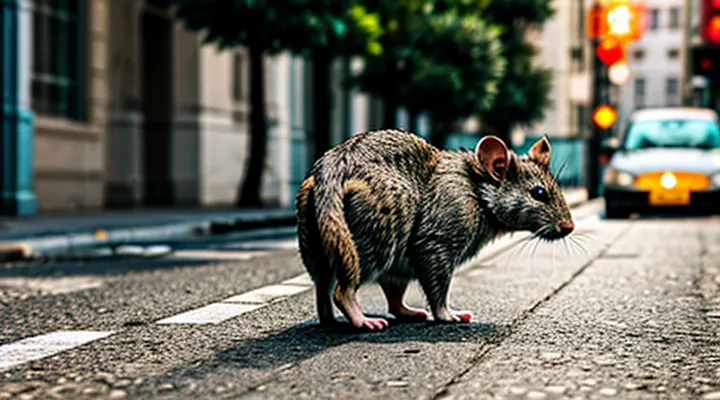
The Urban Wilderness: A Rat's Perspective
Beyond the Stereotype: Rethinking Urban Wildlife
The Hidden Lives of Street Rats
Street rats thrive in urban corridors, exploiting gaps between infrastructure and natural habitats. Their nocturnal foraging patterns align with human activity cycles, allowing them to scavenge waste, insects, and small vertebrates while avoiding direct confrontation.
Key aspects of their concealed existence include:
- Dietary flexibility: Opportunistic consumption of refuse, organic debris, and occasional predation on insects.
- Social organization: Hierarchical colonies with dominant individuals, cooperative breeding, and shared burrow networks.
- Spatial navigation: Memory‑based routes through alleys, drainage systems, and subterranean passages, reinforced by scent markings.
- Reproductive dynamics: Rapid breeding cycles, average litter size of six to eight pups, and seasonal peaks driven by temperature and food availability.
Adaptations such as heightened sensory perception, robust dentition, and resistance to toxins enable survival amid fluctuating urban conditions. Observations captured in street photography reveal these rodents in situ, highlighting their integration into the city's ecological fabric without overt human acknowledgment.
Ecological Niche of Urban Rodents
The photograph of a street‑dwelling rat illustrates the species’ adaptation to densely built environments. Urban rodents occupy a niche defined by abundant anthropogenic food sources, diverse microhabitats, and reduced predation pressure.
Food availability in cities derives from waste disposal, litter, and organic residues. Rats exploit these resources through omnivorous foraging, seasonal shifts in diet, and opportunistic scavenging. Their digestive physiology tolerates high‑fat and low‑quality substrates, enabling survival where natural forage is scarce.
Shelter is provided by structural gaps, underground utilities, and abandoned infrastructure. These refuges offer protection from temperature extremes, human disturbance, and predators. The ability to navigate narrow passages and climb vertical surfaces expands the range of usable habitats within the urban matrix.
Predator interactions differ from rural settings. Feral cats, birds of prey, and occasional wildlife constitute the primary threat, yet their impact is moderated by the rat’s nocturnal activity and rapid reproductive cycle. High fecundity compensates for mortality, maintaining population stability.
Disease transmission forms a critical component of the urban rodent niche. Close proximity to humans facilitates the spread of zoonotic pathogens such as Leptospira, hantavirus, and various bacteria. The rat’s role as a reservoir influences public health dynamics, prompting targeted control measures.
Key elements of the ecological niche can be summarized:
- Resource exploitation: omnivorous diet, waste utilization, flexible foraging strategies.
- Habitat use: subterranean networks, surface debris, building crevices.
- Reproductive strategy: short gestation, large litters, rapid turnover.
- Predation avoidance: nocturnality, agility, shelter selection.
- Pathogen reservoir: host for multiple zoonoses, interaction with human waste streams.
Understanding these parameters clarifies how a free‑roaming rat persists within the complex urban ecosystem, informing both ecological research and management policies.
Capturing the Moment: The Art of Wildlife Photography in the City
Techniques for Urban Wildlife Photography
Ethical Considerations in Street Photography
The practice of capturing candid images of urban wildlife raises distinct moral questions. Photographing a free‑roaming rodent on a city sidewalk involves assessing the balance between artistic intent and the responsibilities owed to both the animal and the surrounding environment.
A street rat is a public‑domain subject, yet the act of documenting it can influence public perception of pest species, affect community attitudes toward sanitation, and potentially expose the photographer to legal or health risks. Recording the creature without disturbing its behavior preserves the authenticity of the scene while minimizing harm. Conversely, staging interactions or provoking the animal for dramatic effect breaches ethical standards and may jeopardize the animal’s welfare.
Professional conduct in this context includes:
- Securing permission when the location belongs to a private entity or when the image may intrude on property rights.
- Maintaining a safe distance to avoid stress or injury to the animal.
- Refraining from using bait, traps, or any device that alters the rat’s natural activity.
- Ensuring that the final image does not misrepresent the animal’s condition or the surrounding area.
- Documenting the circumstances of the shoot (time, place, weather) to provide transparent context for viewers.
Adhering to these principles upholds the credibility of street photography while respecting the ecological and social fabric of urban spaces.
Equipment for Discreet Observation
Observing a free‑roaming urban rat requires gear that minimizes disturbance while capturing high‑quality imagery.
- Camera system: Mirrorless or DSLR body paired with a 300‑mm or longer telephoto lens; fast autofocus and silent shutter mode prevent alerting the animal.
- Stabilization: Carbon‑fiber tripod with a fluid, low‑noise head ensures steady framing during extended periods.
- Camouflage: Neutral‑toned, low‑profile clothing and a small, portable blind made of matte fabric blend with the street environment.
- Remote triggering: Wireless or infrared trigger connected to the camera allows activation from a distance of 10–15 m.
- Lighting: Adjustable, dimmable LED panels with diffusion filters provide illumination without harsh shadows; use a low‑color‑temperature setting to preserve the rat’s natural coloration.
- Audio control: Foam windshields for the microphone and sound‑absorbing blankets reduce ambient noise that could startle the subject.
- Protective gear: Disposable nitrile gloves and a face mask guard against potential disease transmission while handling equipment.
- Data management: High‑capacity, weather‑sealed memory cards and a rugged external SSD enable continuous recording without interruption.
Properly assembled, this kit supports unobtrusive documentation of urban rodent behavior, delivering clear visual evidence while preserving the animal’s natural setting.
Interpreting the Image: Narrative and Impact
The Power of a Single Photograph
A single image of an unrestrained city rat, taken where the animal moves freely among pavement and shadows, condenses complex ecological and social narratives into a visual moment. The photograph isolates behavior, habitat, and human impact without relying on explanatory text.
- It records authentic urban wildlife, providing evidence for biodiversity assessments.
- It challenges assumptions about pest species by revealing adaptability and survival strategies.
- It supplies material for scientific comparison, allowing researchers to track changes in population distribution.
- It engages public perception, prompting reconsideration of coexistence with non‑human city residents.
The power of this visual record lies in its immediacy. Viewers perceive texture, movement, and context simultaneously, which accelerates comprehension compared with statistical reports. The image also serves as a reference point for future documentation, establishing a baseline against which environmental shifts can be measured.
In professional practice, a well‑composed photograph functions as both data and communication tool. It bridges the gap between field observation and public discourse, delivering concise, verifiable insight into the dynamics of urban ecosystems.
Challenging Perceptions Through Visual Storytelling
A photograph capturing an unconfined rat navigating a city sidewalk presents a rare glimpse of urban wildlife in its own environment. The image isolates the animal from typical cinematic depictions, allowing viewers to observe its behavior without narrative preconceptions.
Visual storytelling relies on composition, lighting, and spatial relationships to convey meaning. In this case, the rat’s placement against graffiti‑covered walls creates a contrast between the creature’s natural instincts and the built environment. The close‑up perspective emphasizes texture and movement, while the surrounding clutter frames the subject as an integral element of the street’s ecosystem.
The visual record confronts entrenched stereotypes that portray rats solely as pests. By documenting the animal’s ordinary existence, the image encourages reassessment of moral judgments and prompts consideration of rats as adaptive urban residents. The absence of sensationalism forces the audience to engage with the subject on factual terms rather than emotional reaction.
Key effects of this approach include:
- Adjustment of public perception toward tolerance of urban fauna.
- Provision of evidence for policymakers addressing coexistence strategies.
- Enhancement of educational curricula that integrate realistic wildlife representation.
Through precise visual framing, the photograph transforms a commonplace scene into a catalyst for critical discourse about humanity’s relationship with the species that share our streets.