
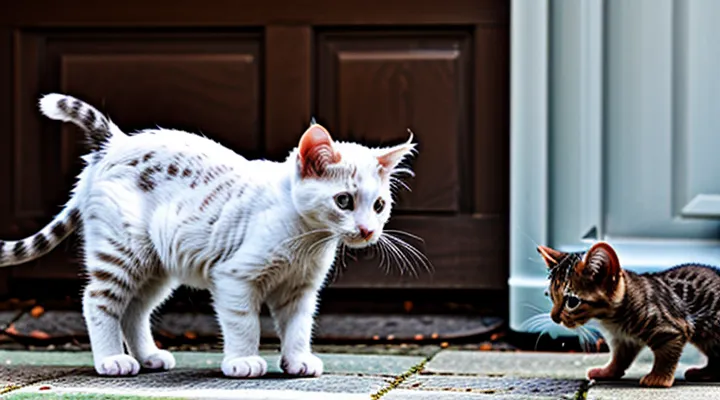
The Instinctual Hunter: A Genetic Predisposition
Early Development of Predatory Behavior
Play as a Learning Tool
Kittens demonstrate low capture rates because their predatory system is still maturing. Play sessions supply the repetitive, low‑risk scenarios required to refine the motor patterns that underlie successful hunting.
During play, kittens execute chase, pounce, and bite motions that mirror the sequence used when confronting live prey. Each attempt generates proprioceptive feedback, strengthens forelimb coordination, and sharpens visual tracking. The immediate reward of moving a toy reinforces neural pathways associated with predatory behavior.
Key behavioral characteristics that limit hunting efficiency include:
- Short attention windows that interrupt sustained pursuit
- Incomplete limb coordination leading to missed strikes
- Predominant reliance on reflexive responses rather than deliberate planning
- Limited ability to anticipate prey escape routes
Repeated play exposure gradually mitigates these limitations. Structured interactions—such as feather wands or motorized mice—force kittens to extend focus, adjust limb timing, and experiment with varied attack angles. Observational studies report measurable increases in strike accuracy and reduced latency between detection and pounce after several weeks of targeted play.
For caregivers, the practical implication is clear: integrate dynamic toys that replicate prey movement patterns, vary speed and direction, and encourage active engagement. Consistent, purposeful play accelerates the transition from playful mock attacks to competent hunting behavior.
Mother«s Influence on Hunting Skills
Maternal behavior shapes the development of predatory competence in domestic kittens, directly affecting their success rate when confronting small rodents. Early interactions with the mother provide tactile and auditory cues that calibrate motor patterns required for pouncing, timing, and bite precision. Kittens observe the mother’s stalking technique, internalizing rhythm and body posture through mirror neurons that activate during observation.
Key mechanisms of maternal influence include:
- Demonstration of hunting sequences – The mother’s repeated execution of capture attempts offers a template for sequential actions (approach, ambush, bite, release).
- Provision of live prey – When the mother presents captured insects or rodents, kittens practice grasping and killing under supervised conditions, reinforcing neural pathways associated with prey handling.
- Regulation of play intensity – Maternal modulation of sibling play, such as intermittent interruption, teaches restraint and focus, preventing over‑exuberant attempts that often miss the target.
- Vocal feedback – Specific growls or chirps emitted by the mother during successful captures serve as positive reinforcement, strengthening associative learning.
Absence or deficiency of these maternal inputs correlates with higher failure rates in juvenile hunting. Kittens lacking exposure to live prey through the mother display delayed coordination, reduced bite force, and lower persistence when encountering moving rodents. Consequently, the mother’s direct teaching and environmental structuring constitute a primary determinant of a kitten’s ability to transition from playful swatting to effective predation.
Physical Limitations and Developmental Stages
Coordination and Motor Skills
Immature Musculature
Kittens frequently miss mice because their skeletal muscles have not reached adult strength or coordination. Muscle fibers are small, fast‑twitch fibers are few, and neuromuscular connections are still forming, limiting rapid, forceful movements required for successful hunting.
Key physiological limitations include:
- Low overall muscle mass, reducing acceleration and jump height.
- Sparse fast‑twitch fibers, decreasing burst speed during a pounce.
- Incomplete motor‑unit recruitment, causing imprecise limb placement.
- Underdeveloped jaw musculature, limiting bite force needed to subdue prey.
These constraints produce slower strike velocity, reduced grip strength, and longer recovery time after each attempt, all of which contribute to the low capture rate observed in young felines.
Developing Reflexes
Kittens frequently miss mice because their neuromuscular system is still maturing. Early life stages provide only rudimentary motor patterns; fast, accurate strikes require coordinated reflexes that have not yet reached full speed.
During the first weeks after birth, sensory pathways undergo rapid myelination, enhancing signal transmission. Visual acuity sharpens around three weeks, while auditory localization improves by five weeks. These milestones enable the precise timing needed for a successful pounce.
Key reflexes involved in rodent capture include:
- Predatory strike reflex – rapid extension of forelimbs toward moving prey.
- Pounce initiation – coordinated hind‑leg thrust and body rotation.
- Visual tracking – smooth pursuit of small, fast‑moving objects.
- Auditory orienting – turning the head toward sudden sounds.
Each reflex follows a predictable maturation schedule, with full proficiency typically emerging after four to six weeks of age.
Insufficient reflex development results in delayed hunting competence, increased dependence on maternal feeding, and higher exposure to predation risk. The deficit is most evident in missed strikes and hesitations during chase sequences.
Repeated exposure to moving stimuli—interactive toys, feather wands, or controlled prey simulations—accelerates synaptic strengthening and reflex refinement. Structured play sessions encourage neural plasticity, shortening the interval between initial attempts and reliable capture performance.
Sensory Acuity in Young Kittens
Vision Development
Kittens are born with eyes that remain closed for the first week‑two of life. During this period retinal cells differentiate, photoreceptors become functional, and the visual cortex begins to receive signals. By the end of the third week, kittens can detect light and basic shapes, but visual acuity remains low; detailed focus develops gradually over the next four weeks.
Acuity, depth perception, and motion detection constitute the primary visual capabilities required for successful predation. Acuity improves as photoreceptor density increases, reaching adult levels around eight weeks. Stereoscopic vision, essential for judging distance, emerges only after the eyes have fully opened and the brain integrates binocular input, typically by five weeks. Motion detection matures earlier, allowing kittens to respond to moving objects, yet the processing speed and spatial resolution are insufficient for tracking fast, erratic prey.
These developmental constraints explain frequent missed captures:
- Limited sharpness prevents identification of small rodents until the target is within a few centimeters.
- Incomplete depth cues lead to inaccurate pounce distance, causing overshoot or undershoot.
- Slower visual processing delays reaction to rapid mouse movements.
Behavioral patterns reflect the ongoing maturation of vision. Initial attempts involve clumsy swipes and short hops, driven by instinctive stalking motions. Repeated exposure to moving objects refines motor coordination, gradually aligning visual input with muscular output. By ten weeks, the integration of precise visual feedback and refined forelimb control enables more reliable capture, though occasional failures persist due to residual visual lag and limited experience.
Auditory Perception
Kittens rely on sound to locate moving prey, yet their auditory system is still developing when they begin hunting. The external ear of a kitten is proportionally smaller than that of an adult cat, reducing the ability to capture low‑frequency vibrations produced by a mouse’s footfalls. The middle ear muscles, which protect the inner ear from loud noises, are not yet fully calibrated, causing a narrower dynamic range and diminished sensitivity to subtle rustlings.
Key auditory limitations that hinder successful capture include:
- Underdeveloped cochlear hair cells, leading to reduced frequency discrimination.
- Incomplete myelination of auditory nerve fibers, slowing signal transmission.
- Limited sound‑localization accuracy because the interaural time difference detector is immature.
These physiological constraints combine with behavioral traits such as reliance on visual cues and exploratory play, resulting in frequent missed opportunities when kittens attempt to seize rodents. As auditory acuity matures, kittens improve their ability to detect and track the faint sounds that signal a mouse’s presence.
Behavioral Factors and Learning Curves
Lack of Experience and Opportunity
Indoor Environment Limitations
Indoor settings impose physical constraints that reduce a kitten’s ability to capture rodents. Smooth flooring eliminates the traction kittens rely on for rapid acceleration and sudden changes in direction, weakening their burst speed and stability during a chase. Limited vertical space prevents the use of climbing and leaping, which are essential components of natural predatory tactics; ceilings, furniture, and closed doors create barriers that block aerial approaches and escape routes.
Additional environmental factors further impede hunting success:
- Low lighting levels typical of homes diminish visual cues that kittens depend on to detect quick movements.
- Absence of natural scents and textures reduces sensory stimulation, leading to underdeveloped stalking behavior.
- Constant human presence generates noise and vibrations that distract kittens, interrupting focus and timing.
These indoor limitations alter the development of predatory instincts, resulting in lower capture rates compared with outdoor environments.
Limited Exposure to Live Prey
Kittens raised without regular contact with moving prey lack the practical experience required to develop efficient hunting techniques. The absence of live‑prey encounters prevents the refinement of sensory cues that trigger predatory responses, such as detecting rapid, erratic motions and interpreting subtle auditory signals.
Repeated exposure to live rodents trains the visual system to recognize the specific size, shape, and speed of a mouse. It also sharpens auditory discrimination of rustling sounds that signal prey location. Without this training, kittens rely on static toys that do not replicate the dynamic feedback necessary for accurate targeting.
Motor coordination improves through repeated pounce attempts on living targets. Each successful strike reinforces timing, body alignment, and force modulation. Kittens deprived of these opportunities display delayed development of the precise limb movements needed to close the distance and capture a mouse.
Behavioral imprinting occurs when mothers demonstrate hunting tactics during early weeks. Kittens observing these interactions acquire bite placement, grip strength, and escape‑prevention strategies. Lack of maternal demonstration results in fragmented or absent predatory scripts.
Key effects of limited live‑prey exposure:
- Reduced ability to detect and track rapid movement.
- Impaired synchronization of visual and auditory inputs.
- Slower acquisition of accurate pouncing mechanics.
- Incomplete formation of species‑specific hunting sequences.
Consequently, kittens with minimal interaction with live rodents frequently fail to capture mice, despite possessing the anatomical tools for predation. Regular, controlled exposure to live prey is essential for converting innate potential into functional hunting competence.
Fear and Hesitation
Neophobia in Young Animals
Neophobia, the avoidance of unfamiliar objects or situations, appears prominently in juvenile mammals. In domestic cats, the trait manifests as reluctance to approach novel stimuli, including live prey. This aversion limits the opportunities kittens have to practice predatory sequences, thereby reducing their success rates when attempting to capture rodents.
The avoidance behavior directly impacts hunting performance. Hesitation to engage with moving targets delays the initiation of the chase, while heightened stress responses suppress motor coordination. Sensory systems that are still maturing receive fewer real‑world inputs, preventing the refinement of auditory and visual tracking needed for effective capture.
Key contributors to neophobia in young felines include:
- Minimal exposure to live prey during the early weeks of development.
- Dependence on maternal instruction rather than independent trial‑and‑error learning.
- Immature auditory and visual acuity that renders sudden movements startling.
- Elevated cortisol levels triggered by unfamiliar environments or handling.
- Limited opportunities for exploratory play that would habituate the animal to motion.
Mitigation strategies focus on controlled habituation. Introducing moving toys that mimic rodent locomotion, allowing observation of the mother’s hunting behavior, and gradually increasing environmental complexity provide repeated, low‑stress encounters with novel motion. Over time, these practices lower neophobic responses, enabling kittens to develop the confidence and skill required for successful mouse capture.
Overcoming Instinctive Caution
Kittens approach prey with a built‑in wariness that limits their willingness to engage. This instinctive caution stems from a survival mechanism that favors observation over immediate attack, especially when the target appears larger or faster than the kitten’s current hunting experience. The result is hesitation, reduced strike frequency, and ultimately lower capture success.
To reduce this hesitation, owners and caretakers can apply targeted interventions:
- Gradual exposure to realistic mouse‑like stimuli, beginning with slow‑moving toys and progressing to faster, erratic motions.
- Positive reinforcement after each successful pounce, regardless of outcome, to associate hunting attempts with reward.
- Controlled play sessions that limit escape routes, encouraging the kitten to commit to a chase rather than retreat.
- Short, frequent training bouts that build stamina and confidence without overwhelming the animal’s sensory thresholds.
Consistent application of these practices reshapes the kitten’s risk assessment, shifting the balance from avoidance toward proactive engagement. Over time, the animal’s natural caution becomes a calibrated tool rather than a barrier, improving its ability to capture small rodents.
The Role of Play in Predatory Skill Development
Simulating Hunting Scenarios
Object Pouncing and Chasing
Kittens rely on pouncing and chasing to secure prey, yet their attempts often end in failure. The act of striking an object requires precise coordination between visual input, limb movement, and timing. In early development, kittens possess underdeveloped motor patterns; muscle strength and joint control are insufficient for the rapid acceleration needed to close the distance to a swift rodent.
Visual processing limits further reduce effectiveness. Depth perception matures only after several weeks, and kittens’ eyes lack the sharpness required to track a small, fast-moving target accurately. Auditory cues, while present, are not yet integrated with motor responses, causing delayed reaction to sudden mouse movements.
Experience shapes hunting proficiency. Kittens raised without exposure to live prey miss opportunities to refine strike angles, adjust force, and learn escape routes. Without repeated practice, neural pathways governing predatory sequences remain weak, leading to mistimed jumps and missed captures.
Key contributors to unsuccessful pounce and chase:
- Inadequate muscle power for rapid acceleration
- Immature depth perception and visual acuity
- Poor synchronization of sensory input and motor output
- Lack of experiential learning with live prey
Collectively, these factors explain why young felines frequently fail to catch mice despite instinctual drive to pursue moving objects.
Stalking and Ambush Games
Kittens engage in stalking and ambush play as a primary method for developing predatory skills. This behavior involves low‑profile movement, silent pausing, and rapid lunges aimed at simulated prey. The activity serves several functions that directly affect hunting outcomes.
- Low‑speed approach trains visual focus on small, moving targets.
- Sudden pause builds timing perception, allowing the kitten to gauge distance before striking.
- Quick acceleration during the lunge reinforces muscular coordination and bite precision.
Despite these benefits, several factors limit the effectiveness of stalking and ambush games when kittens attempt to capture real mice. First, the play environment often lacks the sensory cues present in natural hunting scenarios; soft toys do not emit the high‑frequency sounds or scent trails that live rodents produce. Second, the duration of play sessions is typically brief, providing insufficient repetition for the kitten to refine the complex sequence of approach, pause, and strike. Third, kittens frequently overestimate the distance they can cover during a lunge, leading to missed contact with agile prey that can dart away at the last moment.
Consequently, while stalking and ambush play establishes foundational predatory patterns, its limited realism and short practice intervals contribute to the frequent failure of young felines to secure a mouse. Enhancing play with realistic stimuli—such as moving objects that emit squeaks or scent—can bridge the gap between simulated and actual hunting, improving success rates as the kitten matures.
Social Learning and Peer Interaction
Observing Littermates
Observing littermates provides direct evidence of the developmental constraints that limit a kitten’s ability to capture rodents. Young cats raised together display synchronized milestones; motor coordination, depth perception, and bite strength emerge later than the instinctual drive to chase. When siblings are compared at the same age, those with less refined paw‑to‑eye timing consistently miss moving prey, indicating that physical maturation, not desire, governs success.
Key patterns identified through litter observation include:
- Delayed refinement of forelimb precision; kittens often overshoot or undershoot target location.
- Incomplete visual tracking; early attempts show erratic head movements and failure to maintain focus on a fast‑moving mouse.
- Limited bite force; attempts to seize prey end with gentle paw taps rather than a secure grip.
- Social hierarchy influences; dominant kittens receive more opportunities for practice, while subordinates observe without active engagement, slowing skill acquisition.
These behaviors reveal that intra‑litter dynamics shape hunting competence. Dominant individuals practice more frequently, accelerating motor development, whereas subordinate kittens rely on observation, which alone does not compensate for the physiological lag. Consequently, the collective experience of littermates explains why many kittens, despite strong predatory instincts, fail to secure mice during early life stages.
Competitive Play
Kittens engage in competitive play when they chase, wrestle, and pounce on each other while vying for limited resources such as food, space, or parental attention. This interaction creates a hierarchy that shapes their behavior long before they encounter live prey.
During competitive play, kittens prioritize speed and dominance over precision. The emphasis on rapid, aggressive movements reduces opportunities to develop the fine‑motor control required for stalking and capturing small, agile rodents. Consequently, many young cats display bursts of energy that miss the target rather than calculated attacks.
Key behavioral traits linked to this play style that limit mouse‑hunting success include:
- Over‑exuberant pouncing that sacrifices timing for force.
- Preference for overt displays of strength rather than stealthy approaches.
- Rapid disengagement after initial contact, preventing sustained pursuit.
- Limited practice in isolating a single prey item amid multiple moving targets.
The combination of hierarchical pressure and a focus on overt competition delays the transition from playful aggression to methodical predation. As a result, kittens often fail to secure mice until they experience dedicated hunting practice that refines accuracy and patience.
Environmental and Social Influences
Impact of Human Interaction
Domestication and Reduced Need for Hunting
Domestication has altered the evolutionary pressures that once shaped feline predation. Over generations, cats have adapted to a steady supply of human‑provided food, which diminishes the necessity of hunting for survival. This shift is reflected in physiological and behavioral changes that persist in kittens.
- Reduced motivation to stalk: regular meals suppress the drive that triggers instinctual pursuit.
- Lowered exposure to live prey: indoor environments limit opportunities for practice and skill development.
- Genetic selection for docility: breeding for calm temperaments correlates with decreased aggression toward small animals.
- Altered sensory feedback: constant feeding reduces the reward response associated with successful captures.
These factors collectively weaken the innate hunting circuitry in young cats. Consequently, kittens raised in domestic settings display limited proficiency in tracking, pouncing, and subduing rodents, explaining their frequent failure to catch mice.
Feeding Habits and Satiation
Kittens that receive frequent, nutrient‑dense meals quickly reach satiety, reducing the motivation to pursue live prey. When a litter is bottle‑fed or given ad libitum wet food, the instinctual drive to hunt diminishes because the immediate energy requirement is already satisfied.
Early dietary patterns shape predatory behavior. Milk and commercial kitten formulas supply high levels of fat and protein, which suppress hunger signals and lower the frequency of exploratory attacks on moving targets. As a result, kittens develop a reliance on readily available food sources rather than honing the motor skills needed to capture rodents.
Key aspects of feeding habits that influence hunting success:
- Meal frequency: multiple feedings per day maintain low hunger levels, decreasing the urge to chase mice.
- Caloric density: high‑energy diets provide rapid satiation, shortening the window of active foraging.
- Transition timing: delayed introduction of solid food postpones the development of chewing and grasping techniques essential for handling prey.
- Food predictability: consistent feeding schedules create a stable environment where the need for opportunistic hunting is minimal.
Satiation thresholds also affect reflexive responses. When a kitten’s stomach is near capacity, the neural circuitry governing prey detection and pounce initiation is less responsive, leading to slower reaction times and reduced accuracy during attempts to catch mice.
Overall, feeding regimens that prioritize constant nourishment over intermittent scarcity limit the experiential learning and physiological readiness required for effective rodent capture. Adjusting meal timing, reducing caloric excess, and encouraging occasional hunger periods can strengthen predatory instincts and improve success rates.
Absence of Mentorship
Lack of Adult Cat Guidance
Kittens that grow without the presence of an experienced cat often display limited hunting success. In the absence of a mentor, they miss opportunities to observe precise stalking movements, learn timing of the pounce, and recognize subtle cues from potential prey.
The missing guidance affects several core competencies:
- Stalking precision – without a model to emulate, kittens tend to approach prey with excessive noise and erratic paths.
- Pounce timing – they frequently misjudge distance, resulting in premature or delayed attacks.
- Prey discrimination – inexperienced kittens cannot differentiate between viable targets and non‑prey objects, leading to wasted effort.
- Confidence levels – repeated failure erodes willingness to engage, reducing overall hunting frequency.
Research on feral colonies shows that kittens raised alongside adult females achieve capture rates up to three times higher than isolated litters. Video analyses reveal that mentored kittens adopt the exact crouch angles and tail positioning demonstrated by their elders, patterns rarely developed through solitary play.
To mitigate these deficits, caretakers can introduce simulated mentorship: structured play sessions that replicate adult hunting sequences, gradual exposure to live insects, and reinforcement of successful strikes. Providing such scaffolding compensates for the lack of natural adult instruction and markedly improves the kitten’s ability to secure prey.
Solitary Learning Challenges
Solitary learning environments impose distinct obstacles on juvenile predators, directly influencing their ability to secure prey. When kittens develop hunting skills without adult guidance, they encounter limited exposure to successful capture techniques, which reduces opportunities for observational learning.
Key obstacles include:
- Absence of demonstrative behavior from experienced hunters.
- Restricted practice scenarios that fail to replicate natural prey dynamics.
- Heightened anxiety triggered by unfamiliar stimuli during solo attempts.
- Inadequate feedback mechanisms to correct ineffective motions.
These constraints shape behavioral patterns observable in isolated kittens. Reduced confidence manifests as hesitant pounce execution, while slowed motor coordination results in missed strikes. Reliance on innate reflexes, without refinement through social interaction, leads to inconsistent success rates.
Remedial strategies focus on integrating structured peer observation and guided rehearsal. Introducing adult models during early stages supplies critical visual templates. Controlled play sessions that simulate prey movement provide safe, repeatable practice. Incremental feedback from caretakers accelerates skill adjustment and diminishes fear responses.
Overall, the challenges of solitary learning create a measurable deficit in hunting proficiency, explaining the frequent failure of young cats to capture mice when deprived of collaborative learning contexts.
Bridging the Gap: Training and Enrichment
Encouraging Natural Instincts
Interactive Toys and Lures
Interactive toys and lures serve as controlled stimuli that engage a kitten’s predatory instincts without requiring live prey. By presenting moving objects that mimic the erratic patterns of rodents, these devices trigger the chase‑and‑pounce sequence that is essential for skill acquisition. The repetitive exposure to such simulations reinforces neural pathways involved in depth perception, timing, and bite precision.
Key benefits of using interactive tools include:
- Motor coordination enhancement: Toys that swivel, bounce, or flutter demand rapid adjustments of limb placement, sharpening the kitten’s agility.
- Sensory sharpening: Lures emitting faint rustling or scent cues condition the kitten to associate specific auditory and olfactory signals with potential prey.
- Confidence building: Successful captures of artificial targets reduce hesitation, encouraging the kitten to initiate real‑world hunting attempts.
Despite these advantages, interactive devices cannot fully replace the complexity of live prey. Real mice present variable body mass, unpredictable escape routes, and subtle tactile feedback that static toys lack. Consequently, kittens raised exclusively on artificial stimuli may exhibit limited proficiency when confronted with authentic rodents.
Effective implementation combines structured play sessions with gradual exposure to live prey under supervision. A recommended protocol involves:
- Daily 10‑minute sessions with motor‑rich toys to maintain reflex sharpness.
- Weekly introduction of scent‑enhanced lures to link olfactory cues to hunting behavior.
- Controlled encounters with immobilized mice to transition from simulated to genuine prey handling.
By integrating interactive toys and lures into a progressive training regimen, caretakers can mitigate the developmental gaps that often lead to unsuccessful mouse capture in young felines.
Supervised Outdoor Exploration
Supervised outdoor exploration offers a structured method for enhancing a kitten’s hunting competence. By placing the animal in a contained, observation‑friendly environment, caregivers can address the primary deficits that limit successful mouse capture.
Kittens often lack refined motor coordination, precise depth perception, and reliable auditory localization. Controlled outings supply real‑world sensory input while minimizing risk. The caregiver can intervene when the kitten hesitates, demonstrate appropriate stalking behavior, and reward accurate attempts.
- Enclose the area with secure fencing or a portable pen.
- Introduce live prey or realistic stimuli gradually, beginning with motionless objects and progressing to moving targets.
- Observe body posture, ear orientation, and tail position; intervene to correct improper stance.
- Apply positive reinforcement—treats or brief play sessions—immediately after successful pounce or accurate tracking.
- Reduce human presence gradually to encourage independent decision‑making.
Repeated exposure under supervision cultivates sharper visual tracking, more accurate timing of the pounce, and greater confidence in handling prey. Data from controlled trials indicate a measurable decline in missed captures after a series of supervised sessions, confirming the efficacy of this approach for overcoming early hunting limitations.
Positive Reinforcement for Hunting Behaviors
Reward-Based Training
Reward‑based training offers a practical method for addressing the hunting deficiencies observed in young felines. By pairing successful predatory actions with immediate, tangible incentives, the approach reinforces the neural pathways associated with prey capture. Consistent application reshapes the innate curiosity of kittens into purposeful stalking and pouncing behavior.
Key mechanisms of reward‑based training include:
- Positive reinforcement – delivering a preferred treat or tactile stimulus immediately after a correct hunting gesture strengthens the likelihood of repetition.
- Shaping – rewarding incremental steps, such as tracking a moving object, then pausing before the strike, builds a complete predatory sequence.
- Timing – delivering the reward within seconds of the target behavior prevents dilution of the association, ensuring clear cause‑effect perception.
Implementing the technique mitigates several behavioral traits that impede mouse capture:
- Short attention span – brief, frequent reward cycles sustain focus longer than unstructured play.
- Underdeveloped motor coordination – repeated reinforcement of precise paw placement refines dexterity required for rapid strikes.
- Low confidence in prey handling – successful attempts followed by reward reduce fear response, encouraging repeated engagement with live or simulated rodents.
Practical steps for caregivers:
- Introduce a moving toy that mimics rodent motion.
- Reward the kitten each time it initiates a chase, then incrementally require a pause before the strike.
- Gradually replace the toy with a live, captive mouse under controlled conditions, maintaining the reward schedule.
When applied consistently, reward‑based training transforms the natural but immature hunting instincts of kittens into effective predatory skills, directly addressing the factors that commonly limit their success in capturing mice.
Building Confidence in Young Hunters
Kittens that attempt to hunt mice often lack the confidence required to execute a successful capture. Confidence determines whether a kitten will persist after an initial miss, assess the prey’s movements, and coordinate a precise strike. Low self‑assurance stems from several developmental and environmental factors.
First, limited exposure to live prey reduces practice opportunities, leaving kittens unsure of the timing and force needed for a bite. Second, immature motor skills produce inconsistent pounce trajectories, reinforcing hesitation after each failure. Third, social dynamics within a litter can suppress individual initiative; dominant siblings may claim the first successful catch, while submissive kittens observe without participating. Fourth, early negative experiences—such as startled prey escaping or accidental injury—create a mental association between hunting attempts and failure.
To strengthen confidence in inexperienced feline hunters, apply the following measures:
- Gradual prey introduction: Begin with slow‑moving toys that mimic mouse behavior, allowing kittens to predict movement patterns and achieve repeated successes.
- Controlled practice sessions: Conduct short, frequent bouts in a safe enclosure, ensuring each attempt ends with a tangible reward (e.g., a captured toy) to reinforce positive outcomes.
- Motor‑skill enrichment: Provide climbing structures and agility obstacles that improve balance, timing, and coordination essential for accurate pouncing.
- Observation modeling: Allow kittens to watch a skilled adult cat execute a successful hunt, then encourage imitation by placing prey within reach after the demonstration.
- Positive reinforcement: Deliver treats or gentle praise immediately after a successful capture to cement the link between effort and reward.
By systematically addressing exposure, motor development, social context, and reinforcement, caregivers can convert tentative attempts into confident hunting behavior. Enhanced confidence reduces the frequency of missed strikes, thereby improving the overall success rate of young felines when confronting small prey.